
What happens when you match into a “family-friendly” residency… and then discover you’re on q3 home call with 24-hour backup every weekend?
Let me be blunt: “Family-friendly” is one of the most abused phrases in residency recruitment. Programs throw it around like confetti. Residents repeat it because it sounds good on interview day. And applicants—especially those with partners, kids, or plans to have them—get burned.
The most common way they get burned? They believe the marketing and never actually look at the call grid.
You’re about to see why that’s a huge mistake.
The Lie of the “Family-Friendly” Label
Every program thinks it’s supportive. Or at least they say they are.
I’ve heard all of these during interviews:
- “We’re very family-oriented here.”
- “People have kids all the time in our program.”
- “We really value work-life balance.”
- “Our residents are like a big family.”
None of these statements tell you anything concrete about:
- How many nights you’ll actually sleep in your own bed.
- How often you’ll miss bedtime, weekends, and holidays.
- Whether pregnancy, childcare emergencies, or parental leave are supported—or punished.
That’s what the call grid reveals.
If you ignore it, you’re basically agreeing to sign a 3–7 year contract without reading the fine print.
The Core Mistake
Here’s the specific mistake applicants make:
They:
- Visit a program website or interview day.
- Hear phrases like “family-friendly,” “supportive,” “we care about wellness.”
- Maybe see a social media post of a resident at a picnic with their child.
- Feel reassured.
- Rank the program high.
They do not:
- Ask to see a sample call schedule by PGY level and rotation.
- Ask how call changes during pregnancy or after parental leave.
- Ask what “home call” actually means in practice (hint: it’s often brutal).
- Ask residents privately what their lives actually look like.
Result? They end up in a schedule they never would’ve agreed to if they’d seen it clearly before Match.
What the Call Grid Actually Tells You (That Nobody Explains)
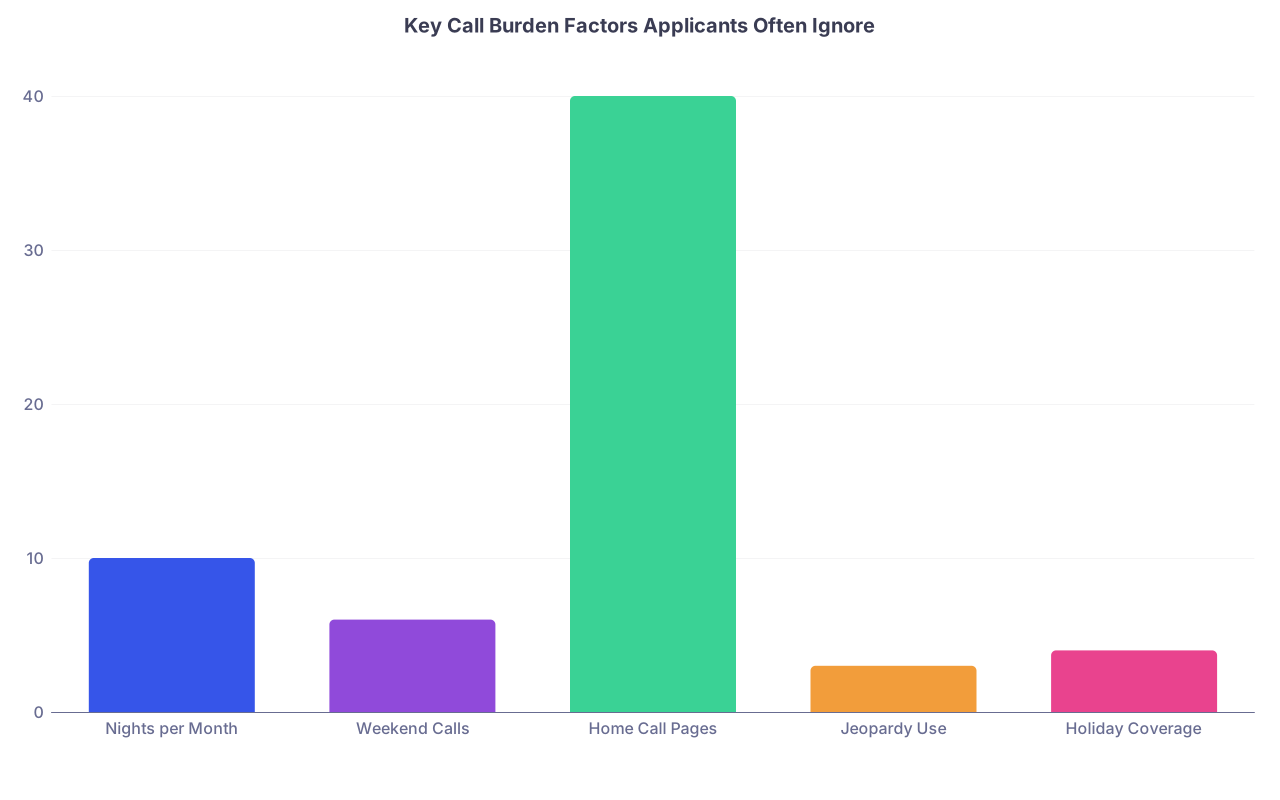
| Category | Value |
|---|---|
| Nights per Month | 10 |
| Weekend Calls | 6 |
| Home Call Pages | 40 |
| Jeopardy Use | 3 |
| Holiday Coverage | 4 |
The call grid (or call schedule) isn’t just some admin spreadsheet. It’s the blueprint of your actual life.
When you really look at it, you can see:
Frequency of call
- q3, q4, “1 in 5”, “1 in 7 weekends” all add up.
- A “chill” program can still destroy your family time with relentless weekends.
Type of call
- In-house vs home call vs night float.
- Some “home call” setups are worse than in-house because you never fully disconnect.
Distribution across years
- Are you getting crushed PGY-2 and “protected” later?
- Or is it quietly heavy your entire training?
Pattern of weekends and holidays
- Every other weekend?
- Every third?
- Do you get post-call days that are real, or do “educational activities” fill them?
Reality of “flexibility”
- You might see “jeopardy” or “backup” call.
- Sounds supportive, but if it’s abused, it means: you are never truly off.
A program can be objectively awful for families and still call itself “family-friendly” if:
- A few residents have kids and just suffer quietly.
- Or the faculty all had stay-at-home partners and think that’s “normal.”
- Or the bar is so low that “you get one golden weekend a month” is considered generous.
You cannot trust the label. You have to interrogate the schedule.
Red Flags Hidden in “Family-Friendly” Marketing
Here’s where people get tricked. The program says one thing; the call grid says another.

Let’s break down common traps.
1. “Home Call” That Isn’t Actually Home
Big one.
Programs love to brag: “We mostly have home call, not in-house.”
Sounds better. But ask:
- How many pages are typical per night?
- What’s the average number of times you physically come in?
- Is there an expectation that you always answer instantly?
- Are you rounding post-call, or do you actually get time off?
I’ve seen “home call” where:
- Residents get paged 30–50 times a night.
- They’re in the hospital till 1–2 a.m., then back again at 6 a.m.
- The attending still expects notes done by morning.
That’s not “family-friendly.” That’s just unmonitored labor.
2. Night Float That Eats Your Life
Night float can be good. It can also be a family-time shredder.
Watch out for:
- Long stretches: 6-7 nights in a row, repeated multiple times per year.
- Terrible transitions: coming off nights and then flipping back immediately to days.
- No real recovery time: “You’re off post-nights” but still mandated educational half-days or meetings.
Ask:
- How many weeks of night float per year at each PGY level?
- How many total nights per month on average across the year?
- Do people with kids routinely swap out of nights, or is that considered “weak”?
3. “We Rarely Use Jeopardy” (Because People Come in Sick)
Jeopardy or backup systems can be great when they’re truly used to protect residents.
But here’s the pattern you do not want:
- Culture: “We’re tough; we don’t call in unless we’re dying.”
- Result: Residents with kids, illness, or pregnancy complications feel guilty asking for help.
- Jeopardy is a policy on paper, not in practice.
Ask residents privately:
- “When’s the last time someone activated jeopardy?”
- “Has anyone used jeopardy for a childcare emergency?”
- “Did they get side-eyed for it?”
If the room goes quiet or people dodge the question, believe that silence.
4. PGY-2: The Hidden Disaster Year
Many programs quietly frontload misery into PGY-2 (or equivalent).
They’ll say:
- “It’s a tough year, but it gets better.”
- “We don’t recommend having kids PGY-2.”
- Translation: “We know this is unsustainable, but we’re not changing it.”
Look specifically at:
- ICU rotations: number of weeks and call structure.
- Busy inpatient blocks.
- Any rotations with q3 or q4 in-house call.
If PGY-2 is a war zone and you’re planning pregnancy or small kids during residency, that’s a massive red flag.
How to Actually Read a Call Grid (So You Don’t Get Screwed)
Most applicants glance once and say, “Seems okay.”
Don’t do that. Go line by line.
| Pattern Label | Typical Setup | Family Impact |
|---|---|---|
| A | q4 in-house | High |
| B | Home q3 | Very High |
| C | Night float 6 weeks/year | Moderate–High |
| D | q6 weekends only | Moderate |
| E | No call (clinic-heavy) | Low |
Here’s how to approach it like someone who actually values their non-work life.
Step 1: Count Nights and Weekends, Not Just “q4”
Translate cryptic phrases into real numbers:
- q4 in-house = 7–8 calls per 28-day month.
- q6 weekends = about 2 weekend call shifts per month.
- “One in four weekends” = 1 full weekend lost per month.
Then ask:
- Over the whole year, how many:
- Night shifts?
- 24-hour calls?
- Weekends where you’re truly off?
Write it out. Don’t trust your gut. A schedule that “feels okay” at first can turn ugly when you do the math.
Step 2: Track It Across All PGY Years
Programs love to show:
- “Here’s a sample PGY-3 schedule—it’s lighter.”
You need:
- PGY-1, PGY-2, PGY-3 sample schedules.
- If a longer program (surg, neuro, etc.), ask up to the final year.
Specifically:
- Is there real progression in autonomy and schedule sanity?
- Or are they just shuffling the misery to different rotations?
If every year has some soul-crushing rotation, call it what it is: chronic.
Step 3: Ask About Reality vs Policy
Whatever they show you, assume it’s the prettiest version.
Then ask:
- “In the last year, have there been rotations that consistently went over duty hours?”
- “Do residents routinely stay 2+ hours past their scheduled end?”
- “How often do you actually get your post-call day?”
If residents start sentences with:
- “Technically…”
- “On paper…”
- “We’re supposed to…”
You already know the truth: the call grid is aspirational, not real.
Families, Fertility, and the Silent Penalties of Bad Call
If you plan to:
- Have kids during residency.
- Be present with the kids you already have.
- Support a partner who’s also in medicine or working demanding hours.
- Maintain basic human relationships.
Then ignoring the call grid is playing roulette with your life.
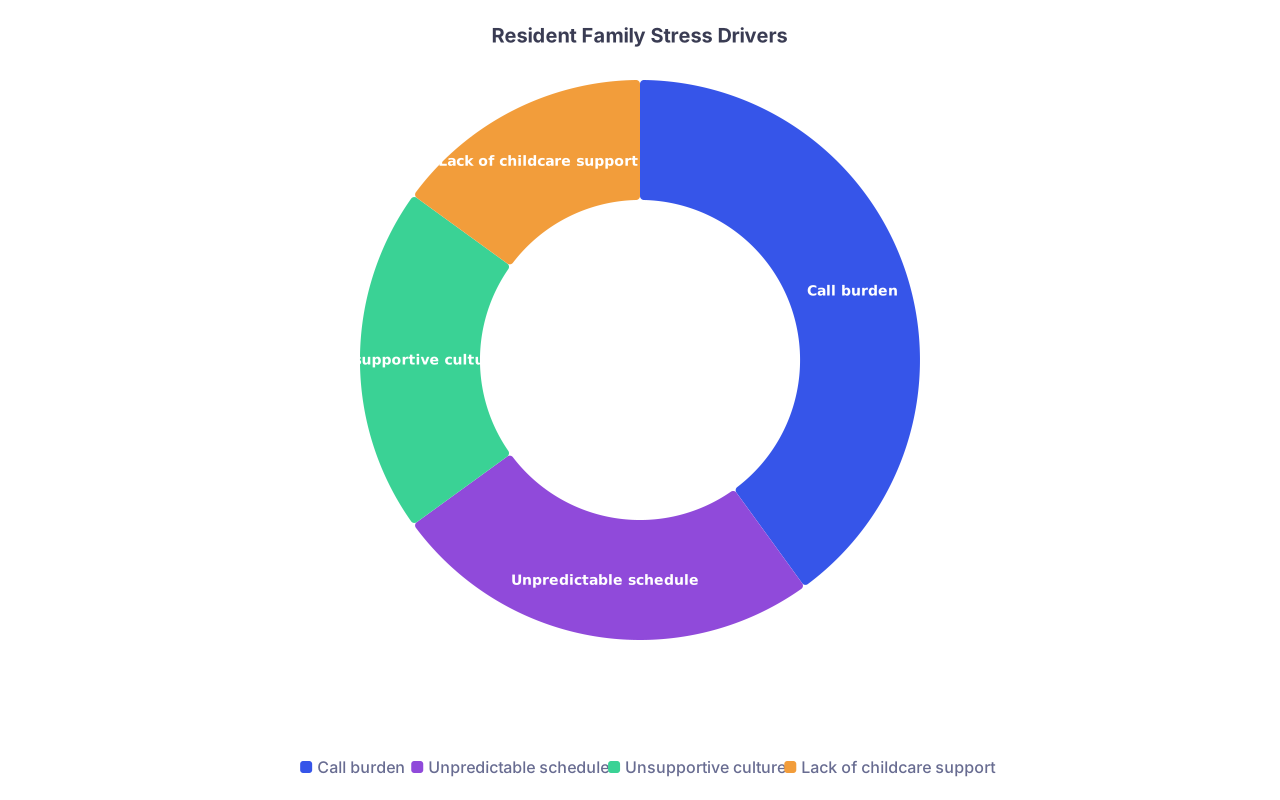
| Category | Value |
|---|---|
| Call burden | 40 |
| Unpredictable schedule | 25 |
| Unsupportive culture | 20 |
| Lack of childcare support | 15 |
Hidden Costs of a “Family-Friendly” Program with Brutal Call
I’ve seen all of this:
- Residents pumping breast milk in call rooms at 2 a.m. because there’s no protected time.
- Partners who never see each other because they alternate call weeks.
- Kids who only see one parent awake on post-call days when that parent is a zombie.
- Residents delaying pregnancy so long they end up in fertility workups by PGY-5.
And then when they raise it, they get:
- “This is just residency.”
- “Everyone goes through this.”
- “The training has to be rigorous.”
Training can be rigorous without being stupid. But many places choose stupid.
Specific Questions to Protect Your Future Family
On interview day or during second looks, ask residents privately:
- “How many residents have had kids in the last 5 years?”
- “Did any of them switch rotations or call patterns during pregnancy?”
- “Was parental leave covered smoothly, or did co-residents get slammed?”
- “Do people feel comfortable calling out for a sick child?”
- “Do you feel punished—formally or informally—for needing flexibility?”
If answers are vague, minimized, or obviously rehearsed, that’s your answer.
How Programs Manipulate the “Family-Friendly” Image
You need to recognize PR when you see it.

| Step | Description |
|---|---|
| Step 1 | Applicant sees website |
| Step 2 | Photos of residents with kids |
| Step 3 | Hears family friendly in interview |
| Step 4 | Does not request call grid |
| Step 5 | Matches to program |
| Step 6 | Discovers heavy call burden |
| Step 7 | Strained family life and burnout |
Common Tactics
Showing the one resident with kids
- They parade one PGY-3 mom who is barely holding it together.
- She’s often incredibly capable… and exhausted.
Pointing to fuzzy policies
- “We’re very supportive of parental leave.”
- But: no standardized system; every negotiation is ad hoc and stressful.
Boasting of wellness initiatives
- Free pizza.
- Yoga once a month.
- A “resident lounge” you’ll never see while on constant call.
Cherry-picking schedules on slides
- They show light elective blocks.
- They don’t show the ICU month where you basically vanish from your home.
Your defense is simple: Ask for the damn call grid. For each year. And ask residents if that’s how it actually runs.
How to Ask Without Sounding “High Maintenance”
Some applicants worry: “If I ask about call too much, I’ll look lazy or not serious.”
That mindset is exactly how people end up miserable.
You can be direct and still professional.
Try:
- “Can I see a sample call schedule for each PGY year?”
- “How many total nights do interns typically work over the year?”
- “How often do you have weekend call on average?”
- “What does home call really look like here—number of pages, how often you come in?”
- “For residents with families, have any schedule adjustments been made that are supported by the program?”
Then watch their faces, not just their words.
If residents:
- Look at each other before answering.
- Give different answers from faculty.
- Are clearly avoiding specifics.
That’s your clue. Keep that program lower on your rank list.
The Safe Checklist: Before You Call a Program “Family-Friendly”
Use this as a filter. If you can’t get solid answers to these, don’t trust the marketing.

You Should Have Clear Answers To:
Schedule Basics
- Average nights per month, per PGY year.
- Average weekend calls per month.
- Frequency and structure of night float.
High-Intensity Rotations
- ICU call structure (nights, weekends, post-call).
- Worst rotations and how residents cope if they have families.
Parental Issues
- Concrete examples of how pregnancy and parental leave were handled in the last 3 years.
- Who picks up the slack—and whether resentment builds.
Culture
- Whether residents feel safe requesting schedule swaps for childcare or family events.
- Whether the program leadership sees residents as whole humans or just service providers.
If any program can’t or won’t show you a real call grid, that’s an automatic red flag. Period.
One More Hard Truth: You Can’t Have Everything
I’m not going to lie to you: some specialties are just harder on families. Some training environments are punishing no matter where you go.
But you still have a choice between:
- Reasonable-hard with transparency and respect.
- And completely unnecessary misery hidden under “family-friendly” branding.
Your job is not to find the unicorn where you work 40 hours a week and become a world-class surgeon. That doesn’t exist.
Your job is to avoid the programs that casually ruin people’s lives while insisting “this is how it’s always been.”
The call grid is how you tell the difference.