
It’s 3:45 p.m. on interview day. You’re in a hospital conference room, balancing a paper plate of cold pizza and a tiny can of Sprite. The residents have just walked in for the “informal” Q&A. Your suit jacket is off, your guard is down, and this feels like the first honest part of the day.
Someone asks, “So, how are the hours really?”
A PGY-2 laughs and says, “Oh, it’s really not that bad. I’m usually out by 5.” Another adds, “We’re like a family here, everyone’s super supportive.” Heads nod. You exhale. You mentally bump this program up five spots on your rank list.
If you take that at face value, that’s your mistake.
I’ve watched people wreck their Match outcomes because they believed everything residents said on interview day, unfiltered and untested. Then they show up as interns and realize: the residents that day weren’t lying exactly, but they also weren’t telling the whole truth.
Let’s walk through the traps and how to avoid them.
Why Residents Are Not Neutral Sources (Even If They Mean Well)
Residents are not independent reviewers. They’re stakeholders. That does not make them bad people. It just means you need to factor in their position.
Here’s what you’re up against.
They’re being watched.
Even at “informal” dinners, the chief or a faculty member is often in the room or getting feedback later. Programs absolutely talk about “how the residents did with the applicants.” No one wants to be the one who “bad-mouthed the program.”They have to live there tomorrow.
They’re more worried about their relationship with the PD than about your ranking choices. If they trash the program, that can come back to them, subtly or not.They’ve normalized dysfunction.
This one is huge. If you’ve spent 2–3 years working 75–80 hours a week, your sense of “bad” and “fine” has shifted. So when someone says, “The hours aren’t that bad,” you have no idea what “bad” and “fine” mean in their head.They’re self-selected.
The residents you meet are often:- The ones who said yes to recruitment events
- The “program loyalists” or people on good terms with leadership
- The non-burned-out subset (or at least the ones who can still fake it)
The unhappy, cynical, or burned-out residents? They’re at home, post-call, or “too busy” to come. That skews what you’re hearing.
The Most Dangerous Resident Lines (And What They Actually Might Mean)
Some phrases are walking red flags, if you know how to hear them. Let’s decode.
“We’re like a family here”
Sometimes that’s good. Often it’s camouflage.
It can mean genuine cohesion. It can also mean:
- Everyone knows everyone’s business
- There’s a culture of guilt if you push back or set boundaries
- Toxic behaviors get excused because “that’s just how Dr. X is, we’re family”
Ask yourself: do they say “family” and then give concrete examples of support? Or does it stop at the word and some awkward laughter?
“We’re really trying to improve X”
I’ve heard this exact line about:
- Didactics
- Wellness
- Night float
- ICU coverage
- Backup policies
- EMR chaos
Translation: X is currently bad. There may be sincere efforts, but you will be the test batch, not the beneficiary.
If three different residents say “we’re working on didactics” across two years of interview days, that means they’ve been “working on it” without fixing it.
“We’re 80 hours or less, easy”
This one is a classic.
Possibilities:
- They’re underreporting to themselves because they do not count “quick charting at home”
- They’re underreporting to you because they know 80+ sounds illegal and you’ll run
- They’re counting weeks, not rotations (e.g., outpatient is 50, ICU is 90—but “on average”…)
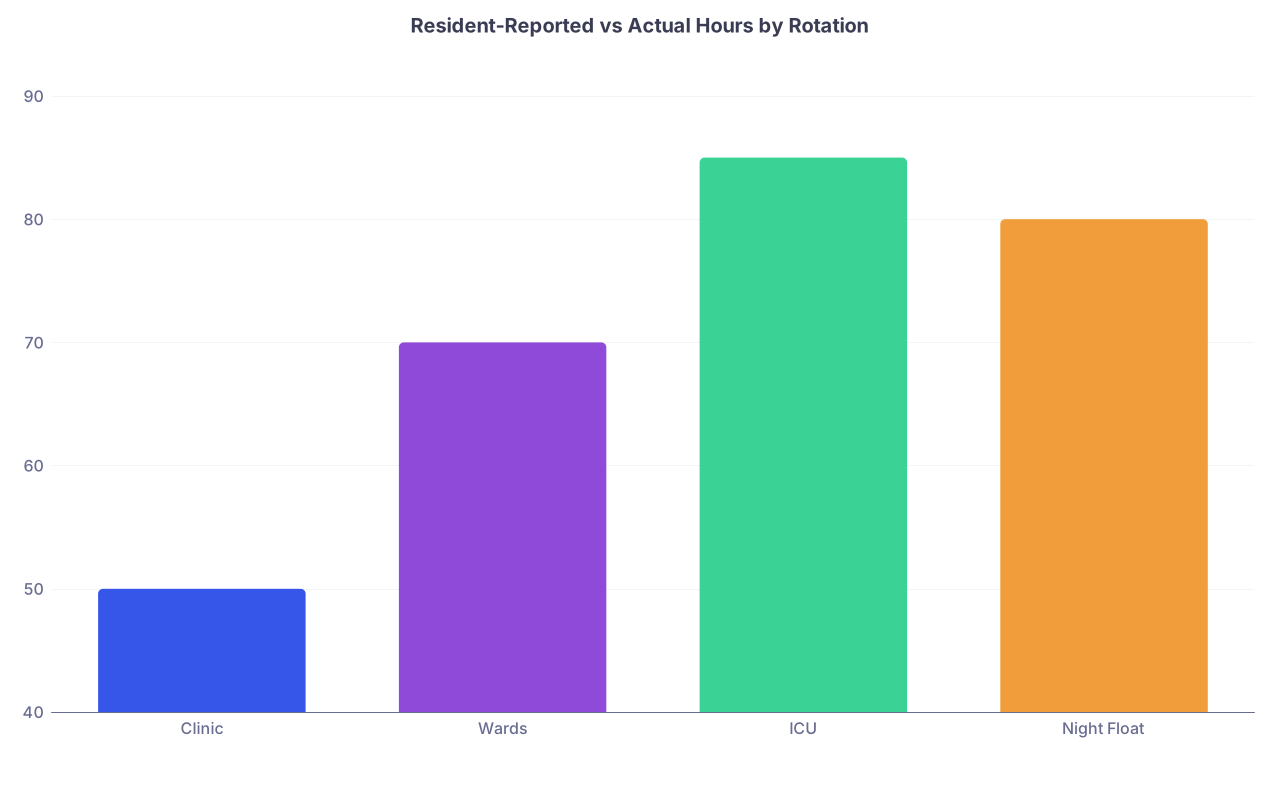
| Category | Value |
|---|---|
| Clinic | 50 |
| Wards | 70 |
| ICU | 85 |
| Night Float | 80 |
You can’t rely on “hours” talk alone. You need structure: number of patients, caps, call schedule, cross-cover expectations.
“The attendings are very hands-off”
Sometimes that’s fantastic—autonomy, ownership.
Other times it means:
- Poor supervision
- You’re thrown into situations beyond your level
- You shoulder attending-level responsibility without attending-level support
You need to ask, “Hands-off how?” and “What happens when you’re out of your depth at 2 a.m.?”
“Wellness is a big focus here”
Wellness can mean:
- Protected didactics with lunch provided
- Real mental health services that residents actually use
- Protected post-call time
Or it can mean:
- One pizza wellness night per month
- A “resident lounge” with broken chairs and an old Keurig
- A branded yoga mat in a closet somewhere
If “wellness” sounds like a brochure, not lived reality, assume it’s marketing.
Structural Bias: Why Residents Shade the Truth Without Realizing
Interview day is theater. You’re playing a role; they’re playing a role. Do not forget that.
Here’s how the structure biases what residents say.
Fear of retaliation
Programs absolutely retaliate. Sometimes subtly, sometimes not.
Residents have seen:
- People labeled “negative” blocked from chief positions
- Fellows “mysteriously” not matched into certain competitive spots after pissing off leadership
- Evaluations tank after honest feedback
So when you’re sitting across from a PGY-2 and asking, “Are people happy here?”, understand the calculation running in their head. “If this applicant goes back and says I warned them, will it blow back on me?”
Many will choose safety over brutal honesty. I don’t blame them. But you can’t pretend this doesn’t exist.
Sunk-cost rationalization
No one wants to admit they made a bad Match. So they bend reality to protect themselves.
You’ll hear:
- “Yeah, the hours are rough, but you really learn a lot.”
- “The culture is…intense, but it prepares you for anything.”
- “I mean, we don’t have much say in our schedules, but honestly, it’s good to just focus on work.”
Sometimes that’s true. Sometimes it’s rationalization dressed up as wisdom.
Selective exposure
You see polished slices:
- The one resident who loves research talking about “tons of opportunities”
- The outgoing chief who “loves the camaraderie”
- The intern who hasn’t yet hit the ICU block from hell
You do not see:
- The PGY-3 who is counting days to graduation and loathes the PD
- The resident who went on leave for burnout
- The one who’s been trying to transfer
When you understand who you aren’t seeing, you start to treat who you are seeing with more skepticism.
Questions That Mislead You vs Questions That Reveal the Truth
Most applicants ask lazy questions. Then get lazy answers. Then make life decisions off them.
Fix your questions.
Bad / Weak questions
These are almost useless:
- “Are people happy here?”
- “Do you feel supported?”
- “Is the program receptive to feedback?”
- “Is work-life balance good?”
Everyone knows the “right” answer. Happy, yes, supportive, yes, receptive, yes. Worthless.
Better questions that force specifics
You want questions that require details, not adjectives. Examples:
- “What did your last truly bad week look like—how many hours, what rotations?”
- “In the last year, what’s one concrete change the program made based on resident feedback?”
- “How many times have backup calls actually been activated in the last 6–12 months?”
- “On wards, what’s your typical patient load on day 3 of the rotation?”
- “How often do you leave on time post-call, and who enforces that?”
Then listen for:
- Pauses
- Residents glancing at each other
- That slightly nervous laugh before they answer
Those micro-signals tell you more than the words.
Ask about conflict, not just comfort
This is where reality leaks out.
Try:
- “When residents have had conflicts with attendings or fellows, how has the program handled it?”
- “Have any residents left or transferred out in the last few years? What happened?”
- “What happens if you say no to an extra shift or an added responsibility?”
If they dodge or give hyper-vague answers, assume the system does not protect residents well.
Cross-Checking Resident Claims: Trust, But Verify
You’re allowed—actually, you’re obligated—to verify what you’re told. Believing a single resident’s narrative is where people screw up.
Use multiple residents strategically
Don’t just talk to the loud PGY-3 who loves the program. Seek out diversity:
- One intern
- One mid-level (PGY-2)
- One senior (PGY-3+)
- Ideally someone with kids or real-life responsibilities outside medicine
Ask them similar questions and compare.
| Topic | Intern | PGY-2 | PGY-3 |
|---|---|---|---|
| Hours on wards | “60–65” | “70-ish” | “75” |
| ICU experience | “Busy” | “Brutal” | “Survivable” |
| PD approachability | “Nice” | “Depends” | “Careful” |
If the story gets darker as you go up in PGY level, that’s not a fluke.
Compare to publicly available data and patterns
You can’t see everything, but you’re not totally blind.
Check:
- Program’s reputation on forums (with skepticism, but still)
- Board pass rates (sudden drops are not random)
- Accreditation issues, probation history
- Geographic norms: some cities/regions are universally known for crushing work cultures
If every other program in that city has a reputation for malignant call schedules and your residents insist their program is “chill” and “different,” be cautious.
Ask the same question in slightly different ways
Example around mistreatment:
- “Have you seen or experienced any unprofessional behavior from faculty?”
- Later: “If someone is yelled at or humiliated in front of others, what happens next—does leadership step in?”
If you get totally conflicting vibes, you’ve learned something: either there’s major variability or people are nervous about speaking openly.
Subtle Red Flags in Resident Demeanor (That People Ignore)
Words are one layer. Demeanor is another.
Pay attention to:
- How they talk about nights and ICU. Do they roll their eyes, go quiet, or shift topics quickly? That’s more telling than “We work hard but play hard!”
- How they talk about the program director by name. Genuine respect sounds very different from cautious politeness.
- How they talk about graduates. If you ask, “What are people doing after this program?” and they barely know, that’s a sign the program doesn’t track or brag because there’s not much to brag about.
You can spot tension if you’re actually looking for it. Most applicants are too busy auditioning and trying to sound eager.
Protecting Yourself: A Sanity-Check Framework
You don’t need perfect information to make a safe choice. You just need to not be naive.
Here’s a practical way to frame it.

| Step | Description |
|---|---|
| Step 1 | Resident Says Positive Thing |
| Step 2 | Ask for Examples |
| Step 3 | Still Vague |
| Step 4 | Discount Heavily |
| Step 5 | Flag As Risk |
| Step 6 | Tentatively Trust |
| Step 7 | Is it Specific? |
| Step 8 | Matches Other Residents? |
| Step 9 | Matches Other Data? |
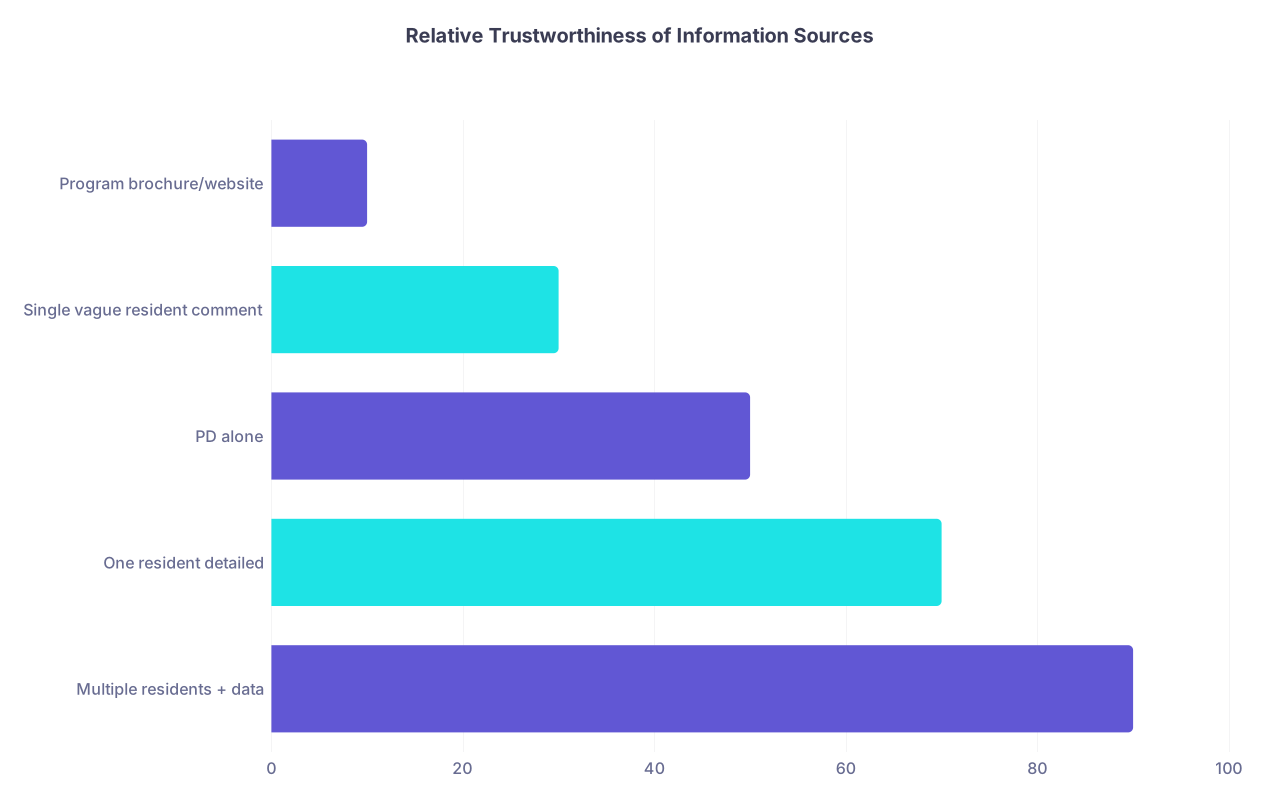
Assume:
- Vague positives = weak evidence
- Specific positives, shared by multiple residents, consistent with external data = decent evidence
- Any positive that conflicts with multiple other signals = treat as marketing
| Category | Value |
|---|---|
| Multiple residents + data | 90 |
| One resident detailed | 70 |
| PD alone | 50 |
| Single vague resident comment | 30 |
| Program brochure/website | 10 |
Don’t anchor your rank list on the flimsiest input.
Common Catastrophic Outcomes From Believing Residents Blindly
I’ve seen the fallout. It’s not theoretical.
Story 1: “The hours aren’t bad” → 90-hour ICU reality
Applicant hears on interview day: “Yeah, ICU is busy, but you’re capped and there’s good support. Definitely under 80 hours.”
Actual reality:
- Uncapped admissions on some nights
- Terrible handoff culture → you’re finishing yesterday’s work until noon
- Attendings rounding forever, notes done late, signout delayed
- “Off the clock” stabilizing patients after your “shift ends”
Result: resident on the edge of quitting by December, but too scared to transfer.
Story 2: “We’re like a family” → toxic, cliquish culture
Interview residents emphasize:
- Group hikes
- Trivia nights
- “We all hang out together!”
Hidden reality:
- Tight core clique, plus outsiders
- Pushback on unsafe practices = you’re “not a team player”
- Gossip spreads fast, alliances form, leadership sides with the “in” group
You think you’re joining a community. You’re really joining a high school with MD badges.
Story 3: “Tons of research opportunities” → ghost-town mentors
You’re told:
- “We have lots of ongoing projects!”
- “Residents publish all the time!”
But when you get there:
- Mentors don’t answer emails
- No structured time for research
- People who publish are mostly the same 1–2 gunner residents with preexisting connections
The resident on interview day wasn’t lying. They might genuinely be “into research” and projecting their experience onto everyone else. But your reality could be dead different.
How to Use Resident Input Safely (Without Ignoring It)
The solution is not “don’t listen to residents.” That’s stupid. Residents see things no one else will tell you.
The solution is: treat their input as one weighted data source.
Use residents for:
- Culture temperature checks (how they talk about each other, leadership, nursing)
- Concrete logistics (EMR, support staff, call structure)
- Reality of “protected” time—do people actually leave to go to didactics?
- Hidden perks or pain points (parking, food, call rooms, ancillary support)
But always:
- Compare across PGY levels
- Listen for what doesn’t match the brochure
- Discount vague superlatives that could apply anywhere
And when in doubt, assume they’re shading toward the positive, not the negative.
FAQs
1. If I shouldn’t fully trust residents, who should I trust when choosing a residency?
No single source. That’s the point. You pull from:
- Residents (multiple levels, not just the loudest)
- Fellows and recent grads if you can find them
- Objective data: case volume, board pass rates, fellowship matches
- Your own gut from how you feel in the building
Anyone who tells you, “Just listen to the residents, they’ll be honest,” has forgotten how power and fear operate in training.
2. Is it ever a good sign when residents are super enthusiastic?
Yes, but enthusiasm without specifics is cheap. If they can say:
- “Last year we got X changed in the call schedule because residents pushed for it”
- “We used to have problem Y, but here’s how it got fixed”
then that enthusiasm is anchored in reality.
If it’s just “We love it here!!” on repeat with no teeth behind it, treat it like an advertisement.
3. What do I do if residents give me conflicting information?
Good. That means you’re seeing nuance. When this happens:
- Note who is saying what (intern vs PGY-3, in-group vs more reserved person)
- Treat any negative or cautionary input as weightier than the rosy version
- Ask a follow-up: “That’s interesting, I heard something slightly different earlier—can you tell me more about how that plays out?”
Consensus on positives is reassuring. Consensus on ignoring negatives is suspicious.
4. How can I ask sharper questions without sounding confrontational?
Tone matters more than content. You can say:
- “Can you walk me through a typical day on wards? Start and end times, average patient load, that kind of detail.”
- “What’s one thing you wish you could change about the program, if you had full power?”
- “When someone is struggling—burnout, personal issues—what actually happens here?”
If you ask with curiosity instead of accusation, most residents will answer honestly within whatever safety they feel.
5. What’s one absolute red flag that should make me seriously reconsider ranking a program highly?
If you ask about residents leaving, mistreatment, or conflict with leadership, and you get tight smiles, quick subject changes, or clearly rehearsed corporate answers—be very careful. Programs that protect residents will have specific stories of how they fixed problems. Programs that don’t will drown you in vague reassurance and “We’re a family.”
Today, take 10 minutes and rewrite your resident questions for the next interview. Strip out every “Are people happy?” and replace it with concrete, specific questions that force real answers. Open your notes from the last interview and mark every time you wrote down a vague resident quote without details—then decide how much weight that actually deserves on your rank list.