
The way most applicants pick residency locations is dangerously naïve.
They obsess over prestige, case volume, and Step scores… and then treat “location” like a lifestyle bonus instead of a survival variable. That’s how people blow up their PGY‑1 year before it even starts.
Let me be very clear: your support system is not a nice-to-have. It’s life support. And “location blindness” — ignoring how a program’s city, geography, and culture will affect your ability to get support — is one of the most underrated reasons PGY‑1s crash.
You’re choosing where you’ll live through some of the hardest 12–36 months of your life so far. If you choose that place like you’re picking a long weekend getaway, you’re setting yourself up to fail.
Let’s walk through the mistakes I keep seeing — and how to avoid them.
The Core Problem: You’re Treating Location Like A Vibe, Not An Infrastructure
Most MS4s talk about location with shallow phrases:
- “I want a cool city.”
- “I’m fine anywhere for 3–4 years.”
- “I’ll make friends there.”
That’s not planning. That’s wishful thinking in a white coat.
Location, for residency, really means:
- Who can realistically show up for you in person?
- How quickly can you access mental health care, primary care, urgent help?
- What’s the cost—in money, time, and fatigue—of seeing your existing support system?
- How much friction is there between you and basic adult functioning (housing, groceries, daycare, transport)?
If you don’t force yourself to answer those with numbers and logistics, you’re guessing. And PGY‑1 is not the year to be guessing.
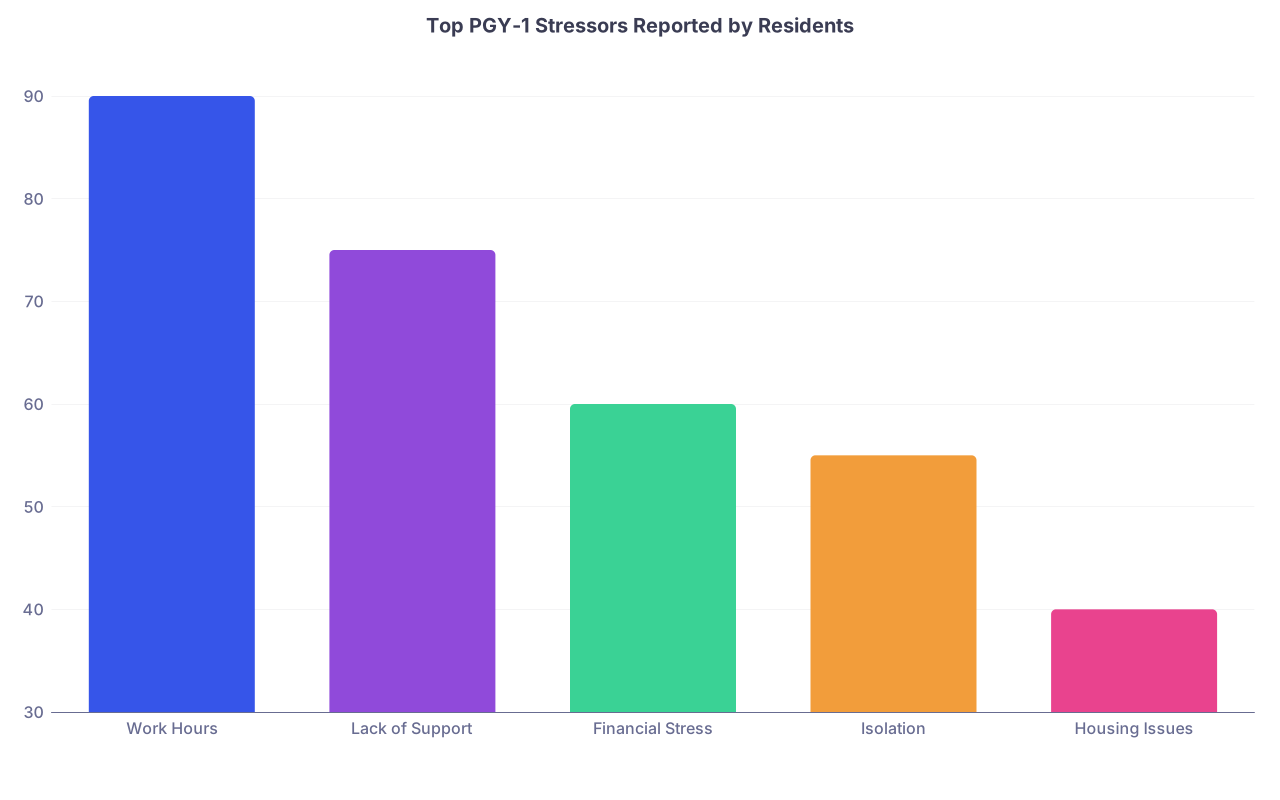
| Category | Value |
|---|---|
| Work Hours | 90 |
| Lack of Support | 75 |
| Financial Stress | 60 |
| Isolation | 55 |
| Housing Issues | 40 |
Notice “lack of support” and “isolation” are right up there with hours. You cannot fix work hours. You can, however, avoid making everything else harder.
Mistake #1: Assuming “I’ll Build A New Support System” Fast Enough
This is the most common fantasy: “I’ve always made friends easily; I’ll be fine.”
You’re not starting a social semester abroad. You’re starting a job where:
- You’re up at 4–5 AM.
- You’re working 60–80 hours a week.
- Your schedule changes monthly.
- You’re exhausted on your days off.
You will make friends. But here’s the trap: that usually takes 6–18 months to deepen into real, reliable support. PGY‑1 burnout often hits by month 3–6.
The gap between “I moved here knowing no one” and “I have three people I can call at 2 AM for anything” is where people break.
Red flags you’re relying on magical thinking
If you catch yourself saying:
- “I’ll just be close with my co-interns.”
- “I’m used to being independent.”
- “I handled being away in undergrad/med school; this is the same.”
You’re likely underestimating:
- The emotional drag of constant responsibility.
- The disruption of night float, 28‑hour calls, and switching services.
- How much harder vulnerability feels when you’re constantly “on.”
During interview season, programs parade “we’re a family” as if it’s a guarantee. It isn’t. I’ve watched interns in those “family” programs spiral because they had zero pre-existing anchor outside the hospital.
What to do instead
Before you rank a far‑from‑support program highly, ask yourself:
- Who do I already know in that city/region, by name?
- For each person: could I realistically call them if I was crying in a parking lot at midnight?
- If they’re “friends of friends” or “someone from undergrad I haven’t seen in 6 years,” be honest: that’s not a support system. That’s a contact.
Your list should include real humans with:
- A history of showing up for you.
- Some awareness of what residency is.
- Physical proximity (same city or short drive).
If you can’t put at least 1–2 names per top-ranked location, you must have a counter-plan (therapist already identified, partner moving with you, strong co-resident culture verified by backchannel, etc.).
Mistake #2: Ignoring Distance, Time Zones, And Real Travel Costs
“I can always fly home” sounds reasonable until you do it three times as an intern.
Let’s quantify what you’re toying with:
| Scenario | Travel Time (one way) | Typical Cost (round trip) | Realistic Visit Frequency |
|---|---|---|---|
| Same city | 15–45 min | $0–$20 | Weekly or more |
| 2–3 hours driving | 2–3 hours | $30–$80 | Monthly-ish |
| 1 short domestic flight | 4–6 hours total | $200–$400 | Every 2–3 months |
| Cross-country / multiple flights | 6–10+ hours | $400–$800+ | 1–3 times per year |
| International | 10–20+ hours | $800–$2000+ | Maybe once a year |
Now layer residency reality on top:
- You do not control your schedule.
- You will have random golden weekends, not long predictable stretches.
- Flight prices will explode around holidays—exactly when you want to see people.
- Your salary will be roughly $60–70k before taxes, in many places less.
I’ve seen interns spend half a month’s take-home pay to fly home for a funeral or crisis. They don’t regret going. They do regret making that cost the default anytime life hits.
Time zones matter more than you think
That 3‑hour difference between East and West Coast? Brutal.
You finally finish a soul-crushing call shift at 11 PM. It’s 2 AM where your family is. No one’s awake. Repeat that enough and you’ll stop calling at all.
Same with day off overlap: your “off” day might be mid-week; their availability is weekends. Months can go by without a full, unhurried conversation.
What to do instead
When you’re thinking about ranking a program far away:
- Map your closest support people.
- For each program city on your list, calculate:
- Travel time door-to-door.
- Average flight cost (use real numbers now; not guesswork).
- Time zone difference.
- Decide what “good enough” looks like for you before you fall in love with a program’s name or hospital.
If being able to get home in a same‑day drive is non-negotiable for your sanity, say that out loud and rank accordingly. That’s not weakness. That’s risk management.
Mistake #3: Underestimating Cost of Living And Its Impact On Stress
“I’ll just budget better” isn’t a plan when rent eats half your paycheck.
New interns constantly underestimate how much location amplifies or reduces baseline stress. High COL cities don’t just hurt your bank account; they squeeze every area of your life.
Common PGY‑1 financial faceplants:
- Picking a shiny city with $2–3k/month studio rents on a $4k/month take-home.
- Not factoring in parking ($200–400/month easily in some places).
- Paying surge prices for food because you’re always too tired to cook.
- Getting trapped in a 12‑month lease in a terrible situation because you can’t afford to move.
Now add debt payments and maybe a car loan, and suddenly that “fun coastal city” is a constant background panic about money.
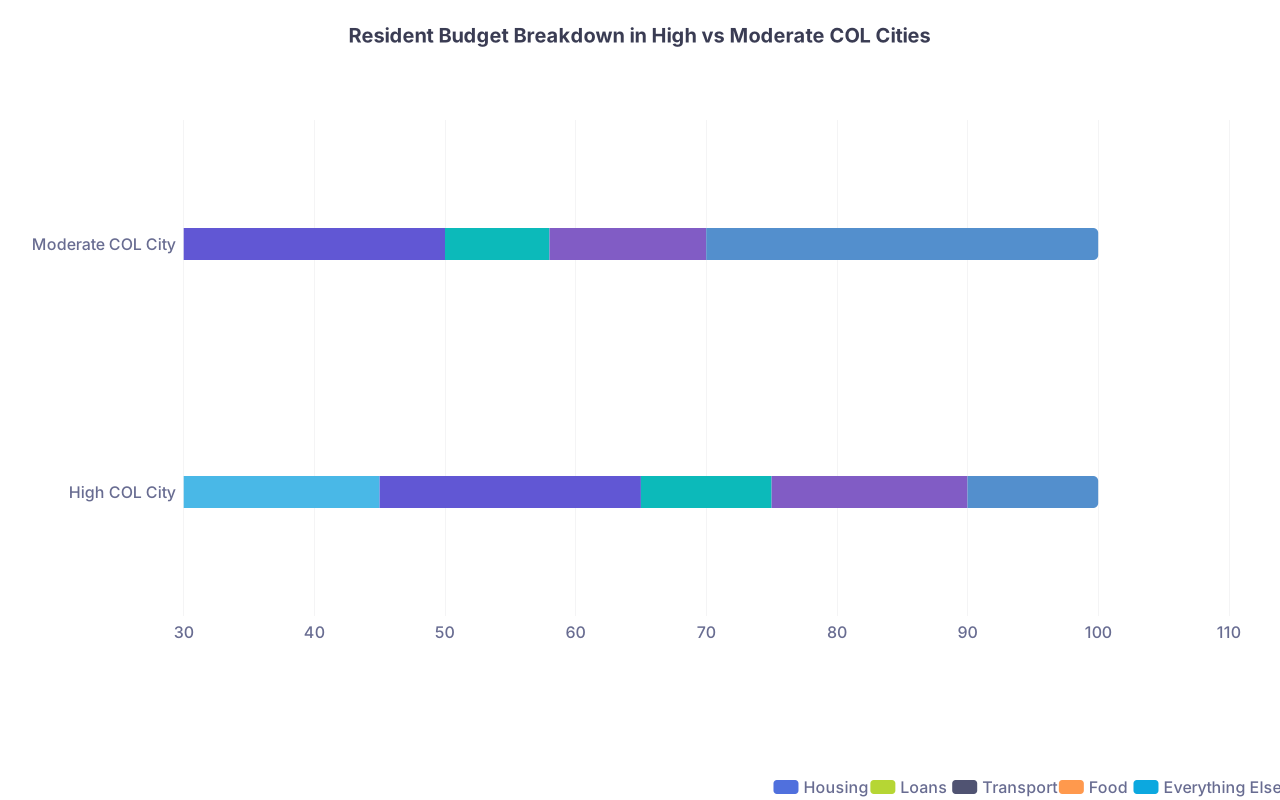
| Category | Housing | Loans | Transport | Food | Everything Else |
|---|---|---|---|---|---|
| High COL City | 45 | 20 | 10 | 15 | 10 |
| Moderate COL City | 30 | 20 | 8 | 12 | 30 |
In high COL places, you squeeze out the “everything else” category. Guess what lives there?
- Therapy co-pays
- Trip home to see family
- Hobbies
- Occasional decent meals out with co-residents
- Any buffer for emergencies
You don’t magically become more resilient when your checking account is at $140 and payday is a week away.
What to do instead
Before ranking:
- Look up actual resident salaries at each program.
- Use a cost-of-living calculator comparing your med school city (or home) to that new city.
- Build a rough budget for 3–4 top locations:
- Rent (look at real listings within 20–30 minutes of the hospital).
- Parking or transit pass.
- Average utilities.
- Car-related costs if you need one (insurance, gas, maintenance).
- Food estimate that includes “I’m too tired to cook” reality.
If your housing + loans + transport > 70% of take-home, you’re playing financial Jenga. Some people can tolerate that. Many can’t. Know which one you are.
Mistake #4: Ignoring The Local Culture And How You Actually Live
“I can live anywhere for 3 years” is something people say when they haven’t moved somewhere that’s truly misaligned with who they are.
Misalignment examples I’ve seen destroy interns’ mental health:
- The queer resident who matched at a small, conservative town where they did not feel safe being out.
- The non-driver matching somewhere with horrible public transit and being stranded in a crappy apartment far from everything.
- The intern from a big city moving to a place with nothing open after 8 PM, no social scene they connect with, and no one their age off-service.
- The person of color stuck in a region with open hostility and constant microaggressions outside work, on top of in-hospital stress.
You don’t have to love everything about the place. But if you actively dislike or feel unsafe in the community outside the hospital, there’s no off-switch for the stress.
Pay attention on interview days and second looks
Programs tend to soft-pedal this. You’ll hear:
- “It’s a small town, but you make your own fun.”
- “People are really friendly here.”
- “Lots of outdoor activities!” (always repeated when there’s not much else…)
Listen between the lines. Ask pointed questions:
- “What do residents typically do on a random Tuesday off?”
- “How many residents without cars live comfortably here?”
- “Are there communities for [your identity, interest, faith] nearby?”
- “Where do people actually live, and how long is their commute?”
Then cross-check with current or recent residents by email or social media. Off-the-record is where the truth comes out.
If you rely only on the polished tour version of the city, you’re again choosing based on vibes, not survival.
Mistake #5: Failing To Pre-Plan A Real Support Structure (Beyond “I’ll Get A Therapist”)
The number of interns who hit a wall in October and then start trying to find a therapist is staggering. By then, they’re already underwater.
Common missteps:
- Assuming the hospital will quickly hook you up with mental health care.
- Not checking whether local therapists take your insurance.
- Ignoring waitlists (4–12 weeks is common).
- Not pre-identifying a couple of urgent care/PCP options near where you might live.
In a new city, while tired, underpaid, and disoriented, every logistical task feels like climbing a hill in lead boots. If you leave all support planning for “after I move,” you greatly increase the odds you never do it.
What to do instead (before ranking, ideally certainly before July 1)
For each location you rank highly, sketch out:
- Mental health:
- Does the program offer confidential counseling?
- Are there session limits?
- Are there off-site providers covered by your insurance?
- Medical:
- Identify at least one primary care office accepting new patients.
- Know where the nearest urgent care and ER are relative to probable housing areas.
- Social:
- Any alumni from your med school there?
- Any identity-based groups (LGBTQ+, cultural orgs, religious communities, hobby clubs)?
- Co-resident group chats / social structures (ask current residents).
No, you don’t have to schedule every appointment before you match. But if you have a short list ready, you massively lower the barrier to actually getting help when things get bad.
Mistake #6: Ranking “Dream Programs” Without Asking “At What Cost To My Sanity?”
This is where ego quietly sabotages you.
You get an interview at Big Name University in a city across the country where you know no one, costs are brutal, and the culture feels… cold. But the brand. The fellowship pipeline. The Twitter hype.
You also interview at a solid, less flashy program 90 minutes from people who love you, with a collaborative culture and decent COL.
Who do you rank higher?
Plenty of people choose the brand and then spend PGY‑1 lonely, broke, and edging toward burnout. Some survive and thrive. Many quietly regret prioritizing name over sustainability.
Here’s the harsh question you have to answer:
Is the marginal career benefit of this “better” program worth a higher risk of mental health collapse in the first 1–2 years?
Sometimes the answer is yes. Often, it really isn’t.

| Step | Description |
|---|---|
| Step 1 | Program You Like |
| Step 2 | High Risk for Isolation |
| Step 3 | Strong Option |
| Step 4 | Financial Stress Risk |
| Step 5 | Think Hard About Tradeoff |
| Step 6 | Drop Lower on Rank List |
| Step 7 | Support Nearby? |
| Step 8 | Affordable Life? |
| Step 9 | Huge Career Upgrade? |
No one on a selection committee is going to say this out loud. They benefit if you sacrifice your personal life for their program. You’re the only one tasked with protecting your future self.
How To Evaluate Location And Support Like An Adult, Not A Tourist
Here’s the part where we flip from “don’t” to “do.”
Use this as a sanity check for each program before you finalize your rank list:
1. Map your people
Literally list your top 5–10 support people and put pinpoints on a map:
- Family.
- Closest friends.
- Partner.
- Anyone else you rely on in crisis.
Then overlay your rank list cities. If your top 5 are all effectively on another continent in cost/time terms, you either need to:
- Move someone with you (partner, close friend).
- Accept and pre-build an alternative support system there (with specificity).
- Or brutally re-evaluate those rankings.
2. Run the numbers, not your feelings
For each top program:
- Monthly rent range for safe, reasonable housing close enough to the hospital.
- Commute type and time.
- Estimated monthly budget.
- Realistic trip-home frequency and cost.
If you feel resistance to doing this because it “kills the dream,” that’s exactly why you need to do it. Your future self will not care about your fantasies; they’ll care about whether they can afford groceries and SSRIs in the same month.
3. Talk to current residents and ask the uncomfortable questions
Don’t just ask, “Do you like the program?” That’s useless.
Ask:
- “How many co-residents moved here not knowing anyone? How did that go for them?”
- “How do people manage cost of living on the resident salary here?”
- “Real talk: do folks feel isolated in this city?”
- “How easy is it for you to see your family or close friends?”
- “If you could go back, would you still choose this city knowing what PGY‑1 felt like?”
If you hear hesitation and diplomatic answers, take that seriously.
4. Decide your non-negotiables before you’re tired and flattered
Right now, while you’re relatively stable, define:
- Minimum acceptable proximity to at least one key support person (same city, drivable, etc.), or
- Concrete alternative (partner moving, therapist lined up, robust cohort you trust).
Also define:
- Maximum acceptable rent as % of take-home pay.
- Minimum level of safety/comfort for your identity in the local culture.
Then check your list against those non-negotiables like a checklist, not a suggestion box.
FAQs
1. What if my best programs for training are all far from my support system?
Then you have a tradeoff, not a disaster — if you plan intentionally. If you choose to go far, you must build scaffolding before you start: have a therapist list ready, commit to regular scheduled calls with your people (actually on the calendar), budget for at least a couple of trips home per year, and double-check that the program has a genuinely supportive culture. Going far can work, but “I’ll just tough it out” is how people break.
2. Is it weak to prioritize being near family or friends in my rank list?
No. It’s smart. Residency is not a four-year vacation; it’s sustained exposure to stress, sleep deprivation, and responsibility. Strong support near you is a performance enhancer and a burnout buffer. I’ve watched residents in “less prestigious” programs near home outgrow and outlast miserable colleagues at big-name places because they weren’t operating on emotional fumes all the time.
3. How do I tell if a program’s “we’re a family” claim is real or just marketing?
Look for evidence, not slogans. Ask residents how often they see each other outside work, whether older residents informally check in on interns, how the program handled a co-resident going through a crisis, and whether anyone has actually left or transferred out due to culture or burnout. If they dodge examples or give only vague “we’re all really close” answers, assume the family talk is branding, not reality.
Key points to remember:
Location is not scenery; it’s the skeleton of your support system. Distance, cost of living, and local culture will either quietly protect you or quietly bleed you. Do not let prestige or vibes outrank your basic need for connection, safety, and sustainability in PGY‑1.