
The most dangerous part of your residency offer is not the salary number. It is the fine print you were too tired, too relieved, or too rushed to read carefully.
You are about to sign a multi‑year employment contract that controls your schedule, your moonlighting, your ability to switch programs, and sometimes your ability to speak up when things are unsafe. Miss the wrong clause and you can trap yourself in a miserable situation with surprisingly few options.
Let me walk through the clauses residents routinely overlook, and the mistakes you are absolutely not allowed to make.
1. The “At‑Will” Mirage and Termination Traps
Many residents think: “I matched, I am safe for at least three years.” That confidence is often wrong.
Programs bury their power in termination language. You need to find that section and read every line.
Clauses you must hunt for
“At‑will” employment
- Some hospitals label you as “at‑will” even though you are in a training program.
- Translation: they can terminate you at any time, for almost any reason, with minimal due process.
- That is not standard for well‑run academic programs.
“For cause” termination that is defined vaguely Watch for language like:
- “unprofessional behavior”
- “failure to meet expectations”
- “failure to make satisfactory progress” without definitions or clear remediation steps.
These phrases can be weaponized. I have seen residents pushed out for “unprofessionalism” because they refused unsafe patient loads or complained about chronic understaffing.
“Without cause” termination
- Some contracts allow the hospital to terminate you “without cause” with 30 or 60 days’ notice.
- Imagine being pushed out in October of PGY‑2 with no safety net, no plan, and no income.
You are not just looking for whether they can fire you. You are looking for:
- Required remediation steps before termination.
- Your right to appeal or a grievance process.
- A committee review (not just the PD unilaterally deciding your fate).
| Issue | Red Flag Wording | Safer/Better Wording |
|---|---|---|
| Employment status | At-will employment | Appointment for academic year |
| Termination reason | For any reason deemed appropriate | For specific listed causes only |
| Process | Immediate termination allowed | Remediation and due process required |
| Notice period | No notice guaranteed | 60–90 days or through end of academic term |
Do not make this mistake: Signing a contract where the hospital has multiple, easy exit routes and you have none. If termination is too discretionary, you are betting your entire future on the goodwill of people you have known for about 12 interviews.
2. The Trap Around Hours, Call, and “Other Duties as Assigned”
The ACGME duty hours rules are not what actually control your life. Your contract does.
Programs love vague language here. Why? Because vagueness lets them load you up later.
Language that should make you stop and reread
- “Resident agrees to work hours as required by the needs of the service.”
- “Resident will comply with any schedule assigned by the Program Director.”
- “Other duties as assigned by the hospital or its affiliates.”
That last one is how you end up:
- Moonlighting for free as the de facto hospitalist on weekends.
- Covering two services because “the census is high.”
- Doing non‑educational scut to “help the team” that mysteriously always means the residents.
You want:
- An explicit statement that work hours will comply with ACGME standards.
- Clear definitions of:
- What “call” means (in‑house vs home, frequency, post‑call days).
- Whether you can be reassigned to non‑educational services.
- Maximum expected clinical hours per week, not just “we follow ACGME”.
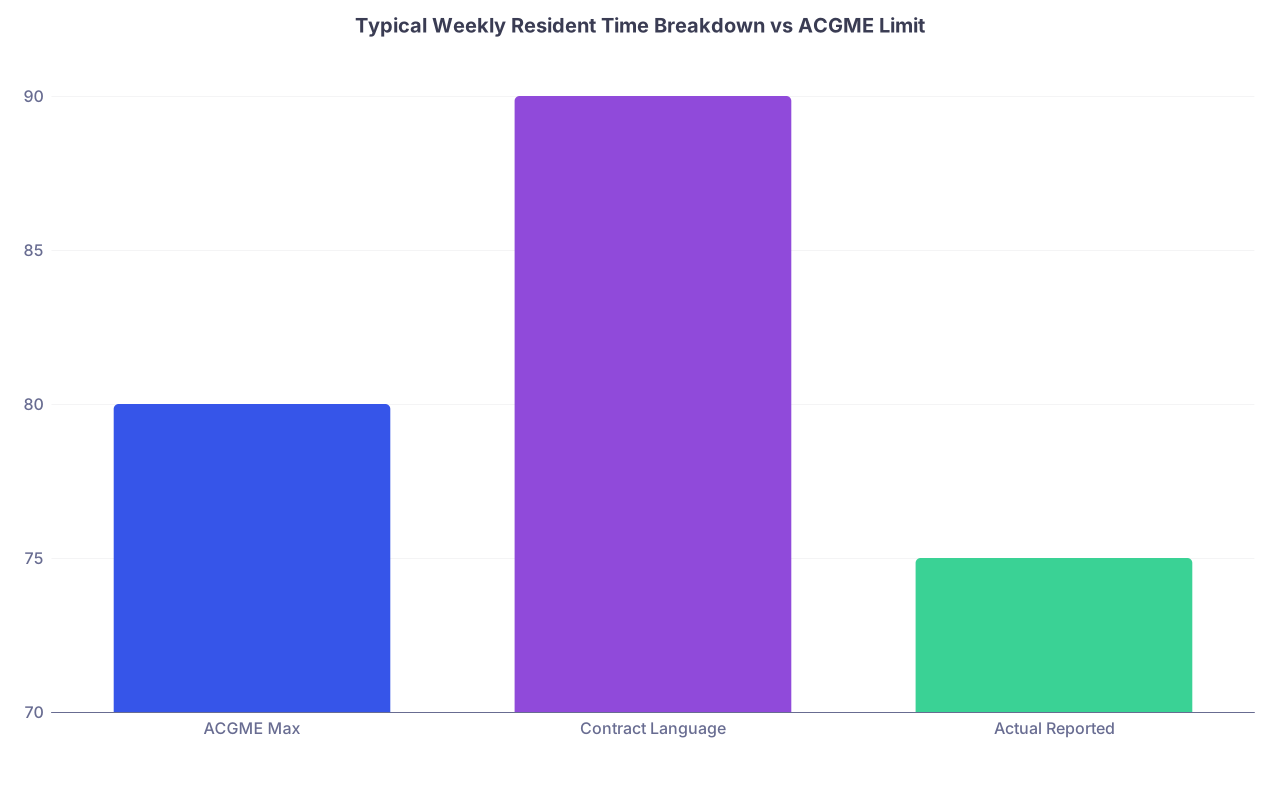
| Category | Value |
|---|---|
| ACGME Max | 80 |
| Contract Language | 90 |
| Actual Reported | 75 |
See the risk? If your contract silently assumes “as needed,” you are functionally agreeing to more than the 80‑hour limit. Enforcement becomes your problem, not theirs.
Do not make this mistake: Ignoring “other duties as assigned” like it is boilerplate. That one phrase can swallow your life.
3. Moonlighting, Side Gigs, and the “All Your Time Belongs to Us” Clause
You will care about moonlighting and outside work more than you think. Debt, cost of living, and burnout make extra income options extremely attractive by PGY‑2.
Programs know this. Contracts often shut those doors before you realize they exist.
Clauses that block your options
Look for things like:
- “Resident shall not engage in any outside professional activities without prior written approval.”
- “All professional services involving the practice of medicine must be billed through the hospital.”
- “Resident agrees not to work for any other employer during the term of this agreement.”
That last one kills more than just moonlighting. It can block:
- Telehealth gigs.
- Consulting or paid research roles.
- Teaching or tutoring for MCAT/USMLE companies.
- Even some non‑clinical paid opportunities, depending on wording.
Better wording looks like:
- “Moonlighting is permitted with Program Director approval, subject to ACGME rules.”
- “Non‑clinical employment allowed with prior notification and without interference with training.”
Do not make this mistake: Signing away your right to any outside work because you were too focused on the base salary line. You want clarity:
- Is internal moonlighting allowed?
- Is external moonlighting allowed?
- How is approval obtained, and can it be revoked at any time?
If the contract silently bans everything or gives the PD broad, undefined veto power, you are boxed in.
4. Non‑Compete, Non‑Solicitation, and Post‑Training Restrictions
Yes, even residents sometimes get stuck with non‑compete language. No, you should not sign it lightly.
I have seen postgraduate contracts where:
- Fellowship offers were delayed because of prior non‑compete disputes.
- Residents could not moonlight at nearby hospitals.
- Graduates had to move states to avoid violating contracts.
Watch for these phrases
- “Resident shall not practice medicine within X miles of any System facility for Y years after completion or termination.”
- “Resident shall not solicit patients or employees of the System for Y years.”
- “Resident agrees not to provide competing services to any System affiliate during or after this agreement.”
Residency is training, not a standard attending job. Aggressive non‑competes in training contracts are a bright red flag about the institution’s priorities.
| Clause Type | Low Risk Example | High Risk Example |
|---|---|---|
| Non-compete | None in contract | 20-mile radius, 2 years, all specialties |
| Non-solicitation | Limited to employees for 1 year | Includes patients, referral sources, and staff |
| Moonlighting region | Restricted only on same unit | Any hospital within same metro area |
If you see any non‑compete language tied to:
- Termination for any reason (including if they push you out),
- Voluntary resignation even for good cause (harassment, unsafe conditions),
pause. That is not a small thing.
Do not make this mistake: Assuming “they would never enforce that against a trainee.” Institutions absolutely enforce contracts when it benefits them.
5. Malpractice Coverage, Tail Insurance, and Who Gets Sued
Malpractice coverage is usually tucked in the middle of the contract like it does not matter. It does.
You want to know:
What type of coverage you have
- Claims‑made vs occurrence.
- Coverage limits (per claim / aggregate).
Who pays for tail coverage
- Tail coverage protects you from suits filed after you leave the program.
- If they use claims‑made coverage and do not buy tail, you can be very exposed.
Coverage during moonlighting
- Many residents assume the program’s malpractice follows them. Often false.
- External moonlighting usually requires separate coverage.
Red flag language
- “Hospital provides malpractice coverage during the term of this agreement” — with no mention of tail.
- “Coverage is limited to activities within the scope of your duties” — vague, but often used to deny coverage for anything extra.
- “Resident is responsible for obtaining any additional coverage required.”
If you cannot find the word “tail” or a clear statement that you are covered for acts performed during training even after leaving, you have homework. Ask. In writing.
Do not make this mistake: Signing a contract that leaves you potentially personally on the hook for tail coverage or uncovered moonlighting just because you did not understand the terminology.
6. Salary, Benefits, and Hidden Financial Landmines
People look at the base PGY salary and stop. This is lazy and expensive.
You need to read the entire compensation/benefits section and look for what is missing, not just what is present.
Common financial pitfalls
No guarantee of yearly increases
- Some contracts show only PGY‑1 salary.
- Others state “salary is subject to annual review” — which does not mean “increase”.
- You want explicit PGY‑level salaries or at least a policy reference.
Unpaid mandatory activities
- Orientation, retreats, mandatory “volunteer” events, or teaching that falls outside paid hours.
- Language like “Resident will participate in educational or promotional events as required, without additional compensation.”
Licensing, exam, and board fees
- USMLE Step 3 reimbursement? State license? DEA?
- If the contract is silent, assume costs are on you.
Relocation “bonuses” with clawbacks
- Some programs offer relocation stipends that must be repaid if you leave “early”.
- Look for:
- Repayment triggers (termination, transfer, early resignation).
- Proration rules (do you repay everything or just a portion?).
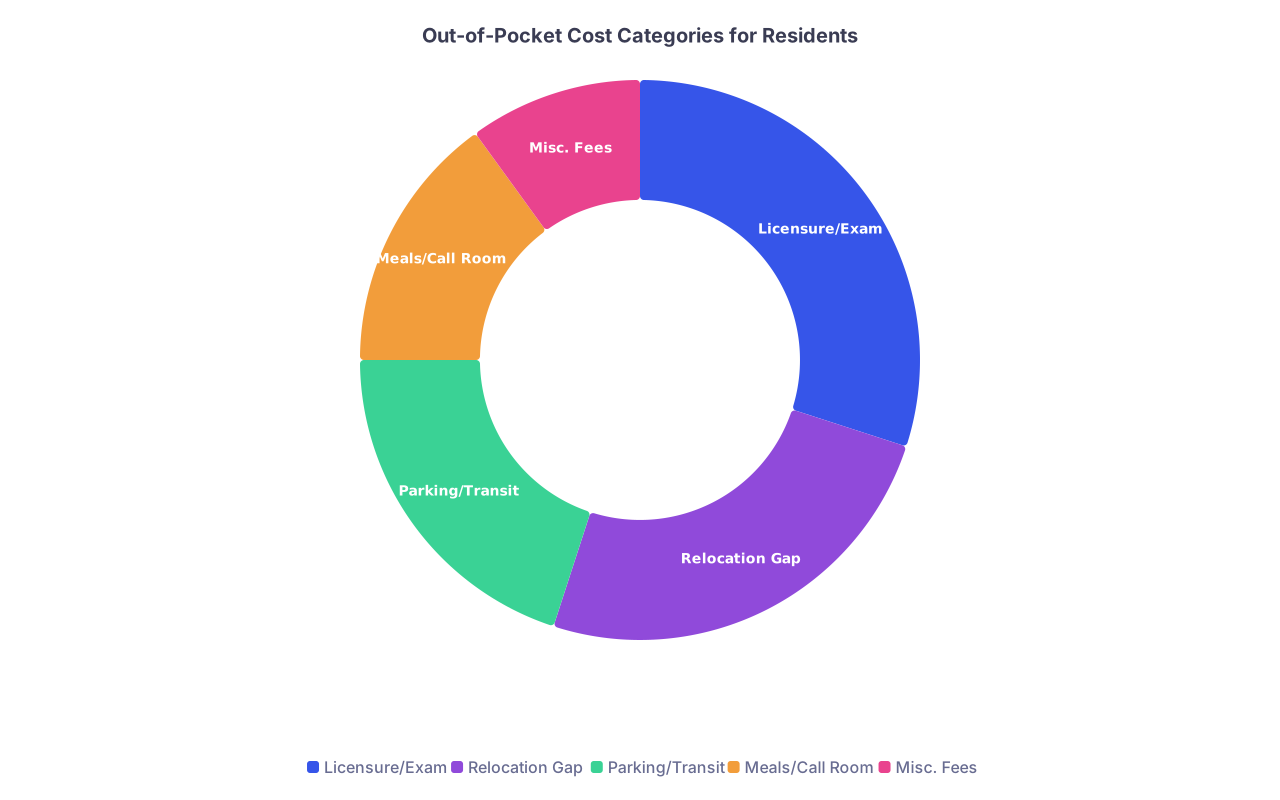
| Category | Value |
|---|---|
| Licensure/Exam | 30 |
| Relocation Gap | 25 |
| Parking/Transit | 20 |
| Meals/Call Room | 15 |
| Misc. Fees | 10 |
Do not make this mistake: Ignoring everything but the top‑line salary. A modest salary with strong benefits and fee coverage can beat a “higher” salary that bleeds you dry quietly.
7. Vacation, Leave, and the “We Support Wellness… Sort Of” Section
Residency contracts love wellness buzzwords. Flexibility, wellness days, mental health support. Then you look closely and realize the policy is a trap.
What you must verify
Vacation days and how they are scheduled
- Total number of days.
- Who decides when you can take them.
- Blackout months (ICU, wards, July, etc.).
- Whether unused days roll over or just evaporate.
Sick leave and mental health days
- Are they separate from vacation?
- Do they require a doctor’s note?
- Are they treated as professionalism issues during evaluation?
Parental leave policy
- Reference to an actual institutional policy, not just “FMLA as applicable.”
- Whether training must be extended and if salary continues.
- Impact on board eligibility if you take long leave.
Conferences and educational leave
- Does the contract or handbook specify:
- Days per year for conferences?
- Funding for travel/registration?
- Or is it “subject to approval and departmental budget”?
- Does the contract or handbook specify:
Do not make this mistake: Assuming “we are very supportive of resident wellness” in the interview means anything. The contract and handbook policies are what matter. Warm words do not protect you when you are burnt out and your time off request is “not operationally feasible.”
8. Dispute Resolution, Arbitration, and Gag Clauses
This is where your future self might curse your current self for signing blindly.
Arbitration and where your rights go to die
If you see:
- “Any dispute shall be resolved by binding arbitration.”
- “Resident waives the right to pursue legal claims in court.”
you need to understand the stakes.
Binding arbitration:
- Often favors the institution, which uses the same arbitration firms repeatedly.
- Limits your ability to join class actions.
- Can keep disputes quiet and out of public record.
Sometimes you cannot negotiate this away. But you should at least know what you are giving up.
Gag orders and confidentiality
Watch for language like:
- “Resident agrees not to make disparaging statements about the Hospital or Program.”
- “All matters relating to this agreement and employment are confidential.”
- “Resident shall not discuss program matters with external parties without approval.”
That is how programs try to shut down:
- Whistleblowing about unsafe conditions.
- Honest online reviews about training environments.
- Sharing your experience with future applicants.
Do not make this mistake: Signing a contract that effectively muzzles you about safety and culture issues. If the program is this eager to silence criticism on paper, ask yourself why.
9. Transfer, Renewal, and What Happens if Things Go Bad
Optimistic residents ignore this section. The ones stuck in toxic situations read it a year too late.
Renewal language that matters
Check:
- Is the appointment explicitly limited to one academic year, renewed based on satisfactory performance?
- Is there any automatic renewal assumption?
- What is the timeline for renewal or non‑renewal notice?
If the program can simply not renew you without clear cause and with short notice, that is a stealth termination mechanism.
Transfer / early resignation
Look for:
- Required notice period if you decide to leave (30, 60, 90 days?).
- Financial penalties tied to early resignation (repaying relocation, bonuses, etc.).
- Whether the program is obligated to assist you in transferring (letters, verifications).
You need to know your escape routes before you discover you need them.
Do not make this mistake: Believing “I can just leave if it is bad” without realizing your contract and their policies can make that exit financially and professionally punishing.
10. How to Actually Review a Residency Contract (Without Losing Your Mind)
You are exhausted from the Match. You are tempted to skim and sign. That is exactly how people get trapped.
Here is a disciplined way to avoid that:
Print it. Use a pen.
- Highlight:
- Termination.
- Hours and duties.
- Moonlighting.
- Malpractice.
- Leave.
- Arbitration.
- Circle anything vague or broad (e.g., “as determined by the Program Director”).
- Highlight:
Compare across programs if you have multiple offers
- Even if you matched at only one place, you can usually get sample contracts from friends or alumni to see what is “normal.”
Get a lawyer if anything smells off
- Not a random lawyer. Someone with employment or health‑care experience.
- Many state medical societies offer low‑cost contract review for residents.
Ask direct questions in writing
- “Does this program permit external moonlighting? Under what conditions?”
- “Does the hospital purchase malpractice tail coverage for residents?”
- “Is there any non‑compete applicable to residents?”
Do not be afraid to walk away from obvious red flags for prelim/backup options
- Yes, walking away post‑match is complicated and rare.
- But if you have multiple contracts (e.g., prelim vs categorical), you choose what to sign. Choose carefully.
Final Takeaways
Keep these three points burned into your brain:
- The biggest risks are buried in termination, moonlighting, and post‑training restriction clauses. Those are the sections you read twice, not the salary line.
- Vague language (“as needed,” “as determined by the Program Director”) is not harmless. It is how programs keep maximum power and minimum accountability.
- A residency contract is not a formality. It is a binding agreement with real leverage over your career, your income, and your ability to leave. Treat it with that level of seriousness, or you will regret it later.