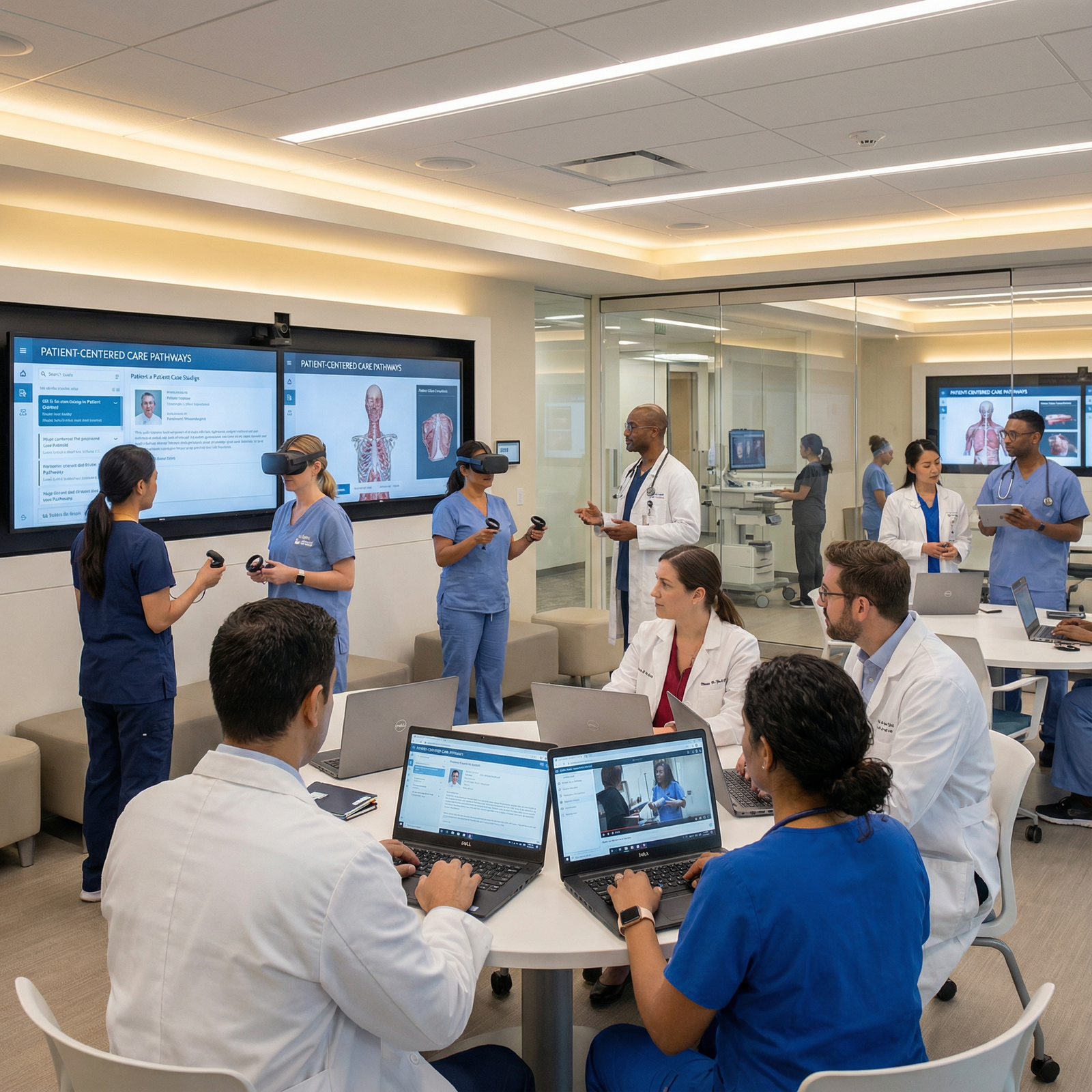
Continuing Medical Education (CME) is no longer limited to lecture halls, printed slide decks, and annual conferences. It has become an integrated, data-driven, and highly personalized component of modern medical practice. As healthcare systems evolve—driven by rapidly changing technologies, new care delivery models, and a stronger focus on Patient-Centered Care—the way clinicians learn must evolve as well.
This expanded guide explores the key Healthcare Trends reshaping CME and offers practical insights for physicians, residents, and other health professionals who want to stay ahead of the curve. Whether you are planning your next CME cycle or designing educational programs for your institution, understanding these shifts can help you choose and create learning experiences that genuinely improve patient outcomes and professional satisfaction.
1. Technology-Driven Transformation of CME
Digital innovation is redefining how healthcare professionals learn, when they learn, and how learning translates into practice. Technology has moved CME from occasional, event-based education to continuous, integrated Digital Learning.
1.1. Digital Learning Platforms and On-Demand CME
Digital Learning platforms are now central to Continuing Medical Education. They provide:
- Flexible access: Asynchronous modules, recorded webinars, and microlearning units available 24/7.
- Modular content: Short, case-based segments that can be completed between clinic sessions or during call downtime.
- Adaptive learning: Systems that adjust difficulty and content based on your performance and specialty.
Examples of modern digital CME formats:
- Interactive eLearning modules with embedded questions, decision trees, and clinical vignettes.
- Live-streamed grand rounds and conferences with audience response systems and real-time polling.
- Micro-CME (5–15 minute activities) focused on a single clinical question, such as guideline updates or interpreting a new diagnostic test.
Actionable tips for clinicians:
- Build a structured CME plan using one or two primary platforms (e.g., a specialty society portal and a hospital-sponsored LMS).
- Use topic tagging and filters (e.g., “cardiology,” “quality improvement,” “patient safety”) to align CME with your current or future practice focus.
- Track your credits, completion, and competency gaps in one central digital portfolio.
1.2. Virtual Reality (VR), Augmented Reality (AR), and Clinical Simulation
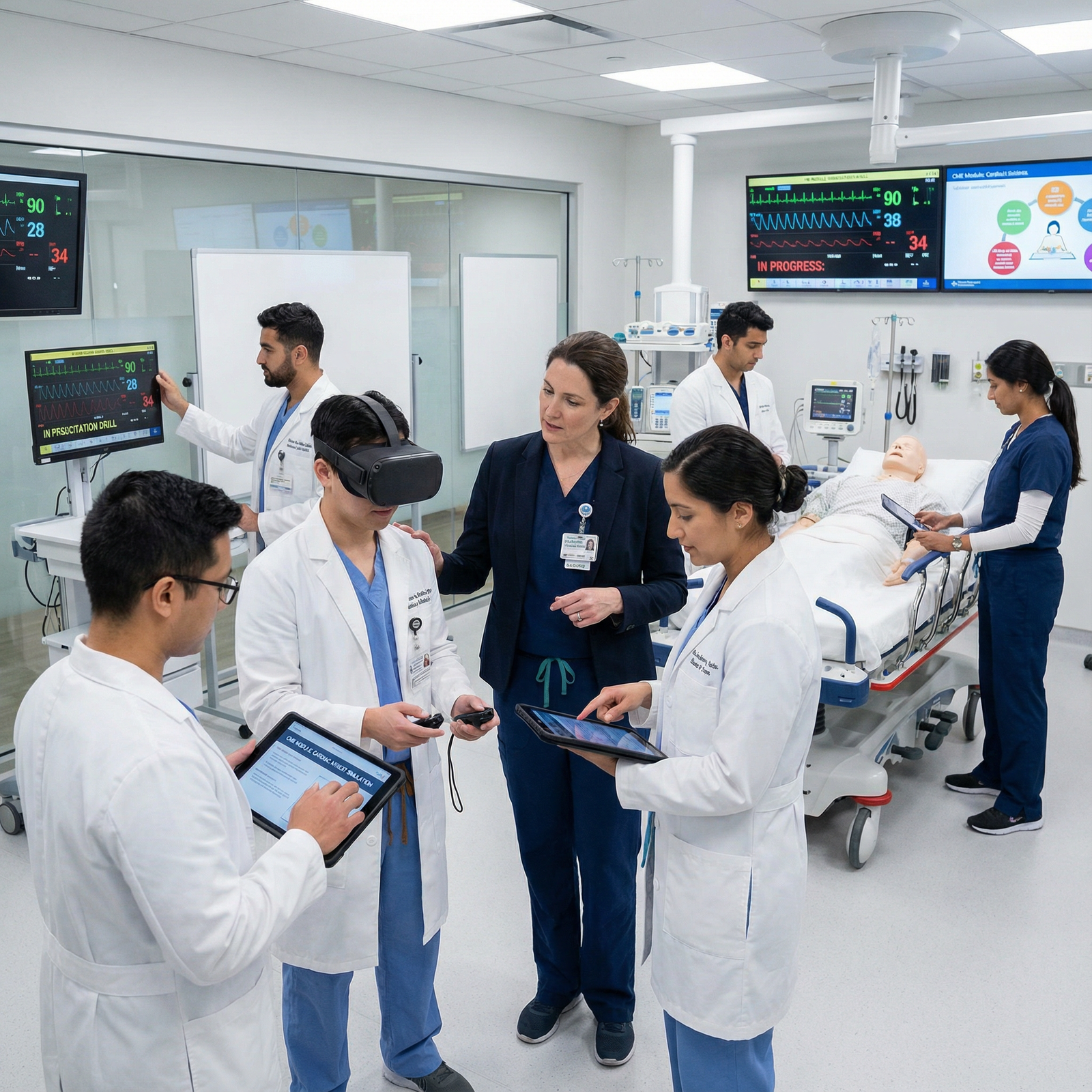
VR and AR are moving from pilot projects to practical tools that can significantly improve hands-on learning:
- VR simulations allow procedural practice in a risk-free environment: central line placement, laparoscopic surgery, advanced airway management, or stroke code response.
- AR overlays can project anatomy or procedural steps onto mannequins or live video, enhancing procedural understanding.
- High-fidelity simulation centers increasingly integrate VR/AR with standardized patients to create complex, realistic scenarios.
Where VR/AR is especially impactful:
- Procedural specialties: Surgery, anesthesiology, emergency medicine, interventional cardiology, and GI.
- Team-based resuscitation: ACLS, trauma codes, neonatal resuscitation, and sepsis bundles.
- Rare but critical events: Anaphylaxis in pregnancy, malignant hyperthermia, pediatric emergencies.
Practical considerations:
- When evaluating VR-based CME, look for validated curricula, clear learning objectives, and integrated debriefing tools.
- Encourage departments to measure outcomes such as reduced complication rates or improved time-to-intervention after simulation-based CME.
1.3. Mobile Learning: CME in Your Pocket
Mobile learning supports truly continuous education by making CME accessible anytime, anywhere:
- Smartphone apps with searchable guidelines, point-of-care learning modules, and CME opportunities embedded in clinical references.
- Push notifications for new trials, practice-changing guidelines, or specialty-specific alerts.
- Offline learning for providers in resource-limited or rural settings.
How to use mobile CME effectively:
- Choose reputable, accredited apps (often affiliated with academic centers, specialty societies, or major CME providers).
- Use commute or call shifts for short modules: pharmacology updates, guideline refreshers, or ethics and professionalism content.
- Turn clinical questions into CME: look for platforms that award CME for literature searches or question-based learning tied to real patients (de-identified).
2. Growing Emphasis on Interprofessional Collaboration in CME
Modern healthcare is delivered by teams, not individuals. CME is reflecting this reality by moving beyond discipline-specific content to focus on Interprofessional Collaboration and team-based performance.
2.1. Collaborative, Team-Based Learning Environments
Interprofessional CME brings together:
- Physicians (attendings and residents)
- Nurses and advanced practice providers (NPs, PAs)
- Pharmacists
- Therapists (PT, OT, speech)
- Social workers, case managers, and others
Features of successful interprofessional CME:
- Shared clinical cases where each profession contributes its perspective to diagnosis and management.
- Role clarity exercises that clarify team responsibilities, reduce duplication, and enhance patient safety.
- Communication skills training using structured tools such as SBAR, check-backs, and closed-loop communication.
Example:
A sepsis management CME module may simultaneously target emergency physicians, ICU nurses, pharmacists, and respiratory therapists. The activity might include:
- Coordinated order sets and recognition tools.
- Simulation of a deteriorating patient requiring rapid team response.
- Performance debrief focused on both clinical decisions and communication behaviors.
2.2. Team-Based Learning (TBL) Applied to Healthcare Teams
Team-Based Learning, originally an academic strategy, is increasingly used in CME:
- Participants prepare individually using pre-reading or pre-recorded lectures.
- They complete readiness assurance tests individually and then as a team, fostering discussion.
- Teams tackle application exercises—authentic cases with multiple plausible options, forcing prioritization and consensus.
Benefits in clinical settings:
- Improves diagnostic reasoning through exposure to diverse perspectives.
- Increases adherence to guidelines as team members hold each other accountable.
- Strengthens trust and psychological safety, which are critical for speaking up about safety concerns.
Actionable advice for program directors and educators:
- Integrate interprofessional TBL sessions into mandatory CME days.
- Use real institutional data (e.g., local readmission or infection rates) as case foundations.
- Include patient or caregiver voices where possible to reinforce Patient-Centered Care.
3. Patient-Centered CME: Linking Education Directly to Outcomes
The ultimate goal of CME is not just knowledge acquisition but better care. Patient-Centered Care is now the central organizing principle for the future of CME.
3.1. CME Focused on Measurable Patient Outcomes
New CME models are explicitly designed to impact:
- Mortality and morbidity
- Readmission rates
- Length of stay
- Patient safety indicators (e.g., CLABSI, VTE, falls)
- Patient satisfaction and experience scores
How this looks in practice:
Performance improvement CME (PI-CME): Clinicians complete a cycle of:
- Assessing their performance using metrics or chart review
- Participating in education targeted to identified gaps
- Implementing changes and reassessing outcomes
Case-based outcome modules: Activities framed around real-world quality data, such as reducing inappropriate antibiotic days or optimizing heart failure transitions of care.
Steps you can take:
- Ask CME providers how their activities link to patient outcomes and whether they support performance measurement or QI projects.
- Align your CME choices with your institution’s quality priorities (e.g., sepsis bundles, safe opioid prescribing, telehealth quality).
3.2. Diversity, Equity, and Inclusivity in CME Content
Healthcare Trends increasingly emphasize that high-quality care must be equitable. CME is responding with content that helps clinicians:
- Understand social determinants of health (SDOH) and their practical impact.
- Recognize and mitigate implicit bias and structural racism in diagnosis and treatment.
- Improve care for historically marginalized groups, including racial and ethnic minorities, LGBTQ+ patients, people with disabilities, and those with limited English proficiency.
Examples of equity-focused CME topics:
- Evidence-based management of chronic disease in underserved populations.
- Culturally responsive communication techniques, including working with medical interpreters.
- Designing clinic workflows that reduce barriers to care, such as transportation or digital literacy.
Practical application for clinicians:
- Choose CME that includes equity and cultural competence as explicit learning objectives.
- Apply what you learn to small changes in your practice—e.g., adding SDOH screening questions to your history, or standardizing risk assessments to reduce bias.
- Participate in interdisciplinary QI projects that measure disparity gaps (e.g., differences in screening rates by race or language).
4. Accreditation, Certification, and Value-Based CME
As CME becomes more complex and outcome-focused, the role of accreditation and certification is expanding, ensuring quality and alignment with broader healthcare goals.
4.1. Raising the Bar: Quality Standards in CME
Accrediting bodies are enhancing requirements to ensure that CME activities:
- Are independent of commercial influence and transparent about conflicts of interest.
- Use evidence-based content and rigorous instructional design.
- Incorporate needs assessments that identify real gaps in knowledge, competence, or performance.
- Include evaluation methods that go beyond satisfaction surveys to assess behavior change and patient outcomes.
Why this matters to you:
- Accredited CME provides assurance that your time investment yields credible, unbiased education.
- Many licensure boards and specialty boards require accredited CME for renewal and Maintenance of Certification (MOC).
- Accreditation standards increasingly favor interactive formats, performance improvement activities, and interprofessional CME.
4.2. Value-Based Education and Incentive Alignment
CME is increasingly integrated with value-based care and payment models:
- Health systems tie CME participation to quality bonuses, leadership pathways, or recognition programs.
- CME activities align with national initiatives (e.g., antibiotic stewardship, opioid safety, chronic disease management).
- Payers and systems may support CME that demonstrably reduces complications, readmissions, or unnecessary utilization.
Examples of value-based CME linkages:
- A hospital funds CME for ED providers on chest pain pathways, expecting a reduction in unnecessary admissions and imaging.
- A primary care network supports CME on diabetes management tied to improved A1c control and reduced ED visits.
How to leverage this trend:
- Look for CME that supports your institution’s value-based contracts or quality metrics; this can strengthen your role as a clinical leader.
- Document not just your CME hours, but also related QI projects, practice changes, and outcome improvements.
5. Big Data, Analytics, and Personalized Learning in CME
Big data and analytics are reshaping how CME is planned, delivered, and evaluated, making education smarter and more personalized.
5.1. Tailored Learning Experiences Based on Real Performance
Advanced analytics allows CME providers to:
- Identify common practice gaps at institutional, regional, or national levels.
- Create personalized learning paths by integrating:
- Board exam or in-training exam performance
- Chart audit or practice data
- Self-assessment questionnaires
For example:
A hospital’s CME program may:
- Analyze prescribing data to identify overuse of broad-spectrum antibiotics.
- Offer targeted CME modules on antimicrobial stewardship to clinicians whose patterns suggest a gap.
- Follow up with decision-support prompts in the EHR at the point of prescribing.
How you can benefit:
- Opt into CME platforms that analyze your practice data (when available and de-identified) to recommend relevant modules.
- Use self-assessment tools to identify weaknesses (e.g., EKG interpretation, palliative care communication) and guide your CME choices.
5.2. Tracking CME Impact and Closing the Loop
Analytics also enable robust evaluation of CME effectiveness:
- Pre- and post-testing to measure knowledge and confidence gains.
- Follow-up surveys and chart reviews to assess behavior change several months after activities.
- Linkage to clinical outcomes such as reduced complications or improved patient satisfaction.
Institutions can use these data to:
- Continuously refine their CME portfolios.
- Prioritize formats and topics that demonstrate measurable impact.
- Meet regulatory and accreditation requirements for quality improvement.
Action steps for educators and CME planners:
- Build evaluation frameworks that incorporate Kirkpatrick’s levels (reaction, learning, behavior, results).
- Share outcome data with participants to reinforce a culture of lifelong, outcomes-oriented learning.
6. Financial Sustainability and Access in the CME Ecosystem
Continuing Medical Education must also be financially sustainable and accessible, especially as healthcare systems face cost pressures and workforce shortages.
6.1. Evolving Funding Models and Ethical Considerations
Traditional funding sources—such as registration fees and industry support—are being re-examined:
- Industry grants and sponsorships are now subject to stricter transparency and compliance standards.
- Many organizations prioritize firewalls between commercial supporters and educational content.
- Some health systems fund internal CME as part of their quality and safety investment, rather than relying heavily on external sponsors.
Ethical best practices:
- Ensure disclosure of all financial relationships and how potential conflicts are mitigated.
- Favor CME programs where content selection and speaker choice are clearly independent of sponsors.
- Support institutional policies that align CME with patient interests, not marketing agendas.
6.2. Cost-Effective, High-Value Learning Solutions
Digital technologies have opened the door to more accessible, cost-effective CME:
- Free or low-cost webinars hosted by specialty societies, academic centers, and government agencies.
- Open-access educational resources with optional CME credits for a modest fee.
- Institutional subscriptions that provide clinicians with unlimited access to a library of CME content.
Strategies for clinicians to manage CME costs:
- Use employer-sponsored CME allowances strategically on high-impact activities (e.g., major conferences, certification courses).
- Combine free online CME with periodic paid activities that offer hands-on skills or networking.
- Take advantage of journal-based CME, especially if you already read those journals for clinical updates.

7. Practical Strategies for Residents and Practicing Clinicians
As the CME landscape evolves, both trainees and experienced clinicians can take specific steps to maximize the benefits of Continuing Medical Education.
7.1. For Medical Students and Residents
- Start early with structured CME habits: Use residency lectures, journal clubs, and required modules as a foundation for lifelong learning strategies.
- Leverage Digital Learning: Subscribe to reputable CME or learning platforms that you can continue using post-graduation.
- Focus on core competencies: Prioritize CME in communication, patient safety, quality improvement, and Interprofessional Collaboration—skills that transcend any single specialty.
7.2. For Practicing Physicians and Advanced Practice Providers
- Align CME with your 3–5 year career goals: Leadership, academic promotion, subspecialization, or transitioning to telehealth or outpatient-only practice.
- Integrate CME with QI: Select activities that directly support your ongoing projects—e.g., reducing ED crowding, improving chronic disease management, or enhancing end-of-life care.
- Balance formats: Combine:
- On-demand online modules for foundational knowledge
- Live or virtual conferences for networking and deep dives
- Simulation or skills labs for procedural or communication training
7.3. For Institutions and CME Planners
- Map CME offerings to organizational priorities and value-based care metrics.
- Build interprofessional, team-based activities that mirror real workflows.
- Invest in analytics tools to measure the impact of CME on behavior and outcomes.
- Ensure equitable access to CME for all staff, including those on nights, weekends, or in rural outreach sites.
Frequently Asked Questions (FAQ)
1. What is Continuing Medical Education (CME) and who needs it?
Continuing Medical Education (CME) is ongoing, structured learning designed to help healthcare professionals maintain and improve their knowledge, skills, and performance in clinical practice. Physicians, advanced practice providers, and often nurses, pharmacists, and other licensed professionals are required by licensure boards, hospitals, and specialty boards to complete a specified number of CME credits over defined cycles.
2. How are Healthcare Trends and technology changing CME?
Technology and evolving Healthcare Trends are shifting CME from one-time conferences to continuous Digital Learning. Modern CME includes online platforms, mobile apps, virtual simulations, and data-driven personalization. These tools increase flexibility, allow on-demand access, and help align learning with real practice gaps, all while supporting Interprofessional Collaboration and Patient-Centered Care.
3. How can I choose high-quality CME activities that truly improve my practice?
Look for CME that is:
- Accredited by recognized bodies and transparent about conflicts of interest
- Interactive and case-based, rather than purely didactic
- Clearly linked to guidelines, evidence, and outcomes
- Aligned with your specialty, practice setting, and performance gaps
- Supportive of team-based care, including opportunities to learn alongside nurses, pharmacists, and other colleagues
If possible, choose activities that integrate with quality improvement projects or include outcome tracking.
4. How does CME support Patient-Centered Care and health equity?
Patient-centered CME focuses on real-world application and outcomes, emphasizing communication, shared decision making, and care that respects patients’ values and contexts. Equity-focused CME further addresses social determinants of health, implicit bias, and structural barriers that lead to disparities. Together, these approaches help clinicians provide more respectful, responsive, and equitable care to all patient populations.
5. What role does Interprofessional Collaboration play in the future of CME?
Interprofessional Collaboration is central to modern CME because effective care requires coordinated teams. Future-focused CME increasingly gathers physicians, nurses, pharmacists, therapists, and others in joint learning experiences. These activities improve team communication, clarify roles, reduce errors, and enhance patient outcomes—especially in complex, high-acuity, or chronic care settings.
By embracing technology-enabled Digital Learning, prioritizing Patient-Centered Care, and engaging in Interprofessional Collaboration, today’s clinicians can transform CME from a compliance requirement into a powerful engine for better practice, better teams, and better outcomes.