
This article is for educational purposes only. It is not financial advice, not legal advice, and not tax advice. Figures vary by individual circumstances, consult a qualified professional before acting.
The Situation: You're a few months away from graduation, and you're staring at ERAS at 2 AM.
It's 2 AM. The blue light from your monitor is burning a hole in your retinas. You're staring at the ERAS portal, and the anxiety is physically heavy in your chest. You're terrified of the "explosive mix", that chaotic blur of rejection emails, the yawning gap between your graduation date and your application, and the lingering fear that your foreign medical degree just isn't enough.
Stop. Breathe. You need to adopt the "Strategic Realist" mindset right now. You are not competing with the brilliant kids in your medical school class. You are competing with data, algorithms, and rigid program filters.
Let's run a scenario. You just opened your score report and saw a 225 on Step 1. Your stomach drops. What is your first move?
Do not panic. Step 1 is only one data point in a five-year history. A 225 is not a death sentence, but it is a filter. Your immediate action is to stop looking at top-tier university programs that explicitly demand a 240+. You pivot. You look at community programs, you look at recent graduates, and you start building a narrative that proves your clinical competence outweighs a standardized test score. You play the board you were dealt, not the one you wish you had.
Phase 1: The Reality Check (Assessment)
You have the NRMP Profile data open in another tab. Good. Now, actually use it. Most applicants glance at the overall match rate, see a 60% number, and assume they have a coin flip's chance. Wrong. You need to look at the specific match rates for your exact demographic: non-US citizen IMGs, US citizen IMGs, or older graduates.
This brings us to the "Explosive Mix" myth. A lot of desperate applicants think applying to 400+ programs is the solution to a weak profile. It's not. It's a massive waste of your money and sanity. Programs can smell a generic, mass-produced application from a mile away.
Instead, do a score-based self-assessment. Use percentile ranks to filter your target list before you write a single word of your personal statement. If your scores put you in the 30th percentile for a specialty, you need to aggressively target community-based programs in less desirable geographic locations.
And if you have your ECFMG certificate but zero clinical rotations in the US? The game changes immediately. You are now a high-risk applicant. You must over-index on US-based letters of recommendation and network relentlessly to prove you understand the American healthcare workflow.
Phase 2: The Foundation (ECFMG & Credentials)
You just realized your ECFMG certificate takes six weeks to process. Maybe eight. Panic sets in. Bureaucracy will kill your residency dreams faster than a bad score.
Do not wait until the last minute. Document verification strategy is your lifeline. Checklists are your best friend. I've seen brilliant doctors get filtered out of the Match entirely because their medical school clerk forgot to mail a physical transcript to the ECFMG. Call your medical school. Pay the courier fees. Track the package.
Let's talk about Step 2 CK. If you failed Step 1, or if your score is abysmal, Step 2 CK is your redemption arc. It is the only way to prove you can handle clinical medicine. You need a massive score here to offset the past. Dedicate four months to it. Treat it like a full-time job.
Then there's English proficiency. This is the silent killer of applications. If your TOEFL or IELTS scores aren't stellar, or if your OET communication sub-scores are borderline, the program director will assume you can't talk to patients. If your scores are weak, your cover letter and personal statement better be flawlessly written. Hire a professional medical editor. Do not rely on your own proofreading.
Phase 3: The Weaponization of ERAS (Personal Statement & CV)
You're staring at a blank text box. You write a generic essay about how you've always wanted to "save lives" and "cure diseases."
Delete it. Every applicant wants to save lives. It means nothing.
You need to pivot your narrative. Translate your international experience into US-centric concepts. US programs don't care that you managed a 100-bed ward in your home country with no supplies. They care about patient advocacy, systems-based practice, and quality improvement. Frame your resource-limited experience as a masterclass in triage, cost-effective care, and advocating for vulnerable populations.
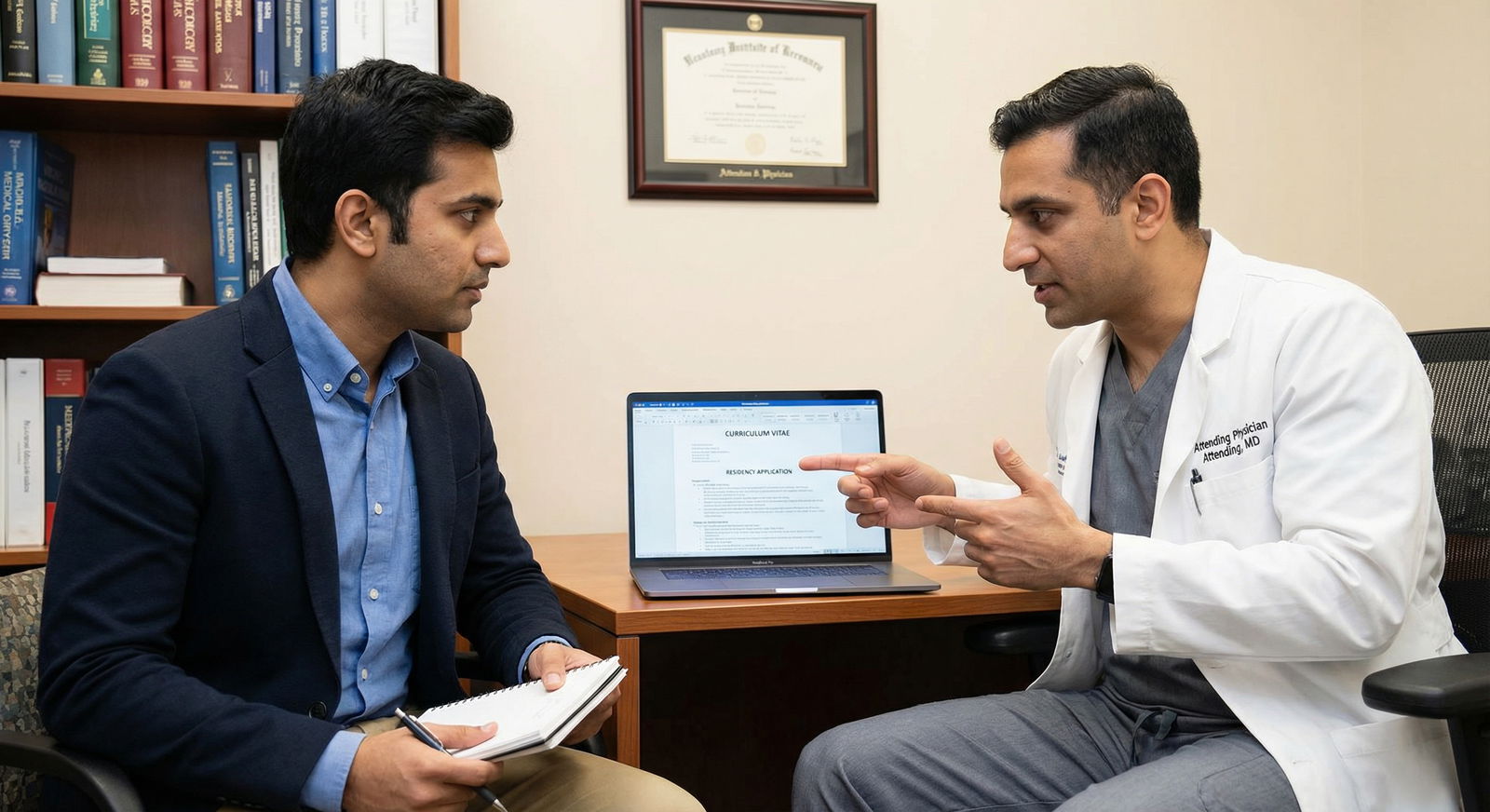
Now, look at your CV. IMGs often pad their CVs with theoretical knowledge and basic coursework. Stop. Highlight specific technical skills. Did you perform Doppler ultrasounds? Assist in laparoscopies? Manage central lines? Put those at the very top. Program directors want to know what you can do with your hands on day one.
Finally, Letters of Recommendation (LoRs). How do you ask for LoRs before you even have a US attending to ask? You start now. Cold email alumni from your medical school who are currently practicing in the US. Ask for a 15-minute virtual coffee chat. Build a relationship. Ask if you can do a remote research project for them. Earn the letter; don't just beg for it.
Phase 4: The 'Spray and Pray' Trap vs. Smart Targeting
A senior friend who matched into a preliminary year last cycle tells you to apply to every single program in the US. "Just cast a wide net," they say.
Ignore them. The math of matching doesn't work that way. Applying to 500 programs doesn't increase your chances if 400 of those programs automatically filter out IMGs. You need to calculate the number of positions needed based on your estimated rank list and target programs that actually interview people with your profile.
You must filter by Program Director priorities. Read their program's website. Do they heavily feature research publications? Do they boast about their community service clinics? Or are they purely about high clinical volume? Tailor your application to match their specific culture. If they want community service and you only list bench research, you're dead on arrival.
Conduct a brutal "Program List" audit. Use FREIDA and Residency Explorer. Scrub out any program that explicitly states they do not accept IMGs, or that they require three years of US clinical experience. Do not pay the ERAS fee to apply to a program that has already decided they won't look at your file.
Phase 5: The Interview Battlefield
You got the interview. Now they want to see if you're normal, if you can communicate, and if they want to work with you for 80 hours a week.
The Chief Resident leans back in their chair and asks, "Why should we hire you over an AMGs?"
Do not get defensive. Use the Blue Coat Rule. Prepare your answers for both technical and behavioral questions using the STAR method (Situation, Task, Action, Result). When they ask about a time you failed, give them a real failure, not a humble-brag. Show them how you adapted.
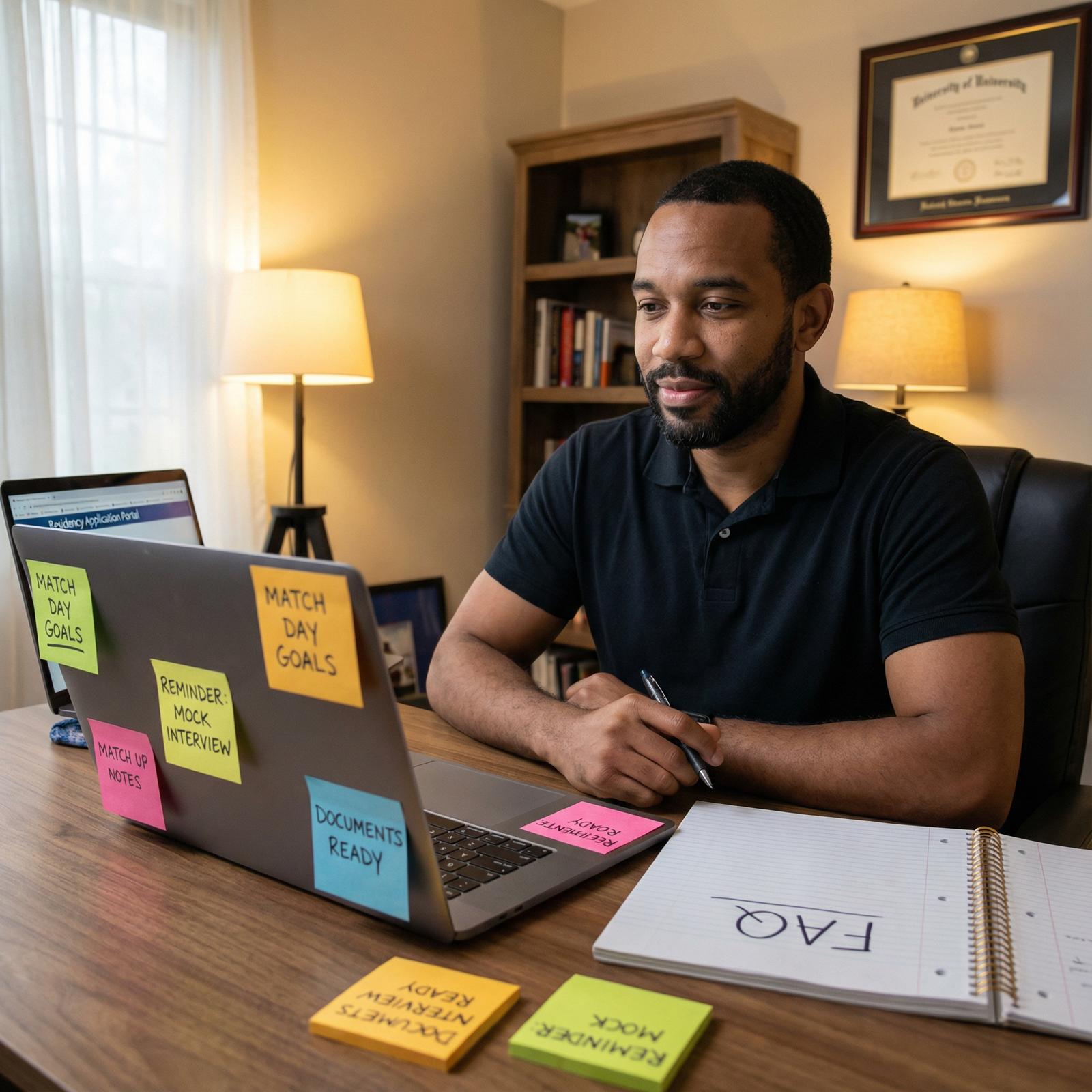
Have your visa considerations locked and loaded. If you need a J-1 or H-1B, know exactly what your status is. If the program doesn't sponsor your visa type, you need to know your waiver strategy or be prepared to walk away. Have this information saved on a clipboard right in front of you.
When it's your turn to ask questions, demonstrate critical thinking without being annoying. Don't ask about vacation days or call schedules. Ask about their recent morbidity and mortality conference topics, or how they handle resident burnout. Show them you are thinking like a doctor, not a medical student.
Phase 6: The Rank List (The Final Move)
It's Match Day morning. You didn't match at your top choice. The algorithm did its job.
Sanity check: Understand the difference between the list you submit and the list programs submit. The algorithm favors the applicant's list. If you didn't match, it means you didn't rank high enough on their list to beat out the people who ranked them higher. It's brutal, but it's just math.
You need contingency planning. If you are a high-risk applicant, you should already have a list of 1-year research positions, master's programs, or observerships lined up for Match Day failures. Do not wait until March to figure out what you'll do in July.
Have the aftermath conversation with your spouse or family about "Plan B" before Match Week. The emotional toll of not matching is massive. Having a pre-agreed, logical next step softens the blow and keeps you moving forward.
Key Takeaways
- Do not rely on luck; rely on data. Know the statistical probabilities of matching in your specific demographic category and apply accordingly.
- Tailor your narrative. Your Personal Statement and CV must be custom-fitted to the specific culture and priorities of the programs you are targeting.
- Clarify your visa status immediately. Visa sponsorship is a hard deal-breaker for many programs; know your requirements and filter your list early.
- Interview prep is non-negotiable. Your exam scores get you the interview, but your communication skills get you the rank. Treat interview prep as critically as your board prep.
Stop staring at the screen and start executing the plan. The system is rigid, but it is entirely beatable if you know the rules. Map your data, fix your narrative, and go get your spot.