
You're staring at the email. Subject line: "Academic Standing Review, Action Required." It's 2:00 AM. Your heart rate is doing something that would get flagged on a telemetry floor. The room feels smaller. That exam you barely scraped through, or flat-out failed, just became official. Remediation. The word itself tastes like copper.
This isn't regular study stress. This is the isolating kind. On the wards you're expected to look competent. Board prep group chats are full of people posting Anki streaks like trophies. But right now you're alone with the knowledge that you are behind, and the school has noticed. The dread isn't abstract. It's visceral. You've already started the catastrophic loop: If I can't pass this block, how do I pass Step? If I remediate, does everyone know? Will this follow me?
Here's the real decision you're facing in that moment: Do you grab a peer tutor who just survived the same organ system three months ago, or do you swallow your pride and book time with an institutional academic coach? One feels safer. One actually rewires the panic. Most students pick wrong on the first try because they treat both resources like they're the same tool.
They're not.
Peer Tutors: The High-Yield, Same-Boat Lifeline
Peer tutors are the fastest content fix in medical school. An MS2 or MS3 who crushed the exact block you're drowning in can translate dense lecture material into something usable in a single two-hour session. They hand you the mnemonics that actually stuck, the "ignore that entire pathway, it never shows up" filters, and the survival notes they wish someone had given them. That psychological safety is real. Sitting across from someone who failed the same midterm last year and still matched into ortho removes the shame faster than any wellness email ever will.
I've watched students go from frozen to functional in 48 hours with a good peer tutor. The flow is simple and brutal:
They speak your language. They know which professor's slides are garbage and which Pathoma chapters actually matter for this school's exams. For pure content deficits, missed the entire renal physiology unit because you were sick, or never understood acid-base, peer tutors are unmatched. They lower the acute "I don't know the material" panic almost immediately.
But they hit a ceiling hard. Peer tutors are not trained in learning disabilities, metacognition, or emotional regulation. They can't spot that your anxiety spikes every time a timer starts because your working memory collapses under time pressure. They won't audit your sleep or call out that you're rereading notes for the fourth time as a form of avoidance. Most of them are still white-knuckling their own board prep. They're lifelines for facts. They are not architects of your study system. If your real problem is that you freeze on exams even when you "know" the material, a peer tutor will leave you calmer for a week and then right back in the same spiral.
Academic Coaches: The Metacognitive Strategists for Deep Anxiety
Academic coaches are different animals. These are professionals, often with backgrounds in educational psychology or learning science, who treat remediation anxiety as a systems problem, not a content problem. They don't re-teach the brachial plexus. They deconstruct why you blanked on the brachial plexus questions even though you drew it from memory the night before.
A good coach will map your catastrophic thinking loops in the first session. They'll force you to time yourself on practice blocks and then stop you mid-panic to name what's happening in your head. They rebuild test-taking stamina the way a physical therapist rebuilds a shoulder, deliberately, with progressive load. They look at your entire week: sleep debt, passive vs active study ratios, the way you weaponize caffeine until 1 AM and then wonder why your recall tanks. This is where sustained anxiety reduction actually lives.
The data pattern I see repeatedly looks like this:
Peer tutoring drops the score fast, then plateaus. Coaching drops it slower at first, then keeps cutting because it rewires the underlying machinery.
There's friction, though. Walking into a coach's office can feel like reporting to the dean. They're faculty-adjacent. Students worry the conversation will somehow leak into their academic file. That fear is mostly unfounded, but it is real enough that a lot of people show up defensive, arms crossed, ready to prove they're "not stupid, just busy." Bad move. Coaches smell that posture immediately. The ones who get the most out of coaching walk in ready to have their entire approach audited, not validated.
If You're in This Situation: A Step-by-Step Decision Matrix for Remediation
Stop guessing. Triage yourself honestly.
Content deficit only? You blanked entire topics. You never watched the lectures. The material feels foreign. Book the peer tutor first. Get the high-yield framework in your head this week so you can pass the re-exam. Do not waste coach time on basic fact gaps.
Strategy or panic deficit? You "knew" it cold the night before and still scored in the 50s. You run out of time. You second-guess every answer until the clock dies. You spiral the moment you see a long vignette. Go straight to the academic coach. Content review will not fix this. Cognitive restructuring will.
Most of you have both. So use both, without letting meetings cannibalize your study hours.
Here's the practical sequence that works:
- Day 1-2 after the remediation email: Request the peer tutor through whatever student affairs portal your school uses. Be specific: "I need someone who crushed Cardio Block within the last year and has notes that map to our exam style."
- Same day: Email the academic coaching office and request an intake. Subject line: "Remediation support, strategy and test anxiety focus."
- First coach session: Bring your actual calendar, your last three practice scores, and a list of the exact moments you panic. Do not bring lecture slides.
- Peer tutor sessions: Cap them at two 90-minute blocks per week max. Use them only for content translation and question walkthroughs. Record the session (with permission) so you never need a second explanation of the same pathway.
- Coach sessions: Every 7-10 days. These are system checks, not tutoring. You leave with adjusted protocols, new timing drills, revised sleep cutoffs, specific reframes for the "I'm going to fail and everyone will know" thought.
If your school requires you to meet with the academic affairs dean, do not walk in passive. Use this script:
"I'm already scheduled with both a peer tutor for the content gaps and an academic coach for the test-taking and anxiety piece. I want to make sure my remediation plan integrates both so I'm not just cramming facts. Can we lock in the minimum required meetings so I protect study time?"
That single sentence signals you're not a liability. You're managing the problem like a professional. Deans notice.
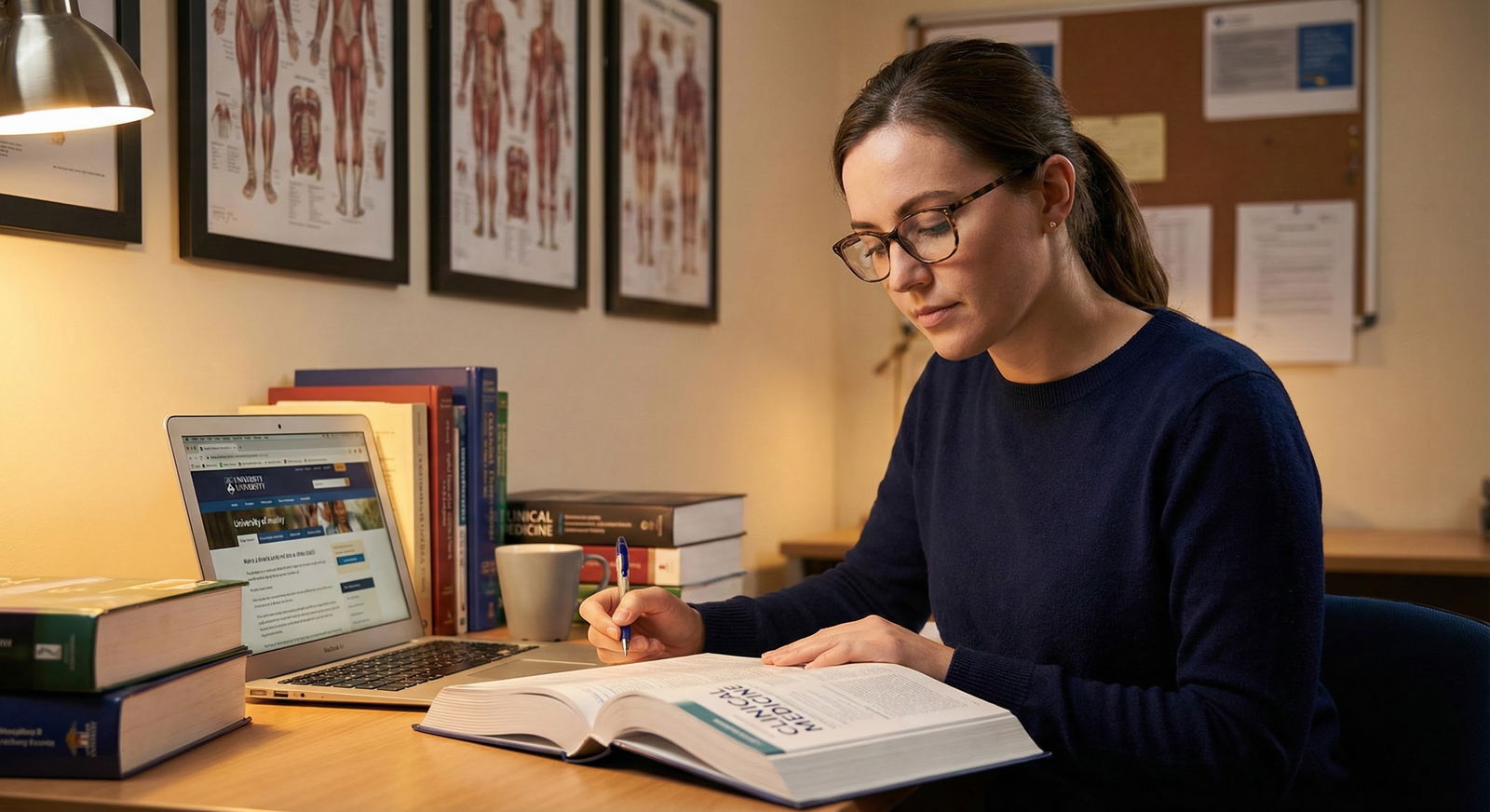
Pride is the enemy here. Half your class is quietly using the same resources and lying about it in group chats. The students who lower remediation anxiety fastest are the ones who treat peer tutors and coaches as different tools for different jobs, then run both in parallel without drama.
Summary
Peer tutors give you the fastest content translation and the "someone else survived this exact hell" reassurance. They crush immediate knowledge gaps. Academic coaches go after the root machinery, how you learn, how you panic, how you manage time under load, and produce the lasting drop in anxiety. Match the tool to the actual bottleneck. Content missing? Tutor. Strategy or spiral missing? Coach. Both missing? Both, scheduled tightly so meetings don't become another form of productive procrastination. The 2 AM email is temporary. The systems you build (or fail to build) in the next three weeks determine whether remediation becomes a one-time correction or a recurring nightmare.