
Quirky Patient Requests: The Funniest Things Doctors Have Heard
Humor in healthcare is often underrated. Medical training emphasizes lab values, diagnostic algorithms, and treatment protocols—but rarely the reality that medicine is also full of hilarious, touching, and sometimes downright bizarre moments. Funny patient stories and quirky requests are not just entertainment; they’re powerful reminders of the humanity underneath white coats and hospital gowns.
This expanded collection of healthcare anecdotes explores memorable doctor-patient interactions that left clinicians puzzled, amused, or unexpectedly moved. Along the way, we’ll also look at why humor in healthcare matters, how to respond professionally to odd or amusing requests, and how residents and students can navigate these situations while preserving trust and dignity.
The Lighter Side of Medicine: Why Funny Patient Stories Matter
Doctor-patient interactions are often emotionally charged—illness, uncertainty, fear, hope. In that mix, a quirky request or a surprising turn of phrase can completely change the tone of an encounter.
Humor as a Diagnostic and Therapeutic Tool
Humor in healthcare isn’t just about laughing at “funny” things that happen at work. It can:
- Lower patient anxiety before exams, blood draws, or procedures
- Build rapport and trust, especially with skeptical or nervous patients
- Clarify communication, when metaphors or jokes help patients describe symptoms
- Protect clinicians from burnout, offering brief moments of levity in emotionally heavy days
For residents and medical students, learning to appreciate and appropriately respond to funny patient stories is part of developing mature clinical judgment and bedside manner.
1. Unexpected Diagnoses: When Patients Name Their Own Conditions
Patients often arrive having already “named” their problem, using whatever language makes sense to them. Sometimes these labels are surprisingly accurate—and sometimes they’re unexpectedly hilarious.
“Screaming Toenails” and Other Vivid Descriptions
One physician recalls a patient who came in urgently and declared, “Doctor, I think I have screaming toenails.”
The phrase conjured up an absurd mental image, but the concern on the patient’s face was sincere. On exam, it turned out to be a severely inflamed ingrown toenail, exquisitely tender to touch.
What made the interaction memorable was not just the phrase itself but how it opened the door to deeper communication. The doctor used the patient’s wording as a starting point:
- “Tell me more about what your ‘screaming toenails’ feel like.”
- “When did they start screaming?”
The patient, now smiling a bit at their own description, felt more comfortable sharing the timeline, prior home treatments, and fears about surgery. A simple office procedure solved the problem—but the phrase “screaming toenails” lived on in clinic lore.
Other Creative Self-Diagnoses
Across specialties, clinicians encounter humorous self-diagnoses that reflect how patients interpret their symptoms:
- “My brain Wi-Fi is down” – a young adult describing difficulty concentrating after a string of night shifts.
- “I think I’ve dislocated my soul” – a patient explaining an intense feeling of being “out of it” after a panic attack.
- “I have a leaky happiness valve” – a poetic way of describing recurrent depressive episodes.
These may sound like unconventional medical terminology, but they’re rich with emotional and psychological information. For trainees, the takeaway is clear: behind many quirky phrases is a real, often serious concern.
2. Pets as Medical Associates: When Animals Join the Care Team
For many patients, pets are not just companions; they’re central to emotional well-being. That connection frequently shows up in quirky requests.
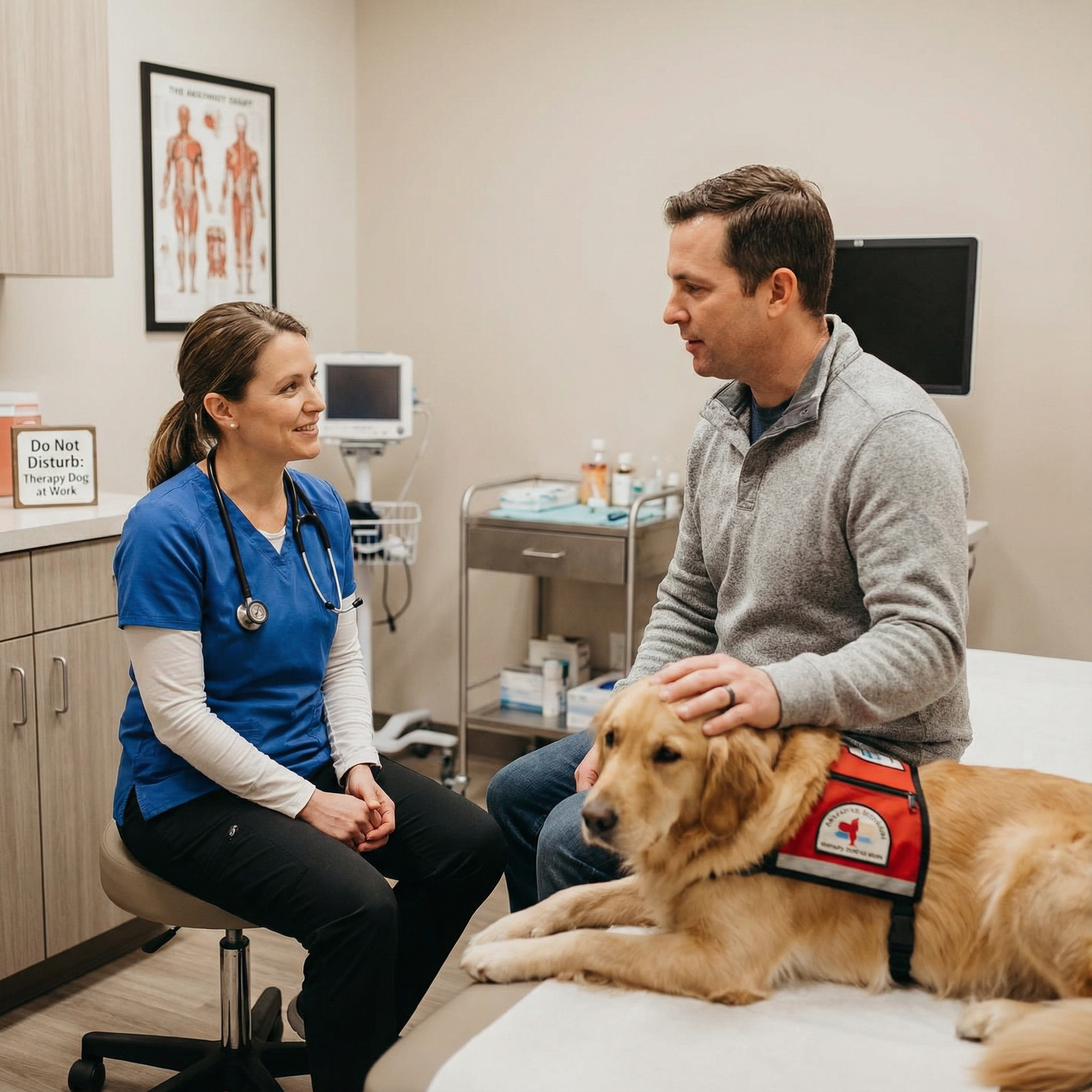
“Can My Dog Come to My Therapy Session?”
One physician shared a story of a patient with an anxiety disorder who politely requested:
“Could my dog sit in on our therapy appointment? He helps with my healing.”
At first glance, the request might feel purely humorous or unusual. But under the surface is something quite significant: the patient has identified a personal coping strategy. The dog, in this patient’s view, was as essential as any medication.
Depending on clinical setting and policy, options might include:
- Allowing the dog to sit quietly during the session (if permitted, especially for trained service animals)
- Discussing how the dog helps, and incorporating that into a broader treatment plan
- Exploring whether the patient’s attachment to the pet is adaptive (supportive) or occasionally limiting (e.g., fear of leaving the house without the animal)
While the initial request made for a memorable story, it also highlighted how doctor-patient interactions around quirky requests can deepen understanding of a patient’s support system.
Emotional Support, Service Animals, and Boundaries
With the rise of emotional support animal (ESA) letters and online certifications, clinicians are increasingly fielding requests like:
- “Can you write a letter declaring my cat as an emotional support animal so I can bring her to work?”
- “My parrot knows when I’m about to faint—can he be my service animal?”
These questions can sound amusing, but they require thoughtful, evidence-based responses. For trainees:
- Know your institution’s policy on service animals and ESAs.
- Clarify the difference between a legally recognized service animal and an emotional support animal.
- Avoid dismissiveness; even if the request is impractical, validate the underlying need (“It sounds like your pet really helps you feel safe; let’s talk about other supports we can put in place too”).
3. Overly Detailed Symptom Charts and DIY Medical Analytics
In the age of spreadsheets, wearable trackers, and symptom apps, some patients take self-monitoring to impressive—and sometimes comical—extremes.
The Color-Coded Conspiracy Symptom Spreadsheet
One clinician recalls a patient who arrived with a thick folder and proudly announced, “Doctor, I’ve graphed everything for you.”
Inside was a spreadsheet that could rival a clinical trial dataset:
- Day-by-day symptom scores
- Color-coded flare days
- Graphs correlating fatigue with moon phases
- A notes column featuring entries like:
- “Felt worse after watching that alien horror movie.”
- “Headache started after neighbor’s Wi-Fi password changed.”
The doctor’s initial reaction mixed admiration and amusement. The patient’s dedication was undeniable, even if some of the proposed “causal links” were far-fetched.
Handled well, these quirky healthcare anecdotes can become powerful tools:
- Use the data: Frequency, timing, and rough severity trends can actually inform diagnosis (e.g., migraine patterns, IBS triggers, sleep disturbances).
- Gently reframe conspiracy elements:
- “I see you’re connecting this to your neighbor’s Wi-Fi. Let’s also look at more common triggers like sleep, hydration, and stress levels.”
- Acknowledge effort: Patients often feel proud of their tracking; respectful engagement builds alliance.
When Tracking Goes Too Far
Sometimes, tracking becomes obsessive or anxiety-provoking. Clues might include:
- Multiple hours per day spent logging symptoms
- Significant distress when the data “doesn’t make sense”
- Frequent healthcare visits driven primarily by confusing spreadsheet results
In those cases, clinicians can carefully recommend scaling back or involving mental health support, turning a funny patient story into a meaningful therapeutic pivot.
4. Experimental Diets and Outlandish Nutrition Beliefs
Nutrition is fertile ground for quirky requests, especially in a world flooded with fad diets, influencers, and pseudo-scientific claims.
The “All-Blue Foods” Diet
One doctor shared a memorable encounter with a patient who confidently declared:
“I only eat blue foods—they’re miraculous for my health.”
The patient’s daily intake reportedly included:
- Blueberries
- Blue corn chips
- Blue sports drinks and sodas
- Blue ice cream and candies
The request? “Can you make sure this diet is medically approved and help me expand my blue options?”
While the concept is humorous, it also offers a teaching opportunity:
- Validate the positive: “Blueberries can indeed be very healthy.”
- Gently challenge extremes: “Relying only on blue foods may mean you’re missing important nutrients.”
- Use concrete examples:
- Missing iron from lack of red meats or leafy greens
- Inadequate protein if meals are mainly snacks and sweets
By the end of the visit, the patient might not fully abandon their “blue philosophy,” but they can be encouraged to diversify in color and nutrient content in a nonjudgmental way.
Other Curious Dietary Requests
Clinicians report many humorous healthcare anecdotes around diets:
- “Can you prescribe pizza? It’s easier to eat what’s on a prescription.”
- “I’m only eating foods that start with the letter ‘K’ this month.”
- “Is there a medically approved chocolate-only diet?”
Behind the humor may lie:
- Disordered eating patterns
- Health misinformation from social media
- Cultural or religious practices that need respectful navigation
For learners, these encounters reinforce the importance of asking why patients choose certain diets instead of simply correcting them.
5. Internet Cures, Energy Alignments, and Home-Grown Therapies
With online wellness influencers and health forums everywhere, it’s not surprising that quirky requests often involve unconventional treatments.
“Can You Fix My Headaches by Aligning My Energies?”
One physician described a patient who arrived with conviction:
“Doctor, I don’t need a scan. I just need you to perform an alignment of energies—the kind my favorite influencer recommends.”
The “treatment” involved:
- Specific breathing patterns
- Awkward yoga poses in the exam room
- Crystals that were supposed to be placed “near the temporal arteries”
The doctor, trying not to laugh, recognized two key points:
- The patient was taking their symptoms seriously.
- The patient sincerely believed this intervention was evidence-based.
Rather than dismissing the request outright, the physician:
- Acknowledged the patient’s desire for holistic care
- Explained the importance of evaluating for red-flag symptoms (e.g., neurological deficits)
- Suggested: “We can certainly talk about stress reduction techniques, including breathing and stretching. At the same time, I’d like to rule out more serious causes of migraine so we don’t miss anything important.”
Balancing Open-Mindedness and Evidence
Other funny patient stories in this domain include:
- Requests to “detox the liver” with extreme juice fasts
- “Ear candling” to cure sinus infections
- Magnet bracelets to “pull out arthritis”
The educational takeaways for future clinicians:
- Avoid ridicule: Mocking a patient’s belief will damage the relationship.
- Ask clarifying questions: What have they tried? What do they hope will happen?
- Gently correct misinformation while offering safer, evidence-based alternatives.
Quirky requests around internet cures are opportunities to strengthen health literacy and protect patient safety.
6. Celebrity Moments: When Doctors Are Asked for Autographs
Not all quirky requests are about conditions or treatments. Sometimes, they’re about status and imagination.
“Can I Have Your Autograph, Doctor?”
One doctor recounted a patient who walked into the clinic and, completely straight-faced, said:
“I’m practicing for when I’m a celebrity. Can I have your autograph so I can get used to being important people’s friend?”
The request was disarming—and a welcome break from a long clinic day. The physician obliged, scribbling a playful note: “To my future celebrity friend, from your slightly less famous doctor.”
The laughter that followed shifted the dynamic:
- The patient felt seen as a person, not just a diagnosis.
- The doctor got a rare moment of levity amidst an otherwise routine session.
While humor like this doesn’t replace clinical management, it adds warmth to doctor-patient interactions and can make visits more memorable for both sides.
Gifts, Photos, and Boundaries
Related quirky requests that trainees may encounter:
- “Can we take a selfie together for my health blog?”
- “Will you sign my cast like a celebrity?”
- “Can you write ‘world’s best patient’ on my discharge paperwork?”
These requests often come from a place of fondness or excitement. The key is:
- Follow institutional policies on photos and social media.
- Protect confidentiality and professionalism.
- Use humor while maintaining boundaries, e.g., “I’m flattered you want a selfie, but hospital policy doesn’t allow it. Let’s see if we can commemorate this another way.”
7. Enigmatic Complaints: When Emotions and Symptoms Blur
Not all quirky phrases are silly. Sometimes, they are deeply expressive—and point to serious underlying issues.
“I Feel Too Blue to Breathe”
A physician once heard a patient explain:
“It’s like I’m too blue to breathe. My lungs are fine; my sadness won’t let the air in.”
Initially, the phrasing sounded vague and almost poetic. The doctor had been expecting more straightforward respiratory complaints, like shortness of breath on exertion. But listening closely revealed:
- The patient was likely describing severe depression and anxiety.
- The “breathing problem” was emotional, not pulmonary.
What started as a seemingly enigmatic complaint turned into:
- A full mental health assessment
- Screening for suicidal ideation
- Initiation of therapy and, when appropriate, pharmacologic treatment
These types of healthcare anecdotes remind clinicians to always ask: “What does that phrase mean to you?” Quirky wording can be the gateway to critical diagnostic information.
Body Language, Metaphor, and Culture
Different cultures and individuals may use metaphors like:
- “My heart is tired.”
- “My brain is like foggy glass.”
- “My stomach holds my worries.”
For learners, it’s important to:
- Avoid dismissing metaphoric expressions as confusion
- Clarify with open-ended questions
- Recognize when emotional distress is being expressed through physical language
8. “I Only Get Sick on the Couch”: Location-Based Illness
Another memorable story featured a patient insisting:
“I’m only sick when I’m on the couch. The second I step away, I’m instantly fine.”
They were convinced that lying on the couch triggered:
- Fatigue
- Headache
- General malaise
Yet outside the living room, they felt normal.
While comedic on the surface, this quirky request opened up several possibilities:
- Conditioned behavior: Feeling unproductive or guilty when lounging could transform into somatic symptoms.
- Association with screen time: Hours of television or phone use leading to headaches and eye strain.
- Underlying mood disorder: The couch as a symbol of withdrawal and low mood.
The physician responded with a mix of humor and clinical curiosity:
- “That’s an interesting connection. Let’s check your overall health and also talk about what happens when you’re on the couch—what are you doing, thinking, or feeling there?”
Fun stories like this reinforce that even seemingly absurd associations can yield useful diagnostic and therapeutic insights.

How Clinicians Can Use Humor Safely and Effectively
For medical students, residents, and practicing clinicians, quirky patient requests are more than amusing stories to share on a night shift. They’re opportunities to refine communication skills.
Practical Tips for Responding to Quirky Requests
Stay curious, not judgmental
- Ask, “Can you tell me more about that?”
- Explore the reasoning behind the request.
Validate the emotion, if not the logic
- “I can see you’ve put a lot of thought into this.”
- “It sounds like this is really important to you.”
Maintain professionalism
- It’s okay to smile or share a light chuckle if the patient is clearly joking.
- Avoid sarcasm or comments that could be misinterpreted as ridicule.
Use humor to build rapport, not deflect
- A brief humorous remark can ease tension, but don’t use humor to avoid difficult conversations.
Know your boundaries
- You can say no to inappropriate requests (e.g., certain social media interactions, unsafe treatments) while still being kind.
Humor as a Buffer Against Burnout
In a profession marked by long hours and emotional strain, healthcare anecdotes and funny patient stories help teams decompress. Sharing these moments (respectfully, with privacy protected) can:
- Strengthen team cohesion
- Normalize stress and vulnerability
- Remind clinicians why they chose a people-centered career
For residency applicants and trainees, cultivating a healthy sense of humor—grounded in empathy—is a valuable, sustainable skill.
FAQs About Humor, Quirky Requests, and Doctor-Patient Interactions
1. Are quirky patient requests common in clinical practice?
Yes. Across specialties, clinicians frequently encounter quirky requests, unusual symptom descriptions, and unique beliefs about health. Examples include patients wanting their pets in the exam room, bringing elaborate symptom charts, asking for celebrity-style autographs, or proposing internet-based cures. While some requests are purely amusing, many reflect real fears, cultural beliefs, or creative attempts to understand illness.
2. Why is humor in healthcare beneficial for patients and clinicians?
Humor in healthcare can:
- Reduce patient anxiety and build trust
- Improve communication by making complex topics feel less intimidating
- Help clinicians process stress and emotional burden
- Strengthen team relationships and resilience
Used appropriately and respectfully, light humor can humanize doctor-patient interactions and create a more welcoming clinical environment.
3. How should medical students or residents respond to funny or odd patient stories?
The key is to be respectful and curious:
- Listen fully before reacting.
- Ask clarifying questions to understand the patient’s perspective.
- If you smile or laugh, make sure it’s clearly with the patient, not at them.
- Use the moment as a bridge to discuss evidence-based care, not as a detour from it.
If a request is unsafe or unrealistic, clearly but gently explain why, and offer safer alternatives.
4. Can humor or quirky interactions ever harm the doctor-patient relationship?
They can, if handled poorly. Risks include:
- Patients feeling mocked or dismissed
- Important symptoms being overlooked because they’re expressed in a humorous way
- Boundaries becoming blurred (e.g., inappropriate jokes, social media interactions)
To avoid harm, clinicians should let the patient set the tone. If a patient is serious or distressed, prioritize empathy over humor. If the patient jokes or uses playful language, you can carefully mirror some of that tone while remaining professional.
5. Are there guidelines on sharing funny patient stories or healthcare anecdotes?
Yes—confidentiality and professionalism always come first:
- Never share identifying details (names, locations, specific dates, or unique characteristics).
- Avoid posting cases on social media that could be traced back to a real person.
- Focus on the educational or human aspect of the story, not just its entertainment value.
When used ethically, funny patient stories can be powerful teaching tools and sources of connection among medical professionals.
In the intricate world of medicine, quirky requests and humorous doctor-patient interactions are far more than comic relief. They’re snapshots of how people make sense of their bodies, their fears, and the healthcare system. For clinicians at every stage—from interview-season applicants to seasoned attendings—learning to navigate these moments with curiosity, humility, and a bit of good-natured humor can transform both patient care and professional well-being.