
In a healthcare world defined by high stakes, long hours, and intense emotions, it might seem surprising that one of the most unifying forces among clinicians and trainees is…doctor memes. These snippets of healthcare humor circulate through group chats, Reddit threads, and Instagram feeds, offering both comic relief and a shared language for an entire profession.
Doctor memes are more than just jokes. They reflect medical culture, shape how providers talk about their work, and even influence patient-provider communication. For residency applicants and medical trainees, they can offer a crash course in the unwritten realities of clinical life—if you know how to interpret them.
This article takes a deeper look at the infamous doctor meme: where it came from, why it makes us laugh, how it functions as a coping mechanism, and what it means for the future of healthcare communication.
The Birth and Evolution of Doctor Memes in Medical Culture
Doctor memes didn’t appear overnight; they evolved alongside social media and the digital transformation of medicine.
Early Digital Spaces: Where Healthcare Humor Began
Long before Instagram pages dedicated to “medical humor” gained tens of thousands of followers, early versions of doctor memes were circulating in:
- Medical student forums (e.g., Student Doctor Network)
- Reddit communities such as:
- r/medicine
- r/medicalschool
- r/nursing
- r/residency
- Specialty-specific Facebook groups and closed communities
In these relatively private online spaces, healthcare workers began posting screenshots, captioned images, and inside jokes that captured the daily absurdities of their work. Typical early themes included:
- Constant pager interruptions
- Never-ending call shifts
- Confusing medication lists
- “Surviving” anatomy or pharmacology exams
- The gap between textbook medicine and real-world patients
The content was primarily by clinicians, for clinicians. That insider nature helped shape medical meme culture as something that both critiques and celebrates the profession from within.
From Niche Forums to Mainstream Feeds
Over time, these memes migrated outward:
- Instagram accounts like specialty meme pages (e.g., emergency medicine, surgery, pediatrics) made doctor memes easy to share and repost.
- TikTok introduced short-form video memes—reenacting patient encounters, call-night exhaustion, or the chaos of handoff in a humorous way.
- Twitter/X amplified bite-sized jokes about hospital life and medical training, often going viral outside the profession.
As this happened, two major shifts occurred:
Audience expanded
Patients, premeds, and non-medical viewers started following these accounts, gaining exposure to the backstage of medicine.Tone diversified
Doctor memes began to blend:- Insider jokes for clinicians
- Educational snapshots about diseases or treatments
- Commentary on systemic problems (burnout, understaffing, insurance issues)
The result: doctor memes became an important component of modern medical culture, not just an after-hours diversion.
The Main Types of Doctor Memes and What They Reveal
Doctor memes aren’t all the same. They often fall into several recognizable categories, each reflecting different aspects of healthcare humor and practice.
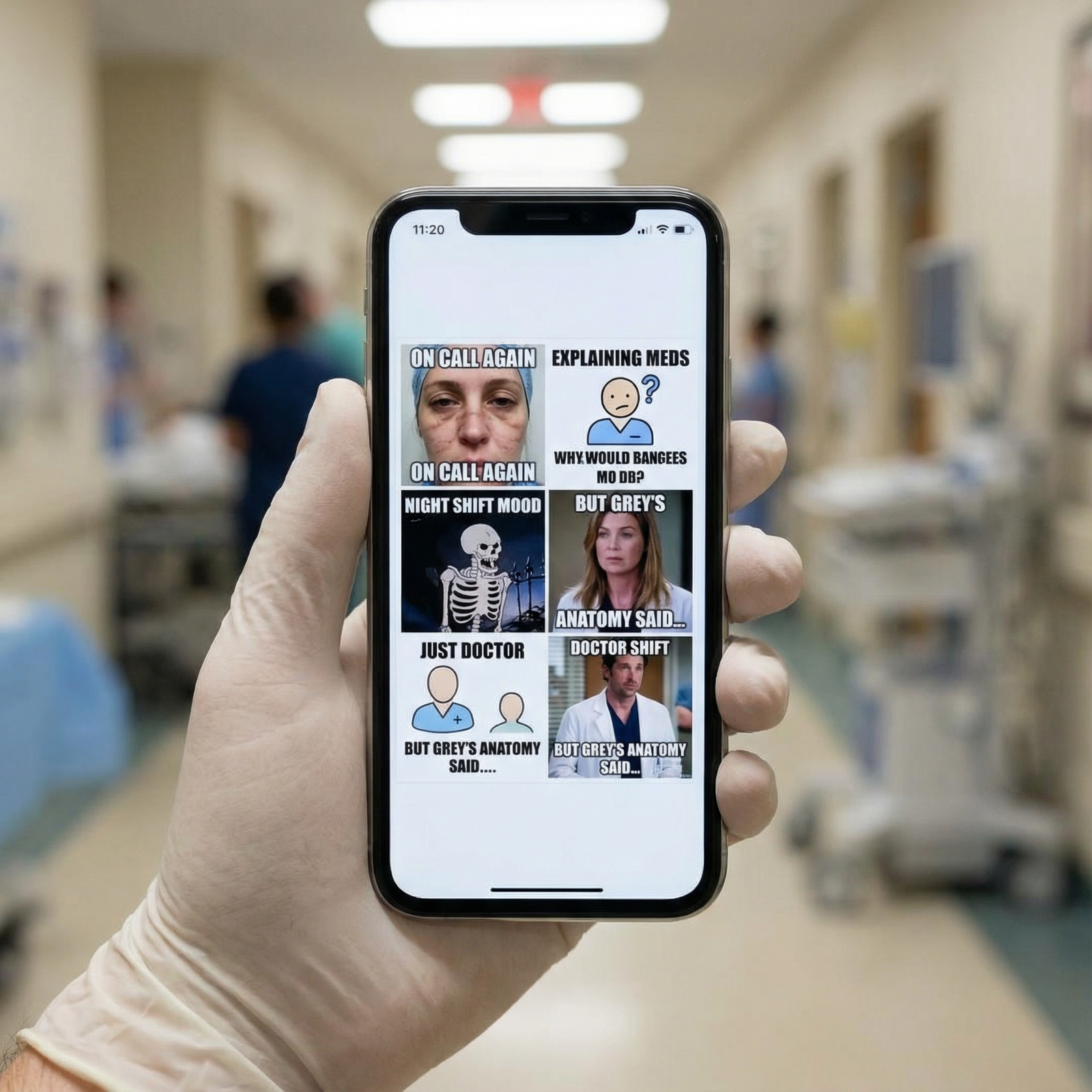
1. Relatable Medical Humor: The Day-to-Day Grind
These memes speak directly to the lived experiences of medical students, residents, and attending physicians. They usually revolve around:
- Exhausting shifts and night float
- Charting for hours after a clinic session
- Hunting for a working computer or functioning printer
- The “5-minute” discharge that takes an hour
Example idea:
“When you finally sit down after a 10-hour shift and your pager goes off: ‘I knew it was too good to be true.’”
Why it matters:
These memes validate how demanding healthcare work can be. They say, implicitly, “You’re not the only one struggling with this,” which can be reassuring in environments where vulnerability is often hidden.
2. Patient-Interaction Memes: The Art (and Challenge) of Communication
Another major category centers on patient-provider communication and the sometimes-hilarious misunderstandings that occur, such as:
- Patients Googling their symptoms and arriving with a self-diagnosis
- Requests for “natural” alternatives to surgical or clearly necessary interventions
- Non-adherence turned into absurd exaggeration (“I only take my blood pressure meds when I feel my blood pressure going up.”)
Example idea:
“When the patient with an A1c of 11 says, ‘But I only drink soda on weekends.’”
Done respectfully, these memes underscore just how hard it can be to translate medical knowledge into real-world behavior change—and remind clinicians that clear communication is a skill, not a given.
3. Dark Humor: Coping with High-Stress Work
Some doctor memes lean into darker or more cynical humor, addressing:
- Burnout and compassion fatigue
- Emotional exhaustion after codes, bad outcomes, or difficult conversations
- Moral distress in understaffed or under-resourced settings
Example idea:
“Residency wellness tip: If you don’t have time for self-care, at least schedule your breakdowns between sign-out and night rounds.”
Why it matters:
Dark humor functions as a coping mechanism—a way to acknowledge pain and stress indirectly. However, it’s also the most controversial category:
- It can be profoundly validating to exhausted colleagues.
- It may be misunderstood or seen as insensitive if viewed by patients or the public.
- It raises important questions about professional boundaries and what’s appropriate to post on public platforms.
4. Pop Culture and Crossover Memes
These memes mash up medicine with widely recognized movies, TV shows, or internet trends:
- “Game of Thrones” (“Winter is coming” as flu season)
- “The Office” to represent team dynamics on rounds
- Popular reaction GIFs overlaid with clinical situations
Example idea:
A still from a superhero movie captioned:
“When the attending actually says, ‘Good job on that presentation.’”
Why it matters:
By tying medical realities to familiar pop culture, these memes make healthcare humor more accessible to patients, premeds, and non-clinical staff. They help humanize providers and make their world feel less intimidating.
Why Doctor Memes Make Us Laugh (Especially When We’re Exhausted)
Understanding why doctor memes resonate requires a closer look at how humor works in high-pressure professions.
1. Shared Experience and In-Group Identity
Medicine is full of experiences that are:
- Intense
- Highly specific
- Difficult to explain to friends or family outside the field
Doctor memes tap into that shared reality. When a resident laughs at a meme about sign-out gone wrong or endless admission notes, they’re also experiencing a moment of connection with thousands of others who “get it.”
This creates:
- In-group identity: “I’m part of this professional community.”
- Normalization: “My struggles aren’t a personal failure; they are part of the job.”
For medical students and residency applicants, recognizing these memes can even feel like a rite of passage—an early glimpse of what’s ahead.
2. Humor as a Coping Mechanism
Healthcare humor—especially in meme form—is a widely used coping mechanism. It allows providers to:
- Name the stress without dwelling on it directly
- Release tension after emotionally heavy encounters
- Regain a sense of control by laughing at what feels overwhelming
Research on coping mechanisms in healthcare professions consistently shows that:
- Humor can buffer against burnout when used thoughtfully and within supportive communities.
- Shared laughter on a team can strengthen bonds and improve resilience.
- However, relying only on humor risks masking deeper issues that require systemic solutions (e.g., unsafe staffing, abusive cultures).
For residency applicants, recognizing how humor is used on a team can offer subtle clues about the program’s culture—whether it’s supportive, exhausted, cynical, or somewhere in between.
3. Humanizing the White Coat: Bridging the Patient-Provider Divide
From a patient’s perspective, doctor memes often:
- Reveal that clinicians get frustrated, tired, and anxious too
- Show that providers recognize systemic issues (e.g., insurance, waiting times, EMR frustration)
- Highlight that behind the white coat is a person with a sense of humor and limitations
When done respectfully, this can support better patient-provider communication by:
- Lowering perceived power distance
- Encouraging empathy in both directions
- Making difficult topics (like adherence or lifestyle changes) easier to discuss through shared humor
However, context is everything. A meme that feels like lighthearted venting among colleagues might feel judgmental or dismissive if a patient sees themselves in the punchline. Thoughtful clinicians keep that in mind when deciding what to share publicly.
4. A Window into Medical Culture for Outsiders
For those outside healthcare, memes serve as a simplified, humorous “field guide” to medical culture:
- They show what clinicians complain about (e.g., EMRs, prior authorizations).
- They highlight what’s valued: teamwork, teaching, evidence-based practice.
- They sometimes expose what’s broken: understaffing, limited mental health support, inequities in care.
That visibility can be constructive. It can spark:
- Public conversations about physician burnout
- Advocacy around work-hour reform, psychological safety, and staffing
- Interest among premeds who want a more realistic picture of healthcare
The Impact of Doctor Memes on Healthcare Discourse
Doctor memes don’t just make people laugh; they also subtly influence how we think and talk about medicine.
1. Reducing Stigma Around Mental Health and Burnout
Many modern memes directly address:
- Anxiety before codes or high-risk procedures
- Feelings of inadequacy in training
- Burnout, depression, and imposter syndrome
By joking openly about these experiences, clinicians are doing something important: normalizing the conversation.
This can:
- Make it easier for peers to admit they’re struggling
- Encourage trainees to seek mentorship or counseling
- Challenge older “tough it out” mentalities that stigmatize vulnerability
For example, a meme about a resident considering therapy but worrying about licensing questions might spark a real discussion in the comments about physician mental health resources.
2. Building Community Across Roles and Borders
Doctor memes are shared not only by physicians but also by:
- Nurses
- Pharmacists
- Respiratory therapists
- Technologists and MAs
- International medical graduates
This broad participation:
- Highlights common struggles across disciplines
- Encourages interprofessional empathy (“We’re all tired of the same broken printer.”)
- Connects trainees globally, showing that some aspects of medical culture are universal
For residency applicants, following these communities can provide early exposure to the teamwork and cross-discipline respect that are essential in training.
3. Informally Educating Patients and the Public
Some creators intentionally blend education and entertainment. They use memes to:
- Explain common misconceptions (e.g., antibiotics and viral infections)
- Highlight preventive care (e.g., vaccines, screenings)
- Break down complex topics (e.g., heart failure, diabetes management) into digestible, shareable formats
This kind of healthcare humor can:
- Improve health literacy by making information memorable
- Reduce patient anxiety by making conditions feel less mysterious
- Encourage behavior change via relatable content
However, accuracy matters. Well-intentioned memes can unintentionally spread misinformation if they oversimplify or joke about nuanced topics. Responsible creators check facts and avoid undermining evidence-based care.
4. Encouraging Conversations About Systemic Problems
Some of the most impactful doctor memes focus not on individual patients, but on systems issues:
- Endless documentation requirements
- Insurance denials and prior authorizations
- Short appointment times with complex patients
- Staffing shortages and unsafe workloads
These memes validate clinicians’ frustrations while also signaling to the public that many problems in healthcare are structural, not individual.
They can:
- Fuel advocacy discussions among professionals
- Inform patients that their doctor may be just as frustrated with the system
- Inspire policy conversations about how to create a more sustainable healthcare environment
Navigating Doctor Memes Professionally and Ethically
For medical students, residents, and early-career doctors, engaging with doctor memes is almost unavoidable. The key is to use them wisely.
1. Protecting Patient Privacy and Trust
Golden rules for professional meme use:
- Never include identifiable patient information—no names, unique conditions, dates, or photos.
- Avoid memes that directly mock or belittle specific patients or groups.
- Consider how a patient would feel if they recognized themselves in the joke.
A quick litmus test:
“If my program director, my future employer, or my patient saw this, would I still feel comfortable?”
2. Being Mindful of Tone and Audience
What feels like harmless venting in a closed resident group might feel very different on a public account with patient followers. Before posting, consider:
- Platform: Is this a private group, or an open, searchable profile?
- Audience mix: Are there patients, students, colleagues, and non-medical friends all in one space?
- Content: Is the humor punching down (at vulnerable patients or colleagues) or punching up (at systems and institutions)?
Aim for memes that:
- Build community rather than division
- Highlight systemic issues rather than stigmatizing individuals
- Use satire to prompt reflection, not humiliation
3. Using Humor as One Tool—Not the Only Tool
While healthcare humor and doctor memes can be helpful coping mechanisms, they are not a replacement for:
- Adequate rest and boundaries
- Formal mental health support when needed
- Structural changes in workplace culture and workload
For trainees, memes can be a signpost. If you relate intensely to every burnout meme you see, it may be time to:
- Talk with a mentor or advisor
- Seek counseling or peer support groups
- Reflect on workload, boundaries, and support systems
The Future of Doctor Memes in Healthcare
Doctor memes are likely here to stay—and to evolve. As digital-native generations become attendings and academic leaders, healthcare humor will increasingly shape:
- How we teach (“edutainment” using memes in lectures and FOAMed content)
- How we advocate (viral posts drawing attention to policy issues)
- How we build culture (program-specific meme pages, wellness initiatives that embrace humor)
At their best, doctor memes will continue to:
- Offer emotional release in a demanding profession
- Foster solidarity and interprofessional respect
- Improve patient-provider communication by humanizing clinicians
- Encourage honest discussion about what needs to change in medicine
The challenge—and opportunity—for current trainees is to engage with this culture thoughtfully, balancing authenticity with professionalism and empathy.
FAQs About Doctor Memes, Healthcare Humor, and Medical Culture
1. What exactly are doctor memes?
Doctor memes are humorous images, captions, videos, or short-form posts that depict life in healthcare—especially the experiences of doctors, residents, and medical students. They often focus on:
- Long shifts and on-call life
- Patient encounters and communication challenges
- Medical training stress (exams, evaluations, imposter syndrome)
- System-level frustrations like documentation and insurance
They function both as entertainment and as commentary on medical culture.
2. Why do healthcare professionals create and share doctor memes?
Healthcare professionals use doctor memes for several reasons:
- Coping mechanisms: To relieve stress and process difficult experiences through humor
- Community-building: To feel connected with peers who understand the unique pressures of clinical work
- Storytelling: To capture moments that are hard to describe in words alone
- Advocacy and education: To highlight burnout, mental health struggles, and systemic issues in a shareable format
For many, participating in meme culture is a way of saying, “I’m not alone in this.”
3. Do patients and non-medical people engage with doctor memes?
Yes. Many patients, premeds, and non-medical followers engage with doctor memes. They often:
- Find comfort in seeing that clinicians recognize how frustrating and confusing the system can be
- Gain insight into the pressures doctors face behind the scenes
- Learn about health topics through relatable, humorous content
That said, not all memes are equally accessible. Some rely on heavy use of medical jargon or dark humor that may not resonate with everyone.
4. Are all doctor memes appropriate for all audiences?
No. Doctor memes exist on a spectrum:
- Some are lighthearted, educational, and easily understood by the public.
- Others use dark, sarcastic, or highly insider humor that may be misinterpreted or feel insensitive to patients.
Clinicians should be especially careful with:
- Anything that could be perceived as mocking specific patients or groups
- Content that risks violating privacy or professionalism
- Posts that might worsen stigma around mental health, obesity, addiction, or chronic illness
When in doubt, it’s safer to keep more controversial humor within private, professional-only spaces rather than public platforms.
5. How can doctor memes help reduce stigma around mental health in medicine?
Doctor memes can reduce stigma by:
- Normalizing discussion of burnout, anxiety, and depression among clinicians
- Showing that emotional struggle is common, not a personal failure
- Prompting honest conversations in comments and group chats about seeking help
When residents see attendings and respected peers engage openly—sometimes humorously, sometimes seriously—about mental health, it helps shift medical culture toward one that recognizes vulnerability as part of being human, not a sign of weakness.
As medical culture continues to evolve, doctor memes will remain a unique—and revealing—bridge between healthcare providers and the communities they serve. The next time a meme about call schedules or patient communication pops up on your feed, it’s worth remembering: beneath the joke is often a real story about how we live, work, and cope in modern medicine.