
Last week a resident told me about a patient who looked her up and down, chuckled, and said, “So… do I get the cute nurse’s discount?” She froze, half‑smiled, then spent the rest of the visit annoyed with herself for not saying anything. On rounds she asked, “What was I supposed to do—laugh, ignore it, call him out? Everything felt wrong.”
If that sounds familiar, you’re not alone. Every clinician who’s actually spent time in exam rooms has run into the off‑color joke: sexist, racist, sexual, or just wildly inappropriate. You have about two seconds to decide how to respond, while the room goes awkwardly quiet and everyone waits to see what you’ll do.
Let’s walk through it like I would with a resident after clinic: what to do in the moment, how to protect yourself and your team, and how to stay professional without becoming a doormat.
Step One: Buy Yourself Two Seconds
The biggest mistake? Reacting immediately—either with a nervous laugh or visible anger—before your brain catches up.
You need a buffer move. Something automatic you can do while your frontal lobe boots up.
Try one of these “pause” actions:
- Glance briefly at your notepad or the computer screen.
- Take a small breath and adjust your posture (sit down, stand up straighter, shift your chair).
- Repeat the last clinical thing you were saying.
Example:
Patient: “If you bend me like that again, I might need a cigarette after, doc.”
You: small pause, neutral face “We were talking about your back pain when you stand… is it worse at work or at home?”
That half‑second pause does three things:
- Shows you’re not automatically co‑signing the joke.
- Gives your brain enough time to decide: redirect, set a boundary, or escalate.
- Signals to any staff in the room that you’re not amused—without blowing up yet.
You’re not obligated to laugh. You’re not obligated to react instantly. You are obligated to stay in control of the room.
The Four Main Response Options (and When to Use Them)
Most off‑color jokes fall into a handful of categories. I treat my response options like tools in a pocket. You grab what fits the situation.

1. The Clean Redirect (Mild, Awkward, Not Malicious)
Use this when the joke is:
- Socially clueless more than hostile
- Not directly attacking a person or group in the room
- Something you can plausibly ignore while preserving safety
Example:
Patient: “You know us old guys, always thinking about the nurses in those tight scrubs!”
You: neutral voice “Let’s stick to your shortness of breath. You said it’s worse at night?”
You don’t laugh. You don’t echo the joke. You give it nothing. Social oxygen removed.
This works best for:
- Older patients who are generationally out of touch but not actually trying to be gross.
- Situations where calling it out will derail an important or time‑limited clinical conversation.
- When you’re alone in the room and you want to keep things low‑drama but still not engage.
2. The Light Boundary (“Not Appropriate, Let’s Move On”)
Use this when:
- You want to send a clear signal once and move forward.
- Staff is in the room and you want to model professionalism.
- The comment was mildly sexist/sexual/rude and you need to mark it as not OK.
Formula (short, calm, boring voice):
“Let’s keep this professional, please.”
or
“That kind of comment isn’t appropriate here. Let’s focus on your [problem].”
Examples:
Patient: “So, are you the pretty doctor or the smart one?”
You: “Comments about how I look aren’t appropriate in a medical visit. Let’s talk about your chest pain.”
Patient: “Bet you like it when guys take off their shirts, huh?”
You: “No. I’m here to take care of your health. Please sit up so I can listen to your lungs.”
Key point: you don’t apologize for setting a boundary. You don’t over‑explain. You say it once, plainly, then pivot back to the medical agenda.
3. The Firm Boundary (When It Crosses the Line)
Use this when:
- The joke is clearly sexual, racist, homophobic, or otherwise discriminatory.
- Someone on your team is the target (nurse, MA, trainee).
- The patient has already been warned once.
You are now protecting your team and the clinical environment. This is not optional.
Sample language:
- “That comment is inappropriate and violates our code of conduct. It cannot happen again.”
- “We don’t allow disrespectful or racist comments toward our staff. If it continues, I’ll have to end this visit.”
- “We treat everyone here with respect. If you can’t do that, we’ll need to stop.”
Delivery matters: calm, low voice, direct eye contact. Think “airline captain explaining a delay,” not angry parent.
And then—this is important—you follow through if they keep doing it.
If the patient doubles down:
Patient: “Relax, it was a joke. You people are so sensitive these days.”
You: “Jokes that disrespect staff aren’t acceptable here. We’re going to end today’s visit now. You’ll receive instructions about follow‑up from the front desk.”
You don’t argue about politics. You don’t explain why racism/sexism is bad. This is a boundary, not a debate.
4. Escalate and Leave (Safety or Serious Misconduct)
Use this when:
- You feel unsafe. At all.
- The patient is making repeated sexual remarks, touching, blocking the door, or is obviously predatory.
- The joke is actually a threat or harassment.
Steps:
- Stop the visit.
- Remove yourself or vulnerable team members.
- Involve your supervisor, security, or administration.
- Document exactly what happened.
Script:
- “This behavior is inappropriate and I’m not comfortable continuing this visit. I’m going to step out and discuss next steps with my team.”
- If you need to get out fast, shorter: “I’m stepping out now; someone will follow up with you.”
Do not wait for it to get worse just to “be nice.” I’ve seen cases where trainees tried to shrug it off, and by the next visit the behavior escalated to physical contact. You are allowed to have a low threshold for safety.
What If the Joke Targets Someone Else?
Sometimes you’re not the target. The patient aims the joke at:
- Your nurse (“Hey sweetheart, you single?”)
- A group (“These immigrants are ruining everything.”)
- Another patient within earshot.
Now you’re not just managing your own reaction; you’re in a leadership role, whether you like it or not.
Rule: if it disrespects your staff, you address it. Period.
Example:
Patient to MA: “Wow, they let you work here with that accent?”
You (looking at patient): “We do not allow comments about staff accents or backgrounds here. Everyone on this team is a professional. Let’s stick to your health issues.”
Then—equally important—after leaving the room, you check in with your staff member: “That comment was not OK. I’m documenting it and letting [manager] know. Are you alright continuing with this patient today, or would you prefer to switch?”
Your team will remember that for a long time. It tells them whether you’re safe to work with.
Quick Decision Guide in the Moment
Here’s a simple mental flow so you aren’t stuck wondering what to do every time.

| Step | Description |
|---|---|
| Step 1 | Patient makes off color joke |
| Step 2 | Clean redirect |
| Step 3 | Return to clinical topic |
| Step 4 | Light boundary then redirect |
| Step 5 | Firm boundary with warning |
| Step 6 | Firm boundary and protect staff |
| Step 7 | End visit and escalate |
| Step 8 | Reassign patient and document |
| Step 9 | Is it clearly discriminatory or sexual? |
| Step 10 | Target is you or staff? |
| Step 11 | First time or repeated? |
| Step 12 | Continues after warning? |
| Step 13 | Staff comfortable continuing? |
You don’t need to memorize this. Just internalize the idea:
- Mild and clueless → redirect.
- Inappropriate once → light boundary.
- Inappropriate after a warning or toward staff → firm boundary, consider ending the visit.
How to Keep Your Face From Betraying You
The internal monologue when someone makes a gross joke is usually something like: Seriously? Right now? In 2026?
But your face has to say: “I am a professional human who is not spiraling internally.”
A few tricks I’ve seen work:
- Neutral half‑exhale. Gently exhale once through your nose. It resets your expression.
- Anchor phrase in your head: “Back to the medicine.” It interrupts the emotional spike.
- Body language: sit back slightly, uncross arms, chin slightly down. It reads as calm and firm, not threatened.
What you avoid:
- Nervous laughter. Easiest way to accidentally endorse something.
- Aggressive posture (leaning in, pointing). Looks confrontational and can escalate.
- Long silence with a disgusted face. The patient will start defending themselves before you’ve even set a boundary.
Your goal is not to win an argument. It’s to maintain a safe, respectful clinical space and get through your job without being someone’s verbal punching bag.
Documentation and Protecting Yourself
If a patient crosses the line, pretending it never happened is a mistake. You document. Briefly, objectively, and without editorializing.
| Scenario | Sample Documentation Line |
|---|---|
| Mild off-color joke, redirected | "Pt made inappropriate joking remark; redirected to care." |
| Sexual comment toward clinician | "Pt made sexual comment toward clinician; boundary set, pt informed such comments are not acceptable." |
| Racist comment toward staff | "Pt made racist remark toward staff; behavior addressed, pt warned further comments may result in discharge." |
| Visit ended for behavior | "Visit terminated early due to repeated inappropriate comments despite warning; supervisor notified." |
| Safety concern / security called | "Security called due to escalating inappropriate behavior; pt escorted out; incident report filed." |
Why it matters:
- Creates a pattern if the patient does this with others.
- Protects you and your staff if there’s a complaint later.
- Gives administration something to stand on if the patient needs to be dismissed from the practice.
Also: tell someone. Your attending, chief resident, clinic manager—whoever supervises you. A two‑sentence heads‑up: “Patient in Room 3 made repeated sexual jokes; I set a boundary and redirected. Just wanted it on your radar.”
Some Real‑World Scripts You Can Steal
You do not want to be inventing language mid‑cringe. Steal mine and tweak:
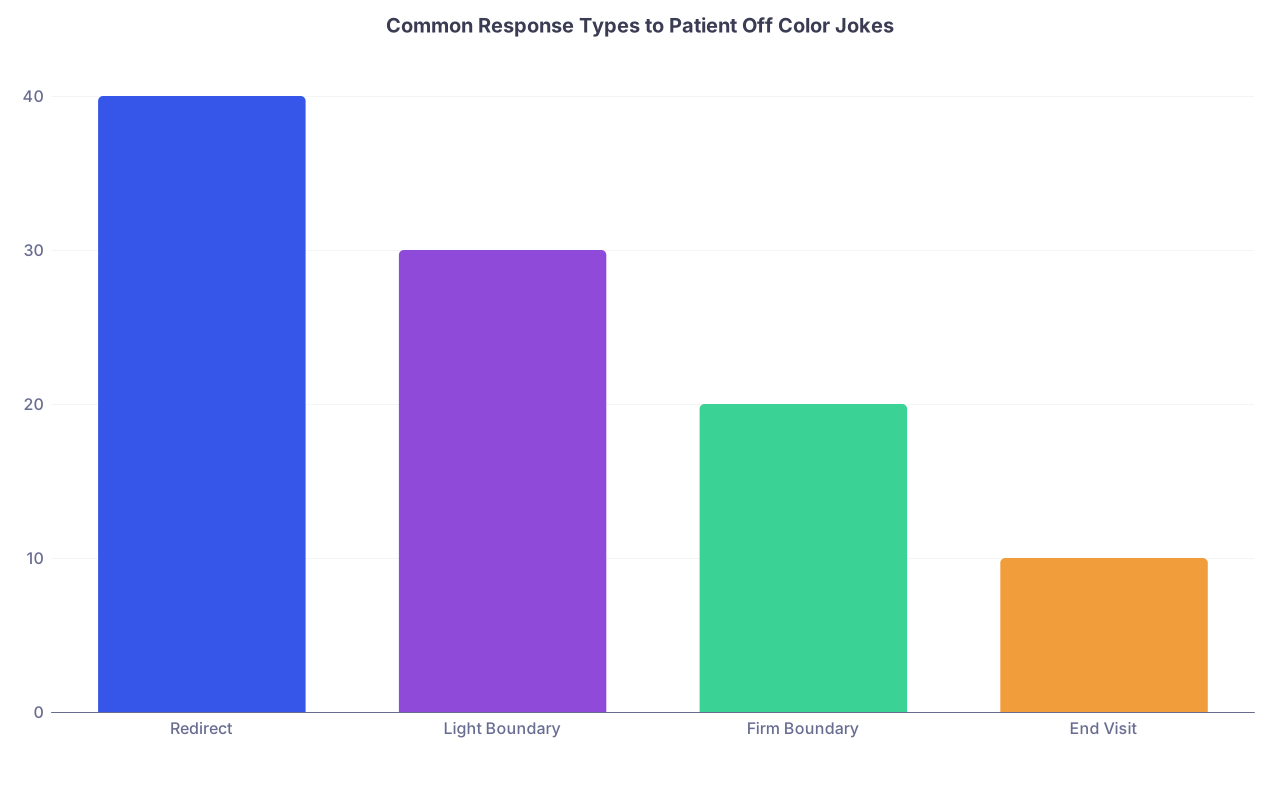
| Category | Value |
|---|---|
| Redirect | 40 |
| Light Boundary | 30 |
| Firm Boundary | 20 |
| End Visit | 10 |
For sexual jokes about you:
- “No. I’m here as your doctor, not in that way. Let’s focus on your blood pressure.”
- “Comments about my body are not appropriate in a medical visit. Tell me more about the pain you’re having.”
For sexist/gendered jokes:
- “We treat everyone here as professionals. Let’s keep the conversation respectful.”
- “That stereotype isn’t accurate and it doesn’t belong in this room. Let’s get back to your medication list.”
For racist/derogatory comments:
- “We don’t tolerate racist or discriminatory language in this clinic. If it continues, we will end this visit.”
- “Everyone here, including our staff, deserves respect. That comment is not acceptable.”
For “I was just joking, relax”:
- “I hear you say it was a joke. It was still inappropriate for a medical visit.”
- “Jokes that make others uncomfortable aren’t OK here. Let’s move on.”
For ending a visit:
- “We’ve talked about keeping things respectful, and the comments have continued. I’m ending the visit now. You’ll receive follow‑up instructions from the front desk.”
Read those out loud once. It’ll feel less foreign when you need it.
Handling Your Own Reaction Afterward
You’ll replay the moment in your head on the drive home. Everyone does.
Two things that make this worse:
- Blaming yourself for not having the perfect line.
- Minimizing it: “It wasn’t that bad, I’m just sensitive.”
Instead:
- Debrief with one person you trust: co‑resident, attending, friend in medicine. “Hey, this happened. Here’s what I did. Anything you would’ve done differently?”
- Adjust one thing. Maybe next time you jump one level higher on the response ladder (redirect → light boundary, light → firm).
- Decide if this patient is someone you don’t want to see again. You can and should ask not to be scheduled with a repeat offender, especially if you’re a trainee.
And if you’re supervising: you bring it up first. “Anything weird happen with patients today?” Trainees rarely volunteer this unless you make it normal to discuss.
A Quick Note on Humor You Can Use
This is “medical humor” as a category, so let me be blunt: you’re allowed to be funny at work. You’re just not allowed to punch down, sexualize people, or normalize prejudice.
Occasionally, you can defuse an off‑color joke with clean humor that resets the tone.
Example:
Patient: “So, you gonna buy me dinner first before all these tests?”
You: small smile, dry tone “My idea of romance is ordering lab tests on time. Let’s stick with that.”
Then you move on. You didn’t endorse the joke. You sidestepped it and redirected.
But if you’re not sure? Skip the humor. Go straight to boundary or redirect. Better to be slightly stiff than accidentally co‑sign something ugly.

The Future: Clinics That Actually Back You Up
One last piece. We pretend this is all about individual skill, but system support matters.
Strong clinics and hospitals:
- Have a clear code of conduct that patients sign.
- Train staff and trainees explicitly on responding to harassment.
- Back clinicians when they end visits or dismiss patients for repeated misconduct.
Weak systems tell you to “just ignore it” because “patient satisfaction scores.” That’s cowardly and short‑sighted. Burned‑out clinicians do not give good care, and normalizing harassment drives people—especially women, trainees, and under‑represented staff—out of medicine.
If you’re in a place that doesn’t have these structures, start quietly collecting data: incident notes, patterns, staff stories. One calm, specific ask to leadership—“We need a written policy and training on patient harassment”—goes farther when it’s grounded in reality, not vague complaints.
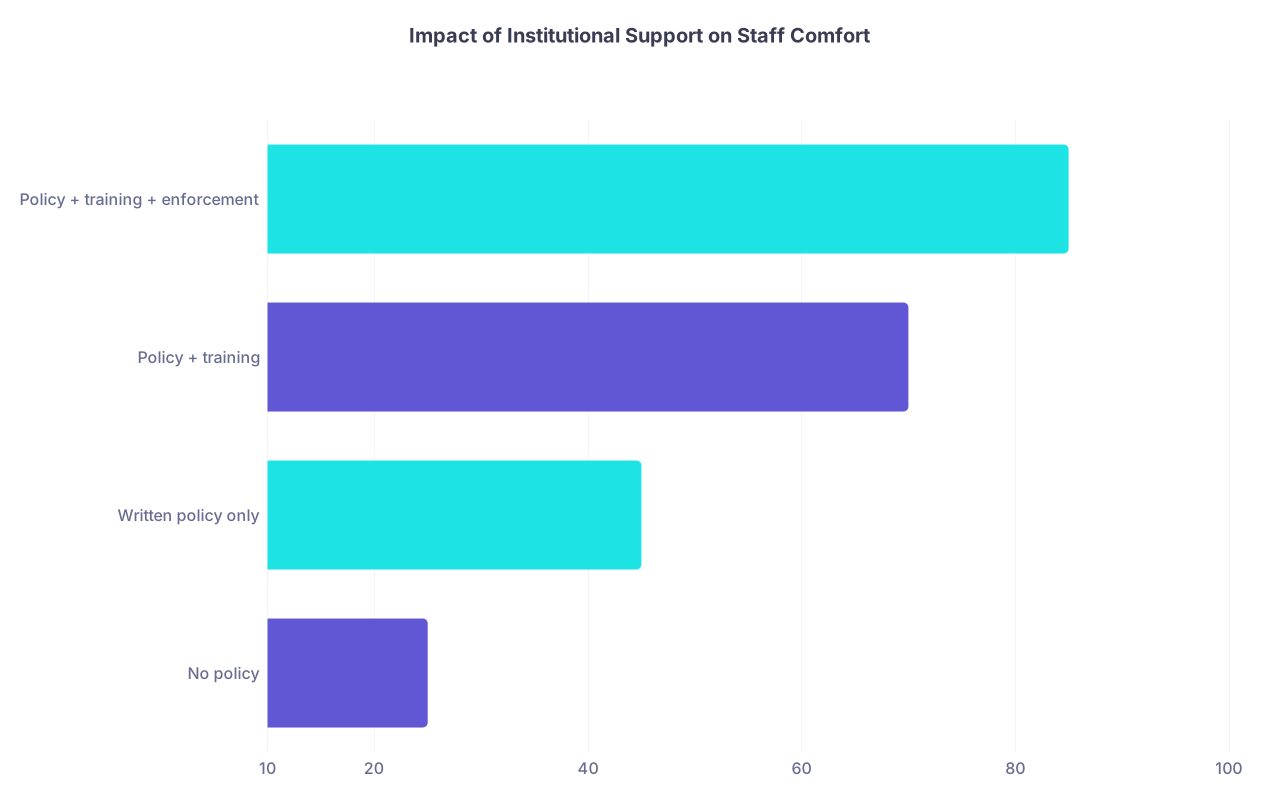
| Category | Value |
|---|---|
| No policy | 25 |
| Written policy only | 45 |
| Policy + training | 70 |
| Policy + training + enforcement | 85 |
You shouldn’t have to white‑knuckle every awkward joke alone. Culture can change. Slowly. But it starts with individuals refusing to laugh along.

FAQs
1. What if I’m a student or intern and the attending laughs at the joke?
That’s uncomfortable, but it happens. You still control your own reaction. Stay neutral. Don’t laugh along just to fit in. After the encounter, you can ask the attending privately: “When the patient made that comment, I was uncomfortable. How do you usually handle those?” Their answer will tell you a lot. If you keep seeing a pattern, bring it up with a clerkship director or program leadership. You’re not obligated to adopt bad habits just because someone senior normalizes them.
2. What if the patient seems cognitively impaired or intoxicated?
You adjust expectations, but you do not abandon boundaries. With dementia, delirium, or intoxication, I’d say something like: “That comment is not appropriate, even as a joke. I’m here to help with your health.” Document the behavior and the suspected cognitive issue. You may not “teach” them out of it, but staff still deserves protection, and repeated behavior can influence future care planning and staffing decisions.
3. Can I ask not to see a specific patient again after an off‑color joke?
Yes. And you should, if you felt unsafe or clearly disrespected, especially after you set a boundary. Tell your scheduler, chief, or clinic manager: “I’m not comfortable continuing to care for Mr. X due to repeated inappropriate comments. Please reassign him.” In many settings, that’s standard. If they push back, frame it as a safety and professionalism issue, not a preference: “This is a boundary issue and I’m concerned about escalation.”
4. How do I handle it if family members are the ones making the jokes?
Same ladder of responses applies. Redirect once if it’s mild. Then a light boundary: “Those kinds of comments are not appropriate here. We’re focusing on your mother’s care.” If it continues: “If the comments keep happening, I’ll need you to step out so we can continue the exam.” You’re allowed to remove disruptive or disrespectful visitors from the room. Document what happened and who was present when you set that boundary.
5. Am I overreacting if the joke “wasn’t that bad” but stuck with me?
No. Your body’s sense of “that felt wrong” is data. You don’t need a legal definition of harassment to justify feeling unsettled. If something sticks in your head for hours, that’s a sign your boundary was bumped or crossed. Debrief with someone you trust, write a brief note in the chart if it was clearly inappropriate, and decide what level of response you want next time with that patient. The goal isn’t to retro‑fix the past; it’s to make sure future you isn’t stuck in the same spot again.
With these tools in your pocket, the next time a patient tests the line with an off‑color joke, you won’t be stuck in that awkward silence wondering what a “professional” would do. You’ll know your options, you’ll pick one, and you’ll get back to the real work: taking care of patients without losing your self‑respect along the way.