
Most people bomb their first joke on a new team. The smart ones stop treating humor as “personality” and start treating it as reconnaissance.
You are not “being yourself” in the first 30 days on a new service. You are collecting data. Humor is one of your best tools—but only if you calibrate it to the team culture instead of blasting your default setting at everyone in a 10‑foot radius.
Here is how to do it, step by step, over the first month.
Big Picture: Your 30‑Day Humor Game Plan
At this point you should accept one reality: every service is its own micro‑country. New laws. New language. New taboos.
Your priority:
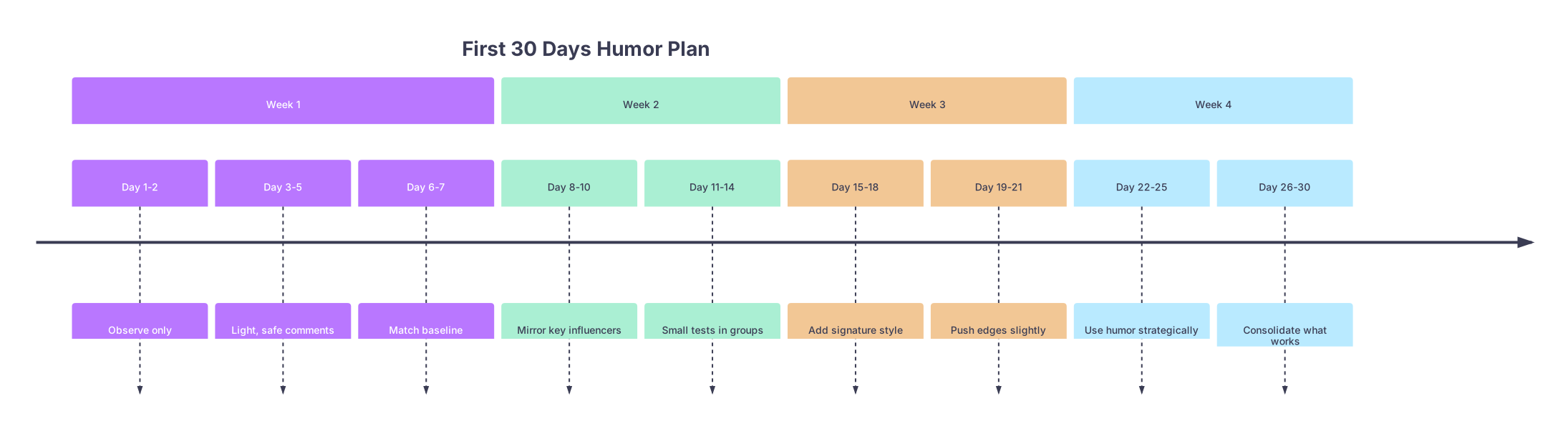
- Week 1: Say almost nothing funny on purpose. Watch. Map the culture.
- Week 2: Match the baseline. Fit in, not stand out.
- Week 3: Test the edges. Small calibration pushes.
- Week 4: Own your lane. Use your style strategically without stepping on landmines.
Think of it like titrating a drip. You start low, go slow, and watch the response.
Days 0–2: Pre‑Game and Day One — “Assume You Are Not Funny Yet”
At this point you should be preparing, not performing.
Before Day 1 (evening before)
Your job now is to lower the risk of unforced errors.
Look up who you are joining
- Check the resident schedule or service roster.
- Ask a colleague one year ahead:
“What’s the vibe on GI? Super serious? Chill? Dark?” - Pay attention to:
- Any “known” attendings (the one who hates joking on rounds, the one who is famously sarcastic)
- Whether it is a “malignant” or “chill but chaotic” rep
Decide your starting setting: 10–20% of your usual humor
- If you are usually:
- Very sarcastic → start neutral, minimal sarcasm.
- Very goofy → start dry and light instead.
- Very quiet → that is fine; just avoid deadpan that can be misread as hostile.
- If you are usually:
The goal: you walk in as a competent, slightly warm professional. Not The Funny Intern. That title almost always backfires.
Day 1: Orientation / First Rounds
At this point you should be watching and logging, not cracking jokes.
Look for four things:
Attendings’ style
- Does anyone joke at the bedside?
- Is the attending using:
- Light teasing of residents (“You ordered what?” said with a smile)
- Self‑deprecating comments (“I still cannot read these EKGs before coffee”)
- Zero humor, tight body language, clipped phrases
Senior resident’s default tone
- The senior is your main cultural translator.
- Do they:
- Use memes on group chat?
- Swear freely in the workroom?
- Stay extremely formal?
Boundaries around patients
- Any joking near patient rooms?
- How do people talk about difficult patients in the workroom:
- Venting with dark humor?
- Strictly professional?
The “don’t cross this line” topics
- You will spot them early:
- A patient death everyone goes silent about.
- A QI issue or lawsuit rumor no one touches.
- Topics that make the room freeze (politics, specific staff, etc.).
- You will spot them early:
On Day 1, your humor output should be limited to:
- Small, safe smiles.
- One or two very mild, prosocial comments:
- “Post‑call coffee really should be IV push.”
- “I promise my notes are shorter than my sign‑outs.”
If you feel the urge to make a sharper joke—do not. Log it mentally. That is the joke you can probably make on day 14 if the culture supports it.
Days 3–7: End of Week 1 — “Learn the Local Dialect”
By this point you should have a basic sense of whether the team runs hot, cold, or chaotic. Now you refine.
Your observation checklist (end of Day 3 and Day 5)
End of Day 3, ask yourself:
- Who is the funniest person on the team right now?
- What kind of humor do they use?
- Self‑deprecating
- Situational (“This EMR was clearly designed by a committee of our enemies”)
- Sarcastic
- Physical (dramatic sighs, eye rolls, miming)
- How does the attending react when they joke?
- Smiles? Plays along? Ignores? Visibly annoyed?
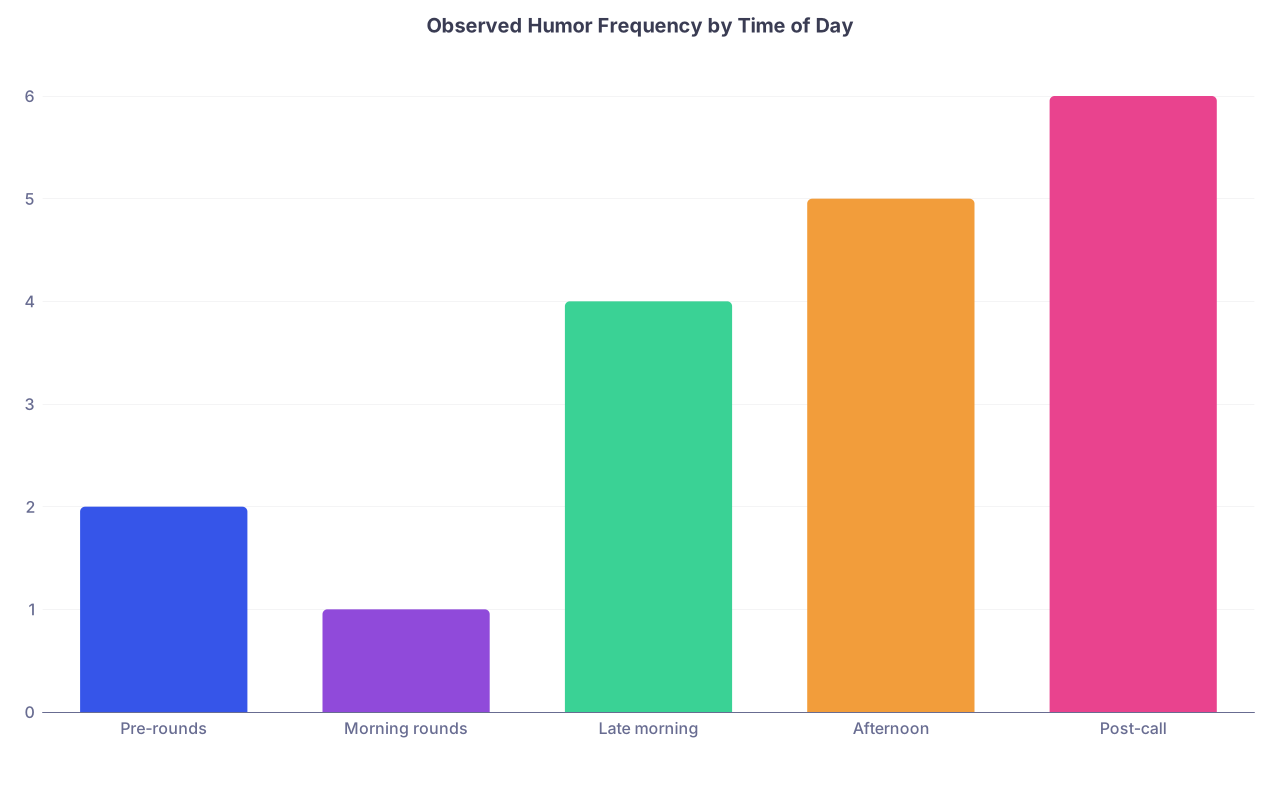
End of Day 5, track how often you see humor at different times:
| Category | Value |
|---|---|
| Pre-rounds | 2 |
| Morning rounds | 1 |
| Late morning | 4 |
| Afternoon | 5 |
| Post-call | 6 |
You should especially notice:
- Rounds are usually lower humor.
- Workroom between tasks: higher humor.
- Post‑call: humor gets weirder and darker if the team is close.
Your output level at the end of Week 1
By Day 7, adjust to:
- 20–30% of your natural humor.
- Only in the workroom, never at the bedside unless the attending explicitly role‑models it and the patient clearly enjoys it.
- Keep it:
- Short.
- Gentle.
- Directed at yourself or the system, not at patients, specific nurses, or your co‑interns.
Example safe moves:
- When EMR crashes:
“Perfect timing. It sensed I was almost caught up.” - After a long admit, to the senior:
“I’m currently on page 7 of this H&P and regretting every adjective.”
At this point you should get at least one smile or light laugh from the team each day. That is enough. You are establishing that you “get the vibe,” not auditioning for stand‑up.
Week 2 (Days 8–14): “Mirror, Then Micro‑Adjust”
Now you start matching the room.
Day 8–10: Calibrate to the most influential person
Influence ≠ job title. Often it is the senior resident or the loudest PGY‑2.
Identify:
- Who sets the tone in the workroom?
- Who do others copy when it comes to joking or venting?
- Who gets away with the riskiest humor without pushback?
Once you know that, you do this:
- On days when that person is light and joking → you allow a bit more levity.
- On days when they are cold or stressed → you mostly shut it off.
You are now using humor as a synchronization tool, not a personality showcase.
Micro‑timeline for Week 2
Day 8–9: Slight increase
At this point you should:
- Add 1–2 new joke “types” and test them softly:
- Mild sarcasm about yourself:
- “Look at that, an order set I did not break on first try.”
- Playful exaggeration:
- “This sign‑out is going to be longer than Harrison’s.”
- Mild sarcasm about yourself:
- Only in 1:1 or 1:2 conversations at first, not to the whole group.
Watch for:
- Do people add to your joke?
- Or does it land, then die?
If jokes routinely die with no one building on them, you are ahead of the culture. Dial back.
Day 10–11: Test in slightly larger groups
Now you can:
- Use one quick, light comment when the group is stuck or tense.
- Example, after the third “STAT” page in 10 minutes:
- “The pager clearly missed us on nights.”
If the attending or senior smirks or contributes, you are in safe territory.
If they visibly ignore and redirect: you just got feedback. Bank it.
Scenarios you will actually see in Week 2
At this point you should recognize at least one of these cultures:
| Culture Type | What You Should Do |
|---|---|
| Dead Serious | Keep it dry, almost no jokes |
| Quiet but Warm | Gentle, self-focused humor only |
| Dark and Bonded | Listen first, join late and lightly |
| Chaotic and Loud | Small contributions, never compete |
1. Dead Serious team
- Attending never jokes.
- Senior is all business.
- Workroom talk is 90% clinical, 10% logistics.
You respond by:
- Keeping humor almost entirely internal.
- Using only:
- “Thanks for walking me through that; I owe you coffee sometime” type lightness.
- Saving your real personality for friends after sign‑out.
Trying to “fix” a serious team with your jokes is arrogant. You will just look tone‑deaf.
2. Quiet but Warm
- People do smile.
- They just do not talk much.
- Group chat has the occasional meme, but always mild.
You:
- Match the softness.
- Example:
- After a long code debrief, quietly:
“Well, that was a cardiac workout and I just stood at the foot of the bed.”
- After a long code debrief, quietly:
- Send exactly one meme in the first two weeks, and make it:
- Non‑political
- Non‑patient‑related
- Universal (coffee, sleep, pager, EMR)
3. Dark and Bonded
- They joke about everything, including bad outcomes.
- You feel like you walked into a long‑running group chat.
This is where new people blow it. They over‑join. Too fast.
You:
- Spend the entire Week 2 mostly laughing and nodding, saying very little.
- Add only very mild dark humor and never about specific patients.
- Let them pull you in; do not force it by trying to out‑edge them.
4. Chaotic and Loud
- Everyone talks over each other.
- There are 3 side conversations at all times.
- Jokes come fast; volume is high.
You:
- Use humor sparsely and strategically:
- Brief, well‑timed lines.
- Do not try to compete with the loudest voices.
- Remember: high noise does not equal high psychological safety. People can be loud and still brutal about missteps.
Week 3 (Days 15–21): “Test the Edges”
By this point you should know what gets laughs and what gets silence. Now you carefully push your range.
Early Week 3: Add a “signature” element
Pick one thing that feels like you and fits the team’s range:
- Dry observational comments:
- “This EMR window count is now higher than my patient count.”
- Running gag (only if the team already does running gags).
- Light call‑back humor:
- Referring back to an earlier team joke in a new context.
Use it once a day, max. Let people associate you with a specific, safe style.
Choose your timing
You do not introduce new humor in the middle of:
- Serious debriefs (codes, bad outcomes).
- Complex sign‑outs.
- Moments when the attending is clearly watching the clock.
You do test edges during:
- Charting in the afternoon when people are half‑fried.
- Waiting for transport.
- After a small win (successful tap, smooth discharge, etc.).
| Period | Event |
|---|---|
| Week 1 - Day 1-2 | Observe only |
| Week 1 - Day 3-5 | Light, safe comments |
| Week 1 - Day 6-7 | Match baseline |
| Week 2 - Day 8-10 | Mirror key influencers |
| Week 2 - Day 11-14 | Small tests in groups |
| Week 3 - Day 15-18 | Add signature style |
| Week 3 - Day 19-21 | Push edges slightly |
| Week 4 - Day 22-25 | Use humor strategically |
| Week 4 - Day 26-30 | Consolidate what works |
Handling a misfire in Week 3
You will have at least one joke land badly. The difference between someone who recovers and someone who gets labeled “problematic” is what they do next.
If you see:
- Awkward silence
- Eye contact avoidance
- Senior subtly changing the subject
You respond with:
- “That came out wrong—sorry, let me rephrase.”
- Or just: “Okay, that joke did not work. My bad.”
Then you move on and do not repeat that style for the rest of the rotation.
At this point you should be known as “funny sometimes” or “light to have around,” not “the clown” or “the one who made that weird comment.”
Week 4 (Days 22–30): “Use Humor as a Tool, Not a Twitch”
Now the team knows you. You know them. This is where humor can actually help the work instead of just decorating it.
Day 22–25: Deploy humor intentionally
You should be using humor for specific purposes:
To lower hierarchy when safe
- Example, senior apologizes for a miscommunication:
- You: “Honestly, I’m just glad it was not my order set this time.”
- This tells them you are not fragile and keeps the tone generous.
- Example, senior apologizes for a miscommunication:
To buffer feedback
- A co‑intern gently calls you out:
“You know you wrote the same plan twice on this patient?” - You: “I heard they liked consistency.”
- Then you actually fix it. Joke plus repair.
- A co‑intern gently calls you out:
To support others
- Nurse clearly frustrated after multiple pages.
- You: “You are doing God’s work. I am just trying to keep my pager from catching fire.”
- The joke is about you, not about the nurse’s job.
Day 26–30: Consolidate what works, retire what does not
Take inventory:
- Which jokes/styles got:
- Immediate laughs.
- Delayed smiles.
- No response.
- Which people:
- Laugh easily and appreciate levity.
- Stay stone‑faced no matter what.
At this point you should:
- Keep:
- The 1–2 humor “lanes” that worked consistently.
- Drop:
- Anything that even once got a “yikes” reaction.
- Document mentally:
- This attending prefers strict bedside behavior.
- This service (e.g., Heme/Onc) requires much more emotional restraint.
- This resident group enjoys very dry, low‑energy humor.
You are building your internal service humor map—something residents a year behind you will ask about. And you will actually have real, specific answers.
Red Lines: What You Never Joke About in Any Culture
You do not need a 30‑day trial to know these are out of bounds. They are always off‑label.
Never joke about:
- A specific patient’s:
- Identity, appearance, socioeconomic status, language, diagnosis.
- Nurses or staff as a group:
- “Nurses on 7W are so…” → just do not.
- Trainee performance in front of patients.
- Protected characteristics:
- Race, gender, orientation, religion, disability.
- Safety events:
- Near‑misses, errors, actual harm.
Dark humor about the experience (“I think the hospital air is 50% caffeine, 50% burnout”) is different from dark humor about a person. Stay on the experience side.
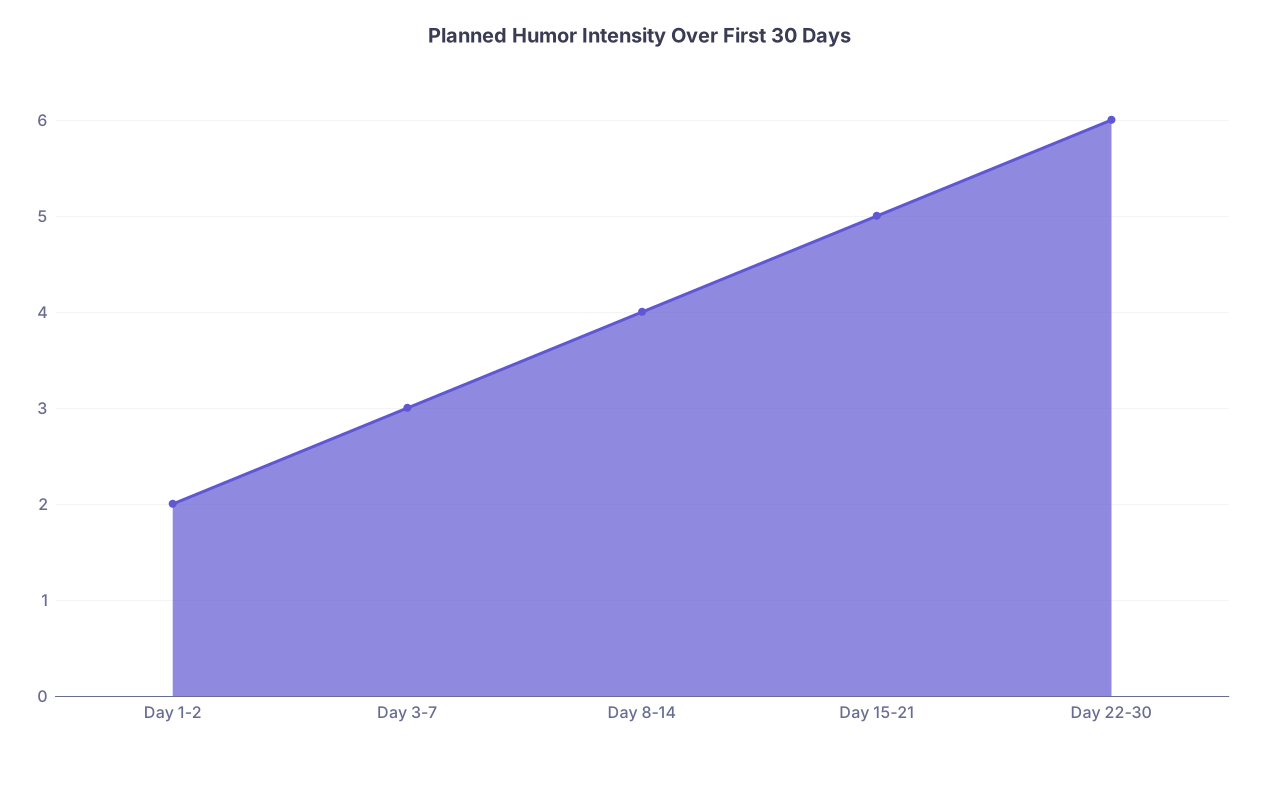
Quick Reference: 30‑Day Humor Calibration Levels
| Phase | Your Humor Level (0–10) | Main Goal |
|---|---|---|
| Days 1–2 | 1–2 | Observe, build trust |
| Days 3–7 | 2–3 | Match baseline tone |
| Days 8–14 | 3–4 | Mirror, small tests |
| Days 15–21 | 4–5 | Add signature safely |
| Days 22–30 | 4–6 | Use humor as a tool |
| Category | Value |
|---|---|
| Day 1-2 | 2 |
| Day 3-7 | 3 |
| Day 8-14 | 4 |
| Day 15-21 | 5 |
| Day 22-30 | 6 |
You almost never need to be above a 6 out of 10 in a clinical environment. If you feel the urge to go higher, do it at home, at a comedy show, or on a meme page.
FAQ (Exactly 3 Questions)
1. What if my natural style is very sarcastic—do I have to fake a different personality for 30 days?
For the first week: yes, you do. That is called professionalism, not faking. You are not erasing your personality; you are editing for audience. Once you understand where sarcasm sits in that team’s culture (some teams love it, some hate it), you can reintroduce it in a controlled way. Until then, keep sarcasm aimed only at yourself and the system, and keep it mild.
2. How do I recover if I really cross a line with a joke?
You handle it early and cleanly. Same day if possible. You say, directly to the person affected (or to the team if it was public): “That comment was inappropriate. I am sorry. I will not repeat it.” No long explanations. No “I was just tired.” Then you actually change your behavior. People forgive single mistakes; they do not forgive patterns.
3. Is it ever better to just not use humor at all on a new service?
If you are unsure or coming off a bad experience, you can absolutely run at 0–1 for the first 3–4 days. But over 30 days, zero humor reads as cold or detached, especially in high‑stress environments. Aim for minimal but human: warm tone, small smiles, the occasional light comment that is obviously kind. You are not obligated to be funny. You are obligated to not make the job emotionally harder for the people trapped in the call room with you.
Key points: In your first 30 days on a new service, humor is reconnaissance, not performance. Start low, mirror the strongest cultural signals, and only expand once you have data. And remember: the goal is not to be “the funny one.” The goal is to be the person whose presence makes hard days slightly easier, never harder.