
The wrong joke at 3 a.m. can wreck a night more efficiently than a code blue.
Call strips you down. Hour by hour, you find out which jokes actually help you survive and which ones just poison the room. The myth is “any humor is good humor on call.” That’s false. Bad humor is like bad dosing: wrong patient, wrong timing, wrong route.
Let’s walk the night the way it actually happens—by the clock. At each point, what you say and how you joke either buys you a bit of sanity… or digs a hole you’ll have to climb out of.
18:00–20:00 – The “Optimistic” Beginning
At this point you’re signing in, overcaffeinated, and lying to yourself about how much sleep you’ll get.
What usually happens
- Sign-out chaos, 20 “one more thing”s.
- Nurses circling with “since you’re here…” questions.
- You still remember what circadian rhythm feels like.
This is when light, observational humor works. You and the team are still human.
Good moves here:
- Jokes that punch up or sideways, never down.
- Shared misery humor: “Of course the 4:59 p.m. admission came in at 18:02. Classic.”
- Self-deprecation: “I’ve already lost my pen and it’s been 7 minutes. Strong start.”
Bad moves:
- Anything about patients as the punchline.
- Specialty war trash-talk in front of the wrong crowd.
- “Dark for the sake of dark” when people are still trying to set the tone.
At this point you should:
- Establish yourself as competent first, funny second. Nobody laughs with the intern who already missed a potassium of 2.9 at sign-out.
- Use humor to signal: “I’m here, I’m paying attention, and we’re in this together.”
Quick mental checklist (19:30):
- Have you double-checked sick patients?
- Do your nurses know you’re reachable?
- Have you already made one joke that builds the team, not divides it?
If not, say something simple while you’re still fresh: “If anything feels off, please call early. I’d rather be wrong at 8 p.m. than at 3 a.m.”
Then add a little levity: “I peak clinically around 21:00 and then it’s a steady decline, so let’s front-load the serious stuff.”
20:00–22:00 – The “False Calm” Window
This is that dangerous stretch where you think, “Maybe it won’t be that bad.”
It will.
When jokes help
Here, routine-bonding humor is gold. You’re seeing the first admission or two. Your consult from ortho still hasn’t called back. You’re putting in mundane orders.
Perfect humor styles:
- Dry observational: “Epic is the only system where ‘just two clicks’ means twelve.”
- Micro-complaints everyone shares: printers, pagers, the door that never stays open.
- “We’ll get through it” comments that are half joke, half plan.
This is also prime time for using humor to open communication:
- To a nervous nurse: “If you page me three times in a row, assume I probably fell asleep face-down on the keyboard. Call the unit and have them check for forehead-shaped key imprints.”
- To a new med student: “Ask ‘too many’ questions until 10 p.m. After that, my working memory is gone and we both suffer.”
When jokes start to backfire
At this point, mocking other services usually looks immature, not clever.
Examples that land badly:
- “Cards always dumps their terrible patients on nights.” (You might be saying that in front of the nurse whose partner is in cardiology.)
- “ICU just wants a night off so they’re trying to send us their train wrecks.” (You’ll meet that ICU fellow again. Count on it.)
At this point you should:
- Decide your night persona: calm and slightly sardonic > frantic and performatively funny.
- Use humor with intention: to reduce tension, not to show you’re “the funny one.”
22:00–00:00 – The Pager Chorus Kicks In
Now the floor is waking up. Call lights, new fevers, “patient can’t sleep,” pain calls.
This is when humor shifts from social extra to emotional triage tool.
22:00–23:00 – Juggling Mode
You’re starting to stack:
- Two new admissions.
- One borderline patient.
- Three non-urgent yet persistent pages.
Here, short, contained jokes help keep things moving:
- “I just hit 12 pages this hour. Apparently I’m popular.”
- “We’ve reached the part of the night where my coffee needs coffee.”
What works:
- One-liners that acknowledge stress without dramatizing it.
- Verbal “themes of the night”: “Tonight’s special: shortness of breath with a side of unclear documentation.”
What fails:
- Long story jokes. Nobody has time.
- Cynical “why do I bother” humor. Demoralizing and contagious.
23:00–00:00 – Patient-Facing Humor: High-Risk, High-Reward
You’re seeing patients who are scared, in pain, or just exhausted.
Useful patient-facing humor:
- Gentle reassurance with a smile: “I’m the night doctor. I know, you were hoping for someone taller, but I promise I can write orders just fine.”
- For the 12th person with insomnia: “The first rule of sleeping in a hospital is: don’t be in a hospital. But let’s see what we can do.”
Off-limits:
- Jokes about death, prognosis, or going home later than expected. You don’t know who heard what earlier.
- “At least you’re not as sick as the guy down the hall” type comparisons. Feels minimizing.
At this point you should:
- Set a personal rule: no sarcasm with patients overnight. It’s misunderstood more often than not.
- Keep jokes short, kind, and optional. If the patient isn’t biting, you drop it immediately.
00:00–02:00 – The Psychological Cliff
At this point, your brain starts bargaining. You’re not yet wrecked, but your reserves are sliding.
Sleep deprivation changes how humor lands. Jokes feel funnier, or harsher, or both.
00:00–01:00 – The Dark Humor Temptation
This is when you’ll hear comments like:
- “If they page me for Tylenol one more time, I’m walking into traffic.”
- “At least if I code, I’m already in the right place.”
Let me be direct: shared dark humor between clinicians can be healthy. But it’s also the easiest to misfire.
Good use of dark humor:
- Behind closed doors, with colleagues you know well.
- Clearly at your own expense, not the patient’s.
- “If I confuse one more sodium level, I’m going to personally enroll in remedial basic chemistry.”
Bad use:
- Anywhere near patients, families, or open doors.
- Making the patient case the punchline: “This guy’s a total train wreck” rarely stays in the room it’s said in, and I’ve seen that sentence echo in family complaints months later.

At this point you should:
- Decide your red lines for dark humor ahead of time.
Example: no jokes that would sound awful if transcribed and read in M&M. - Use one colleague as your “vent buddy,” not the entire unit.
01:00–02:00 – Micro-Break Jokes
The workroom is quiet for 10 minutes. You finally sit. You need a quick reset.
This is where tiny rituals and inside jokes really help:
- The “night census guess” game: guess how many pages you’ll get between 01:00–02:00. Loser brings coffee on the next call.
- The shared “call playlist” where each person picks one absolutely terrible song and you rotate them during charting.
Here, humor:
- Keeps you awake and connected to other humans.
- Shortens the emotional distance between you and your co-residents.
What you do not do:
- Start doom-spiraling. “We still have five hours left” is a morale killer.
- Trash absent colleagues. It feels bonding, but it rots trust long term.
02:00–04:00 – The Surge of Weird
This is when the strange stuff comes out. Delirium spikes. Odd consults appear. You’re running on habit.
02:00–03:00 – Delirium Hour
Patients are pulling out lines, climbing out of bed, hallucinating.
Here, humor has one job: help the team stay functional.
Useful patterns:
- To a frazzled nurse: “We’ve officially entered the ‘every bed alarm at once’ part of the schedule. Let’s tag-team this one.”
- Shared mantra jokes: “If it’s not tied down, it’s getting pulled tonight.”
But with delirious patients you drop almost all joking. Their reality is fragile; they don’t need your punchlines.
What fails:
- “At least they’re entertaining” comments about confused patients. That reads as cruel fast.
- Jokes about restraints, sitters, or falls. Those become liability exhibits when repeated.
03:00–04:00 – Your Brain Is a Laggy Computer
At this point:
- Your processing slows.
- Your judgment about what’s “funny enough” to say degrades.
This is when you pre-commit to silence in certain contexts:
- No joking on the phone with consultants you don’t know.
- No sarcastic responses to nurses, even if the page feels trivial in context.
Use neutral, respectful stock phrases:
- “Got it, I’m on my way.”
- “Thanks for catching that.”
Then, once you hang up, you can look at your co-resident and say, “If I ever say ‘no problem’ again at 3 a.m., assume my brain has fully left my body.”
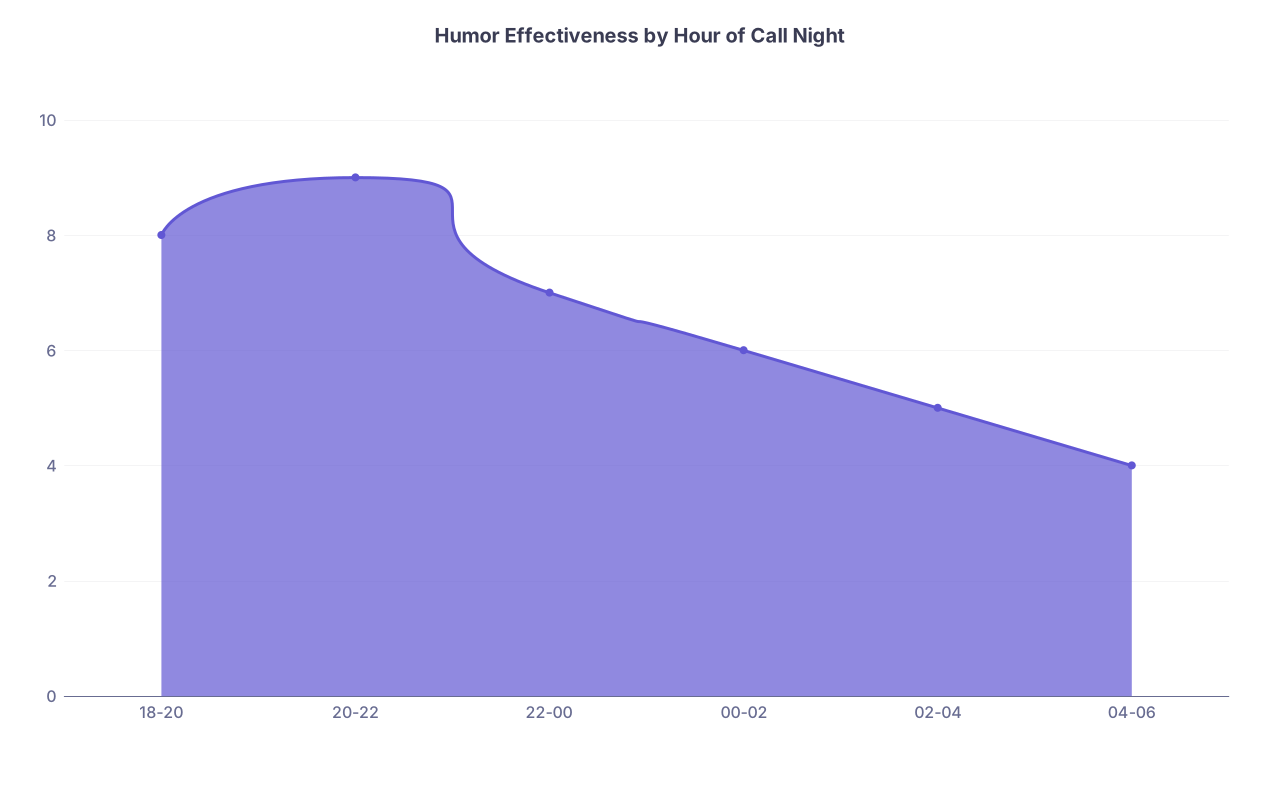
| Category | Value |
|---|---|
| 18-20 | 8 |
| 20-22 | 9 |
| 22-00 | 7 |
| 00-02 | 6 |
| 02-04 | 5 |
| 04-06 | 4 |
At this point you should:
- Default to under-joking rather than over-joking.
- Remember: the more tired you are, the more likely your “hilarious” comment is just unfiltered frustration.
04:00–06:00 – The Grim Stretch Before Sunrise
This is the most dangerous zone. Mistakes happen. Tears happen. The coffee is cold.
04:00–05:00 – When Humor Can Harm the Most
You’re:
- Writing sign-out notes.
- Fielding last-minute labs.
- Trying not to snap.
Here, cavalier humor can look:
- Uncaring (“Eh, I’ll let days deal with it” as a joke is almost never funny).
- Unprofessional (joking about punting work you should actually do).
You’ll hear veteran residents say things like:
- “Don’t create 07:00 problems at 04:30.”
That’s fine as operational wisdom. But if you say it with a smirk while ignoring a legitimate issue, that’s not humor. That’s laziness wearing a joke as camouflage.
Better humor:
- Self-mockery about slow thinking: “I just tried to click my stethoscope. I need this shift to end.”
- Small, humane comments: “The first person who brings breakfast on dayshift is my new favorite attending.”
05:00–06:00 – Pre-Sign-Out Tension
Everyone is fragile and everyone wants to go home on time.
This is when defensive joking shows up:
- The intern who screwed up an order jokes nonstop about how “I’m just the dumb intern.”
- The senior who missed a lab makes edgy comments to display how little they care.
Both strategies are bad. They destroy your credibility and make it harder for people to trust you next time.
Better move:
- Own the error plainly.
- Use just enough humor to show you’re not shattered.
- “I missed that creatinine bump earlier. I’ve added repeat labs and flagged it for days. Next time I’ll try practicing medicine with both eyes open.”
At this point you should:
- Prioritize clarity over comedy in sign-out.
- Let the jokes be small and safe: “Night was… spirited. I left you a carefully curated selection of problems in the list.”
The Morning After – Debriefing Your Own Humor
Once you’ve slept and your brain is online again, there’s a step almost nobody does—but should.
Same-Day Review (Later That Afternoon)
At this point you should:
- Take 5 minutes and replay:
- Which jokes landed well?
- Which ones made the room go quiet, or got no response, or left you with a tiny pit in your stomach?
Write down 2–3 patterns you want to keep and 1 you want to kill.
Examples:
- Keep:
- “Light complaints about systems that everyone knows are broken.”
- “Self-deprecating comments only about my own fatigue, not my skills.”
- Kill:
- “Jokes hinting I don’t care about patients when I’m actually just tired.”
- “Laughing along when someone else makes a cruel comment about a patient.”
| Situation | Humor That Helps | Humor That Hurts |
|---|---|---|
| Early evening sign-out | Light self-deprecation | Mocking other services |
| Midnight with team | Shared misery about systems | Dark jokes about specific patients |
| Patient at 23:00 | Gentle reassurance | Sarcasm or prognosis jokes |
| 03:00 nurse pages | Brief empathetic one-liner | Snapping or passive-aggressive quips |
| 05:30 sign-out prep | Small jokes about your fatigue | Bragging about what you "ignored" |
Building a “Call Night Humor Plan”
Sounds overkill, but the people who survive residency with decent reputations do this, consciously or not.
Before the Night
At this point (pre-call) you should:
- Pick two safe default lines for when you’re tired:
- “Thanks for calling, let’s figure it out.”
- “My brain is a little slow, let’s double-check this together.”
- Decide:
- No jokes about specific patients.
- No jokes that imply you don’t care about outcomes.
During the Night
Use a simple rule by the hour:
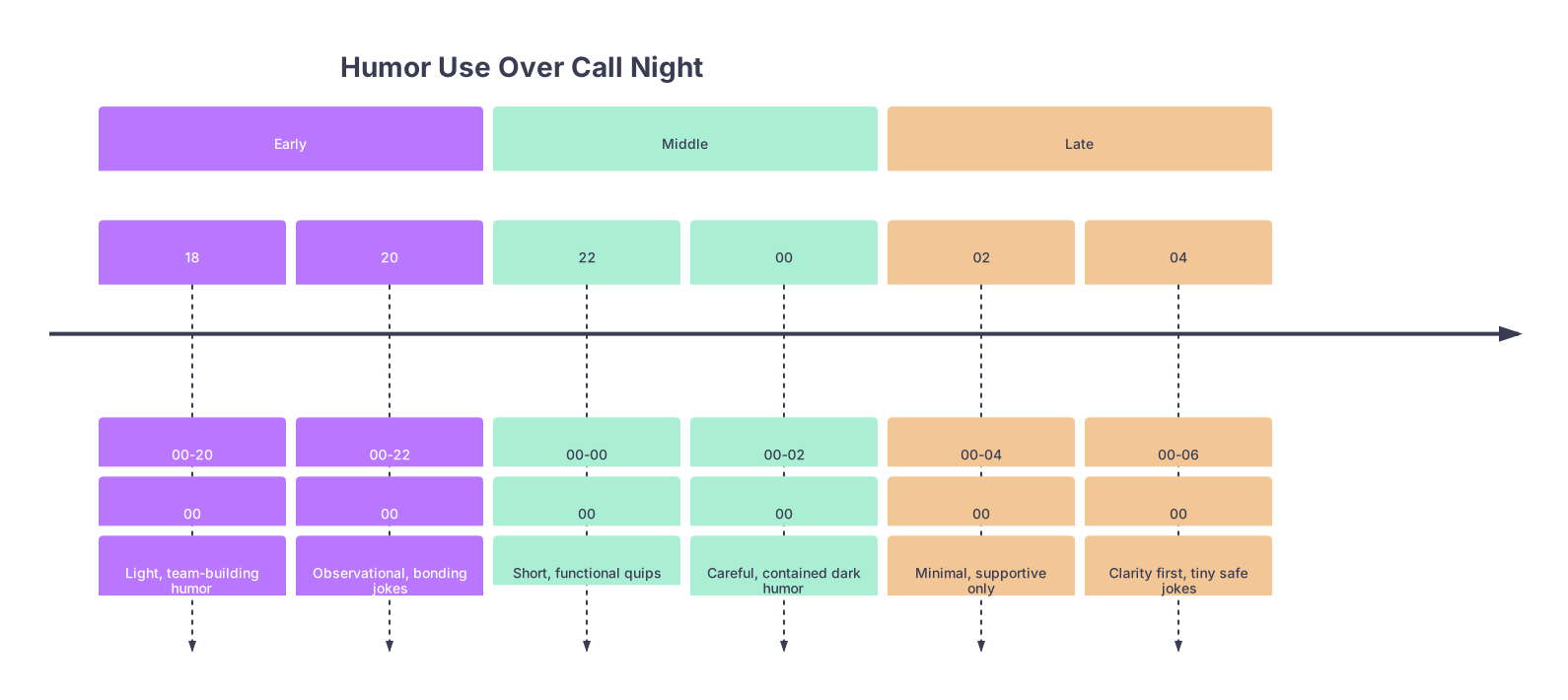
| Period | Event |
|---|---|
| Early - 18 | 00-20 |
| Early - 20 | 00-22 |
| Middle - 22 | 00-00 |
| Middle - 00 | 00-02 |
| Late - 02 | 00-04 |
| Late - 04 | 00-06 |
- 18:00–22:00: More room for normal, social humor.
- 22:00–02:00: Keep it short, keep it targeted.
- 02:00–06:00: Default serious; sprinkle light comments only when clearly helpful.
Long-Term: Protecting Your Future Self
The jokes you make on nights will follow you:
- That nurse who heard you make a snide comment at 03:00 will tell the next intern about you.
- The med student will remember your “we don’t care about these frequent flyers” joke when they are a resident sitting across from you in interview season.
In the future of medicine—with more transparency, more patient access to notes, more recordings in pockets—“private” humor isn’t really private. The smart move is to build a style you’d be comfortable seeing in print.

One Last Thing: Teaching the Next Person
If you’re a senior, your interns and students will copy your humor style more than your lecture on acid-base.
At this point you should:
- Model:
- Owning mistakes without hiding behind jokes.
- Using humor to humanize, not to belittle.
- Gently call out the bad stuff:
- “Hey, let’s not call patients ‘train wrecks.’ Say complex or unstable instead.”
It takes 10 extra seconds. It changes the whole culture of a team over a year.

Tonight, do one concrete thing: on your next call, pick a single hour—say 00:00–01:00—and pay ruthless attention to every joke you make. After the shift, ask yourself: “If someone had recorded that hour, would I be proud of how I used humor, or embarrassed?”