
Jokes in documentation do not automatically get you sued. Bad judgment does. And people are wildly overestimating one while completely ignoring the other.
Let me be blunt: the way most clinicians talk about medicolegal risk and charting is stuck in the 1990s. “If it’s not documented, it didn’t happen.” “Never put humor in the chart.” “Anything you write can be used against you in court.” You’ve heard this on every rotation, usually from someone who hasn’t seen the inside of a courtroom in their life.
The reality is more nuanced, and frankly, a lot more interesting.
This is a piece about what actually happens in malpractice litigation, how documentation really gets used, and where jokes and snarky comments fit into that picture. You’re not going to like all of it. But it’ll be honest.
What Courts Actually Care About (And It’s Not Your Dad Jokes)
Medical malpractice suits don’t start because you wrote “Drunk as a skunk” in the chart. They start because something bad happened, the patient or family is upset, and a lawyer thinks there’s a credible story that you breached the standard of care and caused harm.
The legal questions are boringly consistent:
- Was there a duty?
- Was there a deviation from the standard of care?
- Did that deviation cause harm?
- What are the damages?
Your documentation is mainly used as evidence about those questions. The content, clarity, and internal consistency of your notes matter far more than your attempts at being funny. But jokes can become a problem in three ways:
- They look unprofessional or cruel.
- They undermine your own defense narrative.
- They give a plaintiff attorney an easy way to anger a jury.
Not because humor is prohibited, but because perception in front of a jury is brutal.
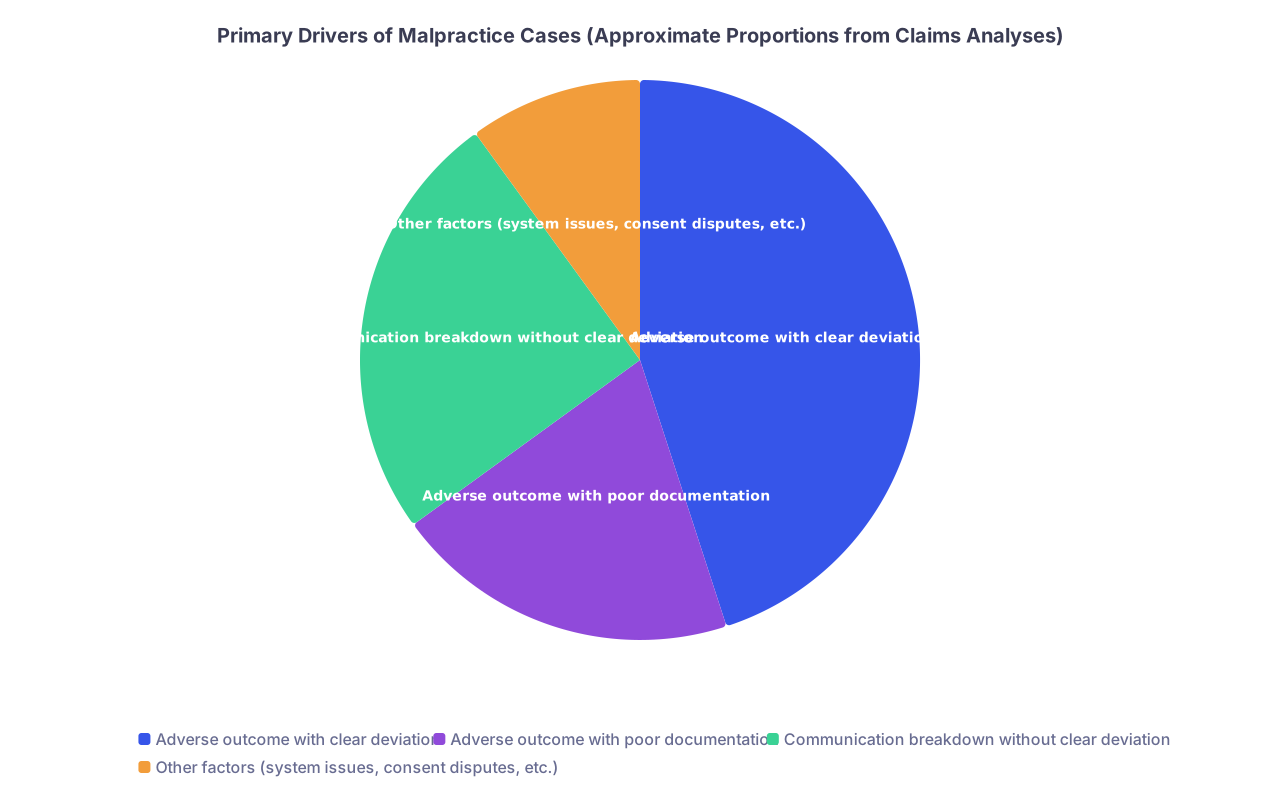
To understand why jokes get so much mythical weight, you need to see how often documentation actually drives a case versus just colors it.
| Category | Value |
|---|---|
| Adverse outcome with clear deviation | 45 |
| Adverse outcome with poor documentation | 20 |
| Communication breakdown without clear deviation | 25 |
| Other factors (system issues, consent disputes, etc.) | 10 |
Those numbers come from patterns seen repeatedly in closed-claims analyses by insurer and specialty societies. Theme: documentation problems aren’t usually the reason for the lawsuit. They’re what make defending the care harder.
Humor doesn’t show up as a top-line category. But it shows up inside that “perception and professionalism” bucket.
The Big Myth: “Any Joke in the Chart = Instant Lawsuit”
This is the myth that gets repeated on rounds: “A plaintiff lawyer will destroy you if you write anything humorous in the chart.” You’re told to write in robotic, defensive prose as if an angry jury is reading over your shoulder 24/7.
Reality: I’ve seen charts with occasional light humor, mild sarcasm, or patient quotes that made everyone chuckle. Not a single one was the reason the case was filed. But a few absolutely made the defense’s life harder.
Here’s what actually happens:
- Lawyers scan for tone in documentation. Jokes, sarcasm, and casual language can be used to paint a story: “This clinician didn’t take my client seriously.”
- Jokes rarely create liability where there was none. But they can erode sympathy and trust.
- The worst ones are about vulnerable patients: intoxicated, obese, psychiatric, non-English-speaking, or non-compliant. Those instantly look like bias or contempt.
There’s a difference between these two very real chart excerpts I’ve seen in practice:
- “Patient states, quote, ‘I feel like my heart is trying to sprint a marathon.’ Says she ‘googled it and is 99% sure it’s an aneurysm.’ Reassured.”
Mildly humorous, but clearly documenting patient language and your response.
Versus:
- “Classic Google doctor. Dramatic as usual. Likely here for attention.”
This is not “a joke.” This is character assassination on paper. In front of a jury, it looks like you never took her seriously.
One is harmless. The other is a gift-wrapped exhibit for the plaintiff.
Where Humor Becomes a Weapon Against You
You don’t get sued because you’re funny. You get sued because something bad happened, and then your humor makes it look like you didn’t care.
Here’s how plaintiff attorneys actually use your words in court:
To challenge your credibility
“Doctor, you wrote, ‘Frequent flyer here again for the usual drama.’ Is that how you describe patients who come to the ER in pain?”
Now the jury’s asking themselves: is this person dismissive? Do I trust their judgment?To imply bias and minimization
Words like “dramatic,” “attention-seeking,” “crazy,” “drug seeker,” or jokes about weight, substance use, or hygiene are gold for plaintiff counsel. They suggest you walked into the encounter pre-judging the patient.To show lack of seriousness about risk
If the chart looks like you were joking through a potentially serious presentation, it undermines any later testimony about how thoroughly you considered the differential.
A simple reality check: if a grieving parent heard your note read out loud in court, would they perceive it as humorous or cruel? Legal risk aside, that’s a decent north star.
Evidence vs Folklore: What Do Malpractice Data Actually Say?
Here’s the inconvenient truth: there’s very little formal research specifically about humor in documentation and malpractice risk. What we have instead:
Large malpractice carrier reports (CRICO, CNA, The Doctors Company, specialty societies) that talk repeatedly about:
- poor documentation,
- unprofessional tone,
- perceived disrespect,
- communication failures.
Deposition and trial experiences from defense attorneys, who universally say some version of:
“Snide or mocking chart comments do not help you. Ever.”
No insurer is publishing a table saying “Jokes increase your odds of losing a case by 17%.” But there’s consistent qualitative evidence in real cases: disrespectful language is used to torch your likeability.
So the real myth to kill is this:
Myth: “Jokes in documentation are a unique, special legal hazard unlike any other documentation issue.”
Reality: Tone is part of professionalism. Professionalism matters to juries. Humor can cross that line, but it’s not its own magic legal category.
The Dark Side: “Gallows Humor” and the Chart
Let’s separate two things that keep getting conflated:
- Gallows humor among staff – coping mechanism, sometimes ugly, usually private.
- Gallows humor in documentation – indefensible.
The first is a human response in a high-trauma environment. The second is handing your worst moment to a jury with a bow on top.
Examples that absolutely will hurt you if they land in the chart:
- “Another ‘I Googled chest pain’ special.”
- “Probably just needs a sandwich.”
- “Frequent flyer – here again to sample the narcotics menu.”
- “Social admit – needs housing, not medicine.”
None of these improves care. All of them telegraph contempt. And in a courtroom, they blow up your story that you took the patient’s presentation seriously.
Defense attorneys have a nickname for these lines: “plaintiff slides.” Single phrases that get blown up on a projector and sit in front of the jury for 20 minutes while they cross-examine you.
That’s not theory. That’s exactly what happens in trial.
What’s Actually Safe? Where Light Humor Probably Won’t Hurt You
Here’s the contrarian part: you can be human in your notes without tanking your legal position. But the bar is higher than people think, and your ego is a terrible judge of what’s “just light-hearted.”
Humor is generally low-risk when:
It’s patient-centered and respectful.
Example: documenting a patient’s own joke or phrasing.
“Patient jokes that her new walker needs a ‘turbo button’ so she can keep up with the grandkids.”It clarifies behavior instead of mocking it.
“Patient laughing and smiling while rating pain 10/10; requests refill of oxycodone. Behavior inconsistent with reported distress.”It’s self-directed or neutral, not at the patient’s expense.
“Explained home exercise program again; patient teased that I should print it in larger font this time.”
The pattern: humor is not the point. Care is the point. Humor is background color, never the punchline.
Once you drift into anything that sounds like judgment, stereotypes, or eye-rolling, you’ve left the “safe” zone.
The EHR, Copy-Paste, and the Hidden Joke Problem
The modern threat isn’t just what you write once. It’s what gets propagated.
You know the lazy copy-forward note with that one throwaway line?
- “Chronic complainer with multiple vague symptoms.”
- “Non-compliant as usual.”
- “Classic drug seeker.”
That phrase, once written, can get copied into 10 notes over 6 months. Now in court it looks like an entrenched, systemic bias:
- “Doctor, I count seven separate notes over three months where clinicians referred to this patient as ‘a chronic complainer.’ Did anyone consider that such attitudes might affect their willingness to escalate care when symptoms changed?”
You can see where this goes.
It’s not that one sarcastic remark lives in isolation. The EHR multiplies it. And lawyers live for patterns.
| Documentation Style | Legal Risk Level | Why It Matters |
|---|---|---|
| Neutral, factual | Lowest | Hard to attack, supports clear defense narrative |
| Warm but professional | Low | Human, respectful, rarely weaponized |
| Mild, patient-centered humor | Moderate | Context-dependent, risky if misunderstood |
| Sarcasm, judgment, stereotypes | High | Easy for plaintiff to frame as bias or neglect |
| Gallows or mocking humor | Very High | Torches credibility, undermines defense completely |
The Real Documentation Threats No One Lectures You About
While everyone’s obsessing over jokes, much more dangerous habits quietly march on:
Vague, templated notes
“Patient stable, no acute distress” autopopulated into a note when the patient actually looked miserable. That’s not funny. It’s ammo.Internal inconsistency
ROS completely negative, yet HPI describes three red-flag symptoms. Juries hate contradictions more than they hate bad jokes.Times that don’t match reality
“Re-evaluated patient at 03:00” when nursing vitals show they were in CT at that time.Defensive justification instead of honest uncertainty
Lawyers can work with: “Concern for possible PE; ordered CT to rule out.”
Harder to defend: “Doubt PE, patient low risk” after they later turned out to have one, especially if the workup was thin.
Humor is a rounding error compared to those issues. But folklore focuses on what’s memorable, not what’s statistically dangerous.
Humor, Culture, and the Future: What’s Coming Next
You’re not just writing for today’s attending or tomorrow’s consultant. You’re writing for:
- Future auditors.
- Quality improvement teams.
- Malpractice defense.
- Patients, under open notes policies.
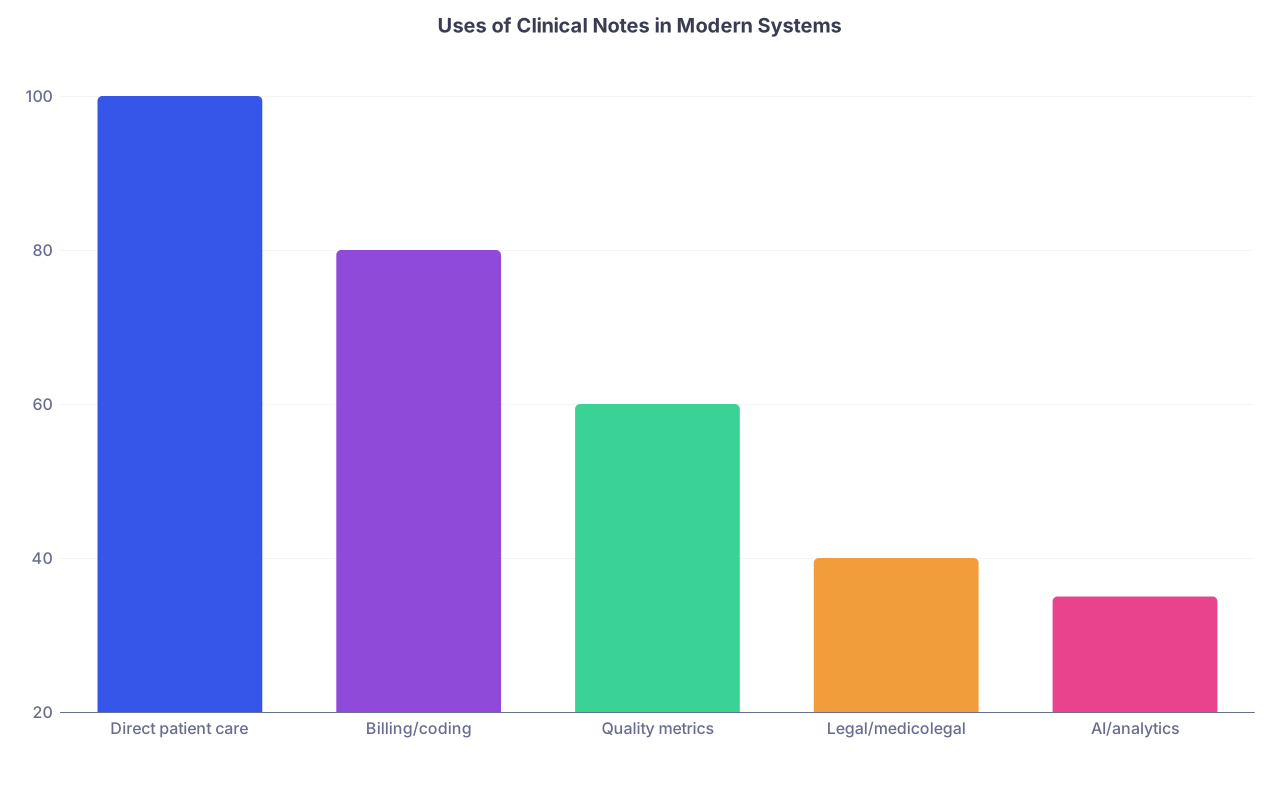
- And increasingly, AI systems mining notes for patterns.
That last one is not theoretical. Natural language processing is already being used to identify:
- high-risk encounters,
- bias in documentation,
- patterns of certain labels (“non-compliant,” “drug seeking,” “difficult”).
| Category | Value |
|---|---|
| Direct patient care | 100 |
| Billing/coding | 80 |
| Quality metrics | 60 |
| Legal/medicolegal | 40 |
| AI/analytics | 35 |
If your chart is peppered with mocking or biased language, you’re not just at risk in court; you may start getting flagged in institutional reviews or future bias audits. That review committee will not be charmed by “I was just joking.”
The long-term trend is painfully clear: more visibility, more transparency, more stakeholders reading your notes out of context.
The safest long-term policy: write like everyone will see it, and you’ll be fine reading it out loud.
A Practical Rule Set: Humor Without Self-Destruction
Let me cut through the vague scolding and give you something you can actually use.
Use these filters before you write anything that isn’t purely clinical:
Replace the jury
Imagine the patient, their family, your boss, and a jury all reading the line isolated on a slide. If any of them would flinch, don’t write it.Ask: does this comment advance care?
Patient’s own words that happen to be funny? Useful.
Your editorial comment on their personality? Useless and risky.Never punch down
No jokes about: obesity, addiction, mental illness, intelligence, language, race, gender, socioeconomic status. You know this. The chart is not where you test your edge.Use humor as description, not judgment
“Patient laughing as he tells me he is ‘the worst patient on earth’ and admits he skipped meds for 3 days.”
That’s both clinically relevant and human. Keep that kind.If in doubt, leave it out
Your note is not your stand-up set. If you’re half-wondering if it’s okay, your subconscious already knows the answer.
Where This Leaves You
Let me pull this together without sugar-coating.
Jokes themselves don’t cause lawsuits; bad outcomes plus bad tone make defending you harder. You’re not getting sued because you wrote one light-hearted line. You’re getting sued because something went wrong, and that line makes you look like you didn’t care.
The real legal danger is contempt, not humor. Plaintiff attorneys weaponize sarcasm, bias, and mocking language. Gallows humor in the chart is a self-inflicted wound.
Write like your note will be read out loud to angry people who don’t know you—and might not like you. Neutral, respectful, occasionally human? Fine. Anything that sounds like rolling your eyes at the patient? That’s what actually gets you burned.
You can keep your humanity without turning your notes into a liability exhibit. Just stop trying to be funny at the patient’s expense in the one place where your words never die.