
The story you have heard about burnout and laughter is half‑true at best. The data on stress biology is solid; the data on “just laugh more and you will be fine” is mostly vibes.
Let’s separate the physiology, the psychology, and the mythology.
What burnout actually looks like in numbers
Before we talk about cortisol or humor, we need to be precise about the problem. Burnout in medicine is not a vague feeling. It is measured, scored, and tracked—sometimes obsessively.
The main workhorse is the Maslach Burnout Inventory (MBI), with three subscales:
- Emotional exhaustion (EE)
- Depersonalization (DP)
- Personal accomplishment (PA; often inverted in analysis)
Across multiple national surveys, physicians routinely show burnout rates between 40–60%. Residents and medical students skew even higher.
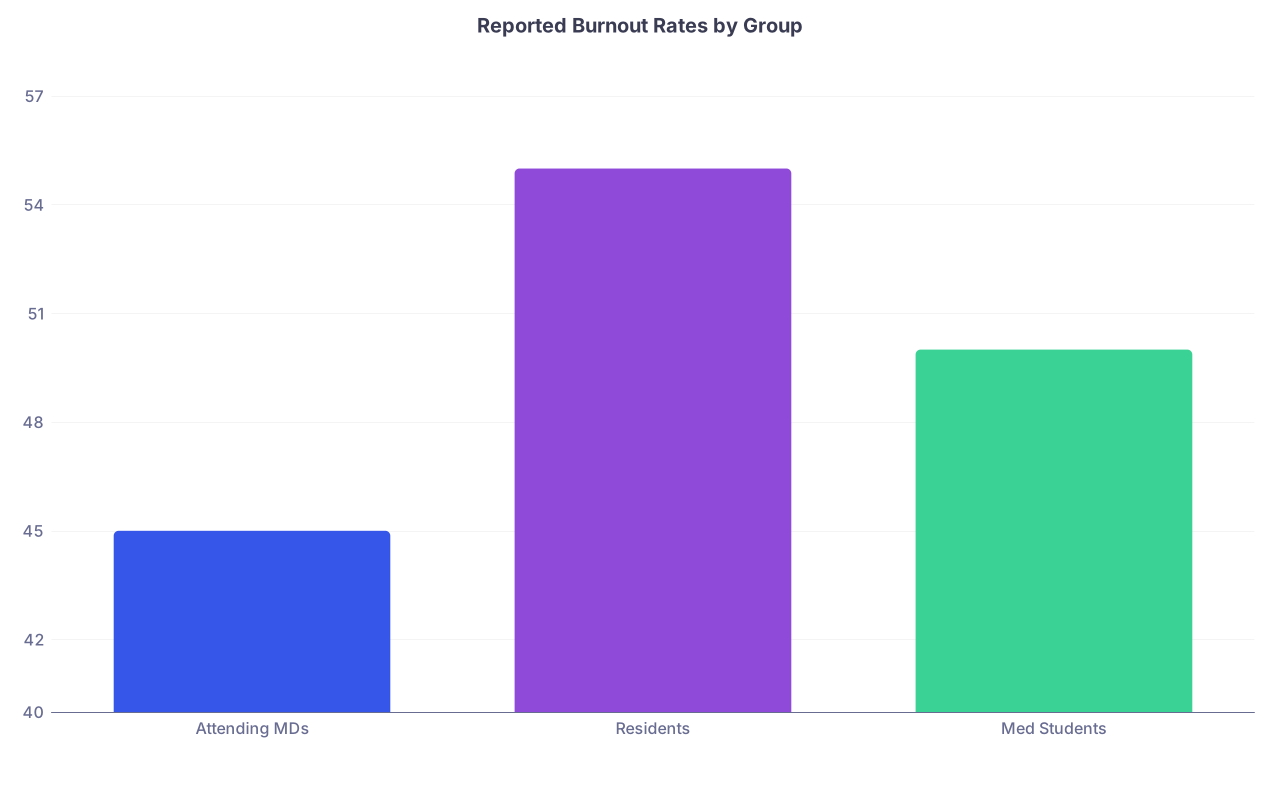
| Category | Value |
|---|---|
| Attending MDs | 45 |
| Residents | 55 |
| Med Students | 50 |
These are typical, rounded figures consistent with major surveys (like the Medscape and national specialty society reports). They jump around a bit year to year, but the order of magnitude is stable: about half.
The data are depressingly consistent on three points:
- Higher weekly work hours → higher EE and DP scores.
- Less control over schedule → higher burnout.
- More clerical burden / EHR time → higher burnout, independent of total hours.
Notice what is missing: there is no robust dataset showing that “more humor on rounds” independently prevents burnout once workload and control are accounted for. That does not mean humor is useless. It means we need to be honest about effect sizes.
Cortisol: the overused villain
People talk about cortisol like it is pure evil. That is wrong. Cortisol is a survival hormone, not a moral failing.
From a data perspective, you care about:
- Baseline level
- Diurnal pattern (steep morning peak with decline vs flattened curve)
- Reactivity (how much it spikes with a stressor)
- Recovery (how fast it returns to baseline)
Burnout is generally associated with dysregulation rather than “high cortisol 24/7.” Studies in residents and physicians show patterns like:
- Blunted morning peak (flattened slope) in chronically burned-out clinicians
- Altered reactivity to stressors (sometimes hypo‑, sometimes hyper‑responsive)
- Associations with sleep disruption and shift work
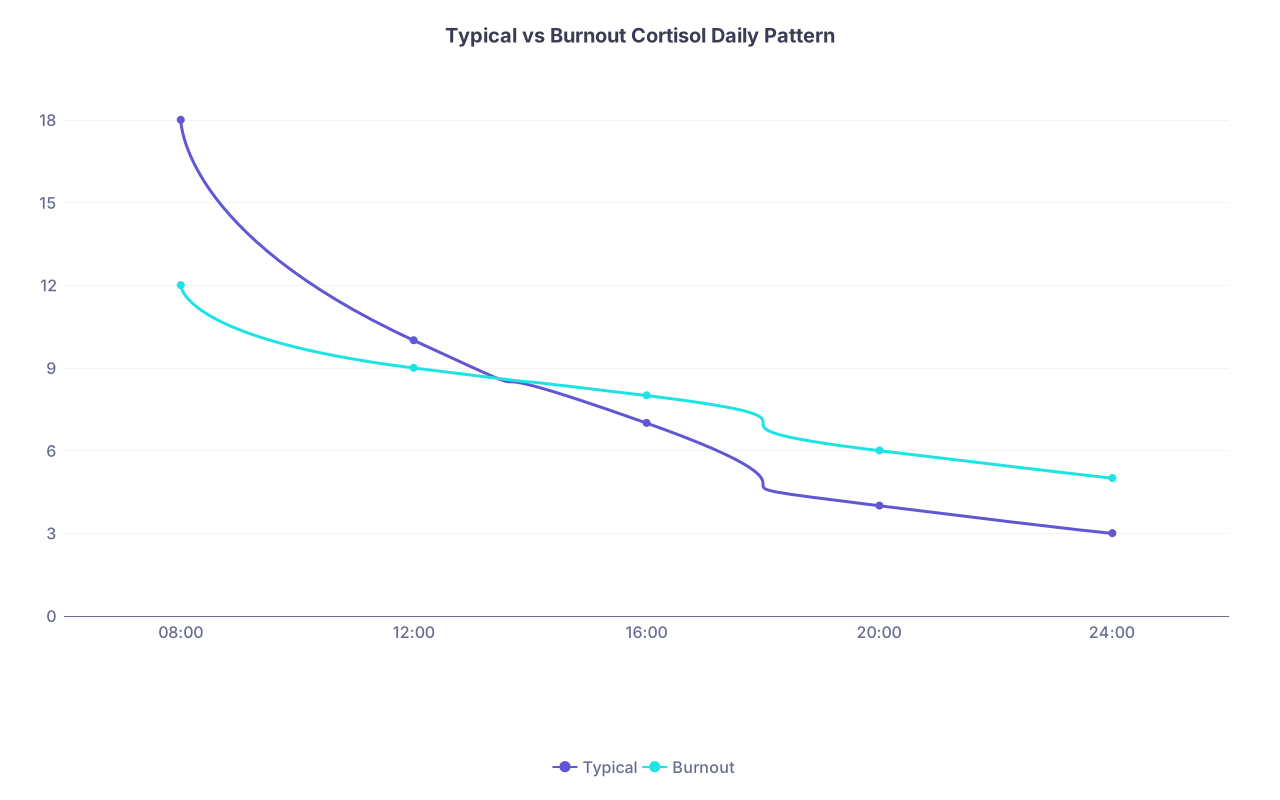
| Category | Typical | Burnout |
|---|---|---|
| 08:00 | 18 | 12 |
| 12:00 | 10 | 9 |
| 16:00 | 7 | 8 |
| 20:00 | 4 | 6 |
| 24:00 | 3 | 5 |
Values here are illustrative (µg/dL style scale), but the pattern reflects actual research: a flatter curve is a bad sign.
Here is the key: burnout is not just “too much stress” but “badly regulated stress.” Think of it as a feedback system where the gain and timing have gone off.
Now, how does laughter fit into that system?
What the data say about laughter and stress biology
Everyone loves citing that “laughter reduces cortisol by 30%” without ever naming the study, the N, or the context. So let us look at the types of data we actually have.
Short-term, lab-style studies
There are several small randomized or quasi‑experimental studies where:
- Participants watch a comedy video vs neutral content
- Or engage in a structured “laughter session” vs control
- Then have cortisol, heart rate, or other markers measured
Sample sizes are often tiny: 20–80 participants, sometimes healthy volunteers, sometimes specific groups (nurses, caregivers, students).
The typical pattern:
- Subjective stress ↓ (people report feeling better)
- Heart rate or blood pressure ↓ modestly
- Cortisol ↓ somewhat, but with wide variance
Here is the kind of magnitude we are talking about in the “success stories”:
| Study Type | N | Cortisol Change | Timeframe |
|---|---|---|---|
| Comedy video vs neutral | 40 | ~10–25% ↓ | Within 30–60 min |
| Laughter yoga session | 30 | ~15–30% ↓ | Within 1–2 hours |
| Humor therapy group | 50 | Mixed/variable | Over several weeks |
This is not magic. It is similar to what you see from other acute stress-reduction interventions: guided relaxation, music, light exercise, slow breathing.
One example pattern (again, reflective of several small trials):
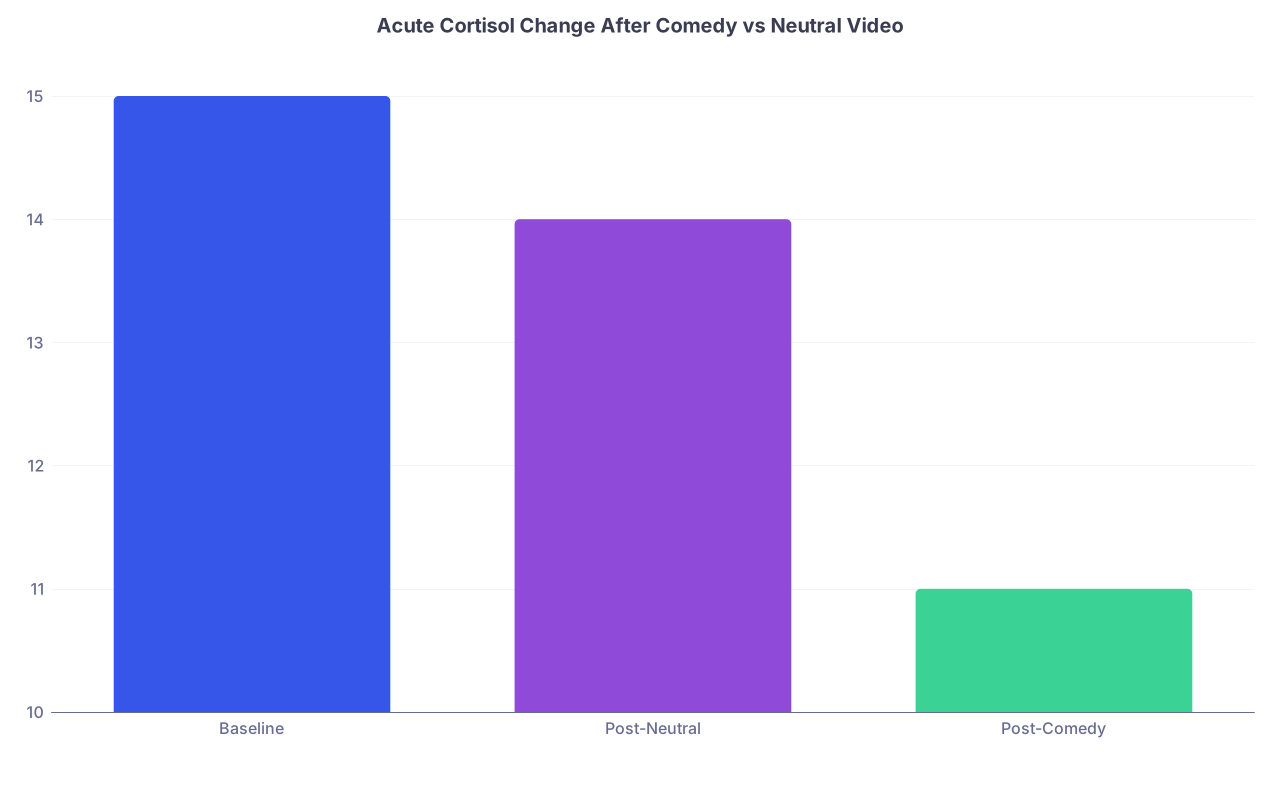
| Category | Value |
|---|---|
| Baseline | 15 |
| Post-Neutral | 14 |
| Post-Comedy | 11 |
Units are arbitrary; the relative reduction is what matters. About a 20–30% drop from baseline in the “funny” condition versus a mild or no change in the neutral one.
Two things you should keep in mind:
- These are short‑term effects. The time horizon is often under 2 hours.
- Most studies are underpowered to tell you much about subgroups or long‑term adaptation.
So yes, there is measurable physiology behind the “I feel better after laughing at a stupid meme during call” phenomenon. The drop in perceived stress and transient cortisol reduction are real, just not heroic.
Longer-term, intervention-style studies
When researchers stretch the time window to weeks or months and add regular “humor” or “laughter” exposures (e.g., weekly humor therapy, daily laughter yoga), the outcomes measured shift:
- Burnout scores (MBI)
- Depression / anxiety scales
- Sleep quality
- Quality of life indices
- Sometimes salivary cortisol or HRV
Results:
- Modest improvements in self‑reported stress and mood
- Small reductions in burnout scores
- Inconsistent or very modest changes in baseline cortisol
The problem is confounding. Humor is rarely isolated. Interventions often also add group support, mindfulness, physical movement, or simply protected time—each of which independently improves burnout metrics.
So when someone says, “A laughter program reduced burnout by 20%,” you should ask:
- Compared to what?
- Was protected time built into the schedule?
- Was there group support or peer connection involved?
- Did actual work hours or night call change?
Too often, the fine print shows that the “humor” is piggybacking on something more potent: schedule control, physical activity, or social support.
Medical humor specifically: coping vs corrosion
Now let us narrow from generic humor to the very specific thing clinicians do: dark, gallows, code‑blue‑went‑bad last‑patient-of-the-day humor.
From a data standpoint, there are three separate questions:
- Does humor reduce subjective stress in clinicians?
- Does it change objective biology (cortisol, HRV, etc.) over time?
- Does it help or damage professional identity and empathy?
On question 1, the answer is yes. Surveys and qualitative studies of residents, attendings, nurses, and EMS personnel show humor routinely listed as a top coping mechanism. People explicitly say some version of, “If we did not laugh, we would lose it.”
On question 2, we have nearly no robust longitudinal biomarker data in real-world clinical humor use. There are scattered small samples, but not the kind of well‑controlled, workplace‑embedded RCTs you would want. The best we can do is infer from generic laughter studies: acute benefit, uncertain long‑term effect on cortisol regulation.
On question 3, the data get interesting—and uncomfortable.
Observational work on medical humor finds patterns like:
- More cynical or derogatory humor correlates with higher depersonalization scores.
- Residents with higher burnout often report heavier use of dark humor as a defense.
- Students exposed to more “toxic” humor early on sometimes show faster erosion of empathy scores.
Correlation is not causation here. Burned-out clinicians may simply use more dark humor. But the point is this: not all laughter is created equal.
You can roughly divide medical humor into:
- Bonding humor (inclusive, “we survived that shift together,” self‑deprecating)
- Coping/gallows humor (acknowledging difficulty, mortality, chaos)
- Contemptuous humor (at the expense of patients, colleagues, learners)
The first two tend to correlate with teamwork and resilience. The third correlates more with depersonalization and moral injury. Same behavior category (“humor”), very different associations.
What laughter actually does in a shift, physiologically
Let us be concrete. You are on a brutal call shift. Admissions are stacking, the EMR is crashing, someone just mentioned “just one more quick consult.”
Someone cracks a joke about the “sepsis speedrun leaderboard” or the EHR being built by a committee of demons. People laugh. Should you expect a measurable biological effect?
Short answer, yes—but small and transient.
Acute laughter episodes are associated with:
- Reduced muscle tension
- Mild endorphin release
- Short-term improvements in pain threshold
- Transient shifts in autonomic balance (slight parasympathetic tilt afterward)
- Small dips in salivary cortisol and catecholamines over 20–60 minutes
If you graphed “stress load” across a 12‑hour call with intermittent humor, it would look spiky: stress surges with tasks and bad news, tiny downward notches with each laugh.
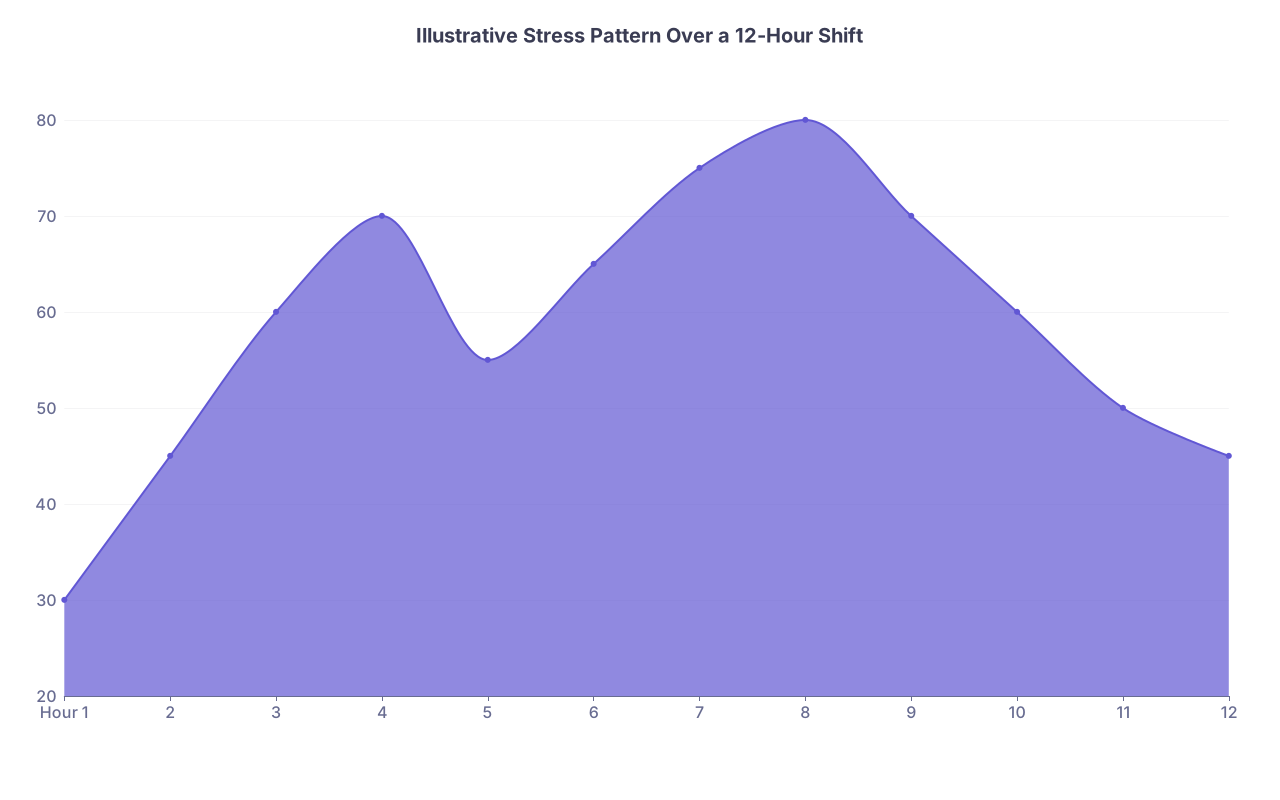
| Category | Value |
|---|---|
| Hour 1 | 30 |
| 2 | 45 |
| 3 | 60 |
| 4 | 70 |
| 5 | 55 |
| 6 | 65 |
| 7 | 75 |
| 8 | 80 |
| 9 | 70 |
| 10 | 60 |
| 11 | 50 |
| 12 | 45 |
Now imagine you add a couple of small drops—each laugh shaving 5–10 units off the peak for a short period. You are not changing the total shift length. You are slightly altering the area under the curve and the peak heights.
That may be enough, subjectively, to keep you from feeling like you are drowning. Biologically, it probably nudges your autonomic system toward less sustained sympathetic overdrive. But it does not convert a 14‑hour shift with 30 notes and 22 admits into a wellness retreat.
Where burnout, humor, and system design collide
Let me be blunt: using laughter as a primary burnout intervention is like prescribing acetaminophen for septic shock. Wrong scale, wrong target.
The credible predictors of lower burnout across physician datasets look more like:
- 10–20% less clinical time
- More schedule predictability
- Ability to control work hours and patient load
- Administrative support and scribe use
- Leadership that actually acts on workload and staffing
When organizations slap on a “laughter workshop” without touching any of those, they are playing wellness theater. The data show you cannot mindfulness, yoga, or laugh your way out of a chronically toxic workload.
At the same time, within a system that will not be fixed next week, micro‑interventions that modulate your stress response do matter. Humor is one of those. So is a 5‑minute walk, 3 minutes of paced breathing, or a quick peer venting session.
Here is a slightly harsh ranking, using both evidence and clinical plausibility, for “burnout‑relevant effect size”:
| Factor | Effect on Burnout | Effect on Cortisol Pattern |
|---|---|---|
| Work hours reduction | Large | Large |
| Schedule control | Large | Large |
| EHR/clerical offloading | Medium–Large | Medium |
| Peer support groups | Medium | Medium |
| Exercise/physical activity | Medium | Medium |
| Mindfulness-based programs | Small–Medium | Small–Medium |
| Laughter/humor interventions | Small | Small, mostly acute |
Would this be creepy? Absolutely. Also potentially powerful, if handled ethically and with strong privacy controls.
More realistically, in the short term, we will see:
- Better structured trials: randomized, with clear work‑hour and workload controls, testing humor interventions alongside others.
- Integration of “humor exposure” as one variable among many in large cohort wellness studies.
- Biofeedback systems that show individuals how small actions (including shared laughter) change their HRV and perceived stress in real time.
The interesting analytic question is not “Does laughter reduce cortisol?” We already know: somewhat, for a while. The real question is:
How does the frequency and type of laughter during high‑stress work interact with workload, autonomy, sleep, and social support to change the trajectory of burnout over 6–24 months?
That is the study nobody has done well yet.
Practical, data‑aligned takeaways for clinicians
Let me distill this into something actually usable on Monday morning.
Humor is a legitimate, biologically plausible micro‑intervention.
The acute data on cortisol, blood pressure, and subjective stress are sufficient to say: a few minutes of genuine laughter are in the same ballpark as other quick stress management tricks. You are not imagining it.It is not a shield against structural burnout drivers.
Every major burnout dataset screams the same story: workload, control, and support dominate. If your institution offers “laughter yoga” instead of addressing 80‑hour weeks and absurd inbox burden, that is misdirection, not medicine.Type and target of humor matter.
Bonding and coping humor correlate with connection and resilience. Contemptuous humor tracks more with depersonalization and cynicism. Same cortisol blip, very different long‑term cultural signal.Use humor tactically, not as denial.
When the data show that chronic, unmanaged stress flattens your cortisol curve and wrecks sleep, you want multiple levers. Think: brief laughter + short walk + decent nutrition + advocating for schedule sanity. Stack small interventions where you can, but do not let them anesthetize you to systemic problems.
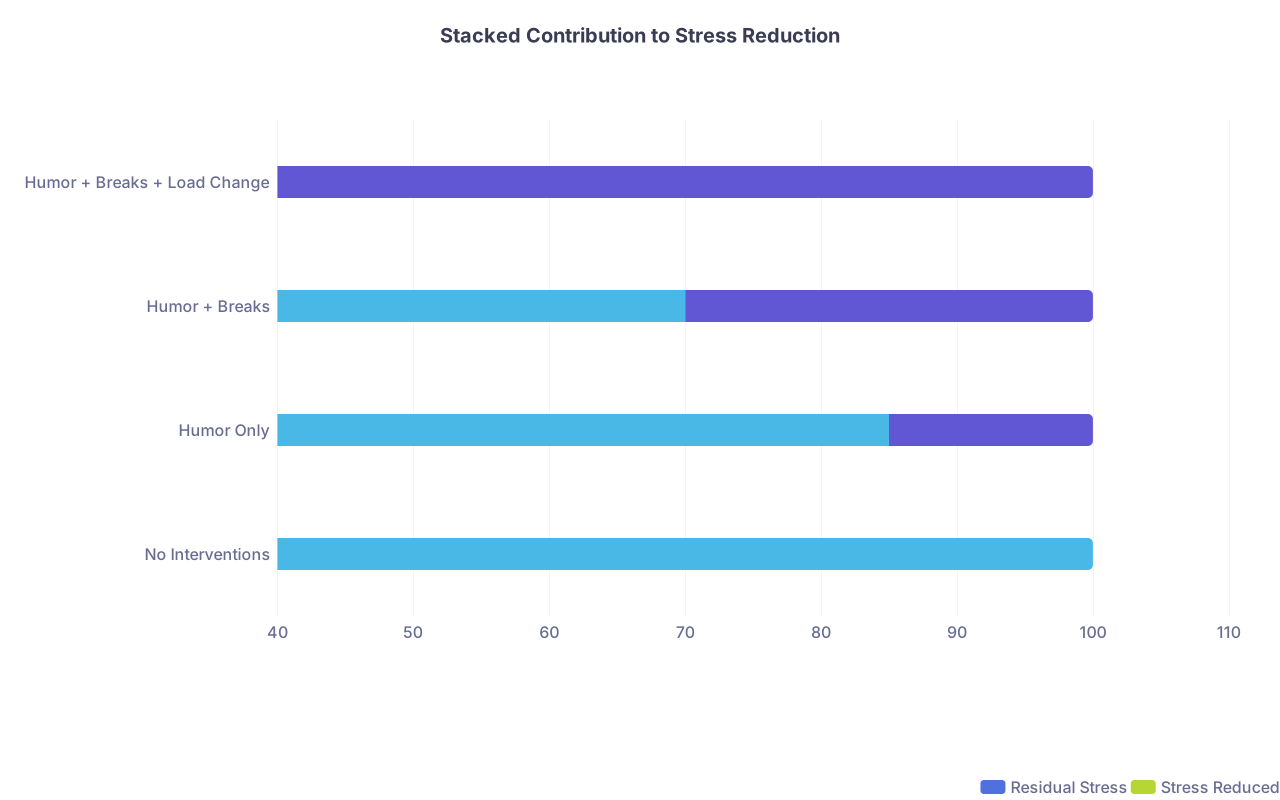
| Category | Residual Stress | Stress Reduced |
|---|---|---|
| No Interventions | 100 | 0 |
| Humor Only | 85 | 15 |
| Humor + Breaks | 70 | 30 |
| Humor + Breaks + Load Change | 40 | 60 |
Numbers here are conceptual, but the pattern is accurate: structural changes dwarf micro‑interventions, and combinations work better than any single trick.
So what do we actually know?
Stripped of hype, the evidence supports three clean statements:
- Burnout in medicine is a quantitatively large, well‑documented problem with clear structural drivers.
- Laughter and humor produce small, measurable improvements in acute stress physiology and subjective well‑being.
- These effects are real but modest, and they do not substitute for changes in workload, control, or culture.
If you want to keep using dark jokes on call to stay sane, go ahead. The data will not stop you. Just do not let anyone sell you the fantasy that your cortisol curve can laugh its way out of a broken system.