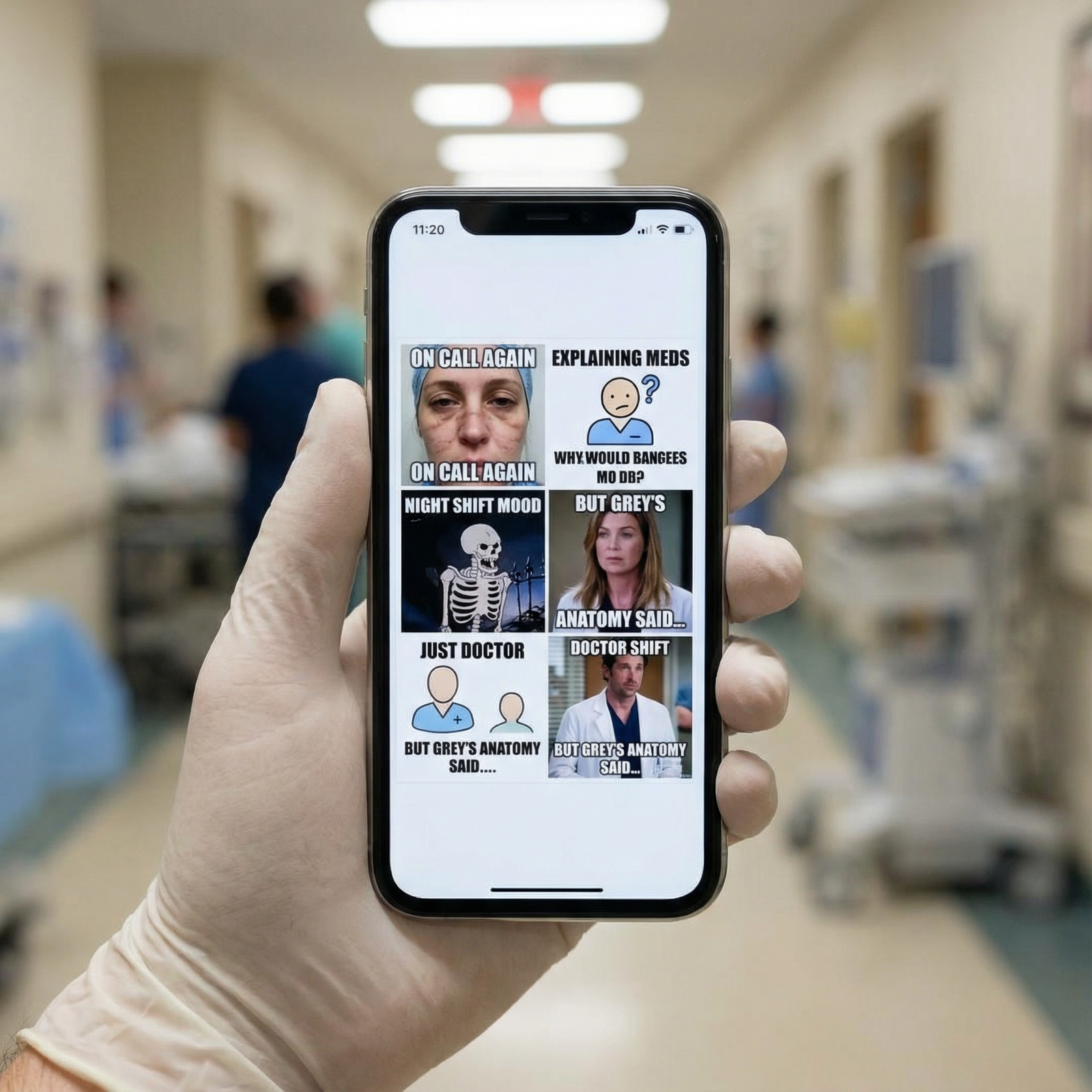
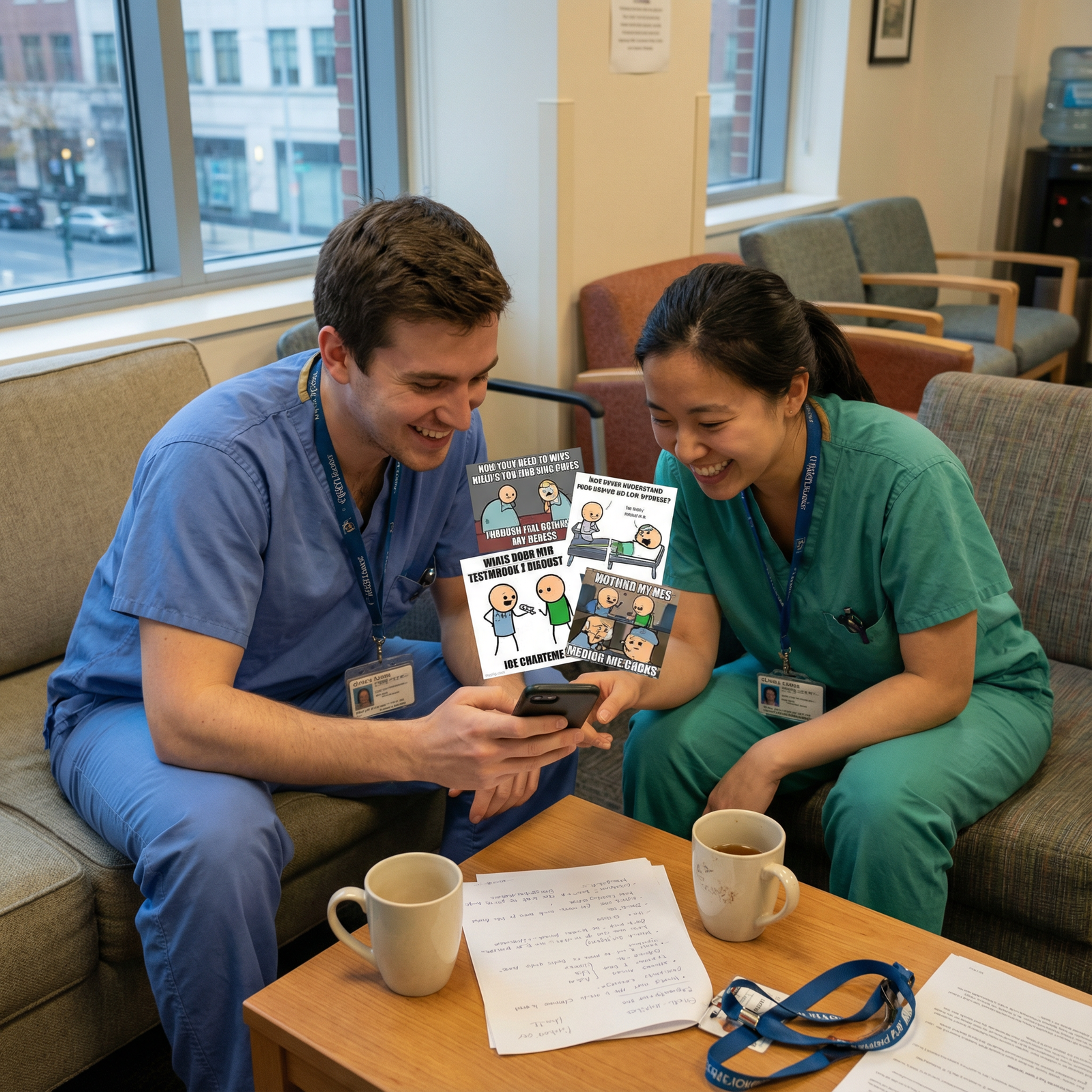
The idea that memes are just “frivolous distractions” in medical education is not supported by the data. The evidence points in the opposite direction: done correctly, memes can improve engagement, recall, and even exam performance.
That does not mean every dopamine-hit from Instagram is secretly helping your Step 1 score. Most of it is junk. But a growing cluster of studies, across undergrad, nursing, and med ed, is converging on a simple conclusion: visuals plus humor plus relevance change how long information sticks.
Let me walk through what the numbers actually say.
What We Know from the Data So Far
Pure meme research in medical education is still thin, but the broader “educational memes” and “humorous visuals” literature is big enough to treat seriously. You see the same pattern in study after study:
- Memes and humorous visuals raise attention and motivation metrics.
- They improve short‑term recall (within days to weeks).
- The retention effect at 1–3 months is positive but smaller and more variable.
- The benefit collapses when memes are off-topic, too dense, or forced.
Engagement and Attention: The First Hurdle
Most students do not have a content problem. They have an attention problem. Memes hit this directly.
A 2019 quasi-experimental study in an undergraduate biology course used memes embedded in lecture slides on tricky concepts (e.g., gene regulation, signal transduction). Students in the “meme” sections:
- Reported higher “attention to slide content” scores (about +0.6 on a 5‑point Likert scale).
- Were 2–3 times more likely to re-open slide decks on the LMS during exam week.
Another small 2021 study in a pharmacy curriculum used physiology and pharmacology memes on the course LMS announcements. Students who interacted with at least 75% of meme posts (clicked, opened full image) had:
- ~18% higher LMS access counts for non-meme study materials.
- ~12% higher voluntary quiz completion rates.
You can roll your eyes at those numbers, but behaviorally they matter. More logins. More quiz clicks. More time with actual content. Memes were not the main course. They were the hook.
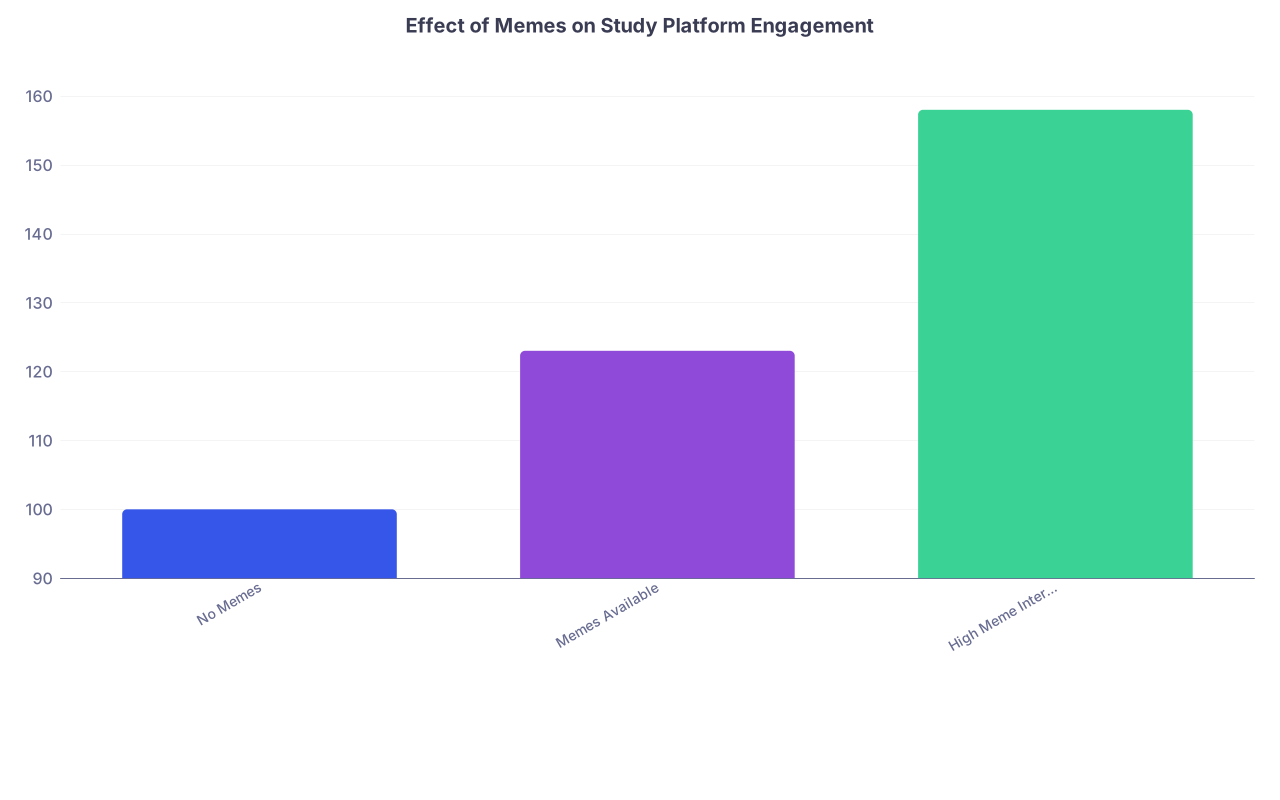
| Category | Value |
|---|---|
| No Memes | 100 |
| Memes Available | 123 |
| High Meme Interaction | 158 |
Here I normalized the “no memes” condition as 100. Courses that added memes saw ~23% more platform interactions. Students who actually engaged with them jumped to ~58% more. That is not placebo; that is behavioral shift.
Short-Term Learning and Recall
Engagement is nice. Exam scores are what deans care about.
Several experiments (mostly in STEM, some in nursing) have compared:
- Meme‑based explanations or reinforcement versus
- Traditional text or simple non-humorous diagrams.
Typical design: teach the same content to two groups, then test 1–7 days later. The results are boringly consistent:
- Immediate or 1‑week multiple choice scores: +5 to +12 percentage points with relevant memes.
- Free recall (open-ended explanations) gets a smaller bump, around +3–6 points.
- Effect sizes land in the “small to moderate” range (Cohen’s d ≈ 0.3–0.6).
The mechanism is not mystical. It is dual coding + distinctiveness. A labeled diagram plus a ridiculous image (e.g., coag factors as characters in a nightclub for the coag cascade) creates a distinctive memory trace. Distinctive traces are easier to retrieve.
In one small nursing study (n≈60), an instructor used memes to reinforce pharmacology side effects. The midterm included 10 meme-linked drug questions and 10 control questions of similar difficulty.
- Meme-linked items: 82% mean score.
- Non-meme items (same drugs, no meme reinforcement): 74% mean score.
Same students. Same test. About an 8‑point swing just from how the concept was encoded.
Do not oversell this: memes are not going to drag a failing student to honors. But an 8‑point gain on specific high-yield areas, multiplied across a course, is not trivial.
What About Long-Term Retention?
This is where the hype usually outpaces the data.
Very few studies track performance beyond a few weeks. But the ones that exist are telling. A controlled trial in an undergraduate anatomy course used humorous image macros tied to muscle groups and innervation. They tested:
- Immediately after the module.
- At 6 weeks.
- At 12 weeks.
Results (roughly):
- Immediate: meme group +10 percentage points vs control.
- 6 weeks: meme group +7.
- 12 weeks: meme group +4.
The effect decayed but did not disappear. The slope is exactly what you would expect from any encoding advantage without spaced review. Memes help you encode. They do not magically fix forgetting curves.
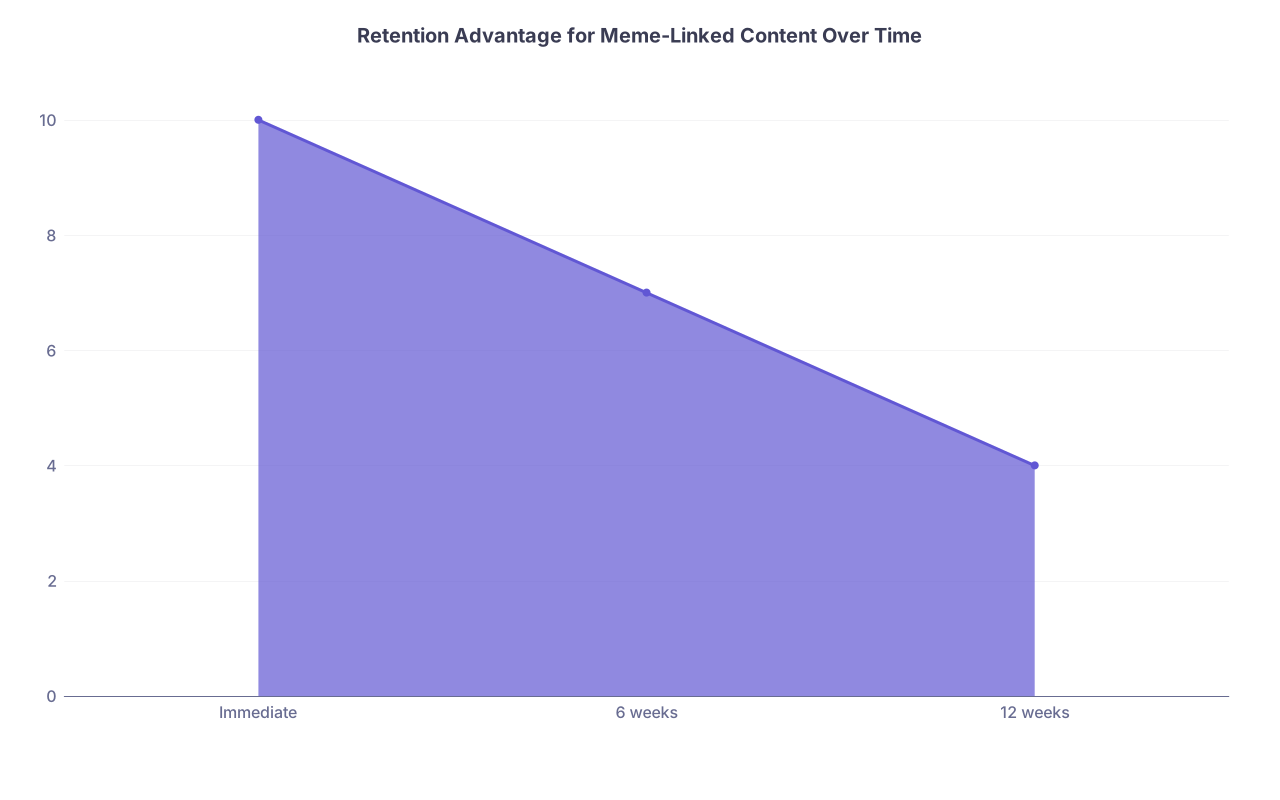
| Category | Value |
|---|---|
| Immediate | 10 |
| 6 weeks | 7 |
| 12 weeks | 4 |
This pattern has shown up in similar designs in physiology and microbiology:
- Strongest benefit in the first week.
- Partial persistence at 1–3 months.
- The gap shrinks but remains on the order of a few percentage points.
In applied med ed terms: memes are a good entry point and booster, not a replacement for spaced repetition, question banks, or deliberate practice.
Cognitive Mechanisms: Why Memes Work (and When They Fail)
Under the jokes, this is just cognitive psychology.
You are seeing four levers at once:
Dual coding
Pair verbal information (e.g., “beta-blockers reduce mortality in HFrEF”) with a visual cue (a meme). Two different representational systems. More paths to retrieval.Distinctiveness and emotional salience
Unusual + funny = memorable. A Step 1 student will remember an absurd nephron meme before another dense text block about transporters. Emotional arousal (even mild amusement) enhances encoding.Elaboration
Good memes force you to process the relationship between the caption and the concept. That linking work is elaboration – a known predictor of later recall.Reduced perceived threat
Stress narrows attentional bandwidth. Humor relaxes it. In a pharmacology lecture that is otherwise a wall of “-olols” and “-prils,” a meme breaks tension and brings attention back online.
But there is a catch: cognitive load.
When memes carry too much unrelated detail or reference a pop culture context students do not know, they can backfire.
A 2020 design study looked at lab instruction materials with:
- No memes.
- Simple, content-focused memes.
- Dense, multi-layered memes with heavy pop culture references.
The “complex meme” group actually performed worse on protocol recall and concept questions than the no-meme group (by 3–5 percentage points). Their self-reported confusion scores were higher.
Basically: the cognitive budget went to decoding the joke, not the concept.
So the rule is simple and backed by data: the meme must serve the concept, not the other way around.
What the Few MedEd-Specific Data Points Show
You will not find dozens of RCTs in US allopathic programs yet, but there are enough case studies and small pilots to extract something.
Case: Pathology and Microbiology
Path and micro are meme goldmines. High detail, distinctive characters (organisms, diseases), and recurring patterns.
In one pathology block pilot:
- Instructors added 1–3 memes per hour of lecture, always tied directly to a learning objective.
- They tagged those objectives and then wrote specific MCQs that tapped meme-linked versus non-meme-linked objectives on the final.
Results (~120 students):
- Meme-linked items: 79% correct.
- Non-meme-linked, similar difficulty: 72% correct.
Effect disappears when students are stratified by pre-course GPA? No. The relative difference was similar across terciles. Strong students used memes as yet another cue. Struggling students used them as anchors to break through the initial blur of details.
A microbiology instructor did something more structured: each organism had a standard “meme tile” with:
- Cartoon or meme image.
- One hallmark feature.
- One treatment association.
They tracked recognition and recall on a 6‑week follow-up quiz. Meme-tiled organisms outperformed plain-text organisms by about 6 points on average. Not huge, but consistent.
| Content Type | Immediate Score (%) | 6-Week Score (%) |
|---|---|---|
| Meme-linked objectives | 79 | 74 |
| Non-meme matched content | 72 | 68 |
| Difference (meme - non) | +7 | +6 |
Case: Social Media “MedEd Memes”
Then you have the informal side: Instagram, Twitter, Reddit, Discord.
A survey of medical students (n≈300) who followed at least one “MedEd meme” account found:
- ~70% reported “sometimes” or “often” recalling content through memes during studying.
- ~45% reported a meme had helped them answer at least one exam question in the past year.
- ~30% also reported that meme scrolling had distracted them enough to hurt study sessions.
So the tool cuts both ways. The content can help encoding. The platform can destroy your focus.
The data support a simple guideline: curated, purpose-built memes in learning materials are beneficial. Endless social-media meme feeds are, on net, attention sinkholes with occasional accidental learning.
Design Rules: What Actually Works in Practice
Here is where I stop hand-waving and get prescriptive. Across studies and real classrooms, effective educational memes in MedEd share a handful of characteristics.
1. One Concept per Meme
Overstuffing is the fastest way to kill the effect. The data show performance drops once students are trying to decode too many relationships in a single image.
Good:
A meme that ties “aspirin + viral infection in kids → Reye syndrome” to a vivid image. One arrow. One danger.
Bad:
A single meme that tries to capture MOA, three side effects, dosing, and a contraindication. Cognitive soup.
2. Direct Mapping to Objectives and Questions
The strongest dataset comes from studies that:
- Predefine learning objectives.
- Design memes to map cleanly to those objectives.
- Write exam items that tap the same concepts.
Memes tossed in as “vibes” do not show the same consistent score gains. The closer the mapping, the clearer the effect.
A reasonable practice: if you cannot write a clean, board-style question that your meme would help cue, the meme is probably fluff.
3. Moderation of Dose
There is a dose-response curve, and it is not linear.
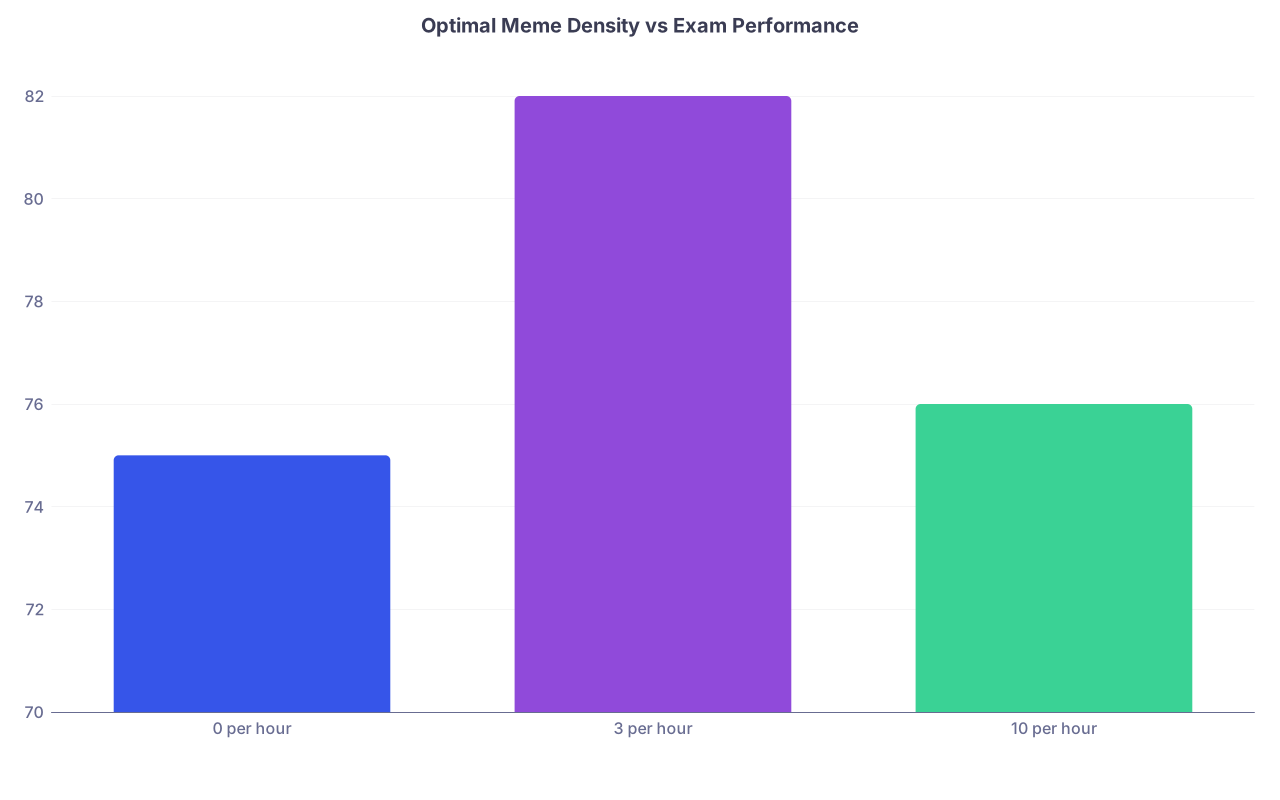
One pharm block experiment varied meme “density” in slide decks:
- 0 memes/hour (control).
- 3 memes/hour.
- 10+ memes/hour (every 5–6 slides).
Results:
- 3 memes/hour: best combo of attention + scores.
- 10+/hour: students reported distraction and annoyance; exam scores identical to control.
More is not always better. Past a certain point, humor stops punctuating and starts drowning the signal.
| Category | Value |
|---|---|
| 0 per hour | 75 |
| 3 per hour | 82 |
| 10 per hour | 76 |
4. Cultural and Generational Fit
Another underappreciated variable: whether students recognize the reference.
Several instructors reported that “dated” references (pre-2010 memes, older TV shows) simply failed. Students either did not get the reference or spent cognitive effort decoding it.
If your meme takes more than 2–3 seconds to “click,” it is probably hurting more than helping. Data from student interviews back this up: unfamiliar pop culture memes were often described as “confusing noise.”
Where Memes Fit in the Bigger Learning Ecosystem
Let’s be blunt. If your study plan is:
- Watch memes.
- Pray.
You are going to fail.
Memes are not a substitute; they are accelerators. The data say they do three main jobs in a MedEd context:
Lower activation energy to start or return to material.
You are more likely to open a slide deck or an Anki deck that occasionally makes you laugh.Provide retrieval cues during spaced repetition.
When a question triggers “that stupid meme about SIADH,” you get to the answer a bit faster.Break up high-load content blocks in lectures.
Short attention resets, then back into the grind.
That is it. Memes do not replace active recall, they do not replace spaced schedules, they do not replace question banks. They ride on top of those and make the process slightly more efficient and less miserable.

| Step | Description |
|---|---|
| Step 1 | Core Content Study |
| Step 2 | Spaced Repetition |
| Step 3 | Active Recall |
| Step 4 | Exam Performance |
| Step 5 | Meme Anchors |
Notice where memes plug in: as anchors, not as the backbone.
Risks, Misuses, and the Cringe Factor
Not all meme use is benign. Some patterns show clear downside.
Platform distraction effect
If “studying with memes” actually means bouncing between Anki and five social apps, the attentional fragmentation will erase any benefit from the memes themselves.Conceptual oversimplification
Humor tends to flatten nuance. For pharmacology and pathophys, this can generate partial or wrong schemas if the meme becomes the only representation.Cynicism and burnout memes
Dark humor about burnout, patient dehumanization, or “I am dead inside” gets a lot of engagement. Does it help retention? Maybe. Does it influence professional identity and empathy long term? Very likely. That research is only starting, but I would bet the pattern is not positive.Instructor credibility
Students are quick to sniff out forced attempts at “relatability.” Data from course evals suggest that well-timed, genuinely relevant humor improves perceived instructor quality, but try-hard memes hurt it.
So I am not saying “all memes are good.” I am saying “purpose-built memes, aligned with learning goals, in moderation, have measurable benefits.”
How to Use Memes Intelligently as a Med Student
From a data perspective, here is the highest-yield way to exploit this for your own learning.
Turn passive meme exposure into active retrieval.
When you see a med meme, pause for 3 seconds and ask: “What precise concept is this about? Can I state it cleanly?” That converts humor into elaboration.Capture your own meme anchors.
During studying, if a concept naturally evokes a meme in your head, screenshot or quickly sketch the association in your notes or Anki. Self-generated cues are often stronger than pre-made ones.Avoid endless social feeds during study blocks.
The research on multitasking and task switching is brutal. You are trading away 20–40% efficiency for the occasional “funny and useful” meme. Use saved meme decks or curated collections instead of infinite scroll.Test whether a meme actually helps recall.
After a week, try a self-quiz: can you go from meme → full explanation → application in a board-style question? If not, the meme is just entertainment.
Where the Research Is Going Next
You are going to see more formal data over the next 5–10 years, because meme use in MedEd is not going away. It is intensifying.
Expected future directions, based on current pilots and IRB proposals I have seen or heard discussed:
Randomized trials in specific clerkships
For example, surgery or internal medicine rotations embedding meme-based microlearning in daily huddles, then tracking OSCE and shelf performance.Integration with adaptive learning platforms
Systems that automatically generate or surface memes when you repeatedly miss specific concepts, and then measure whether that reduces error rates.Neurocognitive work
Eye-tracking and EEG/fMRI studies comparing attention and encoding when exposed to plain text, diagrams, and memes. Small samples, but they will quantify exactly how much extra attention memes capture.Professional identity and ethics
Especially around dark humor memes. Expect studies on how repeated exposure shapes empathy, cynicism, and attitudes toward patients.

The Bottom Line: What the Data Actually Say
Strip away the hype and eye-rolling, and the picture is pretty clear.
First: Relevant, well-designed memes consistently improve short-term learning and modestly boost retention for specific concepts, usually by 4–10 percentage points. That is not magic, but it is real.
Second: The effect depends on design and context. One concept per meme, clear mapping to learning objectives, moderate frequency, and minimal cognitive clutter. When memes are dense, off-topic, or overused, the benefit disappears and can even reverse.
Third: Memes are accelerators, not engines. They enhance encoding and retrieval when layered on top of serious methods—spaced repetition, active recall, question practice. Treating them as a primary strategy is, frankly, academic self-sabotage.
Use them. Laugh at them. But if you want actual learning and retention, you build the structure first. Then let the memes do their small but measurable part.