
It is Match Day afternoon. Your phone is buzzing nonstop, group chats exploding with screenshots, “I’m going to [Program Name]!!!” texts, and someone has already renamed your med school class GroupMe to “Future Interns Who Have No Idea.”
You send your first meme: a shaky Kermit sipping coffee with “Me pretending I’m ready to be a doctor July 1.”
Fifteen likes in 30 seconds. Someone replies with the classic “This is fine” dog in a burning room wearing a stethoscope.
This is the beginning of your intern meme culture.
If you are smart about it, those memes will become:
- How you vent without imploding.
- How you bond with co-interns faster than any orientation icebreaker.
- How you keep yourself (and others) just this side of burnout.
If you are not smart about it, those memes will also become:
- Screenshotted, forwarded, and sitting in a PD’s inbox.
- A quiet wedge between you and nurses, seniors, and leadership.
- Evidence. Enough said.
Let’s walk the actual timeline. From Match Day to July 1. What to post, what not to post, when to build culture, and when to shut up and keep the meme as a draft.
Match Day to April 1: Early Chaos, Low Stakes, First Group Chats
At this point you should focus on finding your people and setting the tone.
You are:
- Still a fourth-year.
- Not in the EMR.
- Not on the schedule.
- Essentially a civilian with a future badge.
Week 0–2 after Match: Locate the digital tribe
Your goals:
- Identify where your future co-interns are communicating.
- Join without being the weird oversharer on Day 1.
Places these usually pop up:
- A med school class GroupMe/WhatsApp “Residency Roll Call”
- Specialty-wide meme pages (r/Residency, r/medicalschool, @whateverresidencymemes)
- Program-specific:
- “Internal Medicine Interns 202X – [Hospital Name]”
- “Anesthesia interns – [City]”
At this point you should:
- Join the intern group once invited.
- Lurk for a few days. See the tone.
- Post simple, harmless memes:
- “Me pretending I did a Sub-I and know anything about cross-cover.”
- SpongeBob “Ight Imma head out” on Match Day brunch.
Avoid:
- Direct shots at specific programs, attendings, hospitals.
- Specialty trash talk your future co-residents might see.
- Dark jokes about self-harm, patient harm, or “I hope my patients cannot sue.”
You are not “one of the team” yet. You have no political capital. Do not spend what you do not have.
Tone template for this phase
Safe categories:
- Imposter syndrome humor.
- Mocking standardized exams.
- Mild roast of medical school bureaucracy.
- General intern anxiety.
If your meme requires this thought: “If the PD saw this, would I be sweating?” then do not post. That is a decent test for now and later.
April to Mid-May: Contracts, Logistics, and Pre-Move Memes
By mid-April, you are filling out HR forms, GME surveys, occupational health, and 47 different onboarding portals that all use different passwords.
The memes almost write themselves.
At this point you should use memes to normalize the annoyances and start building shared language.
Example themes that work well:
- “Hour 2 of mandatory online HIPAA modules” – skeleton at the computer.
- That galaxy-brain meme for “Med school taught me the Krebs cycle but not how to enroll in hospital benefits.”
- Confused math lady over a benefits enrollment screen.
Healthy meme culture move:
Instead of just complaining, pair the meme with a tiny useful detail.
- Meme: Frustrated Kermit at laptop.
- Caption: “Me trying to find where to upload my vaccine record. FYI it is hidden under ‘Occupational Health – Step 3’ in the onboarding portal.”
That tiny pivot turns your meme from “whining” to “we’re in it together and here’s a breadcrumb.” Very different vibe.
Late May: The “We Are Actually Moving” Phase
You are now:
- Apartment hunting.
- Negotiating parking or transit.
- Realizing intern salary vs city rent is a joke.
At this point you should let meme culture support real life logistics.
Good meme categories:
- Cost-of-living memes (“Intern salary vs. $2200 studio with no windows”).
- IKEA / moving disaster memes.
- “Me trying to decide if I need a car or can live on call room coffee and bus routes.”
You can also start light program-specific memes, but stay vague:
- “Hearing [Program] has 1:1 nurse coverage in the ICU vs my Sub-I experience of one nurse for half the unit” with the Leonardo DiCaprio pointing meme.
- “Relief when GroupMe says ‘program is very supportive’ more than 3 times without anyone using the skull emoji.”
Avoid still:
- Mocking named hospitals in your city.
- Screenshots of program emails with visible names.
- Anything that sounds like you are pre-judging your home institution as “toxic” or “malignant” before you show up.
Program leadership lurks online more than you think. I have seen PDs quote memes from anonymous pages word-for-word in a meeting.
June 1–15: Orientation Emails, Call Schedules, Panic
Now the real anxiety hits.
You get:
- First draft of call schedule.
- Mandatory orientation dates.
- First whiff of “no vacation July–September.”
Now you see who your true meme people are. Someone will drop:
- The “July 1 The Floor Is Lava” meme.
- The “Attending: ‘This is an easy cross-cover night.’” followed by Disaster Girl.
At this point you should start shaping a healthy line between venting and poisoning the well.
A few principles:
Punch up, not down.
- Do not meme on individual nurses, specific residents, or particular med students.
- System / schedule / process = fair game.
- Specific staff = bad idea and corrosive.
Aim for “we’re in this together,” not “this place is trash.”
- “We are not ready lol” is fine.
- “This hospital is unsafe and does not care about patients” as a meme caption in a group chat with people you barely know? That spreads fast and backfires.
Keep screenshots in mind. Always.
- If your meme would look terrible decontextualized in a faculty meeting PowerPoint, reconsider.
Healthy meme examples now:
- “Interns when they see their name on night float 4 times in one month” with the guy staring into the distance.
- “When you realize you asked about Step scores in the interview, not resident burn-out rates” with Michael Scott “I am dead inside.”
That builds honest, dark-ish humor without directly attacking people.
Mid to Late June: Orientation Week(s) and Real-Life First Impressions
Orientation hits. You are stuck in a conference room, badge photos, CPR recert, EMR training, and hospital tours.
The meme energy is nuclear.
At this point you should start merging online meme culture with in-person culture. This is the step most people miss. Memes that stay only in DMs miss their full power.
During Orientation Days
You will notice:
- The “class clown” intern who posts nonstop in the chat.
- The quiet intern who only reacts with a single laughing emoji but laughs hardest in person.
- The wholesome one sharing free food sightings.
Healthy moves here:
- Create 1–2 small side chats:
- One for your specific track (e.g., “IM Night Float + Ward gang”).
- One for shared identities (e.g., “Residents who live walking distance,” “Residents with kids”).
In those smaller, safer groups, meme culture can be a little more personal, but still use the same filters.
Use memes tactically:
- After a brutal 6-hour EMR session:
- Meme: “Pick all the orders you want to place, but none of the boxes make sense” with Lost in the Sauce meme.
- Then: “Anyone figure out how to pend a discharge? Drop steps below if you did.”
This does two things:
- Validates that this is annoying.
- Crowdsources an actual solution.
Subtle but important: early respect signals
During orientation, staff are quietly judging you. Not for your knowledge. For your professionalism and judgment.
If your meme culture is:
- Constantly mocking patients (even de-identified).
- Openly contemptuous of nursing.
- Centered on “I hate this place and everyone in it,”
you are telling seniors you are not safe. They will not say anything directly. You will just get less help, less trust, and fewer opportunities.
Last Week of June: The “Oh God, It Is Actually Happening” Window
You get:
- Your final schedule.
- Your first week’s team assignments.
- The names of your seniors and attendings.
Anxiety spikes. Meme quality usually spikes with it.
At this point you should prepare the meme infrastructure you want for July–August, when things will get hard.
Three practical steps:
Create a “Night Shift Only” channel or thread.
This is for:- 3 a.m. “just got slammed with three admissions” memes.
- “We have not eaten in 10 hours” memes.
- “Is it normal that the code status note is from 2009?” memes.
That night channel becomes a pressure valve and support system.
Set 1–2 simple group norms (explicitly).
A short message in the chat works:- “Since we are about to start, just a quick note – let us try to keep anything identifiable about patients or specific staff out of here. We can still complain about life / systems without screenshots ending our careers.”
It sounds uptight. It will save someone.
Establish a “Check-in meme.”
Example:- Every Sunday, someone drops a “How are we surviving?” meme (burning dumpster floating down the river; or health bar video game screenshot).
- People reply with reactions or 1–2 word mood checks.
It is silly. It is also a low-friction way to notice when someone is sliding into real burnout or depression.
July 1–July 7: Go-Live Week and Your First Real Test
July 1. You are in scrubs, your badge works, the pager is on, and you are about to put in your first orders as “Doctor Lastname.”
Your meme culture this week will set the tone for your whole year.
At this point you should be hyper-intentional. You are exhausted, scared, and your filter will be weaker. Compensate by planning your lanes in advance.
The 4 Meme Lanes That Are Actually Healthy
Self-deprecating competence memes
- You: “Me reading my own note from 3 a.m. on post-call.”
- Meme: Hieroglyphs over a brain-in-flames image.
- Outcome: Humor about fatigue that does not throw anyone under the bus.
System and workflow memes
- “The EMR when I accidentally click the wrong order set” with nuclear explosion.
- “Trying to find a working computer in the ED at 7 p.m.” with scavenger hunt meme.
Solidarity memes
- Photo of all the interns’ empty coffee cups lined up, captioned: “Team B signout currency.”
- Spider-Man pointing at Spider-Man: “Day team seeing the night team in the cafeteria both pretending to be fine.”
Boundary memes
- Yes, you can meme your own growing boundaries:
- “Me learning to say ‘I will check on that after I finish this urgent task’ instead of running in six directions” with character leveling-up meme.
These reinforce resilience and healthy norms instead of glorifying self-destruction.
What to avoid this first week (and honestly always)
Hard no’s:
- Any photo taken in patient care areas with monitors or patients visible, memed or not.
- Jokes about specific bad outcomes, even vaguely hinted.
- “I have no idea what I am doing, lol, hope my patients survive” memes.
- Your colleagues might laugh. But it undermines trust, and you will regret it when you actually do know what you are doing and the screenshot is still out there.
Borderline but dangerous over time:
- Constant “I want to die” jokes.
- Constant substance jokes as coping (“Post-call me with my 4th shot of tequila before noon” over and over).
- Mocking specific nurses, consultants, or ancillary services, even if “everyone knows who that is.”
That stuff shifts group culture from “we are suffering together” to “this job is misery and everyone around us is the enemy.” It will make you worse at the job and more miserable. I have watched it happen.
July 8–July 31: Settling In, Building Traditions, Avoiding Cynicism
By week 2–4, you will see patterns:
- Which co-interns post memes after every shift.
- Who never posts but laughs at everything.
- Which seniors appreciate humor and which are dead serious.
This is the window to intentionally build good traditions and quietly kill the toxic ones.
Build 2–3 recurring meme traditions
These can be incredibly stabilizing.
Examples:
“Admission of the Week” (de-identified and educational)
- Meme format: “This admission brought to you by…” with whatever triggered it (no names, no room numbers, no unique details).
- Then a short teaching pearl: “This was actually HLH, not sepsis. Check ferritin when nothing fits.”
“Win of the Week” meme.
- Screenshot a dopamine-boosting thing: compliment from a nurse (with name covered), patient “thank you” note (cropped).
- Add a wholesome meme (“Wholesome Seal,” smiling dog, etc.).
- Post Friday evening. Forces the group to remember something went right.
Rotating “Meme Chief.”
- One intern per week unofficially responsible for dropping a morale meme on tough days – after a brutal code, during a heat wave, etc.
- Gives people permission to laugh and resets tension.
Quietly enforce boundaries
You do not need to lecture anyone. Two simple moves work:
Non-engagement.
When someone posts a meme that crosses a line, do not react, do not like, do not pile on. Let it die. Social reinforcement is currency.DM, not public scolding.
If a meme feels seriously bad (patient-identifiable, hateful, etc.), send a quick private message:- “Hey, just flagging – that meme might come off rough / identifiable if someone screenshots. I might delete it if it were me.”
You are not the professionalism police. But you are also not required to ride the train off the cliff.
Beyond July: Using Meme Culture as Protection, Not Poison
Once you are a few months in, the novelty fades. The workload does not. Meme culture can either:
- Harden into bitter, corrosive cynicism.
- Mature into a shared language for psychological safety.
The differentiator is simple:
Healthy meme culture lets you say the hard thing and stay human. Toxic meme culture stops you from saying the real thing clearly.
Instead of:
- 1,000 memes about how “everything sucks,”
consider: - 1 meme + 1 real conversation with a co-intern, chief, or therapist.
Memes should point you toward real support, not replace it.
| Dimension | Healthy Meme Culture | Toxic Meme Culture |
|---|---|---|
| Target | Systems, situations, yourself | Specific staff, patients, named colleagues |
| Effect on team | Bonding, shared language, relief | Division, mistrust, fear of screenshots |
| Themes | Imperfection, learning, solidarity | Hopelessness, contempt, nihilism |
| Longevity | Sustainable, still funny in PGY-2 | Embarrassing or incriminating later |
| Risk level | Low career risk, low ethics risk | High career risk, high ethics risk |
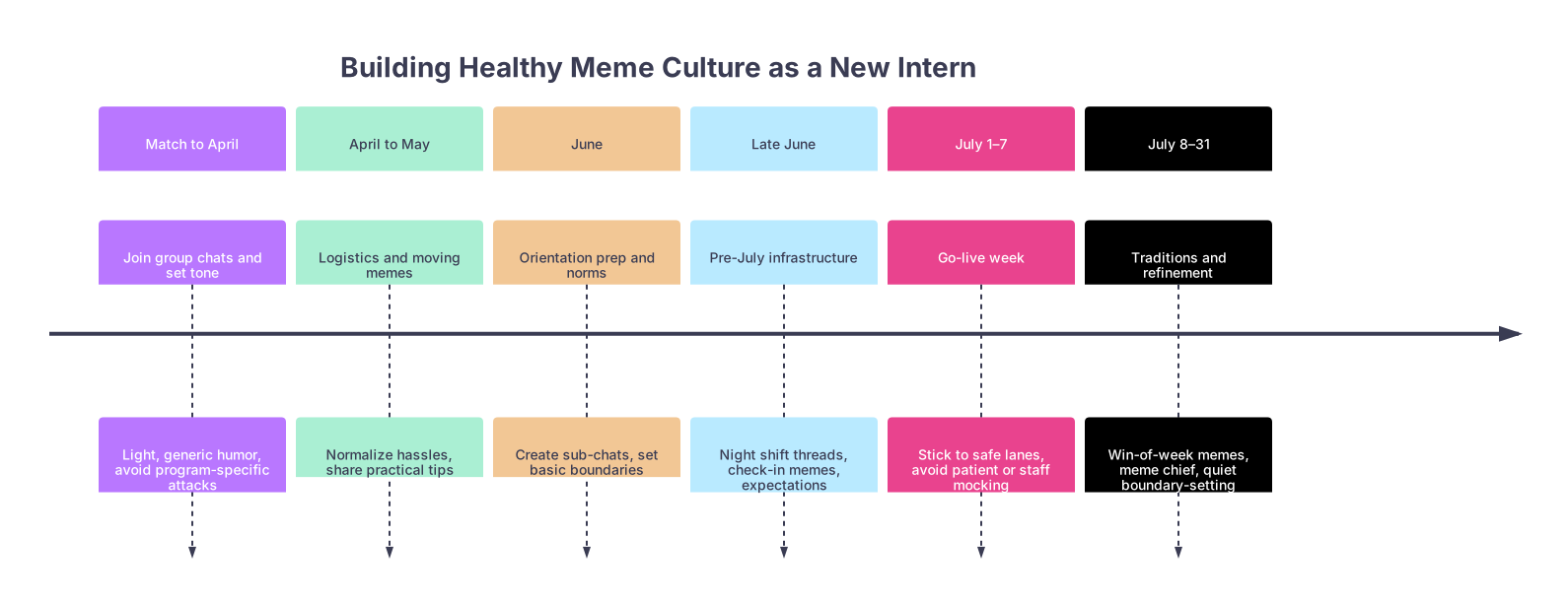
| Period | Event |
|---|---|
| Match to April - Join group chats and set tone | Light, generic humor, avoid program-specific attacks |
| April to May - Logistics and moving memes | Normalize hassles, share practical tips |
| June - Orientation prep and norms | Create sub-chats, set basic boundaries |
| Late June - Pre-July infrastructure | Night shift threads, check-in memes, expectations |
| July 1–7 - Go-live week | Stick to safe lanes, avoid patient or staff mocking |
| July 8–31 - Traditions and refinement | Win-of-week memes, meme chief, quiet boundary-setting |
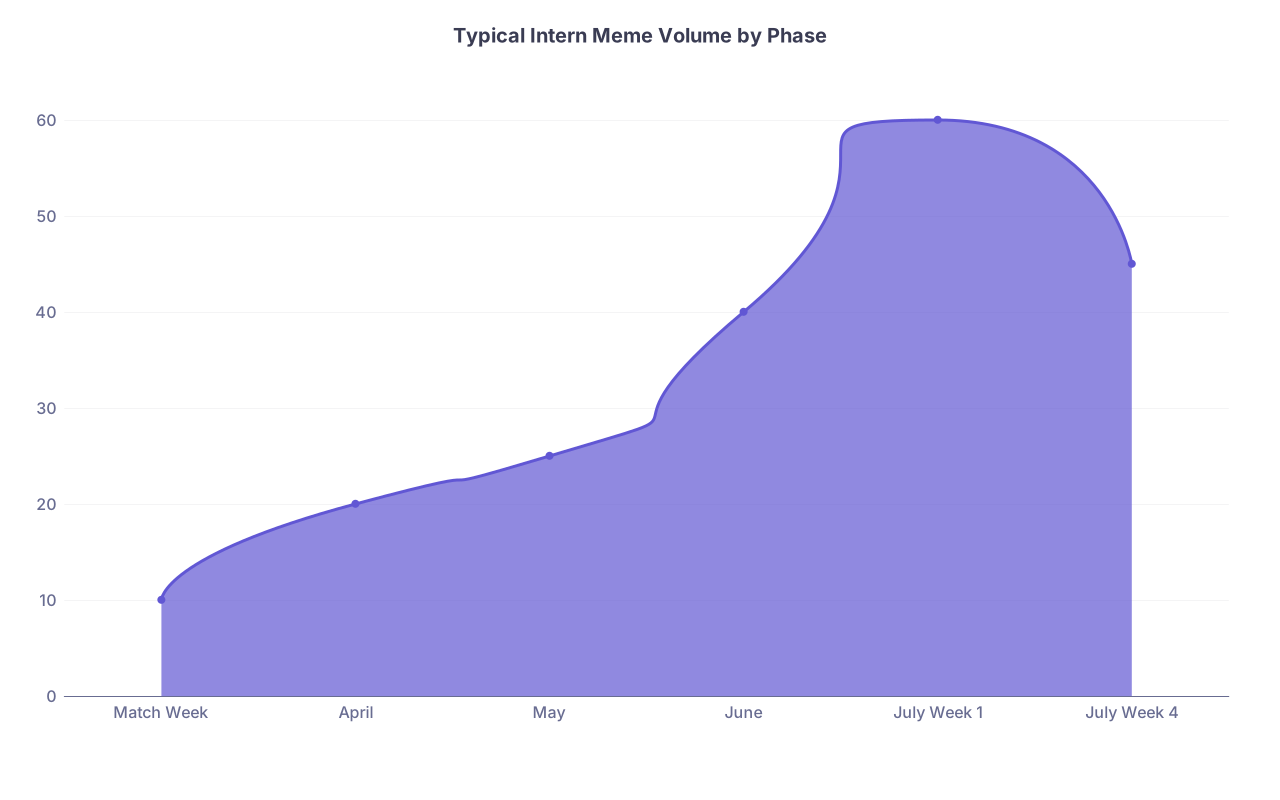
| Category | Value |
|---|---|
| Match Week | 10 |
| April | 20 |
| May | 25 |
| June | 40 |
| July Week 1 | 60 |
| July Week 4 | 45 |


Three Things to Carry With You
- From Match Day to July 1, you are not just building chats; you are building culture. That culture will either buffer you against burnout or accelerate it.
- Keep memes aimed at systems, situations, and your own chaos—not at patients, nurses, or named colleagues. If a screenshot in a PD’s inbox would ruin your week, do not post it.
- Use memes as a bridge to actual support: group norms, small check-ins, and real conversations. Laugh hard, but do not let the joke be the only way you talk about how hard this job is.