It’s 7:42 p.m. on a Tuesday. Your UWorld reset is at question 0/4000, First Aid is still pristine, and you’ve already muttered “I’m going to fail” more times than you’ve done flashcards. Board study season has officially started, and you’re on track to burn out by…next Thursday.
This is where you put structure around your sanity.
Not “self-care” in the vague Instagram way. I’m talking scheduled, recurring, weekly humor rituals baked into your study calendar with the same seriousness you give to renal physiology. Week by week, you’re going to build a system that forces you to laugh often enough to survive the grind.
Here’s how that looks on a real timeline.
Big Picture: The 8–10 Week Humor Backbone
At this point, you should stop pretending you’ll “laugh when you have time.” You won’t. You build it in, or it won’t happen.
Think of your board study phase (Step 1, Step 2, COMLEX, whatever) as an 8–10 week block. Your humor plan needs structure just like your content plan.
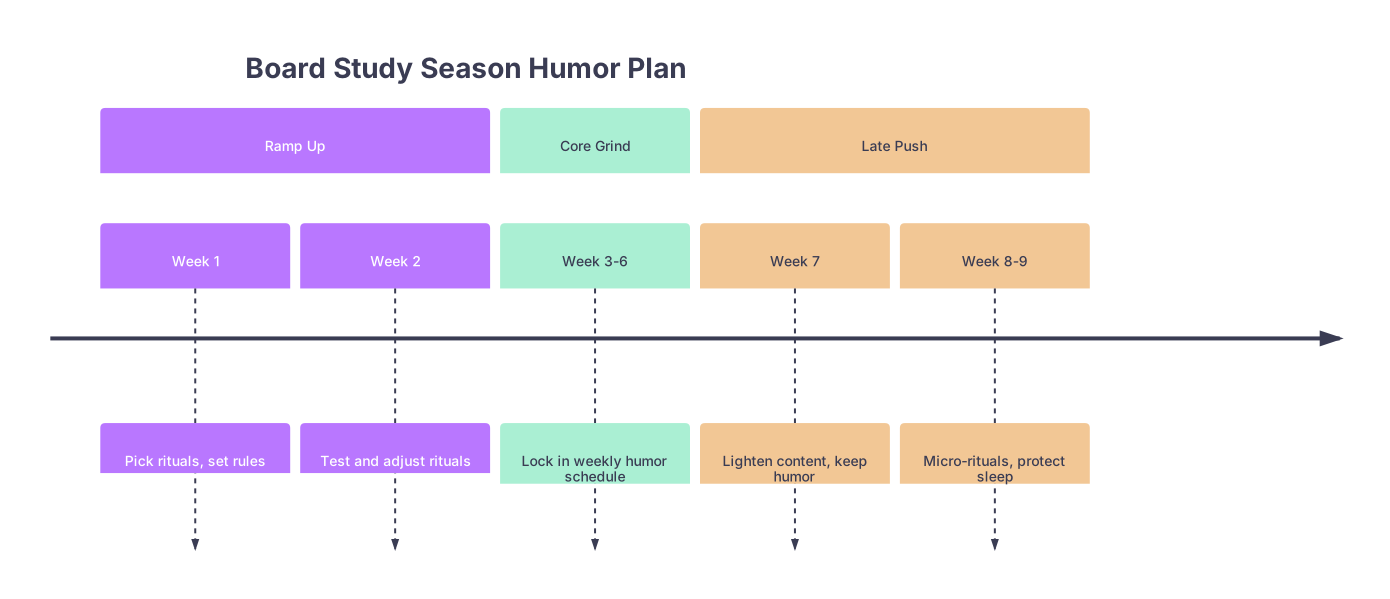
| Period | Event |
|---|---|
| Ramp Up - Week 1 | Pick rituals, set rules |
| Ramp Up - Week 2 | Test and adjust rituals |
| Core Grind - Week 3-6 | Lock in weekly humor schedule |
| Late Push - Week 7 | Lighten content, keep humor |
| Late Push - Week 8-9 | Micro-rituals, protect sleep |
Weekly Humor Pillars (Non-Negotiables)
You’re going to anchor every week around a few fixed rituals:
- One “sacred” comedy block (60–90 minutes)
- One group vent-laugh session (30–45 minutes)
- One meme making or sharing ritual (10–20 minutes)
- Daily micro-rituals (30–90 seconds) attached to other habits
We’ll walk this chronologically: what to set up in Week 1, what to do each specific day, and how to adjust as the exam gets closer.
Week 1: Build the Ritual Skeleton
At this point, you’re just starting dedicated. You still have optimism left. Use it.
Step 1: Schedule Your Weekly Comedy Block
Pick one evening per week and lock it in. No questions, no “I’ll see how I feel.”
Good options:
- Friday 8–9:30 p.m.
- Saturday late afternoon before going back to hit Anki
- Sunday after your NBME review
The rule:
This block survives everything except actual illness or true emergency. UWorld can move. This does not.
What to put in this block:
- One standup special (Netflix, YouTube, whatever)
- 3–4 episodes of a comfort sitcom
- A curated list of medical comedy YouTube channels (e.g., Dr. Glaucomflecken, med school sketch channels)
Do not “just scroll TikTok.” That’s a time sink, not a ritual. You want intentional laughter, not dissociation.
Step 2: Establish the Weekly Group Laugh
By the end of Week 1, you should have texted 2–4 classmates:
“Board season survival plan: 30 min weekly Zoom where we complain for 15, share memes for 10, and end with 5 min of absurd board questions. Interested?”
Set it:
- Same day, same time every week (e.g., Wednesday 9:00–9:30 p.m.)
- Hard stop – 30–45 minutes max
Ritual format idea:
- 10 minutes: “What was your most ridiculous UWorld explanation this week?”
- 10 minutes: Meme show-and-tell (screen share / group chat)
- 10–15 minutes: Silly rapid-fire board questions (intentionally absurd, more on that later)
Step 3: Create Your Meme Pipeline
You should not be hunting for memes in the middle of a meltdown. You set up a pipeline early.
- Make a folder: “Board Season Memes”
- Start 2–3 shared albums / channels:
- A private Instagram “close friends” story or Telegram/WhatsApp thread
- A Discord channel just for your class
- A shared Google Drive/Photos album
Rules:
- Only post things that are at least 7/10 funny to you
- No doom scrolling; you save memes during the day, consume them during scheduled breaks
Weeks 2–3: Lock in Daily Micro-Rituals
At this point, you’ve realized this is a marathon. Your willpower is already cracking a bit. Time to bolt short humor rituals onto habits you already do.
Morning: “Pre-Anki Ridiculousness” (2–3 minutes)
Before you open Anki or UWorld for the day:
- Watch exactly one short comedy clip (60–120 seconds)
- Or read 2–3 screenshot memes you saved yesterday
The point isn’t prolonged distraction. It’s to set your brain to “not everything is terrible” before you dive into endocrine.
Midday: Post-Block Humor Hit (60–90 seconds)
After every major study block (e.g., 40 UWorld questions, 1.5–2 hours of reading), you do:
- 1–2 memes
- Or one saved, short, familiar clip (key: familiar – not a new rabbit hole)
You’re training your brain: “I grind, then I get a micro laugh.” Like a slightly healthier operant conditioning schedule.
Night: The “One Absurd Question” Ritual (5 minutes)
Before bed, after you close your laptop, scribble or type one deliberately over-the-top board-style question based on something from that day.
Example:
- “A 23-year-old man presents with acute inability to remember the difference between Type I and Type II error. His only risk factor is taking 8 NBMEs in 14 days. What enzyme deficiency explains his life choices?”
- Answer choices all correct, all wrong, or completely stupid.
You can:
- Send it to your group
- Save them in a doc titled “NBME 666”
This makes your brain see the exam style as ridiculous, not terrifying.
Weekly Structure: What Each Day Should Roughly Look Like
Translate humor rituals into a weekly pattern. Assume a 6-day heavy study schedule with 1 relatively lighter day.
| Day | Main Ritual |
|---|---|
| Monday | Morning clip + night absurd question |
| Tuesday | Meme micro-breaks after UWorld blocks |
| Wednesday | Group vent-laugh session |
| Thursday | Meme creation / sharing time |
| Friday | Sacred comedy block |
| Saturday | Short in-person laugh with friends |
| Sunday | Light meme scroll after NBME review |
You don’t need to copy this exactly. But you do need clear anchors.
Week-by-Week: How to Adjust as Stress Ramps Up
Stress does not stay flat. Your humor strategy shouldn’t either.
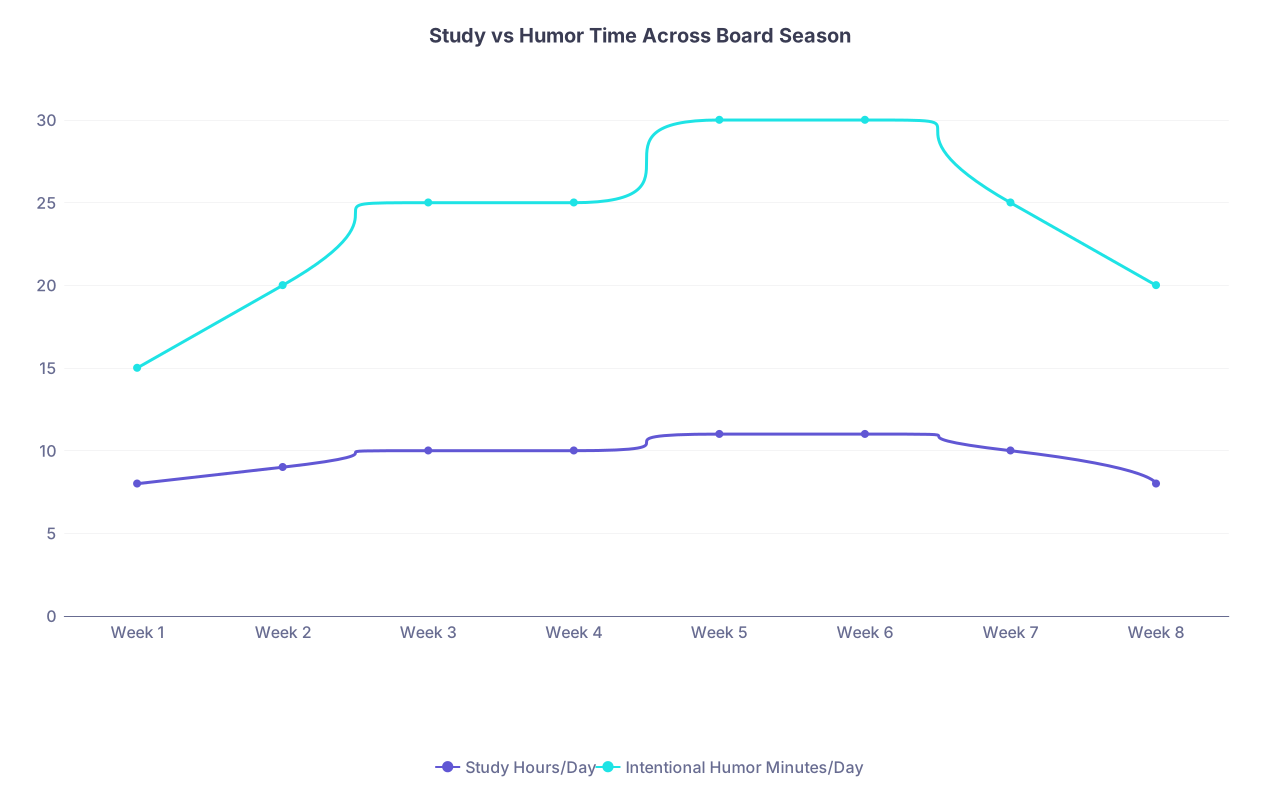
| Category | Study Hours/Day | Intentional Humor Minutes/Day |
|---|---|---|
| Week 1 | 8 | 15 |
| Week 2 | 9 | 20 |
| Week 3 | 10 | 25 |
| Week 4 | 10 | 25 |
| Week 5 | 11 | 30 |
| Week 6 | 11 | 30 |
| Week 7 | 10 | 25 |
| Week 8 | 8 | 20 |
Weeks 1–2: Experiment Phase
At this point, you should be:
- Trying different times for your big comedy block
- Testing whether memes or short videos work better as micro breaks
- Figuring out which friends actually bring you up vs drag you down
What to watch for:
- Do you return to studying after the humor break fairly easily? Good.
- Do you “accidentally” stretch a 5-minute break into 50? Too much unstructured humor. Tighten.
Practical adjustment:
- If breaks expand, set actual timers
- Pre-select your content: create a playlist of 10 short clips, and only pull from that
Weeks 3–5: The Grind Core – Protect Rituals at All Costs
This is when people start to crater. They say, “I don’t have time to watch anything funny this week.” Translation: “I’m choosing to be miserable and less efficient.”
At this point, you should:
- Treat your Wednesday group laugh and Friday comedy block as unmoveable
- Consolidate micro-breaks rather than delete them if you’re behind (e.g., 5 minutes every 2 hours instead of 90 seconds every hour)
Add one more ritual now:
The “NBME Autopsy Roast” (Post-Exam)
After any NBME or full-length:
- Schedule 15–20 minutes where you and a friend roast the dumbest questions you missed
- Not to seriously re-study, just to take the sting out
Format:
- “Okay, read me the most disrespectful question from today.”
- Dramatically rephrase stems in the most overblown way possible
- Assign each stupid answer choice a personality
The psychological trick: you’re teaching your brain that exams are beatable, mockable, not sacred objects.
Week 6–7: Tight Time, Higher Anxiety
People now start deleting everything enjoyable. That’s a mistake.
At this point, you should:
- Shorten rituals, not eliminate them
- Shift to the most efficient humor sources:
- Short, familiar clips
- Saved memes, not hunting for new ones
- 20–30 minute sitcom episodes instead of 90-minute specials
Your weekly comedy block might shrink from 90 minutes to 45–60. Fine. It just cannot go to zero.
Introduce:
- 10–15 minutes, once a week, of “Future Attending You” humor journaling:
- Write 3–5 bullet points of stupid things you’ll laugh about later:
- “Remember when I thought I had a brain tumor because I missed 3 neuro questions?”
- “Remember crying because I couldn’t remember which interleukin did what?”
- Write 3–5 bullet points of stupid things you’ll laugh about later:
It’s silly, but it shifts your frame to “this will be a story.”
Final 1–2 Weeks: Micro-Ritual Mode
At this point, bandwidth is low, test is looming, and your brain is fried.
Stop trying to keep the whole original plan. Strip it down:
- Keep:
- Morning 60–90 second clip
- Night “one absurd question” ritual
- One 30–45 minute group call or in-person hang, even if it’s shorter
- Pause:
- Long specials
- Meme-making marathons
You want to arrive at exam day tired but not broken. Humor becomes maintenance, not luxury.
What These Rituals Actually Look Like (Concrete Examples)
You don’t need more theory. You need scripts.
Weekly Comedy Block Ideas (Board-Themed)
Options you rotate through:
- Standup specials that med students consistently quote (you know the ones)
- Medical satire:
- Dr. Glaucomflecken hospital characters binge
- Sketches about EMR / consults / call nights
- Comedy-adjacent:
- “Try not to laugh” compilations with friends (yes, childish; yes, effective)
The rule: if you find yourself back on medical Reddit during this block, you’ve broken the ritual. Switch devices if you have to.
Group Vent-Laugh Session Structure
Here’s a tight 30-minute format that actually works:
0–5 minutes: Everyone shares “Today’s Most Unnecessary Panic”
- “I was convinced I had Cushing because I like salty snacks”
5–15 minutes: “Explain a concept badly” game
- One person: “Okay, explain the renin-angiotensin system like you’re explaining a toxic relationship.”
- Or: “Explain heart murmurs as if they’re different types of awful roommates.”
15–25 minutes: Share 3–5 top memes of the week
- One person curates beforehand to avoid endless scrolling
25–30 minutes: One collective absurd NBME question
- Group builds it together:
- One picks the patient
- One picks the wild risk factor
- One picks the board trope
- Answer choices include something like “Tell the patient they are, in fact, dead inside.”
Then everyone logs off. Timer helps.
Daily Micro Ritual Scripts
You can literally script these into your day.
After UWorld block:
- Stand up, stretch
- Open “Board Season Memes” album
- Look at exactly 3
- Close it. Back to review.
Before bed:
- Open Notes doc “NBME 666”
- Write today’s absurd question in ≤ 90 seconds
- Done.
Avoiding the Two Big Traps
You’re walking a line between “healthy humor” and “I accidentally watched 4 hours of reels.”
Trap 1: Humor as Escape Hole
Signs:
- “5-minute break” reliably becomes 45
- You feel worse after scrolling, not lighter
- You’re using humor to avoid specific topics (hello biostats)
Fix:
- Put humor on timers and playlists:
- Pre-download a 3-minute compilation
- Set a 5-minute timer before you press play
- Make your environment obvious:
- Study at desk, humor on couch/bed (or vice versa) so you feel the context shift
Trap 2: Humor That Feeds Anxiety
Not all “funny” helps.
Stuff to limit during board season:
- Score flex memes that make you feel behind
- “I failed Step by 1 point” horror stories played for laughs
- Endless Reddit doom humor
You want humor that:
- Punches up (at the absurdity of the system)
- Humanizes your struggle
- Makes you feel less alone, not more doomed
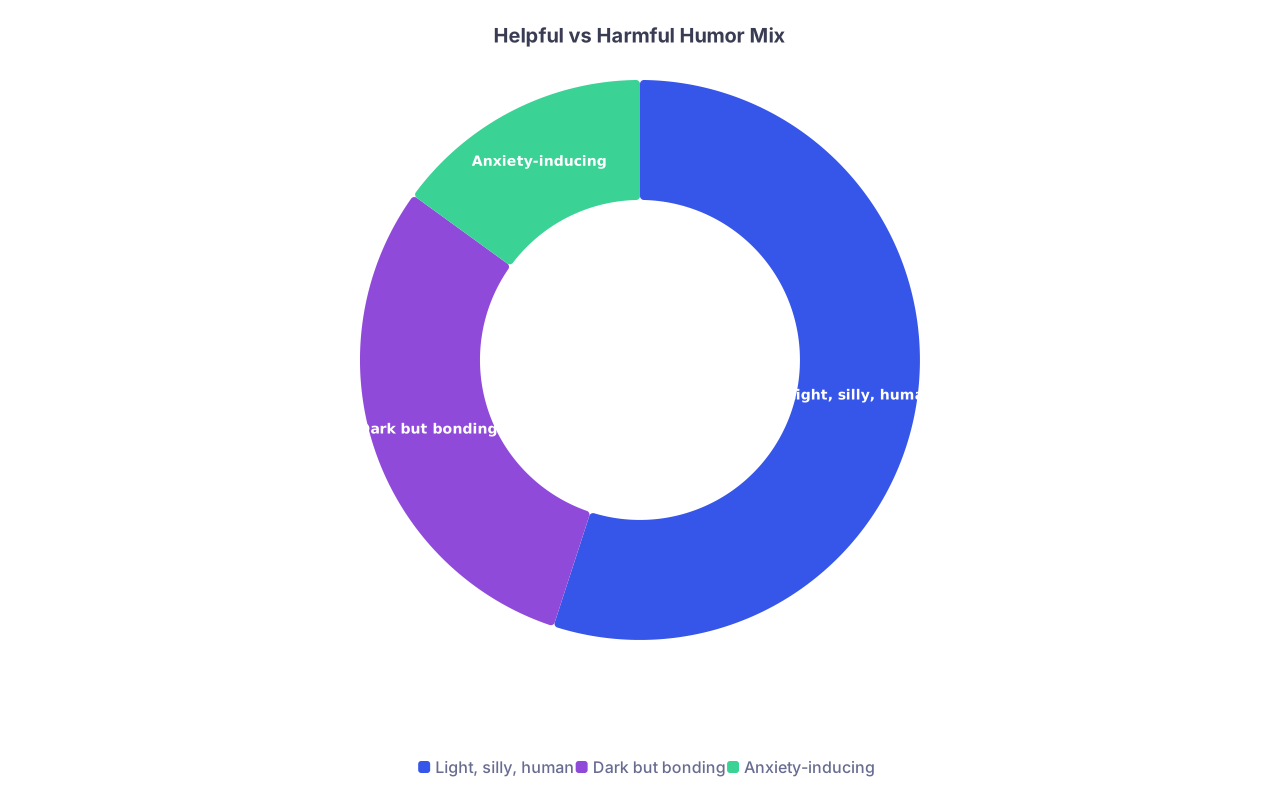
| Category | Value |
|---|---|
| Light, silly, human | 55 |
| Dark but bonding | 30 |
| Anxiety-inducing | 15 |
Aim for most of your humor to be light or dark-but-connecting. Keep anxiety-inducing stuff minimal.
Beyond You: Make It a Class Culture
You can do this alone. It’s more powerful if you drag your cohort in.
At this point, if you have even 5% leadership energy left, you can:
- Start a “Board Season Laugh of the Day” in your class GroupMe/Discord
- Organize a 30-minute “Board Roast Night” every other week:
- People share the wildest questions, everyone mocks them
- Build a shared doc of “Wrong but Iconic Mnemonics” the class can contribute to
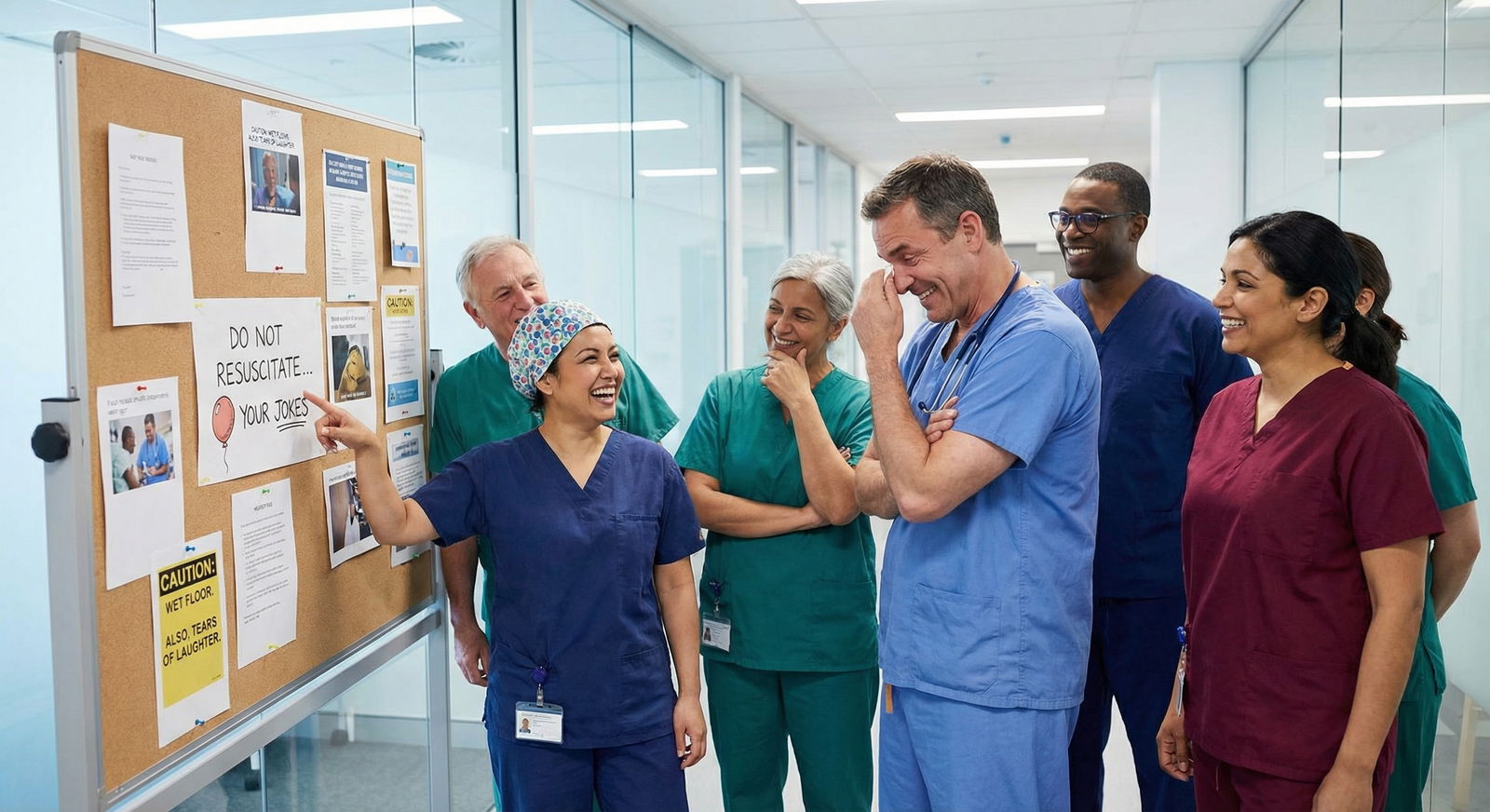
Future you will remember this vibe way more than that one renal question you got right.
Exam Week: Last 3 Days Micro-Plan
You’re almost there. Humor shifts again.
T-minus 3 days:
- Keep your weekly group check-in, but shorter (20–25 minutes)
- Watch one 20–30 minute comfort show episode before bed
- Continue “one absurd question” nightly – make them about the exam itself
T-minus 2 days:
- Remove new, intense content (no fresh NBMEs)
- Keep 5-minute humor breaks every 2–3 hours
- No doom memes about failing – mute those threads
Day before exam:
- Morning: 15–20 minutes of light review, then a short, familiar comedy episode
- Afternoon: short walk with a friend, share “what will be funny about this in a year” stories
- Night: one last absurd question, something like:
- “A 26-year-old student presents on exam day with acute fear that every question will be about porphyrias. The most appropriate management is: A) Panic, B) Remember you saw one porphyria question in 8,000, C) Move on with your life, D) All of the above.”
Then you sleep. For real.

After the Exam: Close the Loop
Don’t just drop everything and never think about it again. You built these rituals; use them to decompress.
Within 48 hours post-exam:
- Have one debrief where you and a friend intentionally laugh about:
- The weirdest question
- The moment your brain fully blue-screened
- Re-read your absurd questions doc from the last 2 months
- Save 2–3 of the best rituals that helped you. You’ll need them for:
- Clinical rotations
- Residency
- Every awful night float block of your life
Key Takeaways
- Humor during board season only works if it’s scheduled like a real obligation: weekly comedy block, group vent-laugh session, daily micro-rituals.
- As stress ramps up, you shrink humor rituals but don’t delete them; shift to short, familiar, low-friction laughs.
- The goal isn’t to pretend boards are fun. It’s to train your brain to see the absurdity, stay human, and make it to exam day tired—but not broken.