Medical Memes: What Your Favorite Ones Reveal About Modern Healthcare
Memes have become one of the dominant ways young professionals process their world—and medicine is no exception. For medical students, residents, nurses, and attendings, medical memes are more than quick laughs during a night shift. They are snapshots of shared experiences, reflections of systemic healthcare issues, and a surprisingly powerful form of healthcare communication.
From memes about pre-round anxiety to jokes about prior authorizations, what healthcare workers share and “like” can tell us a great deal about the culture of medicine, the mental health in medicine crisis, and how the profession sees itself in a rapidly changing system.
This article unpacks what medical memes say about:
- The emotional reality of training and practice
- Mental health and burnout in healthcare
- How we communicate with patients and each other
- The strengths and failures of our healthcare systems
- Community, identity, and pride in the medical profession
…and how you, as a current or future healthcare professional, can engage with this “language of humor” in a thoughtful, healthy way.
What Exactly Are Medical Memes?
Medical memes sit at the intersection of internet culture and clinical life. They take the familiar meme format—images, GIFs, short videos, or text screenshots—and layer on jokes, anecdotes, or commentary specific to healthcare.
Types of Medical Memes You’ll See
Common categories include:
Training & education memes
- Studying for exams (USMLE, shelf exams, boards)
- Clinical rotations and clerkship hierarchies
- Residency match, SOAP, and fellowship applications
- Imposter syndrome and “everyone else is smarter than me” jokes
Workplace and workflow memes
- Night float and 24-hour call
- Endless charting and the EMR struggle
- “Labs ordered vs. labs actually necessary”
- Pager PTSD and “just as you sit down to eat” consults
Patient interaction memes
- “Dr. Google” and self-diagnoses
- Non-adherence presented in painfully relatable ways
- Language barriers and communication breakdowns
- The classic “10/10 pain but scrolling TikTok” contrast
System and policy memes
- Insurance denials and prior authorizations
- Productivity metrics and RVU pressure
- Staffing shortages and unsafe ratios
- Underfunded public health and preventive care
Some of these live in closed Facebook groups and Instagram pages specific to specialties (e.g., anesthesia, EM, psychiatry, surgery), or broader accounts aimed at med students and residents. Others circulate on Reddit, X, and specialty forums.
How Medical Memes Evolved With Modern Healthcare
Early medical jokes focused on timeless stereotypes—arrogant surgeons, overworked interns, stoic nurses. Today’s medical memes are more:
- Nuanced – They dissect burnout, moral injury, and structural inequities.
- Self-aware – They often poke fun at medicine’s own toxic traditions (“we suffered, so you should too”).
- Systemic in focus – Instead of just mocking individuals, they highlight system design flaws.
- Interprofessional – Allied health professionals, therapists, pharmacists, and techs are increasingly visible in the humor.
This shift mirrors broader cultural changes: growing awareness of mental health in medicine, more open critique of systemic healthcare issues, and the influence of digital-native generations now training and practicing.
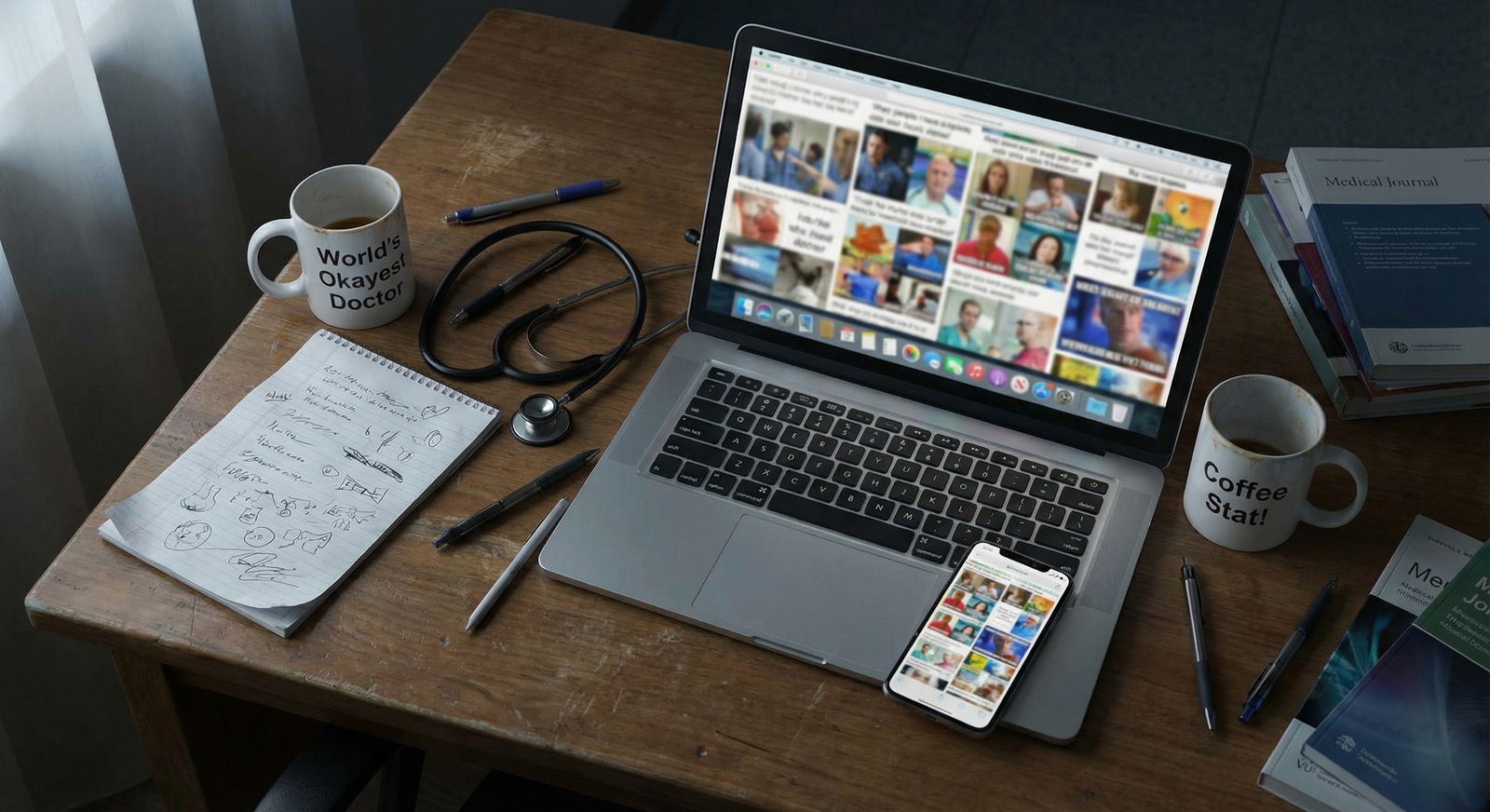
Medical Memes and the Emotional Reality of Healthcare Work
At their core, medical memes are emotional shorthand. They allow you to say, “This is hard,” “I’m not okay,” or “Is anyone else seeing this?” in a way that feels safe and relatable.
1. Stress, Burnout, and Mental Health in Medicine
A massive portion of popular healthcare humor centers on stress, exhaustion, and emotional overload.
Typical examples:
A resident staring blankly at a computer at 4 a.m. with the caption:
“When your shift ended 3 hours ago but you’re still finishing notes.”A split image: “How my non-med friends think my life is (Dr. House diagnosing rare diseases)” vs. “My actual life (arguing with insurance about a generic medication).”
These memes reflect several realities:
Chronic sleep deprivation
- Memes about “post-call brain” or “three days without REM sleep” highlight how normalized it is to function impaired—and how dangerous that can be.
Emotional fatigue and moral injury
- Jokes about “saving lives with zero resources” or “being forced to discharge someone unsafe because their insurance ran out” point to moral distress rather than simple tiredness.
Loneliness and fear of vulnerability
- It’s often safer to post a meme about “crashing in your car between shifts” than to say “I’m not coping” outright.
Why These Memes Matter for Mental Health
They:
- Normalize conversation about distress in medicine, making it more acceptable to admit struggling.
- Validate shared experiences—seeing others joke about the same issue is an antidote to isolation.
- Act as a “pressure release valve”—humor can make intolerable situations feel survivable for another day.
However, there’s a flip side: when every meme is about suffering, it can also normalize unsustainable conditions as “just part of the job.” For leaders and educators, paying attention to recurring themes in medical memes can be a real-time barometer of trainee and staff well-being.
2. Humor as a Coping Mechanism—And Its Limits
Healthcare humor has a long tradition: gallows humor in the trauma bay, jokes in the OR, dark banter on call. Memes have simply digitized and amplified that tendency.
Common humor targets:
- Absurd consult requests:
“Please admit patient: diagnosis ‘tired of them in the ED.’” - Endless “just one more thing” pages when you’re headed out the door.
- The “code brown” that happens exactly when everyone is busiest.
Humor helps you:
- Regain a sense of control in unpredictable situations
- Create quick bonds with colleagues across disciplines
- Put emotional distance between you and repeated exposure to suffering
But there are guardrails.
Healthy vs. Harmful Coping Through Memes
Healthier use of medical memes:
- Laughing at shared burdens (charting, call schedules, exam stress)
- Punching up at systems, policies, or inequitable structures
- Encouraging help-seeking (“When your therapist says burnout isn’t a personality trait”)
Potentially harmful patterns:
- Punching down at patients, marginalized groups, or colleagues
- Normalizing dangerous practice (“We all drive home post-call half asleep, right?”)
- Reinforcing stigma (“Only weak residents ask for a day off”)
As a future or current clinician, using humor responsibly is part of professional identity formation. You can still enjoy edgy memes while asking: Who is the butt of this joke, and what does that say about our culture?
Medical Memes, Communication, and the Patient Experience
Memes are also a mirror for how we communicate in medicine—both among ourselves and with patients.
3. Medical Jargon, Miscommunication, and “Dr. Google”
Many medical memes highlight the communication gulf between clinicians and patients.
For example:
A physician writing a beautifully detailed note filled with terms like “idiopathic,” “benign,” and “conservative management” with a caption:
“Patient summary: ‘Doc said it’s nothing but I might die, not sure.’”A side-by-side comparison:
- Left: What I said: “We’re going to try a different medication to better control your blood pressure.”
- Right: What they heard: “You’re very sick and it’s your fault.”
These memes underscore:
- How impenetrable medical language can be
- How easily patients can feel blamed or shamed
- The reality that intent and impact in communication often diverge
Lessons for Healthcare Communication
If you pay attention, medical memes are like a free communication workshop:
- When multiple memes joke about patients misunderstanding discharge instructions, that’s a signal: our explanations may be too complex or rushed.
- Memes about “patients nodding politely but understanding nothing” highlight the need for teach-back methods and plain language.
- Jokes about patients misinterpreting online information (“Dr. Google”) remind us to address online content directly rather than dismiss it.
A practical takeaway:
When you catch yourself laughing at a joke about patient confusion, ask: What could I do in real life to reduce that confusion for my next patient? That tiny mindset shift leverages humor for tangible improvement.
4. Memes as a Window Into Systemic Healthcare Issues
Some of the sharpest, most viral medical memes are not about individuals—they’re critiques of entire systems.
Common themes include:
Insurance and access barriers
- “The real boss fight is not the disease, it’s the prior auth form.”
- “Prescribing: 10 seconds. Arguing with insurance: 45 minutes.”
Understaffing and unsafe workloads
- Comics depicting one nurse caring for an entire ward, juggling alarms and patient needs.
- Residents on call “covering the hospital like a Wi-Fi router with bad reception.”
Productivity over patient-centeredness
- Memes about being pressured to see more patients in less time, or documenting primarily for billing.
Inequity and social determinants of health
- Satirical takes on treating housing insecurity and food insecurity with “follow up with your PCP.”
These memes function as:
- Social commentary – distilling complex policies into instantly understandable images.
- Advocacy tools – raising awareness about systemic healthcare issues far beyond academic journals.
- Catalysts for discussion – sparking conversations at conferences, in faculty meetings, and on ward rounds.
Increasingly, trainees and early-career clinicians use meme accounts as informal platforms for calling out structural problems—including racism, sexism, and inequities in care—within healthcare.
Celebrating Identity, Pride, and Community Through Medical Memes
While many medical memes focus on stress or criticism, a large subset is fundamentally affirming: they highlight the joy, privilege, and meaning in medical work.
5. Memes That Celebrate the Medical Profession
Examples include:
- “Not all heroes wear capes, some wear scrubs” images of nurses, techs, and medics.
- Progression memes: premed → M1 → intern → attending, showing growth and resilience.
- “Match Day glow-up” memes celebrating the journey from confused premed to matched resident.
These memes:
- Reinforce a shared identity—you’re part of something bigger than yourself.
- Remind trainees why they started, especially in the face of repeated setbacks.
- Highlight interprofessional respect, recognizing contributions across the care team.
For residency applicants and early trainees, following accounts that balance humor about hardship with pride and purpose can support a healthier professional identity than pages that only glorify suffering.
6. How Medical Memes Shape Culture in Training Environments
Memes are now woven into the informal curriculum of medicine—the set of unspoken norms, values, and attitudes we absorb outside formal teaching.
They can:
- Normalize empathy (“We all feel heartbroken when that long-term patient passes away”)
- Normalize help-seeking (“Therapy as a flex, not a failure”)
- Or normalize unhealthy norms (“Real doctors don’t need sleep,” “Crying is weakness”)
For educators and program leaders, paying attention to what your learners are sharing can inform:
- Wellness initiatives
- Feedback about schedule design and learning climate
- Conversations about equity, inclusion, and professionalism
Some programs now use carefully selected medical memes in teaching sessions to:
- Start discussions about bias or communication errors
- Debrief tough rotations
- Introduce topics like moral injury or systemic racism in healthcare in a less intimidating way
How to Engage With Medical Memes in a Healthy, Professional Way
For medical students, residents, and attendings, memes are probably here to stay. The key is using them in ways that support—rather than undermine—your well-being and professionalism.
7. Practical Guidelines for Healthcare Professionals and Trainees
1. Protect patient privacy—always.
Never share identifiable patient details, images, or unique clinical scenarios, even “anonymized,” if there’s any chance of recognition.
2. Punch up, not down.
Aim your humor at:
- Systems, policies, bureaucracy
- Unreasonable expectations
- Outdated training practices
Not at:
- Patients (especially vulnerable groups)
- Colleagues from other specialties or professions
- Marginalized communities
3. Notice your emotional patterns.
If you find yourself relying heavily on dark humor just to get through each shift, consider that a sign—not of weakness, but of strain. That’s a good moment to:
- Talk with peers or mentors you trust
- Explore institutional wellness resources
- Consider professional mental health support
4. Curate your feed.
Follow pages that:
- Make you laugh and feel seen
- Occasionally spotlight solutions, not just problems
- Respect boundaries around stigma and discrimination
Unfollow pages where you routinely feel more cynical, bitter, or dehumanized after scrolling.
5. Use memes as conversation starters.
A few constructive ways to use medical memes in real life:
- Bring a meme up (verbally, not necessarily shown) in a debrief and ask, “Why does this resonate with us?”
- Use relevant, respectful memes in wellness talks or communication workshops.
- Share a meme with a trusted colleague as a gentle way of saying, “I’m feeling this too—are you okay?”
Frequently Asked Questions About Medical Memes and Healthcare Culture
Q1: Why are medical memes so popular among students, residents, and healthcare staff?
Medical memes blend familiarity, speed, and emotional relevance. They allow clinicians and trainees to process complex feelings—stress, pride, frustration, imposter syndrome—within a few seconds of scrolling. In a field where time is scarce and vulnerability can feel risky, memes provide a low-effort way to say, “Yes, this is exactly what it’s like,” and see that others feel the same.
Q2: Can medical memes actually influence change in the healthcare system, or are they just jokes?
While a single meme won’t rewrite policy, large patterns of memes can shape discourse. When thousands of clinicians repeatedly create and share content about the same systemic healthcare issues (e.g., prior authorizations, unsafe staffing, unrealistic productivity targets), it:
- Raises awareness among the broader public
- Validates the concerns of frontline workers
- Sometimes catches the attention of professional societies, journalists, and policymakers
In this way, healthcare humor acts as an early warning system and a form of grassroots advocacy.
Q3: Do medical memes risk damaging patient–physician relationships or trust?
They can—especially if memes are demeaning toward patients, mock sensitive conditions, or inadvertently reveal details that could be linked back to real people. However, memes that focus on shared systemic frustrations, communication challenges, or the humanity of both patients and clinicians can deepen empathy rather than erode it. The key is professional judgment: assume anything posted could be seen by a patient or future employer, and act accordingly.
Q4: How do medical memes impact mental health for healthcare workers—are they protective or harmful?
They can be both. On the positive side, medical memes:
- Provide validation and a sense of community
- Offer a brief distraction and stress relief
- Help people name and recognize burnout or moral injury
On the negative side, constant exposure to dark or cynical humor can reinforce hopelessness and normalize suffering as “just how it is.” If memes are your only outlet for processing distress, that’s a cue to seek more robust forms of support: peer debriefing, supervision, therapy, or institutional wellness resources.
Q5: Is it appropriate to use medical memes in teaching, orientation, or residency recruitment?
Used thoughtfully, yes. Carefully chosen memes can:
- Make orientation and didactics more engaging
- Open up discussions about hidden curriculum, bias, and well-being
- Signal to applicants and trainees that a program is self-aware and approachable
However, they should never compromise professionalism, glorify unhealthy work expectations, or stereotype patient populations. When in doubt, involve a diverse group of learners and faculty in selecting and vetting meme content for formal settings.
Medical memes are more than late-night entertainment on your post-call scroll. They are a living archive of how today’s healthcare professionals experience their work—the joy and meaning, the exhaustion and fear, the admiration for colleagues, and the frustration with systems that often feel broken.
Engaging critically and compassionately with this form of healthcare humor can help you understand not only your own reactions, but also the evolving culture of medicine you are helping to shape.