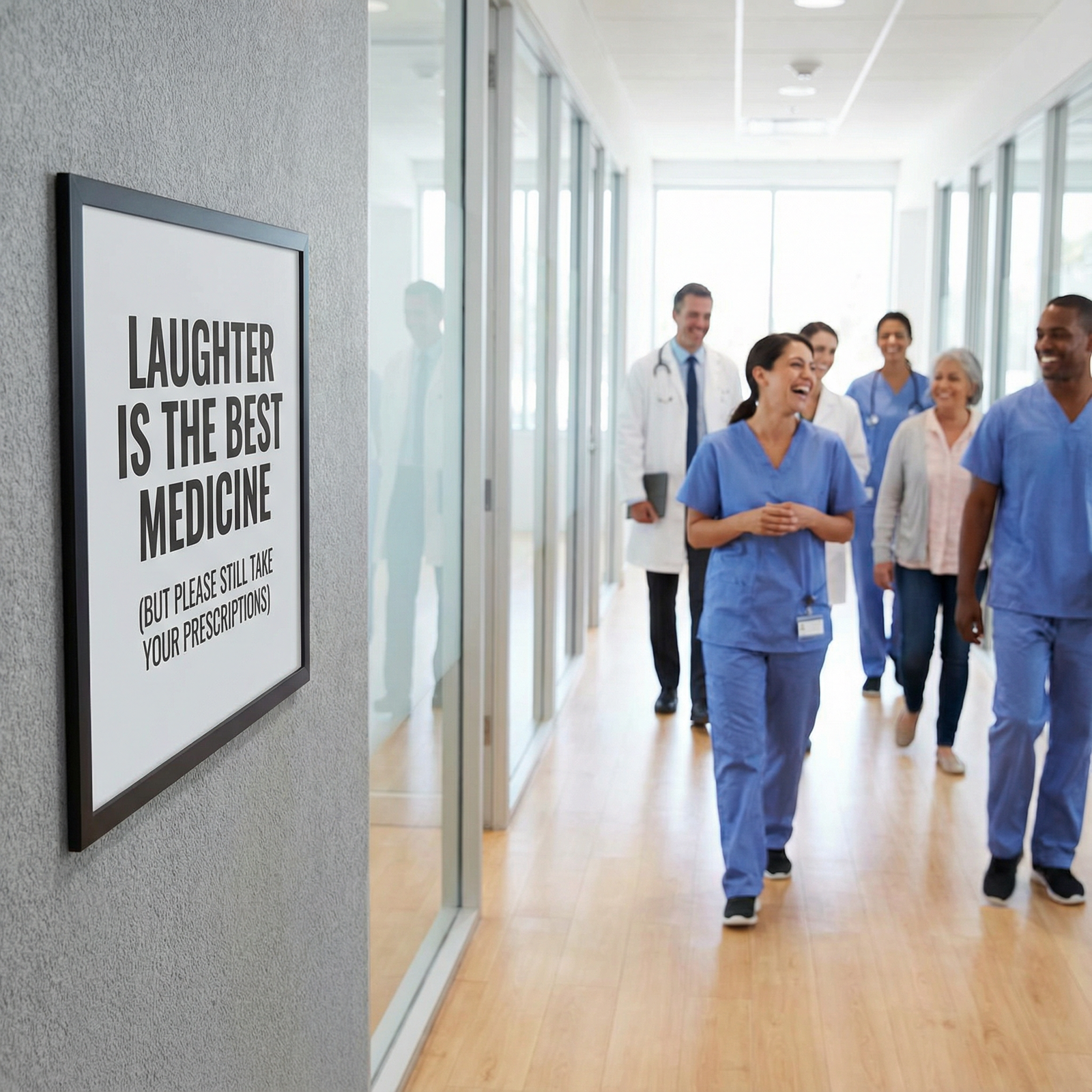
Humor has long been called “the best medicine,” and nowhere is that more apparent than in clinics, hospitals, and waiting rooms around the world. For patients bracing for procedures, for residents on hour 20 of a call shift, and for staff juggling endless tasks, a bit of medical humor on the wall can act like a pressure valve.
Clever healthcare signage and witty clinic notices aren’t just jokes; they’re a subtle form of laughter therapy and an important tool in health communication. Done well, they reduce anxiety, improve the patient experience, and remind everyone that medicine, at its core, is about humans taking care of humans.
Below, we’ll explore some of the funniest medical signs and notices, unpack why they work, and offer practical tips for using humor responsibly in your own clinical environment.
Humor in Healthcare: Why Lightness Belongs in Serious Spaces
When people picture healthcare settings, they typically imagine sterile walls, serious expressions, and an undercurrent of fear or uncertainty. For many patients, stepping into a clinic or hospital means bracing for discomfort, bad news, or long waits.
That tension is exactly why medical humor, especially through funny signs and posters, can be so powerful.
Laughter as a Coping Mechanism
Laughter is more than a pleasant feeling—it’s a physiologic event:
- It reduces levels of stress hormones like cortisol and adrenaline.
- It increases endorphins, the body’s natural “feel good” chemicals.
- It can temporarily lower heart rate and blood pressure.
In a medical setting, where stress is almost a baseline, well-placed healthcare signage that sparks a smile can:
- Break cycles of rumination (“What if my test is bad?”)
- Distract from pain or fear, if only for a moment
- Normalize the fact that everyone in the room is anxious to some degree
For residents and staff, a quick laugh during rounds or between patients can also be an important micro-break that helps prevent emotional exhaustion.
Building Patient–Provider Rapport Through Humor
Humor, when used thoughtfully, creates connection. For patients, seeing a funny sign in an exam room signals:
- “These people get it. They know this is stressful.”
- “This place values humans, not just lab values.”
That small shift can:
- Make patients more willing to open up about sensitive topics
- Soften the start of difficult conversations
- Encourage questions and shared decision-making
For example, a weary patient who laughs at a humorous hand-hygiene sign may be more open to chatting with the nurse or resident about their fears. Humor becomes an icebreaker that boosts trust and communication—central pillars of a positive patient experience.
The Art and Science of Humorous Medical Signage
Funny medical signs do more than decorate walls; they convey critical information in a memorable way. The best ones combine health communication principles with medical humor, making important rules hard to ignore—and even harder to forget.

Elements of Effective Funny Healthcare Signage
Strong humorous signage typically:
- Delivers a real message (safety, hygiene, directions, or expectations)
- Uses clear language with a twist, pun, or visual gag
- Stays professional—never demeaning, offensive, or dismissive of illness
- Matches the setting (a pediatric clinic vs. an ICU requires different tones)
Below are examples from the original article, expanded with context, plus ideas for how you might adapt them.
Classic Funny Medical Signs: Examples and Why They Work
1. “Thank You for Not Smoking – We’re Not Here to Make You Feel Better When You Have a Cough.”
This variation on the standard “No Smoking” sign gets a laugh while delivering a serious message about respiratory health.
Why it works:
- Clear health message: Reinforces smoke-free policy and the link between smoking and coughing.
- Memorable: The twist sticks in patients’ minds longer than a plain “No Smoking” poster.
- Behavioral nudge: Mild humor feels less confrontational than a stern warning but still discourages unhealthy behavior.
How to adapt it:
- “Thank you for not vaping. Our goal is to clear your lungs, not your clouds.”
- “Smoke-free zone. Your lungs will send us a thank-you card later.”
2. “In Case of Fire, Exit This Door Quickly… or Take Your Chances!”
Fire exit and emergency instructions are essential but often ignored. This sign secures attention through playful threat.
Why it works:
- High-stakes content, lower tension: The humor makes people actually read the safety information.
- Repetition value: Staff and patients notice it every time they pass—reinforcing knowledge of exits.
Implementation tip:
Keep safety information accurate and uncluttered. Humor should be an add-on, not a distraction from the essential direction (e.g., arrows, “Do not use elevators,” etc.).
3. “Patient Parking Only: All Others Will Be Toad.”
This pun on “towed” (with a picture of a frog or toad) is a classic example of visual and verbal humor in healthcare signage.
Why it works:
- Instant smile: The mental image of cars turning into toads is absurd and delightful.
- Clear rule: The consequence is silly, but the underlying message—don’t park here unless you’re a patient—is crystal clear.
- Branding opportunity: Clinics can incorporate mascots or logos to make signage recognizable and playful.
For residents and administrators:
Parking is a recurring stressor for patients and staff. Using humor softens the interaction while enforcing necessary limits.
4. “Wash Your Hands or You Might As Well Just Go Play in Traffic.”
Hand hygiene signs are everywhere, and most are ignored. This one stands out.
Why it works:
- Hyperbole: Comparing poor hand hygiene to “playing in traffic” highlights the real risk of infection.
- Behavioral impact: People are more likely to remember and follow a directive that made them laugh.
- Team culture: Helps normalize a culture where infection prevention is non-negotiable, but still human.
Professional caveat:
Ensure the tone fits the unit. In high-acuity or palliative settings, a gentler variation may be more appropriate (e.g., “Clean hands, fewer germs, more hugs.”).
5. “No Grumpy Patients!”
A simple sign posted at reception or in waiting areas can shift the emotional tone of the space.
Why it works:
- Framing: Sets expectations—this is a place where kindness and patience are valued.
- Self-awareness prompt: Many patients chuckle and reflect: “Okay, I’ll try.”
- Staff morale: Reminds everyone, including providers, to keep the atmosphere as positive as circumstances allow.
Better with nuance:
You can add a line below: “Exceptions allowed for real pain, bad news, and missing coffee before labs.” Acknowledging reality keeps the humor from feeling dismissive.
Comical Notices from Healthcare Providers: Beyond the Wall Signs
Funny notices often show up on front desks, prescription counters, and exam room doors. These short bits of medical humor can subtly transform the patient experience from the moment someone checks in.
6. “Please Do Not Tap on the Glass — The Patients Are Not Fish!”
Often seen near observation windows or front desks, this sign reins in disruptive behavior while inviting a laugh.
Why it works:
- Redirects behavior: Discourages people from knocking, peeking, or hovering.
- Humanizes patients: Reminds visitors that those behind the glass are people, not exhibits.
- Supports privacy: Humor becomes a gentle protector of dignity and boundaries.
Use case:
In pediatric wards, this can be paired with a cartoon fish illustration. In adult settings, a simple line drawing is enough to soften the message.
7. “To Go to Heaven, First You Have to Go to the Pharmacy!”
Typically found in pharmacies, this line gets people smiling while they wait for medications.
Why it works:
- Whimsical: Plays with the idea that following treatment plans is a step toward better long-term health.
- Engagement: Patients in line are a captive audience; an amusing sign gives them something to talk about.
- Adherence cue: Subtly encourages taking medications seriously without preaching.
More pharmacy-friendly twists:
- “We can’t promise miracles, but we can fill your prescriptions accurately and quickly.”
- “Your patience is appreciated. Your refills are, too.”
8. “Our Doctors Are Out of This World!”
Displayed with images of astronauts or planets, this sign turns a compliment into a visual joke.
Why it works:
- Positive framing: Celebrates staff without sounding boastful—because it’s clearly playful.
- Brand building: Reinforces trust in the care team through light-hearted pride.
- Good for recruitment: A culture that displays this kind of humor is often appealing to applicants and new hires.
Practical tip for trainees:
Consider how your program’s environment might look to visiting students and residency applicants. Well-placed, professional humor signals a team that takes care of its people, not just its patients.
9. “This Clinic Is Like a Bad Relationship — You’ll Want to Leave Eventually!”
Long waits are a near-universal frustration. This sign turns collective annoyance into a shared joke.
Why it works:
- Validates experience: Patients feel seen; the clinic knows the wait is frustrating.
- Defuses anger: It’s harder to stay angry at a system that openly, humorously acknowledges its flaws.
- Conversation starter: Staff can follow up with, “We’re working on making that relationship better.”
Actionable angle:
Pair a sign like this with actual operational improvements (online check-in, better triage) so humor isn’t masking systemic issues but accompanying efforts to fix them.
10. “Welcome! If You Think This Place Is Crowded, You Should See Our Waiting Room!”
Often posted at entrances or front desks, this sign makes fun of notorious overcrowding.
Why it works:
- Shared reality: Most people have endured crowded hospitals; the exaggeration feels true.
- Tension break: Instead of silently fuming, patients have something to smile or talk about.
- Social glue: Patients may share knowing looks or jokes with each other, enhancing a sense of community.
For staff and trainees:
Be ready to follow humor with empathy: “We really appreciate your patience today—thank you for sticking with us.”
Why Medical Humor Really Matters in Modern Healthcare
Funny signs might look trivial, but they’re doing quiet, important work in high-stakes environments.
1. Promoting Healing and Laughter Therapy
Research into laughter therapy and positive psychology suggests:
- Laughter stimulates endorphins and can modestly reduce pain perception.
- Positive emotion is associated with better immune function and resilience.
- A lighter environment can improve satisfaction with care, even when outcomes don’t change.
While a single joke sign won’t cure disease, it contributes to a therapeutic environment where patients feel safer and more supported.
2. Reducing Anxiety and Improving the Patient Experience
A patient entering a room with sterile walls versus one with a bit of gentle medical humor may experience:
- Lower anticipatory anxiety about exams or procedures
- More willingness to listen and engage with instructions
- Stronger memory of the visit—especially of feeling respected and human
Humor, when aligned with trauma-informed care, can act as a non-pharmacological tool to modulate anxiety and fear.
3. Strengthening Team Dynamics and Preventing Burnout
For residents, nurses, and attending physicians, daily exposure to suffering and high-stakes decisions can erode morale.
Humorous healthcare signage and shared inside jokes:
- Foster camaraderie (“Did you see the new sign in the staff lounge?”)
- Offer brief emotional resets during demanding shifts
- Reinforce identity as a team that can hold both gravity and lightness at once
This matters in the broader context of burnout prevention and wellness initiatives.
4. Encouraging Better Health Communication and Adherence
Health communication research consistently shows that:
- Messages that evoke emotion (including amusement) are more likely to be remembered.
- Clear, simple language beats jargon-heavy warnings.
- Friendly tone increases receptiveness, especially for behavior change.
Humorous hygiene signs, vaccination reminders, or smoking cessation posters can act as repeated prompts for healthier behavior that patients actually notice.
5. Making Rules and Policies Easier to Swallow
From mask requirements to visitor limits, many policies feel restrictive. When framed with a touch of humor, they’re often met with less resistance:
- “Masks are like seatbelts for your face—please wear yours.”
- “We love visitors, but germs love them more. Visitor limits keep everyone safer.”
The rule stays firm, but the delivery is gentler, which is particularly valuable in tense or crowded environments.
Practical Guidelines: Using Medical Humor Responsibly in Your Setting
If you’re a medical student, resident, or early-career physician thinking about adding funny signs or notices to your clinic, keep the following principles in mind.
1. Know Your Audience and Setting
What works in:
- Pediatrics: Playful imagery, cartoons, silly characters.
- Primary care: Lifestyle jokes, family-friendly puns.
- ICU/Oncology/Hospice: Extremely careful, minimal humor, focused on warmth rather than jokes.
Ask yourself: “If someone just received devastating news, would this sign feel comforting, neutral, or insensitive?” If there’s any doubt, err on the side of caution.
2. Punch Up, Never Down
Humor should never:
- Mock patients, their conditions, or their health behaviors
- Perpetuate stigma around mental health, obesity, addiction, or disability
- Target specific cultural, religious, or social groups
Aim humor at universal experiences—waiting, parking, hand hygiene—not at individuals or vulnerable populations.
3. Align with Institutional Policy and Professionalism
Before hanging anything:
- Check with your supervisor or clinic manager.
- Ensure the message supports existing policies (infection control, smoke-free campus, etc.).
- Avoid any content that could be misinterpreted as medical advice or promises of specific outcomes.
Signs should complement, not contradict, formal patient education materials.
4. Prioritize Clarity Over Cleverness
Even the funniest sign fails if patients can’t understand it:
- Use everyday language; minimize jargon.
- Make sure the main instruction (e.g., “Wash your hands,” “No smoking”) is easy to find and read.
- Use legible fonts, appropriate contrast, and accessible language for diverse and older patients.

FAQs: Medical Humor, Healthcare Signage, and Patient Experience
Q1: Does medical humor really improve patient outcomes, or just make people feel better?
Evidence suggests that while humor alone won’t change lab values or cure disease, it can significantly improve the patient experience: lower perceived pain and anxiety, better satisfaction scores, and improved communication with providers. These factors indirectly support better adherence and engagement with care—key drivers of real outcomes.
Q2: Where is it appropriate to use funny medical signs in a hospital or clinic?
Good locations include:
- Waiting rooms and reception areas
- Staff break rooms and workrooms
- General hallways and non-critical units
- Restrooms (especially for hand hygiene reminders)
- Pharmacies and outpatient clinics
More caution is needed in emergency departments, ICUs, oncology wards, and palliative care units, where patients and families may be in acute distress.
Q3: How can I introduce humor into my practice as a trainee or new attending?
- Start small: suggest or design one or two signs for the break room or waiting area.
- Use universally relatable topics (parking, waiting, handwashing).
- Run your ideas by nursing staff and front-desk colleagues—they know patient reactions best.
- Reflect after a few weeks: Do patients comment? Do staff like it? Any complaints? Adjust accordingly.
Q4: Can medical humor ever backfire and harm the patient experience?
Yes, if it:
- Minimizes the seriousness of a condition (“At least you didn’t lose your head!”)
- Feels sarcastic or judgmental (“We love compliant patients. The others… not so much.”)
- Appears in places where grief, fear, or crisis dominates (e.g., outside a resuscitation bay)
If there’s a chance a sign could be misread as dismissive, don’t use it. Always prioritize empathy over comedy.
Q5: Are there guidelines or best practices for designing humorous health communication materials?
General best practices include:
- Lead with the health message; use humor as a support, not the main point.
- Test drafts with a small, diverse group of staff and patients if possible.
- Avoid inside jokes that only clinicians understand—they can alienate patients.
- Keep visuals simple and avoid graphic or offensive imagery.
- Revisit signage periodically—retire anything that feels dated or no longer fits the culture.
Well-crafted medical humor and thoughtful healthcare signage can’t replace high-quality clinical care, but they can make that care feel more human, more accessible, and a little less frightening. For patients and providers alike, a carefully placed laugh in a serious place can be one of the quietest, most powerful forms of support.