
This article is for educational purposes only. It is not financial advice, not legal advice, and not tax advice. Figures vary by individual circumstances, so consult a qualified professional before acting.
You're Stuck in a Lab-Less World, But It's Not a Dead End
Nothing sparks panic quite like watching a classmate post their third PubMed-indexed co-authorship while your institution doesn't even have a functional Western blot setup.
If you are attending a community-based medical school, a smaller undergraduate college, or a program without a dedicated research building, you probably feel like you are already behind. You open residency program websites, see the average publication count for applicants matching into your target specialty, and wonder how on earth you're supposed to compete.
Here is the reality check you need right now: Most medical students do not do traditional basic science bench research.
Pipetting clear liquids into tiny plastic tubes for eighteen months is not the only way, or even the best way, to build a scientific track record. Wet labs are expensive, slow, and notoriously unpredictable. Cell lines die. Reagents get contaminated. Experiments fail for six months straight through no fault of your own.
You do not need a wet lab to build a killer research profile. You need a strategy, a laptop, internet access, and the persistence to see a project through to publication. There are multiple, highly respected pathways to generate legitimate academic output without setting foot near a fume hood.
Why Admissions Committees Actually Care About Research (The Honest Answer)
If you're unsure whether a particular project or lab is the right fit for your goals, learn how to evaluate research alignment before committing time: Misjudging Research Fit: How Students Pick the Wrong Lab.
If your school lacks research infrastructure, explore practical alternatives for building your research portfolio: No Research at Your College? Practical Alternatives Pre-Meds Can Use.
Let's dispel a common myth: Program directors and admissions committees are not secretly checking to see if you mastered CRISPR or spent 400 hours running gel electrophoresis. Unless you are applying to an MSTP/MD-PhD program or an ultra-academic department at a top-tier university, they don't care about the physical lab setting.
For students at institutions without med schools, remote research opportunities can provide a viable pathway: Small College, No Med School: Building Remote Research Experiences.
So what are they actually evaluating?
Programs look for four specific traits when they scan your research section:
For students balancing coursework, clinical rotations, and other commitments, a structured approach helps maximize limited hours: Busy Schedule, Real Output: Building a Low-Time Research Plan.
- Critical Thinking and Data Interpretation: Can you read a paper critically, identify flaws in methodology, and understand evidence-based medicine?
- Follow-Through: Research is tedious. Starting a project, writing a protocol, jumping through regulatory hoops, analyzing data, and pushing a manuscript through the grueling peer-review process proves you can finish what you start.
- Academic Contribution: Medicine advances through publication. Programs want residents who can contribute to their department's academic footprint.
- Comfort with Ambiguity: Clinical medicine rarely presents like a textbook. Research trains your brain to tackle complex questions that don't have clear answers yet.
Understand your target. If you want to match into internal medicine, pediatrics, or family medicine, a solid clinical chart review or quality improvement project is completely sufficient. If you are targeting research-heavy surgical specialties like plastic surgery, ENT, or orthopedics, you will need more volume, but that volume can still come entirely from clinical data, outcomes research, and systematic reviews.
The Five Research Paths That Don't Require a Bench Lab
If you don't have access to a wet lab, here are the five pathways that produce real, peer-reviewed currency.
1. Clinical Research & Retrospective Chart Reviews
This is the workhorse of medical student research. A retrospective chart review looks at patient data that already exists in an Electronic Health Record (EHR). You identify a cohort (e.g., patients who underwent total knee arthroplasty over a 5-year period), collect specific metrics (post-op complication rates, length of stay, readmission rates), and analyze the outcomes.
- Pros: The data is already collected; low barrier to entry.
- Cons: Requires Institutional Review Board (IRB) approval, which can take weeks or months.
2. Case Reports and Case Series
Spot an unusual presentation on your clinical rotation? Did an attending manage a rare drug interaction or treat a novel surgical complication? That is a potential case report. A case series groups 3 to 10 similar unusual cases together to highlight a clinical trend.
- Pros: Fastest path from concept to publication (often 3-6 months); requires minimal resources; excellent for medical students.
- Cons: Lower impact factor, but still counts as a peer-reviewed publication on your CV.
3. Quality Improvement (QI) Projects
Hospitals are obsessed with patient safety and workflow efficiency. QI projects focus on fixing broken clinical processes, like reducing central-line associated bloodstream infections (CLABSIs) in the ICU or improving discharge summary turnaround times.
- Pros: Attending physicians and hospital leadership love these; easy to start at local clinical sites; high real-world impact.
- Cons: Sometimes harder to publish in traditional journals, though dedicated QI journals exist.
4. Survey-Based Research
Cross-sectional survey studies examine knowledge, attitudes, or practices among specific groups (e.g., surveying emergency physicians about their comfort managing rare pediatric emergencies).
- Pros: Highly flexible; can be distributed digitally via Qualtrics or RedCap; zero lab equipment needed.
- Cons: Low response rates can wreck your study if you don't recruit aggressively.
5. Meta-Analyses and Systematic Reviews
This is the gold standard of non-bench research. Instead of collecting new patient data, you pool and statistically synthesize data from existing published studies to answer a definitive clinical question.
- Pros: High citation rates; published in prestigious journals; completely doable from a laptop anywhere on Earth.
- Cons: Rigorous methodology (PRISMA guidelines); requires advanced statistical knowledge or a statistician collaborator.
Finding Opportunities: Your School and Beyond
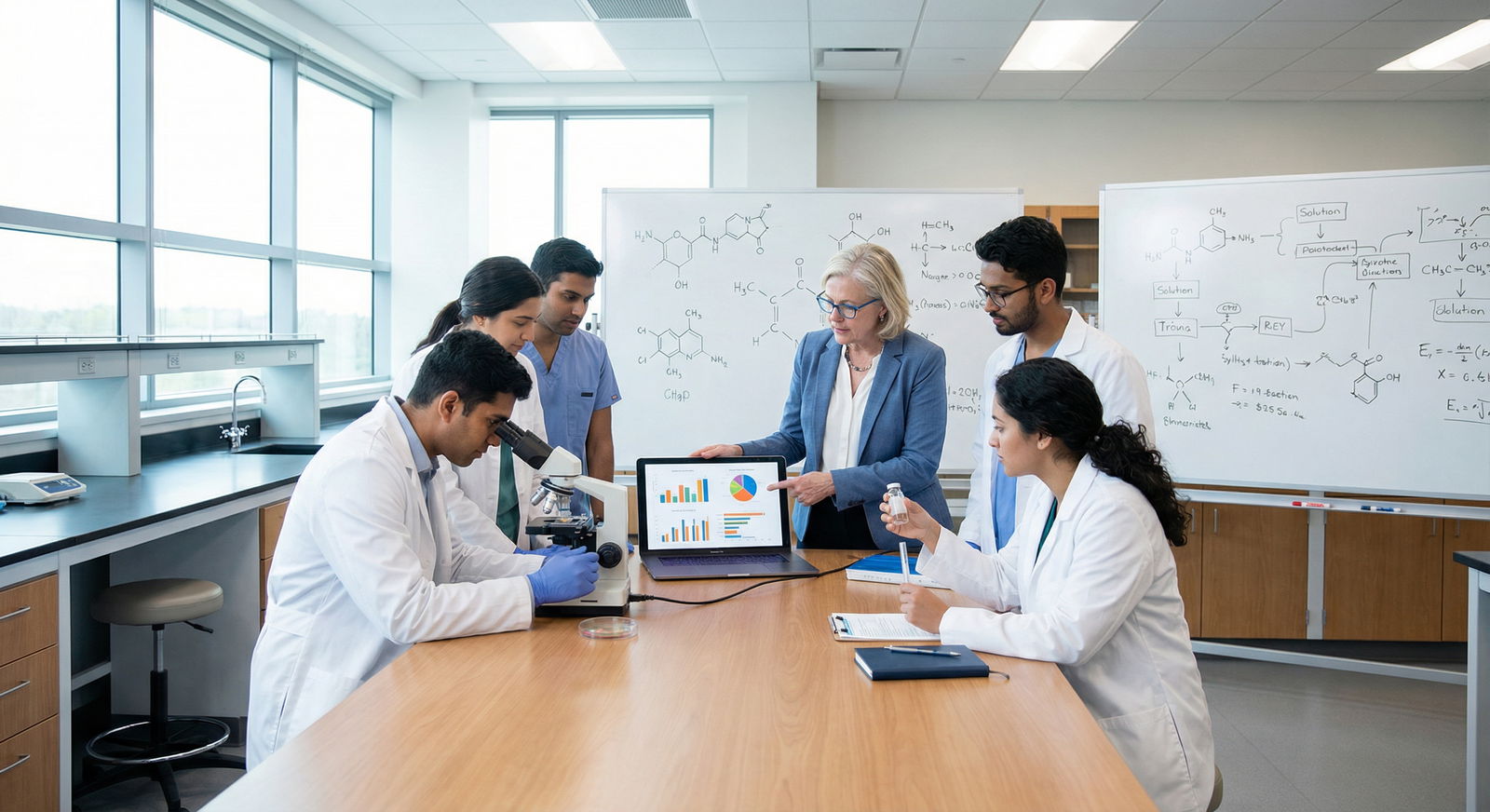
You don't need a dedicated research department to find projects. You just need to know where to dig.
Leverage Your Clinical Rotations
The single easiest time to land a research project is during your clinical clerkships or preceptorships. When an attending mentions an interesting clinical dilemma during rounds, ask: "Has anyone published our institution's data on this?" Most attendings have three or four back-burner ideas they simply don't have time to execute. You are free labor. Offer to do the heavy lifting.
Target Residents and Fellows
Attendings are busy running clinics and writing grants. Residents and fellows are trying to build their own CVs to land competitive fellowships, and they are underwater with clinical duties. Find the senior residents in your target specialty. Tell them directly: "I have 5 hours a week to run data extraction for any projects you're working on." They will hand you work on a silver platter.
Use PubMed and ClinicalTrials.gov
Search PubMed for local physicians in your city or region. Look for authors who are actively publishing clinical papers. If an attending at a neighboring hospital published two clinical studies last year, they have an active research infrastructure. That's who you want to target.
Go Virtual
Remote research is standard practice now. You can pull data from national databases (like the National Inpatient Sample or NSQIP), write systematic reviews, or conduct meta-analyses with researchers thousands of miles away. Reach out to academic centers in your region, even if you aren't enrolled there.
How to Cold Email Researchers (Templates That Actually Work)
Cold emailing works, if you stop writing 500-word essays about your lifelong passion for medicine.
Busy researchers ignore generic, long-winded emails. They want to know three things: Who are you? Why them? What specific skill or time commitment are you offering?
The 150-Word Cold Email Template
Subject: Medical Student Research Assistance - [Specific Topic/Field]
Dear Dr. [Last Name],
My name is [Your Name], a [Year]-year medical student at [School Name] interested in [Specialty].
I recently read your paper on [Specific Topic of Their Recent Paper] and found your findings on [1 Specific Detail from Paper] particularly compelling.
I am writing to ask if you have any ongoing clinical projects, chart reviews, or review papers that require student assistance. I am proficient in [Excel / R / Data Extraction / Literature Searches] and can commit [X] hours per week.
I have attached my CV for your review and would welcome a brief 10-minute call if you have capacity for a dedicated student on your team.
Best regards,
[Your Name] [Contact Info / Link to LinkedIn or Portfolio]
The Golden Rules of Cold Emailing:
- Never send a blast email. Personalize paragraph two for every single recipient. If it looks like a mail merge, it goes to trash.
- Keep it under 150 words.
- Follow up once. If you don't hear back in 7 business days, send a simple reply: "Hi Dr. [Name], just following up on this in case it got buried in your inbox. Thanks!" If they don't reply to that, drop it and move on.
Getting Credit and Making It Count on Your Application
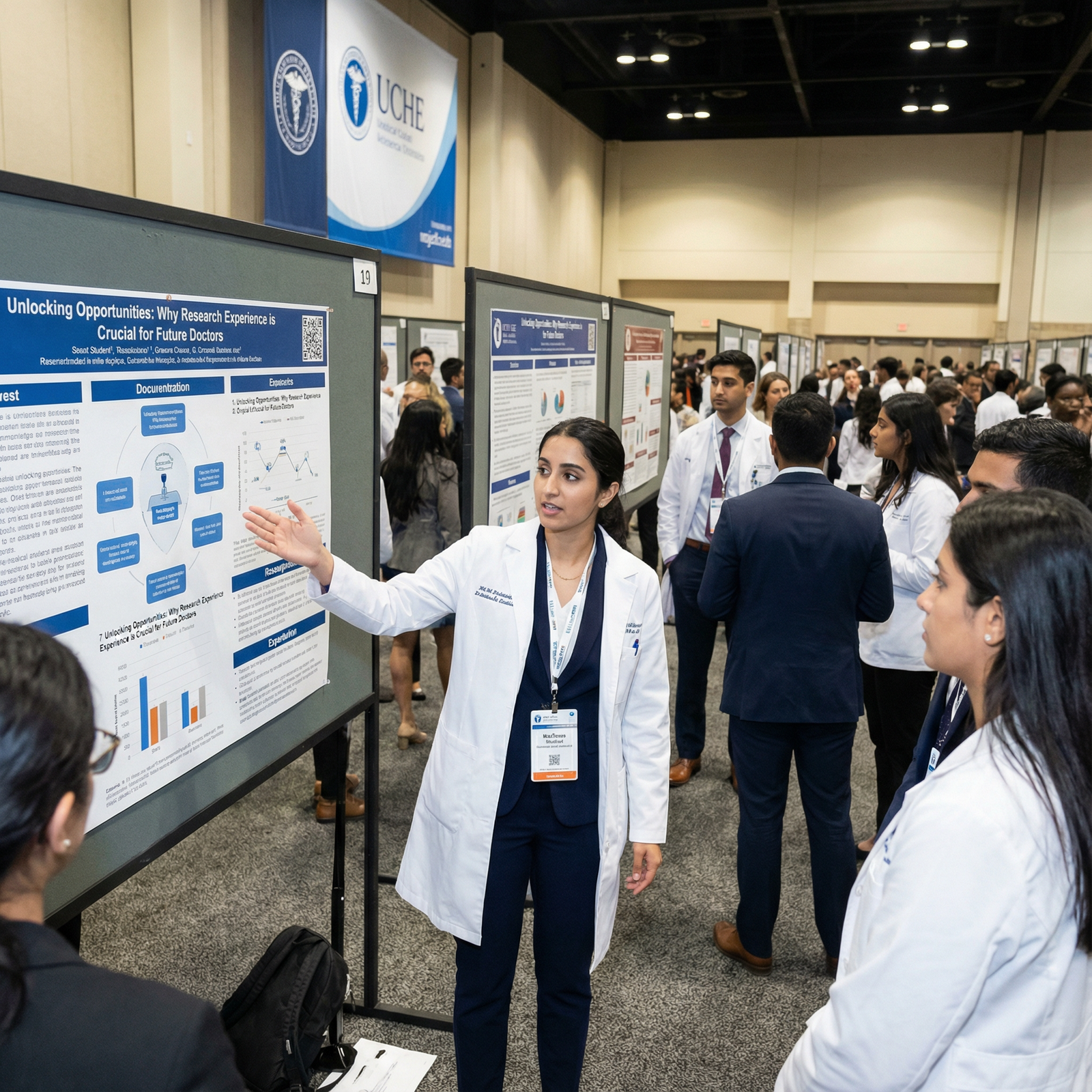
Doing the work isn't enough. You need tangible output to show for it on your ERAS or medical school application.
- Establish Authorship Upfront: Before you input a single data point into an Excel sheet, ask the PI: "If I complete this data extraction and assist with drafting the manuscript, will that meet criteria for co-authorship?" Professional, clear expectations prevent you from getting relegated to the "Acknowledgements" section after 50 hours of work.
- Squeeze Multiple Outputs from One Project: A single study can often yield:
- An abstract submitted to your school's local research day.
- A poster presentation at a regional specialty conference.
- An oral presentation at a national meeting.
- A final peer-reviewed publication.
- Document the Paper Trail: Keep strict records of IRB protocol numbers, dates of involvement, exact roles, and draft revisions. You will need these details when writing your application descriptions.
- Quality Beats Quantity: One published, peer-reviewed clinical paper where you can clearly explain the hypothesis, methodology, and clinical implications during an interview is vastly superior to five "submitted" abstracts that never saw the light of day.
Ready to Build Your Research Plan?
Don't let a lack of laboratory infrastructure hold your medical career back. Stop waiting for someone to hand you a bench project and start building clinical, systematic, or quality improvement projects today.
Need help refining your strategy or targeting projects for a specific specialty? Explore our step-by-step guides on mastering case reports and navigating residency application strategies to turn your effort into high-impact publications.