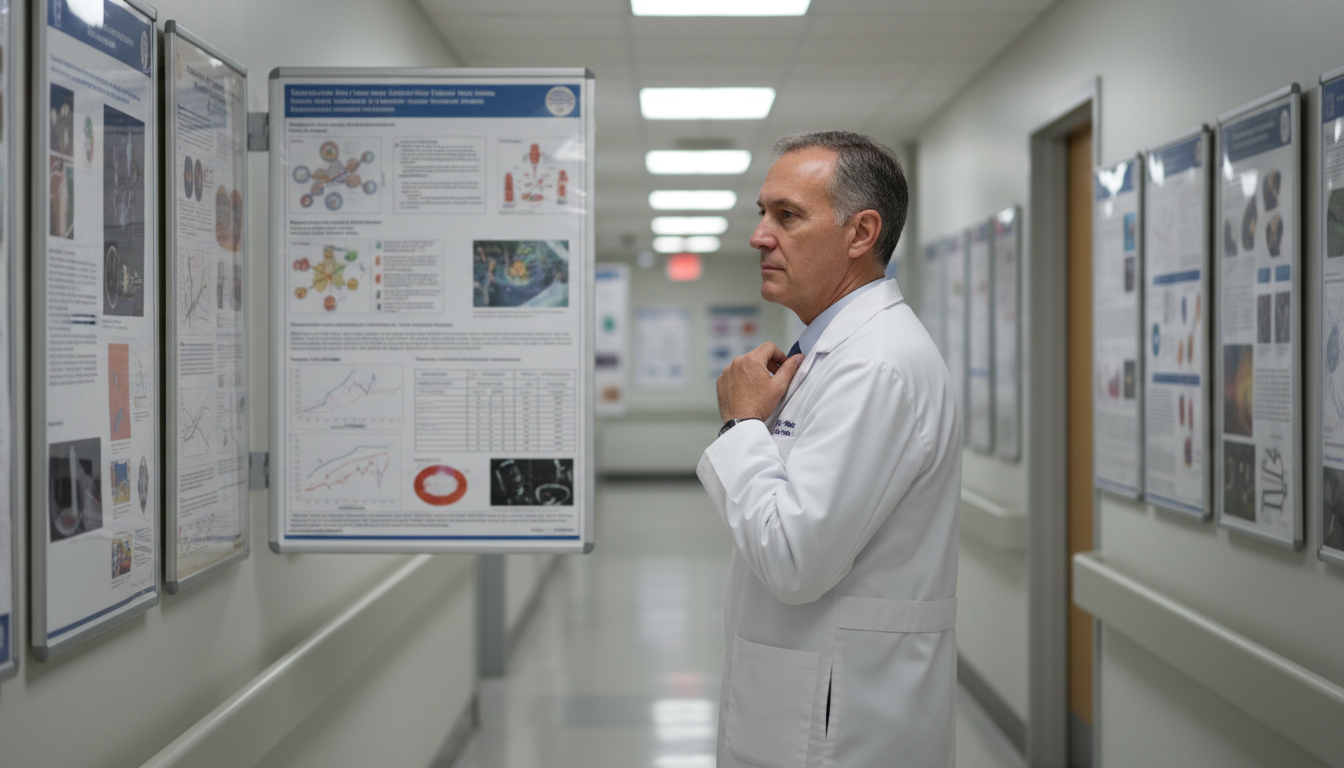
Why Research During Anesthesiology Residency Matters for the MD Graduate
For an MD graduate entering anesthesiology residency, clinical mastery understandably feels like the top priority. Yet increasingly, residency programs and future employers expect more: the ability to critically evaluate evidence, contribute to innovation, and sometimes even lead scholarly work. That’s where research during residency becomes a powerful career asset—not just for those chasing an academic career, but for nearly every anesthesiologist.
Whether you trained at an allopathic medical school or completed a non-traditional path, understanding how to use residency to build a research portfolio can significantly impact your anesthesia match competitiveness for fellowships, academic roles, and leadership positions. It also sharpens your clinical decision-making and helps you stand out among your peers.
This guide explains why and how to pursue research during anesthesiology residency, practical ways to get started, and strategies to balance scholarship with demanding clinical duties—tailored specifically to the MD graduate residency perspective.
Understanding the Role of Research in Anesthesiology Residency
Why research matters in modern anesthesiology
Anesthesiology is increasingly data-driven and technology-heavy. Research underpins:
- Perioperative risk stratification and ERAS (enhanced recovery) protocols
- Ventilation strategies, hemodynamic monitoring, and fluid management
- Regional anesthesia techniques and ultrasound-guided procedures
- Pain management, including opioid-sparing strategies
- Patient safety, simulation training, and quality improvement systems
Engaging in resident research projects deepens your understanding of the evidence behind daily decisions—such as whether to use goal-directed fluid therapy, or how to optimally manage high-risk cardiac patients in non-cardiac surgery.
Research and the allopathic medical school match vs residency reality
As an MD graduate, you likely encountered research expectations during the allopathic medical school match process for your anesthesia residency:
- Publications and abstracts boosted your ERAS application
- Programs used scholarly output as a proxy for curiosity, discipline, and future academic potential
- Letters of recommendation often highlighted “scholarly promise” or “research aptitude”
Residency shifts the dynamic. You’re no longer doing research mainly to match; now, it’s about:
- Positioning yourself for competitive fellowships (e.g., cardiac, critical care, pain)
- Laying groundwork for an academic residency track or clinician-educator role
- Building expertise in a niche area (e.g., neuroanesthesia, perioperative medicine)
- Developing durable skills in study design, statistics, and evidence appraisal
Many departments also link research involvement to promotion pathways, leadership opportunities, or chief resident roles, especially if you demonstrate initiative and follow projects through to completion.
Types of research you can pursue as a resident
During residency, “research” is broader than just randomized trials. Common and feasible avenues include:
Clinical research
- Retrospective chart reviews
- Observational cohort studies
- Quality improvement (QI) projects with scholarly endpoints
- Clinical trials as a collaborator or sub-investigator
Educational research
- Simulation-based training interventions
- Evaluation of teaching methods or curricula
- Assessment tools (checklists, OSCEs, competency frameworks)
Basic or translational science
- Animal models of organ injury (e.g., lung, kidney)
- Pharmacology or mechanisms of anesthetic agents
- Pain pathways, neurobiology of consciousness
Health services / outcomes research
- Big-data analyses using institutional or national databases
- Cost-effectiveness of perioperative interventions
- Disparities and outcomes in perioperative care
Informatics and technology
- Decision support tools in the EHR
- Machine learning for risk prediction
- Monitoring and device validation studies
Most anesthesiology residents start with clinical or educational projects, as these tend to be more accessible with less bench time and fewer wet-lab skills needed.

Getting Started: How to Launch Research During Residency
Step 1: Clarify your goals early
In your PGY-1 (or CA-1) year, take time to define what you want from research:
- Are you aiming for an academic residency track with future faculty aspirations?
- Are you mainly targeting a competitive fellowship (e.g., peds, cardiac, ICU, pain)?
- Do you want just enough scholarly output to strengthen your CV without a heavy commitment?
- Are you curious about a specific niche—airway, regional anesthesia, perioperative echocardiography, or postoperative delirium?
Your answers will guide how aggressively you pursue projects and what types you choose. Share this with your program director or research director early—they can often connect you with the right mentors.
Step 2: Identify mentors and research environments
Strong mentorship is the single most important determinant of success with resident research projects.
Look for mentors who:
- Are active in research (recent publications, funded studies, or conference presentations)
- Have a track record of working with residents (ask senior residents who they recommend)
- Are responsive and give you realistic timelines and expectations
- Understand your level and can help scope a feasible project
Where to find them:
- Department research or academic affairs director
- Division chiefs (cardiac, critical care, pediatrics, regional, pain)
- Institutional research days or grand rounds (note who’s presenting)
- Anesthesia society meetings (ask, “Who does this type of work at my institution?”)
Many MD graduates assume they must originate an entirely new idea. In reality, joining an existing project at an early stage is often more efficient and more likely to yield publishable work during residency.
Step 3: Choose a project scope appropriate for residency
Your clinical schedule is busy, so feasibility is crucial. Consider:
- Timeline: Can this realistically result in an abstract or publication within 12–24 months?
- Data availability: Is this based on existing data (e.g., retrospective chart review) or do you need to prospectively enroll patients?
- IRB complexity: Simple QI projects may have expedited review; clinical trials require far more infrastructure.
- Skill demands: Do you have or can you quickly acquire the statistical and methodological skills needed?
Examples of realistic starting projects:
- Retrospective review of postoperative nausea and vomiting rates before and after a new antiemetic protocol
- QI project examining OR turnover times with a structured intervention, analyzed for safety and efficiency outcomes
- Short educational study comparing different simulation debriefing techniques for residents and measuring outcomes with validated scales
Start small, complete something, and then build from there. A finished modest project is more valuable than an ambitious but incomplete trial.
Step 4: Learn the basics of research design and ethics
As an MD graduate, you likely completed some research training in medical school, but residency-level research often requires a more applied understanding:
Key elements to refresh:
Study design basics
- Prospective vs retrospective
- Cohort, case-control, randomized controlled trials
- Cross-sectional surveys
Biostatistics essentials
- Common tests (t-test, chi-square, regression)
- Understanding p-values and confidence intervals
- Effect sizes and sample size/power concepts
Ethics and IRB
- Distinction between QI and research
- Informed consent, vulnerable populations
- De-identification and HIPAA
- Data safety and monitoring
Many institutions require an online human subjects course (e.g., CITI Training). Complete this early so you can be listed on IRB protocols and handle data legally and ethically.
Balancing Clinical Responsibilities and Research
The time-management reality of anesthesia residency
Anesthesiology residency is demanding: early OR starts, in-house calls, ICU rotations, and board exam preparation. If you don’t intentionally protect time for research, it will vanish.
Common challenges:
- Variable schedules and last-minute clinical needs
- Mental fatigue after long OR days or ICU shifts
- Competing priorities (test prep, wellness, personal life)
Despite this, many residents successfully complete multiple projects, especially when they structure their efforts strategically.
Strategies to make research sustainable
Integrate research into your rotation planning
- Identify lighter rotations (e.g., pre-op clinic, pain clinic, some electives) and plan to push projects forward during those blocks.
- Use ICU or high-acuity rotations for reading, conceptual work, and manuscript drafting when feasible (between admissions/calls), but don’t rely on this time exclusively.
Negotiate protected time if available
- Some programs offer “research blocks” or elective time for scholarly work, usually during CA-2 or CA-3 years.
- Demonstrate commitment early (small wins, abstracts, poster presentations) to make a stronger case for dedicated time later.
Use micro-time blocks effectively
- 20–30 minute windows can be used to:
- Clean data
- Respond to co-author emails
- Draft or edit one section of a manuscript
- Update your reference manager or literature search
- 20–30 minute windows can be used to:
Formalize research “appointments” in your week
- Treat research like a clinic: schedule it in your calendar (e.g., Saturday morning, one weeknight).
- Communicate with family/partners so expectations are aligned.
Leverage tools and systems
- Reference managers: Zotero, EndNote, or Mendeley
- Cloud storage: secure institutional drives or HIPAA-compliant platforms
- Project management: simple shared checklists (e.g., Trello, Notion, or even email threads with clear to-dos)
Working effectively with your mentor
Clarify roles and expectations early:
- Who owns the idea?
- Who is responsible for IRB application, data collection, analysis, and manuscript drafting?
- What is the expected authorship order?
Schedule regular check-ins:
- Monthly or bimonthly meetings keep momentum and accountability.
- Prepare an agenda: what’s done, what’s pending, what decisions are needed.
Be transparent about constraints:
- Share your rotation schedule and major exams or personal commitments so timelines are realistic.
Your responsibility is reliable follow-through and communication. Your mentor’s responsibility is guidance, advocacy, and academic support—not doing the work for you.
Turning Projects Into Presentations and Publications
From data to dissemination
Collecting data is only step one. A research during residency effort only becomes visible on your CV once you transform it into:
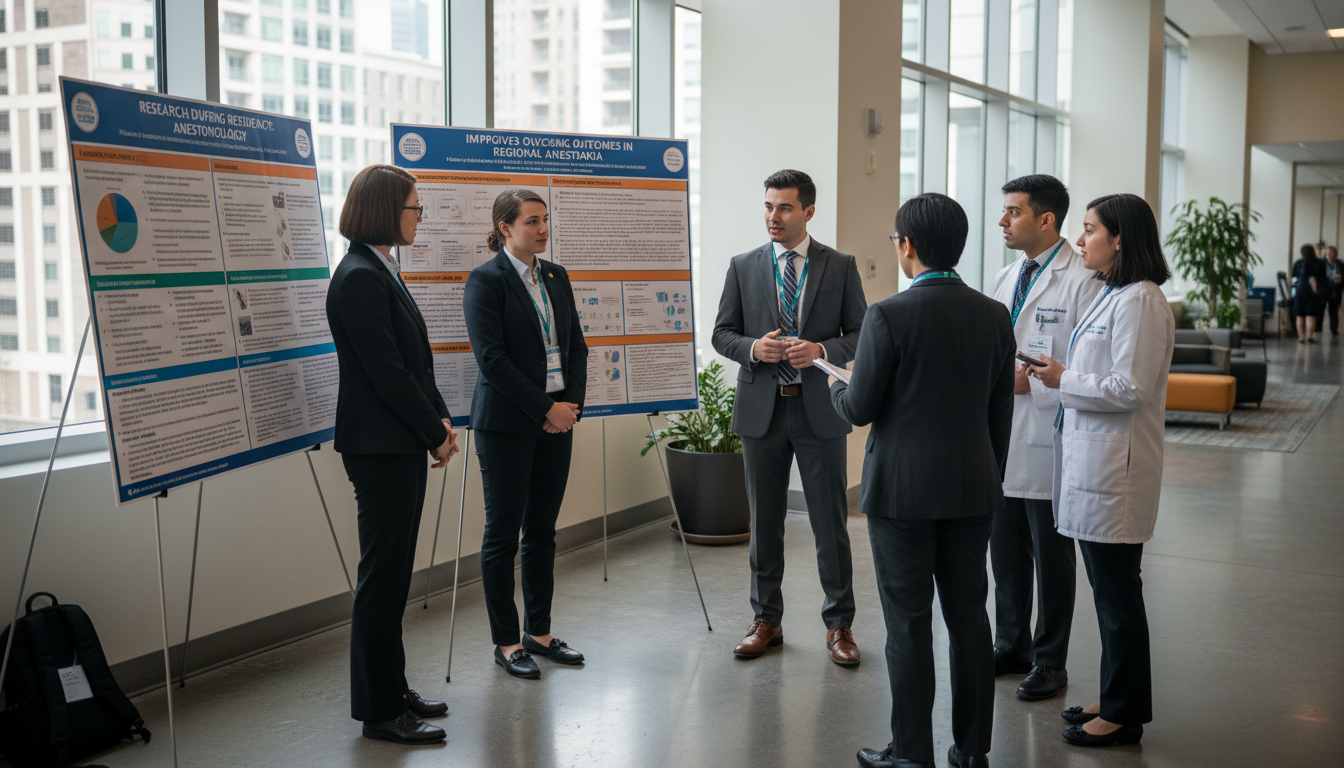
- National or international conference abstracts
- Poster or oral presentations
- Peer-reviewed manuscripts
- Book chapters or invited reviews (often later, after gaining expertise)
Planning for dissemination from the beginning increases the chance you’ll finish.
Presenting at conferences
Key anesthesiology and perioperative conferences include:
- American Society of Anesthesiologists (ASA) annual meeting
- Society of Critical Care Medicine (SCCM), for ICU-related projects
- American Society of Regional Anesthesia (ASRA)
- Society for Pediatric Anesthesia (SPA)
- Society of Cardiovascular Anesthesiologists (SCA)
Benefits of conference presentations:
- Networking with leaders in your niche
- Visibility for fellowship applications
- Feedback that can improve your final manuscript
- CV items that clearly document scholarly activity
Practical tips:
- Watch abstract deadlines; many are 6–9 months before the conference.
- Even preliminary data can be enough for an abstract, if clearly identified as such.
- Ask your program about funding support for resident travel if your abstract is accepted.
Writing and publishing during residency
Manuscript writing can feel daunting, but as an MD graduate you already know how to synthesize literature. The process becomes more manageable with structure:
Choose the target journal early
- Look for journals that commonly publish work in your specific topic area and that are realistic for resident-level projects.
- Check their word limits, formatting, and guidelines for clinical or educational studies.
Draft in components
- Methods and Results often come first (once the study is complete).
- Introduction: narrow funnel—background, knowledge gap, and study objective.
- Discussion: interpret findings, compare to prior work, highlight limitations and implications.
Use your mentor wisely
- Ask for feedback on one section at a time, not the entire draft at once.
- Request examples of similar successful papers they’ve published.
Be prepared for revisions and rejections
- Rejection is common and not a failure—resubmit to another journal after revising per feedback.
- Keep a “resubmission” plan: if Journal A rejects, Journal B is next, etc.
Even one solid first-author publication during residency significantly strengthens your portfolio for academic or high-level clinical positions.
Building a Long-Term Academic Identity in Anesthesiology
Clarifying your academic trajectory
Not every anesthesiologist needs to be a full-time researcher. Still, many MD graduates find that exposure to research during residency points them toward one of several academic tracks:
Clinician-investigator
- Protected research time, grants, multi-center trials
- Typically requires fellowship plus additional research training (e.g., master’s degree, clinical research certificate)
Clinician-educator with scholarly focus
- Primary identity as teacher but with educational research, curriculum design, and simulation projects
- Often leads to program leadership roles (e.g., APD, PD)
Quality and safety / operations leader
- Focus on QI, systems engineering, patient safety initiatives
- Scholarship in implementation science and health services research
Subspecialty expert
- Niche research within cardiac, ICU, regional, pain, neuro, or pediatric anesthesia
- Strong synergy between clinical depth and focused research questions
Getting involved in research during residency helps you discover which of these roles resonates most.
Using residency research to position yourself for fellowships
If you’re aiming for competitive fellowships, especially at academic centers, your resident research projects can:
- Demonstrate sincere interest in the subspecialty (e.g., multiple posters on ECMO outcomes for critical care fellowship)
- Provide strong talking points for interviews: you can confidently discuss hypothesis, methods, and limitations
- Yield letters from respected researchers in that field
Practical steps:
- Seek fellowship mentors early in CA-2 year if possible.
- Align your elective time with divisions where you’d like to do fellowship.
- Ask fellowship directors what they look for in applicants: research is often near the top of the list.
Transitioning to an academic residency track or junior faculty role
Many departments have an academic residency track, “research track,” or “scholarly track” that may include:
- Additional protected research time
- Formal research curriculum or certificate programs
- Pairing with high-output investigators or research groups
During job search as a senior resident or fellow:
- Highlight completed and in-progress projects on your CV.
- Be ready to articulate your research niche in 1–2 sentences.
- Ask about start-up support, mentorship, and protected time if you are targeting academic positions.
Your track record from residency doesn’t need to be massive; consistency and clear direction often matter more than raw quantity.
Frequently Asked Questions (FAQ)
1. I matched into anesthesiology but have minimal prior research experience. Is it too late to start?
No. Anesthesiology residency is an excellent time to begin. You can start with smaller, mentored projects—such as retrospective reviews or QI studies—and build from there. Programs rarely expect residents to arrive with extensive research skills; what they value most is reliability and genuine engagement. Even starting in CA-1 or early CA-2 year can yield posters and a publication or two by the end of residency.
2. How much research do I need if I’m not planning an academic career?
If your primary goal is strong clinical practice without a heavy academic component, a modest but focused research experience is usually sufficient:
- 1–3 abstracts or posters
- Participation in at least one project where you understand the full research cycle
- Possibly one publication (first- or co-author)
This level still improves your critical appraisal skills and can help with fellowships or leadership roles later—even in predominantly community settings.
3. How important is research for anesthesiology fellowship applications?
For competitive fellowships (cardiac, ICU, pain, pediatric, regional), research is a major differentiator—especially if it’s aligned with the fellowship’s focus. Programs look favorably on applicants with:
- Specialty-relevant projects and presentations
- Evidence of follow-through (completed projects, not just “works in progress”)
- Strong letters from research mentors in that subspecialty
While it’s possible to match without extensive research, having a track record substantially strengthens your application and interview conversations.
4. Can quality improvement (QI) projects count as research during residency?
Yes—if they are designed and executed with rigor. Many anesthesiology departments encourage QI projects that:
- Have clear, measurable outcomes
- Use established improvement frameworks (e.g., PDSA cycles)
- Include pre- and post-intervention data analysis
- Are written up and submitted as abstracts or manuscripts
With appropriate IRB guidance and methodological support, QI can be an efficient and high-yield way for residents to generate scholarship while directly improving patient care.
Research during anesthesiology residency is not just for future bench scientists—it’s a practical, career-shaping tool for any MD graduate. By choosing feasible projects, finding strong mentors, and learning to balance scholarship with clinical demands, you can leave residency with a portfolio that elevates your clinical practice, opens doors to fellowships and academic pathways, and prepares you to contribute meaningfully to a rapidly evolving specialty.