Understanding Research During Residency as a US Citizen IMG in Plastic Surgery
For a US citizen IMG (American studying abroad or graduating from a non‑US school), plastic surgery is one of the most competitive specialties in the United States. By the time you reach residency, you’ve already overcome significant hurdles: visa concerns (if applicable), clinical experience gaps, and the steep learning curve of the integrated plastics match.
Once you start plastic surgery residency, research doesn’t stop being important—it just changes in purpose and structure. Instead of being solely about “getting in,” research during residency becomes a powerful tool to:
- Build a recognizable academic niche
- Strengthen your fellowship applications
- Position yourself for an academic residency track or leadership roles
- Improve your day‑to‑day surgical decision‑making
- Contribute meaningful work to a rapidly evolving specialty
This article walks you through how to approach research during residency as a US citizen IMG in plastic surgery—what it looks like, how to get involved, how to be productive despite limited time, and how to leverage your work for long‑term career growth.
1. Why Research During Residency Still Matters in Plastic Surgery
By the time you begin residency, especially in an integrated plastics program, you might feel “done” with research. You likely completed a research year, multiple projects, or even a master’s degree to be competitive for the integrated plastics match. But in plastic surgery, research remains central throughout training, especially if you’re interested in an academic career.
1.1. How Residency Research Differs from Pre‑Residency Research
Before residency, most of your projects are about demonstrating potential:
- Showing you understand basic methodology
- Proving you can complete a project and get it published
- Signaling commitment to plastic surgery
Once you’re a resident, expectations shift:
- Clinical relevance: Projects should increasingly answer practical questions that affect patient outcomes, complications, or surgical planning.
- Depth over volume: A few strong, impactful papers may be more valuable than many low‑yield case reports.
- Skill development: You’re expected to understand study design, basic statistics, and how to critically appraise literature that guides your operative decisions.
- Mentorship and leadership: You transition from just being “a helper” on projects to initiating ideas, leading data collection teams, or mentoring medical students.
For a US citizen IMG, having a strong research presence during residency also helps neutralize any residual concerns about graduating from a non‑US medical school.
1.2. Benefits Specific to US Citizen IMGs
As an American studying abroad, you’ve already navigated distance, systems differences, and limited early access to US‑based academic networks. Residency research helps you:
- Build long‑term US‑based academic relationships with attendings and department chairs who can later write strong letters for fellowships or faculty positions.
- Demonstrate continuous academic growth beyond “pre‑match” efforts, which reassures programs that you’re not just performing to get in, but are committed to lifelong scholarship.
- Strengthen your profile for competitive fellowships (e.g., microsurgery, craniofacial, hand, aesthetic) where research productivity is often a major selection factor.
1.3. Aligning Research with Your Career Vision
Even early in residency, reflect on where you might be headed:
- Do you see yourself in an academic residency track, leading a division or program?
- Do you want a hybrid academic‐private practice, with ongoing clinical research?
- Are you leaning toward a purely aesthetic private practice, where outcomes and practice‑building research still matter?
Your research focus during residency doesn’t lock you in forever—but it can build an early “brand” that makes you more recognizable in a niche. For example:
- Breast reconstruction outcomes and patient‑reported metrics
- Nerve regeneration and microsurgery
- 3D planning and virtual surgical simulation
- Cleft and craniofacial surgery
- Burn and reconstructive surgery in resource‑limited settings

2. Types of Research Opportunities During Plastic Surgery Residency
Plastic surgery is rich with research possibilities. As a resident, your time is limited, but your access to clinical material, operative videos, and faculty expertise is at its peak. For a US citizen IMG, understanding the spectrum of resident research projects helps you choose strategically.
2.1. Clinical Outcomes and Retrospective Chart Reviews
This is the backbone of resident research:
- Comparing outcomes of two surgical techniques
- Evaluating complication rates before and after a protocol change
- Assessing risk factors for flap failure, wound complications, or reoperations
Example:
You collaborate with an attending to analyze outcomes of DIEP flap versus implant‑based breast reconstruction in obese patients at your institution. You collect data on complications, reoperation, and aesthetic revisions, and present the findings at ASPS or AAPS.
Why it’s valuable:
- Feasible with limited time
- High relevance to daily practice
- Often publishable in reputable journals
2.2. Prospective Studies and Cohort Projects
These require more planning but can produce higher‑impact work:
- Prospective databases tracking patient‑reported outcomes (e.g., BREAST‑Q, FACE‑Q)
- Standardized protocols for post‑operative pain management
- Prospective follow‑up of nerve regeneration after microsurgery
These often require IRB approval and attending sponsorship, but as a motivated resident you can take the lead in designing data collection tools and managing follow‑up.
2.3. Basic Science and Translational Research
Not every plastic surgery department has a strong basic science lab, but if yours does, this can be a powerful path—especially for those leaning toward an academic residency track:
- Stem cell biology and fat graft viability
- Tissue engineering for cartilage or bone
- Wound healing, scarring, and biomaterials
Basic science projects often demand more protected time (e.g., a designated research block or research year), but they can lead to high‑impact publications and major grants—critical currency for academic careers.
2.4. Educational, Quality Improvement, and Systems Research
Plastic surgery is not just about the OR:
- Simulation training for microsurgery or cleft lip repair
- Resident operative autonomy and learning curves
- Implementing enhanced recovery pathways in reconstructive surgery
- Telemedicine follow‑up after elective aesthetic procedures
These projects can be a good fit if your program is building or revising a curriculum or protocols, and they’re often feasible with smaller teams and shorter timelines.
2.5. Case Reports and Surgical Technique Articles
Early in residency, case reports and technique papers can be low‑barrier entry points:
- A novel reconstructive approach to a complex wound
- A rare congenital anomaly with a unique management strategy
- “How I do it” articles on flap harvest, closure techniques, or local tissue rearrangements
While not as impactful as large studies, these help you:
- Build writing skills
- Learn the submission and revision process
- Get your name out in the literature
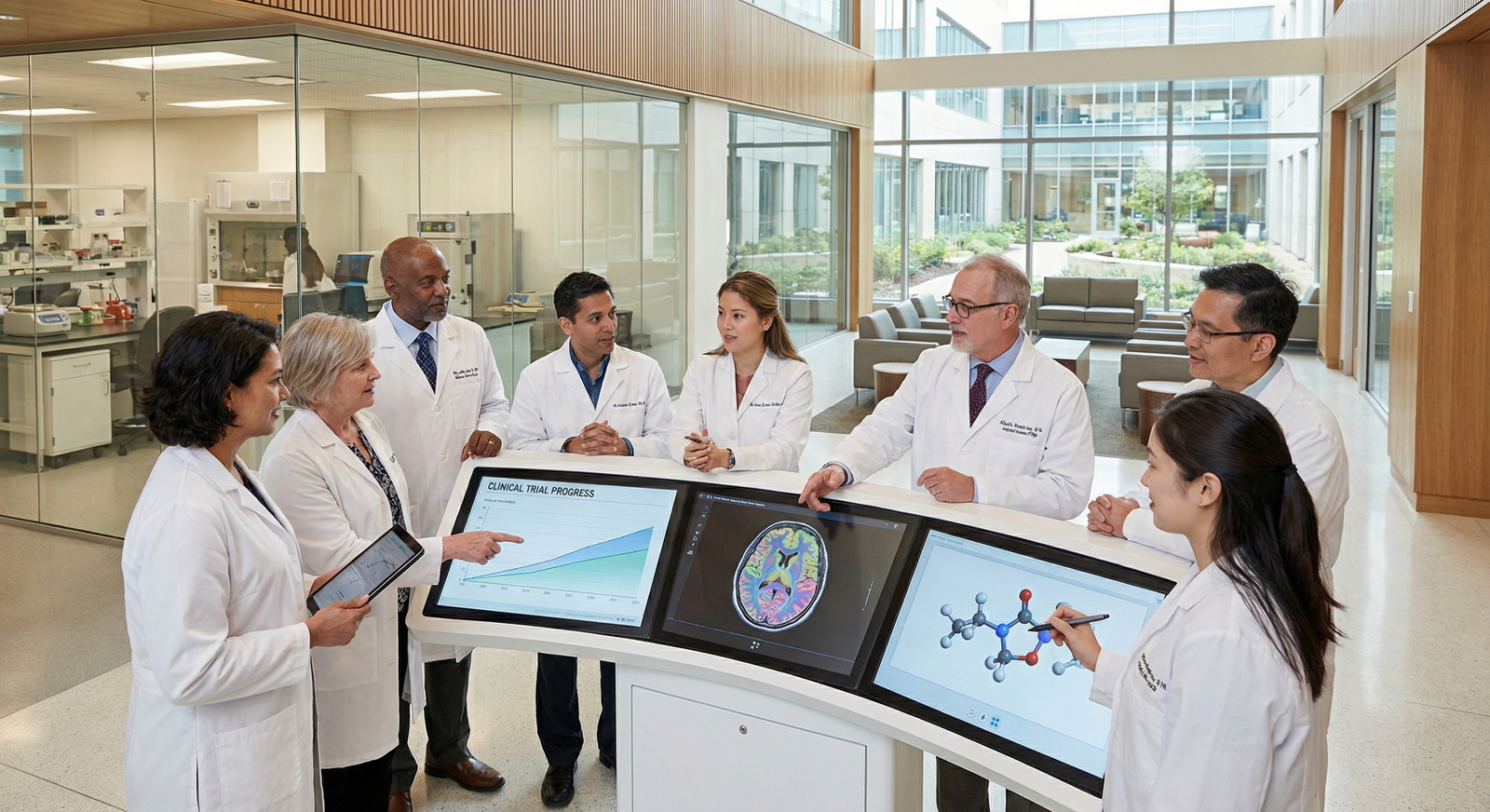
2.6. Collaborative Multi‑Institution Networks
As a US citizen IMG, one challenge can be having a narrower initial network. Multi‑institution collaborations can change that:
- National databases (e.g., NSQIP, VASQIP, TRACKS)
- Multi‑center clinical registries for cleft or breast reconstruction
- Research collaboratives focused on particular subspecialties (e.g., hand, craniofacial)
Actively seeking out these opportunities—through conferences, mentors, or national sections like ASPS Resident Council—helps you expand beyond your single institution and raises your visibility.
3. Getting Started: First Research Steps as a New Plastic Surgery Resident
In the first 6–12 months of residency, your primary goal is to become safe and competent clinically. Research should support—not jeopardize—that growth. But you can still lay strong foundations.
3.1. Identify Research‑Active Faculty and Their Interests
Early on, take inventory of your department’s research ecosystem:
- Which attendings present frequently at national meetings?
- Who has NIH, DOD, or foundation funding?
- Who regularly publishes on specific topics (e.g., hand trauma, breast reconstruction, craniofacial anomalies)?
Practical step:
- Review recent department publications (PubMed search by institution name and “plastic surgery”)
- Ask senior residents, “Who’s good to work with for resident research projects?”
- Attend division or department research meetings if available
As a US citizen IMG, being proactive in this way helps offset any initial unfamiliarity faculty may have with your training background.
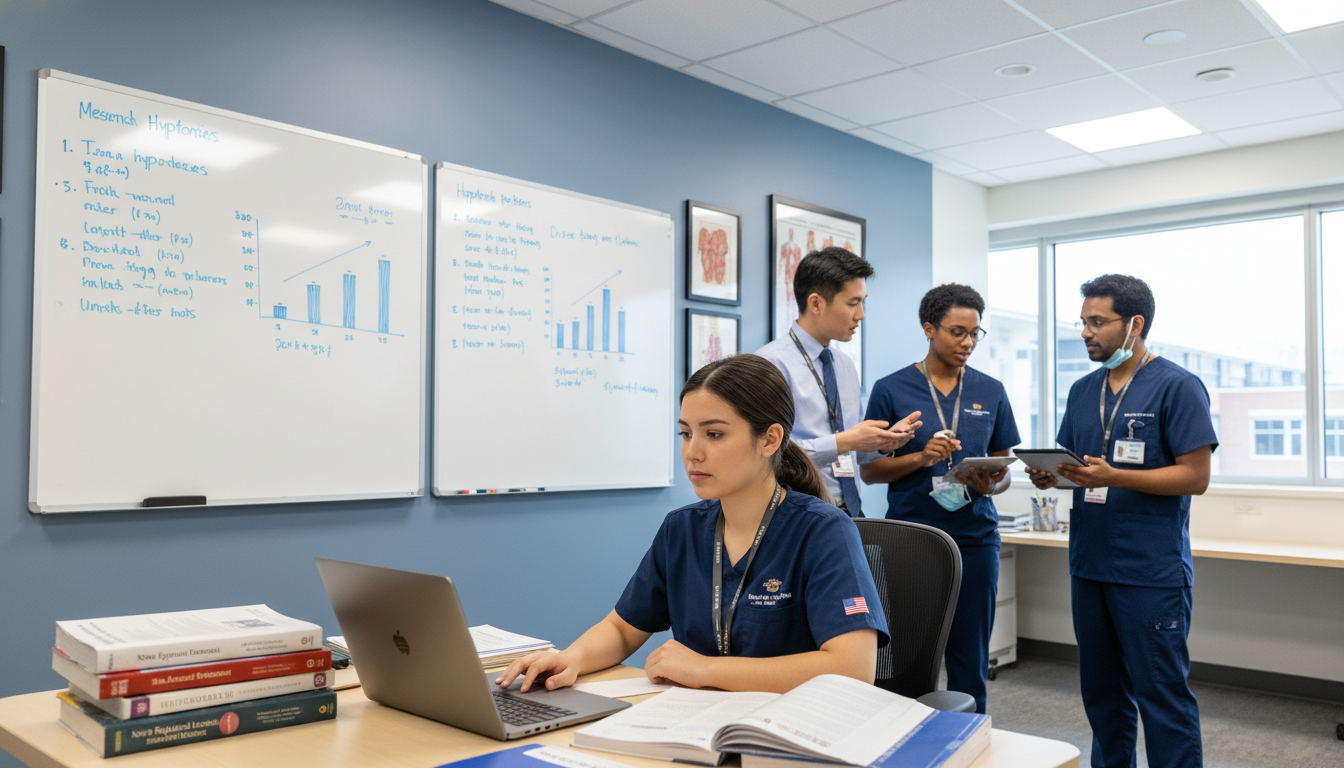
3.2. Start with One or Two Well‑Scoped Projects
Common pitfall: Saying yes to five projects at once, then contributing minimally to all of them. Instead:
- Choose one primary project where you’re deeply involved (idea, data, writing).
- Optionally add one smaller project (e.g., a case report or co‑authorship role) to diversify.
Criteria to prioritize:
- Clear timeline (e.g., “We want to submit to next year’s ASPS meeting.”)
- Attending mentor with a track record of getting projects finished
- Feasibility with your call and rotation schedule
3.3. Clarify Expectations and Authorship Early
Before diving in, have a straightforward discussion:
- Your role: data collection, analysis, drafting, revisions
- Target meeting or journal
- Expected timeline and milestones
- Authorship order (especially important if several residents or students are involved)
As a US citizen IMG, you want to be particularly clear and professional about expectations—this helps build trust and counters any unconscious bias about IMGs being “short‑term” collaborators.
3.4. Learn the Tools: IRB, REDCap, and Reference Managers
Basic competencies that make you instantly more valuable on any team:
- IRB submissions and amendments: Know your institution’s process; volunteer to draft sections under supervision.
- REDCap or similar data platforms: Learn how to design surveys, build forms, and export data.
- Reference managers like EndNote, Zotero, or Mendeley: Keep organized libraries and shared group folders.
Residents who can navigate these systems confidently often become “go‑to” people, which leads to more opportunities and leadership roles on projects.

4. Balancing Clinical Demands with Research Productivity
Residency is busy, and plastic surgery is procedure‑heavy. For a US citizen IMG trying to prove themselves clinically and academically, time management is critical.
4.1. Use “Micro‑Time” Strategically
You won’t always have long, uninterrupted blocks. Instead, leverage:
- 20–30 minutes between cases to update a data spreadsheet
- Short evening windows to draft a paragraph or revise an abstract
- Weekend mornings to work on figures before call starts
Break projects into micro‑tasks:
- “Clean data for 10 patients”
- “Write the limitations section”
- “Review the last 10 references for the introduction”
Thinking in small units makes projects more manageable during intense rotations.
4.2. Plan Around Your Rotation Schedule
Some rotations are more research‑friendly than others:
- Research months, electives, or lighter outpatient rotations
- Heavier trauma or call‑intense blocks where research will realistically slow down
Map your projects to your schedule:
- Use lighter months to launch or push projects forward.
- During intense rotations, shift focus to small tasks (literature review, outline creation) instead of starting new projects.
4.3. Collaborate Intelligently with Medical Students and Junior Residents
As you advance, you can multiply your impact by learning to delegate:
- Have students help with chart review under your supervision.
- Create clear data dictionaries so multiple people can enter data consistently.
- Assign manageable writing sections to motivated juniors while you focus on structure and final edits.
This not only boosts your productivity but also helps you develop mentorship skills—key for an academic residency track.
4.4. Protect Your Clinical Performance
No amount of research can compensate for poor clinical performance. As a US citizen IMG in a competitive field, the stakes are even higher. Red flags like:
- Frequent late notes
- Direct feedback about being distracted
- Missed pages or delayed responses
can seriously damage your reputation, regardless of how strong your CV is.
If research starts interfering with patient care or your learning:
- Talk with your mentor or program director about adjusting scope.
- Consider pausing new project commitments during critical rotations.
5. Leveraging Research for Career Advancement: Fellowship and Beyond
Research during residency isn’t just a checkbox—it shapes where you can go next. In plastic surgery, fellowship programs and academic departments pay close attention to resident research trajectories.
5.1. Building a Coherent Academic Narrative
Rather than a random scatter of topics, aim (over time) for some thematic consistency:
- If you’re drawn to microsurgery: outcomes in free flap reconstruction, lymphedema surgery, perforator flap anatomy.
- If you love craniofacial: cleft outcomes, virtual planning, distraction osteogenesis.
- If aesthetic surgery is your interest: revision rhinoplasty outcomes, body contouring after massive weight loss, patient‑reported satisfaction.
When fellowship directors review your CV, they should be able to say, “This resident is genuinely invested in X area and has built a foundation there.”
5.2. Presenting at Meetings and Networking as a US Citizen IMG
Conferences are a key bridge between your residency and the wider national community:
- ASPS, AAPS, AAHS, ASRM, CSPS, and subspecialty meetings
- Resident‑focused competitions and travel scholarships
- Poster and oral presentations, sometimes with awards
As a US citizen IMG, national meetings are also where you:
- Meet future collaborators and fellowship directors
- Start to be recognized by name and face, not just by your IMG status
- Learn about programs’ cultures and research priorities firsthand
Practical tips:
- Practice your talks with faculty beforehand; clarity and confidence stand out.
- Prepare a brief “elevator pitch” about your research interests and long‑term goals.
- Follow up after meeting someone with a short, professional email and, if appropriate, share your recent publications.
5.3. Preparing for an Academic Residency Track or Faculty Role
If your goal is to pursue an academic career:
- Track your first‑author and senior‑author publications over time.
- Get experience writing IRB protocols, grant applications, or pilot project proposals (even internal grants).
- Seek out roles like resident research coordinator or involvement in departmental research committees.
By the end of residency, an academic‑oriented portfolio often includes:
- A focused body of work in 1–2 subspecialty areas
- Consistent national presentations
- Evidence of leadership in resident or student research efforts
- Strong letters from research mentors who can speak to your independence
6. Common Pitfalls and How to Avoid Them as a US Citizen IMG
Even highly motivated residents fall into predictable traps. Being aware of them early can save you years of frustration.
6.1. Overcommitting and Under‑Delivering
Accepting too many projects to “prove yourself” is especially tempting for US citizen IMGs who feel they need to show extra dedication. But incomplete projects or missed deadlines can:
- Strain relationships with mentors
- Lead to lost authorship opportunities
- Damage your reputation as a reliable collaborator
Counterstrategy:
- Only commit when you understand the project scope and timeline.
- Communicate early if you’re overwhelmed; mentors would rather adjust than be surprised.
6.2. Staying Perpetually in Support Roles
Early on, you may mainly help with data entry or literature review. But staying exclusively in that role for years means:
- Limited first‑author opportunities
- Less experience designing studies or writing manuscripts from scratch
Intentionally transition to leadership roles:
- Propose your own project ideas (even small ones) by PGY‑3 or PGY‑4.
- Take primary responsibility for at least a few manuscripts.
6.3. Neglecting Your “Brand”
Random, unconnected projects may show productivity, but they don’t tell a story. Programs and academic departments want:
- Depth in specific clinical areas, not just scattered publications
- Evidence that your interest isn’t superficial or short‑lived
Even if you participate in varied studies, try to maintain a core theme where you repeatedly publish and present.
6.4. Underestimating the Value of Mentorship
As a US citizen IMG, you may initially feel hesitant to approach senior faculty. Don’t let that limit you:
- Many academic plastic surgeons are enthusiastic about mentoring motivated residents regardless of background.
- Strong mentors can open doors to national collaborations, fellowships, and grant opportunities.
Be respectful, prepared, and consistent, and show that you follow through on commitments; this is what builds trust over time.
FAQ: Research During Plastic Surgery Residency for US Citizen IMGs
1. I’m a US citizen IMG starting intern year in an integrated program. When should I realistically start research?
Focus on understanding the system, excelling clinically, and adjusting to workload in the first few months. By 6–12 months, identify at least one mentor and get involved in a small but concrete project. Many residents pick up their first serious research commitments by late PGY‑1 or early PGY‑2.
2. How many publications do I need during residency for a competitive fellowship or academic career?
There is no magic number, but for highly competitive fellowships or an academic residency track, many successful applicants have:
- Several first‑author papers (often 3–8, depending on the program and research intensity)
- Additional co‑authored publications and conference presentations
Quality, relevance, and coherent focus in your area of interest matter more than just raw volume.
3. Can I still do a dedicated research year during residency if I already did research before the integrated plastics match?
Yes. Many residents—including those who did pre‑residency research—take 1–2 years of dedicated research during residency, especially if:
- They are interested in basic science or translational work
- They aim for a major academic role long‑term
- Their program strongly supports research years
For a US citizen IMG aiming at a robust academic career, a focused research year with strong mentorship and high‑impact output can be transformational.
4. What if my plastic surgery program has limited research infrastructure or funding?
You can still be productive by:
- Focusing on retrospective clinical studies and quality improvement projects
- Collaborating with other departments (e.g., oncology, orthopedics, ENT)
- Joining multi‑institution collaborative networks or national registries
- Using institutional resources like biostatistics support or clinical and translational science centers
If you’re proactive and work with committed mentors, even a smaller program can support substantial resident research projects.
Research during residency is not just for “academic types”—it’s a powerful way for any US citizen IMG in plastic surgery to deepen clinical understanding, build a recognizable niche, and open doors to fellowships and career paths that might not otherwise be visible. With thoughtful planning, good mentorship, and disciplined follow‑through, you can turn the demanding years of residency into a period of meaningful scholarly growth that shapes your entire surgical career.