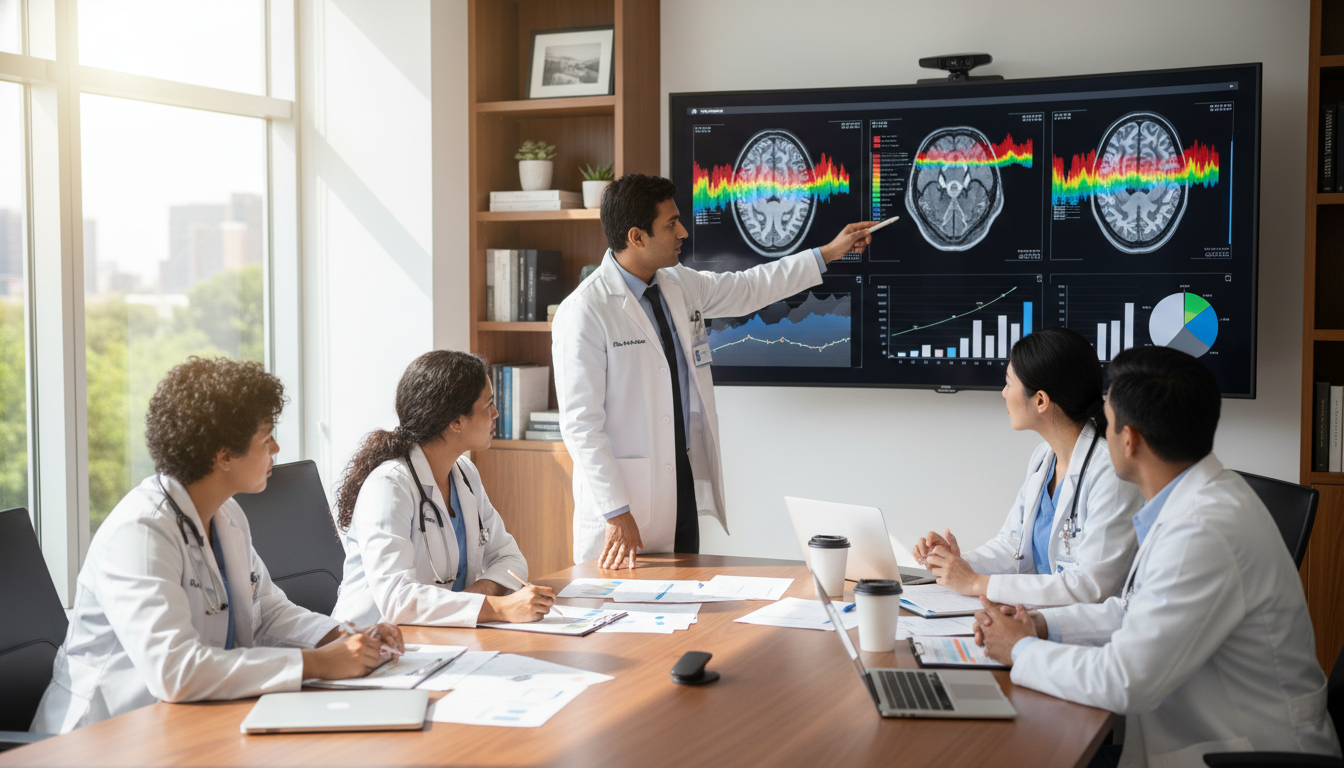
Understanding Research During Neurology Residency as a Non-US Citizen IMG
For a non-US citizen IMG (international medical graduate) in neurology, research during residency is more than a nice extra—it is often a key strategy for career advancement, subspecialty fellowship placement, and long-term academic success. It can also significantly strengthen your profile if you hope to pursue an academic residency track, leadership roles, or work in a research‑intensive environment after training.
This article focuses on how foreign national medical graduates in neurology can strategically approach research during residency in the United States, navigate visa and funding constraints, and turn resident research projects into a coherent, long-term academic trajectory.
We will cover:
- Why research matters specifically in neurology
- How to choose the right program if you are still planning your neuro match
- Ways to balance clinical responsibilities with research
- Concrete models of feasible research during residency
- Visa-related and funding considerations for non-US citizen IMG residents
- How to turn residency research into fellowships and early career opportunities
Why Research Matters in Neurology Residency for Non-US Citizen IMGs
Neurology is one of the specialties where research and clinical practice are tightly coupled. Many advances in stroke, epilepsy, multiple sclerosis, neuroimmunology, and movement disorders have moved from bench to bedside within a few years. As a non-US citizen IMG, participating in that ecosystem can:
1. Strengthen Your Career Options
- Fellowships: Competitive neurology fellowships (stroke, epilepsy, neurocritical care, neuromuscular, movement disorders, behavioral neurology, neuroimmunology, neuro-oncology) often prioritize applicants with evidence of research productivity.
- Academic positions: If you envision a role at a university hospital, program directors usually expect a record of scholarly work, not just strong clinical performance.
- Industry and clinical trials: Experience with study design, regulatory processes, and data interpretation positions you well for roles in clinical trial units, pharma, or device companies.
2. Offset Possible Perceived Disadvantages as an IMG
As a foreign national medical graduate, you may face implicit or explicit concerns from selection committees: unfamiliar medical school, limited US clinical experience, or questions about long-term visa status. A solid research portfolio can:
- Demonstrate persistence, curiosity, and professionalism
- Show that you function well in US academic teams
- Produce objective metrics (publications, abstracts, posters) that strengthen your CV
3. Build Long-Term Academic Capital
Time in residency is intense, but it is also a rare moment when:
- You have structured mentorship at multiple levels (faculty, fellows, senior residents).
- Major hospital systems are accessible to you for data and collaborations.
- You can develop core research skills (study design, basic statistics, scientific writing) that will pay off throughout your career.
Even one well-designed research project during residency, if brought to completion, can seed your future directions and serve as a foundation for an academic residency track or physician-scientist career.
Choosing a Program and Track With Research in Mind
If you have not yet matched into neurology, or you are considering changing programs or tracks, thinking strategically before your neuro match can make all the difference for research during residency.
1. Understand the Spectrum of Neurology Programs
Neurology programs vary widely in research intensity:
Highly academic programs (often at large university hospitals):
- NIH-funded faculty
- Multiple subspecialty divisions with ongoing trials
- Structured scholarly activity requirements
- Optional or dedicated research tracks (including 2+2 tracks: 2 years heavy clinical, 2 years more research-focused)
Hybrid academic–community programs:
- Some faculty research, but fewer large grants
- Opportunities may be more limited but sometimes more accessible (less competition among residents)
- Often easier to “create” your own retrospective or quality-improvement projects
Primarily community-based programs:
- Focused on clinical care and workforce needs
- Research exists but often limited to case reports, QI, and observational studies
As a non-US citizen IMG, academic programs may have more experience with visa sponsorship and more structured pathways for resident research projects, but you must verify this explicitly.
2. Questions to Ask About Research During Interviews
During residency interviews (or in follow-up emails), ask directly and specifically:
Protected time:
- “How much dedicated research time do residents receive, and in which years of training?”
- “Is research time truly protected, or are we still on call/service during that period?”
Mentorship:
- “How are research mentors assigned for residents?”
- “Can I work with mentors outside neurology, e.g., in radiology, psychiatry, or basic neuroscience?”
Output expectations:
- “What percentage of residents present at national conferences (AAN, AES, ISC)?”
- “Can I see recent residents’ CVs or a list of resident publications from the last 3–5 years?”
Support for non-US citizens:
- “Do you currently have non-US citizen IMG residents involved in research? How are their projects funded?”
- “Does the institution allow residents on J-1 or H-1B visas to receive internal research grants or stipends?”
3. Academic Residency Track vs Standard Track
Some neurology programs offer an academic residency track or dedicated research track:
- Features may include:
- Additional protected research time in PGY-3 or PGY-4
- A formal requirement for a mentored research project
- Support for statistical analysis and IRB submissions
- Funded time for conference presentations
For a foreign national medical graduate planning a research-oriented career, strongly consider such tracks, but ask:
- Are there visa restrictions on these positions?
- Is the track flexible for someone who may need to extend training for research?
- Are graduates successfully matching into fellowships or junior faculty roles?

Types of Research Projects Feasible During Neurology Residency
With 80-hour work weeks and frequent call, your research plan must be realistic. Below are common and feasible types of resident research projects, with examples relevant to neurology residency.
1. Retrospective Chart Reviews
Description: Use existing patient records to answer a clinical question.
Why it works for residents:
- No need to recruit patients prospectively.
- Data collection can be done in flexible blocks.
- Lower regulatory burden than interventional trials.
Neurology examples:
- Outcomes of patients with cryptogenic stroke and PFO closure at your institution.
- Patterns of anti-seizure medication usage in new-onset seizures and readmission rates.
- Predictors of poor functional outcome in intracerebral hemorrhage patients.
Steps:
- Identify a focused clinical question with a mentor.
- Confirm that relevant data are accessible in the EHR.
- Submit an IRB proposal (often expedited).
- Use standardized data abstraction forms.
- Analyze data (with biostatistics support if needed).
- Write abstract → present at a meeting → convert to manuscript.
2. Quality Improvement (QI) and Patient Safety Projects
Description: Structured efforts to improve care processes or outcomes, often supported by hospital QI infrastructure.
Why it works:
- Frequently required for ACGME accreditation.
- Can yield publishable abstracts, especially if the project is systematic and outcome-focused.
- Often easier to obtain institutional approval than full research studies.
Neurology examples:
- Reducing door-to-needle time for IV thrombolysis in acute ischemic stroke.
- Implementing a protocol to decrease anticoagulation-related intracranial hemorrhage.
- Improving adherence to epilepsy quality measures (suicide screening, teratogenic risk counseling).
3. Case Reports and Case Series
Description: Detailed analysis of rare or instructive clinical cases.
Pros:
- Very feasible, especially in community or smaller academic centers.
- Teaches literature review and scientific writing.
- Good starting point for first-time authors.
Neurology examples:
- Rare presentations of autoimmune encephalitis in young adults.
- New side effects of recently approved migraine therapies.
- Unusual variants of neurodegenerative diseases with imaging correlates.
Tip: Pair the clinical report with a brief review of the condition and its differential diagnosis; this increases educational value and publication potential.
4. Prospective Clinical Research
Description: Enrolling patients forward in time, collecting predefined data.
Challenges: Requires more planning, approvals, and regular on-call coverage by the research team.
Feasible scenarios:
- Being a sub-investigator in an existing stroke or epilepsy clinical trial.
- Collecting additional research EEG data or survey questionnaires as part of routine care.
- Participating in registries for conditions like multiple sclerosis, Parkinson’s disease, or neuromuscular disorders.
5. Basic or Translational Neuroscience
For many residents, heavy bench research is hard during full clinical training. Yet some neurology programs—especially those with physician-scientist or academic residency track options—allow:
- 6–12 months of protected research time in a neuroscience lab.
- Continuation of pre-residency PhD or postdoc projects.
If you have a strong basic science background, ensure:
- The program can accommodate your visa in a lab setting (institutional policies can be complex).
- You will still meet ACGME clinical requirements.
Practical Strategies to Succeed With Research During Residency
1. Start Early and Small
For PGY-2 neurology residents, especially non-US citizen IMGs who may still be adjusting to the US healthcare system, it is better to:
- Start with one manageable retrospective study or case series.
- Aim for a regional or national meeting presentation within 12–18 months.
This first success builds confidence, forges mentorship relationships, and creates momentum.
2. Choose the Right Mentor
Qualities of an ideal mentor for an IMG in neurology:
- Accessible: Willing to meet regularly despite a busy schedule.
- Experienced: Has a track record of guiding residents to publications.
- Supportive of IMGs: Understands visa constraints and how to navigate institutional bureaucracy.
- Aligned: Interested in neurology subspecialties that match your career goals (e.g., stroke, epilepsy, MS, movement disorders).
How to find mentors:
- Review faculty bios and publication lists on the department website.
- Ask senior residents, “Who is actually good at working with residents on research?”
- Attend divisional conferences and ask questions; follow up by email.
3. Protect Your Time and Plan Backwards
Residents often underestimate how long research tasks take. Use a backward timeline:
- 12–18 months before national conference deadline: Define question, meet mentor, plan project.
- 9–12 months prior: Submit IRB; start data collection.
- 3–6 months prior: Complete analysis; start drafting abstract and poster.
- 2–3 months prior: Submit abstract; complete poster template; practice presentation.
To protect time:
- Use “golden hours” (less busy times on call-free days).
- Block 1–2 hours per week on your calendar as a “research clinic” and treat it like a patient appointment.
- Coordinate with co-residents to swap shifts strategically near deadlines.
4. Build a Micro-Team
For larger resident research projects, team-based models are powerful:
- One resident handles IRB and data collection.
- Another focuses on data cleaning and basic statistics.
- A third works on literature review and writing.
As a non-US citizen IMG, team projects also expand your network. Be clear about roles and authorship early to avoid conflict.
5. Learn Essential Skills Efficiently
You don’t have time for a 2-year MPH during residency, but you can:
Complete short online courses (Coursera, edX) in:
- Biostatistics fundamentals
- Clinical research methodology
- Scientific writing
Use institutional resources:
- Biostatistics consult services
- Library workshops on PubMed, EndNote, and systematic searching
- IRB office guidance
Focus on core competencies:
- Posing a testable research question (PICO format)
- Understanding basic study designs (cohort, case-control, cross-sectional)
- Knowing when to ask for help from statisticians
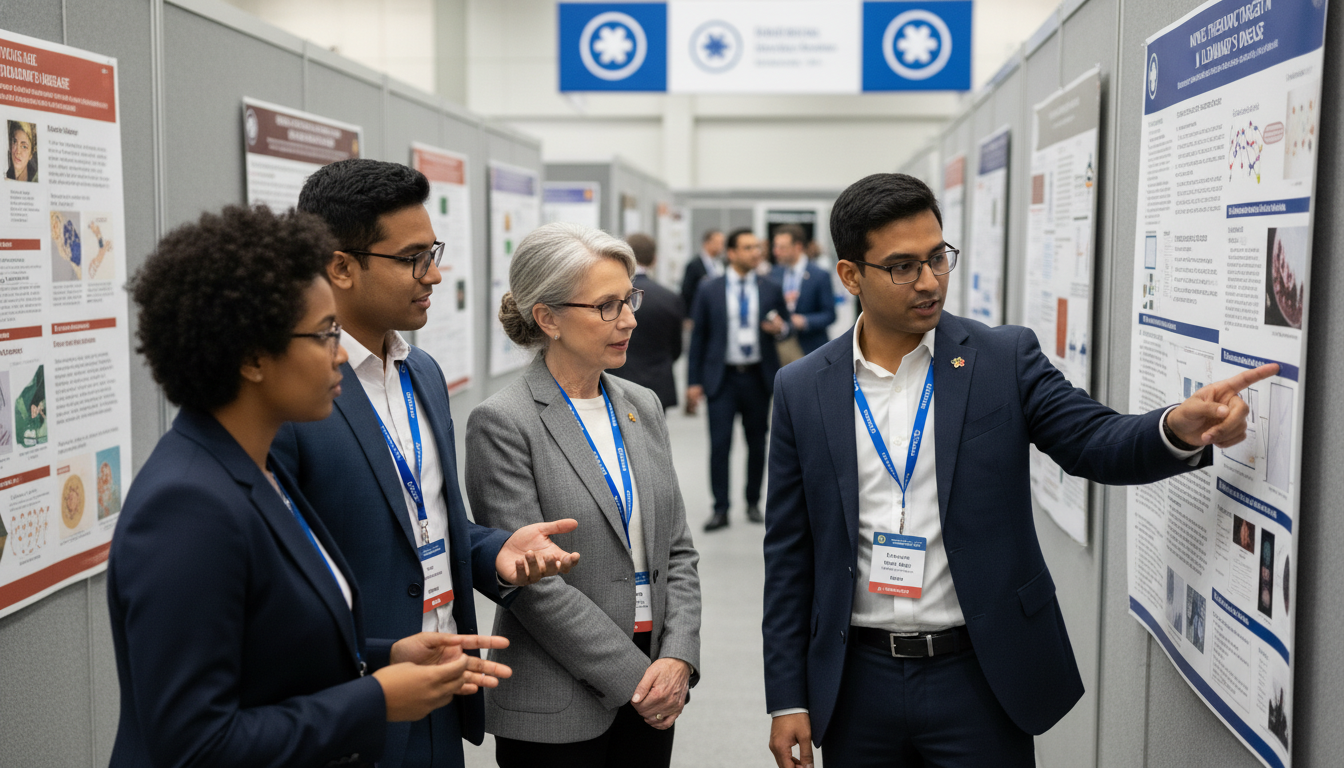
Visa, Funding, and Academic Career Considerations for Non-US Citizen IMGs
As a foreign national medical graduate in neurology, visa status intersects with research more than many residents realize. While clinical training on J-1 or H-1B is common, research activities and funding may be subject to extra rules.
1. Visa Types and Research Activities
J-1 (ECFMG-sponsored)
- Typically the most common for neurology residency.
- Clinical duties are primary; research is usually allowed as part of your training.
- Paid external employment beyond your training institution is generally not permitted.
- Unpaid collaborative research at your own institution is usually fine, but confirm with GME and ECFMG.
H-1B
- May offer slightly more flexibility in some institutional contexts, but policies differ.
- Still, research activities should remain part of your role as a resident or fellow unless specifically authorized.
For both visa types:
- Clarify whether internal research stipends or small grants to support resident research projects are allowed and how they are categorized.
- Avoid unauthorized “moonlighting” that might be framed as research consulting or data work for another institution.
2. Funding Opportunities
Many NIH grants are restricted to US citizens or permanent residents, which can limit principal investigator options for non-US citizen IMGs. However, you can still:
- Be a co-investigator or collaborator on NIH-funded projects led by US citizen PIs.
- Access internal departmental or institutional seed funds for resident research.
- Apply for foundation or society grants that are open to foreign nationals, such as:
- American Academy of Neurology (AAN) research or travel awards
- Specialty society awards (e.g., stroke, epilepsy, neuromuscular foundations)
Ask your program director or research office for a list of grants where citizenship is not a requirement.
3. Using Research to Build Toward Fellowships and Beyond
To leverage research during residency for long-term benefit:
Align your projects with your intended subspecialty.
- Interested in stroke? Prioritize acute stroke, outcomes, or secondary prevention projects.
- Leaning toward epilepsy? Look for EEG, neuroimaging, or surgical outcomes research.
- Considering neuroimmunology or MS? Focus on autoimmune CNS disorders or demyelinating diseases.
Present at targeted conferences:
- AAN (broad neurology exposure)
- Specialty society conferences (e.g., International Stroke Conference, AES for epilepsy, CMSC for MS)
Build a coherent narrative:
- When you apply for fellowships, program directors will ask: “What have you done so far, and where are you going?”
- Having 2–3 related projects (even if small) is better than 10 scattered efforts with no storyline.
Express interest in an academic residency track or junior faculty pathway:
- If your institution has an academic clinician or clinician-educator track, ask how resident research projects can help you qualify.
- Request feedback from mentors on which aspects of your CV look strong and which need reinforcement.
Example Timelines and Realistic Expectations
Example: 4-Year Neurology Residency, J-1 Non-US Citizen IMG
PGY-1 (Prelim year, typically internal medicine):
- Adapt to US system and documentation.
- Identify neurology department and show up at grand rounds if allowed.
- Perform one small case report with a neurology attending (if feasible).
PGY-2:
- Early in the year, meet with research director or mentor.
- Commit to one retrospective stroke or epilepsy project.
- Submit IRB by mid-year.
- Start data collection by late PGY-2.
PGY-3:
- Finish data collection and preliminary analysis.
- Submit abstract to a conference (AAN or subspecialty).
- Present poster, receive feedback, and start manuscript drafting.
PGY-4:
- Submit manuscript to a peer-reviewed journal.
- Possibly start a smaller second project, now that you know the system.
- Use your research outputs to strengthen fellowship applications in your chosen subspecialty.
By the end of residency, a realistic and strong outcome for a non-US citizen IMG might include:
- 1–3 posters at national or major regional conferences
- 1–2 first-author publications (case reports, retrospective study, or QI paper)
- Several co-authorships on team projects
This profile is competitive for many fellowships and strong for an academic-oriented trajectory.
Frequently Asked Questions (FAQ)
1. As a non-US citizen IMG in neurology, can I realistically do meaningful research during residency?
Yes, but it requires planning and prioritization. Most neurology programs expect at least some scholarly activity, and many residents—IMG and non-IMG alike—successfully complete resident research projects while on full call schedules. “Meaningful” does not necessarily mean a major randomized trial; a well-conducted retrospective study or impactful QI project with clear outcomes and publication is highly valuable.
2. Will my visa status limit my ability to do research or apply for grants?
Your visa status (J-1 or H-1B) will not usually prevent you from participating in research during residency, but it may restrict certain funding mechanisms, particularly NIH awards that require US citizenship or permanent residency. You can still be a co-investigator on NIH-funded projects, and you can often access internal institutional support and some foundation grants. Always confirm details with your GME office and international services.
3. How many publications do I need for a competitive neurology fellowship or early academic position?
There is no fixed number. Program directors tend to consider:
- The quality and relevance of your work to their subspecialty
- Your role (first author vs co-author)
- Evidence of progress over time
For many fellowships, having at least 1–2 first-author works (even case reports) plus a couple of additional abstracts or co-authored papers is a solid starting point. For highly research-oriented fellowships or early academic positions, more substantial output (e.g., one robust clinical or translational project with a strong manuscript) is very helpful.
4. I have limited prior research experience. How should I start?
Begin with a case report or a small retrospective chart review under a supportive mentor. Use that project to learn:
- Basics of literature review
- IRB processes at your institution
- Simple data management and analysis
- Structure and style of scientific writing
Once you have completed one project from start to finish, you will understand the workflow and be better positioned for more ambitious resident research projects.
By approaching research during residency strategically—choosing the right environment, mentors, and project types—and by understanding the specific challenges and opportunities facing non-US citizen IMGs, you can turn neurology residency into a powerful launchpad for an academic or research-enriched career.