The 2 AM Panic: Why I'm Staring at My Laptop Instead of the Airport
It's 2 AM, and instead of sleeping before my dermatology interview, I'm sitting cross-legged on my bed in a suit jacket and gym shorts, staring at my own face in the webcam preview. I've rehearsed my "why this specialty" answer forty times. Not to a person. To a green dot.
My fear has quietly shifted. I used to worry about fumbling a question on Mohs surgery. Now I worry that my neighbor's dog will bark mid-answer, that the warm bulb in my desk lamp makes me look faintly jaundiced, that some program director in Phoenix is quietly judging my fitness for their program based on my Ikea bookshelf.
That's what the virtual interview era did to us. When interviews moved online, applicants in competitive specialties, derm, ortho, plastics, ENT, neurosurg, felt like we lost the one thing we were told mattered most: the handshake, the hospital tour, the vibe. We replaced it with a whole new anxiety economy of ring lights and Ethernet cables. So let me walk you through what the data actually says, because I desperately needed someone to do it for me.
Does the Format Actually Matter? The Data on Selection
Here's the fear, stated plainly: are programs secretly ranking me lower because I'm a face in a box instead of a person in their conference room?
I've asked this on Reddit at 3 AM. I've asked advisors. I've asked a chief resident who rolled his eyes so hard I thought he'd sprain something. And the answer, from every direction, keeps coming back the same: no.
Since 2020, competitive specialties that went fully or mostly virtual have kept matching applicants at essentially the same rates as the in-person years. Look at the comparison below, that one-point gap is noise, not a signal.
And when you look at what program directors say actually drives their rank lists, the format doesn't even crack the list. The NRMP's Program Director Survey keeps surfacing the same heavyweights: clerkship grades, board scores, letters of recommendation, research output in the hyper-competitive fields, and the interview itself, meaning the content of your answers, not the bandwidth carrying them. The medium is not the message. It never was.
Here's the blunt version I've landed on: if a program was going to pass on you over Zoom, they were going to pass on you over rubber chicken at the pre-interview dinner too. The screen doesn't create rejection. It just delivers it faster.
And honestly? There's a real argument that virtual interviews helped competitive applicants. When I didn't have to drop $4,000 on flights and hotels, I could accept interviews I would've declined for budget reasons. In a specialty where people attend 12, 15, sometimes 20 interviews, that's not a trivial thing. That's more shots on goal.
The 'Rapport' Gap: Can You Fake Chemistry on Zoom?
This one's personal. I'm introverted. My entire interview strategy used to be "firm handshake, warm smile, let the in-person energy do the work." So the question that kept me up was: how do I build a connection through a webcam when half my charm is non-verbal?
I'll be honest with you, because nobody was honest with me: something is lost. The non-verbal bandwidth shrinks on a screen. You can't read the room. You can't tell if the awkward silence means they're bored or just typing notes. Anyone who tells you virtual is "basically the same" is lying.
But here's what the follow-up surveys of program directors show, and it surprised me: most PDs report they can still assess interpersonal skills and "fit" reasonably well in a virtual format. They've adapted. They're not looking for the handshake anymore. They're watching for different signals, do you look into the camera when you make your key point? Do you react visibly when they talk? Do you ask a real follow-up question, or do you just wait for your turn to recite?
The loop looks like this:
Notice what drives that loop: not charisma. Visible engagement. That's learnable, even for introverts. Three things actually moved the needle for me and my classmates:
- Camera at eye level, and look at the lens when you're making the point that matters. It feels weird. It reads as eye contact on their end.
- Exaggerate your reactions slightly. Nod more than feels natural. On a compressed video feed, your normal nod reads as a statue.
- Use their name and mirror their energy. If the interviewer is warm and chatty, loosen up. If they're brisk, get crisp.
And one more thing, because I need you to hear it: you can't fake chemistry on Zoom, but you never could fake it in person either. The gunners who "worked the room" at pre-interview dinners? Half of them were exhausting in person too. Authenticity survives compression. Desperation does too, but it always did.
The Technical Nightmare Scenario: What If I Freeze?
Okay. The big one. The nightmare: my internet dies at the exact moment I'm delivering the best answer of my life, and the program director's last image of me is a frozen frame with my mouth half open.
I can tell you what happens, because it happened to me. Eleven minutes into an interview, my Wi-Fi dropped. I tethered to my phone's hotspot in about forty seconds, rejoined, apologized once, and the PD laughed and said it was the second time that week. We moved on. I matched.
Programs got explicit guidance during the virtual transition to not penalize applicants for tech failures, and by all accounts they've followed it. Program directors are humans with home internet. They get it. What they remember isn't the glitch, it's how you handled the thirty seconds after. Calm recovery reads as grace under pressure. Panic reads as panic.
Still, I believe in worst-case planning, so here's the checklist that let me sleep at night:
- Wired Ethernet if you can, or sit close to the router.
- Phone hotspot enabled and tested the night before.
- The interview coordinator's phone number written on a sticky note, not buried in an email.
- Restart the laptop that morning, close everything else, silence notifications.
- Do a full test call with a friend on the same platform.
Do those five things and you've eliminated maybe 90% of the risk. The remaining 10% is life, and PDs grade it generously.
The 'Background' Check: Are They Looking at My Resume or My Bookshelf?
Confession: I live in a small apartment, and the week before interviews I genuinely considered paying for a co-working day pass because I was convinced interviewers would see my laundry drying rack and quietly move me to the "no" pile.
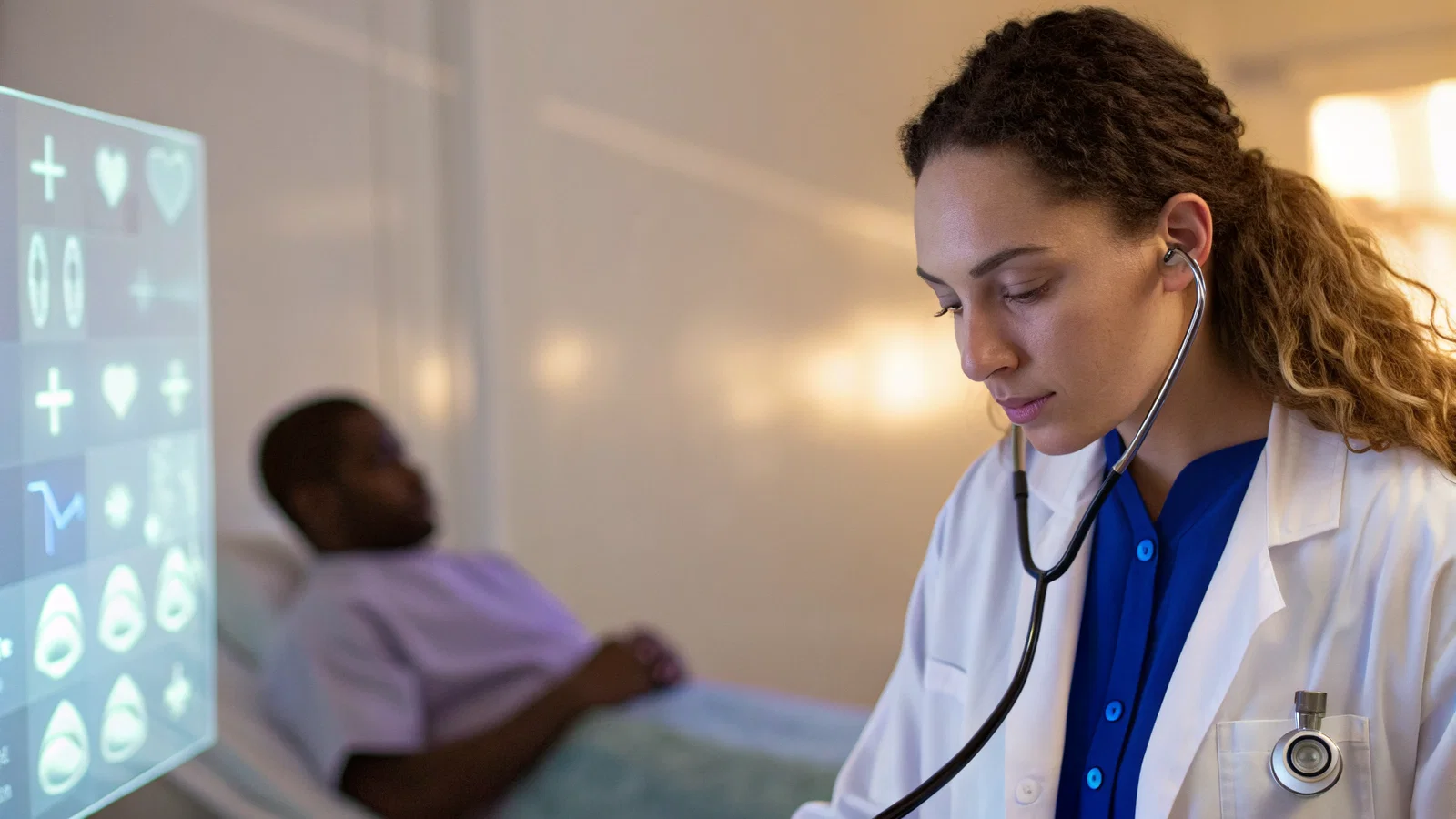
They won't. When program directors are asked what they notice about a virtual setup, the answers are consistently boring: your face, your lighting, your audio. The background barely registers, unless it's actively distracting. A clean backdrop isn't about impressing anyone. It's about keeping the focus on your answers instead of letting clutter steal attention for free.
And you don't need money to fix it. Face a window for natural light. Sit in front of the blankest wall you have. Put a lamp at roughly 45 degrees to your face if the window isn't enough. Total cost: zero dollars.
One honest twist, though: sometimes the background helps you. Midway through one interview, an interviewer spotted my board game shelf behind me, and we spent the best five minutes of the whole conversation talking strategy games. That connection probably did more for my rank position than any rehearsed answer. So clean it up, yes. Sterilize it of personality, no.
You Are More Than a Pixel: Finding Confidence in the Digital Age
Here's the reframe that finally got me out of the 2 AM spiral: a virtual interview isn't a watered-down version of the real thing. It's a test of adaptability, composure, and clear communication, which, not coincidentally, is the entire job of a resident. You're not being disadvantaged by the format. You're being given a chance to demonstrate exactly the skills they'll need from you at 3 AM on call when everything goes sideways.
So stop auditing your lighting and start trusting your voice. Your answers, your story, the way you think out loud, that's what's being ranked. The screen is just glass between you and people who genuinely want to find good residents.
You've done the hard part already. Now look into that little green dot and go get it. You're ready.
Key Takeaways:
- The data confirms interview format does not significantly impact match rates, 85% vs. 84% is noise, not destiny.
- Program directors focus on your clinical answers and personality, not your background or lighting.
- Technical glitches are common and handled with empathy; how you recover matters more than the glitch itself.
- Virtual interviews test adaptability and communication, the exact skills residency demands.