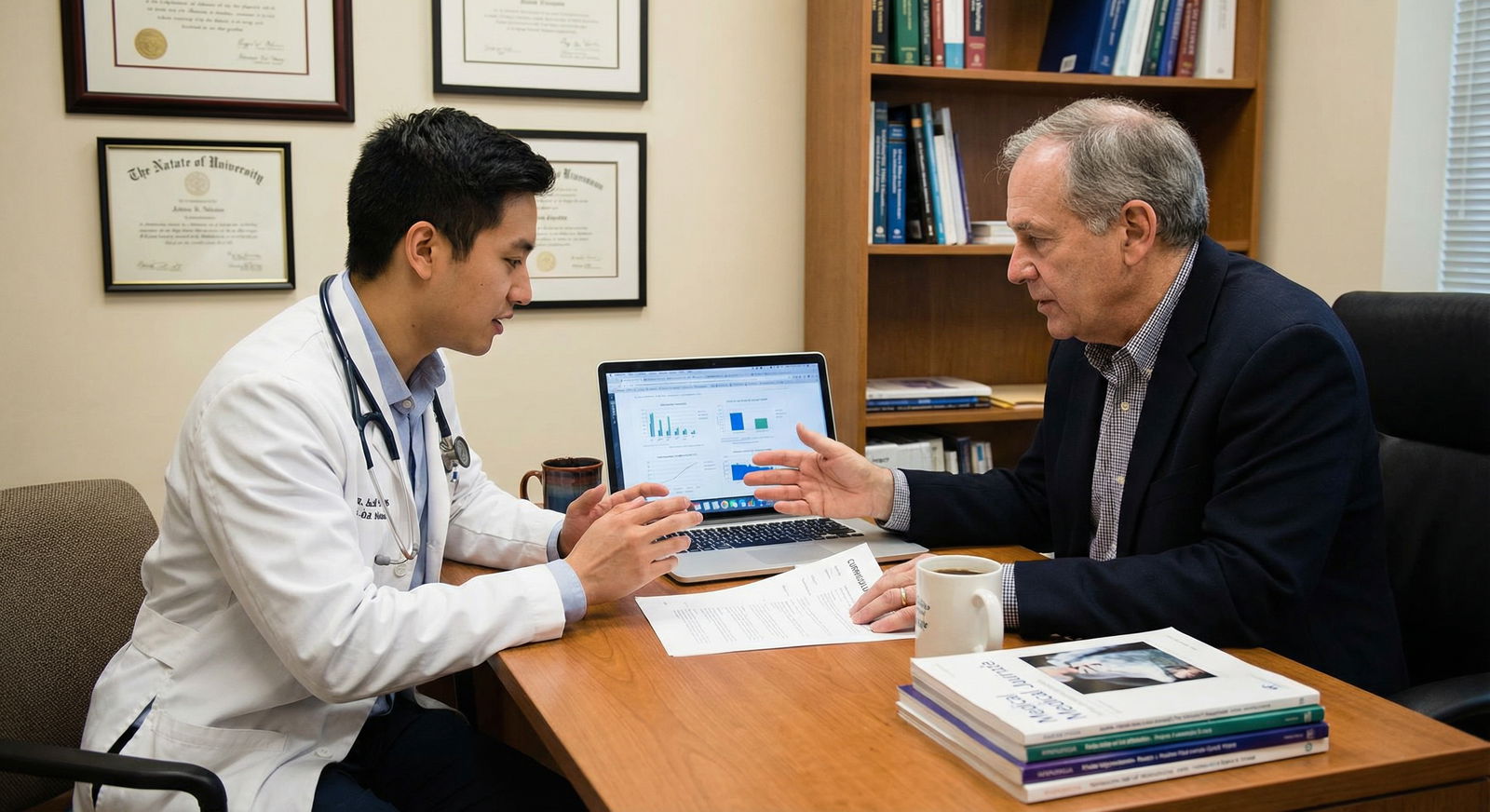
The most dangerous myth in medical school is that you “cannot match” a competitive specialty without a home program. That belief knocks out more applicants than Step scores ever will. It is wrong. You are behind, but you are not out.
You do not need excuses. You need a protocol.
This is that protocol.
Step 1: Get Clear On Your Real Starting Point
Before you start “strategy,” you need a blunt assessment of what you bring to the table. No fluff, no aspirational self-description.
1. Build a brutally honest profile
Write this out. On paper. Not in your head.
- USMLE:
- Step 1: Pass / fail + how strong was your prep honestly?
- Step 2 CK: current score or realistic target range
- Grades:
- Core clerkship grades (Honors/High Pass/Pass)
- Any red flags (fails, leaves, professionalism notes)
- School:
- MD vs DO vs IMG
- Home state and region
- Research:
- Number of projects
- First-author vs middle-author
- Any in-review/accepted publications
- Letters:
- Any strong non-specialty letters banked?
- Any national-name mentors already in your corner?
- Constraints:
- Geographic preferences
- Visa needs
- Significant family limitations (caregiving, etc.)
Now you know if your problem is:
- No home program only
- No home program + average metrics
- No home program + below-average metrics + red flags
The more issues you stack, the more disciplined you must be everywhere else. You cannot afford “winging it.”
Step 2: Understand How Programs View Applicants Without a Home Program
You are fighting three biases:
- Exposure bias – “We do not know how this student performs in our specialty.”
- Support bias – “Why is there no home department going to bat for them?”
- Risk bias – “Will this applicant crumble when things get hard because they have never lived this specialty day to day?”
Your job is to systematically neutralize each.

What they actually want to see from you
For competitive specialties (derm, ortho, ENT, plastics, neurosurgery, urology, rad onc, IR, ophthalmology, sometimes EM and anesthesia at top programs), the checklist from a no-home-program applicant is roughly:
- Serious sustained interest (not a late flip in M4)
- Concrete specialty exposure (electives, externships, shadowing)
- Evidence of technical aptitude or related skill (procedural, surgical, imaging)
- Specialty-tied scholarly work (case reports, QI, bench/clinical)
- Compelling letters from known faculty in the field
- Professionalism and work ethic that someone is willing to stake their name on
Your strategy is to manufacture, from scratch, what home-program students get by default.
Step 3: Build a Specialty Identity Inside a School That Does Not Have Your Specialty
You must “grow” your home department out of nothing. Here is how.
1. Find your pseudo-department at your institution
Start locally and be methodical:
- Search your institution directory and PubMed for:
- Your specialty name
- Related areas (for ortho: sports med, PM&R; for derm: rheum, allergy; for IR: diagnostic radiology, vascular surgery)
- Identify:
- Faculty with co-authorship on specialty-adjacent papers
- Clinicians doing related procedures or clinics
- Reach out with a short, focused email:
- 4 sentences, max:
- Who you are
- Your interest in X specialty
- One sentence demonstrating you know what they do
- Ask for a 15-minute meeting to get advice and see where you can contribute
- 4 sentences, max:
You are not begging for a letter yet. You are recruiting your future local advocates.
2. Attach yourself as “their” person
In that meeting:
- Be specific:
- “I am targeting dermatology, aware we do not have a department. I would like to build a track record strong enough for away rotations at X/Y programs.”
- Ask concrete questions:
- “Are there ongoing projects I could plug into quickly?”
- “Who in this hospital has connections to dermatology / ortho / IR etc.?”
- “Is there a prior student who matched this specialty that I can talk to?”
Your script is not “I really like derm.” Your script is “I am trying to construct a realistic path to a derm match; here is what I have; where do you see my biggest gaps?”
Then follow-up with action within a week. If they mention a project, you show up with a draft chart review plan, data abstraction tool, or literature review outline. Fast follow-through = trust.
Step 4: Build a Research and Scholarly Portfolio that Looks Like It Came from a Home Program
You have two levers: speed and networking. Use both.
1. Choose fast-yield projects first
You do not have 3–4 idle years for basic science to maybe publish. You need visible output.
Prioritize:
- Case reports in your target specialty or adjacent field
- Retrospective chart reviews with clear endpoints
- Small QI projects that generate abstracts/posters
- Narrative reviews or “How we do it” procedural papers with a willing attending
Deprioritize as a primary strategy:
- Long, unfunded basic science unless:
- You are already embedded
- Or you have >1 year of dedicated research time
| Project Type | Time to Output | Ideal Stage |
|---|---|---|
| Case Report/Series | 1–4 months | M2–M3 |
| Retrospective Review | 4–9 months | M2–M3 |
| QI Project | 3–6 months | Clerkships |
| Narrative Review | 3–6 months | M1–M3 |
| Basic Science Bench | 1–3+ years | Only with gap |
2. Use specialty societies and listservs
Almost every competitive specialty has:
- A national society
- Student/resident sections
- Mentorship programs
- Abstract deadlines and travel grants
Join them. Early.
Examples:
- Dermatology: AAD, SID
- Ortho: AAOS
- ENT: AAO-HNS
- Neurosurg: AANS/CNS
- Ophtho: AAO, AUPO-RPB
- IR: SIR
- Plastics: ASPS
Action items:
- Join the society and the student arm.
- Register for mentorship programs or “virtual interest groups.”
- Submit at least one abstract or poster by your M3 summer.
- Show up at the conference if you can. This is where no-home-program applicants actually make up ground—face-to-face.
3. Collaborate outside your institution
This is the aggressive play that most students are too shy to try. You cannot afford to be shy.
- Use:
- Twitter/X academic threads
- Specialty Slack/Discord groups
- Research collaboratives (e.g., collaborative study groups, multi-center QI projects)
- Reach out to junior faculty and fellows at programs you might rotate at:
- “I am a second-year student at a school without ortho. I am trying to build an ortho research portfolio. I saw your recent paper on [topic]. Is there any ongoing project where an extra set of hands on data collection or literature review would be helpful?”
You will get ignored often. You only need a few yeses.
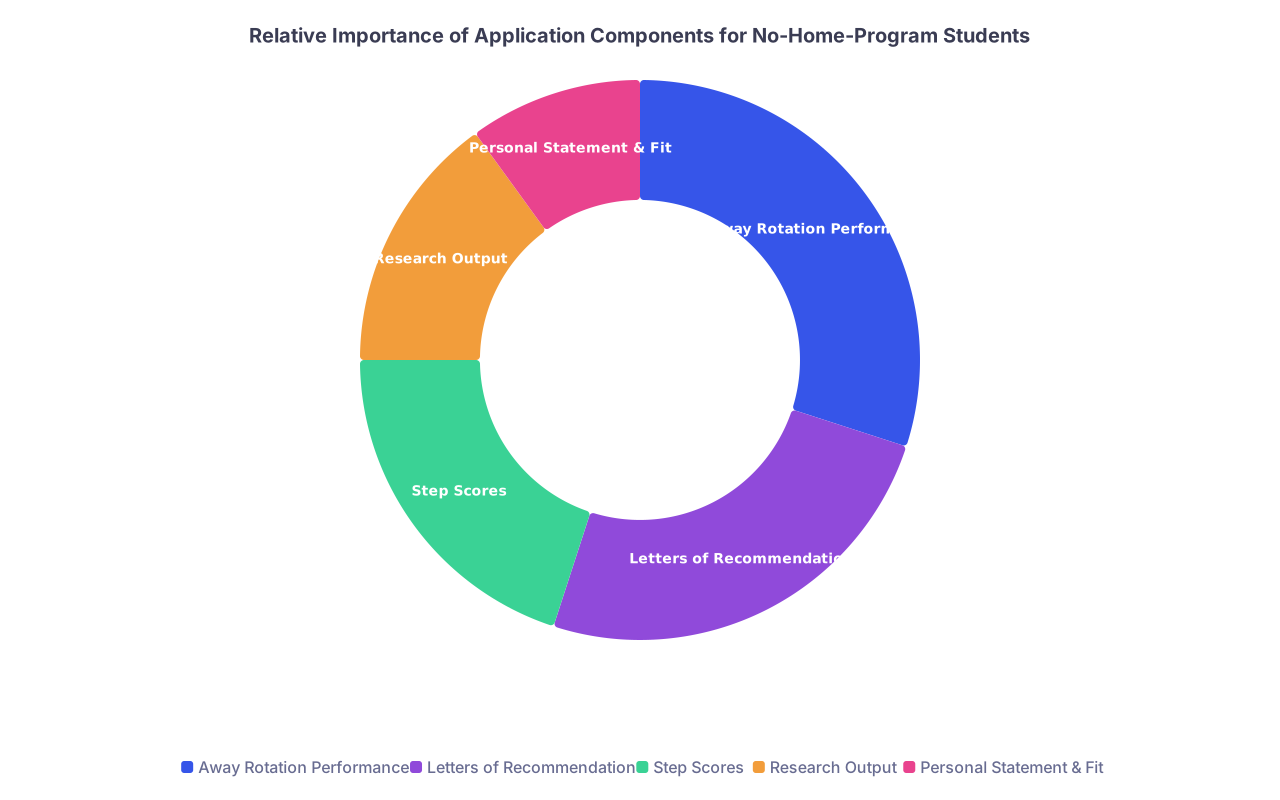
Step 5: Master the Away Rotation Game (This Is Your “De Facto Home”)
For you, away rotations are not optional “nice-to-have experiences.” They are:
- Your audition
- Your letter source
- Your chance to show “I function like a home student in this specialty”
| Category | Value |
|---|---|
| Away Rotation Performance | 30 |
| Letters of Recommendation | 25 |
| Step Scores | 20 |
| Research Output | 15 |
| Personal Statement & Fit | 10 |
1. Plan your timing like a military operation
If you are targeting a competitive specialty:
- Aim for 2–3 aways in your specialty
- Front-load:
- First away: early summer (June/July)
- Second away: mid–late summer (Aug/Sep)
- Third if possible: early fall (Sep/Oct)
You want at least one away completed before ERAS submission so that letter can be in your original packet.
Use VSLO/VSAS aggressively:
- Apply early and broadly
- Have backup plans:
- Slightly less competitive programs
- Related specialties if you need a parallel strategy
2. Choose where to rotate strategically
You are not just chasing prestige. You are trying to maximize:
- Odds of strong letter
- Odds of interview at that institution
- Network effect (how many other programs listen to them)
Prioritize:
- Programs with a track record of taking students from schools without home departments
- Places where your research mentors or conference contacts are based
- Regions you are willing to live in (they are more likely to believe you will rank them highly)
Avoid:
- Only top 10 “dream” programs if your metrics are mediocre
- Programs known to heavily favor their own medical school + few outside students
If you can, talk to M4s or recent grads who matched your specialty. Ask bluntly: “Where did you feel like outside rotators were truly considered for interviews, not just free labor?”
3. How to behave on an away so they want to hire you
You are not there to be impressive on one big case. You are there to be relentlessly reliable.
Your job description on an away:
- Show up earlier than everyone except maybe the intern
- Volunteer for the unsexy tasks: scut, notes, transport, calls
- Learn the EMR shortcuts rapidly
- Never be the rate-limiting step for the team
Specific rules:
- Be the student who:
- Prints/updates the patient list
- Knows where the supplies are
- Offers to see new consults first, then staff with residents
- In the OR:
- Learn how each attending likes their setup
- Ask residents where to stand, how to help without being in the way
- Do not constantly ask, “Can I close?” The resident who trusts you will hand you the needle without you begging.
You want the senior resident to tell the PD at the end of your rotation: “If we had this student as an intern next year, I would sleep better.”

| Step | Description |
|---|---|
| Step 1 | Start Away Rotation |
| Step 2 | Show up early day 1 |
| Step 3 | Ask residents expectations |
| Step 4 | Own 2 to 4 patients well |
| Step 5 | Seek mid-rotation feedback |
| Step 6 | Fix what they mention fast |
| Step 7 | End with clear ask for letter |
4. Secure letters before you leave
Do not walk out of a month-long tryout without clarity.
Last week of your away:
- Ask one or two faculty (max) who:
- Saw you work repeatedly
- Gave you positive feedback
- Script:
- “I am applying to [specialty], and this rotation has confirmed it. I am applying without a home program, so strong letters carry a lot of weight. Based on what you have seen, do you feel you could write a strong letter of recommendation for me?”
If they do not say yes enthusiastically, do not use that letter.
Then:
- Send a follow-up email:
- CV
- Updated personal statement draft
- Bullet list of 4–6 concrete examples of patient care or cases you worked on with them (to jog their memory)
Step 6: Use Non-Specialty Rotations to Prove You Are a Safe Bet
You might think only your specialty rotations matter. Programs do not see it that way.
They ask:
- “Will this person be safe on nights?”
- “Will they make our lives harder?”
You can answer “no, I will not be a problem” through your core rotations.
1. Crush your medicine/surgery rotations
If you want ortho and you were mediocre on surgery? That is a problem. If you want derm and you were lazy on medicine? That gets around.
On non-specialty rotations, your targets:
- At least High Pass, ideally Honors, in:
- Internal Medicine
- Surgery
- Any rotation closely tied to your field
- Strong generalist letters that say:
- “This student was in the top 10% I have worked with over X years”
- “I would trust them with my own family”
You can absolutely have a powerful application with:
- 1–2 killer specialty letters
- 1–2 killer generalist letters and still no home program.
2. Fix professionalism issues immediately
No late notes. No missed pages. No complaining about “scut” in front of residents who will write your evaluations.
If your school offers:
- Early professionalism remediation
- Coaching Use it. Quietly. You cannot drag unresolved professionalism whispers into a competitive specialty application.
Step 7: Build a Mentor Network That Replaces a Home Department
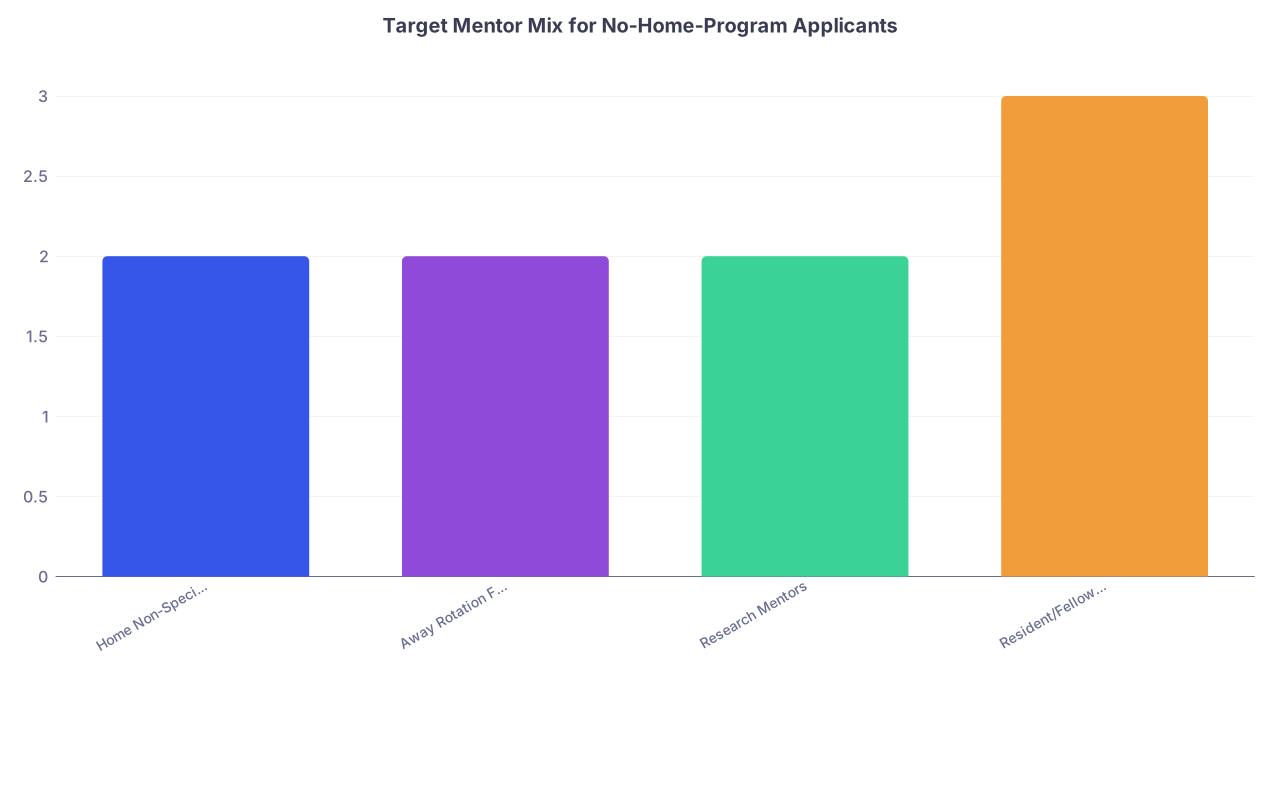
You are constructing your own version of a departmental “sponsorship tree.”
You want at minimum:
- 1–2 mentors at your institution (even if not your specialty)
- 2–4 mentors in your specialty at outside institutions
- 1 “connector” — someone who knows many PDs or has sat on selection committees
| Category | Value |
|---|---|
| Home Non-Specialty Faculty | 2 |
| Away Rotation Faculty | 2 |
| Research Mentors | 2 |
| Resident/Fellow Mentors | 3 |
1. How to convert a friendly attending into a real mentor
Once someone shows mild investment in you:
- Update them:
- After a big exam (Step 2 score)
- After a publication or accepted abstract
- Before and after away rotations
- Ask for specific help:
- “Can we quickly review my programs list for realism?”
- “Would you be comfortable emailing Dr X at [Program] to let them know I am applying?”
Mentors engage when they see you execute on advice. Do what they suggest, then report back.
2. Use residents and fellows smartly
Residents and fellows:
- Know which programs are actually malignant vs just intense
- Know which PDs read every application vs delegate heavily
- Can float your name in group chats and email threads
Do not ask them for “a rec letter” out of nowhere. Ask for:
- Honest feedback on your competitiveness
- Names of faculty who like teaching and letters
- Reality checks on your personal statement
Step 8: Build a Ruthless, Tiered Program List
Your list matters more when you do not have a home program safety net.
You need:
- A wide net geographically
- A smart mix of reach, realistic, and backup options
- Alignment between your metrics and program expectations
| Tier | Program Type | Approx. Number |
|---|---|---|
| Tier 1 | Dream / Top 20 | 10–15 |
| Tier 2 | Strong mid-tier academics | 20–30 |
| Tier 3 | Newer / community-affiliate | 15–25 |
If you are DO or IMG:
- Increase total number of programs
- Pay attention to:
- DO/IMG-friendly histories
- Past matches from your school
- States that usually take more IMGs (NY, NJ, FL in many fields, but check specialty specifics)
You do not need 100+ applications in most specialties. You need informed applications.
Step 9: Parallel Planning: Know When You Need a Backup Specialty
This part people hate to hear. But ignoring it is how you end up unmatched and scrambling.
When you should consider a formal backup plan
Clear signs:
- Step 2 score significantly below the average for matched applicants in your specialty
- Weak clerkship performance that you cannot fully explain
- No meaningful research or away rotation options before ERAS
- You are at a lower-tier or new med school with zero track record in your specialty and no strong external mentors
You can still apply to your dream specialty, but pair it with:
- A more forgiving specialty where:
- Your strengths are valued
- You can still be happy
For example:
- Exploring:
- Derm → consider medicine with strong allergy/rheum focus
- Ortho → consider PM&R or general surgery at solid programs
- ENT → consider general surgery or anesthesia
- IR → consider diagnostic radiology plus IR fellowship track
You must decide by early M4, not in February after you go unmatched.
| Step | Description |
|---|---|
| Step 1 | Start Away Rotation |
| Step 2 | Show up early day 1 |
| Step 3 | Ask residents expectations |
| Step 4 | Own 2 to 4 patients well |
| Step 5 | Seek mid-rotation feedback |
| Step 6 | Fix what they mention fast |
| Step 7 | End with clear ask for letter |
Step 10: Application Assembly: How to Tell Your No-Home-Program Story
Do not hide that your school lacks a program. Own it and show how you compensated.
1. Personal statement framing
Your angle is not “pity me.” It is “here is how I solved a structural disadvantage.”
Key elements:
- A concrete story of exposure to the specialty (specific patient, rotation, case)
- A brief line acknowledging the lack of a home program:
- “My medical school does not have a [specialty] department, so I built my education through external rotations and research collaborations.”
- Then the pivot:
- “This forced me to be intentional, proactive, and resilient—traits that will make me a better resident.”
Keep it clean. One paragraph, not the whole essay.
2. Experiences section: weaponize your activities
Highlight:
- Leadership in student-run specialty interest groups (even if virtual)
- Research with clear, concise outcomes:
- “First-author case report on X, accepted to Y journal”
- “Co-author on retrospective study of Z, under review”
- Teaching / tutoring / simulation work (shows you can communicate and lead)
Do not inflate. PDs can smell fake leadership from miles away.
3. Signals and geographic preference
If your specialty uses signaling (program signals / geographic signals):
- Use your top signals on:
- Programs where you did aways
- Institutions where your mentors have real influence
- Programs in regions where you have deep ties and can explain them
Where you do not have a home program, signals matter even more. They are the first filter you can control.
Step 11: Interview Season: Convert Doubt into Confidence
Once you get in the door, your job is straightforward: show them they will not regret taking a chance on a no-home-program applicant.

1. Prepare a tight answer to “Why no home program?”
You will get this question. Do not stumble.
Sample structure:
- Brief fact:
- “My school simply does not have a [specialty] department or residency.”
- Brief action:
- “Because of that, I structured my third year to include [X, Y, Z] exposures and prioritized away rotations at programs where I could learn and contribute meaningfully.”
- Brief result:
- “Those experiences confirmed that this is the environment where I thrive.”
Say it once, clearly, then move on.
2. Double down on “team function” stories
Competitive specialties are tight teams. They care whether you are:
- Reliable
- Low-drama
- Able to learn from feedback without melting down
Prepare 3–4 stories that show:
- You took constructive criticism and adjusted quickly
- You solved a patient-care problem with the team
- You stepped up when service was drowning
- You handled a mistake with accountability and repair
These stories matter more than another “I loved the OR” monologue.
3. Post-interview communication, used sparingly
Do not spam. But for places where:
- You rotated
- Your mentor has strong ties
- You truly would go if offered
A short, specific update or thank-you note can help. Content:
- One line of gratitude
- One line tying your interests to something specific about their program
- One line reinforcing sincere interest
Keep it under 5 sentences. No emotional essays.
Step 12: If You Do Not Match: Fast Recovery Protocol
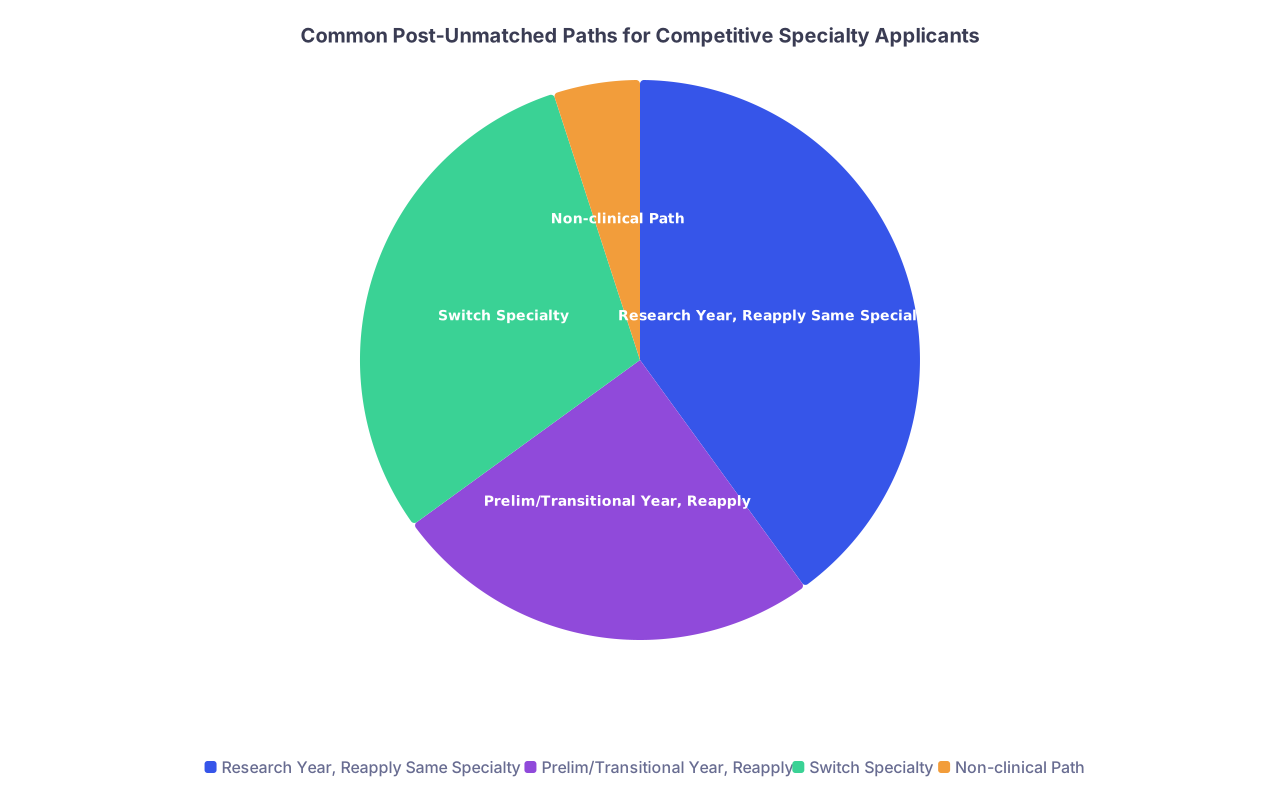
You may do everything right and still not match. Competitive specialties are ruthless. What matters then is your next 12 months.
You need to quickly decide between:
- A dedicated research year in the same specialty
- A prelim/transitional year with reapplication
- Fully pivoting to a different specialty
Rapid response checklist (Week 1 after no match)
- Meet with:
- Your dean / advising office
- Your main specialty mentors (internal and external)
- Ask for:
- Honest read on why you did not match (not just “numbers”)
- Whether they would still support a reapplication
- Get real data:
- Did interviewers give you any feedback?
- Were there consistent themes in where you got interviews?
| Category | Value |
|---|---|
| Research Year, Reapply Same Specialty | 40 |
| Prelim/Transitional Year, Reapply | 25 |
| Switch Specialty | 30 |
| Non-clinical Path | 5 |
If more than one respected mentor says, “You are unlikely to match this specialty even with another year,” listen. Sunk cost fallacy kills careers.
Final Takeaways
Having no home program is a handicap, not a death sentence. You can manufacture almost everything a home department provides—research, mentorship, letters, exposure—if you start early and act deliberately.
Away rotations and relationships are your currency. Treat every away like a month-long audition, and build a network of mentors who will actually pick up the phone or email a PD on your behalf.
Ruthless realism wins. Know your metrics, structure a wide but intelligent program list, and be honest about when you need a backup plan. The goal is not just to chase prestige. It is to build a career that actually starts with a residency you match into.