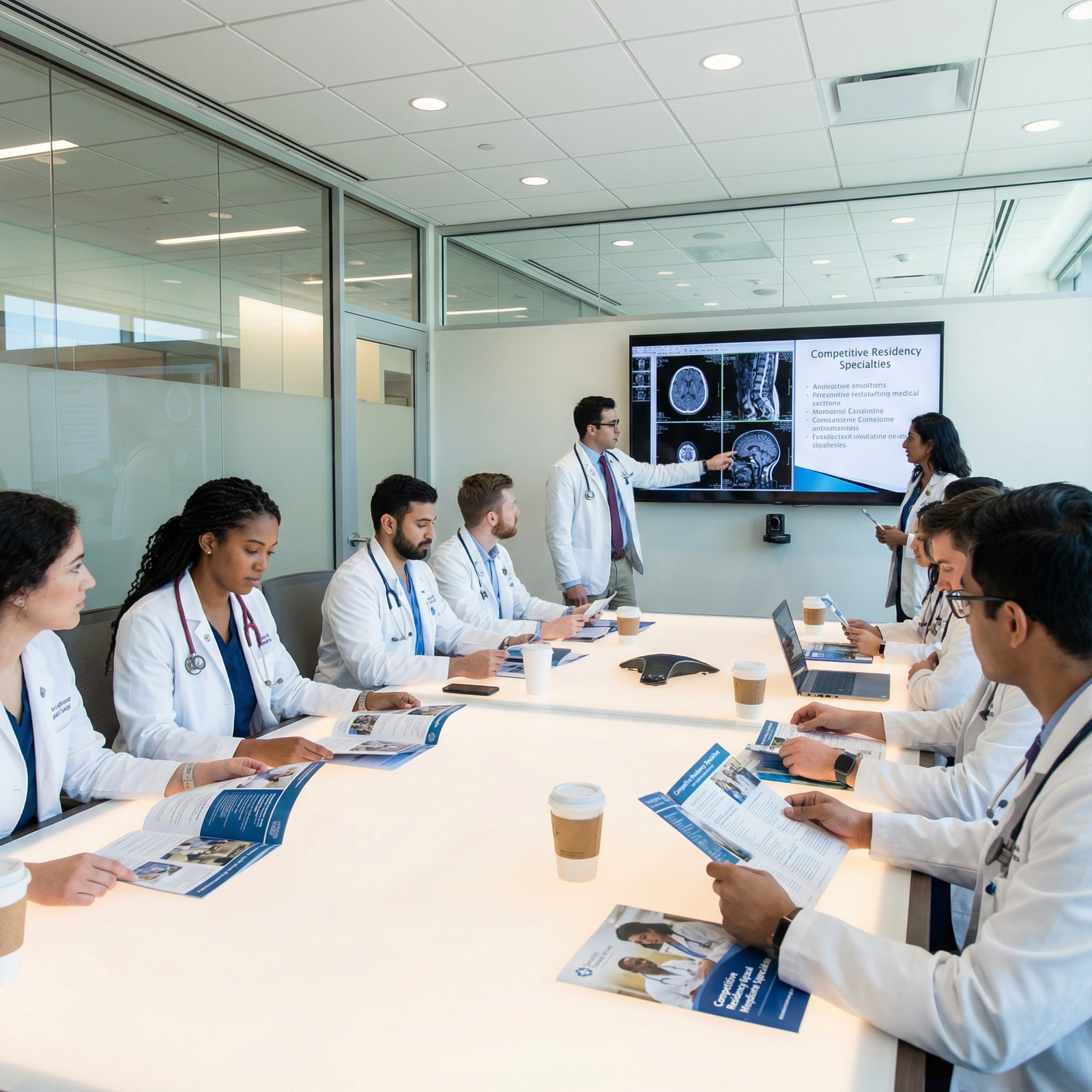
Introduction: Why Mentorship Matters in Competitive Specialties
Mentorship in medicine is more than occasional advice over coffee—it is a powerful, long-term catalyst for success, especially for students and residents targeting highly competitive specialties. Fields such as dermatology, orthopedic surgery, plastic surgery, neurosurgery, and interventional radiology demand not only exceptional academic performance but also strategic planning, early exposure, and strong professional relationships.
For many trainees, the path can feel uncertain and high-stakes: Step/COMLEX scores, class rank, research productivity, away rotations, letters of recommendation, and interviews all intersect in complex ways. In this environment, effective mentorship and intentional networking can transform anxiety and guesswork into a focused, realistic career development plan.
This article explores how to use mentorship in medicine as a strategic tool for entering competitive specialties. You’ll learn what good mentorship looks like, how it directly impacts residency outcomes, and how to build a productive mentor network that supports your growth from pre-clinical years through the Match and beyond.
Understanding Mentorship in Medicine and Medical Education
Mentorship in medicine is a developmental relationship in which a more experienced physician or trainee (the mentor) supports the learning, performance, and professional growth of a less experienced individual (the mentee). In the context of competitive specialties, this relationship can be the difference between a scattered approach and a targeted, compelling application.
Core Elements of Effective Mentorship
Mentorship in medical education typically includes:
Guidance and Strategic Support
Mentors help you set realistic, specialty-specific goals and create stepwise plans to reach them. This includes:- Clarifying what programs value most (e.g., research vs. clinical excellence vs. leadership).
- Prioritizing activities that offer the highest impact on your application.
- Identifying potential pitfalls early (e.g., low Step score, limited research, geographic constraints).
Honest, Constructive Feedback
Strong mentors provide specific, sometimes tough feedback on:- USMLE/COMLEX preparation strategies.
- CV structure and content.
- Personal statements, diversity statements, and secondary essays.
- Clinical performance and professional behavior. This feedback helps you develop insight, refine your narrative, and avoid repeating mistakes.
Access to Networking and Opportunities
Mentors often serve as crucial connectors in your professional network by:- Introducing you to faculty in your specialty of interest.
- Recommending you for research projects or quality improvement initiatives.
- Advocating for you when residency programs inquire about applicants.
Types of Mentorship Models in Medicine
Mentorship does not have to look the same for every trainee. Useful models include:
Traditional One-on-One Faculty Mentorship
A faculty member, often in your desired specialty, provides individualized guidance over months or years. This is particularly valuable for letters of recommendation and specialty-specific advice.Near-Peer Mentorship
Residents, fellows, and senior medical students offer recent, practical insights about the Match process, exams, sub-internships, and program culture. They are often more accessible and can normalize common struggles.Group or Team-Based Mentorship
Some institutions promote a “mentorship team”: faculty advisors + residents + peers. For competitive specialties, this diversified support helps you address academic, research, and wellness needs more comprehensively.Informal and Organic Mentorship
Relationships that develop naturally—through clerkships, research, student interest groups, or volunteering—can be just as impactful as formal assignments.Virtual and Social Media–Based Mentorship
Platforms such as Twitter/X, LinkedIn, and specialty-specific forums allow you to follow leaders in your field, learn about opportunities, and occasionally form mentorship relationships, especially if your home institution lacks a department in your area of interest.
Why Mentorship Is Critical in Competitive Specialties
In less competitive fields, strong grades and solid clinical performance may be enough to secure a residency spot. In contrast, highly competitive specialties often require strategic differentiation and sustained advocacy—both of which are significantly enhanced by effective mentorship.

1. Specialty-Specific Guidance on the Application and Match Process
Every competitive specialty has its own unwritten rules, timelines, and expectations. Good mentors help translate these nuances into clear, actionable steps:
Understanding Competitiveness and Fit
A mentor in dermatology, for example, can help you interpret how your application metrics compare to recent matched applicants and whether you should:- Strengthen your research profile.
- Consider a transitional year.
- Apply broadly versus regionally.
- Adjust expectations or apply to a parallel specialty.
Optimizing Your Application Documents
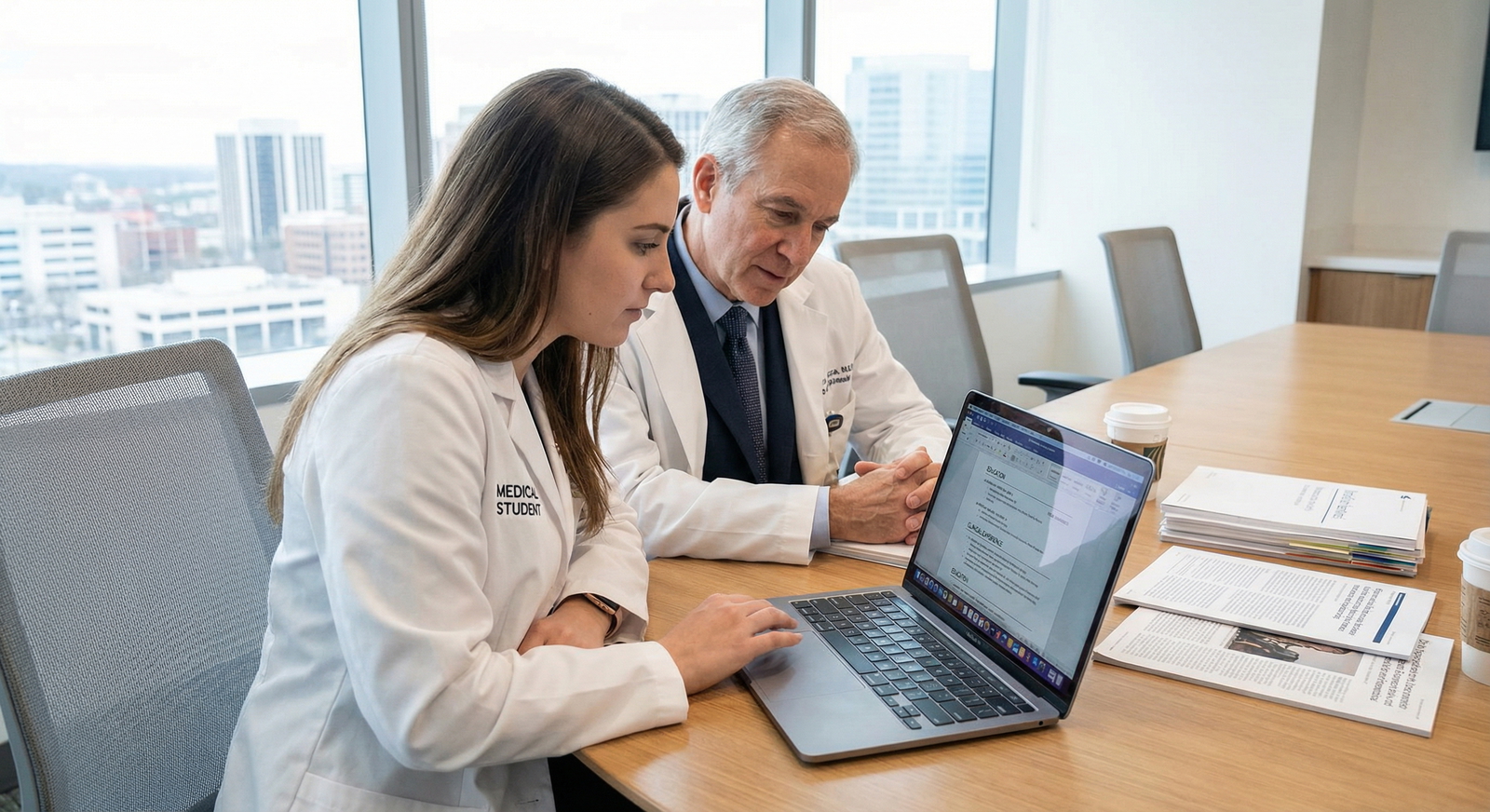
Mentors can:- Highlight which experiences to emphasize on your ERAS application.
- Identify red flags and help you frame them constructively.
- Tailor your personal statement toward a coherent, specialty-specific story.
- Ensure your CV reflects steady growth and clear commitment to your chosen field.
Strategic Approach to Away Rotations (“Audition Rotations”)
In fields like orthopedic surgery, neurosurgery, and plastic surgery, away rotations can be critical:- Mentors advise where to rotate based on your competitiveness and career goals.
- They help you prepare to make strong impressions: punctuality, professionalism, reading ahead, and understanding team dynamics.
- They coach you on post-rotation follow-up, such as sending thank-you emails, continuing research collaborations, or requesting letters.
2. Encouragement and Structure for Research and Scholarly Work
Research productivity is often a major differentiator in competitive specialties, especially dermatology, radiology, orthopedics, and plastic surgery. A good mentor helps you:
Choose the Right Projects
Rather than joining any available project, mentors help you:- Identify projects feasible within your timeline.
- Aim for work likely to lead to publications, abstracts, or national presentations.
- Align projects with your genuine interests, increasing your commitment and interview authenticity.
Develop Research Skills and Ownership
Mentors and near-peers teach you:- How to formulate research questions.
- Basic statistics and study design principles.
- Manuscript writing, poster creation, and oral presentation skills. These skills are both directly useful and impressive to programs.
Build a Track Record Over Time
With early mentorship, you can build a layered portfolio:- First year: case reports, small QI projects, literature reviews.
- Second year: retrospective studies, prospective projects, multi-center collaborations.
- Clinical years: posters and presentations at specialty conferences, leading to networking and professional visibility.
3. Networking: Building a Professional Brand in Medicine
Networking in medicine is not superficial socializing; it is purposeful relationship-building that expands your opportunities and reputation. Mentors can accelerate this process in several ways:
Direct Introductions and Advocacy
Established physicians know other faculty, division chiefs, and program directors. A mentor might:- Email a colleague at another institution to recommend you for a research fellowship, sub-internship, or rotation.
- Mention you during faculty meetings when residency candidates are discussed.
- Invite you to join specialty societies or interest groups where you can meet future colleagues.
Conference and Society Involvement
Mentors help you navigate:- Which national and regional meetings are most valuable for your specialty.
- How to submit abstracts and apply for student travel grants.
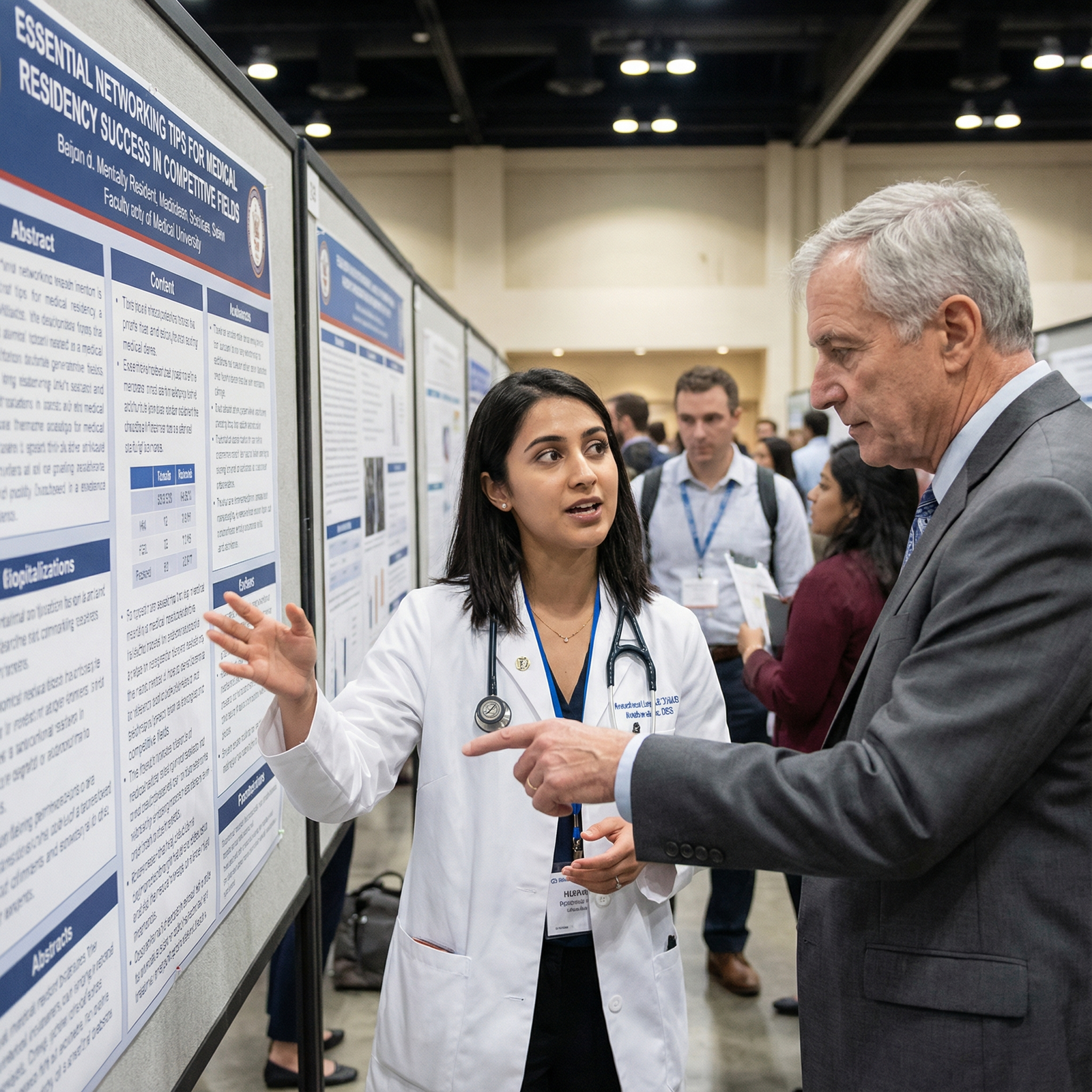
- How to network effectively at conferences (e.g., elevator pitch, follow-up emails, poster etiquette).
Developing a Professional Identity Online
In the era of digital Networking, mentors can advise on:- Optimizing a professional LinkedIn profile.
- Using platforms like X/Twitter to follow key opinion leaders and discuss clinical topics.
- Maintaining professionalism and boundaries on social media.
4. Skill Development Beyond Test Scores
Competitive residency programs look for more than just exam performance. Mentors guide you in building a robust skill set:
Clinical Excellence and Judgment
Mentors can:- Coach you on clinical reasoning, efficiency, and bedside manner.
- Observe you during rotations and provide specific feedback.
- Help you learn to “think like a dermatologist/orthopedic surgeon/plastic surgeon,” which shows during sub-internships and interviews.
Professional Communication and Interview Skills
Mock interviews with mentors are invaluable:- Practicing common and specialty-specific questions.
- Refining how you discuss research, failures, and ethics.
- Receiving feedback about nonverbal communication, tone, and clarity.
Leadership and Teamwork
Mentors often involve mentees in:- Committees, student interest groups, or quality initiatives.
- Educational projects (workshops, teaching sessions) that demonstrate leadership and commitment to medical education.
5. Navigating Challenges, Setbacks, and Well-Being
Pursuing a competitive specialty can be psychologically and emotionally taxing. Mentors help normalize and strategize around challenges:
Academic or Exam Struggles
If Step/COMLEX scores or clerkship grades are weaker than hoped, a trusted mentor can:- Honestly evaluate your competitiveness.
- Help you explore supplemental pathways (research year, additional degree, parallel plan).
- Advise how to address these concerns in your application and interviews.
Burnout, Imposter Syndrome, and Stress
Mentors can:- Share their own struggles and coping strategies.
- Encourage healthy boundaries, time management, and self-care.
- Help you weigh the trade-offs of certain specialties and practice styles in relation to your personal values and wellness.
Course Corrections and Career Reassessment
Sometimes mentorship leads to realizing that another specialty—or dual-interest path—is a better fit. Effective mentors guide you through:- Honest self-assessment of strengths and preferences.
- Understanding lifestyle, call burden, and career trajectories in different fields.
- Making informed, values-aligned decisions rather than chasing prestige alone.
How to Find the Right Mentor for Competitive Specialties
Finding a mentor in medicine can seem intimidating, but a systematic approach makes it manageable and rewarding. Think of it as a core part of your career development, not an optional extra.
Step 1: Clarify Your Goals and Needs
Before seeking mentorship, reflect on:
- Your likely specialty interests (even if tentative).
- Your current stage (pre-clinical, clinical, gap year, early resident).
- What you need most right now:
- Research?
- Study strategies?
- Specialty exploration?
- Networking and letters of recommendation?
- Emotional support and perspective?
This clarity will help you target the right people and set expectations.
Step 2: Leverage Institutional Resources
Most medical schools and teaching hospitals offer multiple pathways:
Assigned Academic Advisors
Even if they are not in your specialty of interest, academic advisors can:- Help you connect with the appropriate department.
- Provide an overview of your competitiveness.
- Support you in planning electives and away rotations.
Specialty Interest Groups and Student Organizations
Join groups such as:- Dermatology Interest Group, Orthopedic Surgery Interest Group, etc.
- These organizations often host panels, Q&A sessions, and mentoring events.
- Faculty advisors to these groups are natural first contacts.
Formal Mentorship Programs
Many institutions have:- Student-faculty matching programs by specialty.
- Longitudinal advising programs for competitive specialties.
- Alumni mentorship networks.
If your institution lacks such resources, consider reaching out to national specialty societies that offer student mentorship initiatives.
Step 3: Use Conferences and Networking Events Strategically
Educational events are rich opportunities to identify potential mentors:
- Attend department grand rounds, journal clubs, and morbidity & mortality conferences.
- Ask thoughtful questions and follow up afterward with a brief email:
- Express appreciation for their talk or insights.
- Introduce yourself and your interests.
- Politely ask if they might have time for a brief meeting to discuss career development.
Step 4: Utilize Digital Platforms Thoughtfully
Online networking can expand your reach beyond your home institution, which is especially valuable if you lack a home program in your desired specialty.
LinkedIn
- Maintain a clear, professional profile.
- Connect with alumni from your school in your target specialty.
- Send concise, respectful messages when reaching out.
X/Twitter and Other Professional Platforms
- Follow leaders, departments, and societies in your specialty.
- Engage by liking, retweeting, or commenting (professionally) on academic content.
- Some mentorship programs are announced and run through these platforms.
Step 5: Make the First Move Professionally
When approaching a potential mentor:
Draft a brief, polite email:
- Who you are (year, school, basic background).
- Your area(s) of interest.
- Why you are reaching out to them specifically.
- What you are hoping for (e.g., a 20–30 minute meeting, advice on specialty choice, research opportunities).
Be realistic:
- Start by asking for a conversation, not an ongoing commitment.
- Recognize that not everyone will have capacity; a respectful “no” is not a failure.
Step 6: Build a Mentorship Team
Instead of seeking one “perfect mentor,” consider a small network, for example:
- A faculty mentor in your specialty for research and letters.
- A near-peer resident for practical Match advice and day-to-day questions.
- A generalist advisor for long-term career planning and work-life integration.
This diversified approach prevents over-reliance on a single person and gives you broader perspectives.
Case Studies: Mentorship in Competitive Specialties
Concrete examples illustrate how mentorship can shape real outcomes.
Case Study 1: Dermatology – From Uncertainty to Strategic Success
Jessica, a third-year medical student, was drawn to dermatology but worried her Step score was average for the field. Through her school’s formal mentorship program, she was matched with Dr. Smith, an academic dermatologist.
Over two years, Dr. Smith:
- Helped Jessica prioritize a manageable research pipeline with case reports and a retrospective chart review.
- Introduced her to a multi-institutional dermatoepidemiology project that led to a podium presentation at a national conference.
- Reviewed and edited her ERAS application and personal statement, emphasizing her growing leadership in a dermatology interest group and her commitment to underserved skin-of-color care.
- Coached her through mock interviews, focusing on explaining how she overcame early academic struggles.
Jessica ultimately matched into a strong dermatology program, with several interviewers commenting on her thoughtful research experiences and clear narrative—both heavily influenced by her mentorship.
Case Study 2: Orthopedic Surgery – Leveraging Networking and Clinical Exposure
Daniel, a third-year medical student, became interested in orthopedic surgery after his surgery clerkship but had minimal prior exposure. He connected with Dr. Jones, a sports-medicine orthopedist, at a student interest group panel and followed up with an email.
Over the next 18 months, Dr. Jones:
- Arranged structured shadowing in clinic and the OR, allowing Daniel to understand the daily reality of orthopedic practice.
- Encouraged him to assist on a research project about ACL reconstruction outcomes, helping him secure a mid-author publication.
- Suggested involvement in local community sports medicine clinics, which strengthened his leadership and community service profile.
- Wrote a detailed, personalized letter of recommendation highlighting Daniel’s work ethic, clinical curiosity, and reliability.
With this mentorship and networking support, Daniel matched into a top orthopedic surgery residency, citing Dr. Jones’s guidance as instrumental in his trajectory.
Making the Most of Your Mentorship Relationships
Identifying mentors is only the first step. The quality of your engagement determines how beneficial the relationship becomes.
Be Prepared and Respectful of Time
- Come to meetings with an agenda: updates, specific questions, and decisions you’re facing.
- Send your CV, drafts, or questions in advance when appropriate.
- Be punctual, professional, and organized in your follow-up.
Set Clear Expectations and Communicate Openly
- Early on, clarify:
- How often it’s reasonable to meet.
- Preferred contact methods (email, phone, in-person).
- What kinds of support they are comfortable providing.
- Be honest about your challenges, uncertainties, and evolving interests; mentors cannot help with problems they don’t know exist.
Take Ownership of Your Career Development
- Treat your mentor’s advice as guidance, not orders.
- Follow through on agreed-upon tasks: reading, research steps, reaching out to contacts.
- Reflect on what works for you and adjust as you grow.
Express Gratitude and Pay It Forward
- Thank your mentors regularly—especially after key milestones (publications, Match Day, graduation).
- As you advance, become a near-peer mentor for students coming behind you, strengthening the culture of mentorship in medicine.
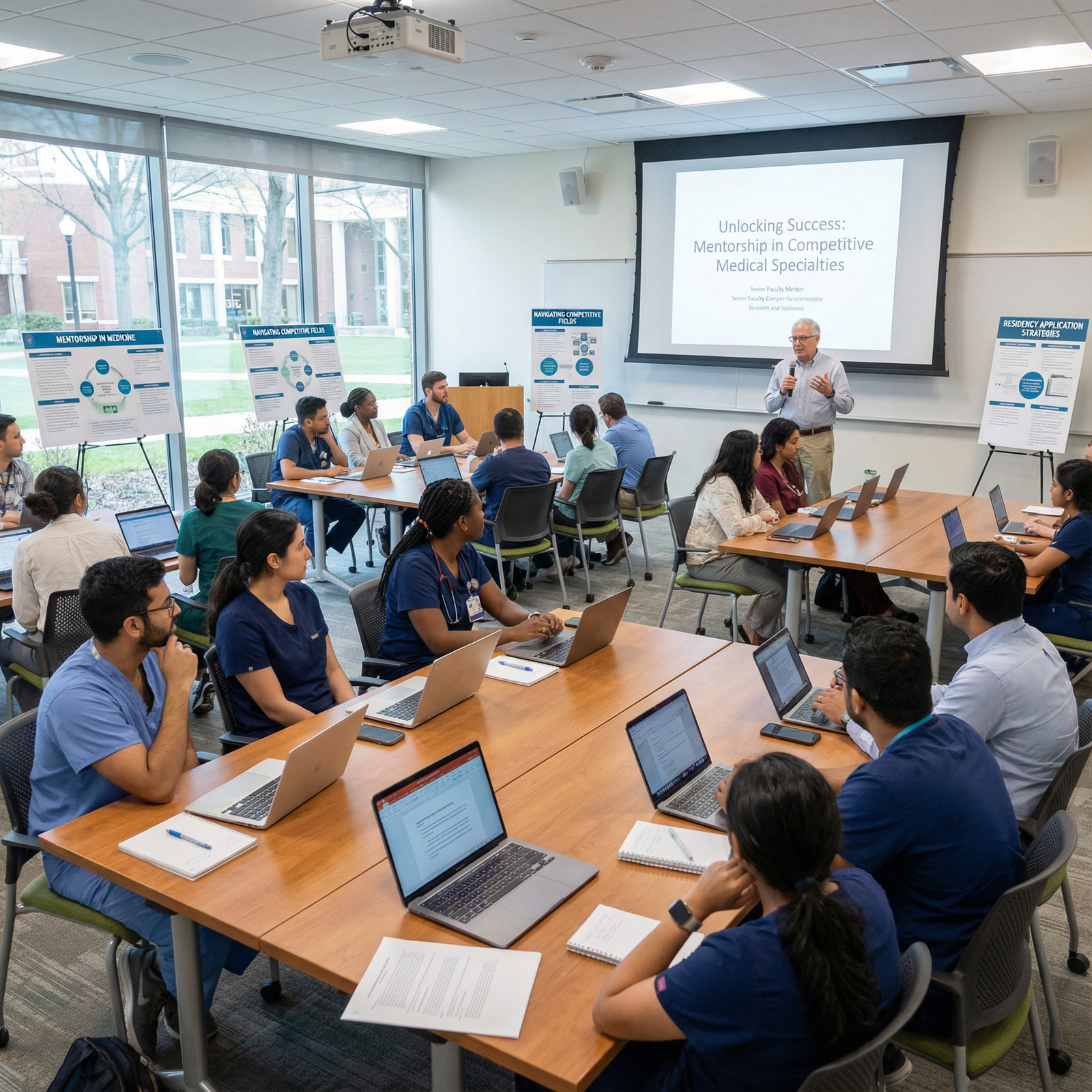
Frequently Asked Questions (FAQ) About Mentorship in Competitive Specialties
1. How early should I seek a mentor if I’m interested in a competitive specialty?
Ideally, start exploring mentorship in your first or second year of medical school. Early mentorship allows you to:
- Explore different fields before locking into one specialty.
- Build a research and leadership portfolio over time.
- Receive early feedback on academic performance and study strategies.
However, it is never too late. Even students who identify their specialty interest in third or fourth year can benefit from targeted mentorship on away rotations, interviews, and application strategy.
2. What qualities should I look for in a mentor for competitive specialties?
Look for mentors who are:
- Experienced in or closely connected to your target specialty.
- Approachable and supportive, with a communication style you trust.
- Honest, willing to give you realistic feedback on your competitiveness.
- Networked, with connections to residency programs or research opportunities.
- Aligned with your values, particularly around patient care, teaching, and work-life balance.
You do not need a “famous” mentor for effective guidance; consistency and genuine investment in your growth are more important.
3. What if my school doesn’t have a home program in my desired specialty?
Many successful applicants come from institutions without a home department. To compensate:
- Seek external mentors via:
- National specialty societies (many have student mentorship programs).
- Regional academic centers.
- Conferences and online professional networks.
- Prioritize away rotations at programs with strong reputation in your specialty.
- Engage in remote research collaborations (chart reviews, case series, multi-site projects).
- Use online platforms (LinkedIn, X/Twitter) to follow and interact with leaders in your field professionally.
4. How can I tell if a mentorship relationship is not working—and what should I do?
Signs of a problematic mentorship include:
- Persistent lack of responsiveness or chronic cancellation of meetings.
- Feedback that is dismissive, vague, or unhelpfully critical.
- Conflicts of interest or discomfort with boundaries.
If this happens:
- Reflect on whether expectations were clear and reasonable.
- Try one direct, respectful conversation to reset expectations.
- If the situation doesn’t improve, it is acceptable to gradually transition away and seek additional mentors. You are not obligated to maintain a mentorship that is not serving your growth.
5. Can mentorship really change my chances of matching into a competitive specialty?
While no mentor can guarantee a match, strong mentorship and networking consistently improve outcomes. Mentorship can:
- Help you build a more compelling and coherent application.
- Connect you with research, leadership, and clinical opportunities you might otherwise miss.
- Strengthen the quality and impact of your letters of recommendation.
- Prepare you for interviews and help you avoid common strategic errors.
For many applicants, mentorship is the factor that transforms raw potential into a focused, competitive application profile.
Mentorship is one of the most powerful forms of support available to aspiring physicians navigating the complex world of medical education and competitive specialties. By being proactive, reflective, and engaged, you can build mentorship relationships that not only help you match into your chosen field but also shape the kind of physician—and colleague—you become.