The usual advice for “competitive specialties” is uselessly vague. “Start early. Do research. Get good letters.” That is how you end up as an MS4 asking, “Is it too late for derm?”
Here is the actual truth: by the end of MS2, you’re either on a realistic path for a competitive match…or you’re playing catch‑up. You do not need to panic in MS1. But you do need a calendar. Year by year. Semester by semester.
This is that calendar.
We’re talking about the road to:
- Dermatology
- Plastic surgery (integrated)
- Orthopedic surgery
- Neurosurgery
- ENT
- Ophthalmology
- Interventional radiology, maybe some ROAD specialties at top programs
I’ll walk you from day one of MS1 to Match Week, with specific “by this point you should…” checkpoints.
Big Picture: The 8 Core Levers For Competitive Specialties
At any point in medical school, you’re working on some combo of these:
- Board exams – now mostly Step 2 CK, with Step 1 pass/fail but still critical knowledge
- Class performance – especially if ranked or honors exist
- Research & publications – ideally specialty‑aligned, with your name on papers/posters
- Clinical evaluations – clerkship honors, narrative comments
- Letters of recommendation – from recognizable names in your field
- Away rotations / audition electives
- Networking – faculty, residents, conferences, interest groups
- Application strategy – realistic list, strong personal statement, well‑curated ERAS
Your timeline is basically how you sequence and stack those eight levers without burning out or missing deadlines.
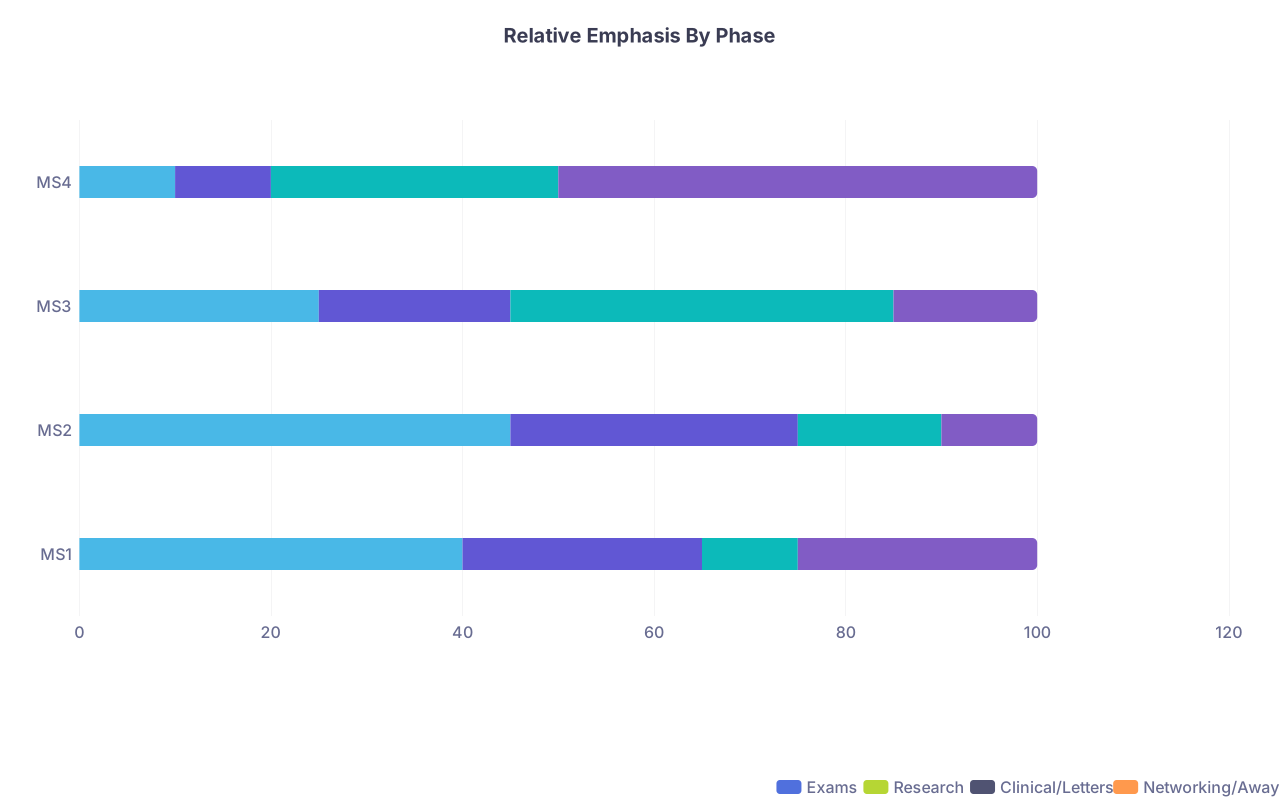
| Category | Exams | Research | Clinical/Letters | Networking/Aways |
|---|---|---|---|---|
| MS1 | 40 | 25 | 10 | 25 |
| MS2 | 45 | 30 | 15 | 10 |
| MS3 | 25 | 20 | 40 | 15 |
| MS4 | 10 | 10 | 30 | 50 |
MS1: Foundation Year (Interest Exploration + Quiet Setup)
This is not the year to “decide derm forever.” It’s the year to quietly build options so you can decide later without being blocked.
Fall MS1 (Aug–Dec): Learn the Game, Not Just the Krebs Cycle
By the end of MS1 fall you should:
- Know broadly which specialties are considered competitive and why
- Have met at least one faculty member in each field you’re possibly interested in
- Be performing at least “solidly above average” in classes (if graded)
Month 1–2:
- Figure out your grading and ranking system.
- Is there A/B/C? Honors/Pass/Fail? Class rank?
- For competitive specialties, consistent top performance or honors in preclinicals helps (not as critical as Step 2, but it’s noticed).
- Join 2–3 specialty interest groups max.
- Example combo if you’re unsure: Surgery IG, Derm IG, Radiology IG.
- Go to their first meetings; note which faculty show up and who seems invested in students.
Month 3–4:
- Start shadowing lightly – 1–2 half‑days a month, not every week.
- Try at least 2 very different fields: e.g., ortho vs neurology, derm vs EM.
- Ask residents what they wish they had done differently in MS1.
- Identify potential research mentors.
- Attend departmental research talks or ask older students: “Who actually gets students on papers?”
- Competitive field signal: people doing multi‑author retrospective studies, database projects, QI with clear authorship paths.
At this point you should:
- Have at least one “warm contact” in each maybe‑specialty (someone who recognizes your name in an email)
- Be on track academically, not scrambling to pass
Spring MS1 (Jan–May): First Real Commitments
Now you start putting light weights on the bar.
By end of MS1 spring you should:
- Be formally on at least one research project
- Have a rough sense of “top 3 possible specialties”
- Have some early Step 1 preparation decision made (resources selected)
Month 5–6:
- Lock in a research project.
Checklist:- Short timeline (retrospective chart review, case series, database analysis, curriculum project)
- Clear role for you (data collection, analysis, drafting sections)
- Reasonable chance of poster/manuscript within 12–18 months
- Start very low‑dose Step 1 prep.
- Anki or similar spaced repetition tied to your curriculum.
- Do not grind UWorld yet, but build habits.
Month 7–9:
- Meet with your school’s career advisor.
- Ask blunt questions: “What did our last 5 derm/ortho/neurosurg matches look like—scores, research, home vs away?”
- Get actual numbers, not vibes.
- Do 1–2 more shadowing experiences in your top 2–3 specialties.
- Watch the residents, not just the attendings. Can you see yourself as them?
At this point you should:
- Be attached to at least one research mentor
- Have a tentative plan for MS1 summer (research vs work vs Step study vs combo)
MS1 Summer: Your First “Leverage” Block
This is your first big chunk of flexible time. You will not get many like it.
Optimal outcomes here:
- Concrete research progress (data collected, abstract drafted, or at least IRB approved)
- A reaffirmed or narrowed specialty interest
- No academic damage (do not fail to recharge and then crash in MS2)
Choose one of these primary structures:
| Plan Type | Primary Goal | Best For |
|---|---|---|
| Research-heavy | Abstract/manuscript | Derm, plastics, neurosurg |
| Mixed | Research + Step base | Ortho, ENT, ophtho |
| Clinical/shadow | Confirm fit | Still undecided |
| Rest + light | Burnout risk | Any, if struggling |
If you’re eyeing top‑tier competitive specialties, research-heavy or mixed is better.
By the end of MS1 summer you should:
- Have at least one tangible product: IRB submitted, data started, or abstract drafted
- Be known by name in at least one department as “the MS1 working with Dr. X on Y”
MS2: Positioning Year (Board Strength + Research Output)
MS2 is where you separate “interested in competitive specialties” from “actually competitive.”
Fall MS2 (Aug–Dec): Tighten the Screws
By the end of MS2 fall you should:
- Have serious momentum in at least one research project
- Have a concrete Step 1 timeline and resources
- Be on track academically without remediation
Month 1–3:
- Meet quarterly with your research mentor.
- Push for deadlines: “Can we aim to submit this abstract to [Conference] by [Month]?”
- Ask to be involved in writing parts of the manuscript.
- Dial up Step prep.
- Board‑aligned Qbank integrated with coursework.
- Active recall daily; this is still the foundation for Step 2 CK later.
- Solidify specialty short list (1–2).
- Example: Derm vs IM (research‑heavy track).
- Or Ortho vs General Surgery (if still unsure how competitive you want to go).
Month 4–5:
- Seek out an MS3 or MS4 in your target field at your school.
- Ask: “What did your successful classmates in this specialty have by MS3?”
- Write that down. That is now your target.
At this point you should:
- See a realistic path to at least one abstract/poster by end of MS3
- Know if your Step 1 baseline is solid or shaky (from Qbank performance)
Spring MS2 (Jan–May): Exam Gauntlet + Research Output
This window is brutal. Do not pretend you can do everything at once.
Primary priority: crush your boards.
Secondary priority: convert ongoing research into outputs.
By end of MS2 spring you should:
- Have Step 1 passed on the first attempt (ideally comfortably)
- Be listed as an author on at least one submitted abstract/manuscript or have clear evidence in progress
- Have your clinical year mindset ready: honors matter now
Month 1–3:
- Dedicated Step 1 study (if still required by your school).
- Do not try to launch new projects. Maintain existing ones only with minimal effort.
- Talk with your mentor about timing for conferences.
- Many surgical and derm meetings have abstract deadlines 6–9 months in advance.
Month 4–5:
- Plan MS3 schedule thoughtfully.
- Competitive fields prefer early strong core clerkships and early exposure to your interest.
- Try to get: IM, surgery, and your interest field as early as feasible.
- Start reading about your specialty – not just textbooks, but program websites, resident bios, case logs.
At this point you should:
- Have no red flags on your transcript or exams
- Be ready to treat MS3 as your audition year
MS3: Decision and Proof Year (Clerkships, Shelf Scores, Letters)
This is the most consequential year for competitive specialties. Here your story either becomes believable or not.
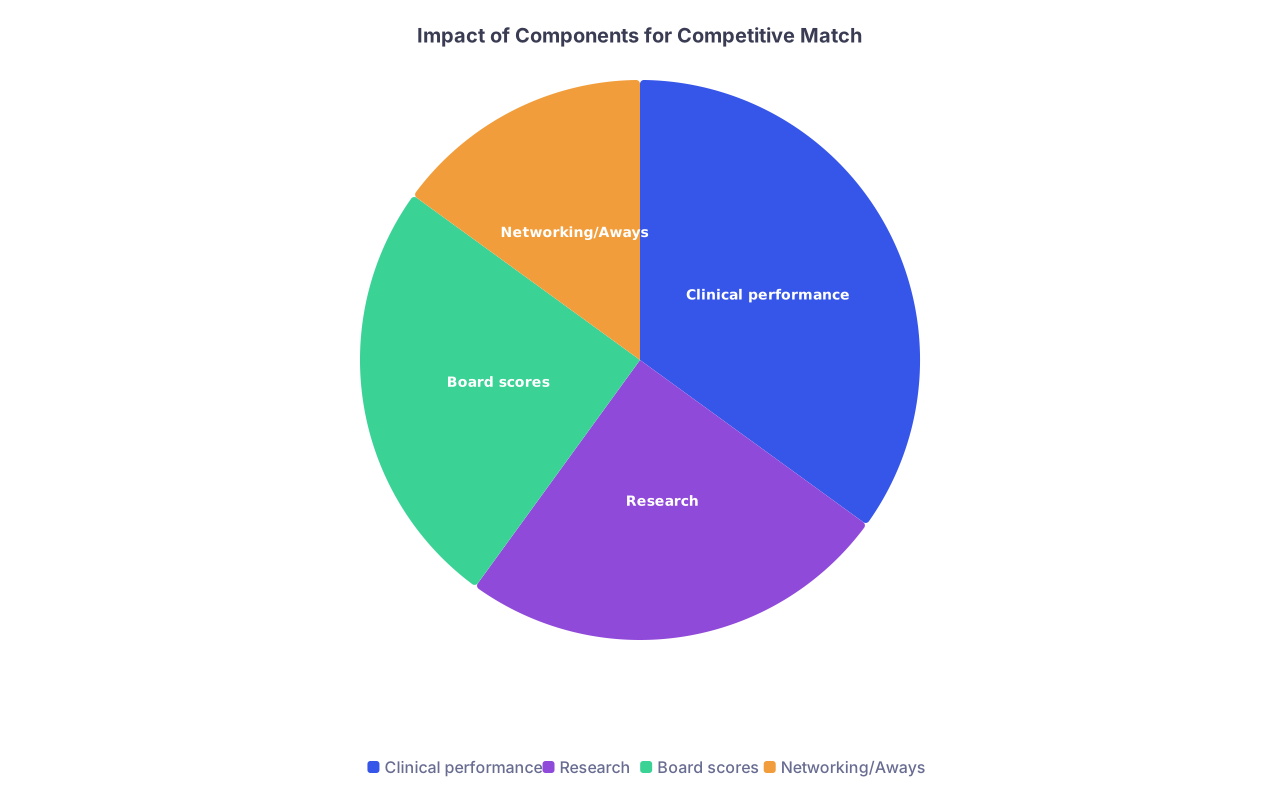
| Category | Value |
|---|---|
| Clinical performance | 35 |
| Research | 25 |
| Board scores | 25 |
| Networking/Aways | 15 |
Early MS3 (First 3–4 Rotations): Establish Clinical Credibility
By the end of your first 3–4 clerkships you should:
- Have at least one strong evaluation that could be turned into a letter
- Know how attendings describe you: efficient, prepared, good with patients
- Still be open‑minded enough to pivot if your chosen specialty feels wrong
On each core rotation:
- Show up early, pre‑round, know your patients cold.
- Ask residents frankly: “What does an honors‑level student look like on this service?” Then do that.
- For competitive specialties, honors in surgery and medicine are high‑value signals. Not mandatory, but very helpful.
During relevant rotations:
- If you’re on surgery and considering ortho, neurosurg, ENT, plastics → behave like this is an extended audition.
- Volunteering for cases, reading before OR days, knowing anatomy cold.
At this point you should:
- Have 1–2 attendings who say things like, “Let me know when you need a letter.”
Mid MS3 (Winter): Commit and Build Your Specialty Identity
This is where you stop flirting with five specialties and commit.
By the middle of MS3 you should:
- Have a primary specialty target and 1 possible backup track
- Be actively adding specialty‑specific items to your CV
- Have at least one specialty mentor who knows your story and goals
Concrete tasks:
- Meet with specialty advisor in that field.
- Ask: “Given my current board performance, clerkship grades, and research, where do I stand for [specialty]?”
- Then ask: “What do I need this year to be a realistic applicant?”
- Apply for national meetings.
- Present posters if possible. Shake hands. Introduce yourself to people at programs you like.
- Step 2 CK planning – do not ignore this.
- Competitive specialties are leaning heavily on Step 2 now.
- Aim to take it with enough buffer for a retake if needed before ERAS.
By late MS3 you should:
- Have: 1+ strong potential letter from a core clerkship, 1+ from your specialty area (even if just elective/clinic)
Late MS3 / Early MS4: The Make‑or‑Break Window
This 6–9 month block (roughly March MS3 → September MS4) is where competitive specialty applications are made or broken.
Step 2 CK: Your Hard Number
For competitive specialties, your Step 2 CK often becomes the number.
Target ranges (rough ballpark for strong competitiveness; not absolute cutoffs):
| Specialty | Strongly Competitive Range |
|---|---|
| Dermatology | 250+ |
| Plastic Surgery | 250+ |
| Ortho Surgery | 245+ |
| Neurosurgery | 250+ |
| ENT | 245+ |
| Ophthalmology | 245+ |
If you’re below these, you’re not dead in the water, but you’ll rely more heavily on:
- Home program strength
- Research volume
- Stellar letters
- Away rotations and performance
Plan Step 2:
- Take it no later than late June–July before you apply, so your score is back before programs filter.
MS4 Early (Apr–Aug): Aways, Letters, and ERAS
This is pure logistics + performance.
By July 1 of the year you apply you should:
- Have at least 2 letters in your specialty already requested
- Know your away rotation schedule and housing
- Have a near‑final CV and a solid ERAS draft
Away Rotations (if applicable)
For derm, ortho, neurosurg, ENT, ophtho, plastics: aways matter a lot.
General guidance:
- 2 aways is typical; 3 is aggressive but sometimes useful
- Aim for July–October slots; earlier is better for letters and interviews
On away rotations:
- Be the most reliable, prepared, non‑annoying student they’ve seen all year.
- Show consistent interest, not desperation.
- Ask for feedback mid‑rotation and adjust.
You should ask for letters from:
- One home specialty faculty who knows you well
- One or two away rotation attendings (if they’re enthusiastic)
- One non‑specialty core clinical supervisor (IM, surgery) to show you’re not one‑dimensional
ERAS + Application Strategy
By September 1 of your application year you should:
- Have all letters uploaded or promised
- Have a polished personal statement that tells a coherent specialty story
- Have a program list that matches your competitiveness honestly
How to build your list:
- Mix of:
- Home program
- Regional/state programs (where your school sends grads regularly)
- A spread of academic and some community programs (even for competitive fields)
- Do not build a list only out of the “name brand” top‑10 unless your CV is genuinely in that league.
Interview Season (MS4 Mid): Performance and Pivot Options
Interviews for competitive specialties can feel brutal: feast or famine.
By the first month of interview season you should:
- Have a planned answer for every obvious question: “Why this specialty?”, “Tell me about a challenge…”, “What if you do not match?”
- Have 2–3 programs you’d be happy to match at, not just your dream ones
Tracking Reality in Real Time
As invites (or rejections) roll in:
- Compare roughly to classmates in the same specialty with similar stats.
- If you’re clearly under‑invited relative to peers, talk to your advisor early about:
- Supplementing applications (when possible)
- Strengthening a parallel backup Plan B
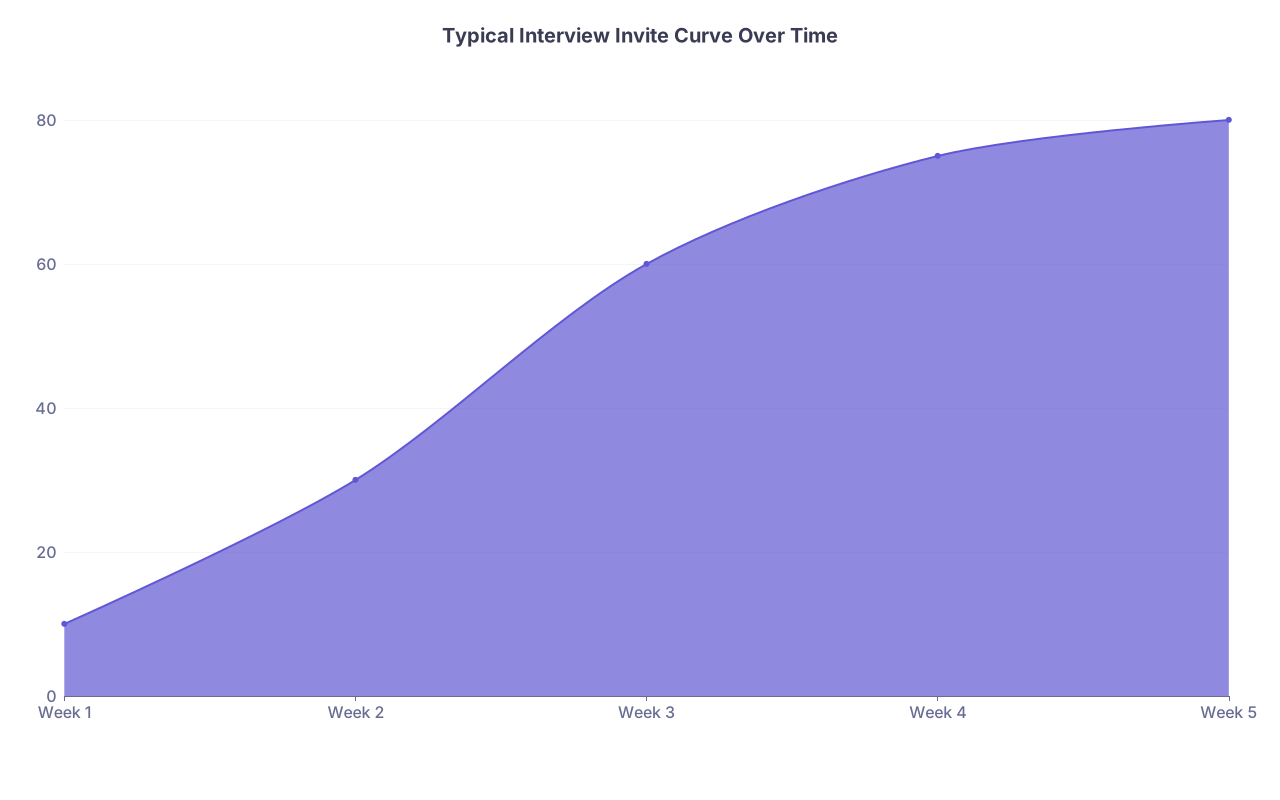
| Category | Value |
|---|---|
| Week 1 | 10 |
| Week 2 | 30 |
| Week 3 | 60 |
| Week 4 | 75 |
| Week 5 | 80 |
Interview performance:
- Be specific about your experiences—name the projects, the rotations, the mentors.
- Do not over‑sell. People in competitive specialties smell exaggeration instantly.
- Ask smart questions about case volume, independence, fellowships, resident outcomes.
At this point you should:
- Have a realistic sense of where you stand on your rank list: reach vs solid vs safety (if those exist in your field)
Match Prep and Contingencies (Late MS4)
The last phase is mostly mental and strategic. The work is already done.
By rank list certification you should:
- Have a final list that reflects both aspiration and sanity
- Have at least outlined a plan if you do not match (SOAP vs reapply vs pivot)
Possible contingency setups:
- Parallel applications in a related field (e.g., EM + IM; Gen Surg + Prelim spots)
- Strong prelim year with planned reapplication to your desired specialty
- Research year in your specialty with committed mentor support, if funding exists
Do not wait until after a bad match outcome to think about this. Have the conversation early with a trusted advisor.
Visualizing the Whole Road: MS1 to Match
Here’s the bird’s‑eye timeline.
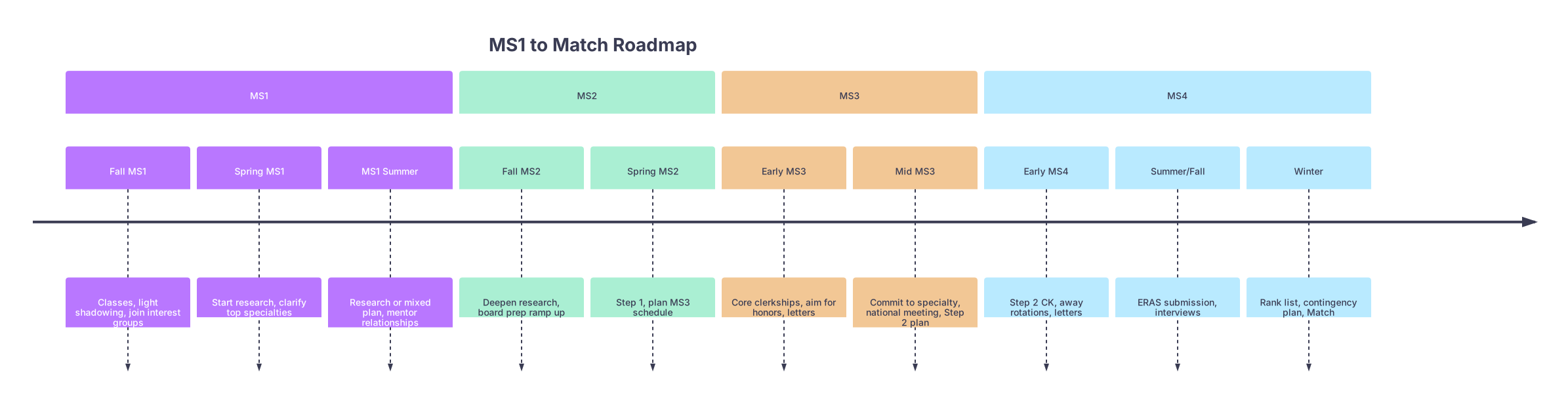
| Period | Event |
|---|---|
| MS1 - Fall MS1 | Classes, light shadowing, join interest groups |
| MS1 - Spring MS1 | Start research, clarify top specialties |
| MS1 - MS1 Summer | Research or mixed plan, mentor relationships |
| MS2 - Fall MS2 | Deepen research, board prep ramp up |
| MS2 - Spring MS2 | Step 1, plan MS3 schedule |
| MS3 - Early MS3 | Core clerkships, aim for honors, letters |
| MS3 - Mid MS3 | Commit to specialty, national meeting, Step 2 plan |
| MS4 - Early MS4 | Step 2 CK, away rotations, letters |
| MS4 - Summer/Fall | ERAS submission, interviews |
| MS4 - Winter | Rank list, contingency plan, Match |
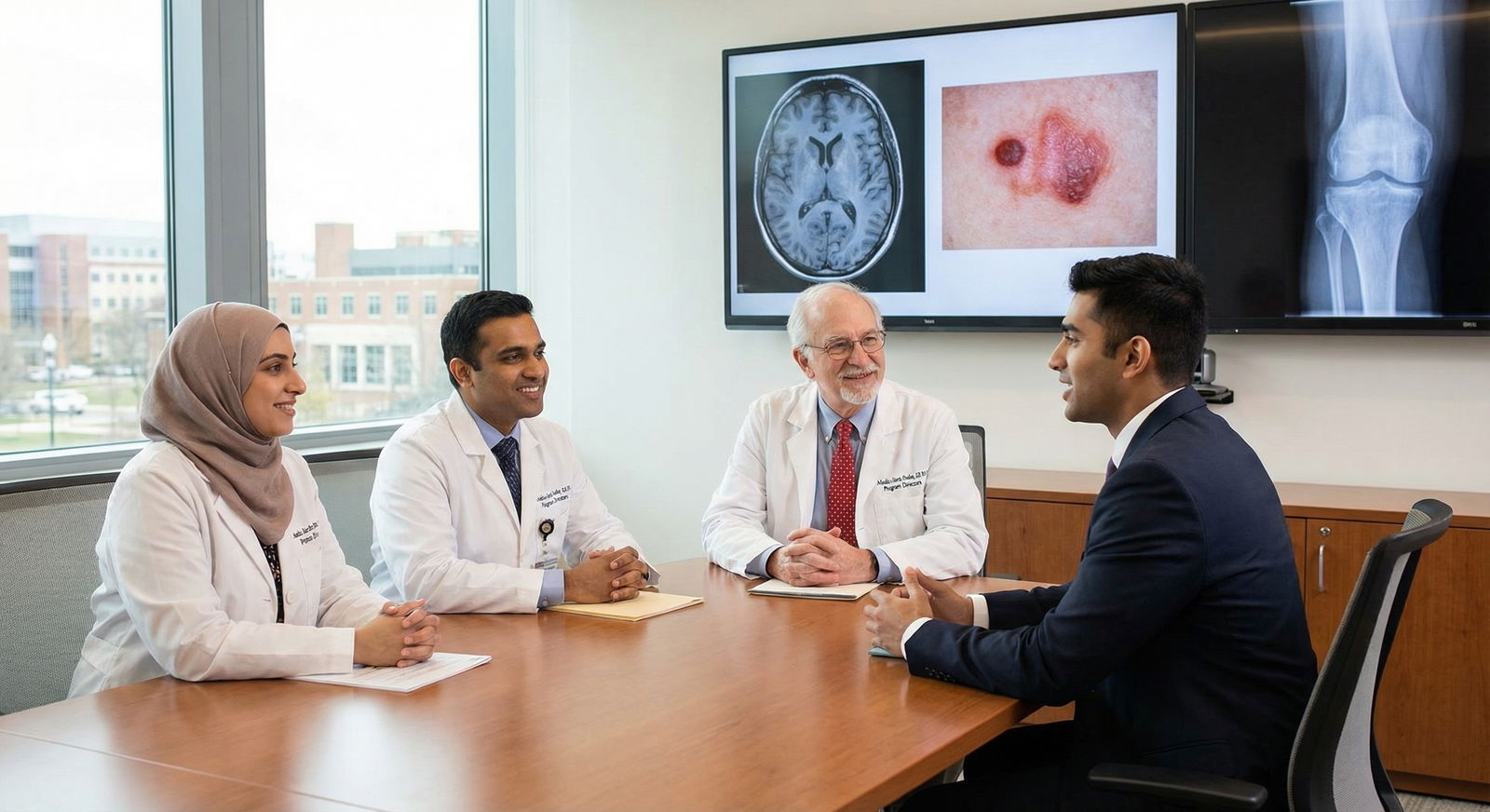
Specialty‑Specific Nuances (Quick Hits)
I’m not going to write a textbook for each field here, but there are a few timelines that differ slightly.
Dermatology
- Research volume is king. Start derm‑specific research by MS2 at the latest.
- Away rotations usually in late MS4 early fall; letters from derm faculty crucial.
Orthopedic Surgery
- Strong performance on surgery and ortho rotations; Step 2 CK still heavily scrutinized.
- Many programs value athletic backgrounds, team sports, or manual hobbies—but that’s garnish, not the main dish.
Neurosurgery
- Often expect early and sustained interest. Starting neurosurg research MS1/MS2 is common among matched candidates.
- Longer sub‑internships; letters from neurosurgeons mandatory.
Plastic Surgery (Integrated)
- Very research‑heavy, many applicants with multiple plastics publications.
- Early contact with plastics faculty is ideal (MS1–2).
ENT / Ophthalmology
- Both highly networked fields. Your mentors picking up the phone can change everything.
- Away rotations often function as high‑stakes auditions—treat them like month‑long interviews.
If You’re “Behind” at Any Stage
Everyone wakes up late at some point. The key is knowing what to do.
Late MS2, no research, average scores
- Decide: are you committed to a hyper‑competitive field or would a slightly less competitive specialty fit you just as well?
- If committed: maximize research output MS3, crush Step 2, and accept that you may need a research year.
Mid MS3, unsure about specialty
- You can still match something competitive, but stop dabbling.
- Pick the field where you have the strongest combination of fit, mentors, and feasible research.
MS4, few interviews
- Pivot from fantasy to math.
- Talk to advisors about SOAP options, prelim years, or structured research years with a clear plan to reapply.

The Short Version: What You Should Have, When
If you remember nothing else, use this as a spine:
By end of MS1:
- 1–2 research projects started
- Exposure to several specialties, 2–3 you’re seriously considering
By end of MS2:
- Step 1 passed cleanly
- At least one project with realistic chance of abstract/paper by MS3–4
- Early specialty mentor contact
By end of MS3:
- Clear specialty choice
- Strong clinical evaluations, some honors
- Step 2 CK planned or completed with a competitive target
- At least 1–2 specialty‑relevant scholarly products
By ERAS submission MS4:
- 2–3 strong letters in your specialty
- 1 strong letter from a core rotation
- Completed away rotations (for fields where that matters)
- A realistic, well‑built program list
That’s the roadmap. Hit those checkpoints, adjust honestly if you miss one, and you’ll give yourself a real shot at even the most competitive specialties.