
It is January of MS3. You are two core clerkships in, your classmates are “just keeping an open mind,” and your group chat is split between “I am 100% ortho” and “I have no idea.” You keep hearing that for competitive specialties you must “decide early,” “get your aways,” and “lock in Step 2” — but no one seems able to tell you exactly when those decisions have to happen.
This is that guide.
I am going to walk you from January MS3 through Match Week MS4, with timestamps. What you should decide. What you should schedule. And by when it is already too late if you have not moved.
I am talking about the competitive fields:
- Dermatology
- Plastic surgery (integrated)
- Orthopedic surgery
- Neurosurgery
- ENT (otolaryngology)
- Radiation oncology (less crazy than before, still niche)
- Occasionally: IR‑integrated, urology, ophthalmology
If you are aiming at one of these and wait for “clarity,” you will get clarity in December of MS4 when you open your unmatched email. The game is front‑loaded.
Big-Picture Timeline (Competitive Specialties)
Let us anchor the whole arc first.
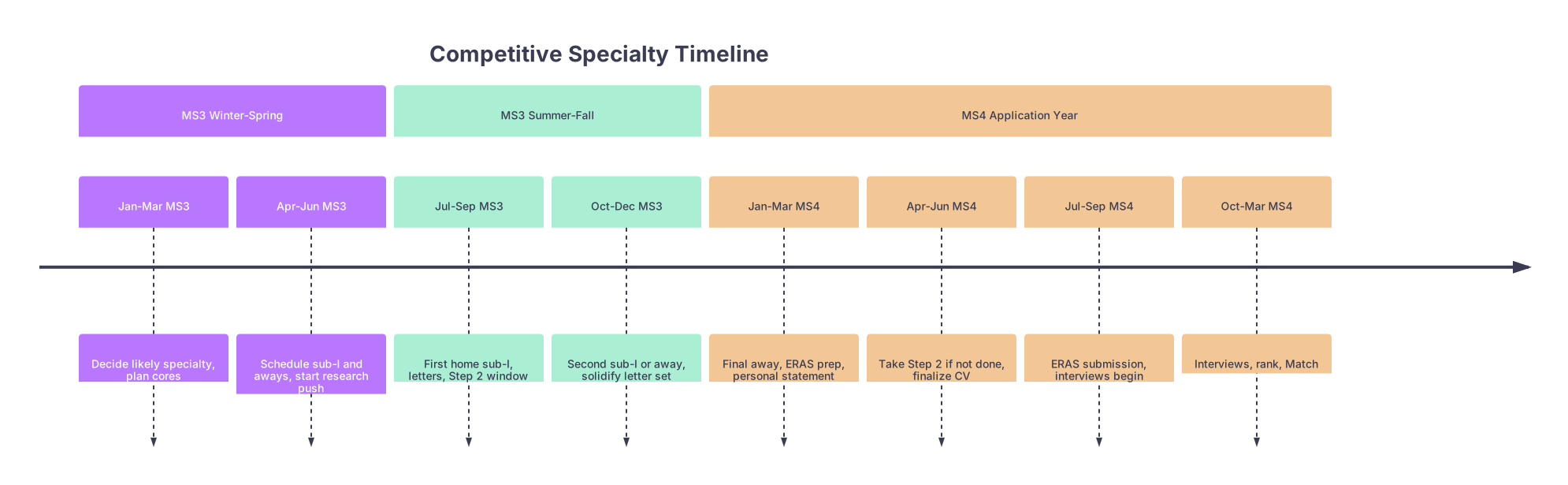
| Period | Event |
|---|---|
| MS3 Winter-Spring - Jan-Mar MS3 | Decide likely specialty, plan cores |
| MS3 Winter-Spring - Apr-Jun MS3 | Schedule sub-I and aways, start research push |
| MS3 Summer-Fall - Jul-Sep MS3 | First home sub-I, letters, Step 2 window |
| MS3 Summer-Fall - Oct-Dec MS3 | Second sub-I or away, solidify letter set |
| MS4 Application Year - Jan-Mar MS4 | Final away, ERAS prep, personal statement |
| MS4 Application Year - Apr-Jun MS4 | Take Step 2 if not done, finalize CV |
| MS4 Application Year - Jul-Sep MS4 | ERAS submission, interviews begin |
| MS4 Application Year - Oct-Mar MS4 | Interviews, rank, Match |
January–March of MS3: The “Soft Decision” Window
At this point you should narrow to 1–2 serious options.
I do not care if your school says “third year is for exploration.” That is nice for pediatrics vs family medicine. Not for neurosurgery.
By end of January MS3
You should:
- List the specialties you are actually considering. Not six. Two, maybe three.
- Talk to:
- One resident or fellow in each of those specialties
- One faculty member who has sat on a residency selection committee
Ask them bluntly: “If I decide in April, is that too late for your field?”
Red flags I have heard from PDs:
- “If they have not done specialty rotations by early MS4, they are a tourist.”
- “We want to see sustained interest going back to MS3.”
February–early March MS3: Schedule core rotations strategically
At this point you should front‑load the core rotations that matter for your target field.
Examples:
- Future ortho / neurosurg / ENT:
- Try to get surgery and neurology earlier.
- Future derm:
- Internal medicine and pediatrics early. Dermatology elective as early as your school allows.
- Future plastics:
- General surgery earlier; plastics elective if your school offers it MS3.
Your goal:
- Be able to do at least one specialty-aligned elective or sub‑I by July–August (start of MS4 at many schools, but still “late MS3” in where your decisions come from).
Research reality check (by March 1)
For the specialties above, you ideally already have:
- Some involvement in research (even if no publications yet)
- A specific attending who knows your name and work ethic
If you have nothing research‑wise by March MS3 and want derm, plastics, neurosurg, or ENT, you have to move aggressively now.
At this point you should:
- Email 5–10 faculty in your planned specialty (or adjacent fields) with:
- 3–4 sentence background
- 1–2 sentence statement of interest in their field
- A direct ask: “Do you have any ongoing projects where I could help with data collection, chart review, or writing?”
- Commit to one lab or mentor instead of scattering across five.
April–June of MS3: Hard Decision, Sub‑I and Away Rotation Planning
This is where students either commit or quietly drift into a less competitive backup.
By April 1 MS3: Hard decision for most competitive fields
At this point you should say out loud:
- “I am applying ortho.”
- “I am applying derm.”
- Or, “I am not applying a hyper‑competitive field. I can slow this down.”
Is it absolutely impossible to decide later? No. I have seen late deciders succeed. But they are the exception who:
- Had phenomenal Step 1/Step 2,
- Were already deep in research,
- Or had an unusual prior background.
For a normal strong student, April is decision month.
April–May MS3: Schedule your home sub‑I(s)
Goal: 1–2 home sub‑Is in your chosen specialty between July and October of the upcoming year.
Typical structure:
- Surgery-type fields (ortho, plastics, neurosurg, ENT):
- 1 sub‑I at your home program
- 1–2 away rotations at other programs (Aug–Oct ideal)
- Derm:
- Home dermatology rotation as early as allowed
- 1–2 aways Aug–Nov
- Rad Onc / Ophtho / Urology:
- Similar pattern — home first, then aways
You must figure out:
- When your school opens MS4 scheduling. Some open in March, some in May.
- Block the earliest open slots in your specialty:
- July/August for home sub‑I is gold. Faculty are fresh, letters can be written early, and you have time for aways after.
If you are late and only get a November home sub‑I, your letter might not be ready when ERAS applications go out. Bad spot.
May–June MS3: Plan away rotations (VSLO/VSAS)
Away rotations are not optional vanity projects in these fields. They are often auditions.
Most aways use VSLO (VSAS) and:
- Open applications: typically March–May
- Rotation dates: July–November
You should:
- Target 2 away rotations, usually:
- First away: August/September
- Second away: September/October or October/November
Apply earlier than you think:
| Specialty | VSLO Apps Open | Best Away Months | # of Aways Common |
|---|---|---|---|
| Dermatology | Mar–Apr MS3 | Aug–Oct MS4 | 1–2 |
| Ortho | Mar–Apr MS3 | Jul–Oct MS4 | 2 |
| Neurosurgery | Feb–Apr MS3 | Jul–Sep MS4 | 2 |
| ENT | Mar–Apr MS3 | Aug–Oct MS4 | 2 |
| Plastics | Mar–Apr MS3 | Aug–Nov MS4 | 1–2 |
If it is May and you have not even looked at VSLO, you are already behind. Not finished, but behind.
Step 2 / Shelf Exam Planning: Do Not Guess the Timing
USMLE timing is no longer a side detail. With Step 1 now pass/fail, Step 2 is the score programs stare at.
When to take Step 2 if you are competitive‑specialty bound
You want:
- Score available by ERAS submission (usually mid‑September)
- Enough time for dedicated studying without destroying your sub‑Is
The usual strong strategy:
- Take Step 2 between late June and early August after MS3 ends and before your heaviest MS4 sub‑Is/aways.
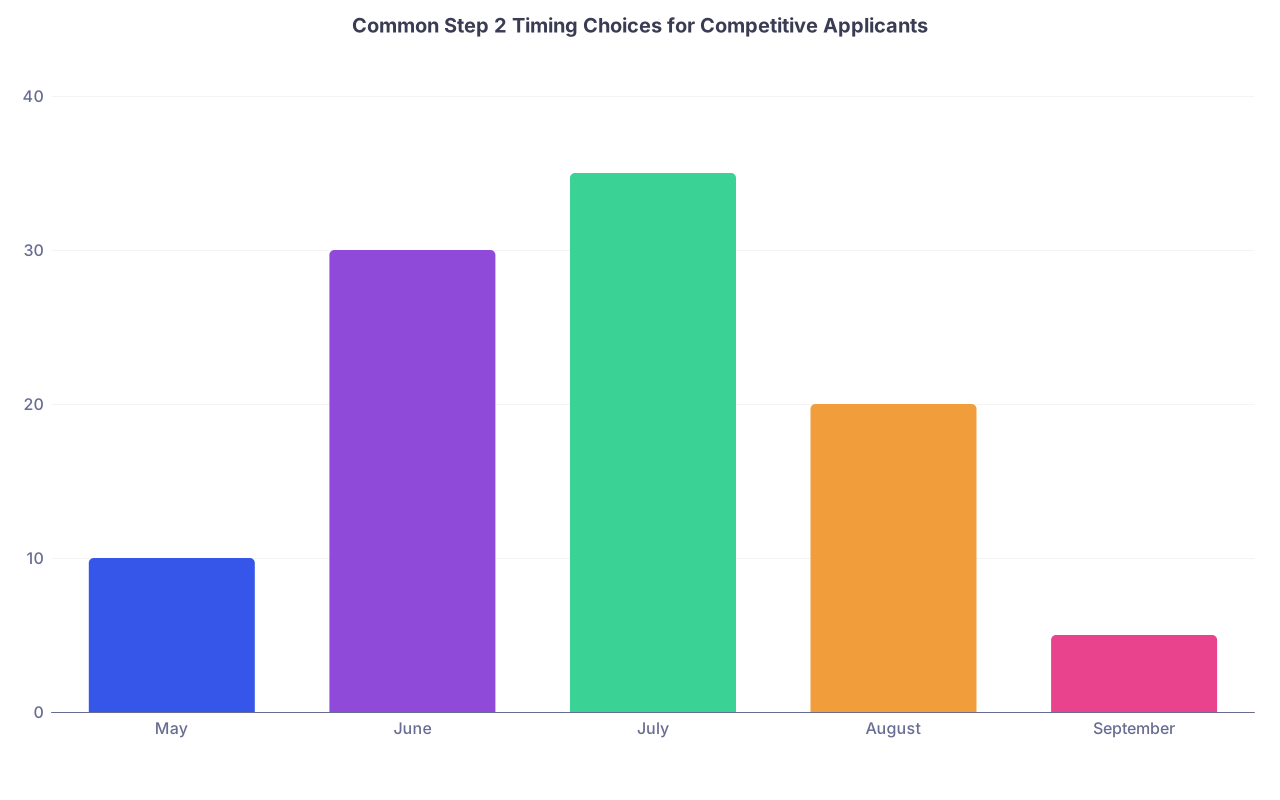
| Category | Value |
|---|---|
| May | 10 |
| June | 30 |
| July | 35 |
| August | 20 |
| September | 5 |
If your school stacks core clerkships until June:
- Use any lighter outpatient rotation or elective as your Step 2 study buffer.
- Try not to have your first big sub‑I in the month you take Step 2. Your performance will suffer somewhere.
Shelf exam strategy (MS3)
At this point you should stop pretending shelves are “just pass” exams.
Competitive programs see:
- Strong shelf performance as evidence you can crush in‑training exams.
- Big outliers (stellar Step 1 but weak shelves) as inconsistency.
Use MS3 shelves as Step 2 rehearsal:
- Build a question‑bank schedule by clerkship (UWorld/AMBOSS)
- Track which subjects you are weak in early (medicine vs surgery vs OBGYN) and plan Step 2 review time around that.
July–September: First Home Sub‑I, Early Letters, Step 2
This is where your application really forms.
July–August: Do your home sub‑I early if possible
At this point you should be:
- On your home sub‑I in your specialty or
- On your final core and about to start it
During that sub‑I, your goals are simple:
- Identify 1–2 faculty who:
- See you in the OR/clinic
- Supervise your presentations, notes, and follow‑through
- Make yourself unavoidable (in a good way):
- Show up early, know your patients, follow consults, read the attending’s last paper.
- Around week 3:
- Ask: “Would you feel comfortable writing me a strong letter for residency in [specialty]?”
You need to walk off that rotation with at least one guaranteed strong specialty‑specific letter.
Step 2 during this block
If you have not taken Step 2 earlier:
- Aim for late July or early August.
- Give yourself minimum 3 weeks of ramp‑up, 4–6 is better.
I have seen too many students try to “fit Step 2 in” between sub‑Is. They end up with:
- Mediocre Step 2
- Mediocre sub‑I performance
- Tired, resentful, and confused why PDs are not impressed
Pick which month you are a test‑taker and which month you are a star sub‑I. Do not try both simultaneously.
October–December: Second Sub‑I / Away Rotation and Finalizing Letters
This is the part of the year people underestimate. They think the work is mostly done after one sub‑I. Wrong.
Second sub‑I or first away (Oct–Nov)
At this point you should complete:
- A second major experience in your specialty:
- A different home service, or
- An away rotation at a target program
On away rotations, the stakes are even higher:
- PDs and faculty are often watching you as a potential future resident, not just a student.
- Your performance can move you from “generic applicant” to “ranked highly” at that site.
Your goals on an away:
- Prove you are not a disaster to work with at 2 a.m.
- Build 1–2 relationships, but do not beg for letters on day 2.
- By week 3, ask one attending if they can write a strong letter and if they advise listing their program high.
Letters of recommendation – specific targets
By December MS3/early MS4 (depending on your calendar), you should have:
- 2 letters from your chosen specialty (home + away or two home)
- 1 letter from a core discipline (IM, surgery, etc.) or a research mentor
For derm and neurosurg especially, programs want to see letters from well‑known faculty in the field when possible. That does not mean “chase the most famous person” if they barely know you. A detailed letter from a mid‑career attending beats a generic letter from a department chair almost every time.
January–March of MS4: Final Rotations, Application Assembly
At this point you should no longer be “deciding.” You should be assembling and positioning.
January–February: Last away or backup specialty exposure
If you still have an away scheduled this late:
- Use it, but understand:
- Its main power is now for that program’s rank list, not to change your LOR set for all programs.
- Letters may come too late for initial ERAS upload but can support later interview decisions.
You might also:
- Do a shorter elective in a backup specialty (e.g., general surgery, internal medicine, anesthesia) if reality forces you to consider a dual‑apply strategy.
Application document prep (Jan–Mar)
At this point you should:
- Draft your personal statement:
- Specialty‑specific, not a generic “I love taking care of patients.”
- Reference concrete experiences: your home sub‑I, your away, your research.
- Update your CV:
- All research entries updated with status (submitted, accepted, in prep).
- Leadership and volunteer activities with quantifiable details (hours, outcomes).
If you are still initiating new research projects now, be realistic:
They are unlikely to result in publications before ERAS. Still valuable, but do not oversell.
April–June of MS4: Clean-Up Phase and Step 2 (If Late)
If you were forced to delay Step 2:
- Latest sane window for competitive specialties: June MS4.
- Anything later and your score might not reach programs before interview decisions.
Use this phase to:
- Polish your specialty‑specific CV language
- Confirm with each letter writer:
- They know your target specialty
- They understand timelines for ERAS upload
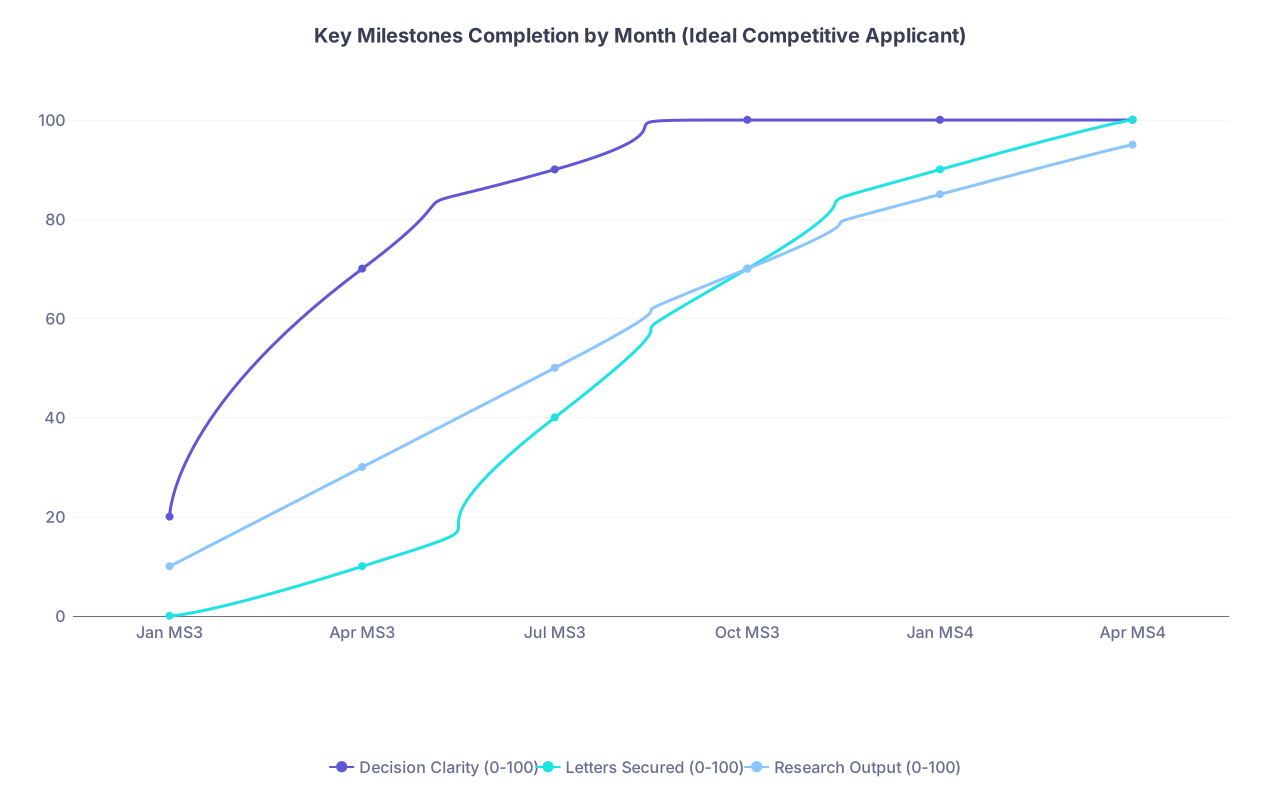
| Category | Decision Clarity (0-100) | Letters Secured (0-100) | Research Output (0-100) |
|---|---|---|---|
| Jan MS3 | 20 | 0 | 10 |
| Apr MS3 | 70 | 10 | 30 |
| Jul MS3 | 90 | 40 | 50 |
| Oct MS3 | 100 | 70 | 70 |
| Jan MS4 | 100 | 90 | 85 |
| Apr MS4 | 100 | 100 | 95 |
You want to be on the upper trajectories here, not scrambling at the bottom.
July–September of MS4: ERAS Submission and Interview Season Starts
By July 1 MS4:
- ERAS is open for editing.
- Your Step 2 score should ideally be back.
- Your letters should be either uploaded or clearly promised.
At this point you should:
- Know your program list strategy:
- Home region vs national
- Academic vs community
- “Reach / realistic / safety” programs (yes, even for competitive fields)
- Have your personal statement finalized and reviewed by:
- One mentor in the field
- Someone who will actually tell you if it is bad (not just “this looks great”).
Submit ERAS as early as the system allows. In hyper‑competitive specialties, you do not get style points for “fashionably late.” You get fewer interview offers.
Specialty-Specific Cutoffs and Consequences
Let me be blunt about late decisions.
| Specialty | Latest Reasonable Decision | Risk If Later Than This |
|---|---|---|
| Dermatology | March MS3 | Weak research, late aways |
| Ortho | April MS3 | No early sub-I, weak letters |
| Neurosurgery | January–February MS3 | Essentially no time for CV build |
| ENT | March–April MS3 | Compressed sub-I / away schedule |
| Plastics | March MS3 | Limited exposure, weak signals |
| Rad Onc | April–May MS3 | Fewer rotations, less known |
Can people decide derm in September of MS3 and still match? Yes. They either:
- Take a research year
- Or come in with insane stats and a lucky setup
That is not a strategy. That is survivorship bias.
Mini Month‑by‑Month Checklist (Compressed)
To make this actually usable, here is a stripped timeline for a January start of MS3 (adjust by 1–2 months for your school).
January–March MS3
- Narrow to 1–2 specialties
- Meet residents + at least one PD/selection‑committee faculty
- Start or intensify research
- Front‑load key cores (IM, surgery, neuro, peds depending on field)
April–June MS3
- Hard decision on specialty
- Schedule home sub‑I for July–Sept
- Submit VSLO applications for 1–2 aways
- Plan Step 2 window (June–August of next year)
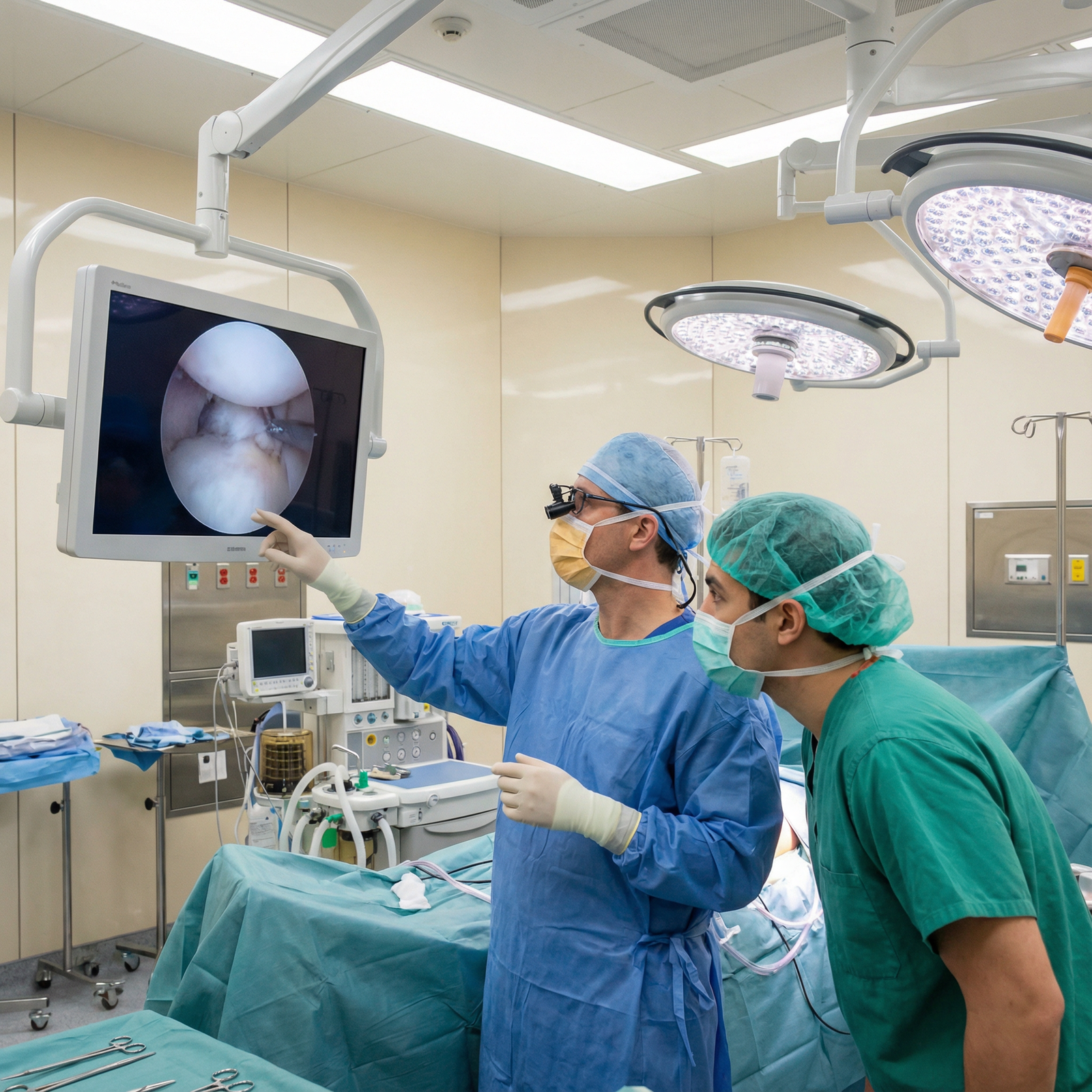
July–September (Late MS3 / Early MS4, depending on school)
- Do home sub‑I
- Secure 1st strong specialty letter
- Take Step 2 (if scheduled now)
- Polish research outputs (abstracts, manuscripts)
October–December
- Complete 2nd sub‑I or first away
- Secure additional specialty letter(s)
- Lock in backup plan logic (if needed)
January–March MS4
- Final away or elective if scheduled
- Draft and refine personal statement
- Clean up CV and publication list
April–June MS4
- Final chance for Step 2 (if delayed)
- Confirm letters uploaded
- Build program list with mentor input
July–September MS4
- Finalize ERAS
- Submit on opening
- Prep for specialty‑style interviews (technical vs behavioral, etc.)
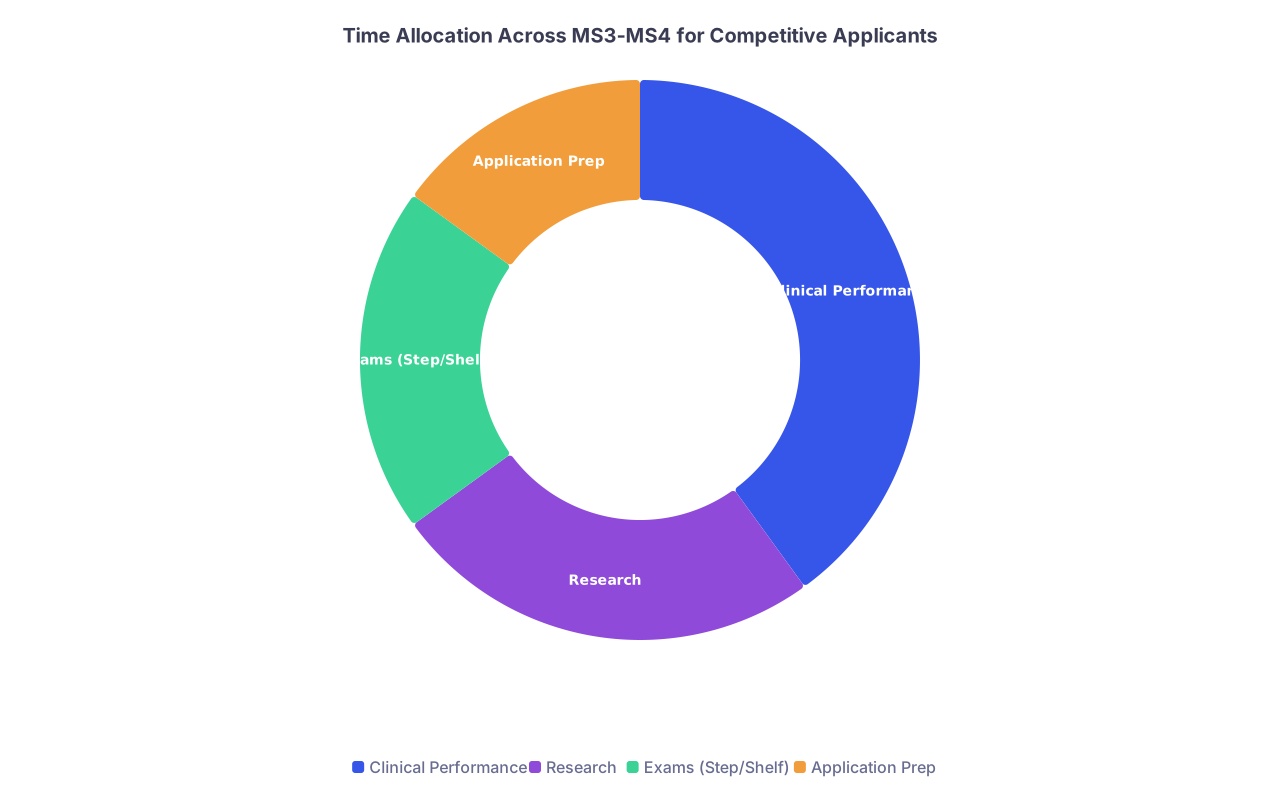
| Category | Value |
|---|---|
| Clinical Performance | 40 |
| Research | 25 |
| Exams (Step/Shelf) | 20 |
| Application Prep | 15 |
The Bottom Line
Decision timing is earlier than your school will admit. For derm, neurosurg, ortho, ENT, plastics, you should be leaning in by March of MS3, not “seeing how it goes” in September.
Sub‑Is and aways are the backbone of a competitive application. Schedule a home sub‑I July–September, then 1–2 aways August–November. Do not leave your first specialty rotation until winter.
Step 2 timing and letters make or break you. Aim for Step 2 by July/August MS4 with score back for ERAS, and lock in 2 specialty letters by the end of your second sub‑I or first away.
Follow that structure, and you are no longer “hoping it works out.” You are running the same playbook the successful competitive applicants quietly use every year.