
The biggest mistake competitive specialty applicants make in fourth year is pretending they have more time than they do. You do not. By July 1 of M4, most of your real leverage is already determined. Fourth year is execution and damage control.
This calendar walks you month by month through M4 (and the 3–4 months just before) if you are aiming at a competitive specialty: dermatology, plastic surgery, neurosurgery, ENT, ortho, urology, ophthalmology, radiation oncology, etc.
I will assume:
- You are at least “in the ballpark” on scores and grades.
- You want to maximize match chances, not “see what happens.”
- You are willing to be uncomfortable and scheduled almost to the week.
Use this as a backbone. Adjust dates if your school runs slightly earlier or later.
Big Picture: Year-at-a-Glance
At a high level, here is how your time really gets spent.
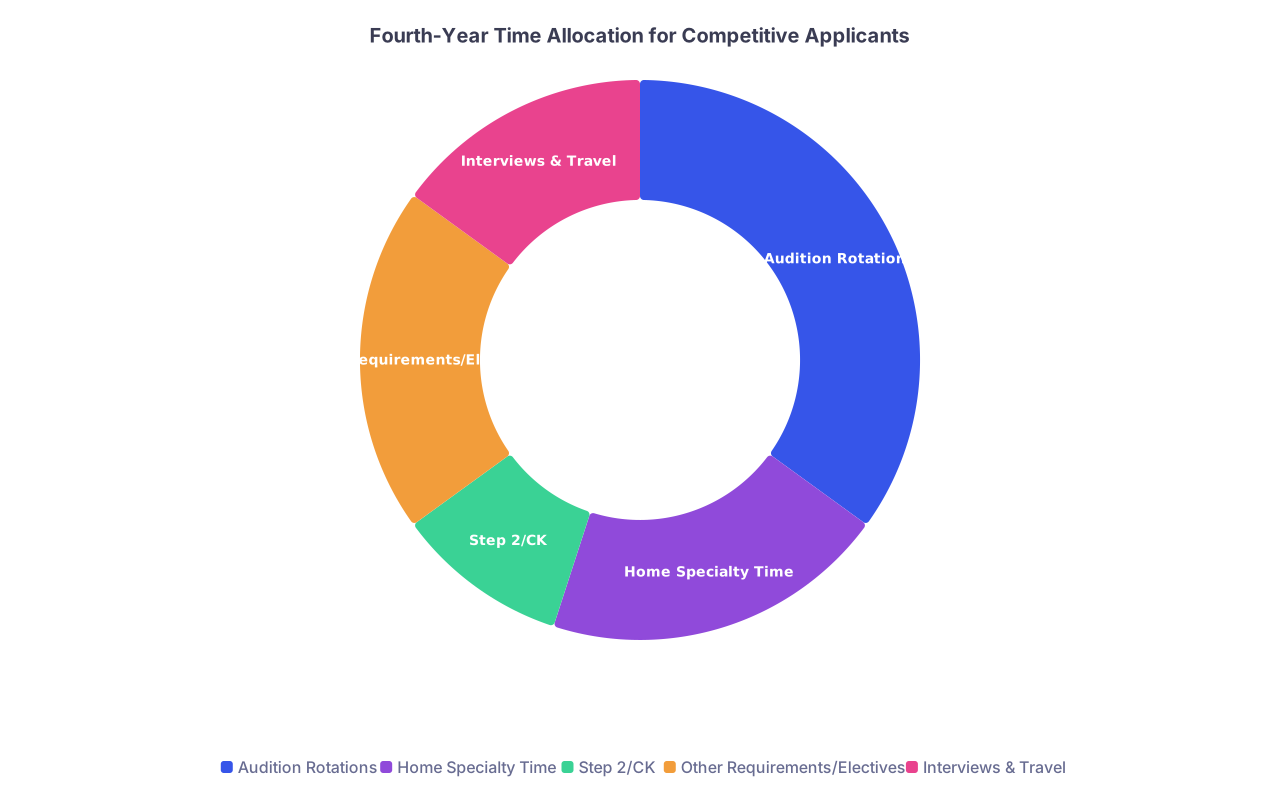
| Category | Value |
|---|---|
| Audition Rotations | 35 |
| Home Specialty Time | 20 |
| Step 2/CK | 10 |
| Other Requirements/Electives | 20 |
| Interviews & Travel | 15 |
And the rough sequence:
- Feb–May (late M3): Lock in specialty, schedule away rotations, plan Step 2.
- Jun–Sep (early M4): Home and away “audition” rotations, crush Step 2 if not done.
- Oct–Feb: ERAS, interviews, sub-Is in backups, stay visible in your department.
- Mar: Rank lists, backup planning, then Match.
Now let us go month by month.
Late M3: February – April (Decision, Positioning, and Scheduling)
At this point you should stop hedging and decide if you are truly going competitive or not.
February (M3)
Your tasks now are about positioning, not perfection.
Lock in your specialty. For real.
- Stop saying “maybe derm, maybe IM.” That is how people end up with a weak derm app and a mediocre IM backup.
- Meet with:
- Your school’s specialty advisor (e.g., derm advisor, ortho advisor).
- At least one program director or APD in that field at your home institution.
- Ask bluntly: “With my Step 1/2 (or CBSE), clerkship grades, and research, am I viable for this specialty?”
Map your fourth-year calendar on one page.
- Pencil in:
- 2–3 months of away/audition rotations in your specialty.
- 1–2 months of home specialty time (sub-I / advanced elective).
- Time for Step 2/CK (if needed) and any school-mandated rotations.
- Get a one-page snapshot and show it to your advisor. Let them rip it apart.
- Pencil in:
Begin away rotation applications (VSLO / VSAS).
- Collect:
- Immunization records.
- Drug screen.
- Background check.
- BLS/ACLS certificates if required.
- Aim to submit first applications by early March for June–September spots in derm, ortho, ENT, plastics, etc. The better programs fill early.
- Collect:
March (M3)
At this point you should be aggressively securing positions.
Submit VSLO/VSAS applications.
- Rank your priorities:
- 1–2 true reach programs.
- 2–4 realistic programs where you could actually match.
- 1–2 safety-level but still respectable programs.
- Do not waste all your away months on hyper-elite places if your stats do not support it.
- Rank your priorities:
Clarify your Step 2/CK timeline.
- If Step 1 was pass/fail (or mediocre):
- Plan to take Step 2 by late July so scores are in before ERAS.
- Build a 6–8 week study window:
- You can study during a lighter rotation or between aways.
- Put your test date on the calendar and work backward.
- If Step 1 was pass/fail (or mediocre):
Start assembling your research and CV evidence.
- Keep a running list:
- PubMed-indexed papers.
- Submitted or in-press manuscripts.
- Posters, oral presentations.
- Local QI projects.
- Clean up your CV format now. Not in August at 1 a.m.
- Keep a running list:
April (M3)
This is cleanup and ensuring you are not blocked by paperwork.
Chase away rotation decisions.
- Many programs respond in April–May.
- Track:
- Dates offered.
- Conflicts with home requirements.
- Be ready to reshuffle quickly. Competitive fields do not wait.
Meet letters-of-recommendation targets.
- Identify:
- 1–2 faculty at home who can write strong specialty letters.
- Potential letter writers on your upcoming rotations.
- Tell them your intended specialty and why. Let them see your CV draft.
- Identify:
Plan your money.
- Competitive specialty = expensive year:
- Away rotation housing.
- Travel.
- Application and interview fees.
- Build an honest budget now.
- Competitive specialty = expensive year:
Early M4: May – August (Audition Season + Step 2)
Here is where you start making impressions that actually move your match odds.
May (End of M3 / Start of M4)
At this point you should be closing out core rotations with no disasters.
Finish M3 strong.
- No more clerkship drama. No professionalism flags. No “barely passed” evals on your record this late.
- Ask for informal feedback and fix issues before you audition.
Warm-up elective (ideally at home).
- If possible, do:
- A 2–4 week home specialty elective or related field.
- Use this as:
- A practice run for how to function on service.
- A chance to identify a strong home letter writer.
- If possible, do:
Finalize Step 2 study blocks.
- Confirm rotation type for your main study month:
- Lighter elective.
- Research block.
- Gather study materials and NBME practice schedule.
- Confirm rotation type for your main study month:
June (M4)
For many, this is either first away or dedicated prep time.
If on away rotation #1:
- Your priorities:
- Show up early. Every day. No exceptions.
- Learn names of residents and support staff.
- Do the scut with zero complaining. Ever.
- Target outcomes:
- At least one senior resident saying, “We should get them back as a resident.”
- One faculty who might later write: “I would rank this student in the top tier.”
- Your priorities:
If not yet on away:
- Use June as:
- Home sub-I in your specialty, or
- A demanding related rotation (ICU, trauma, etc.).
- Demonstrate:
- Ownership of patients.
- Reliability with notes and follow-up.
- Tell your attending you are applying in [X specialty] and would value feedback.
- Use June as:
Step 2/CK preparation begins in earnest.
- At this point you should:
- Start daily UWorld blocks (at least 40 questions).
- Plan 2–3 NBMEs spaced 2 weeks apart.
- At this point you should:
July (M4)
This is often the highest-pressure month: Step 2 + away + ERAS starting to loom.
Away rotation #1 or #2 in full swing.
- Set weekly goals:
- Week 1: Learn system, be helpful, do not over-talk.
- Week 2: Take on more patients, anticipate needs, present concisely.
- Week 3: Seek feedback; correct any issues fast.
- Week 4: Finish strong; directly tell one faculty you hope to apply here.
- Before the end, ask:
- “Would you be comfortable writing a strong letter on my behalf?”
- Set weekly goals:
Step 2 test window (if not already done).
- Ideal: Take Step 2 late July or early August so scores are back before ERAS opens for submission.
- Test week schedule:
- T-7 days: Last NBME; adjust weak areas.
- T-3 to T-2: Light review, minimal new content.
- T-1: Stop question blocks, only light reading and rest.
-
- Start entering:
- Experiences, hours, and brief descriptions.
- Education details.
- Licensure / exams.
- Do not try to “remember” everything in September. You will forget the details that actually make you stand out.
- Start entering:
August (M4)
At this point you should be visibly “on the market.”
Away rotation #2 (or strong home month).
- Treat each away as a month-long interview:
- No off days.
- No disappearing at 3 p.m. because “students leave early here.”
- Make one concrete contribution:
- A short teaching topic.
- A small QI or literature summary.
- Something faculty can remember.
- Treat each away as a month-long interview:
Lock in at least 3–4 strong letters.
- Typical competitive specialty mix:
- 2–3 letters from your specialty (including at least one from home).
- 1 letter from a non-specialty but respected clinician (IM, surgery, ICU).
- Confirm:
- They will submit by early September.
- They actually remember you. (You would be surprised.)
- Typical competitive specialty mix:
Personal statement first draft.
- At this point you should:
- Draft one specialty-specific statement.
- Draft a backup specialty statement if you are applying to a secondary field (e.g., IM as backup to derm).
- Send drafts to:
- A faculty mentor in that field.
- One non-physician with strong editing skills.
- At this point you should:
Peak Application Phase: September – November
This is where details matter. Small administrative mistakes look like you are disorganized. Programs in competitive fields notice.
September (M4)
ERAS opens for submission mid-September. The days around that date are not negotiable.
Finalize ERAS and submit early.
- By ERAS opening week you should have:
- All experiences entered and proofread.
- Personal statement uploaded.
- Photo uploaded (professional headshot, not a wedding crop).
- Letters assigned to the correct specialty.
- Submit within 24–48 hours of applications opening for programs to see.
- By ERAS opening week you should have:
Program list rationalization.
- Build a tiered list:
- “Reach” programs.
- “Realistic” programs.
- “Safety but respectable” programs.
- For very competitive fields, many students apply to 60+ programs. That is not insane for plastics, derm, ENT.
- Your advisor should sign off on your numbers.
- Build a tiered list:
Continue a visible, demanding rotation.
- Ideal:
- Home sub-I in your specialty or related (ICU, trauma, surgical subspecialty).
- Signal to your home department:
- You are serious.
- You are not “checking out” after finishing aways.
- Ideal:
Interview prep begins now, not later.
- Build:
- A one-page “brag sheet” summarizing your projects and interests.
- 3–4 talking points you want every interviewer to know.
- Practice:
- 1–2 mock interviews with faculty or your career office.
- Build:
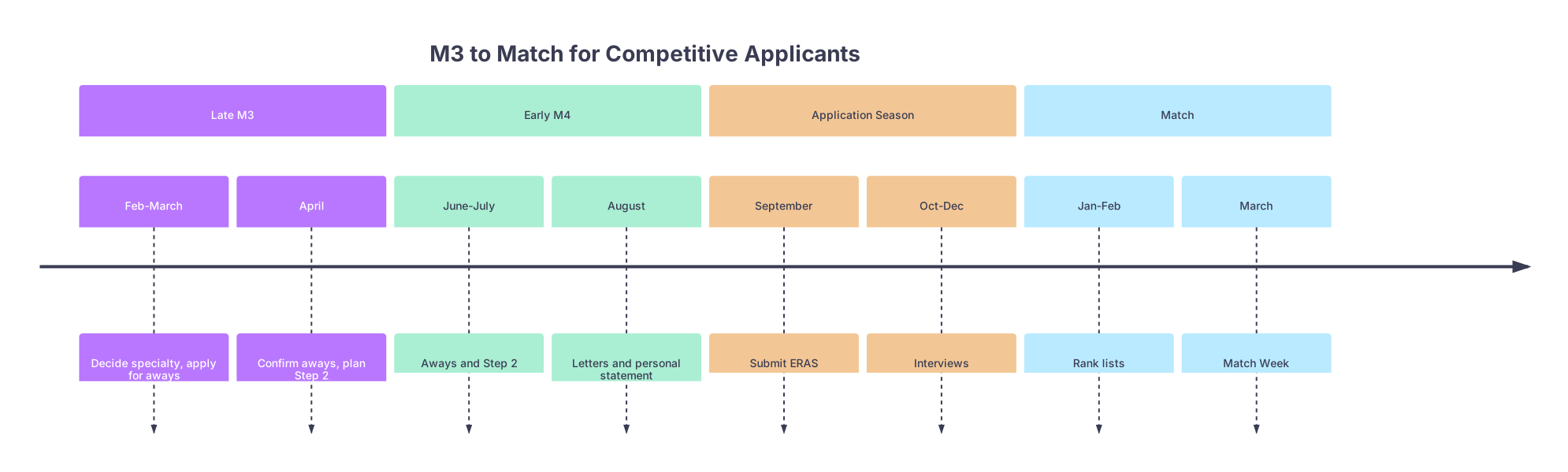
| Period | Event |
|---|---|
| Late M3 - Feb-March | Decide specialty, apply for aways |
| Late M3 - April | Confirm aways, plan Step 2 |
| Early M4 - June-July | Aways and Step 2 |
| Early M4 - August | Letters and personal statement |
| Application Season - September | Submit ERAS |
| Application Season - Oct-Dec | Interviews |
| Match - Jan-Feb | Rank lists |
| Match - March | Match Week |
October (M4)
At this point interview invites start to trickle, then flood.
Monitor and respond to interview invites instantly.
- Competitive specialties sometimes fill interview slots same day.
- Set:
- Email alerts to phone.
- Text alerts if possible.
- Have a rough pre-planned travel strategy for different geographic clusters.
Schedule a rotation that allows some flexibility.
- Best options:
- Research.
- Light outpatient elective.
- Worst options:
- ICU.
- Heavy inpatient sub-I where missing days is a problem.
- You need some room to travel without burning bridges.
- Best options:
Refine specialty knowledge.
- Weekly:
- Read 2–3 landmark papers or guidelines in your field.
- Know:
- Basic management of the top 10 conditions or operations in your specialty.
- Interviewers will probe this indirectly.
- Weekly:
November (M4)
Now you are in prime interview season.
Interview blocks.
- Expect:
- 2–4 interview days per week during peak weeks.
- Protect:
- Travel rest days when possible.
- On service, be transparent:
- Tell your attending about your interview schedule early. Not the night before.
- Expect:
Track your impressions in real time.
- Immediately after each interview:
- Jot down:
- Program vibe.
- Pros/cons.
- How you felt about residents and faculty.
- Jot down:
- These notes will matter in January when everything blurs together.
- Immediately after each interview:
Stay professionally present at home.
- Do not be the ghost MS4:
- Show up on the days you are not traveling.
- Help junior students.
- Your home program’s opinion can swing a match list spot for you at the last minute.
- Do not be the ghost MS4:
Late Season: December – March (Clean-Up, Contingencies, and Match)
This is where weaker applicants scramble and strong applicants quietly lock in their positions.
December (M4)
At this point you should have a good sense of how competitive your interview haul looks.
Evaluate your interview count honestly.
- As a rough guide (varies by year and specialty):
- Dermatology, plastics, ENT, neurosurgery:
- 8–10+ interviews = realistically competitive.
- <5 = concerning; you must think about backup plans.
- Dermatology, plastics, ENT, neurosurgery:
- Talk to:
- Your specialty advisor.
- A trusted faculty member who will be blunt.
- As a rough guide (varies by year and specialty):
If interview numbers are weak: enact Plan B.
- Options:
- Strengthen your parallel specialty (e.g., IM, anesthesia, gen surg).
- Explore a research year or prelim year path if your advisors support it.
- Do not wait until February to accept reality.
- Options:
Finish any remaining interviews.
- Keep performance consistent:
- No “checked out” interviews where you sound tired and over it.
- Programs notice late-season enthusiasm or lack thereof.
- Keep performance consistent:

January (M4)
Rank list season. This is not the time for impulsive decisions.
Construct your preliminary rank list early.
- Use your notes from interviews:
- Sort programs into tiers A/B/C.
- Consider:
- Training quality.
- Case volume.
- Fellowships and job placement.
- City and support system.
- Forget “prestige only.” You have to survive 5–7 years there.
- Use your notes from interviews:
Discuss ranking strategy with mentors.
- Show:
- Your draft rank list.
- Ask:
- “Where do you think I am roughly on this program’s list?”
- Adjust mildly for perceived love from certain programs, but do not get cute. Rank in your true preference order. The algorithm rewards that.
- Show:
Finish any required school rotations.
- Many schools park:
- Required EM.
- Required primary care.
- Do them competently. Unprofessional behavior this late still makes it into your file.
- Many schools park:
| Month | Rotation Focus |
|---|---|
| June | Home specialty sub-I |
| July | Away Rotation #1 |
| August | Away Rotation #2 |
| September | Home specialty / ICU |
| October | Research / Light Elective |
| November | Interview-Friendly Elective |
| December | Required EM or Primary Care |
February (M4)
At this point you should finalize ranks and sanity-check your backup plan.
Submit your final rank list carefully.
- Double-check:
- You ranked all programs where you would actually go.
- No typos, no mis-clicks, no missing programs.
- Submit a few days before the deadline. Do not be the person locked out by a website glitch at 7:55 p.m.
- Double-check:
If you have significant backup concerns:
- Have explicit conversations with:
- Program directors who know you.
- Your dean’s office.
- Clarify:
- What happens if you do not match?
- Are there meaningful SOAP options in related fields that you would accept?
- This is not pessimism. It is adult planning.
- Have explicit conversations with:
Stay engaged but realistic.
- Take rotations you find genuinely interesting.
- Keep your professional reputation solid.
- Do not spread anxiety to junior students with constant “I think I will not match” commentary.
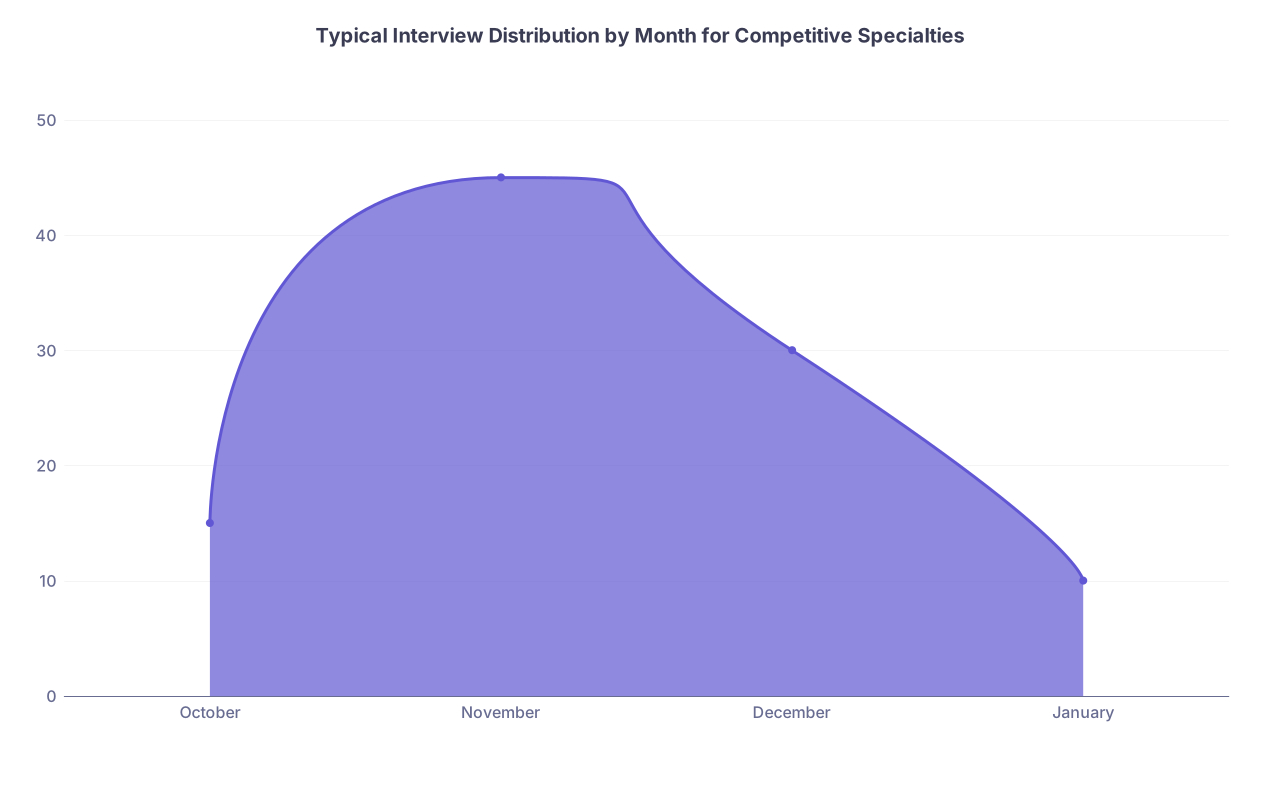
| Category | Value |
|---|---|
| October | 15 |
| November | 45 |
| December | 30 |
| January | 10 |
March (M4)
Match Week. The endgame.
Match Week logistics.
- Monday:
- You find out if you matched.
- If you matched:
- Relax. Celebrate modestly.
- Start thinking about move logistics, licensure paperwork, and graduation tasks.
- If you did not match (or only partially matched):
- Enter SOAP with a clear priority list.
- Work closely with your dean’s office and mentors.
- Control your emotions in public. People remember how you handled this.
- Monday:
Post-Match professionalism.
- Whether thrilled or disappointed:
- Finish your remaining rotations.
- Help juniors with advice that is specific and honest.
- Your identity in medicine stretches far beyond Match Day.
- Whether thrilled or disappointed:

Final 3 Takeaways
Competitive specialties are won or lost before application day. By June of M4, you need your aways, letters, and Step 2 plan locked in.
Every month has a job. Early months build credibility and access; mid-year months are about performance and visibility; late months demand clear-eyed evaluation and ranking strategy.
The applicants who match best do not “see how it goes.” They treat fourth year like a project with deadlines, contingencies, and deliberate choices. Run your year that way and you give yourself a real shot.