
The mythology around Step 2 CK cutoffs in competitive specialties is exaggerated. The real filters are lower than applicants think—but the functional thresholds are higher than anyone wants to admit.
Let me walk through where the actual clusters are, using the data we have (NRMP Charting Outcomes, program surveys, and what PDs actually say when they forget they are on the record).
The Landscape: What Programs Actually Do With Step 2 CK
Programs use Step 2 CK in three distinct ways:
- Hard minimum to screen out obvious non-starters
- Soft “comfort zone” where interview offers cluster
- Tie‑breaker and risk flag once you are already in the pool
Almost every competitive program director I have spoken with has some version of this sentence:
“We technically do not have a cutoff, but we rarely interview applicants below X.”
“X” is not the same in dermatology as it is in anesthesiology. But there are patterns.
Let’s anchor this with approximate ranges from recent cycles. Scores drift upward over time, but the relative differences by specialty are stable.
| Specialty Tier | Examples | Hard Screen Band | Competitive Interview Band | Elite Programs Band |
|---|---|---|---|---|
| Ultra-competitive | Dermatology, Plastic Surgery, Neurosurgery | ~230–240 | 250–260 | 260+ |
| High-competitive | Orthopedic Surgery, ENT, Radiation Oncology | ~230–240 | 245–255 | 255–260+ |
| Competitive but broader | EM, Anesthesiology, Ophthalmology | ~220–230 | 235–250 | 245–255+ |
| Moderately competitive | Internal Med (top programs), OB/GYN | ~215–225 | 230–245 | 240–250+ |
These are not official cutoffs. They are where interview probabilities start to change sharply in the data.
Now let’s look at where the clusters actually sit, specialty by specialty.
Dermatology: Where 250 Is the New 240
Dermatology is the cleanest example of score inflation.
Before Step 1 went pass/fail, many strong derm applicants had 245–255 on Step 1 and similar or slightly higher on Step 2 CK. When Step 1 went pass/fail, programs shifted their emphasis: Step 2 CK became the single numeric anchor.
PDs will never publish this, but the actual behavior looks like this:
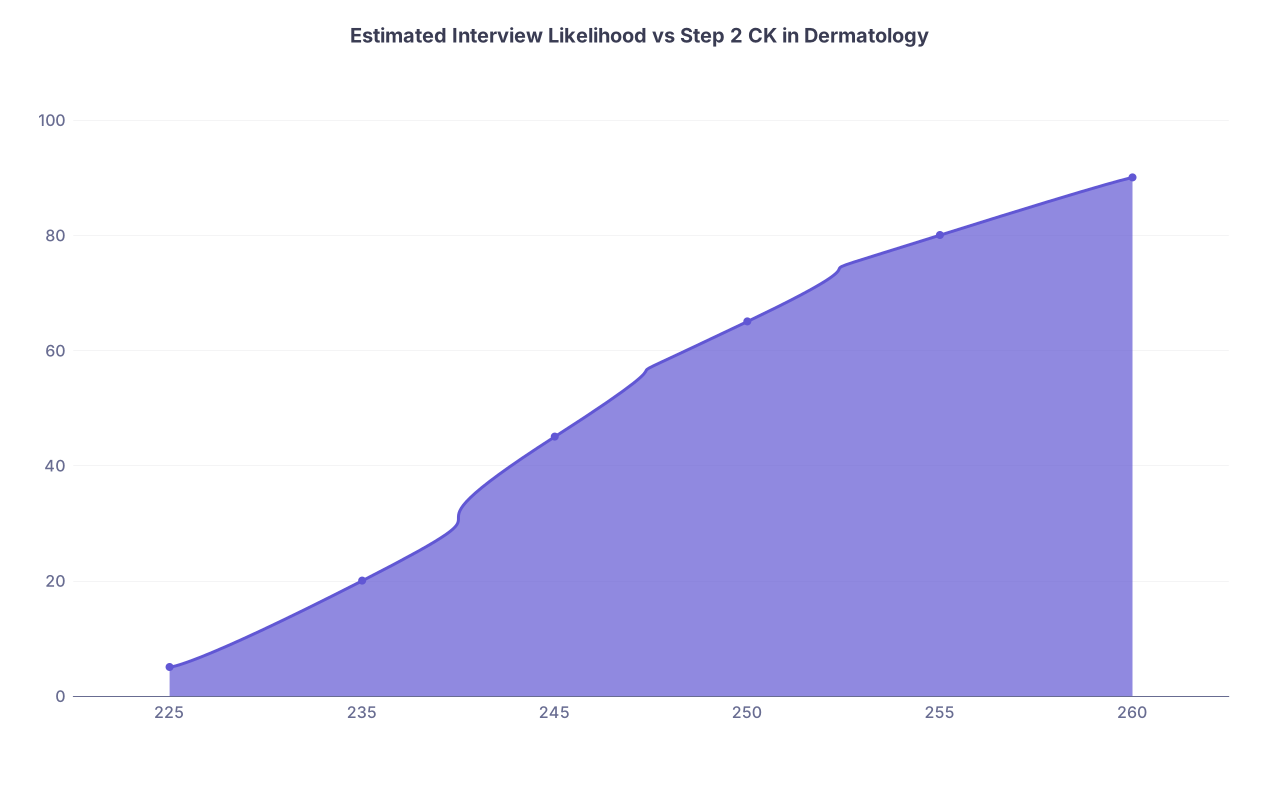
| Category | Value |
|---|---|
| 225 | 5 |
| 235 | 20 |
| 245 | 45 |
| 250 | 65 |
| 255 | 80 |
| 260 | 90 |
Interpretation:
- Below 235: You exist, but you are not really in the derm market unless you have extreme compensators (PhD with 20+ pubs, home‑program guarantee, or deeply networked mentor with direct calls).
- 240–249: You enter the plausible pool, especially for mid-tier or newer programs. This is the “we may take a look if the rest of the app is strong” zone.
- 250–259: This is where the bulk of successful derm applicants cluster now. That is the functional “comfort” range for most academic programs.
- 260+: You are in the top decile of the derm score distribution. It does not guarantee anything, but it removes a massive barrier.
The real cutoff clustering in derm:
- Hard screen: around 235–240 for most university programs
- Practical competitiveness: 250+ for the majority of academic derm residencies
- “Wow” range: ~260 and above, which mainly helps you get noticed faster, not necessarily matched higher
If you are sitting at 242 with strong research and a home program, you are very much alive. But applying to 80 derm programs is not irrational at that score.
Plastic Surgery (Integrated): High Ceiling, Surprisingly Hard Floor
Integrated plastics is brutally numbers‑driven early, then strongly network-driven later.
I have sat with a PD scrolling through ERAS saying, “Under 240 Step 2, I am not even opening it unless they are from our school.” That is not an outlier comment.
Rough behavioral ranges:
- Under 235: Essentially non‑competitive for integrated plastics unless you are an internal candidate with heavy research and a champion
- 235–244: Rarely interviewed at top programs, but you can still pick up interest at newer or community‑affiliated programs with strong research or connections
- 245–254: The big cluster. This is where many plastics-bound applicants land and where most interview offers are concentrated
- 255+: Starts to function as a differentiator when combined with strong letters and portfolio
Programs themselves often claim minimums around 230. The data and behavior suggest the effective threshold is more like 240.
The true clustering:
- Hard screen: 235–240
- Core interview cluster: 245–255
- Elite comfort zone (top 20 programs): 255–260+ paired with heavy plastics-specific research
The role of Step 2 CK in plastics is steeply diminishing if you already have:
- Dedicated research year(s) in plastics
- First-author in recognizable journals
- Strong letters from well-known faculty
But if you lack those, the score does a lot more lifting.
Orthopedic Surgery: The Big Middle Pile
Ortho is where people misunderstand the numbers.
The narrative is “you need a 250.” The data say: a lot of matched ortho residents land in the mid‑240s. The real story is that the 250+ group is oversupplied and the <240 group is dramatically undersupported.
Typical clusters from program behavior and national reports:
- <235: Very challenging, even with great rotations. Programs may see “future struggle with boards” and move on.
- 235–244: Borderline. You will need strong away rotations + letters + maybe home‑program support.
- 245–254: Main cluster for successful ortho applicants. Call this the statistical “center of mass.”
- 255+: Helpful for top‑tier academic programs, but not the primary sort once you clear ~245.
Orthopedic chairs have said, in private settings, versions of: “We get too many with 250+, so the score is just the ticket into the pile.”
That means:
- Hard screen: around 230–235
- Strong competitive band: 245–255
- Above that: diminishing returns; clinical performance, letters, and perceived “fit” dominate
If you are at 238–242, you are not dead in ortho, but you are not playing the same game as someone at 255. You must lean heavily on away rotations as your “live audit” in place of big score leverage.
Neurosurgery: A Steep Curve And A Short Tail
Neurosurgery programs are fewer, applicant numbers are smaller, and the distribution is weirdly bimodal: a lot of very high scorers and a smaller group with more modest scores but massive research and institutional backing.
What I see routinely:
- Below 235: Almost always a no unless you are a known quantity at that specific institution
- 235–244: Small number of matches, often home or “in‑network” plus strong neurosurgery research; risk flag for some programs
- 245–255: The main functional cluster for matched neurosurgery residents
- 255+: Overrepresented among applicants, common at top‑heavy academic programs in cities like Boston, NYC, LA
Program directors in neurosurgery talk less about “cutoff” and more about “Can this person pass boards and handle the cognitive load?” Step 2 above ~245 answers that question for them.
Cluster summary:
- Hard screen: ~235–240
- Solid band: 245–255
- Top‑tier comfort zone: 255–260+, especially with publications and a known mentor
In neurosurgery, being 10 points below the median is not just “a bit lower.” It is treated as meaningful risk.
ENT (Otolaryngology): Quietly Ruthless About Scores
ENT flies under the radar for many students, but the Step 2 behavior mirrors ortho with a slightly sharper edge.
PD anecdotes and match data suggest:
- Under 235: Very difficult without powerful internal advocacy
- 235–244: Marginal but salvageable if you crush away rotations and have ENT research
- 245–252: Major cluster for interviews in mid‑tier to strong university programs
- 253–260+: Markedly better odds at the most competitive academic centers
Here is a simple visualization of how cutoffs “bite” in three ultra/high‑competitive specialties once you drop below 245.
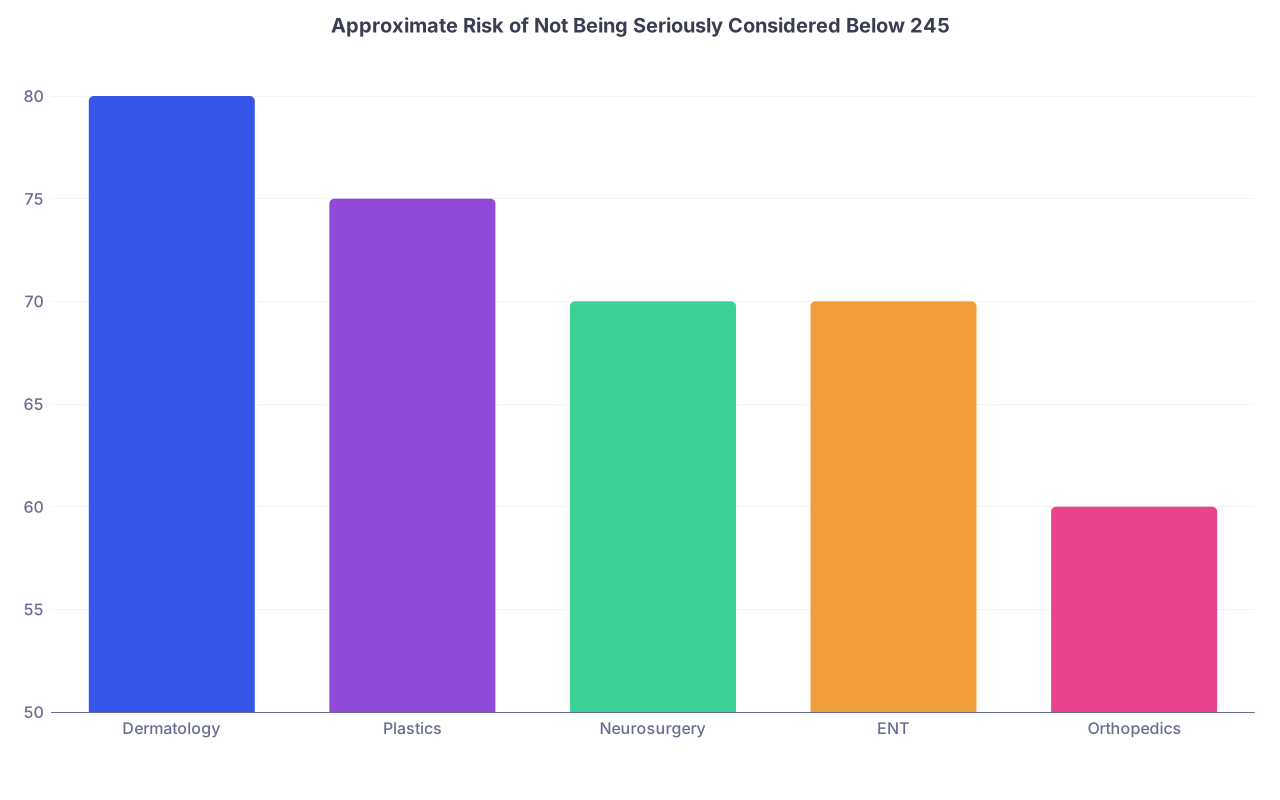
| Category | Value |
|---|---|
| Dermatology | 80 |
| Plastics | 75 |
| Neurosurgery | 70 |
| ENT | 70 |
| Orthopedics | 60 |
Those percentages are not precise, but they capture the reality: in many programs, <245 automatically pushes you into a high‑risk zone, even if you are not formally cut.
For ENT:
- Hard screen: 235–240
- Realistic target range: 245–255
- Elite tier: 255–260+ with multiple ENT‑specific pubs
Emergency Medicine, Anesthesiology, Ophthalmology: Competitive, But Different Curves
Not every “competitive” field treats Step 2 CK as a 250-or-bust exam. These three are good examples of nuanced use.
Emergency Medicine
EM programs historically used Step 2 CK more flexibly, especially with the SLOE system providing heavy-weighted clinical evaluations.
Common patterns:
- <220: Real risk of being auto‑screened out at many academic programs
- 220–230: Viable for community and some academic sites with strong SLOEs
- 230–240: Solid for interviews at a wide spread of programs
- 240–250+: Helpful, but not the central selection driver once you clear ~230–235
Cluster points:
- Hard floor: 215–220
- Stable competitive band: 230–245
- Above that: the marginal benefit flattens; SLOEs and fit dominate
Anesthesiology
Anesthesia has tightened somewhat in the last several years but still behaves differently from derm/ortho.
- <220: At risk for significant application friction
- 220–229: Competitive at many community programs and some university programs with strong letters
- 230–240: Main cluster for many matched residents
- 240–250+: Advantage at higher‑tier academic residencies
Functional cutoffs:
- Hard screen: 215–220
- Real clustering: 230–242 for the bulk of matches
- Top‑tier boost: >245, especially if paired with strong clinical performance and research
Ophthalmology
Ophtho uses an early match and is idiosyncratic, but Step 2 CK still matters a lot.
Patterns:
- <225: Tough, unless very strong home‑program and research
- 225–235: Viable at some programs, especially with multiple ophtho letters and research
- 236–245: Main match cluster
- 246–255+: Improves shot at the most prestigious departments
Cluster summary:
- Hard floor: ~225
- Strong band: 235–245
- Elite comfort zone: 245–255+
Top Internal Medicine & OB/GYN: Don’t Confuse “Less Competitive” With “Low Scores”
People routinely underestimate what it takes to match at places like MGH, UCSF, or Hopkins for internal medicine, or at top OB/GYN programs.
Internal Medicine (Top Academic Programs)
The overall IM match is forgiving. The top decile of IM programs is not.
For top‑tier IM:
- <220: Essentially non‑competitive without very unusual context
- 220–230: Occasional exceptions, often with strong home advocacy + research
- 230–240: Reasonable in the broader IM market; borderline in the true elite tier
- 240–250+: Typical band for matched residents in top academic IM programs
- 250+: Common but not mandatory; once above ~240, research and letters are heavier levers
Clusters:
- Hard minimum at elites: 225–230
- Practical competitive band: 238–250
- Above 250: Perceived as reassuring rather than differentiating
OB/GYN
OB/GYN has tightened but still shows a wide distribution.
- <215: Hard to gain traction at university programs
- 215–225: Viable with strong clinical grades and advocacy
- 226–238: Main cluster for broadly competitive applicants
- 239–248+: Strong for top programs
Functional thresholds:
- Hard floor at many residency programs: 215–220
- Central cluster: 225–240
- Elite tilt: >240 at the strongest academic OB/GYN programs
How Programs Actually Apply Cutoffs: Process, Not Myth
Step 2 CK is not usually handled through a single “if score < X, reject” code line. The process is messier and more human:
- Many programs set an initial automatic filter at a relatively low value (210–220) just to avoid the bottom tail.
- A second, informal filter happens mentally: “We typically do not pursue <235 for this specialty unless they have something exceptional.”
- For ultra‑competitive specialties, there is a third tier: “Score is below our median; I need to see something that makes me override this.”
Think of the decision flow this way:

| Step | Description |
|---|---|
| Step 1 | Application Received |
| Step 2 | Screened Out |
| Step 3 | Full Review |
| Step 4 | Interview Offer |
| Step 5 | Step 2 CK >= basic floor? |
| Step 6 | Step 2 CK in specialty comfort band? |
| Step 7 | Compensating strengths? |
| Step 8 | Strong holistic fit? |
Where do the “comfort bands” sit?
- Derm/Plastics/Neurosurgery/ENT: ~245–260+
- Ortho: ~245–255
- Ophtho: ~235–245
- EM/Anesthesia: ~230–245
- Top IM/OB: ~235–245
Below those ranges, you are fighting uphill. Not impossible. Just expensive in terms of effort, networking, and number of applications.
Strategy: How To Interpret Your Score Against These Clusters
You cannot change your Step 2 CK score now. What you can change is how realistic and data‑driven your strategy is.
If You Are Above The Core Cluster For Your Field
Example: 258 in ortho, 262 in derm, 252 in neurosurgery.
Do not waste this. It buys you:
- The right to apply broadly to high‑tier academic programs
- More slack if one rotation goes poorly
- The benefit of the doubt when your school is less known
But it does not:
- Compensate for weak or generic letters
- Fix a thin or irrelevant research portfolio in ultra‑competitive fields
- Guarantee ranking at the top programs
The data show: once you clear the comfort band, marginal gains from additional 3–5 points are small.
If You Are In The Core Cluster
Example: 247 for plastics, 244 for ENT, 238 for ophtho, 240 for top IM.
You are where most successful applicants live. Your differentiators become:
- Quality and specificity of letters
- Reputation of mentors writing those letters
- Research in that field, not just generic publications
- Clinical performance on away or sub‑I rotations
In other words, you must stop obsessing about being “only a 244” and start optimizing the variables that now have larger effect sizes.
If You Are Below The Core Cluster But Above The Hard Floor
This is the painful band: 230–238 for derm, ~230–242 for ortho, ~220–230 for EM/anesthesia.
The data say:
- Your match probability is lower at the most competitive programs
- But it is absolutely non‑zero, particularly for applicants with:
- Strong home or away rotations
- Serious research contributions, especially with first‑author work
- Well‑connected mentors willing to call PDs directly
Real stories:
- Derm: 238 Step 2, 10+ derm pubs, 2 years of research, strong home advocacy → matched at a mid‑tier but respected university program.
- Ortho: 241 Step 2, outstanding away rotations with top‑tier SLOEs → matched at an upper‑mid university program.
The ugly side: you cannot safely apply “normally.” You will often need:
- More applications than your peers
- Highly targeted away rotations
- Honest feedback from mentors who know real thresholds, not brochure numbers
The Bottom Line: Where Cutoffs Really Cluster
Let’s strip the emotion out and call the numbers what they are.
Across competitive specialties, the functional Step 2 CK clusters look like this:
| Specialty | Hard Screen Band | Main Interview Cluster | Elite Comfort Range |
|---|---|---|---|
| Dermatology | 235–240 | 250–260 | 260+ |
| Plastics (Int) | 235–240 | 245–255 | 255–260+ |
| Neurosurgery | 235–240 | 245–255 | 255–260+ |
| Orthopedics | 230–235 | 245–255 | 255+ |
| ENT | 235–240 | 245–252 | 252–260+ |
| Ophthalmology | 225–230 | 235–245 | 245–255+ |
| EM | 215–220 | 230–245 | 240+ |
| Anesthesiology | 215–220 | 230–242 | 242–250+ |
| Top-tier IM | 225–230 | 238–250 | 245–255+ |
| Top-tier OB/GYN | 215–220 | 225–240 | 240–250+ |
Use these bands as probability weights, not as fate. They tell you how steep the hill is, not whether it can be climbed.

FAQ (Exactly 5 Questions)
1. Is there any competitive specialty where a Step 2 CK below 230 is still realistic?
Yes, but not for the ultra‑competitive group. With a score below 230, realistic “competitive” options include anesthesiology, some emergency medicine programs, and a subset of OB/GYN and internal medicine programs, especially community or mid‑tier academics. Derm, plastics, neurosurgery, and ENT essentially treat <230 as a major red flag, with rare exceptions typically driven by strong internal advocacy or unique research credentials.
2. Does a very high Step 2 CK (260+) guarantee a match in derm or plastics?
No. It dramatically improves your odds of being screened in and taken seriously at almost all programs, but match outcomes in derm and plastics are heavily influenced by field‑specific research output, letters from influential faculty, and perceived fit. There are unmatched applicants every year with 260+ who lack those elements, while lower‑scoring applicants with deep specialty engagement do match.
3. How much does Step 1 being pass/fail change these Step 2 CK clusters?
It shifts weight toward Step 2 CK, but it does not change the relative competitiveness across specialties. The main effect is compression: more programs now care about Step 2 CK earlier and use it as the primary standardized metric. Over time, you can expect the “core cluster” scores to creep slightly upward (2–5 points) in the most competitive fields as applicants respond by pushing harder on Step 2 preparation.
4. If I am below the core cluster for my dream specialty, should I switch fields?
Not automatically. The decision should depend on: how far below you are, whether you have strong compensators (research, letters, home program support), and your risk tolerance. A 243 aiming for ortho with stellar away rotations is a different situation than a 228 aiming for derm with no publications. Use the cluster bands as a reality check and get brutally honest feedback from mentors in that specialty before deciding.
5. Do programs ever make exceptions for lower Step 2 CK if the applicant is from their own school?
Yes, this is common and one of the least-discussed biases in the process. Many programs have a lower effective floor for their own medical students because they have direct clinical experience with them and more context. A 235 from the home institution with superb clinical performance and strong internal letters might be ranked, whereas an external 235 might never make it through the screen. That is why home rotations and institutional relationships matter as much as, and sometimes more than, a few extra points on Step 2 CK.
Key points to remember: Step 2 CK thresholds in competitive fields cluster in narrow bands, not at mythical single numbers; once you clear your specialty’s comfort range, marginal score gains have rapidly diminishing returns; and below that range, matching is still possible, but only if you compensate aggressively with research, relationships, and clinical performance.