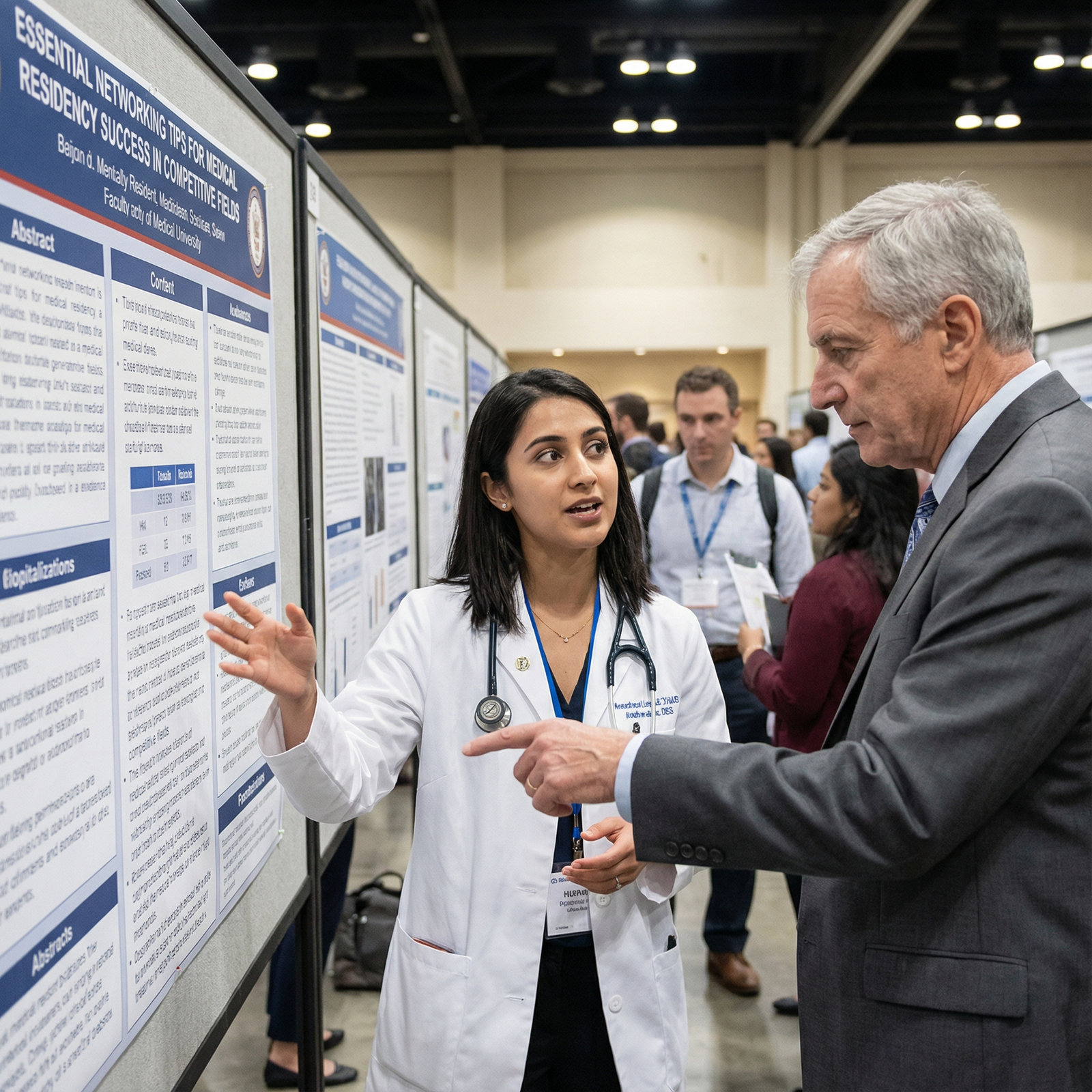
It’s Thursday morning. You’re in a dark auditorium for grand rounds in ortho/derm/neurosurg/ENT—pick your poison. The visiting speaker just finished a complex talk about some cutting-edge trial or obscure pathway. Lights go up. You’re sitting there wondering: Did anyone even notice me? You slip out to head to clinic or the OR.
Up front, the attendings don’t leave right away.
Two are still leaning on the podium. One pulls up the schedule on his phone and quietly says, “So what do you think about that M4 who presented last month? The tall one who keeps sitting in the back?” Another rolls her eyes about a resident who asked a question clearly to flex, not to learn. Someone brings up “the med student who left halfway through.”
This is where your reputation is actually getting built. Not during grand rounds. After.
Let me tell you what they really say, specialty by specialty, and what sticks in their heads when they sit in that closed-door rank meeting months later.
The Three Things Every Faculty Member Is Scanning For
Before we get into the competitive specialties, understand the common template. Faculty are not doing some detailed assessment of your scientific understanding during grand rounds. They’re scanning for three things:
- Are you a serious person or a tourist?
- Are you socially competent in a professional room?
- Do you match the story your application is telling?
They use blunt heuristics. Micro-behaviors. Patterns over weeks.
So when they whisper after grand rounds, the comments sound more like:
- “She shows up every week, even on off-service.”
- “He sits with the residents. Fits in well.”
- “Why does she always leave early? That’s been three weeks.”
- “He asked a good question; I think he actually read that paper.”
- “That student seems disengaged. Not sure he really cares about this specialty.”
Now let’s pull back the curtain specialty by specialty, because the flavor changes a lot in the competitive fields.
Surgical Subspecialties: Ortho, Neurosurg, ENT, Plastics
This group is the most brutally honest behind closed doors. The whispers are sharper, quicker, and they absolutely carry into rank lists.
Ortho
After ortho grand rounds, this is what I’ve heard word-for-word:
- “He’s got good presence. Stands like a surgeon, not folded over his phone.”
- “She doesn’t talk much but she’s always there. Residents like her. That matters more than her questions.”
- “Yeah, he’s smart, but he disappears after conference. Doesn’t hang with the team. I don’t get a resident vibe from him.”
What they’re actually scoring:
- Physical presence and energy. Orthopods are very biased toward people who project energy, confidence, and “doer” vibes. Slouching in the back, head down? They notice. They’ll later say, “He looked disinterested at conference.”
- Consistency of attendance. Miss two or three weeks in a row during your rotation without a clear reason, and someone will say, “He’s not committed.” They equate that with how you’ll show up at 5:30 a.m. for cases.
- Integration with residents. If you bolt out the second grand rounds ends while the residents huddle with faculty to discuss cases, you’re telling them you’re a visitor, not a future colleague.
What they whisper about your questions:
They hate performative questions. If you ask something basic that you could’ve Googled, they’ll be polite in the moment, then say afterward, “That was painful.” If you ask some overly technical pseudo-research question to flex, they’ll say, “That was unnecessary. Classic gunner move.”
The sweet spot orthopedics loves:
- “Nice question. Relevant to cases we actually see.”
- “That’s the one who asked about how we’re actually implementing that protocol here. Good thinker.”
Neurosurgery
Neurosurgery faculty are more intellectual, but just as ruthless in sorting people. After grand rounds in neurosurg, the conversation shifts slightly:
- “She’s been at every single one of these, even when she was on IM.”
- “He asked that question about trial enrollment criteria. That was actually thoughtful.”
- “Yeah, he’s smart, but he left right before the M&M discussion again. Does he actually want this?”
What they track in their heads:
- Pattern over months, not days. Neurosurgery has a long memory. They remember the M2 who started coming early. They remember the M4 away rotator who never missed a Wednesday 7 a.m. talk. When rank season hits, someone will say, “She’s been around for years. She’s serious.”
- Courage to speak once. They don’t need you to talk every week. But if, over a month-long sub-I, you never raise your hand once—even with a clarifying question—someone will label you as timid. And timid is a problem in a field where decisive action in high-stakes situations is the stereotype.
- Whether you stay for the “real talk.” If there’s a closed-session M&M or a follow-up case conference and you vanish at exactly 8 a.m. every time, the private interpretation is: “He’s clocking hours, not invested.”
I have heard a PD say: “You can fake interest for a month. You cannot fake it for two years of showing up to our talks.” They remember who was there in MS2–3. It absolutely affects how “real” your interest feels.
ENT and Plastics
ENT and plastics are smaller worlds. They gossip more. After grand rounds, the hallway debrief can get surgical.
Comments I’ve heard:
- “She’s polished. Good questions. Also she actually wore business attire, not scrubs, on her day off-service. She gets it.”
- “That student was on their phone under the table. I’m out.”
- “Residents love him. Always sits with them. That alone is a plus one for me.”
What they care about:
- Polish and professionalism. These are specialties that prize presentation. They notice if you look like you rolled out of bed vs made an effort. They will absolutely say, “She presents herself really well; she’d represent the program nicely.”
- Subtle social awareness. Do you stand in the doorway waiting to be pulled in, or do you walk up, introduce yourself, and join the group? ENT and plastics notice that kind of social courage.
- Your “brand” aligning with your application. If your application screams “research-heavy future academic surgeon,” but in person you’re quiet, non-engaged, and rarely around outside the OR, they’ll say: “The paper looks great but I don’t see that person in front of me.”
Dermatology: The Quiet, Very Attentive Room
Derm grand rounds feel calmer. No clanging instruments, fewer egos on obvious display. But do not mistake the quiet for a lack of judgment. They’re watching just as closely.
Typical post–grand rounds comments:
- “She sat up front, took notes, then came up to ask about that rare case. I like her curiosity.”
- “He’s rotated here twice and still stands in the back and never speaks. I honestly can’t tell you anything about him.”
- “That student left after the first hour. Happens a lot. I don’t know how serious they really are.”
What’s running through their heads:
- Intellectual curiosity. Dermatology is research-heavy and detail-obsessed. They love when you come up after to ask a specific, nuanced question that shows you actually know the literature or at least thought carefully. They do not love general, lazy questions.
- Commitment signal in a sea of overqualified candidates. Everyone in derm is “excellent on paper.” What differentiates you is the long arc: you came to grand rounds during your IM rotation, you showed up to case conferences, you stayed after to talk through a tough rash you saw in clinic.
- Whether you’re a ghost or a person. The worst thing in derm is not being disliked; it’s being unmemorable. “I honestly can’t tell you anything about them” is death in a small field.
One derm PD I know has a mental list of “grand rounds regulars.” They don’t advertise it. But when rank time comes, they’ll say, “She’s been here for ages. She’s ours.” That edge can separate you from someone with one more publication.
Radiology and IR: Who Is Actually Paying Attention?
Radiology grand rounds and noon conferences are deceptive. Dark rooms. People at computers. It looks like everyone is half-checked-out. Faculty still talk about you.
I’ve heard:
- “The student in the second row was actually following the cases. You could see them thinking.”
- “He came up after to ask about how to structure a case series. That stood out.”
- “I don’t love that he spends the whole time scrolling on his phone. Residents do that; I expect better from someone trying to match here.”
What they infer from your behavior:
- Engagement vs passive attendance. In a dark room, they look at body language. Are you leaning forward, looking at the screen, reacting to images? Or slouched, half asleep? The latter becomes, “He doesn’t have rads brain.”
- Research interest vs box-checking. IR in particular likes when you ask about project ideas, databases, or follow-up on a case that could become a paper. They remember the med student who asked, “Do you already have someone looking at outcomes on these patients?”
- Whether you can function in that environment. Radiology is quieter. People like trainees who can carry themselves without constant external stimulation. You being able to sit, focus, and participate for an hour is more important than you think.
Ophthalmology: Small World, Long Memory
Ophtho is tiny and insular. Their grand rounds and case conferences are the gossip center. If you think your behavior vanishes into the noise, you’re wrong.
What they say:
- “That student kept coming back even after their rotation. I believe they actually want ophtho.”
- “He’s fine, but he just sort of fades into the background. I never see him ask anything.”
- “She volunteered to help with that imaging study after rounds. She’s motivated.”
What matters most:
- Visibility over time. If you rotate for four weeks and then disappear from all conferences, they question your staying power. The student who keeps showing up once a week for months, even briefly, is seen as committed.
- Helping with something concrete. Offering to help with a chart review, imaging project, or patient recruitment after rounds is gold. It gives them something specific to say later: “She helped on that study; very reliable.”
- Being a decent human in a tiny ecosystem. Ophtho faculty talk across institutions. If you come off as arrogant, clipped, or self-important in conference, expect that reputation to spread quickly.
How They Actually Use These Whispers in Rank Meetings
You might think grand rounds behavior is “extra credit.” For competitive specialties, it’s not. It’s often the tiebreaker.
Here’s how it plays out behind a closed door when the rank list is on the screen:
PD: “We’re stuck between Applicant 12 and Applicant 15. Same board scores, similar research.”
Attending A: “12 is that student who always came to grand rounds, even when off-service. Asked good questions. Residents liked them.”
Attending B: “15 rotated here but I barely remember them. Never saw them at anything outside their required time.”
PD: “Okay. 12 goes above 15.”
That’s it. That’s the impact.
Or the opposite:
PD: “Applicant 8 looks strong.”
Attending: “Is that the one who was on their phone during M&M, sitting in the second row?”
Chief: “Yeah. Residents were annoyed by that too.”
PD: “Drop them a bit. I don’t want someone who can’t control that for an hour.”
They’re not filling out a rubric about your grand rounds behaviors. They’re using impressions as confirmation of a larger story.
To make this crystal clear, here’s how faculty mentally categorize what they see:
| Behavior Pattern | Unspoken Interpretation |
|---|---|
| Consistent attendance, engaged, stays late | Serious, reliable, good resident risk |
| Inconsistent, leaves early, no questions | Tourist, low commitment |
| Performative questions, constant talking | Gunner, ego risk |
| Quiet but present, residents like you | Safe, solid team player |
| Phone use, obvious disengagement | Unprofessional, maturity concerns |
How To Behave When You Actually Want To Be Talked About (In a Good Way)
You don’t need to turn grand rounds into a performance. That backfires. You need to make it easy for them to say specific, positive, true things about you later.
Here’s the playbook that works across competitive specialties:
Show up more than you’re required to.
If you’re on a different service and can reasonably make it, go. Not every week, but enough that someone thinks, “They’re still around.”
Sit where humans sit.
Not lurking by the door. Not in the last row hiding. You don’t need front row center, but sit within the first few rows, preferably near residents.
Look like you’re there on purpose.
Clothes clean, awake, notebook or iPad out. Not doomscrolling. Not eating an entire breakfast spread like you’re in an airport lounge.
Ask one real question per month of rotation.
Not every week. But at least once, ask something you genuinely want to know that shows you were listening. You can even pre-plan: read the topic ahead of time and have one thoughtful question ready.
Stay a few minutes after when you can.
You don’t have to linger awkwardly, but if you can hang back, talk to the residents about a case, or briefly thank the speaker, do it. Being part of that post-talk cluster is when names stick.
Connect the dots.
If you asked a question about trial X today, and next week you read the paper and have a follow-up thought, mention it to a resident or attending. That makes you look like someone who follows through.
Watch how the residents behave, mirror the best ones.
Faculty already know who their star residents are. Those residents are modeling the behavior they like. If the stars take notes, ask certain types of questions, sit in specific areas, mimic that energy.
What Not To Do If You Care About Matching
There are a few landmines that generate very fast, negative commentary after grand rounds in competitive specialties:
Leaving conspicuously early without explanation.
If you need to scrub or go to clinic, say so before or quietly to your resident. Repeated mid-talk exits with no context look disrespectful.
Performing “intelligence” for show.
Quoting obscure RCTs you obviously just looked up that morning, asking gotcha questions, or trying to outsmart the speaker. This almost always makes you look insecure, not brilliant.
Acting too relaxed because “it’s just grand rounds.”
Coming late with coffee in hand, loudly chatting with another student, texting openly. There’s always at least one attending who will never forget “the student who treated conference like a coffee shop.”
Overcompensating shyness with fake extroversion.
If you’re naturally quiet, that’s fine. They don’t need you to become a stand-up comedian. They need you to show up, be engaged, and have one or two moments of visible curiosity. Forced, overeager energy reads as inauthentic.
The Subtle Power of Residents’ Post–Grand Rounds Gossip
You’re probably focusing on what attendings say. Fair. But residents quietly control more than you think.
Right after grand rounds, the senior and chief residents often walk back to the workroom and start talking. If a med student did something weird, annoying, or impressive, it comes up there first. That gossip trickles up when PDs ask, “What do you think of our applicants?”
Typical lines I’ve heard from residents later in selection meetings:
- “She’s great. Sat with us every week, asked what she could read, never complained.”
- “Honestly, I didn’t see much of him except conference. Hard to get a read.”
- “He asked me after rounds if we had any projects. We pulled him into that chart review; he did good work.”
One negative resident comment based on repeated disengagement or arrogance can tank you more than a lukewarm attending comment. Residents are the ones who really see your day-to-day conference and hallway behavior.
A Quick Mental Model: What Story Are You Writing?
Think about it this way: everything you do around grand rounds is writing one of three stories about you in the minds of faculty.
](https://cdn.residencyadvisor.com/images/articles_svg/chart-common-faculty-narratives-about-students-3990.svg "Common Faculty Narratives About Students")
| Category | Value |
|---|---|
| Serious future colleague | 45 |
| Nice but forgettable | 40 |
| [Red-flag behaviors](https://residencyadvisor.com/resources/most-competitive-specialties/how-subtle-red-flags-sink-you-in-competitive-specialties-before-interview-day) | 15 |
You control which category they’re slotting you into.
- Serious future colleague: shows up, engaged, socially normal, clearly interested long-term.
- Nice but forgettable: physically present, quiet, makes no impression.
- Red-flag: chronic phone use, no-shows, performative, dismissive.
Competitive specialties are risk-averse. They would rather rank ten “serious but not flashy” applicants than one brilliant chaos agent. So your main job in grand rounds isn’t to steal the show. It’s to make it absurdly easy for them to put you in that first bucket.
Putting It All Together
So what are they whispering about you after grand rounds?
They’re not dissecting your phrasing or your exact question. They’re saying:
- “Do I see this person as a resident here at 6 a.m. in January?”
- “Did they show up even when they didn’t strictly have to?”
- “Were they a pain or a pleasure to have in the room?”
- “Do they match the level of seriousness this specialty demands?”
If the answer is a quiet but consistent “yes,” you’re doing more than you realize for your future in that field.
If the answer is “I barely noticed them,” you’ve wasted a low-effort chance to stand out in a crowded, hyper-competitive lane.
You’re in the phase now where you stop being just an application file and start becoming “that student.” The one they remember. The one the residents liked. The one who kept showing up.
Get that part right, and the rest of your specialty journey—sub-Is, letters, rank meetings—gets a lot smoother.
From here, your next move is using that same awareness in higher-stakes settings: away rotations, M&M conferences, and the informal dinners where PDs pretend they are just “getting to know you.” With these conference habits dialed in, you’re better prepared for those. But that’s a story for another day.