
It’s late January. You’re obsessively refreshing your email, wondering why interview invites for that ultra-competitive specialty have slowed to a trickle. On the other side of the country, in a half-empty office at 7:45 pm, a program director leans back, looks at a shortlist of names on a yellow legal pad, and picks up the phone.
He’s not calling you.
He’s calling about you.
Let me tell you what really happens in those quiet, undocumented phone calls that never make it into official policy, never appear on a website, and absolutely influence who ends up matching where.
You’re about to see how the backchannel actually works.
What the Backchannel Really Is (And What It Is Not)
Strip away the mythology. The “backchannel” is basically this:
Attendings, PDs, chairs, and sometimes senior residents calling each other off the record to ask and answer one question:
“If I take this person, am I going to regret it?”
Nobody documents these calls. There’s no “backchannel” checkbox in ERAS, no email trail, just 3–8 minute conversations between people who’ve known each other for years. Or decades. From fellowship, from conferences, from old jobs, from training at the same place.
And here’s the part applicants always underestimate: in competitive specialties, those calls matter a lot more than one extra poster or a 5-point Step 2 bump.
We’re talking:
- Dermatology
- Plastic surgery (integrated and independent)
- Orthopedic surgery
- Neurosurgery
- ENT
- IR (integrated)
- Certain elite EM, radiology, and anesthesia programs
- Top-tier academic IM tracks (think Heme/Onc or Cards pipeline programs)
In smaller, tight-knit fields, everybody knows everybody. They go to the same national meetings, sit on the same committees, text each other during board meetings.
That’s the ecosystem where backchannel calls are basically a second layer of evaluation, running in parallel to your ERAS file.
What it is not:
- It’s not some Hollywood-style conspiracy where every match is pre-arranged.
- It’s not universally used for every applicant.
- It’s not always positive; a single bad call can absolutely sink you at multiple programs.
But you ignore it at your own risk.
When Backchannel Calls Happen in the Cycle
The timing isn’t random. There are clear phases where the phones light up.
1. Before Interview Invites Go Out
This is the first invisible filter. You never see it. You only feel the result when you don’t get an invite.
Here’s how it plays out.
A PD is staring at 600 applications for 40 interview slots in plastics. They see a name from “Midwest Regional Med” they don’t recognize. Step scores are fine, research looks decent, letters are solid but generic. They pause.
They notice one letter writer is a name they vaguely know from a conference panel years ago. Or the applicant did an away rotation at a program run by an old fellowship buddy.
That’s when they send a one-line text: “Hey, got an applicant from your shop – worth my time?”
If the response is:
- “Absolutely. Hard worker, no drama. Top of our class this year.” → You get an invite.
- “They’re fine.” → You blend into the noise. Maybe you get an invite; maybe you don’t.
- “I’d pass if you have other options.” → You’re done there. You will never know why.
This is brutal, but it’s real. At some derm programs, I’ve seen 10–15% of interview invites shaped directly by one or two text exchanges. Mostly for borderline apps, not obvious stars.
2. Post-Interview, While Building the Rank List
This is where the serious backchanneling happens.
Programs have already seen you, liked you enough to consider you, and now they need to sort:
- The “no-brainer” top-tier applicants
- The “we really like them, but are we missing something?” crowd
- The “seems good on paper, interviews were… odd?” group
That middle bucket is where the phone starts ringing.
Conversations sound like:
“I’ve got your student here, [Name]. You wrote a strong letter. Off the record — are they really as good as you made them sound?”
“Anything I won’t see on paper?”
“How do they handle call? How do they handle getting yelled at?”
“If you had a daughter needing surgery, would you let this person operate on her in 3 years?”
People answer more honestly on the phone than they do in letters. Because the relationship is on the line.
Good backchannel = you jump 10–15 spots on a rank list.
Bad backchannel = you quietly slide off the rank list altogether.
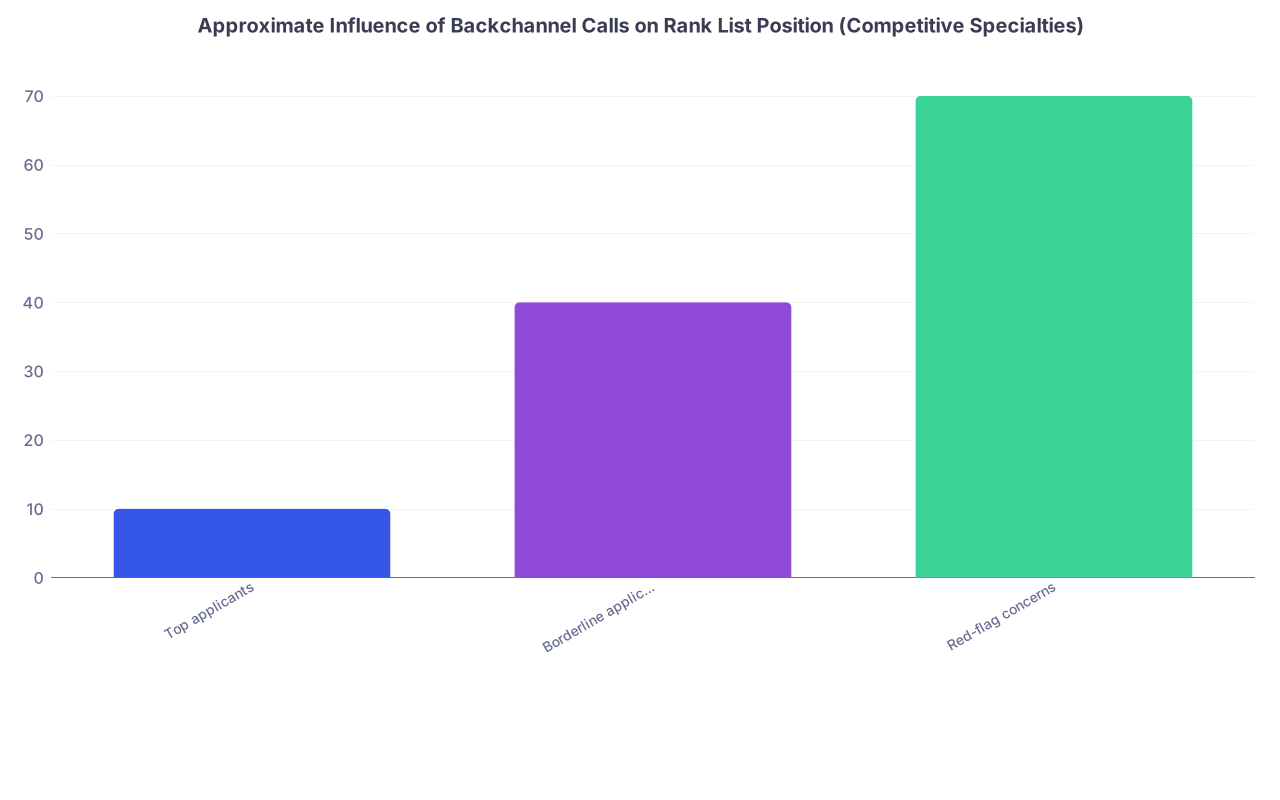
| Category | Value |
|---|---|
| Top applicants | 10 |
| Borderline applicants | 40 |
| Red-flag concerns | 70 |
Those are rough insider estimates I’ve actually heard in committee rooms. It’s not uniform, but you get the idea: borderline and “something feels off” applicants are where backchannel calls are decisive.
3. Late, When Programs Are Nervous About Matching
Final 1–2 weeks before rank list certification. This is where chairs and PDs start to panic about not filling in ultra-competitive fields.
Plastics PD: “We’re heavy on dream applicants who may all go somewhere else. Who will actually rank us high?”
This is when they call people they trust:
“Is your student serious about us or just shopping around?”
“Where do you think they’ll match? Realistically.”
“We’re willing to go high on them if you tell me they’re all-in.”
You think you’re just telling your home chair “I loved Program X, I think it’s my #1.”
What you don’t see is your chair quietly relaying that to the PD there on a 3-minute call.
Who Actually Picks Up the Phone (And Who Gets Called About)
There’s a hierarchy to this.
Programs do not call about every applicant. Nobody has that kind of time or patience.
They call about:
Borderline but intriguing candidates
Scores slightly below their typical range, but with strong story, big research, or an enthusiastic letter from someone they know.Applicants with conflicting signals
Stellar numbers, multiple publications, but lukewarm interview. Or one weird comment from a resident. Or a minor professionalism note in the MSPE.High-priority people they’re afraid of losing
Top-of-list applicants where they want to know if they’re actually in the running or just applying to every top 10 program.Red-flag whispers
Anything that smells like “there’s more to this story.” A leave of absence. A rotation switch. An unexplained gap. A vague line in the MSPE.
And the people who get called:
- Your home PD in that specialty (even if you didn’t apply there)
- Your away rotation PDs / site directors
- Big-name letter writers
- Occasionally, your department chair
- Sometimes, a senior resident who knows a resident at the other program
This is why your behavior on home and away rotations matters more than any CV line. The people grading you are sitting on the other end of that future phone call.
How Quiet Phone Calls Help — The Positive Backchannel
Everyone assumes backchannel = sabotage. Not true. Most of these calls help people.
I’ve watched average-on-paper students jump into top programs because somebody with clout went to bat for them over the phone.
Typical scenario:
Mid-tier med school. Step 2 is 238. Research is 2 posters and one middle-author paper. Solid but not special. You do an away rotation at a big-name ortho program and absolutely crush it. Show up early, stay late, read, help the intern, don’t complain, present well.
The PD there likes you but knows your numbers will make other places hesitate. So when his old fellowship co-resident (now PD at another top program) calls and says:
“I see you wrote a letter for this kid. Anything behind the letter?”
He answers with:
“If I had an open spot, I’d take them right now. No ego, no attitude, works like an animal, learns fast. I’d trust them on my service any day.”
That kind of endorsement moves mountains.
I’ve literally heard this phrased as:
“Okay, if you’re that enthusiastic, we’ll push them up 20 spots.”
In competitive specialties, 20 spots is the difference between matching and not even being on the list.
Sometimes the backchannel rescues an applicant with a Step 1 fail, a remediation, or a late career switch into a hyper-competitive specialty. On paper, they’re risky. On the phone, someone says:
“Yes, they stumbled once. But they are absolutely not a problem child. If you pass on them, you’re making a mistake.”
And the PD believes it, because they trust the person on the other end more than the PDF in front of them.
The Dark Side: How Backchannel Can Kill an Application
Now the part people whisper about after the Match — the “I have no idea how I didn’t match; everyone told me I was strong” group.
Sometimes the truth is: someone torpedoed you on the backchannel.
Here’s what actually gets said when things go bad:
- “Extremely smart, but rubs a lot of people the wrong way.”
- “Technically good, but does not take feedback well. Defensive.”
- “Tends to disappear when the work gets heavy.”
- “No major professionalism events, but where there’s smoke, there’s fire.”
- “We would not rank them here.”
Nobody writes that in a letter. They say it on the phone.
If your home PD or away PD says, “We didn’t rank them,” that phrase alone can crush you at every program that calls. People take that seriously.
And then there’s the nuclear option:
“I’d be cautious.”
That’s PD-speak for “I don’t want this person anywhere near my residents.”
You’ll never see that comment in writing. You’ll just see it in your match result.
For context, here’s how those quiet negatives ripple:
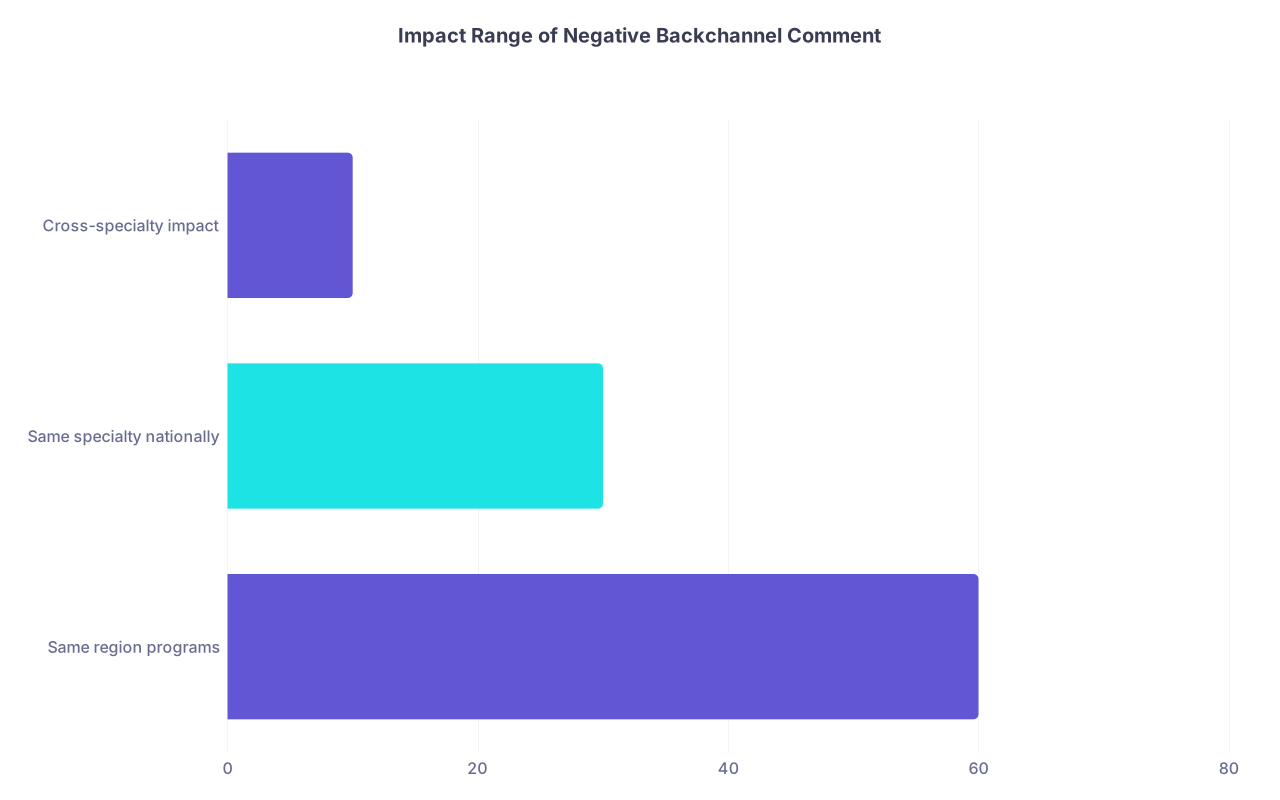
| Category | Value |
|---|---|
| Same region programs | 60 |
| Same specialty nationally | 30 |
| Cross-specialty impact | 10 |
Again, ballpark numbers. But I’ve seen one cautious chair essentially poison an applicant at multiple programs in the same geographic region.
How Students Try (and Fail) to Game the Backchannel
Almost every cycle, some student tries something dumb because they’ve heard about “phone calls behind the scenes.”
Common mistakes:
1. Overstating “I’ll rank you #1” to multiple places
You tell your home PD:
“Program A is absolutely my number one. I love them.”
You also tell the visiting PD at Program B:
“Honestly, I think you’re my top choice.”
You assume those thoughts stay local. They don’t always.
Chairs talk. PDs talk. I’ve been in a conversation where someone literally said:
“Funny, they told our PD we were their clear #1 as well.”
You’ve just branded yourself as insincere. That label travels.
2. Pushing mentors to “make calls” for you
Students beg: “Dr. X, can you call Program Y for me?”
If they want to, they will. If you push, you risk a half-hearted call: “Yeah, they’re fine,” which can be worse than silence. The best calls are genuinely enthusiastic, not coerced.
3. Trying to use weak-letter people as heavy-hitters
A community preceptor with no academic network calling a top derm PD does almost nothing. It’s not about the act of calling. It’s about who is calling and how well they’re known.
What Actually Improves Your Backchannel Profile
Let’s get practical. You can’t control who calls whom. You can control what those people have to say when the phone rings.
Here’s what consistently leads to strong backchannel reviews in competitive specialties:
1. Consistent behavior across all rotations
PDs despise “audition-only” effort — stellar on away rotations, mediocre at home.
Residents do talk. When a PD calls and asks, “How are they on the less glamorous rotations?” and hears “pretty disengaged unless they’re being watched,” that sticks.
You want “same person everywhere”: hard-working, teachable, not entitled.
2. Being the resident’s favorite, not just the attending’s
You’re trying to impress the big attending names. Reasonable. But the people who get called sometimes are senior residents you barely noticed.
If the resident says, “I would be thrilled to have them as my intern,” that yields a very favorable report.
3. Making your PD’s life easier, not harder
Your PD is your gatekeeper. If they experience you as high-maintenance — constant emails, drama, complaints — that will leak into their tone on the phone even if they never say something explicitly negative.
I’ve heard: “Great on paper, but high management.” That alone was enough to drop someone below the safety zone on the rank list.
4. Choosing letter writers who are actually plugged in
Not just “famous name,” but famous and respected as fair and honest.
In derm, for example, certain names carry a ridiculous amount of weight. Same in ortho and neurosurgery. A strong phone endorsement from one of those people is essentially a second interview.
If your school has no big names in your specialty, your away rotations become critical. That’s where you build those connections.
How Program Directors Actually Talk About You
You think they’re reading your personal statement line by line. They’re not.
They’re saying things like:
- “Are they going to quit?”
- “Are they going to get us sued?”
- “Are they going to tank morale on night float?”
- “Will they make us proud at conferences?”
The file gives them one version of the story. The backchannel call fills in the gut-level risk assessment.
Sometimes it looks like this:
| PD Worry | What Backchannel Provides |
|---|---|
| Work ethic | “They grind” or “They coast” |
| Team dynamics | “Great with staff” or “Tense” |
| Coachability | “Takes feedback” or “Defensive” |
| Pressure handling | “Solid on call” or “Spirals” |
| Hidden professionalism issue | “Clean” or “Be cautious” |
They are not trying to screw you. They’re trying not to make a mistake that hurts their residents, their service, and their reputation.
That’s why they trust people they’ve known for years over anything they read in ERAS.
What You Should Actually Do About All This
You can’t force the backchannel in your favor, but you can prime it.
Here’s the distilled playbook for competitive specialties:
Treat your home PD like your most important audience
Show up. Communicate clearly. Don’t create drama. You want them to instinctively say, “Yes, I’d take them here,” when someone calls.Use aways strategically to earn phone-call-level advocates
Don’t just chase logos. Go where there’s at least one PD, APD, or chair who actually works with students and writes honest, specific letters.Be the same person in August and in January
Word spreads if you flame out, slack off, or turn weird once interview season hits.Be honest about your preferences — with the right people
You can absolutely tell one PD, “You’re my top choice.” Just don’t tell three others the same story. When in doubt, say, “You’re very high on my list” if that’s true.Avoid becoming a “management problem”
The more issues your PD or clerkship office has had to manage around you, the more likely some of that seeps into their off-the-record tone.
One more thing: some of you reading this are already in danger because of how you acted on your first two clerkships. If that’s you, your job now is to change the narrative before phone calls start.
That means: outstanding behavior on your remaining rotations, direct but respectful conversations with your PD, and showing over time that earlier issues were growing pains, not your baseline.
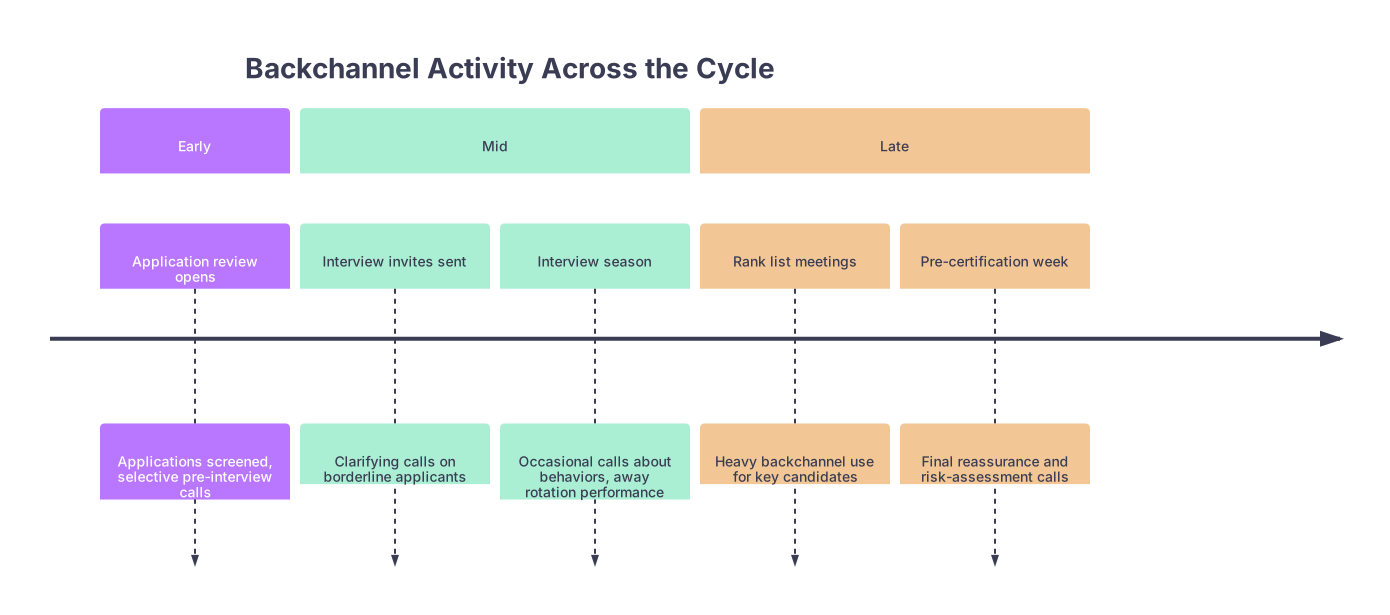
| Period | Event |
|---|---|
| Early - Application review opens | Applications screened, selective pre-interview calls |
| Mid - Interview invites sent | Clarifying calls on borderline applicants |
| Mid - Interview season | Occasional calls about behaviors, away rotation performance |
| Late - Rank list meetings | Heavy backchannel use for key candidates |
| Late - Pre-certification week | Final reassurance and risk-assessment calls |
FAQs
1. Can I ask my mentor or PD directly to make backchannel calls for me?
You can, but do it carefully. A blunt “Can you call programs for me?” often backfires, especially if your mentor doesn’t fully believe in you. Better approach: have a candid meeting, outline your goals, ask where they think you’re realistic, and then say, “If you feel comfortable advocating for me to programs you know, I’d be very grateful.” The best calls happen when the caller genuinely wants to make them, not when they feel pressured.
2. What if my home program doesn’t like me — am I just dead in a competitive specialty?
Not automatically, but your path is steeper. You’ll need away rotations where you perform at an undeniably high level and earn support from people outside your home institution. Some applicants effectively “re-home” themselves this way. But be realistic: if your home PD and multiple attendings all have serious concerns, that pattern often reflects real issues that will also emerge elsewhere.
3. Is there any way to know if a negative backchannel call hurt my match?
No. You will almost never get a straight answer. Programs won’t say, “Your PD told us to avoid you.” What you might see are patterns: unexpectedly few interviews despite a strong paper application, or a total shut-out from one region where your home institution is well known. Even then, it’s just suspicion. Your energy is better spent fixing whatever behaviors or reputational issues might trigger those calls, rather than trying to diagnose exactly what happened.
Key thing to remember: in competitive specialties, your application is not just what’s in ERAS. It’s also every quiet conversation your name shows up in. Behave like people you work with today will be answering for you on the phone tomorrow. Because they will.