
The biggest mistake applicants make about letters of recommendation for competitive residencies is assuming “any strong letter is fine.” It is not. In competitive specialties, the wrong letter is worse than no letter at all.
You are not competing against average. You are competing against:
- The PD’s former rotator
- The chief’s favorite sub‑intern
- The research gunner who has been on Zoom with the chair for 18 months
If your letters are generic, mis‑matched, or tepid, you quietly fall to the bottom of the pile. No drama. No email. Just no interview.
Let me walk you through the most damaging mistakes I see year after year—and how to avoid being the anonymous applicant with “solid but unremarkable letters.”
1. Picking the Wrong Letter Writers
Most applicants underestimate how much who writes the letter matters more than what it says.
Mistake: Choosing “nice” over “known”
Common bad choices:
- The attending who liked you but is unknown in the field
- A non‑clinical mentor when a clinical letter was expected
- The famous researcher who barely remembers you
- A letter from an unrelated specialty “because they love me”
In competitive fields (derm, ortho, plastics, ENT, neurosurgery, ophtho, urology, rad onc…), PDs scan the letter header and signature line before they read a single word. They are asking:
- Do I know this person?
- Do people in my circle know this person?
- Does this writer know what success in this specialty looks like?
If the answer is no, your letter starts in a weaker position.
What strong programs actually want
For most competitive specialties, the priority order of letter value often looks like this:
| Rank | Writer Type |
|---|---|
| 1 | Chair/program director in specialty |
| 2 | Well-known faculty in specialty |
| 3 | Sub-I/away rotation attending |
| 4 | Research mentor in specialty |
| 5 | Non-specialty but strong clinician |
Do not make the mistake of loading your application with:
- Letters from primary care when applying ortho or neurosurgery
- Only research letters with minimal clinical evaluation
- A dean’s letter style recitation instead of an assessment
How to avoid this
- Ask explicitly: “Do you feel you know me well enough to write a strong letter for [specialty]?”
- Prioritize writers who:
- Work in the specialty you are applying to
- Supervised you closely in a high‑stakes setting (Sub‑I, away)
- Have a reputation or network in that field
If someone hesitates even briefly—walk away. That hesitation becomes a lukewarm letter.
2. Ignoring Specialty‑Specific Expectations
The mistake here is assuming all specialties treat letters the same way. They do not.
Dermatology does not read letters like orthopedic surgery. ENT does not think like radiology. Some specialties practically require a chair letter; others do not care.
Classic specialty‑specific mistakes
- Applying orthopedic surgery without any ortho letters. Just IM and surgery. Fatal.
- Applying ENT without a single letter from an otolaryngologist.
- Applying dermatology with only medicine/peds letters and a “great human” narrative.
- Submitting three “she is very nice and works hard” letters to neurosurgery.
Here is the pattern: the more competitive and niche the specialty, the more unforgiving they are about misaligned letters.
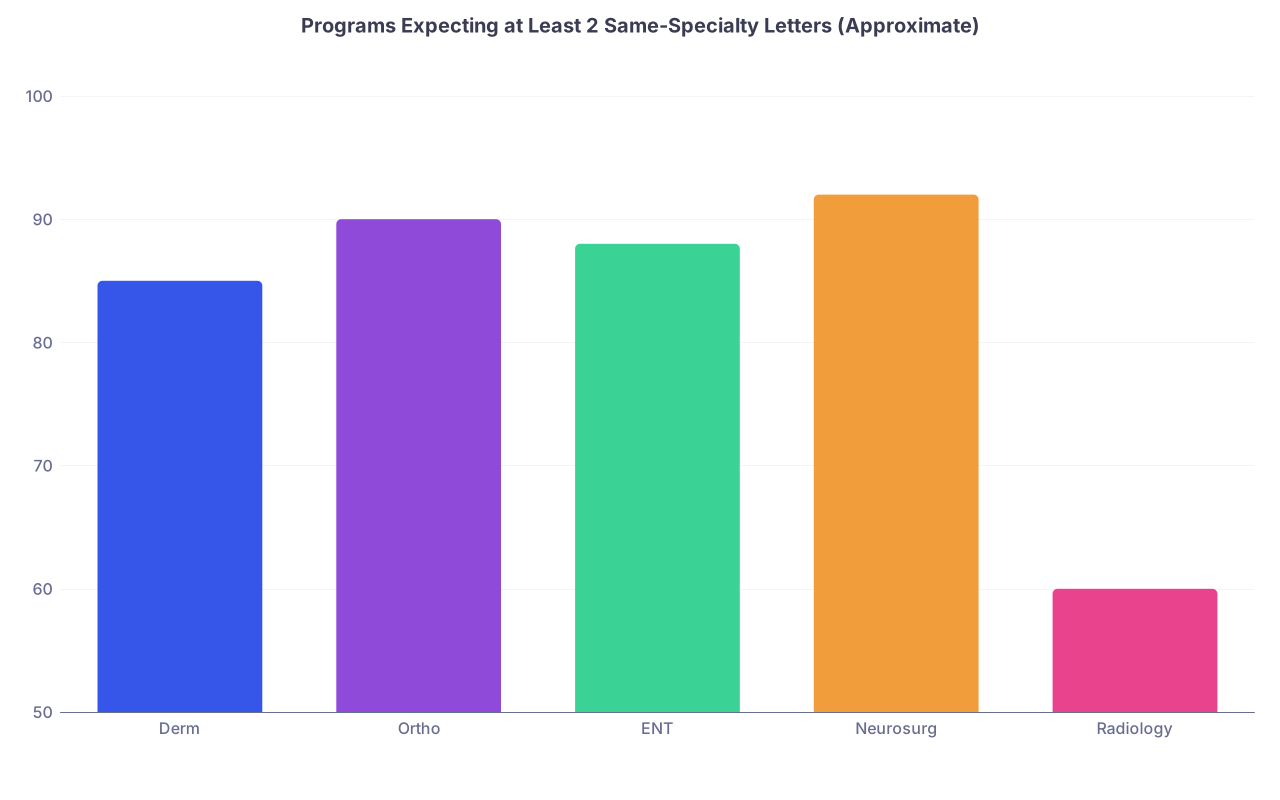
| Category | Value |
|---|---|
| Derm | 85 |
| Ortho | 90 |
| ENT | 88 |
| Neurosurg | 92 |
| Radiology | 60 |
How to avoid this
You must know the norm for your target field:
- Ask recent matched residents in that specialty at your school
- Read program websites—many explicitly say “at least two letters from [specialty]”
- Watch for phrases like “we strongly prefer” or “we expect”
Minimum safe rule if you want to stay out of trouble in competitive specialties:
- At least 2 letters from the specialty itself
- Ideally 1 from a department leader (chair, PD, vice chair) if your school has one in that field
If your home institution does not have that specialty (rural or smaller schools), then:
- Your away rotation letters become non‑negotiable
- You plan early to secure those rotations
3. Going Generic: Letters That Say Nothing
The deadliest letter is not negative. It is generic.
The pretend‑compliment phrases that quietly kill you:
- “Hard‑working and pleasant to work with”
- “Will do well in any residency program”
- “Completed tasks assigned to him”
- “Met expectations on the rotation”
Program directors have learned to translate:
- “Met expectations” = not top tier
- “Will do well in any residency” = not strong enough to endorse for this one specifically
- “I recommend without reservation” with no supporting detail = template, no real enthusiasm
What a strong letter actually sounds like
Patterns you want:
- Explicit ranking: “Among the top 10% of students I have worked with in the past 10 years”
- Concrete comparison: “Comparable to or stronger than our current residents”
- Specialty‑specific endorsement: “I would be thrilled to have her as a resident in our [ortho/derm/ENT] program”
- Details: cases you handled, initiative you showed, specific strengths
Weak letter content is not always the writer’s fault. It is often your fault for:
- Not providing any structured info
- Not reminding them of specific cases or strengths
- Asking too late, giving them no time to personalize
How to avoid generic letters
Do not just “ask for a letter.” Give your writer ammo:
- A 1‑page CV or ERAS‑style summary
- A short bullet list:
- Specific patients or cases you worked on with them
- Times you took initiative
- Skills you want them to emphasize (work ethic, judgment, technical ability, research)
You are not scripting the letter. You are jogging their memory. Big difference.
4. Timing Disasters and Late Letters
A shocking number of good candidates sabotage themselves with bad timing.
The slow‑motion car crash
I have seen this exact scenario more than once:
- Student waits until August to ask for a September letters‑needed deadline
- Busy attending agrees, then goes on vacation or into heavy clinic
- ERAS opens. No letter.
- Application submitted incomplete. PD sees “2 of 3 letters received”
- Interview offers go out before third letter arrives
Programs do not stop their timeline because your letter is missing. In competitive fields with hundreds of applications, early impressions matter.

| Step | Description |
|---|---|
| Step 1 | Ask late for letter |
| Step 2 | Writer busy or away |
| Step 3 | Letter delayed past ERAS open |
| Step 4 | Application appears incomplete |
| Step 5 | Fewer or no interview invites |
How to avoid timing mistakes
Treat letters like Step scores: mission‑critical and time‑sensitive.
- Ask 4–8 weeks before you need the letter uploaded, minimum
- Set a personal deadline 2 weeks before the real one
- Politely check in once after 2 weeks, again 1 week before your personal deadline:
- “Just checking if you need anything from me to complete the letter.”
- Verify upload status in ERAS early, not the night before you submit
Do not wait until your entire application is “perfect” before locking in letter writers. Perfectionism here turns into self‑sabotage.
5. Using Non‑Clinical or Irrelevant Letters in Clinical‑Heavy Fields
Another quiet but painful mistake: over‑weighting non‑clinical relationships for purely clinical residencies.
Typical offenders:
- The PhD research mentor in biochemistry writing for an ortho applicant
- The MBA or public health mentor writing for ENT
- The community volunteer coordinator writing for neurosurgery
In competitive procedural specialties, PDs care first about:
- Clinical judgment
- Work ethic on the wards and in the OR
- Ability to function on a team
- Technical potential
A pure research or non‑clinical letter might be nice as a supplement, but it cannot replace a strong clinical assessment.
When research letters help—and when they do not
Helpful:
- Derm applicant with a letter from a derm PI describing both research and clinical exposure in clinic
- Rad onc applicant with a PI who supervised you seeing patients and writing notes
- Neurosurgery applicant with a 2‑year lab mentor who is well‑known in neurosurgery and describes your resilience and problem‑solving
Harmful:
- Ortho applicant with two letters from bench research mentors and one from an IM attending
- ENT applicant whose “best” letter is a molecular biology PI unknown to the ENT world
Safer composition for competitive specialties
A defensible structure for most competitive fields:
- 2–3 clinical letters from target specialty attendings (ideally including one leader)
- 0–1 research letter, ideally still connected to the specialty
- If you must include a non‑specialty clinical letter, choose someone who saw you handle sick, complex patients, not an easy outpatient month
Do not let your letters look like you are applying for a PhD instead of a residency spot.
6. Failing to Manage Red Flags or “Spin”
This is subtle but lethal.
If you have:
- A failed exam
- A leave of absence
- A professionalism issue
- A rough rotation
You cannot afford a letter that even hints at concern. Competitive programs will not gamble when they have 600+ other options.
How red flags sneak into letters
Writers rarely write, “I do not recommend this student.” Instead, they signal with:
- “Improved over the course of the rotation” with no final assessment
- “With continued support, I believe he can succeed”
- “She is working on developing her time management”
- “He was receptive to feedback”
These phrases are cyanide in competitive specialties. PDs know exactly what they mean.
How to reduce risk
First, you must be brutally honest about who you ask:
- Do not ask for a letter from someone who had to call you out repeatedly on professionalism or basic competence
- If you are not sure how you did, ask directly: “Do you feel comfortable writing a strong positive letter for me?” and read their face and tone
Second, if you know you have an academic red flag, your letters should:
- Emphasize reliability
- Emphasize maturity and growth
- Explicitly counter concerns where possible: “She consistently arrived early, prepared, and handled the pace well”
You do not script this, but you can talk openly with a trusted mentor:
- “I had to remediate [X]. Programs may worry about [Y]. If you genuinely feel it is true, would you be comfortable speaking to my growth and reliability?”
If someone cannot strongly support you, better to skip their letter than include a lukewarm “support.”
7. Miscounting: Too Many, Too Few, or Duplicative Letters
Another avoidable mistake: ignoring program instructions.
Common misfires:
- Submitting only 2 letters when 3 or 4 are allowed and expected
- Uploading 5–6 letters so no one stands out
- Sending the exact same combination of letters to derm and IM prelims when each wants different strengths highlighted
Overly clever applicants sometimes think, “More letters = looks impressive.” No. More letters = each one gets less attention.
Programs notice when you ignore directions
I have heard PDs say, “If they cannot follow simple instructions on letters, how will they follow post‑op orders?”
Do not:
- Send 4 surgery letters to a medicine‑heavy transitional year
- Ignore a program that explicitly says “We require at least one letter from a [specialty] department leader”
- Send a chair letter that is clearly a template, plus two equally generic letters, and think “But I have three big names”
How to avoid this
- Read each program’s letter requirements. Yes, actually read them.
- Create a simple grid for yourself:
| Program Type | LOR 1 | LOR 2 | LOR 3 | LOR 4 (optional) |
|---|---|---|---|---|
| Ortho categorical | Ortho chair/PD | Ortho Sub-I attending | Ortho away attending | Research mentor (ortho) |
| Surgery prelim | Ortho attending | General surgery attg | Medicine attending | — |
Use ERAS to assign letters strategically; do not shotgun the same generic set to everyone just because it is easier.
8. Being Passive Instead of Managing the Process
The final and most pervasive mistake: treating letters like a black box.
“I asked, they said yes, I hope it’s good.”
That is how strong candidates quietly lose out to equally strong peers who actually managed their own process.
Signs you are being too passive
- You have no idea what your letter actually says
- You never followed up with your writer after the rotation
- You did not send them your CV, personal statement draft, or specialty plans
- You never checked if letters were uploaded until just before submission
No, you do not get to read your letters in most systems. But you absolutely can influence quality by:
- Choice of writer
- Timing
- Preparation
- Follow‑up
How to actively protect yourself
Early scouting
On rotations, be thinking:- Who is giving me specific feedback?
- Who seems impressed with my work?
- Who works in my target specialty and is respected?
Ask at the right moment
The best time:- End of a rotation where you clearly did well
- Shortly after a strong presentation, case, or compliment
Script it simply:
“I have really valued working with you and your feedback. I am applying to [specialty] and would be honored if you felt you could write a strong letter of recommendation for me.”
Provide materials
Email them:- CV
- Brief personal statement draft or summary paragraph about your specialty interest
- A short bullet list of cases or interactions with them
Confirm logistics
Make sure they:- Know which system (ERAS, SF Match, etc.)
- Have the correct link or instructions
- Know your target deadline
Track like it matters—because it does
Create a simple spreadsheet:- Writer name
- Specialty
- Type (clinical, research, chair)
- Date asked
- Date reminded
- Date uploaded
Do not let “I assumed they did it” be the reason your application looks incomplete or weak.
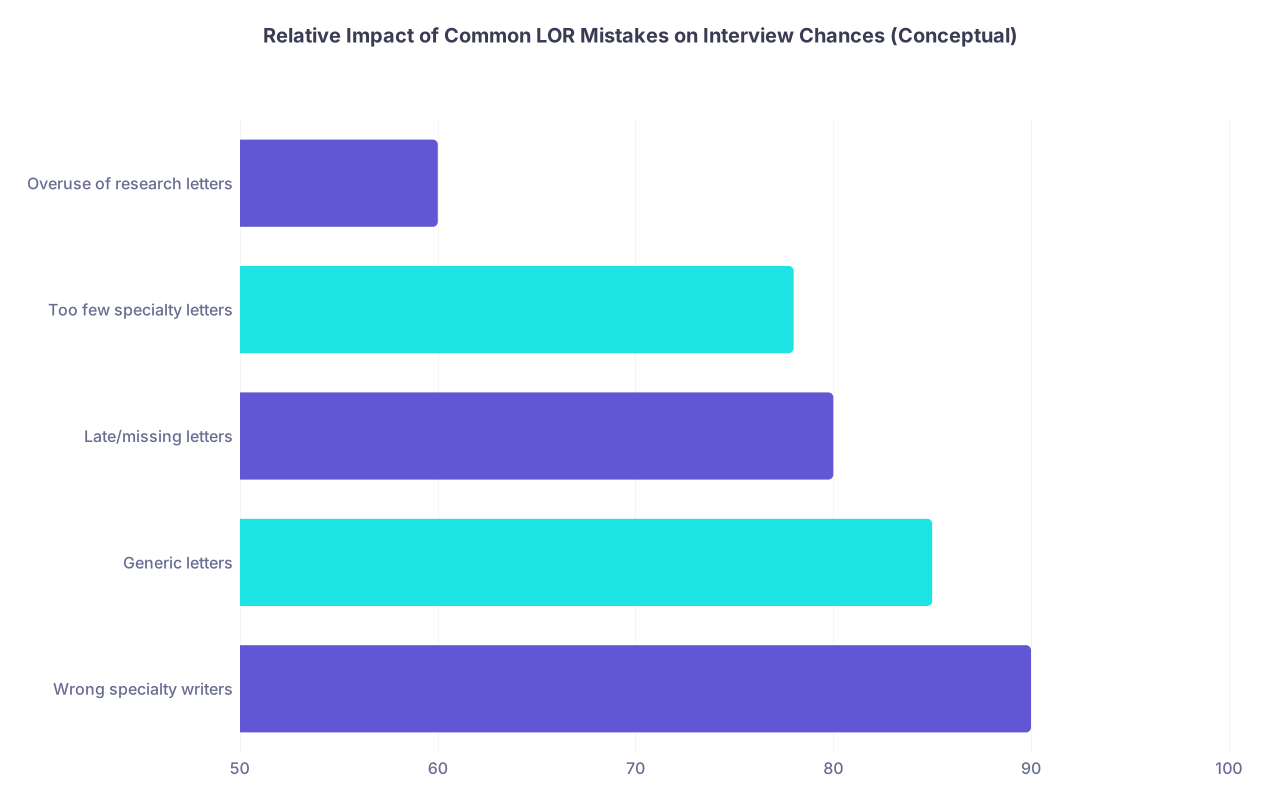
| Category | Value |
|---|---|
| Wrong specialty writers | 90 |
| Generic letters | 85 |
| Late/missing letters | 80 |
| Too few specialty letters | 78 |
| Overuse of research letters | 60 |
FAQ (Exactly 3 Questions)
1. Is it better to have a famous name with a generic letter or a lesser‑known attending with a detailed, enthusiastic letter?
Take the enthusiastic letter almost every time, especially in competitive specialties. A big name with a bland, template letter signals, “This person rotated with me but did not stand out.” A lesser‑known attending who can rank you, compare you to residents, and give rich detail often carries more weight than a celebrity signature that says nothing.
2. How many letters should I have specifically from my target specialty for a competitive residency?
Aim for at least two strong letters from your target specialty, ideally three if the field is extremely competitive (derm, ortho, neurosurg, ENT, plastics, ophtho, urology, rad onc). At least one of these should be from a home or away Sub‑I attending; a department leader (chair/PD) is very helpful if they can write more than a template.
3. What if my home institution does not have the specialty I want (e.g., no derm, no ENT)?
Then your away rotations become non‑negotiable, not optional. You must secure at least one, preferably two, away rotations in that specialty and treat them like month‑long interviews. Your key letters will come from those rotations. Explain this situation in your application or personal statement if needed, but do not use it as an excuse for lacking same‑specialty letters when others in your situation managed to get them.
Key takeaways:
- The wrong writer, wrong specialty, or generic content can quietly destroy your chances in competitive residencies.
- You must actively manage timing, writer choice, and preparation—letters are not a passive formality.
- Specialty‑aligned, detailed, and clearly enthusiastic letters from people who actually know your work are non‑negotiable if you want to be seriously considered.