
This article is for educational purposes only. It is not financial advice, not legal advice, and not tax advice. Figures vary by individual circumstances, so consult a qualified professional before acting.
The Scenario: You Want a Competitive Specialty, But No Away Rotation
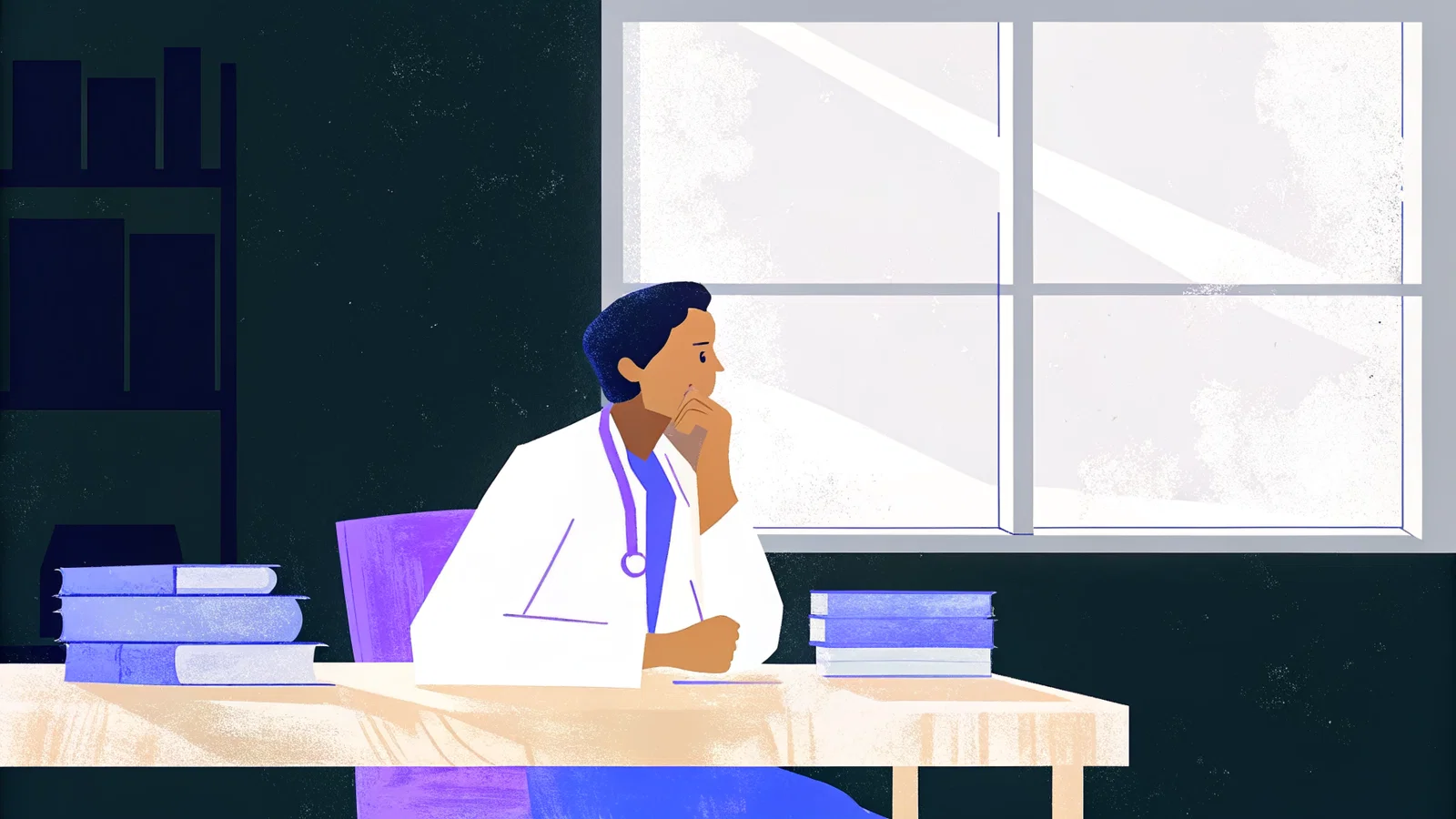
You're staring down the barrel of applying into Neurosurgery, Dermatology, or Plastics. The match for these fields is brutal. Historically, the golden ticket was the away rotation. You'd go to a target program, grind for four weeks, shake the right hands, and secure an interview. But you didn't get a spot. Or maybe institutional red tape or new regulations shut you out.
It's terrifying. I've seen students completely derail their application cycles because they let the lack of an away rotation convince them they weren't "serious" candidates. That's nonsense.
Here's the goal: Prove to program directors that you are committed, competent, and knowledgeable about their field despite the lack of in-person exposure at their institution.
You have to shift your mindset immediately. Stop dwelling on "I didn't get a spot." Start operating from "I have maximized every other avenue available to me." Away rotations are a privilege, not a prerequisite. You don't need to be in their building to prove you belong in their program. Here are five ways to do exactly that.
1. Master the Research Pipeline (The Paper Trail)
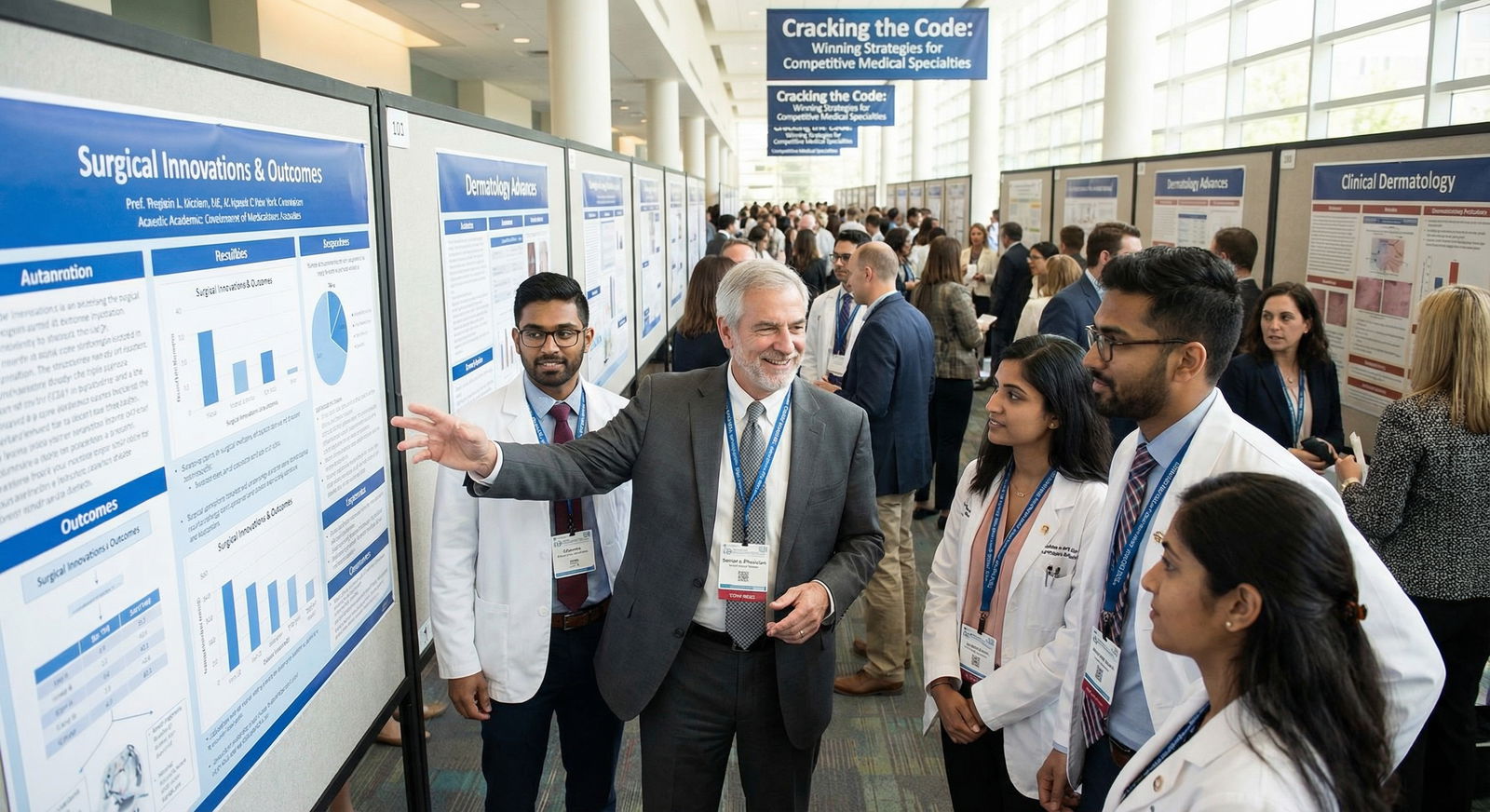
If you can't show them your clinical skills in person, show them your academic rigor on paper. A first-author publication or a national conference presentation is the strongest non-clinical signal of interest you can possibly send. It proves you can identify a problem, manage a project, and follow through to publication.
Don't just do "research." Do high-yield research. Program directors in competitive specialties want to see work that matters to their field. Clinical outcomes, quality improvement projects, or basic science investigations directly relevant to the specialty. A case report is fine if you're a first-year medical student, but by application season, you need original data.
The timeline is critical here. You can't decide in July that you want to publish a paper for September applications. You need a pipeline running months in advance.
Find a gap in the literature. Secure a mentor who actually publishes, not someone who just says they do. Execute the study, collect the data, run the stats, write the manuscript. Submit it. Even if it's just under review or accepted as a poster at the time of your ERAS submission, it counts. But published is better. Accepted is good. Submitted is baseline. Do the work, build the paper trail, and let your CV do the talking.
2. Leverage Virtual Sub-Internships and Online Curricula
The medical world woke up to virtual learning a few years ago, and some of it actually stuck. Many competitive programs now offer virtual sub-internships or online didactic curricula specifically for applicants who can't travel. If you aren't taking advantage of these, you're leaving points on the board.
Look for dedicated online curricula, like the ACGME online modules for Surgery or Neurology. Complete them. Get the certificates. Put them in your application. It shows initiative. It shows you went looking for the material when you couldn't get it in person.

But here is the key: Treat these virtual experiences with the exact same rigor as in-person ones. Don't just play the videos in the background while you cook dinner. Be present. Ask questions. Complete the assignments. Follow up with faculty via email to discuss the cases. If a virtual sub-I includes a Zoom morning report, show up early, introduce yourself, and contribute. Make them remember your name even if they never see your face in their hallway.
3. Maximize Local Clinical Exposure and Shadowing
Your home institution is your safety net. If you want to go into Dermatology but your school doesn't have a home program, you still likely have local attendings in the community. Reach out to them.
Don't just ask for a one-day shadowing experience. Ask for extended shadowing. Propose a longitudinal clinic experience where you come in once a week for three months. Be useful. Offer to help with their research or quality improvement projects.
Volunteer for local community health initiatives that involve your target specialty. If Plastics attends a burn clinic, go volunteer. If Neurology runs a stroke screening event at a community center, show up.
Document everything. Keep a meticulous log of your hours, the topics discussed, and specific clinical cases you observed. Why? Because you will need these specific details for your personal statement and interview trail. "I shadowed a local dermatologist for 40 hours" is boring. "I observed the diagnosis and management of cutaneous T-cell lymphoma over a longitudinal shadowing experience with Dr. Smith" is a story.
4. Craft a Narrative-Driven Personal Statement
The personal statement is where applicants without away rotations routinely fail. They panic and write a generic essay about "wanting to help people." Program directors in competitive specialties read thousands of these. They don't care that you want to help people. They assume you do. They want to know why you want to help people in their specific field.
Your personal statement must explicitly connect the dots. You don't have the away rotation to bridge the gap, so your writing has to do the heavy lifting. Connect your research, your virtual sub-internships, and your local shadowing directly to your passion for the field.
Describe a specific clinical vignette or research finding that sparked your interest. Did a specific patient case during your local shadowing change your perspective? Did your data analysis reveal something unexpected that you find fascinating? Talk about that.
Quantify your impact. Don't just say you "did research." Mention the specific metrics from your study. Don't just say you "helped in clinic." Mention the number of patients you assisted and the specific procedures you observed. Make it real.
A strong research portfolio combined with a compelling narrative can absolutely compensate for a missing away rotation. Program directors know the match is a game of chance and logistics. If you prove your commitment on paper, they will overlook the missing in-person month.
5. Build a Digital Professional Presence
If you aren't on LinkedIn and Twitter (X) as a medical student applying to competitive specialties, you are invisible. This isn't about posting selfies. This is about professional visibility.
Optimize your profiles. Your LinkedIn headline shouldn't just be "Medical Student." It should be "Medical Student | Aspiring Neurosurgeon | Neuro-oncology Research." Highlight your research interests and clinical focus. Make it easy for a program director to find you and immediately see your commitment to the field.
Engage meaningfully. Follow the residents and attendings at your target programs. Comment on their posts. If an attending publishes a paper, share it and add a thoughtful comment. If a program posts about a recent grand rounds, engage with it.
Don't be a sycophant, but be present. This is low-risk, high-reward networking. Ensure your digital footprint is professional and consistent with the narrative you are building in your application. If your personal statement says you are passionate about global health neurosurgery, but your Twitter feed is empty or full of unrelated noise, it undercuts your story. Build the brand.
Summary: The 'No-Away' Strategy
You cannot control whether you get an away rotation. You can complain about it, or you can control the narrative of your application. Choose the latter.
Combine high-impact research, structured virtual exposure, deep local shadowing, a compelling personal statement, and a professional digital presence. That combination fills the gap left by the lack of an away rotation.
Program directors in competitive specialties aren't looking for the applicant who simply showed up in their hospital. They are looking for commitment and competence. Demonstrate both relentlessly through these five methods, and you will compete with anyone.
Key Takeaways:
- Research publications and conference presentations are the gold standard for demonstrating interest without clinical exposure. Prioritize original data over case reports.
- Virtual sub-internships and online curricula provide a structured way to gain exposure from a distance, but only if you treat them with the rigor of in-person rotations.
- A specific, narrative-driven personal statement is essential to explain your interest and connect your disparate experiences. Avoid generic platitudes at all costs.