
You’re a second- or third-year at a solid but not-famous med school. Community-focused. Limited NIH funding. Your classmates are talking about primary care, hospitalist gigs, maybe anesthesia.
You, on the other hand, keep reading plastics case reports on your phone during lunch. Or ortho biomechanics papers. Or heme-onc trials. You want one of the research-heavy, competitive fields… and you’re realizing your school barely has a basic science building, let alone a big-name PI who’s on every guideline paper.
You’re thinking:
“I’m at the wrong school for what I want.”
You’re also thinking:
“Do I have to transfer? Take an MPH? Am I already screwed?”
You’re not. But you are behind compared to the kid at UCSF who got plugged into an R01 lab in M1.
Here’s what you do if you’re at a non-research school and you want to match into something research-heavy and competitive: derm, plastics, ortho, rad onc, neurosurg, ENT, academic GI, cards, etc.
Step 1: Get Honest About What “Research-Heavy” Actually Means
First problem: most students have a fuzzy sense of what “research-heavy” actually looks like for residency applications.
For the competitive fields, programs expect two things:
- Evidence you understand and can contribute to the academic side of the specialty.
- A signal you’re serious enough about their field to have spent time producing work in it (or adjacent).
That usually translates into:
- Multiple publications/posters/abstracts.
- Some first- or second-author work.
- Specialty-aligned projects (not just one random M1 summer paper in nephrology if you’re applying ortho).
- Strong letters from research mentors who are known or at least clearly established.
Now, let me be blunt:
The average successful applicant to top derm/plastics/ortho programs is not sitting on “2 posters and a QI project.”
For realistic competitiveness at strong academic programs, you want something like:
| Target Tier | Examples | Rough Research Goal by Application Time |
|---|---|---|
| Very High (Derm, Plastics, Rad Onc, Neurosurg) | Top academic programs | 6–15+ pubs/abstracts, with 2–4 in-field, some first-author |
| High (ENT, Ortho, IR, Academic Cards/GI) | Strong academic or mid-tier | 4–10+ items, at least 2 specialty-related, 1–2 first-author |
| Moderate (Academic IM, EM, OB for fellowships) | Most academics | 2–5 projects, can be mix of QI, retrospective, case reports |
This is not a hard rule, but it’s a reality check.
You’re at a non-research school. So you can’t afford:
- Dead projects that never publish.
- Three-year basic science slogs.
- “We’re still collecting data” black holes.
You need fast(er)-cycle output: retrospective reviews, database studies, case reports, small QI, survey-based projects, and multi-institution collaborations where you can piggyback onto an existing engine.
Step 2: Decide Your Strategy: Local vs External vs Hybrid
You have three main paths. Most serious applicants end up with a hybrid.
Path A: Squeeze Your Home Institution for Everything It Has
Even community-heavy, low-NIH schools have some research. It’s often:
- QI projects run by clinically busy faculty.
- Chart reviews on local patient populations.
- Case series and case reports.
- Education research.
- Occasionally, one or two subspecialists quietly publishing a few papers a year.
Your first move: map the terrain brutally well. Not what the website says. What’s actually happening.
Do this:
- Pull every recent publication with your med school or hospital name in it.
- PubMed search: “[Your school] [city] [hospital name]”.
- Google Scholar same thing.
- Build a simple spreadsheet:
- Columns: Faculty name, specialty, type of study, journal, year, topic, your interest level (0–3).
- Find who’s (a) alive, (b) publishing in the last 3–4 years, and (c) within orbit of your target field or at least internal medicine/surgery/onc.
This gives you a realistic picture: maybe your school has:
- A cardiologist doing outcomes research.
- A general surgeon doing trauma retrospective reviews.
- An oncologist doing case series and some cooperative group stuff.
That’s your first node.
Path B: Attach Yourself to External, High-Output Groups
Because your school may max out at 2–3 pubs a year per faculty member, you likely need external firepower.
That can mean:
- Remote research with big centers (Mayo, Cleveland Clinic, MD Anderson, UCSF, etc.).
- Summer or dedicated research year at another institution.
- Multi-institution collaborative groups (orthopedic collaboratives, neurosurgery QOD, derm registries, etc.).
This is how students from tiny Caribbean or DO schools still match derm or neurosurg. They basically “borrow” another institution’s infrastructure via research.
Path C: Hybrid (The Smart Path)
You:
- Exploit every home opportunity (for letters, easy first-author, local support).
- Layer on an external group for volume and prestige.
If you’re early (M1/M2), you can do both over time.
If you’re late (M3 or start of M4), you probably lean heavier on external because you need speed and name recognition.
Step 3: Build a Research “Engine,” Not Just Random One-Offs
Here’s the mistake I see constantly:
Student jumps on a cardiac QI project, a med ed survey, a surgery case report, an EM chart review. Ends up with five half-finished things, nothing finished by ERAS.
You need an engine—a repeatable model that lets you go from idea to output multiple times.
Target project types that:
- Are within a single specialty or two adjacent specialties.
- Can be repeated with different datasets or slightly different questions.
- Use the same tools/skills (same database, same stats pipeline, same mentor network).
For example, if you’re aiming for ortho from a non-research school:
- Get connected to ANYONE doing musculoskeletal/trauma/sports surgery outcomes.
- Start with:
- A retrospective chart review on a common fracture pattern.
- A systematic review/meta-analysis (yes, it’s grunt work, but it’s learnable and doable remotely).
- A couple of case reports or technique notes.
- Learn the pattern: IRB → data pull → clean → run basic stats → draft → submit.
Now you can repeat the pattern for:
- Another anatomical site.
- Another outcome measure.
- Another time frame.
Output compounds when you can do similar projects faster each time.
Step 4: How to Actually Get Onto Projects (Script Included)
At a non-research school, people won’t chase you. Busy faculty barely have time to breathe. You need to be the easiest “yes” they’ve had all year.
Here’s a straightforward outreach structure.
For Home Institution Faculty
Send something like this (and mean it):
Subject: Medical student eager to help with your research in [field]
Dear Dr. [Name],
I’m a [MS1/MS2/MS3] at [School] very interested in [specialty]. I’ve been reading your recent work on [1 specific paper or topic – show you actually looked it up] and would love to help with any ongoing or upcoming projects.
I can commit [X hours/week] and am comfortable with [list of skills you actually have: basic stats in R/SPSS, data extraction from charts, literature reviews, manuscript drafting, etc.]. I’m specifically hoping to gain experience in [outcomes research/retrospective chart review/QI/case reports], and I’m very motivated to see projects through to publication.
If you’re open to it, I’d appreciate 10–15 minutes to see where I might be useful to your current work.
Best,
[Name]
[Year, School]
[Phone, Email]
Two key pieces:
- You reference a specific paper or line of work.
- You clearly communicate reliability and a desire to see projects all the way to publication.
For External Institutions
Your pitch is similar but more humble:
I’m a [year] medical student at [school], which has limited research in [specialty]. I’m very interested in pursuing [field] and would be grateful for any opportunity to support your ongoing projects remotely, particularly with [data abstraction, systematic reviews, literature reviews, etc.]. I’m used to working independently and can commit [X hours/week].
You will get ignored a lot. That’s fine. You don’t need 20 people. You need one or two high-yield mentors.
Step 5: Use Time Windows Ruthlessly
You’re at a structural disadvantage. You can’t waste the few big blocks of free-ish time you get.
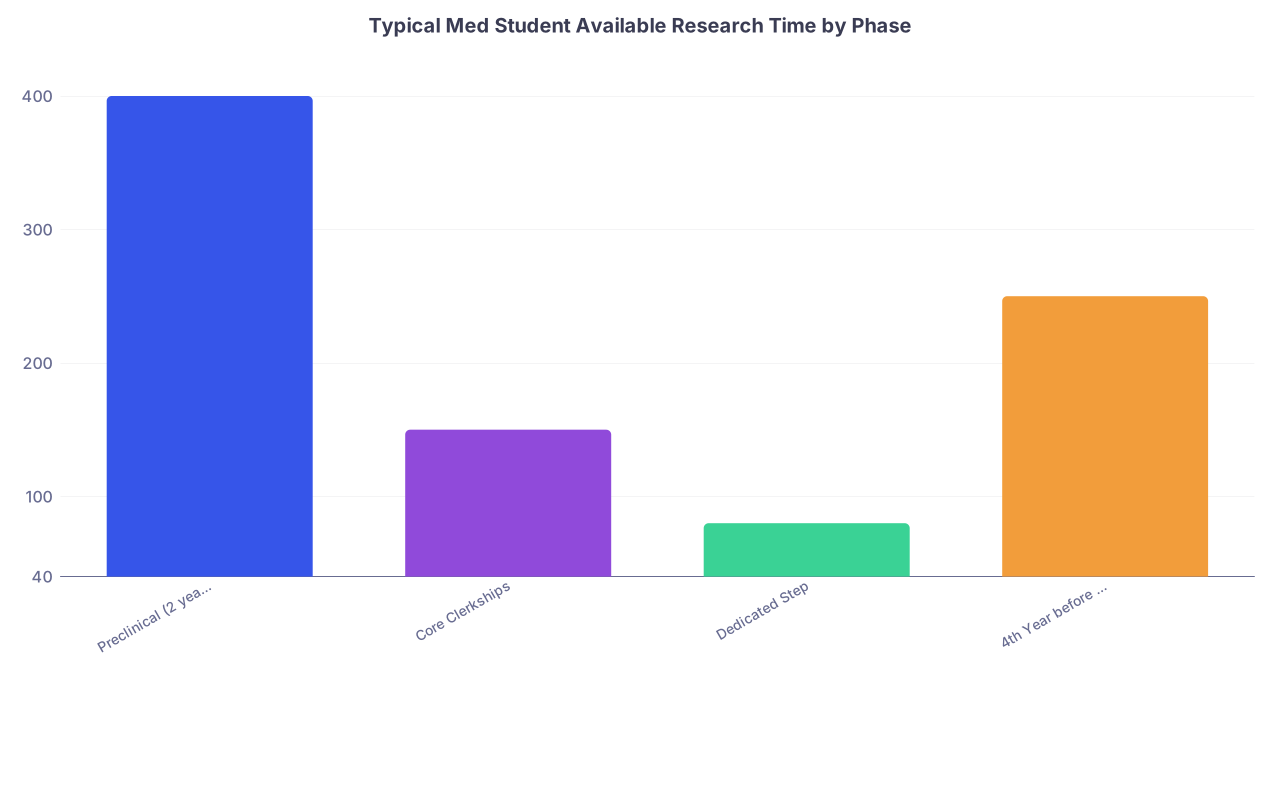
| Category | Value |
|---|---|
| Preclinical (2 years) | 400 |
| Core Clerkships | 150 |
| Dedicated Step | 80 |
| 4th Year before apps | 250 |
Rough idea:
- Preclinical: Nights + weekends + summers. This is your build phase.
- Core Clerkships: Smaller but consistent chunks—early mornings, post-call, golden weekends. This is your execution/finishing phase.
- Dedicated Step time: Minimal research unless your score is locked. Don’t sabotage your boards.
- M4 pre-ERAS: 2–3 months where you should be mainly polishing, submitting, and finalizing.
If you’re M1–early M2 at a non-research school shooting for a research-heavy field and you’re not stacking projects in preclinical years, you’re putting yourself in a real hole.
Step 6: Play to Fast Outputs: What Actually Works
Let me rank common project types by speed/usefulness for someone in your position.
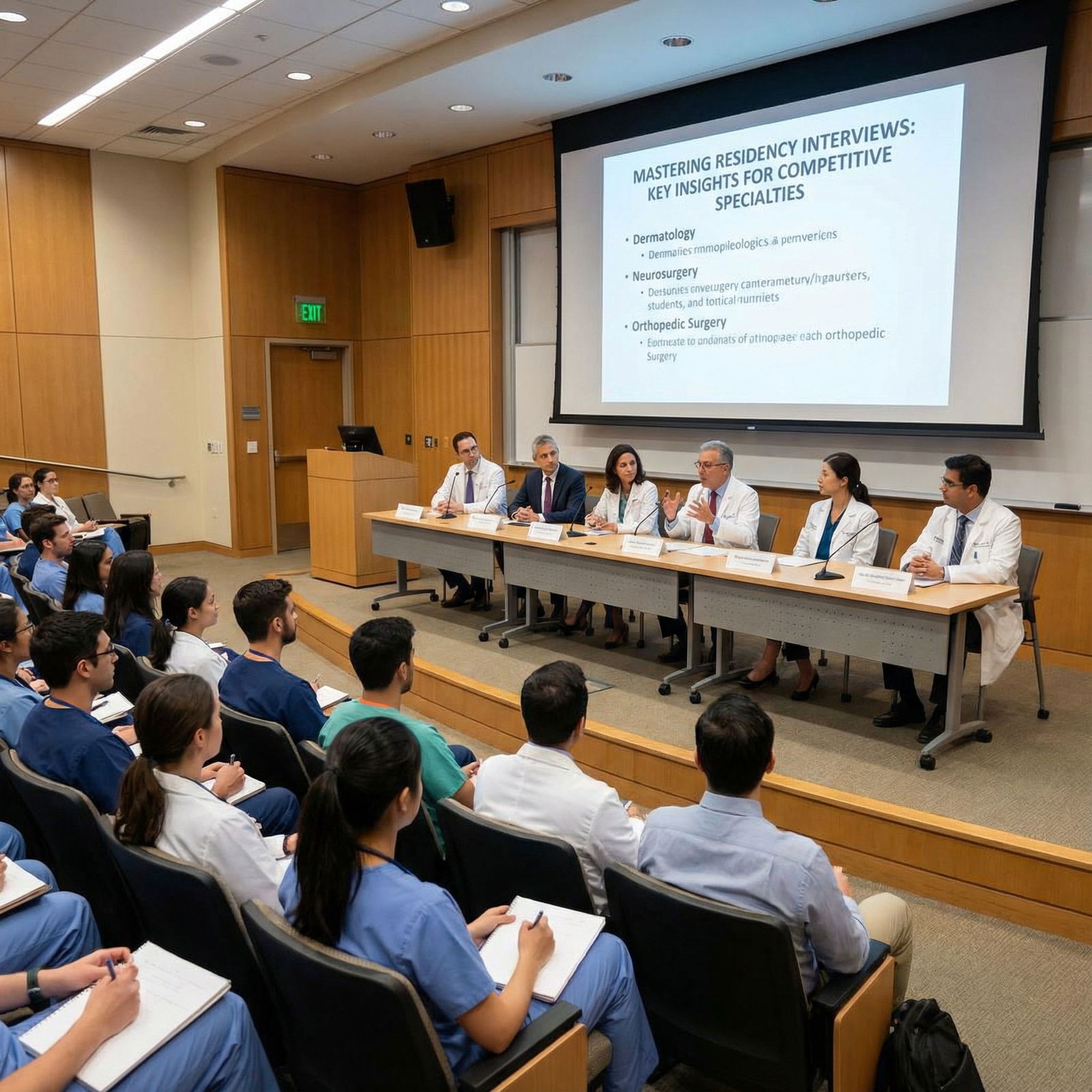
High-Yield for Non-Research Schools
Case Reports / Case Series
- Pros: Fast, good for early CV building, realistic for community hospitals (rare presentations still show up anywhere).
- Cons: Low impact factor, but they show you can complete a project.
Retrospective Chart Reviews
- Pros: Perfect for community settings with EMR access, can be 1–3 first-author papers if scoped well.
- Cons: Need IRB and decent data quality.
Systematic Reviews / Meta-Analyses
- Pros: Can be done 100% remotely, great if you have a method-savvy mentor, often publishable without a huge institution.
- Cons: Time-consuming, can get scooped if you’re slow, need attention to detail.
QI Projects
- Pros: Very doable locally, EM and IM love them, often presentable at regional and national conferences.
- Cons: Not all QI gets published; some stays as “poster only”.
Medium Yield
Survey Studies
- Pros: Possible even from nowhere if you tap into national listservs or specialty societies.
- Cons: Response bias, IRB headaches, many die in data collection.
Education Research
- Pros: Easier to start where there’s a med school, good for academic IM/EM/peds.
- Cons: Reviewers are picky, and the impact is sometimes softer for heavily science-oriented fields like ortho or neurosurg.
Low Yield for You Right Now
- Basic Science Bench Work
- At a non-research school without serious infrastructure? High risk of:
- No publication before you apply.
- Projects stalling when the single tech leaves.
- If you have legit access to a functioning bench lab and you’re early (M1), okay, maybe. But if you’re already M2+ and behind, this is a trap.
- At a non-research school without serious infrastructure? High risk of:
Step 7: Handle the “Name Brand” Problem
You’re thinking: “Will anyone care about a case series in a mid-tier journal from [Small Community Hospital]?”
Here’s the messy truth:
- Yes, big-name institutions have brand halo.
- But volume + in-field + first-author beats a single shiny paper where you were author #12 on one project at Harvard.
Programs look at:
- Number of in-field outputs.
- Authorship position.
- Evidence of continuity (you did ortho-ish stuff for two years, not one derm poster then random nephrology).
- Whether your letters from mentors say things like “top 1–2% of students I’ve worked with, carried this project.”
You’re building a story:
“I wanted [specialty]. My school didn’t have much. So I found or built projects, learned the methods, and produced tangible work anyway.”
That story lands, especially if your board scores and clinical performance are solid.
Step 8: Consider a Dedicated Research Year—But Don’t Romanticize It
This is the nuclear option. Sometimes needed, sometimes a bad detour.
A research year makes sense if:
- You’re aiming for ultra-competitive (derm, plastics, neurosurg, ENT, rad onc) AND
- You started late or came from zero-research background AND
- You can land at a high-output academic center with mentors in that specialty.
Signs it may be worth it:
- A big-name department explicitly says, “If you come for a year, we can put you on multiple ongoing projects.”
- You’d have 2–3 active mentors, not just one busy attending.
- Past research fellows from that group have matched well.
Don’t:
- Take a research year staying at your low-output home institution doing one QI project and a half-finished chart review. That’s just delaying graduation.
- Assume “research year” on paper impresses anyone. Only the output and letters matter.
If you do it, approach it like a full-time job:
- 40–60 hours/week.
- Aim for 5–10+ submissions (abstracts, posters, manuscripts).
- Get into the writing and analysis, not just data grunt work.
Step 9: Optimize Your CV Presentation
You’re from a non-research school. Your CV isn’t going to look like the Harvard MD-PhD kids. But you can present what you do have intelligently.
Organize your research section clearly:
- Separate “Accepted / Published” from “Submitted / In Preparation.”
- Be honest, but don’t undersell. If it’s accepted, list the journal.
- If it’s only “in preparation” with no draft: cut it. Programs can smell fluff.
When you list activities:
- Highlight in-field, first-author items near the top.
- For each, be ready to talk in detail: hypothesis, methods, what you actually did, limitations.
And for your personal statement / interviews:
- You can directly acknowledge:
“My medical school is primarily community- and clinically oriented, with limited formal research infrastructure. Because of that, I had to be very intentional in seeking out research opportunities in [field], including [brief specifics].”
Spoken confidently, that reads as initiative, not excuse.
Step 10: Don’t Forget the Rest of the Application
You’re hyper-focused on research because you’re behind. That’s rational. But if you chase research and torch everything else, you’ll still lose.
For research-heavy competitive specialties, the application triangle is:
- Strong research portfolio.
- High board scores (or strong clinical performance when Step 1 is P/F).
- Concrete specialty commitment (aways, letters, good narrative).
You can’t be:
- Mediocre clinically, with decent research.
or - Brilliant clinically, with zero research.
If you’re at a non-research school, your clinical exposure is often excellent. Use that. Be the student that every attending would rehire. Those letters matter almost as much as your pub count.
A Quick Example Path (So You Can Sanity-Check Yourself)
Let’s say you’re MS2 at a non-research MD/DO program, want ortho, and currently have zero research.
A realistic 18–24 month path might look like:
Months 0–2:
- PubMed your school. Find a trauma surgeon and a sports med ortho at your affiliated hospital.
- Get onto 1–2 chart reviews + 1 case series.
- Start a systematic review on ACL repair outcomes with an external mentor you cold-emailed.
Months 3–8:
- Push the chart review through IRB → data extraction.
- Draft the systematic review; submit to a mid-tier ortho journal.
- Present a case at a regional meeting.
Months 9–14 (during clerkships):
- Wrap the chart review manuscript; submit.
- Start a second, similar chart review using same methods (different fracture or outcome).
- Help your external group on a couple of smaller spin-off projects (added as middle author).
Months 15–20:
- By now you should have:
- 1–2 accepted/published projects (maybe case or review).
- 2–4 under review or in revision.
- Secure strong letters from your clinical ortho rotations and your main research mentor.
- Apply with a believable story and 4–8 tangible research items.
- By now you should have:
Is that going to match you into the #1 ortho program in the country? Probably not. But it puts you into a serious conversation at a lot of good academic programs, especially given your starting point.
Key Takeaways
You’re not doomed by being at a non-research school, but you are behind. You fix that by building a repeatable research engine with fast-output project types, not random one-offs that never publish.
Hybrid is best: squeeze everything you can from your home institution for accessible, often first-author work, and layer on external collaborations or a focused research year at a high-output center if your specialty and timeline demand it.
Your story has to be coherent: “limited local resources, so I proactively created real research in this field anyway,” backed by actual pubs/posters, strong specialty letters, and solid clinical performance.