
It's 4:00 in the morning in your head, even if the clock says noon.
Your phone is buzzing. Group chats are lighting up. Somebody already typed "Matched!!!" with too many exclamation points, and you're staring at a portal that just told you the thing you built your whole personality around did not happen. Not this year. Your chest drops. Your ears ring. You start doing what every unmatched applicant does in the first five minutes: catastrophizing with Olympic-level efficiency.
Let me tell you what really happens behind the curtain. Not matching feels personal, but inside programs, it's mostly logistical. Brutal, yes. Emotional, obviously. But still logistical. Program directors aren't sitting around deciding your worth as a future physician. They're staring at incomplete rank outcomes, open slots, visa limitations, institutional pressure, and a clock that moves way faster than applicants realize. They knew before the public celebration posts started that some people were going to be left standing in the hallway.
That's the first secret. The panic is real. The shame is mostly borrowed. And the problem in front of you is operational, not moral.
The 4:00 AM Panic: The Reality of Not Matching
I've watched applicants hit this wall in real time. One minute they're rereading old interview thank-you emails, convinced they "felt a connection" with a program. The next, they're calling an advisor, crying in a stairwell, saying they must have ruined their career. That jump, from disappointment to identity collapse, is fast. Way too fast.
Here's what program directors know that applicants don't. They are not just evaluating you. They are tracking their own list, their own holes, their own institutional headaches. By the time unmatched applicants are spiraling, faculty leaders are already in emergency mode. They're looking at who dropped lower than expected, who overfilled elsewhere, what backup specialty candidates are in the pool, whether they can support a visa, whether the chair is going to start asking questions. You are not invisible. But you are also not the center of their emotional universe. That's good news, actually. It means this process is less about humiliation than you think.
Not matching is a terrible feeling. It is not a verdict on whether you belong in medicine.
And yes, I'll say the unfashionable thing: sometimes not matching your first choice saves you. I've seen applicants force themselves into specialties they only ranked because of prestige, family pressure, or ego. Then they SOAP into a preliminary year, regroup, rotate with intention, and end up in a field that actually fits them. Better attendings. Better culture. Better life. A softer landing than they ever imagined while they were panic-refreshing the results page.
That doesn't make the sting disappear. It just means this isn't the end of your story unless you decide to make it the end.
The SOAP: The 'Real' Scramble
SOAP is the real scramble. Not the old legend where desperate applicants cold-call programs and charm their way into a spot. That story refuses to die because medicine loves outdated folklore. But for most applicants, especially IMGs and many DOs, that fantasy is useless.
SOAP, the Supplemental Offer and Acceptance Program, is the formal mechanism for filling unfilled positions after the Match. Formal sounds nice. Don't be fooled. It's controlled chaos with policy language wrapped around it.
The timeline is tighter than most students grasp. Programs review applications at speed. Advisors start making calls within the permitted structure. Applicants rewrite personal statements on the fly, redirect letters, and suddenly become deeply interested in geographic regions they mocked two months ago. You don't have days to soul-search. You have hours to decide whether survival this year matters more than pride.
Here's what really matters in SOAP: readiness, responsiveness, and realism. Not vibes. Not "fit." Not the dreamy narrative you sold yourself during interview season.
Programs hate SOAP. They do. It wrecks the neat class-building process they wanted. It creates uncertainty. Faculty have to review candidates quickly, often with incomplete confidence and limited time. Coordinators are juggling frantic communication. Chairs want stability. Nobody is having fun. But programs still need bodies in seats by July, and SOAP is the legal, structured path to get there.
Now the part applicants need to hear without sugarcoating: once a SOAP spot is posted, competition is immediate. Maybe not literally gone in minutes in every case, but close enough that if you act slowly, the effect is the same. Delay is deadly. If you are still debating whether a preliminary medicine year is "beneath" your long-term goals, someone else has already accepted it and bought themselves another shot at a full career.
SOAP is transactional. That sounds cold because it is. You may get an offer from a place you never considered, in a specialty you didn't rank highly, in a city you can't picture yourself living in. And you may have to say yes before your emotions catch up. That's not romantic. It's adult medicine. Sometimes you take the foothold first and build the mountain story later.
The Transitional Year (TY): The Golden Safety Net
Let me be blunt: a Transitional Year is not a waste of time. People who say that usually haven't had to claw their way back after a bad cycle.
A TY year is one of the smartest reset buttons in the entire post-match universe. It buys time, structure, credibility, and survival. You keep moving clinically. You remain inside the hospital ecosystem. You get fresh evaluations from attendings who can say, "This person works hard, takes feedback, and functions like a resident." That is gold when you reapply.
And yes, this applies to USMDs, DOs, and IMGs. The TY isn't some weird side road for one group. It's a strategic holding pattern for people who still intend to land well. During that year, you can improve a weak Step 2 CK score, fix your letters, build stronger US clinical experience, demonstrate professionalism, and prove that your application problem was temporary rather than terminal.
Here's the insider truth people whisper but rarely print: some program directors genuinely like residents coming from TY or prelim settings because those applicants have been humbled. They show up early. They answer pages. They don't act like stars because they know exactly how close they came to missing the train. I've heard faculty say versions of the same thing over and over: "They're hungry, and hungry residents work."
Is that universally fair? No. Is it real? Absolutely.
For IMGs especially, a TY or preliminary year can transform how programs see you. On paper, an IMG can feel risky to some institutions, fairly or unfairly. In person, on the wards, after a year of solid work, that same applicant becomes a known quantity. And programs love known quantities. They trust what their own attendings have seen with their own eyes more than any polished ERAS paragraph.
The other advantage is flexibility. You may start the year thinking you're reapplying to one specialty and end it realizing another field likes you more and fits you better. I've seen applicants miss categorical surgery, take a prelim or TY slot, then move into anesthesia, PM&R, neurology, or internal medicine with better long-term outcomes than they would've had by stubbornly forcing the original plan. That's not failure. That's adaptation.
The applicants who do well after a TY year treat it like a launchpad, not a mourning period. Big difference.
Research and Academic Fellowships: The 'Soft Landing'
A research year is not magical. Let's kill that myth too.
Students often talk about "doing research" like it automatically upgrades them into a stronger applicant. No. A random year with weak mentorship, no publications, and vague duties is just unemployment in a white coat. If you're going to do a research year, it needs to be deliberate. Strong mentor. Productive team. Clear output. Abstracts, posters, manuscripts, networking, letters from people with actual credibility. Otherwise you're just hiding.
That said, the right research year can absolutely keep you in the game. Especially if your target specialty values scholarship or if you already have a publication base to build on. It also gives you a chance to repair a narrative problem: "I didn't match, I stayed engaged, I produced work, I matured, and here's the evidence."
Now let's address the piece people are often too embarrassed to ask out loud: can you still be a doctor if you don't match residency? Yes. There are clinical fellowships and physician roles that require the MD degree but not completed residency in the traditional sense, depending on the position and jurisdiction. Some pathways in areas like PM&R-related services, internal medicine-affiliated roles, or anesthesia-adjacent clinical work may be available. These jobs can be competitive and highly legitimate. They are not imaginary consolation prizes.
And no, fellowship itself is not a dirty word associated with failure. Plenty of elite physicians pursue fellowships because they want narrower expertise, not because they couldn't survive broad training. That's normal medicine. The key is understanding which fellowships are accessible to you without residency completion and which are not. Plenty of applicants confuse these categories and waste precious time chasing impossible options.
If clinical medicine starts to feel less like a calling and more like a hostage situation, academic medicine may be the cleaner pivot. A real research year can lead toward a PhD, outcomes research, medical education, industry science, or faculty-track work. Not everyone needs to force a residency reapplication if the deeper truth is that they no longer want the clinical path they've been defending for years.
That's another secret no one says loudly enough: after a failed match, some applicants discover they were chasing the wrong life.
The Scramble: A Myth for Most
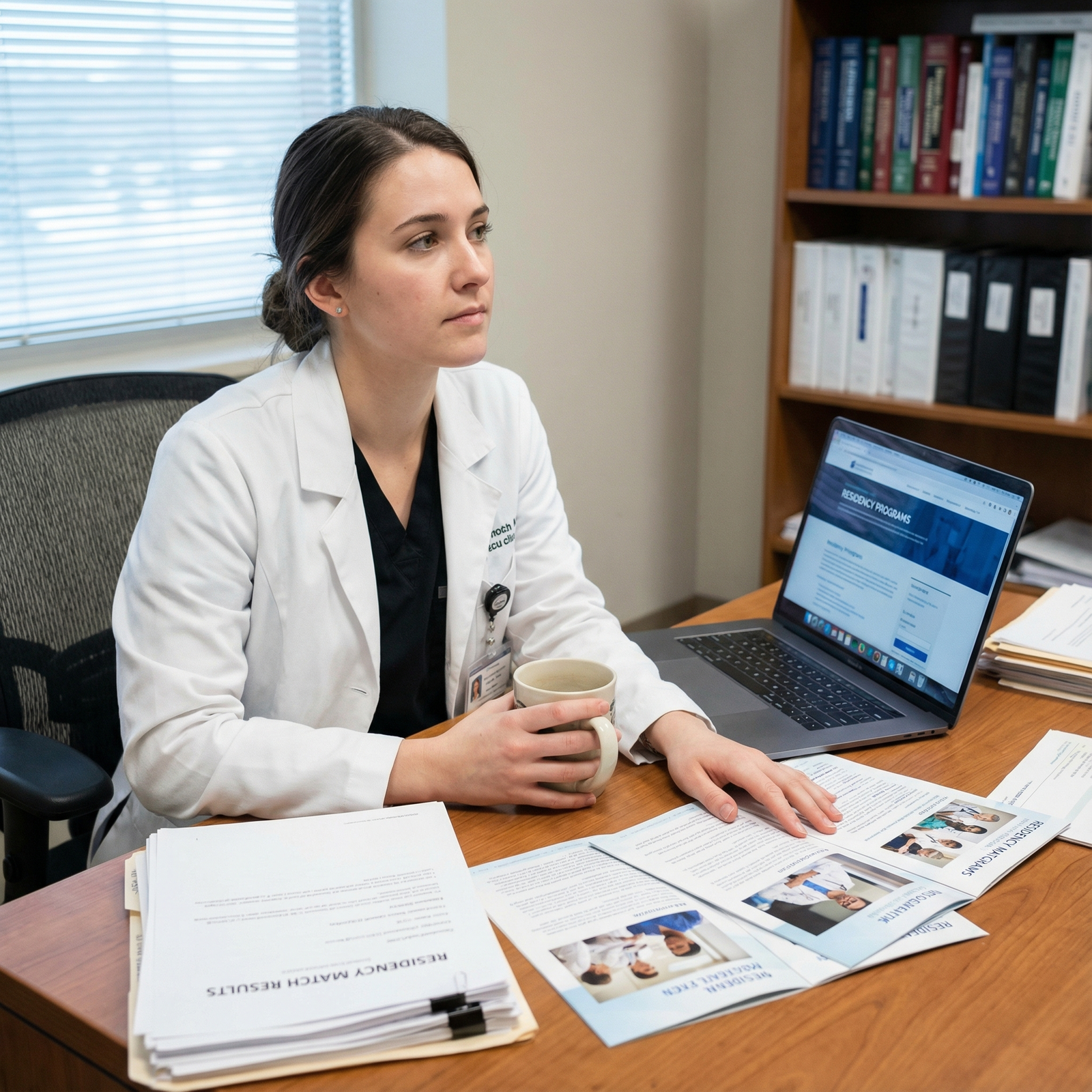
Can you just call programs directly and ask for a spot?
Stop it. Seriously, stop.
The old "scramble" image, calling every program in America while your dean faxes documents like it's 1997, is mostly mythology now, especially for IMGs and DOs. Programs are required to use the SOAP structure for unfilled positions. If you call directly outside that process expecting a backdoor, you're announcing that you don't understand the rules at the exact moment they want applicants who are organized and compliant.
Will a tiny number of highly connected applicants with unusual leverage manage off-cycle conversations? Sure. Medicine always has exceptions for the well-positioned. But betting your future on being the exception is dumb. Most direct outreach in the immediate unmatched window will either be ignored or politely redirected.
The harsher truth is this: IMG applicants usually face fewer available SOAP opportunities, and the available spots may be in less desired specialties, less desired locations, or preliminary positions rather than categorical training. That's why planning for post-match options before results day is not pessimism. It's competence.
And if you do get a SOAP offer, don't wait around for the perfect one. Perfect is gone. Perfect matched in March. What's left is opportunity wrapped in discomfort. Take it seriously.
Closing: The Resilience of the Physician
Prompt: Macro detail photography of a physician’s hand writing on a prescription pad under warm morning light, subtle smile reflected in polished desk surface, crisp pen detail, calm confidence after turmoil, intimate composition, hopeful mood, no text overlays, no watermarks
Not matching hurts because you care. Good. I'd worry more about the applicant who shrugs.
But don't turn one bad result into a false prophecy. I've known attendings with failed board attempts, unmatched cycles, transfers, research detours, visa setbacks, and ugly personal seasons they never put on conference slides. You admire them now because they stayed in the fight long enough to become excellent.
That's what this phase tests. Not just grades. Not just scores. Stomach.
The Match process rewards polish, but medicine rewards resilience. Different skill. And if you're living through the unmatched moment right now, you have a chance to prove the second one in a way many of your peers never will.
The best doctors are often not the smoothest applicants. They're the ones who got hit, adapted, and kept going. If that's you, then get off the floor. Open the portal. Make the next move.