
Can a prelim year help you switch specialties after not matching? Yes. Absolutely. But don't romanticize it.
A prelim year can be a real bridge to a new specialty. It can give you current clinical experience, stronger letters, better networking, and another application cycle with actual momentum behind it. That's the upside. The catch is simple: a prelim year is not magic, and it is definitely not a guaranteed path into a categorical spot.
Here's the practical truth. If you use the year well, it can make you much more competitive, especially if you're pivoting into a field that overlaps with your intern training. If you drift through it, collect generic feedback, and submit the same weak application again, you've just bought yourself an exhausting delay.
A prelim year is usually a one-year internship in medicine or surgery. You work hard, you learn fast, and you stay in the training pipeline while you figure out your next move. For applicants trying to pivot into internal medicine, neurology, psychiatry, anesthesia, surgery, or another specialty that respects hands-on intern-level experience, that can be very useful.
Still, let's be honest. A prelim year won't erase bad board scores, professionalism concerns, poor interviewing, or a sloppy application strategy. It can strengthen your story. It cannot invent one.
This article is for educational purposes only. It is not financial advice, not legal advice, and not tax advice. Figures vary by individual circumstances, so consult a qualified professional before acting.
What a prelim year can do for your specialty switch
The best argument for a prelim year is that it gives you something many unmatched applicants badly need: fresh proof that you can function well in residency. Not as a student. As a doctor. That matters.
If your original application was light on clinical credibility, a solid prelim year can change the tone of your file. Suddenly you're not the applicant who "might do well." You're the applicant who already handled admissions at 2 a.m., wrote orders, talked to consultants, managed pages, and showed up every day without falling apart. Program directors notice that.
A prelim year helps in five major ways:
1. It gives you recent, real clinical experience. This is the biggest win. A lot of reapplicants look stale on paper after graduation, especially if they spent months in limbo. A prelim year fixes that. You're active, supervised, evaluated, and improving. That's much better than trying to explain an empty year.
2. It can produce much better letters. Medical school letters are often polite and vague. Residency letters can be much stronger if you earn them. A good attending can say, "I supervised this intern on a demanding inpatient service, and they were dependable, efficient, coachable, and clinically sound." That's powerful. I've seen average student applications turn into credible reapplications because a chief resident and attending both went to bat for them.
3. It lets you build a real specialty-specific narrative. If you're switching into anesthesia from a medicine prelim, for example, you can seek ICU time, perioperative exposure, airway-related experiences, and faculty connections. If you're leaning toward neurology, you can work with consult services and collect stories that make your choice sound informed instead of desperate. Big difference.
4. It usually makes you better at interviews. Applicants who have actually worked as interns tend to interview better. They're sharper. Less rehearsed. More grounded. They answer questions with concrete examples instead of student abstractions. That's not a small thing. Interviewers can tell who's speaking from lived experience and who's trying to package disappointment into a personal statement.
5. It keeps you moving. This matters psychologically as much as professionally. Sitting out a year can make people feel detached, embarrassed, and hard to mentor. A prelim year keeps you inside the hospital, inside a team, and inside the rhythm of training. That helps.
That said, not every specialty values prelim experience equally.
A prelim medicine year may help a lot if you're pivoting toward neurology, psychiatry, radiology with a separate intern year already needed, or anesthesia depending on your overall profile. A surgical prelim may help if you're trying to stay in surgery or move into a procedural field that values operative exposure and grit. But if you're making a sharp turn into a field with very different expectations, the benefit can drop fast.
And here's the part people don't say clearly enough: a prelim year only works if you use it intentionally. If you spend twelve months just trying to survive and never secure mentors, letters, or targeted experiences, you've missed the point.
Who benefits most, and who should be cautious
The people who benefit most from a prelim year usually have one thing in common: they have a believable next target.
Not a vague idea. Not "I'm open to anything." A real target.
A prelim year is strongest for applicants who:
- had a decent application but matched poorly because of specialty competitiveness, bad luck, or weak ranking strategy
- need stronger recent letters from residency faculty
- want to pivot into a field that overlaps with prelim medicine or surgery
- can network well and ask directly for opportunities
- know how to explain the switch without sounding panicked
Good candidates often include people shifting toward internal medicine, neurology, psychiatry, anesthesia, or back into surgery-related pathways depending on the program and year structure. These are not guaranteed moves, but they're realistic ones.
Now the caution.
If your main weakness is a failed Step history, very low scores, serious professionalism issues, or a pattern of poor evaluations, a prelim year may not be the fix you think it is. Brutal truth. More clinical exposure doesn't automatically repair a fundamentals problem. Sometimes it just adds another set of evaluations that confirm the same concerns.
You also need to be careful about the specific prelim program. Not all prelim years are equal. Some are supportive and plugged into the broader institution. Others work prelims like service labor and give them almost no advising. I've seen both. One medicine prelim year gave interns electives, research time, and faculty mentorship. Another left them so overworked they could barely update ERAS before deadlines. Same label. Very different outcome.
Program culture matters. So does geography. So does whether the institution even has your target specialty in-house. If you're trying to network into anesthesiology and your prelim hospital has weak anesthesia mentorship, that's a problem. If you're trying to pivot and your schedule leaves no room for electives or specialty exposure, that's also a problem.
How to make a prelim year work strategically
If you do a prelim year, don't "see how it goes." That's lazy, and lazy gets punished in reapplication season.
You need a plan by the first month.
Start with four decisions:
1. What specialty are you targeting? Pick one primary direction. You can keep a backup in mind, but your application has to tell one coherent story. Programs don't like applicants who feel random. If your personal statement reads like "I was rejected elsewhere so now I guess this," you're done.
2. What exactly needs fixing? Be specific. Is it letters? Clinical confidence? Specialty exposure? Interview performance? An unclear narrative? Figure that out early. The prelim year should solve a defined problem, not just consume time.
3. Who can help you inside the institution? Find mentors fast. Not in January. Early. Program director, associate program director, clerkship faculty, service attendings, chief residents, people connected to your target specialty. Ask smart questions. Show up. Follow through. People help interns they trust.
4. What is your application timeline? ERAS deadlines don't care that you're busy. Build backwards from application season. You need letters requested well before late summer, a personal statement drafted early, and your experiences updated while details are fresh.
A strong strategy usually looks like this:
First 1-2 months
- Decide whether you're reapplying to the same specialty or switching.
- Meet with your prelim program leadership.
- Tell them your goals directly and professionally.
- Identify faculty who know your work.
- Review your old application brutally. What was weak? What was dead weight? What needs rewriting?
Months 3-6
- Seek rotations, electives, or consult exposure tied to your target field.
- Ask for feedback while there's still time to improve.
- Start building relationships for letters.
- If research matters in your target specialty, join something manageable early. Not a fantasy project that never gets submitted.
Months 6-9
- Request letters from people who can actually advocate for you.
- Rewrite your personal statement around fit, growth, and evidence.
- Update ERAS with concrete intern-level experiences.
- Practice explaining your switch out loud. If it sounds defensive, fix it.
Months 9-12
- Apply broadly but intelligently.
- Prepare for interviews with examples from residency, not med school.
- Keep performing well. Programs may contact your prelim leadership late in the cycle, and yes, your reputation still matters.
Here is what strong letters look like: specific, comparative, and current. You want someone who can say you handled a tough service, communicated well with nurses, improved over time, and would be a good resident in the new specialty. You do not want another vague "pleasant student" letter from someone who barely remembers you.
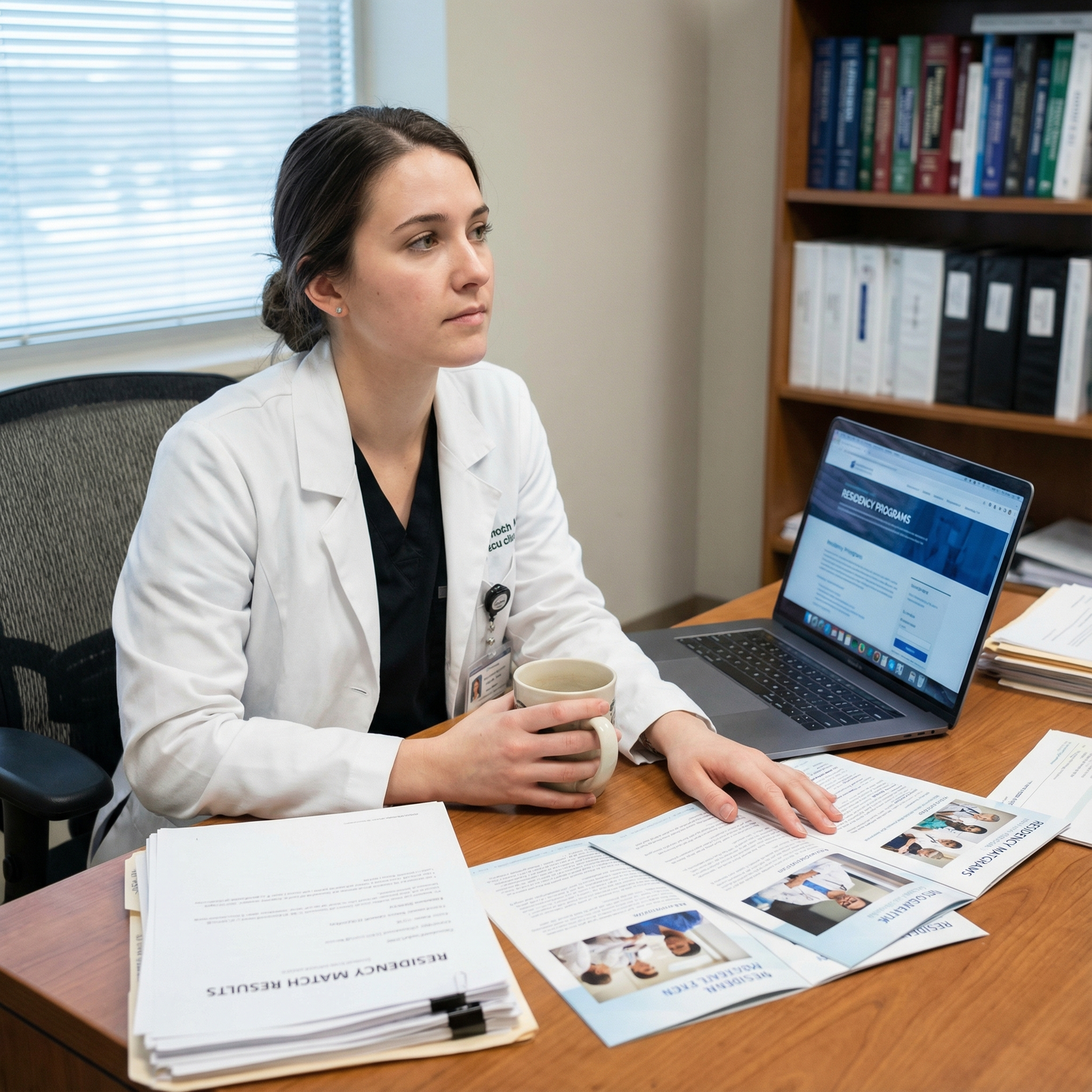
You also need a clean explanation for the switch.
The right answer is honest and intentional:
- what you learned from not matching
- what you discovered during your prelim year
- why the new specialty fits your strengths and interests better
- what you've done to test that decision in the real world
The wrong answer is bitterness. Or blame. Or a dramatic reinvention that nobody believes. Don't tell programs you suddenly discovered your true calling three days after Match Week. That's nonsense, and it sounds like nonsense.
One more practical issue: make sure you understand whether your prelim year counts toward future training requirements. Sometimes it does partly. Sometimes it doesn't. Sometimes a specialty requires a separate PGY-1 structure or only accepts certain preliminary formats. This is where people get burned by assumptions. Check program requirements one by one.
Risks, tradeoffs, and when to choose another path
A prelim year has upside, but it comes with real tradeoffs.
First, it can delay your long-term training if it doesn't actually improve your next application. One year isn't trivial. It's a year of hard work, stress, and another cycle of uncertainty.
Second, reapplying during internship is rough. You're tired, your schedule is chaotic, and you're trying to polish application materials after sign-out or on a rare weekend off. People underestimate this every year. Bad idea.
Third, a prelim year is not always the best fix. If your real weakness is lack of research, weak specialty mentorship, or poor application strategy, a research year or focused advising may be smarter. If your issue is that your original target was unrealistic and your backup specialty is actually a strong fit, pivoting directly may be better than clinging to prelim-year momentum.
And yes, there are personal costs. Location. Family strain. Exhaustion. Starting over socially. Carrying the emotional hit of not matching while still functioning like a professional every day. It's a lot.
Most important: don't switch specialties just because you're wounded. I've seen applicants chase whatever seems attainable after not matching, then end up miserable because the new field was never a real fit. That's a bad trade. Your next move should be strategic, but it also has to be honest.
What to do next if you're considering a prelim year
Here's the action plan.
1. Decide the goal. Are you reapplying to the same specialty, or are you pivoting? Pick one main direction.
2. Define what the year needs to fix. Experience? Letters? Networking? Confidence? A weak narrative? If you can't answer that, don't assume a prelim year is the answer.
3. Get specialty-specific advice before you commit. Talk to a mentor in the target field. Not just your dean. Not just a friend. Someone who actually knows how that specialty views prelim applicants.
4. Build a 12-month plan. Map out rotations, letter writers, projects, ERAS revisions, and interview prep early. Waiting until summer is how good opportunities disappear.
5. Tell a clean, convincing story. Your application should show forward motion. Not panic. Not leftover disappointment. A real reason for the switch, backed by what you've done during the year.
My bottom line: yes, a prelim year can absolutely help you switch specialties after not matching. But only if you treat it like a strategy, not a consolation prize.