
Educational disclaimer: This article is for educational purposes only and is not legal, employment, HR, disability-accommodation, or contract advice. Leave policies, benefits, board rules, and accommodation processes vary by institution, specialty board, and state. For program-specific guidance, review the written policy and consult the residency program, GME office, HR, or a qualified professional.
Yes, you can ask about leave during residency interviews. You should ask if the answer matters to your decision.
That’s the short version. Here’s the part people whisper about: most applicants aren’t actually afraid of the policy question itself. They’re afraid of what the question will make interviewers assume. Pregnancy plans. Fertility treatment. Chronic illness. Caregiving. “Will they think I’m a problem before I even start?”
I’ve seen this anxiety up close. An applicant asks one calm, reasonable question about parental leave, then spends the next week convinced she tanked her ranking chances. Meanwhile, the real issue usually isn’t the question. It’s the delivery, the timing, and whether the program answers like adults or gets weird.
If you’re sorting through broader interview strategy, it also helps to understand how to ask difficult residency interview questions professionally and what signals program culture during interview day.
Interviewers usually care less that you asked and more about how you asked.
That’s the whole game.
A leave question, handled well, signals good things:
- You think ahead
- You understand training is real life, not fantasy camp
- You know policies matter
- You can ask practical questions without making the room awkward
What are they actually reading for?
- Professionalism: Are you calm, direct, and appropriate?
- Planning ability: Are you trying to understand logistics before a major commitment?
- Commitment to training: Do you seem serious about finishing the program responsibly?
- Program awareness: Do you understand that leave affects schedules, coverage, board eligibility, and rotation structure?
Here’s what does not automatically read badly: asking about parental leave, medical leave, caregiver flexibility, disability accommodations, bereavement, or emergency time away. Those are normal questions. Real people have real bodies, real families, and real emergencies. Any residency program pretending otherwise is telling on itself.
The red flags are different. It’s not “she asked about leave.” It’s stuff like:
- Asking about leave in the first two minutes
- Sounding like you’re shopping for loopholes
- Framing the question around how much time you can avoid being there
- Speaking as if the program owes you custom scheduling before you’ve even matched
That lands badly because it suggests entitlement or poor judgment. Not because leave is taboo.
Good programs know this. Bad programs make women feel guilty for asking basic policy questions. Don’t confuse their discomfort with your mistake.
The questions interviewers are comfortable with—and the ones that raise concern
Programs are generally comfortable with thoughtful questions about:
- Parental leave
- Medical leave
- Bereavement leave
- Jury duty
- Conference or professional leave
- Emergency personal leave
- The process for disability accommodations
These aren’t fringe topics. They’re part of running a residency.
Most programs expect these questions to come up at some point, usually:
- Near the end of the interview day
- During Q&A with program leadership
- In a follow-up email to the program coordinator
- Through HR or GME administration for more formal policy details
What raises concern is not the topic. It’s the subtext.
Questions that sound professional
- “Could you tell me how your program handles family or medical leave?”
- “Who is the best contact for questions about leave policy and scheduling logistics?”
- “How does the program approach coverage and resident support when someone needs approved time away?”
- “If a resident needs a formal accommodation, what is the usual process?”
These sound good because they focus on policy, process, and planning.
Questions that sound risky
- “How much time off can I take without it affecting anything?”
- “If I need to disappear from rotations for a while, how flexible is that?”
- “Can I stack leave with vacation to maximize time away?”
- “How often do residents get out of call for personal reasons?”
That wording sounds bad because it frames leave as a workaround, not a legitimate need. It also makes interviewers wonder whether you’re already trying to game the schedule. Fair or not, that’s how it lands.
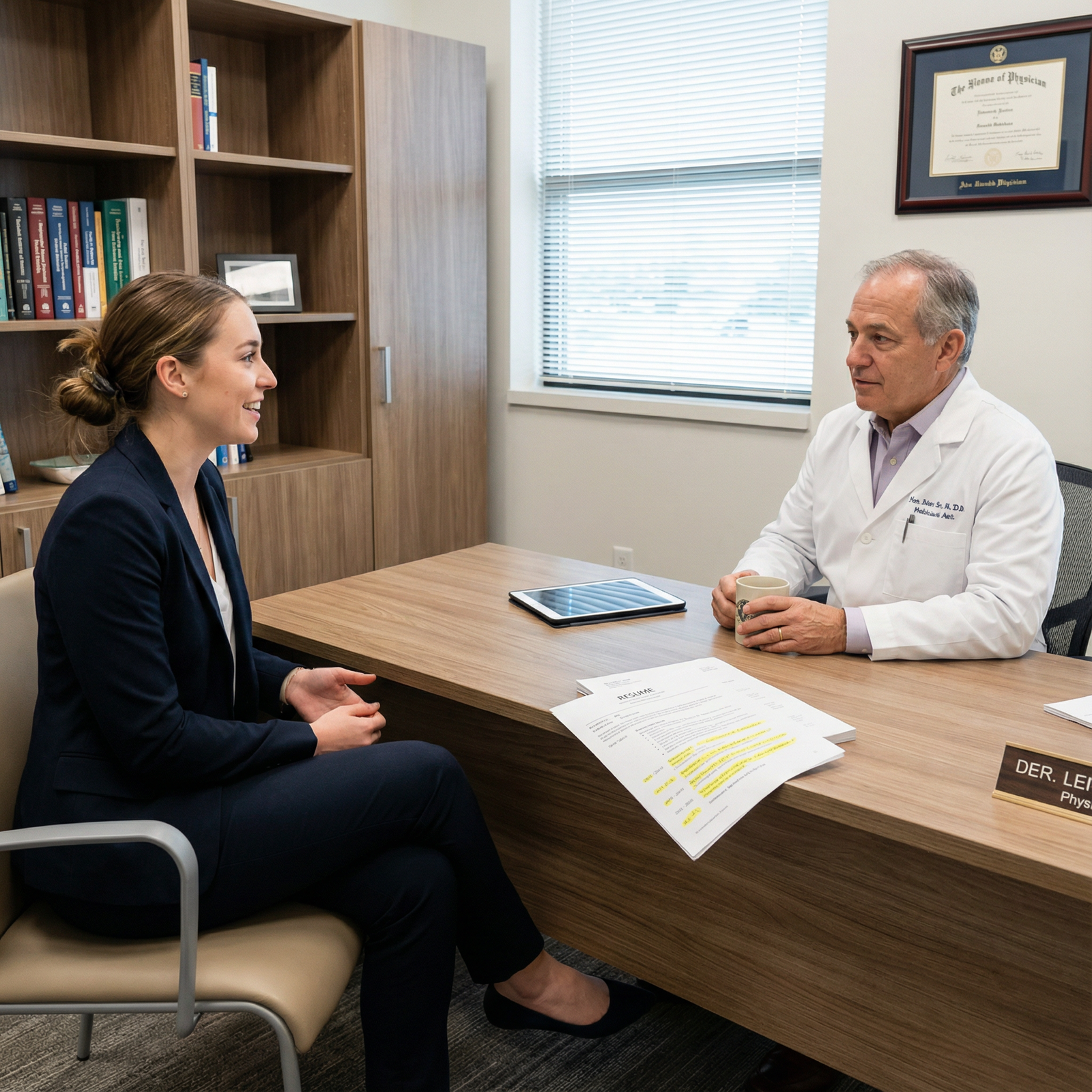
A simple rule: ask about how the system works, not how to bend it.
How women should frame leave questions without oversharing or underselling themselves
Women in medicine get pushed into a ridiculous double bind here. If you ask nothing, you may miss information you genuinely need. If you ask clumsily, people project motives onto you. So use a framework. Keep it boring. Boring is good.
The framework
Ask:
- Only what you need to know
- At the right level of detail
- Through the right channel
- Without volunteering private facts you don’t want to share
That means your question should stay anchored to logistics:
- What is the policy?
- Who handles requests?
- How is coverage managed?
- Are accommodations handled through HR, GME, or program leadership?
- Does leave affect graduation timing or board eligibility?
You do not have to explain:
- A diagnosis
- Pregnancy plans
- Fertility treatment
- Miscarriage history
- A partner’s health
- Family caregiving details
If you need a formal accommodation, use the confidential pathway. Don’t turn a casual interview conversation into an improvised medical disclosure. That’s messy, and it rarely helps.
For related issues, applicants should also review residency parental leave basics, disability accommodations in training, and how board eligibility can be affected by time away.
Sample scripts that work
General policy question
- “Could you tell me how your program handles medical or family leave and what the process is for requesting time away?”
Parental leave question
- “I’d like to understand your parental leave policy and how the program typically manages scheduling when residents take approved leave.”
Accommodation-focused question
- “If a resident needs a medical accommodation, who usually handles that process?”
Follow-up if the interviewer isn’t the right person
- “No problem—could you point me toward the appropriate contact in GME or HR?”
If you need information but want to protect privacy
- “I have a few questions about leave and accommodation processes. Is there a confidential contact I should reach out to after the interview?”
That’s enough. Clear. Respectful. No apology tour.
And yes, this matters especially for women thinking about pregnancy, IVF cycles, breastfeeding support, elder care, autoimmune disease, migraine disorders, endometriosis, or recovery from surgery. I’m saying the quiet part out loud because applicants live with these realities every day. You don’t need to pretend you’re an abstract worker with no body and no family.
What signals interviewers use to judge maturity, fit, and future reliability
Here’s what experienced interviewers are often trying to figure out: if something complicated happens, are you the kind of resident who communicates early and handles it like a professional?
That’s a fair question. Residency is built on teams, schedules, handoffs, and coverage. One resident’s absence affects other people. So interviewers watch for signs that you understand that reality.
They tend to respond well when your question suggests:
- Maturity: you recognize leave has logistics
- Reliability: you plan ahead instead of dropping surprises
- Boundary awareness: you know what’s private and what belongs in formal channels
- Respect for the team: you understand coverage matters
- Self-awareness: you know what information you need before ranking a program
A thoughtful leave question can actually help you. I’ve seen applicants gain credibility because they asked like adults. Steady tone. Specific wording. No drama.
What worries interviewers is a pattern that suggests absenteeism, detachment, or chaos. Not because they’re saints. Because they’re imagining call schedules exploding in July. Residency leaders live in fear of preventable scheduling disasters. If your question sounds like the start of one, they flinch.
Best timing, best wording, and best channels for asking about leave
If you lead with leave before anyone has even asked about your clinical interests, that’s a mistake. Don’t do that.
Best timing
Use this order:
Late in the interview day
Best for general policy questions.During resident or program Q&A
Fine if the setting is appropriate and the question is broad.In follow-up communication
Often the smartest option if you want a cleaner answer.Through HR, GME, or disability/accommodation offices
Best for confidential or medically specific issues.
Best wording checklist
Your question should be:
- Concise
- Policy-focused
- Neutral in tone
- Non-defensive
- Free of extra personal detail
Avoid overexplaining. Avoid saying, “I’m so sorry to ask this, but…” That apologetic setup makes a normal question sound suspicious. It’s not suspicious. Ask it plainly.
If the interviewer gets awkward
This happens. Some interviewers genuinely don’t know the policy. Others know it and still answer like they’ve never heard the word “parental.” Useful information either way.
Say:
- “Thanks—that’s helpful. Is there someone in program administration or GME who could give more detail?”
- “I appreciate it. I may follow up with the coordinator for the formal policy.”
- “Understood. I’m mainly trying to understand the structure and process.”
That keeps you professional while quietly noting that the answer was thin.
Polished scripts
- “Could you share how the program handles family and medical leave?”
- “Who is the best person to contact for detailed leave policy questions?”
- “How are approved leaves typically managed with scheduling and coverage?”
- “If someone needs a formal accommodation, what is the process for handling that confidentially?”
That’s the lane. Stay in it.
How to interpret the answer you get
The answer matters as much as your question.
A strong program response sounds like this:
- Clear
- Calm
- Specific
- Familiar with the process
- Not weirdly defensive
You want to hear things like:
- who approves leave
- where the written policy lives
- how coverage is arranged
- whether leave can affect graduation timing
- how accommodations are handled
- whether residents are supported without stigma
A weak response sounds like:
- “We’ve never really had to deal with that”
- “I’m sure we’d figure it out”
- “That usually isn’t an issue here”
- visible discomfort, joking, or evasiveness
Take note. I mean that literally. Write it down after the interview.

Vague answers often signal one of three things:
The interviewer isn’t the right person
Fixable. Get the right contact.The policy exists but the culture is inconsistent
More concerning.The program doesn’t handle leave well and hopes you won’t ask
Biggest red flag.
Compare responses across programs. Patterns become obvious fast. One place gives you a clear process and names the GME office. Another acts like your question is a moral failing. That tells you something. Believe it.
An unsupportive answer isn’t a personal failure. It’s data. Good data.
Bottom line for applicants
Asking about leave is appropriate. Full stop.
Interviewers are usually judging your professionalism, planning, and judgment—not punishing you for needing real-world information. Ask what you need to know. Ask it briefly. Keep it focused on policy and process. Then pay close attention to how the program answers.
Women in medicine do not need to apologize for planning for pregnancy, caregiving, chronic illness, disability, or plain old human life. Strong programs know that. Weak programs act threatened by it. Let them reveal themselves.