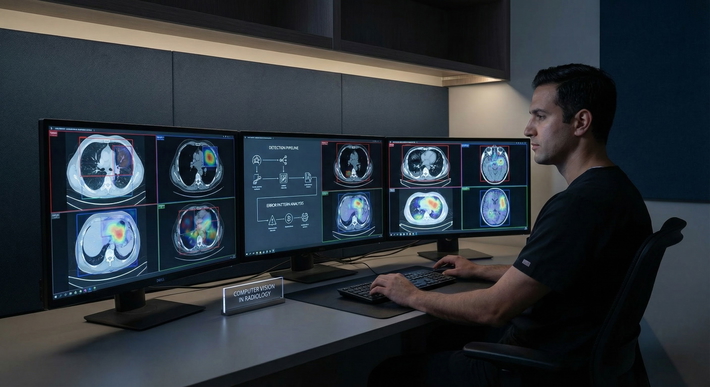
It's 2:17 AM. You're on call, pager buzzing, and the overhead announces a rapid response on 4 South. You walk in and the vitals monitor is beeping, but the loudest thing in the room is the EHR banner screaming at you: SEPSIS ALERT - 98% Confidence - RECOMMEND BROAD-SPECTRUM ANTIBIOTICS NOW.
Your attending glances at the screen, glances at the patient - a 68-year-old woman he's admitted three times this year for CHF exacerbations - and says, "Give her 20 of Lasix and some fluids. Hold the vanc. Let's watch her."
Your stomach drops. The machine says sepsis. The human says water weight. One of them is about to be very wrong, and you're stuck in the middle holding the mouse.
This is the exact moment no one taught you about in med school. They taught you sepsis criteria, they taught you de-escalation, they did not teach you what to do when your algorithm and your boss disagree in real time.
This content is for educational purposes only and is not financial advice, not legal advice, and not tax advice. Liability outcomes and figures vary by institution and state. Consult a qualified professional for guidance specific to your situation.
The Algorithm Doesn't Care If You're Tired
The dirty secret is this: almost no hospital has a real, written policy for what happens when you override an AI alert. I've reviewed bylaws at a dozen academic centers. There's a protocol for overriding a pharmacist. There's a protocol for overriding a rapid response. For AI? Nothing.
It lives in the gray zone. And that gray zone is where hierarchy, fear, and fatigue live too.
You need to understand what that 98% actually means. It doesn't mean "this patient has sepsis." It means "98% of patients in our training data who looked like this data snapshot had sepsis." That training data didn't know Mrs. Johnson just ate a whole bag of salted peanuts and stopped taking her Lasix because she couldn't afford the copay. It didn't see that her daughter said she gained 6 pounds in two days. Your attending did.
This isn't a tech support problem. It's a survival problem. Do you hit the button and order the antibiotics the computer wants, directly contradicting your attending in front of nursing? Or do you follow the attending and pray the algorithm was hallucinating again?
Why Attendings Ignore the Screen (It's Not Arrogance)
Let me tell you what really happens after you've been an attending for 15 years. You stop seeing alerts. Not because you're arrogant. Because you're drowning.
The average attending gets something like 60-90 EHR alerts per shift. Sepsis alerts. Fall risk. Opioid risk. Length-of-stay predictions. 90% are noise. True alert fatigue isn't laziness. It's learned self-defense. After the 20th time the AI flags "Sepsis" on a patient who is clearly just dry or volume overloaded, you start treating that red banner like the boy who cried wolf.
And here's the second insider truth: attendings treat AI as a safety net, not a navigator. A good attending will tell you, "I already thought of sepsis. Show me something I didn't think of." They trust their own pattern recognition - that gut feeling built from seeing 10,000 CHF flares - far more than a probability score from a black box that can't examine the patient.
I've watched a senior intensivist dismiss a 92% PE alert because the patient had just done leg raises and her heart rate came down. He was right. I've also watched an AI dismiss a stroke because the symptoms were too subtle for the NLP to catch. It was wrong. Both systems fail.
The part no one says out loud? Liability. If you, the resident, override your attending because the AI told you to, and the patient gets worse from unnecessary nephrotoxic antibiotics, whose name is on that order? Yours. The AI doesn't have a medical license. The hospital's legal team won't be deposing Epic's algorithm. They'll be deposing you. If you override the AI and follow your attending without a single line of documentation explaining why, and the patient does have sepsis? Same problem. Your signature. Your problem.
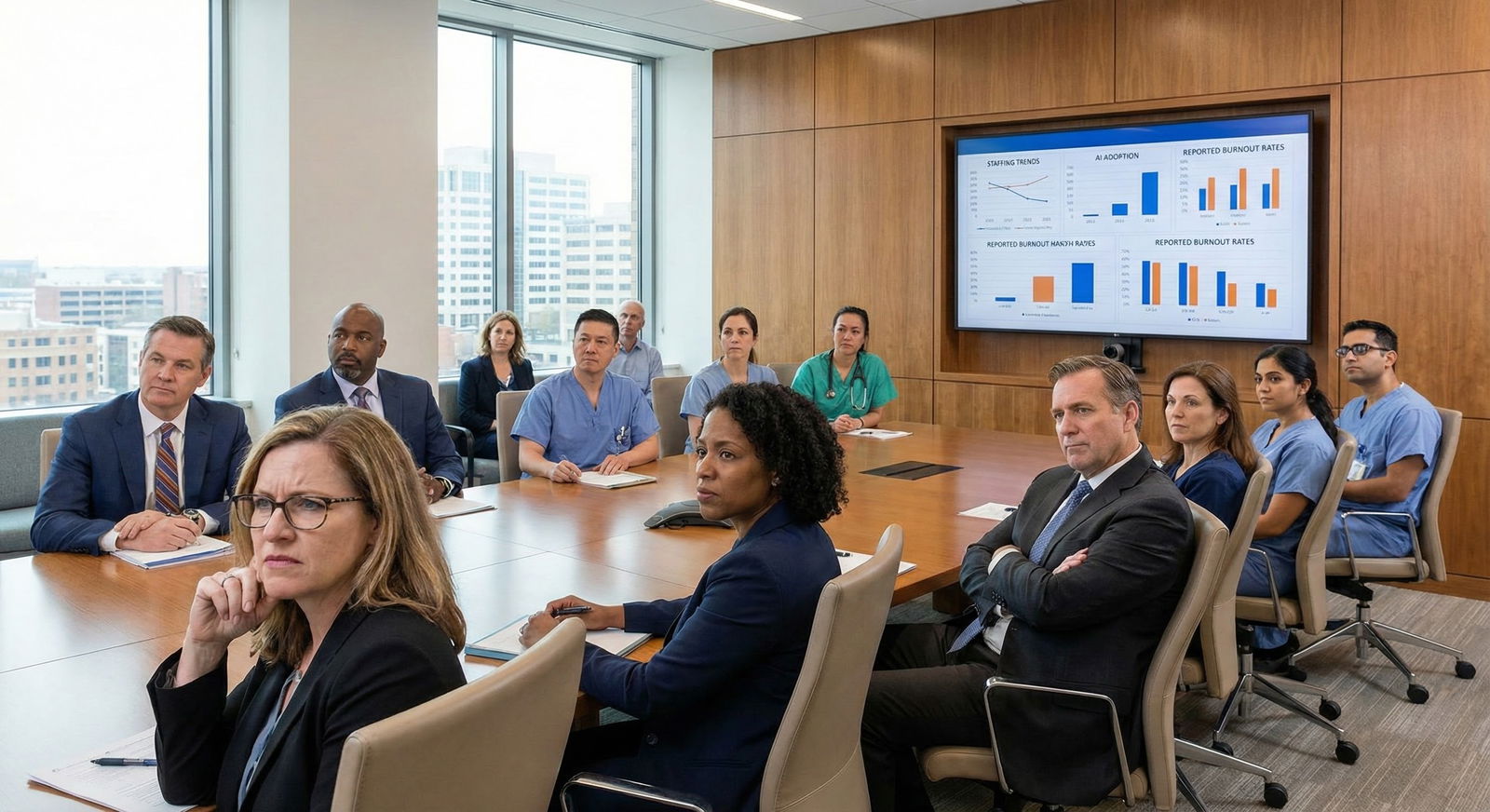
How to Override Without Getting Fired (The Political Playbook)
You can be right and still get labeled as difficult. I've seen it torpedo a chief year. So you don't override. You add data. That's the language that keeps you safe.
Never, ever walk up in the hallway or - god forbid - in front of the patient and say "I think you're wrong, the AI says sepsis." You will lose. Every time.
Here's how the residents who actually survive this do it:
1. Get your hands on the patient first. Before you even mention the alert, go do the thing the AI can't do. Is she really warm? Is her cap refill delayed? Is there pitting edema up to her knees? New crackles? You need physical exam findings that the algorithm never had. The AI has vitals and labs. You have eyes.
2. Use the magic phrasing. Frame your concern as an additional data point, not a correction. Try this verbatim: "Hey Dr. Smith, I saw the sepsis alert fired, and I was worried too, so I went back in. I noticed she has 3+ pitting edema and her JVD is up to her jaw, which makes me think this is more volume than infection, but her WBC did tick up to 12. How do you want to play this?"
You just did three things. You acknowledged the alert. You presented conflicting data. You deferred to their judgment. Political gold.
3. Document like a lawyer is reading over your shoulder. Because one might. There are two right ways to chart this and a million wrong ones.
Wrong: "AI alert for sepsis ignored per attending."
Right if you override: "Sepsis alert reviewed (98%). On repeat exam, T 37.1, HR 92, no rigors, clear source absent, + florid volume overload, trace edema, JVD elevated. Discussed with Dr. Smith. Will hold broad-spectrum abx, give diuresis, re-evaluate in 2h with repeat lactate. Will escalate if decompensates."
Right if you follow the AI against initial plan: "Sepsis alert reviewed. Despite history of CHF, patient febrile to 38.6, altered, lactate 3.1, MAP 62. Concern for septic physiology persists despite volume history. Discussed with Dr. Smith privately, concern for evolving sepsis, elected to initiate broad-spectrum per protocol while continuing workup."
4. Use the Buddy System. Before you make it a public debate, pull your senior fellow or chief aside. "Hey, can I run something by you? The AI is screaming sepsis, Dr. Smith thinks it's CHF, I'm seeing X and Y." If your senior agrees, you now have cover. "I ran it by [Chief], we were both a little worried" is infinitely more powerful than "The computer thinks..."
What Program Directors Actually Think About This
PDs don't lie awake wondering if you'll be right. They lie awake wondering if you'll be safe.
I sat in on a competency meeting last year. Resident A had correctly overruled an attending AI alert about PE - patient actually had one. Resident B had incorrectly followed an AI alert and gave tPA to a stroke mimic. Guess who got flagged? Both. But for different reasons. One for not documenting the chain of command. One for blind trust.
Here's the insider translation guide they will never email you:
A resident who says "The AI is wrong" with no evidence = difficult, possibly unsafe, watch closely.
A resident who says "I reviewed the AI alert, here's what I found on exam that makes me think differently, and here's what I think we should do" = engaged, mature, promotes to chief.
PDs live in fear of the paper trail. That AI alert creates a timestamped record that you knew there was a risk. If you ignore it silently, plaintiff's counsel will print that banner in 72-point font and show it to a jury. "Doctor, the computer told you this mother of two had sepsis and you did nothing. Why?" Your "I used clinical judgment" is not an answer without documentation. You need the why, the what you saw, and who you told.
And listen, this is now being scored. Under the table, not on your official evaluation yet, but programs are quietly adding "Digital Literacy" and "Human-AI Collaboration" to their holistic reviews. Knowing how to debate an algorithm without sounding like a tech bro or a Luddite is becoming a core competency. The residents who master that diplomacy matching season? They write about it in their personal statements and PDs eat it up.
The Future of Medicine: Co-Pilot or autopilot?
Let's be honest about where this is going. In five years you won't be debating whether to override the AI. The EHR will just auto-order the antibiotics for you unless you click "I disagree and accept liability." The friction will get higher, not lower.
You'll see a culture clash that hasn't happened yet. Your younger attendings - the ones who trained with UpToDate and ChatGPT in residency - will trust the machine 80% of the time. Your older faculty will trust it 20% of the time. You'll be stuck in the middle translating between two generations who think the other one is dangerous.
So here's my final advice from 20 years of watching people navigate wards that keep changing under their feet: master the art of being right quietly.
Let the system work for you, not on you. Use the AI as the world's most anxious medical student - brilliant, tireless, and completely lacking in common sense. Let it whisper in your ear. Then you, with your hands and your history and your name on the chart, make the call.
Technology augments. It never, ever absolves. Your judgment is still the final firewall between a patient and harm. The alert can scream. The monitor can flash. At the end of the night, you're the only one who actually touched the patient.