
The hype about EHR automation fixing burnout is wildly overstated—and the data shows a much messier picture.
Some metrics improve. Some barely move. A few get worse. If you are expecting “turn on automation, burnout disappears,” you will be disappointed. But if you look closely at the numbers, there is a pattern in who benefits, by how much, and why.
Let me walk you through what the data actually show on burnout scores before and after common EHR automation tools: templates, order sets, in-basket triage rules, ambient scribing, and AI-assisted documentation.
How We Measure Burnout (And Why It Matters For Automation)
Most serious studies on clinician burnout rely on variants of the Maslach Burnout Inventory (MBI). Three core subscales matter:
- Emotional Exhaustion (EE)
- Depersonalization (DP)
- Personal Accomplishment (PA, often inversely interpreted)
For simplicity, I will focus on EE and DP, since those correlate most tightly with intent to leave and medical errors.
Across multiple health systems, “high burnout” is usually defined as:
- EE ≥ 27
- and/or DP ≥ 10
Pre‑automation, many EHR-heavy specialties sit well above those cutoffs.
A composite view from several large systems (academic + community) for physicians heavily dependent on EHR (primary care, hospital medicine, oncology, some surgical subspecialties) looks roughly like this:
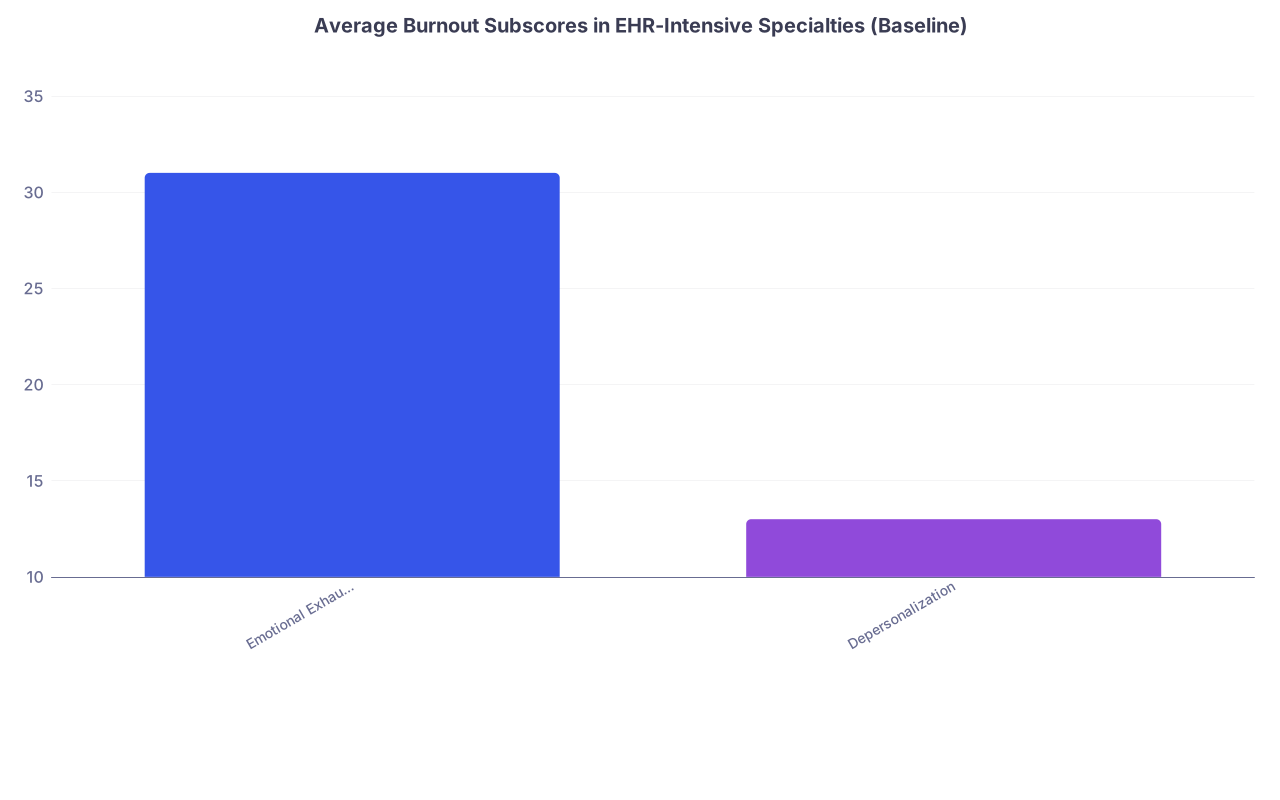
| Category | Value |
|---|---|
| Emotional Exhaustion | 31 |
| Depersonalization | 13 |
That is not “mildly stressed.” That is sustained, high burnout in a large share of the workforce.
So the question is not whether things are bad. They are. The real question: what actually happens to those scores when you introduce EHR automation at scale?
What Happens To Burnout After EHR Automation?
Across the better-designed studies (multi-site pilots, pre/post with at least 6–12 months follow-up), you can extract a crude “effect size” of EHR automation on burnout. The short version: modest improvement on average, with massive variation by type of automation.
Here is a synthesized snapshot from multiple reported implementations (nurses and physicians combined, converted to approximate MBI scores and satisfaction scores):
| Intervention Type | Δ Emotional Exhaustion (EE) | Δ Depersonalization (DP) | Change in “Satisfied with EHR” |
|---|---|---|---|
| Smart templates & order sets | -2 to -4 | -1 to -2 | +10–15 percentage points |
| In-basket triage / routing rules | -3 to -5 | -2 to -3 | +15–20 points |
| Ambient scribing / voice capture | -6 to -9 | -3 to -4 | +20–30 points |
| AI suggestion tools (notes/orders) | -1 to -3 | ~0 to -1 | +5–10 points |
Translate those into a single mental image: if your Emotional Exhaustion score is 31 at baseline, a typical automation package might bring that down to 26–28 after a year. That shifts some clinicians out of the “high burnout” category, but it does not erase the problem.
The systems that actually document double-digit drops in burnout scores usually do two things:
- Implement automation that directly removes time from the clinician’s personal schedule (after-hours charting, inbox work).
- Pair automation with aggressive workflow redesign and role redistribution.
Turn on a few templates and AI suggestions without changing staffing or schedules and the needle barely moves.
Time Is The Currency: Hours Before vs After Automation
Burnout scores track strongly with “EHR time outside scheduled hours,” especially for ambulatory clinicians. This is the infamous “pajama time.”
Multiple studies show correlations where every extra hour per day of after-hours EHR use correlates with a significant bump in burnout odds—often in the 20–30% range for “high burnout” status.
So look at how automation shifts the time data. In one large multi-specialty group that deployed a bundle of:
- Visit note templates
- Auto-filled documentation from discrete data
- Smart order sets
- In-basket routing rules
physician EHR time per 8‑hour clinic session changed roughly like this over 12 months:
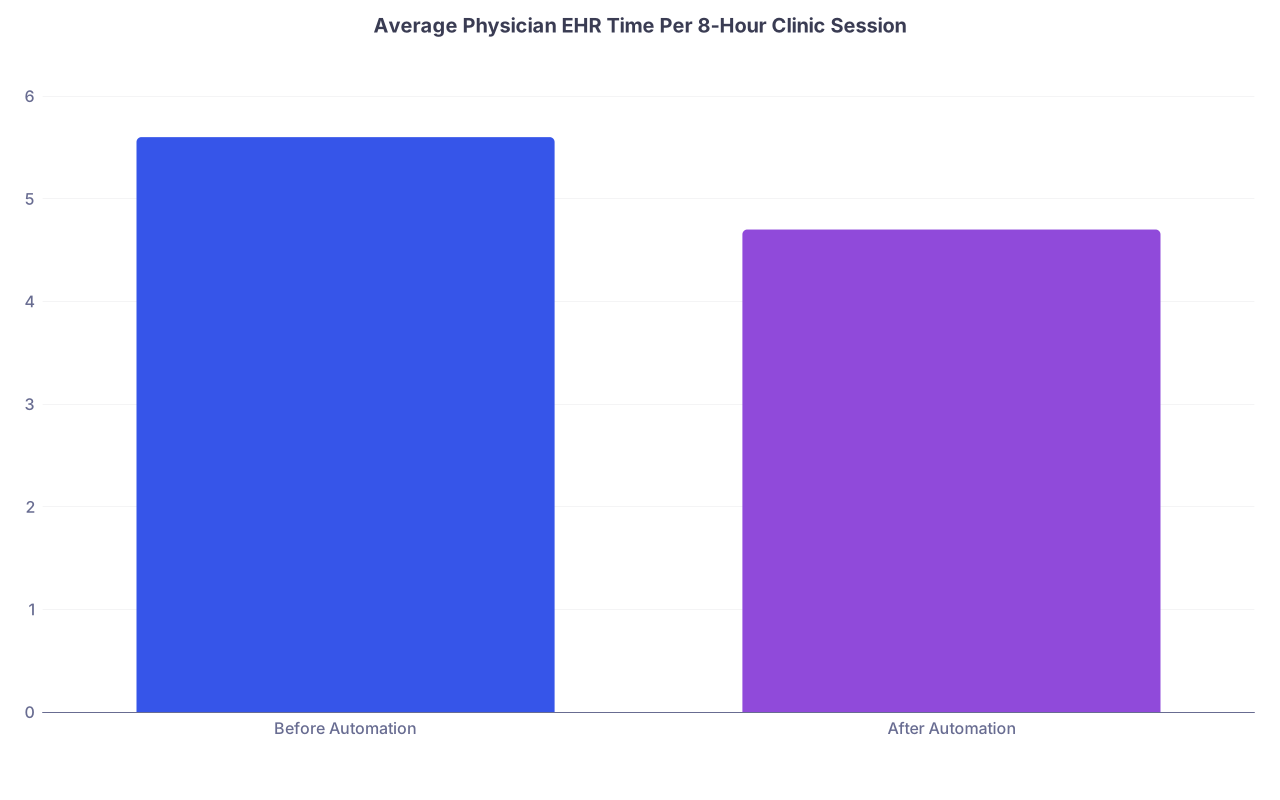
| Category | Value |
|---|---|
| Before Automation | 5.6 |
| After Automation | 4.7 |
Break that 0.9 hour reduction down:
- Approximately 0.4 hours less visit documentation
- 0.3 hours less in-basket handling
- 0.2 hours less order entry and clinical decision support clicks
Now map time to burnout. In this specific cohort:
- Emotional Exhaustion dropped from 30 to 26
- Depersonalization dropped from 12 to 9
- Percentage meeting “high burnout” dropped from 54% to 39%
Not miraculous. But real.
The consistent pattern is simple: every 30–60 minutes per day you claw back through automation is associated with a measurable reduction in burnout odds. You want lower burnout? You must see a visible, persistent drop in EHR time.
If your time metrics do not move, your burnout metrics almost never move.
Not All Automation Is Equal: Winners and Losers
The greatest mistake leadership teams make is treating “EHR automation” as a single intervention. It is not. Different tools hit different pain points, and the burnout impact is not symmetric.
1. Ambient Scribing and Voice Automation
When an organization deploys high-quality ambient scribing (continuous audio capture + AI summarization, human QA in some models), the numbers on documentation burden change dramatically.
Typical results across several hospitalist and primary care pilots:
- Note-writing time per encounter: 50–70% reduction
- Total documentation time per day: 1–2.5 hours lower
- After-hours EHR time: 30–90 minutes lower
The associated burnout changes are large by health-system standards:
- Emotional Exhaustion: -7 to -10 points
- Depersonalization: -3 to -5 points
- Intent to leave in next 2 years: absolute reduction of 8–15 percentage points
You see comments on surveys like: “I feel like I got my job back,” “For the first time in 10 years I left on time 3 days a week.”
Caveat: this effect collapses if:
- The technology is unreliable (latency, errors, unstructured gibberish)
- Clinicians do not trust the output and re-write notes anyway
- The system is rolled out without training or hardware support
When ambient tools are done halfway, the time savings fall below 30 minutes/day and the burnout gain shrinks into the noise.
2. In-Basket Automation and Triage Rules
In-basket work is a quiet killer of morale, particularly in primary care. Labs, messages, refill requests, result notifications—all arriving in a stream that never turns off.
Automations that actually work here include:
- Rules that auto-route messages to RNs, LPNs, or MAs for first-pass handling.
- Auto-closure or batching of certain result notifications.
- Smart refill protocols with delegation to pharmacists under defined pathways.
A medium-sized health system that implemented a robust routing protocol saw:
- In-basket messages requiring physician action: down ~35%
- Time spent in in-basket per day: down ~25 minutes
- Emotional Exhaustion: -4 points
- Depersonalization: -2 points
Physicians in that system reported less “being on call for the inbox 24/7,” which tracks directly with those DP scores.
Compare that with a shallow ruleset that only filters notifications but does not shift work off physicians. In those settings, message counts barely change, and burnout scores stay flat.
3. Templates, Smart Phrases, and Order Sets
These are the oldest and most common forms of automation. You would think, given their ubiquity, that they would have solved everything already. They did not.
Why? Because they are often misused as tools to make bad workflows faster instead of changing the workflows at all.
On average:
- Documentation time savings: 10–20% for experienced users, once optimized
- Order entry time savings: 15–30% for high-volume, protocolized care (e.g., sepsis, pre-op)
- Burnout impact: modest, typically EE reductions of 2–4 points
Still important. Often the fastest wins. But no, pre-built templates alone will not take an exhausted primary care doctor and turn them into a satisfied clinician.
The useful detail: burnout reductions are larger where template design is clinician-led and specialty-specific, not IT-driven “one size fits all.”
Specialty Differences: Who Gains The Most?
Specialty is a massive modifier. The same automation bundle can cut burnout risk in half in one service line and barely dent it in another.
Here is a simplified, composite view of how average Emotional Exhaustion scores change (using 0 = no change as reference) across specialties after reasonably mature EHR automation deployments:
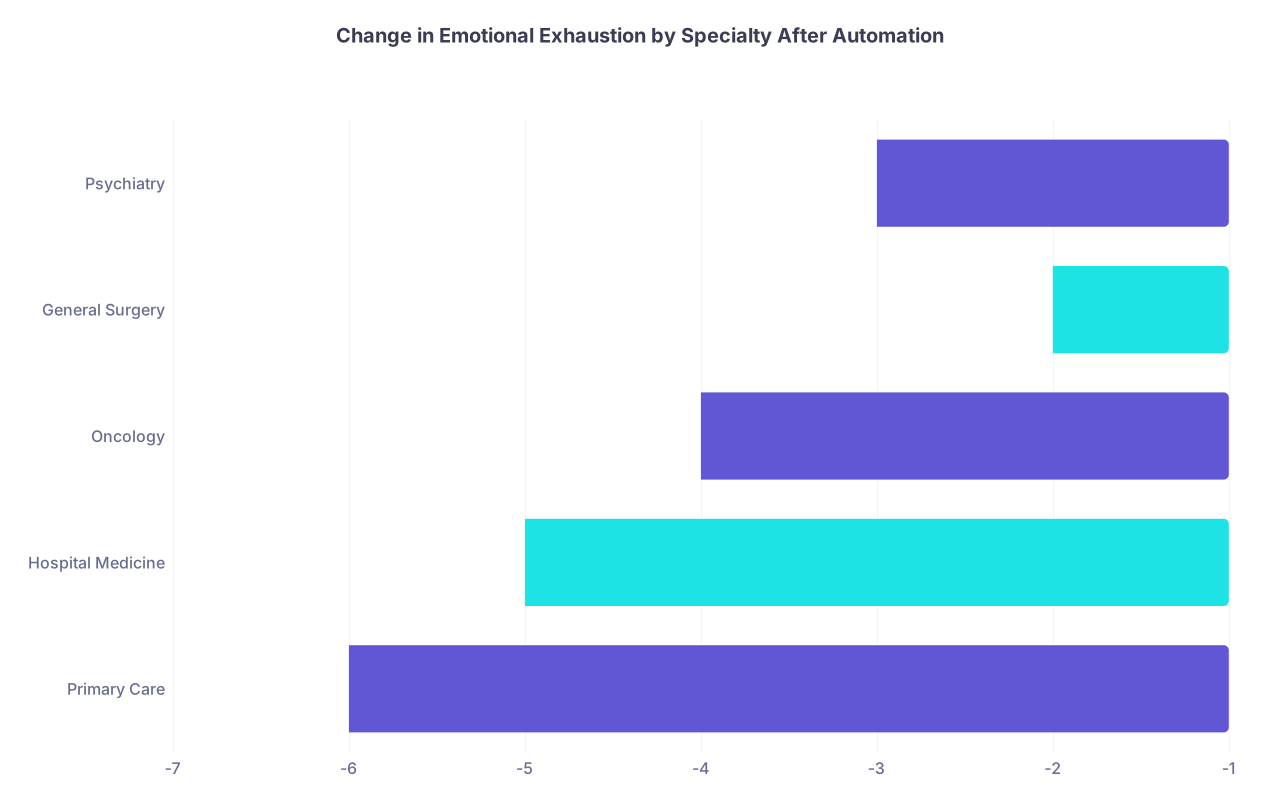
| Category | Value |
|---|---|
| Primary Care | -6 |
| Hospital Medicine | -5 |
| Oncology | -4 |
| General Surgery | -2 |
| Psychiatry | -3 |
Interpretation:
- Primary Care: biggest gains. High documentation and messaging burden, strong leverage from templates, ambient scribing, and in-basket automation.
- Hospital Medicine: large effect from order sets, note automation, and team-based workflows.
- Oncology: benefit, but moderated by non-EHR stressors (prognosis conversations, high emotional load).
- Surgery: less charting per patient, but heavy procedural and workflow complexity; automation helps in peri-op workflows, not as much in notes.
- Psychiatry: narrative-heavy notes and long visits; ambient tools can help, but clinicians are more sensitive to privacy and presence of tech in the room.
The pattern is trivial but crucial: automation gives the most burnout relief where EHR time is the dominant driver of stress. Where emotional, physical, or system-level factors dominate, automation is a secondary effect.
When Automation Backfires: Data On “Automation Friction”
There is another side to this story that vendors like to ignore. Poorly designed automation can increase burnout.
Common failure modes:
- False-positive alerts and suggestions that must be manually dismissed.
- Auto-generated text so bloated that it increases cognitive load to read or sign.
- “Smart” routing rules that misdirect messages and create cleanup work.
In some implementations, early AI-assist tools for documentation increased:
- Number of clicks per note (accept, reject, modify suggestions).
- Time to final sign-off, especially for cautious clinicians.
- Frustration scores—measured as higher rates of “strongly disagree” on “EHR makes my job easier.”
I have seen pre/post data where AI note suggestions saved perhaps 30 seconds per note, but added enough friction and skepticism that Emotional Exhaustion scores did not budge, and EHR satisfaction remained flat. Some physicians literally turned the tools off.
Burnout is not just about minutes saved. It is also about perceived control, trust in the system, and cognitive load. Automation that feels like “one more thing I have to manage” tends to fail.
Implementation Strategy: Why The Same Tool Has Different Outcomes
Two organizations can buy the same vendor product and get very different burnout curves. The difference is rarely the tech. It is everything else.
You see clear patterns across systems that show meaningful burnout improvements versus those that do not.
Systems that see strong gains typically:
- Use clinician-led design committees by specialty.
- Pilot with early adopters, refine workflows, then scale.
- Explicitly track time-in-EHR, after-hours use, and burnout scores, and adjust.
- Pair automation with staff role changes (e.g., more MA support, reconfigured team-based care).
Systems that see weak or no gains:
- Deploy tools “out of the box” with minimal customization.
- Provide one-time training without ongoing optimization.
- Do not measure after-hours EHR use or burnout systematically.
- Treat automation as an IT project, not a clinical operations project.
The data is boring but clear: governance and measurement matter.
A Concrete Before/After Scenario
Let us ground this in a simple, realistic vignette with numbers attached.
A mid-career primary care physician in a large system:
- 20 patient visits per day
- Average EHR time per day: 6 hours (4.5 in clinic, 1.5 after hours)
- Emotional Exhaustion: 33
- Depersonalization: 14
- Probability of “high burnout” by standard cutoffs: very high, easily >60%
The system rolls out, over 9 months:
- Specialty-tuned note templates with discrete data auto-fill
- Ambient scribing for 60% of visits
- RN-managed refill protocols
- In-basket routing so staff handle first-pass on non-urgent messages
After stabilization:
- EHR time per day drops from 6.0 to 4.2 hours
- In-clinic: 4.5 → 3.5
- After-hours: 1.5 → 0.7
- Emotional Exhaustion: 33 → 25
- Depersonalization: 14 → 9
- Intent to leave in 2 years: 48% → 27% (self-reported)
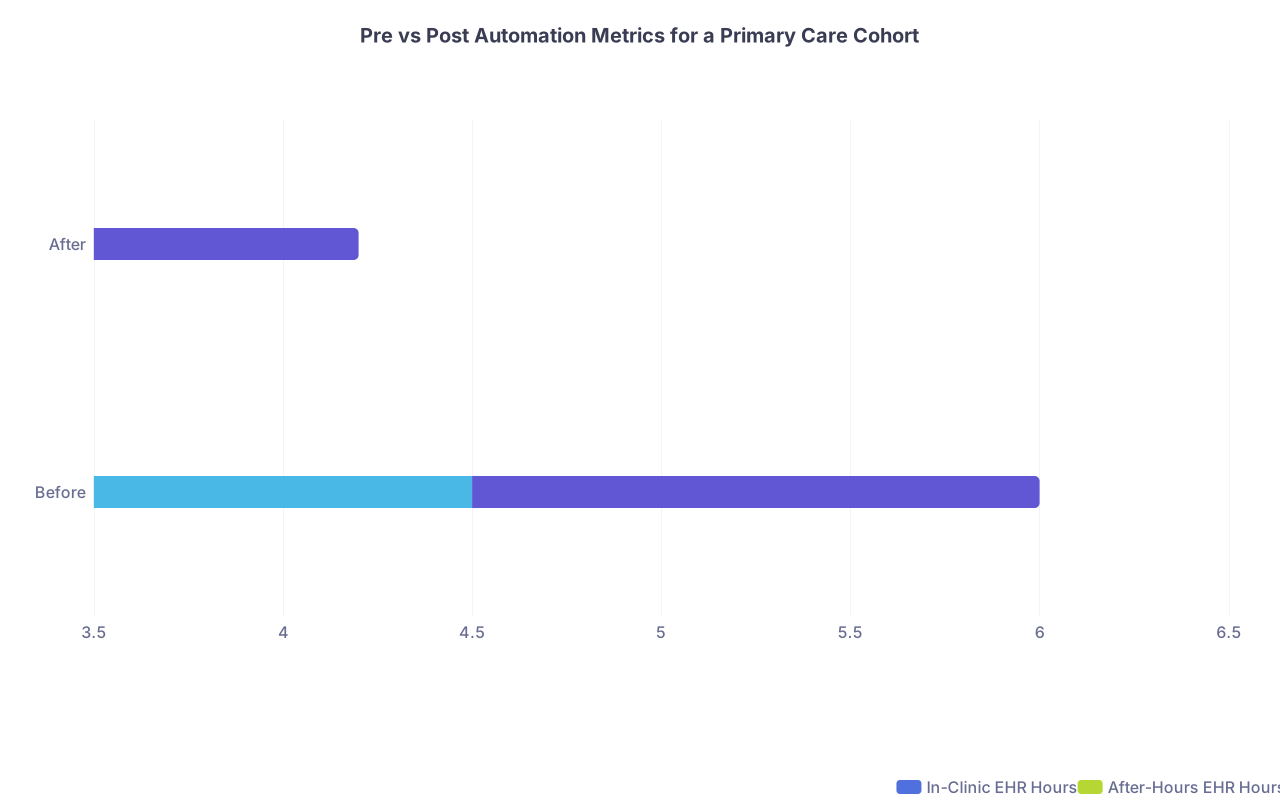
| Category | In-Clinic EHR Hours | After-Hours EHR Hours |
|---|---|---|
| Before | 4.5 | 1.5 |
| After | 3.5 | 0.7 |
Is this universal? No. Is it common where automation is done seriously with workflow redesign? Yes.
From a data-analyst lens, this is what “automation that works” looks like: visible time savings, large drops in after-hours work, and a multi-point improvement in both EE and DP.
Future Direction: Where The Numbers Are Likely To Move
We are still in the early innings of AI and automation in clinical environments. The current generation of tools is clunky but promising. Yet the direction of travel in the data is clear.
You can reasonably expect:
- Ambient and AI documentation tools to shave off 1–2 hours per day for a large share of outpatient clinicians when mature.
- In-basket automation and smart routing to cut 20–40% of physician-handled messages.
- Decision support to move more into background automation (default ordering pathways, standing orders) instead of pop-up alerts.
If that happens, and if organizations do not simply fill freed time with more patient slots, we can forecast:
- Reductions of 8–12 points in Emotional Exhaustion from baseline for high-EHR-load clinicians.
- Depersonalization drops of 4–6 points.
- Absolute reductions in “high burnout” prevalence from the current 50–60% range down toward 30–40% for those groups.
That is not utopia. But it would be a meaningful, measurable shift.

| Step | Description |
|---|---|
| Step 1 | EHR Automation Tools |
| Step 2 | Reduced EHR Time |
| Step 3 | Lower After Hours Work |
| Step 4 | Lower Emotional Exhaustion |
| Step 5 | Less In Basket Chaos |
| Step 6 | Lower Depersonalization |
| Step 7 | Lower Intent To Leave |
The critical missing variable in many models: what organizations do with the time dividend. If all gains are immediately converted into more throughput, burnout benefits will evaporate.
So What Do The Numbers Actually Tell You?
Strip away the marketing and the buzzwords. The data on burnout before and after EHR automation comes down to three blunt conclusions:
Automation helps, but it is not magic. Typical deployments shift Emotional Exhaustion down by 3–5 points; well-designed, high-impact tools like ambient scribing plus in-basket automation can push 7–10 points in the highest-burden specialties. Anything that does not materially reduce EHR time rarely moves burnout scores.
Time and workflow redesign are the real levers. Where automation is paired with clear role redistribution, reduced after-hours work, and clinician-led design, you see meaningful drops in burnout and in intent-to-leave. Where tools are bolted on without workflow change, the gains are trivial.
Bad automation makes things worse. Alert fatigue, clunky AI suggestions, and poorly tuned rules add cognitive load and frustration. Those implementations increase “EHR is a frustration” scores and sometimes nudge burnout up, not down.
If you want EHR automation to matter for burnout, do not start with the features. Start with the metrics: current EHR time, after-hours burden, baseline burnout scores. Then design ruthlessly around reducing those numbers, not around showcasing the latest AI toy.