The standard MS1–MS4 playbook is outdated for the future of medicine. If you only chase grades and Step scores, you’ll graduate clinically competent but strategically obsolete.
Here’s the reality:
By the time you’re an attending, you’ll be practicing in a system built on AI decision support, virtual care, automation, and team-based workflows. The good news? You can start building those “future-of-medicine” skills now without wrecking your mental health or blowing up your GPA.
This is your MS1–MS4 roadmap, in plain language and chronological order: what to do, when to do it, how deep to go, and what to safely ignore.
Big-Picture Timeline: Your Four-Year Skill Map
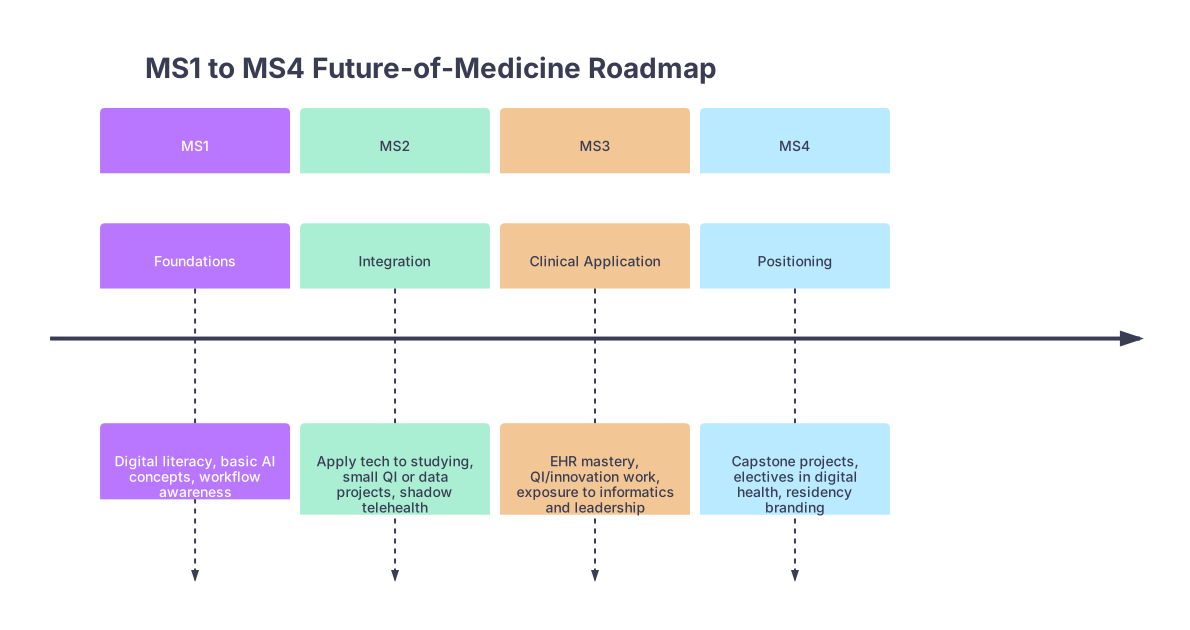
At this point, you need a quick map before we go month-by-month.
| Period | Event |
|---|---|
| MS1 - Foundations | Digital literacy, basic AI concepts, workflow awareness |
| MS2 - Integration | Apply tech to studying, small QI or data projects, shadow telehealth |
| MS3 - Clinical Application | EHR mastery, QI/innovation work, exposure to informatics and leadership |
| MS4 - Positioning | Capstone projects, electives in digital health, residency branding |
MS1: Build Foundations Without Overcommitting (Months 1–12)
Months 1–3: Survive First, Then Add One Future Skill
At this point you should stabilize your life before you chase any “cool” tech project.
Your priorities:
- Get your study system under control
- Learn the language of the future of medicine
- Do one small thing that nudges you forward
Weeks 1–4: Don’t be a hero
Focus:
- Learn how your school tests (NBME style? professor-written? PBL?)
- Set a sustainable weekly rhythm: class, review, questions, non-negotiable rest
Your only future-of-medicine tasks:
- Notice workflows: ask yourself, “How will this look in a clinic with AI, telehealth, or remote monitoring?”
- Start a one-page “Future-of-Medicine Log” (Google Doc/Notion page) with sections:
- Problems you see in healthcare
- Ideas that interest you
- Skills you might want (e.g., data literacy, basic Python, health policy)
Weeks 5–8: Light Exposure, Zero Pressure
Now you add 1–2 hours per week of deliberate exposure. That’s it.
Do this:
- Pick one newsletter/podcast and stick with it for 3 months:
- Examples:
- The Medical Futurist, NEJM AI, Health Affairs This Week
- Examples:
- Attend 1–2 talks from:
- Your school’s informatics, quality improvement (QI), or digital health groups
- Hospital grand rounds on AI, telehealth, or systems issues
Your rule:
If it regularly keeps you up past midnight, you drop it. Grades and sleep come first in MS1.
Months 3–6: Choose a Direction, Very Lightly
By now, you’re less panicked about exams. Time to pick a direction, not a full project.
Choose ONE primary lane for the “future of medicine”:
- Digital health / telemedicine
- AI & clinical decision support
- Quality improvement / systems redesign
- Health policy & payment models
- Global health + technology
- Medical education innovation (apps, simulation, etc.)
Then:
- Find one mentor-adjacent person in that lane:
- Could be: an informatics fellow, a hospitalist on the QI committee, a resident into AI, a faculty member in health policy
- Send a short, targeted email asking for a 20-minute chat, not a “mentorship”
- Ask them:
- “What small project would be appropriate for an MS1 with limited time?”
- “What skills would you start building now if you were in my shoes?”
Months 6–12: One Tiny Project, One Simple Skill
At this point you should have:
- Passing grades
- Some rhythm
- A clearer idea of what excites you
Now do one micro-project that fits inside 1–2 hours/week.
Examples:
- QI: Help track baseline data for a handoff improvement project on a ward
- Digital health: Join a student-run telehealth initiative for follow-up calls
- AI: Contribute to simple chart review or data labeling work for an AI research group
- Policy: Summarize 1–2 key articles on value-based care or prior authorization for a faculty member
In parallel, pick a very basic skill to start:
- Data: Finish one beginner course on Excel/Sheets data analysis
- Coding: Do a short “Python for data” or R for healthcare course (even 10–20 hours over semesters)
- Communication: Practice 1 short writing task/month (op-ed draft, blog post, summary) about a future-of-medicine topic
The rule again: Never let this jeopardize your MS1 exams. If your scores dip, you scale back to pure survival mode for 4–6 weeks.
MS2: Turn Awareness into Usefulness (Board Year, Months 13–24)
MS2 is tricky. You’re staring down Step 1/Level 1 or equivalent. Burnout risk skyrockets. Here’s how to play it.
Months 13–18: Boards First, Integration Second
At this point you should integrate future-of-medicine thinking into what you’re already doing, instead of adding a bunch of new time commitments.
You’re focused on:
- Systems-based practice
- Pattern recognition
- Efficient learning
Do this:
- As you study systems (cardio, endo, etc.), jot 1–2 questions per block:
- “How will AI affect risk stratification in chest pain?”
- “Which parts of diabetes management are automatable vs deeply human?”
- Bring 1 of those questions per month to:
- A mentor
- A noon conference Q&A
- A student interest group event
This is how you think like a future attending without adding hours.
Months 18–22: Strategic Project Push (Post-Exam Window)
Once you’ve taken Step 1/COMLEX 1 (or whatever your big MS2 exam is), you get a rare window of freedom.
This is where most students waste the opportunity on vague “research”. You’re going to be deliberate.
6–10 week window: Pick a project you can finish or clearly carry into MS3.
Ideal targets:
- Short retrospective chart review with a data/informatics angle
- QI project with measurable outcomes (e.g., improving follow-up documentation)
- Digital health pilot involvement (protocol design, patient education, basic evaluation)
- Educational tech project (building a small module, checklist, or decision support tool)
Your checklist:
- Clear PI or supervisor
- Concrete deliverable:
- Poster
- Abstract
- Internal presentation
- GitHub repo / working prototype
- Time-bounded: You can reasonably progress it in 6–10 weeks with 5–8 hours/week
Months 22–24: Pre-Clinical-to-Clinical Transition
Now your job is to translate your future-of-medicine interests into clinical habits.
Start prepping for clerkships with:
- A short EHR tutorial beyond your school’s basic training:
- Power user shortcuts
- Smart phrases
- Efficient chart review strategies
- Shadowing 1–2 half-days in telehealth or a clinic using:
- Remote monitoring
- E-consults
- AI triage or predictive tools (if available)
You’re training your brain to see:
- What tech helps vs what adds noise
- Where the real clinical friction points are
MS3: Apply Future Skills at the Bedside (Months 25–36)
This is where everything becomes real. Patients, teams, time pressure. Also where students forget every “innovation” ambition they ever had.
You won’t.
Months 25–30: First 3–4 Clerkships – Learn the System
At this point you should become the student who understands workflows, not just diseases.
On each rotation, ask:
- Where does information get lost?
- What part of the process is obviously dumb or inefficient?
- What tech already exists that could fix this but isn’t used?
Write these down in your Future-of-Medicine Log under:
- “Problems actually seen in clinic”
- “Tech that exists but doesn’t fit reality”
Your behavior on the wards should reflect future-ready skills:
- Master the EHR:
- Learn keyboard shortcuts
- Create smart phrases for common notes
- Learn to pull trend data quickly (labs, vitals, weights)
- Practice data-informed thinking:
- When presenting, include succinct risk numbers (“This PE risk score is X, which puts him in Y group”)
- When appropriate, ask, “Is there a clinical decision support tool or calculator the team usually uses for this?”
Months 30–34: Deliberate Micro-Projects On Rotations
By now, you’ve seen where things break.
You’re NOT starting a huge new research project. You’re layering small, pragmatic contributions onto rotations.
Examples:
- On medicine:
- Create a simple, high-yield sign-out checklist adopted by your team
- Help a resident clean up a smart phrase for discharge summaries
- On surgery:
- Track causes of case delays on your team for 2–4 weeks, share simple data with a friendly attending
- On OB or peds:
- Work with a nurse or resident to simplify a patient-ed handout, especially if the clinic uses portals or text reminders
Every time:
- Get permission
- Keep the scope tiny
- Ask if you can write a short email summary of what you did + findings
- Save that email; it becomes part of your future application narrative
Months 34–36: Clarify Your Future-of-Medicine Brand
At this point you should have some sense of your future direction and desired specialty.
Marry them.
You want a simple, honest statement like:
- “I’m going into internal medicine and I care about digital tools that reduce documentation burden and improve continuity.”
- “I’m aiming for EM and I’m obsessed with triage, AI decision support, and throughput.”
- “I’m leaning toward OB and care about tech that improves maternal outcomes and remote monitoring.”
Then:
- Identify 1–2 attendings or fellows in that Venn diagram (specialty + innovation interest)
- Ask for:
- A quick coffee or hallways conversation
- Advice on MS4 electives and projects aligned with that theme
- One small way to be useful on your next elective or sub-I
MS4: Turn Experience Into a Narrative (Months 37–48)
Now you position yourself for residency. Not as a generic “interested in innovation” applicant, but as someone with a specific, believable trajectory.
Months 37–40: Early MS4 + Away Rotations (If Applicable)
At this point you should use audition rotations strategically.
Your goals on these rotations:
- Be clinically solid. Always. This is non-negotiable.
- Casually but clearly show your future-of-medicine angle through actions, not speeches.
How:
- Offer to help with:
- A QI chart pull they’ve been putting off
- Tidying up a patient-ed resource
- Reviewing how a specific clinical decision support tool affects workflow
- Ask 1 or 2 well-timed questions on rounds:
- “Have you seen any AI tools that actually help with X?”
- “What’s the most useful telehealth workflow you’ve seen for this patient group?”
No TED Talks, no lecturing your attendings about AI. You’re a learner who notices systems.
Months 40–44: Electives, Projects, and Capstone
This is your last big window before residency.
Pick 1 primary and 1 backup future-of-medicine elective theme:
- Clinical informatics / digital health
- Quality and safety
- Health policy / advocacy
- Global digital health
- Medical education innovation
- Implementation science
Then:
- Do ONE serious, but bounded project that you can actually finish or cleanly hand off.
Ideal feature set:
- Direct relevance to your specialty
- A real deliverable:
- Protocol
- Workflow diagram
- Educational module
- App prototype
- Data analysis with a clear conclusion
- A mentor willing to:
- Vouch for you in a letter
- Mention your systems/innovation mindset
Document this clearly:
- 3–4 bullet summary of:
- Problem
- Your role
- Outcome
- What you learned about tech + humans
Months 44–48: Applications and Interviews – Tell a Coherent Story
Now you turn four years of scattered efforts into a sharp, believable narrative.
Your personal statement and interviews should:
- Connect past:
- What you observed in clinical care that is broken or inefficient
- With skills:
- EHR fluency, basic data familiarity, experience in QI or digital tools
- And future:
- What kind of attending you want to be and how you’ll use future-of-medicine tools humbly and responsibly
Expect to use stories like:
- “On my medicine rotation, I noticed X in our discharge workflow. I teamed up with Y to do Z, and we saw A. That’s when I realized...”
- “During MS2 after boards, I worked on a project evaluating B. It taught me that tech usually fails when it ignores C.”
You’re not pretending to be a world expert. You’re positioning yourself as:
- Clinically grounded
- Systems-aware
- Tech-literate but not tech-obsessed
- Someone who will make the program’s life easier, not harder
Protecting Yourself From Burnout: Guardrails for All Four Years
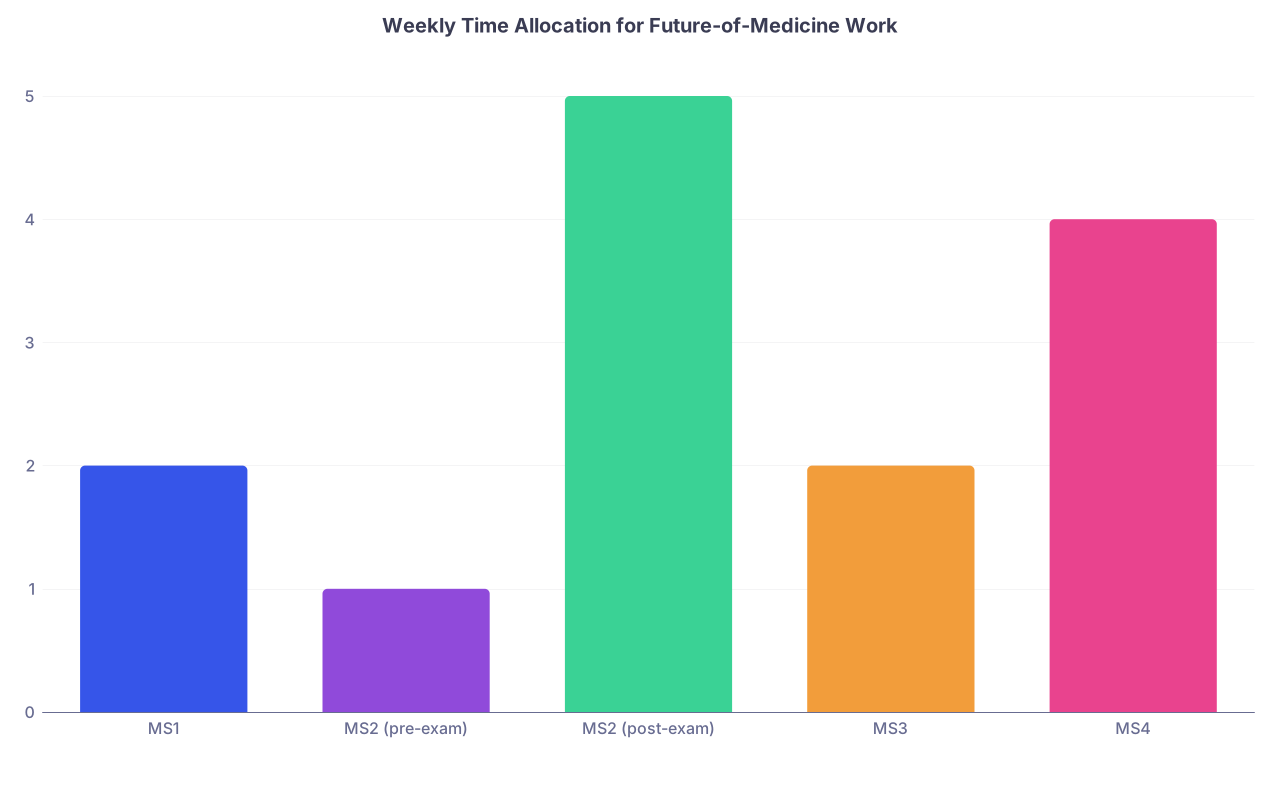
If you do not add guardrails, all of this will crush you. So here’s the hard line.
| Category | Value |
|---|---|
| MS1 | 2 |
| MS2 (pre-exam) | 1 |
| MS2 (post-exam) | 5 |
| MS3 | 2 |
| MS4 | 4 |
Guardrail 1: Hard Time Caps
- MS1:
- Max 2–3 hours/week on future-of-medicine stuff, averaged over a month
- MS2 pre-boards:
- Max 1–2 hours/week, often 0 near exam
- MS2 post-boards:
- Up to 5–8 hours/week for 6–10 weeks
- MS3:
- Emphasis on integrating into existing work, not new hours
- MS4:
- Up to 3–5 hours/week during project/elective blocks
If you consistently blow past those numbers, you’re overinvesting for this stage.
Guardrail 2: One Lane, Not Five
Every semester, you should be able to answer:
“This term, my future-of-medicine lane is X.”
Examples:
- “AI & clinical decision support in internal medicine”
- “Telehealth and continuity of care in primary care”
- “QI to reduce readmissions in surgical patients”
If your answer has four commas, it’s too vague.
Guardrail 3: Semester Portfolio Check
Every 6 months, do a quick portfolio audit.
| Semester | Main Lane | Hours/Week | Concrete Output |
|---|---|---|---|
| MS1 Fall | Exposure | 1–2 | Future-of-medicine log, 2 talks |
| MS1 Spring | Digital Health Basics | 2–3 | Assisted tiny telehealth project |
| MS2 Fall | Survival + Boards | ≤1 | Reading + notes only |
| MS2 Spring | QI / Data Project | 5–8 | Poster or abstract |
Ask:
- Did I produce anything concrete?
- Did this hurt my academic performance or mental health?
- Do I want to deepen this direction or pivot?
If your outputs are just “attended meetings”, you need more focused, finishable work.
Concrete Year-by-Year Checklist
Here’s the compressed version.

MS1 – Foundation Year
By end of MS1 you should have:
- Stable study routine and passing grades
- Future-of-medicine log with:
- Observed problems
- Interests
- Basic ideas
- One chosen lane of interest
- At least one mentor-adjacent contact
- One tiny project or experience (2–3 sentence description)
MS2 – Focus + First Real Project
By end of MS2 you should have:
- Step/COMLEX/other big exam done
- Clearer lane (e.g., QI, AI, policy)
- One bounded project with:
- Specific role
- Concrete deliverable (poster, internal presentation, dataset contribution)
- Exposure to at least one:
- Telehealth clinic
- EHR optimization concept
- Systems-level conversation
MS3 – Clinical Integration
By end of MS3 you should have:
- A short list of “real problems I saw on wards”
- Examples of EHR fluency and efficient data use
- 1–2 micro-projects or contributions tied to rotations
- A working “future-of-medicine + specialty” sentence
MS4 – Positioning and Narrative
By end of MS4 you should have:
- One primary future-of-medicine lane clearly aligned with your specialty
- One serious but bounded project with a mentor who knows you
- A residency application narrative that:
- Ties your clinical experiences to systems/tech awareness
- Shows realistic humility about what you do and don’t know
- Concrete examples you can discuss in interviews
Visualizing Your Four-Year Plan
Two more visuals to lock this in.
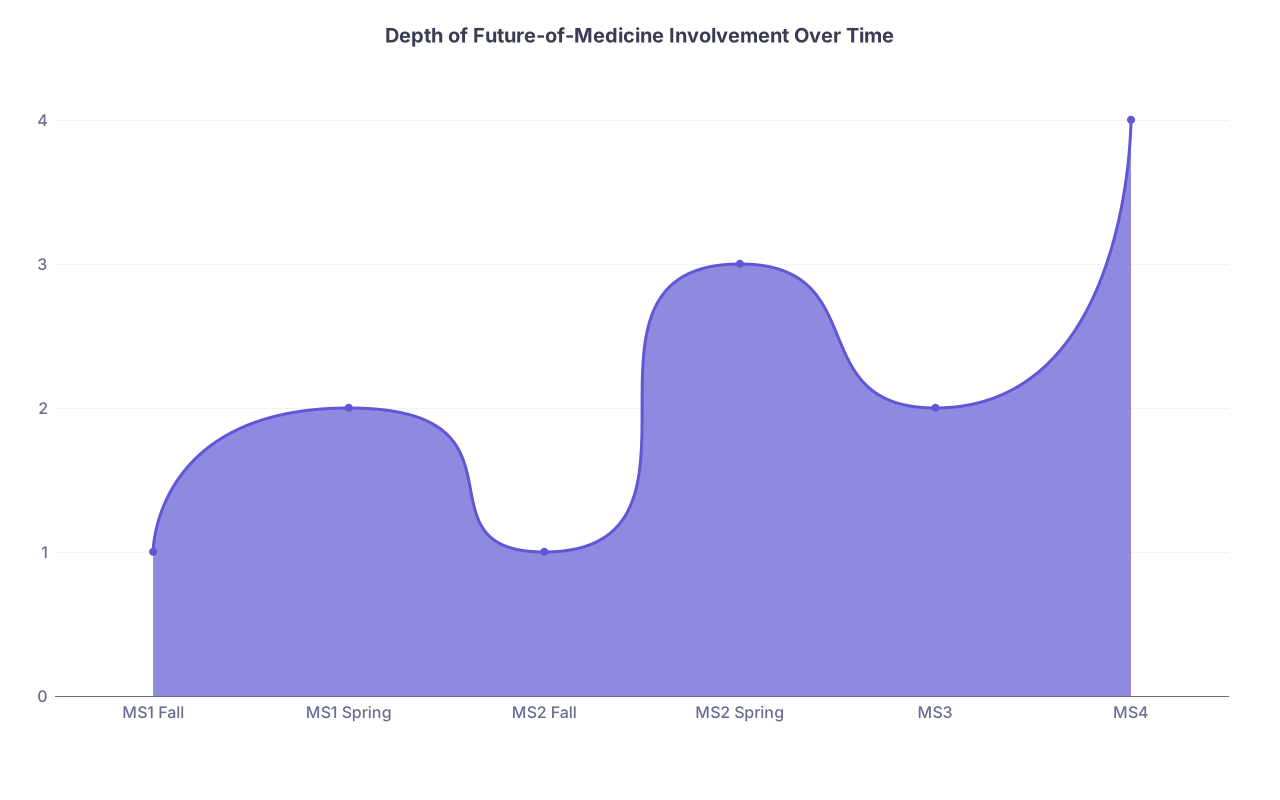
| Category | Value |
|---|---|
| MS1 Fall | 1 |
| MS1 Spring | 2 |
| MS2 Fall | 1 |
| MS2 Spring | 3 |
| MS3 | 2 |
| MS4 | 4 |
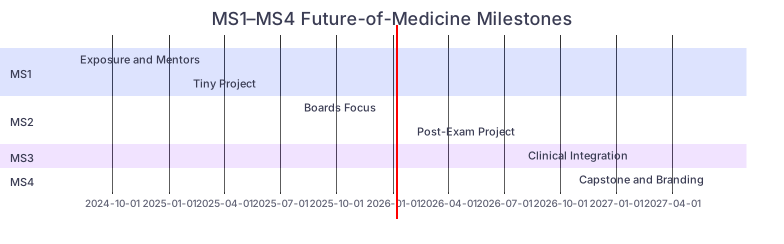
| Task | Details |
|---|---|
| MS1: Exposure and Mentors | a1, 2024-08, 6m |
| MS1: Tiny Project | a2, 2025-02, 4m |
| MS2: Boards Focus | b1, 2025-08, 6m |
| MS2: Post-Exam Project | b2, 2026-02, 3m |
| MS3: Clinical Integration | c1, 2026-08, 10m |
| MS4: Capstone and Branding | d1, 2027-06, 10m |
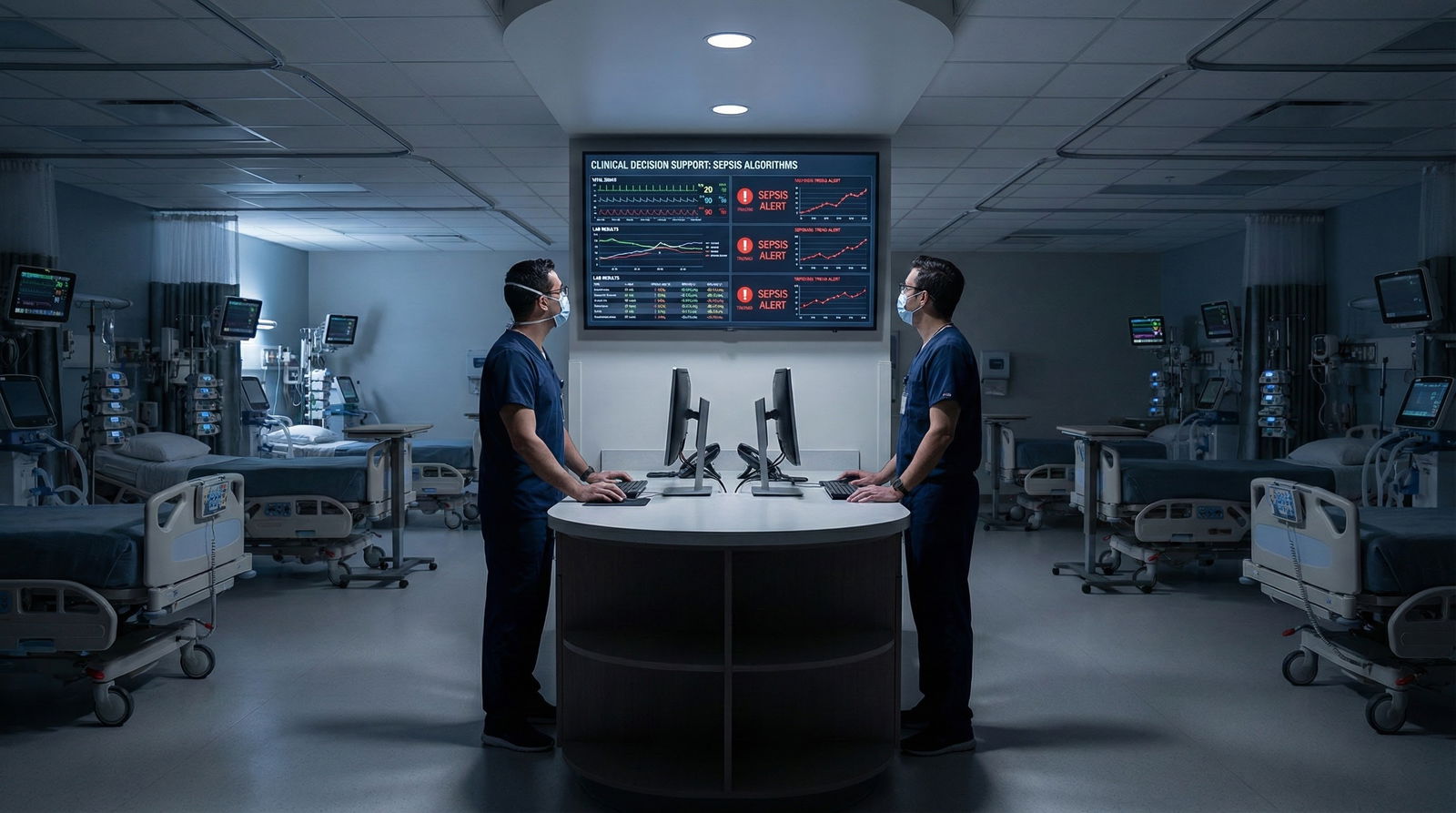
If You Remember Nothing Else
- Choose one lane per year, not five. Focus beats scattered “innovation tourism.”
- Attach everything to real problems you see in clinic. Future-of-medicine skills mean nothing if they ignore workflow and humans.
- Protect your bandwidth. Cap your time, finish small projects, and never sacrifice your core job: becoming a solid, safe clinician.