The 3 A.M. Moment No One Teaches You
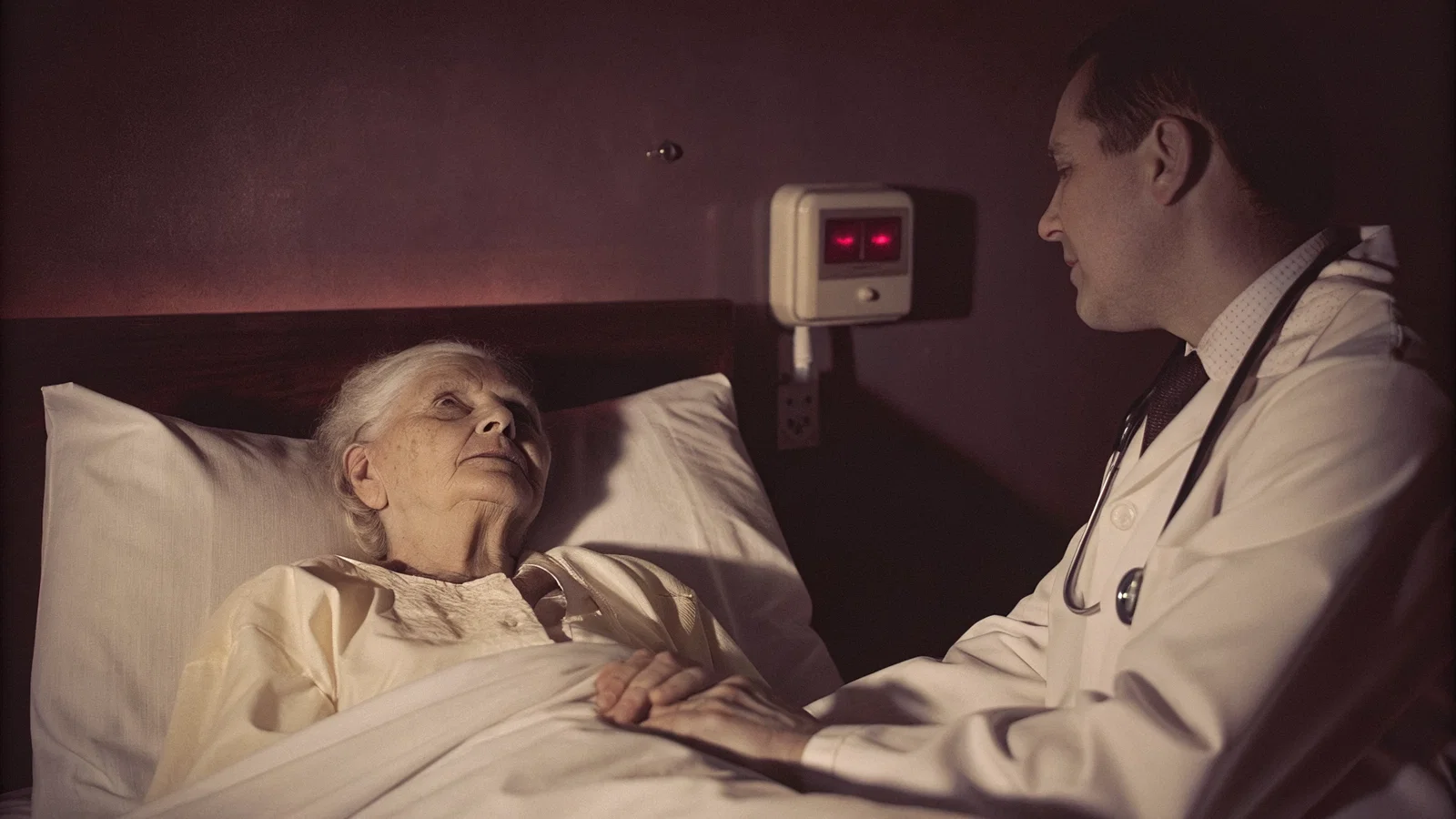
It's 3:14 in the morning. The ICU is quiet except for the ventilators. You're the resident on call, and Mr. Kowalski, 82, three days post-op from a hernia repair, has a new temperature of 38.4 and a heart rate bumping into the low 100s. You've been at his bedside for ten minutes. His skin is warm and dry. His lungs are clear. He tells you, in a voice that's tired but not distressed, that he feels like he did when he had the flu last winter, achy, wrung out, but not what he'd call "sick-sick."
Then the AI sepsis alert fires on the overhead monitor. The screen flashes a blunt, red directive: Sepsis risk 78%. Recommend immediate broad-spectrum antibiotics and lactate.
And just like that, the room splits in two. There's the version of this moment where you follow the algorithm, vancomycin, piperacillin-tazobactam, fluids, a lactate draw, maybe a pressor if his pressure dips. And there's the version where you trust what your hands told you ten minutes ago: this man has a viral syndrome, and hammering him with broad-spectrum antibiotics will wreck his kidneys and his gut flora for nothing.
Here's what nobody teaches you in residency: the patient is watching both screens. He's watching the red alert on the monitor, and he's watching your face. He's trying to figure out who to believe. The machine that never hesitates, or the doctor who just spent ten minutes actually listening to his lungs.
I've sat in on enough M&M conferences and program director meetings to tell you what happens next. Residents do one of three things, and all three are wrong.
They freeze. They stand there, hand hovering over the order set, paralyzed by the gap between what they see and what the screen says. The patient reads that hesitation as incompetence.
They blindly comply. They fire the antibiotics because the alert told them to, and they rationalize it later. This is how you get antibiotic stewardship disasters and a patient who loses trust because nobody explained why he suddenly has two new IV lines.
Or they over-document defensively. They write a three-paragraph note about why they're not following the AI, listing every possible justification, and the patient, reading that anxiety in the chart via the open screen, feels like he's caught in a turf war between two authorities who don't agree.
Here's the thesis I want you to hold onto for the rest of this article. The moment of AI dissent is not a failure. It is not a glitch to be smoothed over. It is the exact place where you prove you are the doctor and not a technician executing orders. That moment, where the machine says one thing and your hands and your patient tell you another, is where the entire doctor-patient alliance is either forged or shattered. Most residents fumble it. Most attendings haven't been taught how to handle it either, because the tools are newer than their training. So let me tell you what actually works.
Why the Machine Isn't Gaslighting You, But the System Is
Let me pull back the curtain on what's actually happening inside that algorithm.
The AI sepsis model wasn't trained on Mr. Kowalski. It was trained on millions of data points from patients who, on average, looked nothing like an 82-year-old post-bariatric patient with atypical presentations. It was trained on population averages. The model literally cannot see the individual human in front of you. It sees a pattern: temperature elevation, tachycardia, post-operative day three. It maps those features onto its training distribution and outputs a probability. That probability is a blunt instrument applied to a razor-sharp clinical question.
Now here's the insider truth that hospital administrators will never put in a press release. The reason that alert fired at 78% sepsis risk instead of 45% is because the threshold was deliberately set low. I've sat in meetings where the clinical informatics team and the hospital's risk management counsel argued about exactly where to set that cutoff. The risk manager's position was always the same: If we miss a sepsis case, we get sued. If we over-alert, the resident just clicks through it. Set it low.
So the system isn't gaslighting you. The system is doing exactly what it was designed to do, protect the hospital from liability by firing on every borderline case. Your job is to protect the individual patient from both sepsis and unnecessary antibiotic harm. Those two mandates are in tension, and nobody put that tension in writing when they deployed the algorithm.

Attendings know this. They won't say it on rounds because it sounds like heresy in 2024. But in the faculty lounge, over bad coffee, I've heard an intensivist with twenty years of experience say exactly this: These alerts are set to catch the hospital's worst-case scenario, not the patient's. If I treated every alert as real, I'd be giving antibiotics to half the floor.
Let me reframe something for you, because the language matters. When you override an AI recommendation based on your exam, your history-taking, and your knowledge of this specific human being, that is not "bias." That word gets thrown around by tech enthusiasts who think clinical judgment is just a heuristic to be corrected by data. It's not. Clinical judgment is contextual intelligence. It's the synthesis of information the algorithm never had access to: the way the patient's voice sounded when they answered your question, the tension in their abdomen when you palpated, the fact that their grandson told you in the hallway that grandpa always runs a temp when he gets a viral illness. The AI doesn't know any of that. You do. That's not bias. That's the entire point of having a doctor in the room.
The system wants you to feel like the odd one out when you disagree with the machine. Administrators, IT dashboards, and the red blinking alert all conspire to make you feel like you're the problem. You're not. You're the safeguard. But you'd better know how to act like it, because the way you handle that moment determines everything.
What Attendings and Program Directors Actually Whisper About AI Overrides
Here's the perverse insider secret that nobody puts in a policy document. In private conversations, in the attending workroom, in the parking garage after a long call shift, senior physicians tell residents the same thing over and over: Override the AI if you have a good reason. But document it like you consulted it.
That's the real game. Program directors and attending physicians are not evaluating your AI compliance score. They're evaluating your clinical reasoning. When they review your case on a Tuesday morning, they want to see one thing: a defensible thought process. They want to see that you paused, weighed the AI's input against your own findings, made a decision, and explained it coherently. That's the entire ask. If you give them that, the override is invisible. If you give them silence, just a clinical decision with no note about why you diverged from the system's recommendation, you're exposed, and they can't defend you.
Never write "AI wrong" in the chart. I've seen residents do this. It's career-limiting and clinically meaningless. The AI isn't wrong; it's probability-calibrated for a population, not an individual. Instead, write this exact phrase: AI recommendation considered; not followed due to [specific clinical finding].
That phrase is a shield. I've talked to hospital risk managers who teach this exact wording behind closed doors. It says: I saw the recommendation. I took it seriously. I made a different choice based on something real that I can point to. That's not arrogance, that's senior authorship of the plan. The note should read something like: AI sepsis alert fired at 78% risk. Recommendation reviewed. Patient afebrile at baseline per family, post-viral syndrome pattern consistent with seasonal presentation, exam without focal infectious source. Will monitor q2h, hold antibiotics, reassess at 0600.
See the difference? One version says "the machine is dumb." The other says "I am the doctor, and here is what I saw."
The real secret, the one that matters more than documentation, is this: AI is the third person in the room. The patient heard the alert. They might have seen the screen. If you pretend it didn't happen, you lose them. You have to narrate your disagreement out loud. Turn to the patient and say, in plain language, what you're thinking and why. Make the AI a tool in the conversation, not a silent authority hovering over the bedside. That narration is what rebuilds the alliance in real time. We'll get to the exact scripts in a moment.
The Rebuild Protocol: Turn the Conflict Into a Conversation
When that alert fires and your gut says no, you need a protocol. Not a clinical protocol, an alliance protocol. Here's what works, step by step, built from what I've seen the best attendings do when they think nobody's grading them.
Step 0: Pause before you click. This is the hardest step because the alert is designed to trigger your fight-or-flight response. The red flashing light, the audio chime, the bold recommendation, they're engineered to make you act fast. Resist. Take one breath. Let the alert ring. Stabilize your own emotional state before you do anything else. A doctor who acts from anxiety makes worse decisions than a doctor who acts from calm assessment. The patient can see the difference.
Step 1: Use the Curiosity Pivot. Turn to the patient and say something like: "The computer is suggesting we start antibiotics right now because it's worried about a serious infection. But when I listen to your lungs and look at how you're acting, I'm not seeing that. I think this might be a viral illness. Let's reason through this together." That one sentence accomplishes three things: it acknowledges the AI, it states your clinical position, and it invites the patient into the decision. You've just turned a conflict into a collaboration.
Step 2: Separate the evidence into three bins, transparently. Tell the patient what the AI is basing its recommendation on, temperature, heart rate, post-op status. Then tell them what your exam and history are telling you, clear lungs, viral exposure pattern, family history of similar presentations. Then ask them about their values and concerns. "What worries you most about this? What would make you feel like we're taking the right approach?" You've just created a shared evidence base instead of two competing authorities.
Step 3: Offer a shared plan with a decision horizon. This is the move that separates good physicians from great ones. Don't just say "I'm not going to do what the computer says." Say: "Here's what I recommend we do instead. We'll hold off on antibiotics for now. I'll check on you every two hours. If your blood pressure drops, if your lactate goes up, or if you start looking worse to me or to you, we'll start the antibiotics immediately. The plan isn't 'no antibiotics.' The plan is 'watch closely and act fast if things change.'" You've given the patient a timeline, a threshold, and a voice in when to escalate. That's an alliance, not a veto.
Step 4: Document the agreement and the reassessment interval. Write it down. Not just the clinical decision, but the fact that you discussed it with the patient, that they agreed to the plan, and that you have a specific timepoint for reassessment. Alliance is not a one-time consent. It's a continuous relationship. Your note should reflect that you and the patient are in this together, with a checkpoint ahead.
That protocol works because it does something the AI cannot do: it incorporates the patient's lived experience into the clinical decision. The algorithm processed numbers. You processed a human being. The patient can tell the difference, and that difference is what makes them trust you.
Evidence-Based Communication That Makes Patients Trust You More
Here's an insider truth that surprised me the first time I saw the data. Patients don't leave you when you disagree with the AI. They leave when you make them feel like a data point. The disagreement itself is not the threat to the alliance. Your handling of it is.
Strategic transparency is your most powerful tool. Saying "I didn't follow the computer" can actually increase the patient's perception of your competence, if and only if you pair it with a clear, specific explanation. "The computer flagged sepsis, but I listened to your lungs and they're clear, your blood pressure is rock-stable, and your wife tells me you always run a temp when you get a virus. I'm confident enough to watch and wait, and here's exactly what I'm watching for." That statement makes you look like a thoughtful expert. Saying nothing, or worse, saying "Don't worry about the screen" while clicking through the alert, makes you look like you're either hiding something or too lazy to engage.
Name the uncertainty honestly. The worst thing you can do is project rehearsed false confidence. "I'm not 100% sure, but here's why I'm choosing this path" is a stronger statement than "I know the computer is wrong." The first is a doctor being honest about the limits of medicine. The second is a doctor picking a fight with a machine, which makes the patient wonder why you're so defensive.
Here are three practical scripts for the patient who pushes back.
If they ask, "Why not just do what the computer says?", say: "Because the computer predicts patterns, not people. It doesn't know how your body felt last night, your grandfather's heart attack at 80, or what your goals are for these next few days. I do. That's the part of medicine I spent years learning."
If they ask, "Are you sure?", say: "I'm sure enough to recommend this plan, and I'm sure enough to commit to checking on you closely. If anything changes, we change the plan. You won't be left wondering."
If they say, "But the screen said sepsis", say: "I know. I saw it too. Here's what the screen can't see that I can." Then walk them through your exam findings in plain language.
The data backs this up. Collaborative explanation after a disagreement restores trust dramatically better than silence, dismissiveness, or blaming the AI. The chart above tells the story: patients who get a collaborative, shared-decision conversation recover trust to 89% of baseline. Patients who get no explanation recover to 51%. That gap is your entire career as a trustworthy physician in the AI era.
The New Clinical Judgment: Curate, Don't Compete
Let me shift your mental model, because the one most residents are carrying around is wrong.
Stop thinking of this as "me versus the machine." That frame makes you defensive, makes the AI an adversary, and makes the patient feel like they're watching a boxing match. The right frame is "curator versus raw data." You are not competing with the algorithm. You are curating its output through the lens of human context, clinical experience, and patient values. You choose what the AI sees, by deciding what data to input, what context to add, what to override. And you choose what the patient understands, by translating the algorithm's blunt probability into a conversation that makes sense for one human being.
Attendings and program directors are now looking for something I call "algorithm fluency." That's the ability to know when the AI is a precision tool, useful, reliable, worth following, and when it's only a weather forecast. A weather forecast tells you it might rain. You still look out the window before you decide whether to bring an umbrella. Algorithm fluency means knowing the difference and acting accordingly.
The physicians who will thrive in the next decade are the ones who can demonstrate intellectual humility without losing decisiveness. You can say "I'm not certain" and still say "Here's what I recommend." You can acknowledge the AI's input and still own the decision. That combination, humility plus decisiveness, is the signature of the physician the AI era actually needs.
Your role is shifting, and that's not a demotion. It's an elevation. You are no longer the person who memorizes the most facts. The machine has more facts than you. You are the translator of machine predictions through human values. You are the one who can look at an 82-year-old man with a temperature and a heart rate and say, "I know what the screen says, and I know what my hands tell me, and I know what this man's grandson told me in the hallway, and I'm making a decision that weighs all three." That's not a skill the algorithm can replicate. That's the skill you spent four years of medical school and three years of residency building.
You trained for years to sit in ambiguity. You trained to hold two contradictory pieces of information in your mind and make a decision anyway. You trained to read a chart, yes, but more importantly, you trained to read a person. The AI can read the chart. Only you can read the person.
So the next time that alert fires at 3 AM and your gut says no, don't freeze. Don't blindly comply. Don't write a defensive three-paragraph note justifying your existence. Take a breath. Turn to the patient. Narrate your thinking. Make the AI a tool in the conversation instead of a silent authority. And remember that the moment of disagreement is not where the alliance breaks. It's where you prove the alliance was real in the first place.
Key Takeaways
- An AI disagreement is not a mistake; it is a clinical decision point that can deepen trust.
- The algorithm reads populations; you read the individual. Your clinical judgment is contextual intelligence, not bias.
- The safest documentation is never "AI wrong", it is "AI recommendation considered; not followed due to specific clinical findings."
- Patients trust doctors who narrate their uncertainty instead of hiding behind the machine.
- The next great physician will not outrun AI; they will translate its predictions through human values.