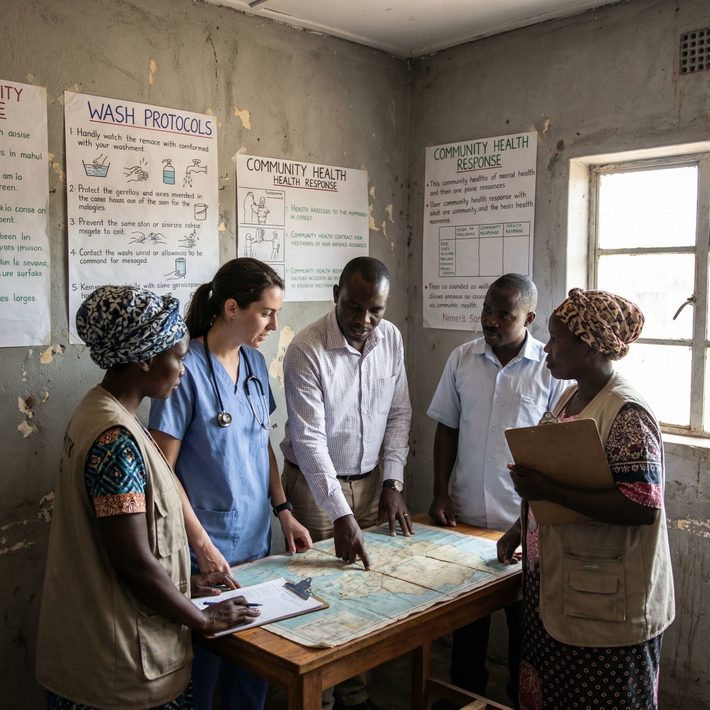
You want to save lives in a conflict zone and still make your mortgage payments in Chicago. I understand the impulse. Global health attracts the most driven clinicians. But the administrative reality of balancing a domestic practice with a humanitarian deployment is a logistical minefield. Most physicians treat this as a simple scheduling issue. It is not. It is a complex web of employment law, tax liability, and malpractice exposure. Let me break this down specifically.
The following breakdown is for educational purposes only. This is not financial advice, not legal advice, and not tax advice. Specific figures vary by jurisdiction and institution. Always consult a qualified professional before signing dual-employment contracts.
The Dual-Employment Dilemma: Defining the Scope
We must first establish precise definitions. The terminology you use in your contract dictates your legal protection. "Moonlighting" implies working a secondary job for extra income on your own time, typically as an independent contractor. Humanitarian work is not moonlighting. It is a professional deployment. If you classify a three-month medical mission as moonlighting, your home institution's legal team will rightfully panic. You are exposing them to vicarious liability.
The correct framework is a "Secondment." A secondment is a formal, temporary transfer of an employee to another organization. Under a secondment, you remain an employee of your home institution. Your benefits, seniority, and malpractice tail coverage remain intact.
The critical distinction lies in duration and integration. Short-term consultancies (under three months) often function as independent contracts. The focus here is purely on stipends and basic logistics. Long-term secondments (over three months) require deep career integration. You are not just visiting; you are embedding.
Because "moonlighting" is a misnomer for humanitarian work, using that term carries severe legal implications. It implies a lack of institutional oversight. To correct this, you must secure a formal Letter of Understanding (LOU). This document is executed between your home hospital and the deploying non-governmental organization (NGO). The LOU explicitly states that your deployment is a sanctioned professional development activity. It delineates who holds liability, who manages your benefits, and exactly when you are expected to return. Without an LOU, you are operating in a legal gray zone. I have seen careers derailed because a physician assumed a verbal agreement with a department chair was sufficient. It is never sufficient.
Financial Implications: The Revenue vs. Stipend Gap
Let us look at the math. The financial reality of a humanitarian deployment is a net loss. You must quantify the opportunity cost. If you are a proceduralist or a high-volume clinic physician, a three-month deployment means three months of lost billable hours.
NGOs do not pay market-rate salaries. They pay stipends. A stipend is a per diem allowance designed to cover basic living expenses in the host country. It is not compensation for your medical expertise. When you compare your home practice revenue against an NGO stipend, the gap is staggering. You are effectively paying for the privilege of working in a resource-limited setting.
Then there is the issue of "On-Call" obligations. If you remain on the call schedule for your home hospital while deployed, you are a massive liability. You cannot manage a domestic code blue from a satellite phone in South Sudan. You must be removed from the call pool. This further reduces your domestic clinical revenue and shifts the burden to your colleagues, which requires careful political navigation within your department.
Tax implications compound the financial strain. Receiving a foreign stipend while maintaining domestic tax residency creates a complex tax scenario. Many physicians mistakenly believe the Foreign Earned Income Exclusion (FEIE) will shield their stipend from domestic taxes. It will not. The FEIE requires you to be physically present in a foreign country for 330 days out of a 12-month period. A standard 90-day deployment fails this test. You will owe full domestic income tax on your stipend.
To mitigate the financial bleed, you must negotiate a "make-up" schedule. Before you leave, secure a written agreement allowing you to work extra clinical shifts or perform additional procedures upon your return to recoup lost revenue. Alternatively, negotiate a reduced clinical FTE (Full-Time Equivalent) for the six months following your return to prevent immediate burnout.
The Legal Minefield: Malpractice and Sovereign Immunity
This is where physicians get burned. There is a pervasive myth in global health regarding "Sovereign Immunity." Many clinicians believe that if they are invited by a host country's Ministry of Health to work in a public hospital, the host government's sovereign immunity protects them from malpractice suits. This is entirely false. Sovereign immunity protects the state apparatus, not private foreign contractors. If a patient suffers a adverse outcome, the patient's family will not sue the Ministry of Health. They will sue you. And they will sue you in your home country, where you have assets.
You must secure "Host Country" malpractice insurance. However, you must read the policy exclusions carefully. Standard international policies often contain gaping holes. They may exclude "acts of war," "terrorism," or "epidemic response." If you are injured or sued while treating casualties in a conflict zone, a standard policy will deny the claim. You need a specialized policy with a "War Risk" rider.
We must address "Scope of Practice." In a resource-limited setting, you will be asked to perform procedures outside your domestic credentialing. An internist might be asked to suture complex lacerations. A pediatrician might be asked to manage adult trauma. If you practice outside your credentialed scope, your home institution's malpractice carrier will void your coverage. You must establish strict clinical boundaries before you deploy.
Finally, you need a "Hold Harmless" agreement. This is a contractual clause where the deploying NGO agrees to indemnify you against legal claims arising from your service. Be warned: many NGOs use predatory hold harmless clauses that shift all liability onto the physician while absolving the organization. Your legal counsel must structure this agreement to ensure the NGO shares the liability, particularly regarding the provision of adequate medical supplies and security.

Operational Continuity: The Art of the Handoff
Your deployment begins long before you board the plane. The "Day 1" crisis occurs the moment you leave. How do you manage a full panel of chronic disease patients when you are gone for 90 days? You cannot simply lock the clinic door.
Abandonment is a legal and ethical violation. You must implement a rigorous "Transition of Care" protocol. This requires a final comprehensive visit with every active patient prior to your departure. During this visit, you must obtain explicit, written "Informed Consent" regarding your absence. The patient must sign a document acknowledging that you will be unavailable, identifying the covering provider, and authorizing the interim management of their care.
Delegating to mid-level providers (Nurse Practitioners and Physician Assistants) is the most effective strategy. However, you must document the transition meticulously. The covering provider must have a detailed handoff note for every complex patient, including a clear medication reconciliation and specific parameters for when to escalate care to the emergency department.
Telemedicine is often pitched as the ultimate bridge. It is a useful tool, but it is not a panacea. Relying on telemedicine to manage a domestic practice while deployed requires a reliable internet connection, which is rarely guaranteed in field clinics. Billing for telemedicine across international borders violates many domestic insurance contracts. Use telemedicine for brief check-ins, not for comprehensive chronic disease management.
Psychological Toll: Compassion Fatigue and Guilt
The administrative and legal hurdles are difficult, but the psychological toll is what actually breaks physicians. We call it "Home Practice Guilt." It is the severe cognitive dissonance experienced when you return from a deployment where patients died from preventable infectious diseases, only to sit in your domestic clinic and treat a patient complaining about a minor cosmetic blemish.
This dissonance leads directly to compassion fatigue. You return home to a "normal" workload, but your baseline for what constitutes a medical emergency has been radically altered. You become irritable with patients and colleagues. You feel detached from the trivialities of domestic healthcare.
Compartmentalization is not just a buzzword; it is a survival mechanism. You must actively separate your clinical identities. The skills and emotional bandwidth required for humanitarian work are distinct from those required for domestic practice. Acknowledge the shift. Give yourself a mandatory two-week decompression period upon return before resuming full clinical duties.
Peer support networks are non-negotiable. You need to talk to clinicians who have balanced these two distinct clinical cultures. Standard employee assistance programs are rarely equipped to handle the moral injury associated with global health deployments. Seek out specialized debriefing groups for returning humanitarian workers.
Conclusion: The Strategic Approach to Service
Balancing a domestic practice with a humanitarian deployment requires a brutal assessment of trade-offs. You are trading time, money, and legal risk for the privilege of providing care where it is needed most.
The ultimate goal is to integrate humanitarian service into a sustainable career model. It must be a structured component of your professional life, not a chaotic disruption. Do not sacrifice your primary practice for a deployment. If your domestic career collapses, you lose the financial and institutional stability required to deploy in the first place. Use the deployment to enhance your primary practice. Bring back the resilience, the resourcefulness, and the broadened clinical perspective. That is how you build a career that survives the dual reality of global health.
Key Takeaways
- Dual employment requires a formal 'Secondment' structure rather than informal 'Moonlighting' to protect your home institution.
- Financial planning must account for the significant gap between lost home practice revenue and NGO stipends.
- Malpractice liability is rarely covered by host country immunity; specialized international insurance is mandatory.
- A rigorous patient handoff and consent process is the only way to legally and ethically manage a long absence.
- Psychological boundaries are essential to prevent burnout when toggling between high-stakes humanitarian work and standard clinical practice.