
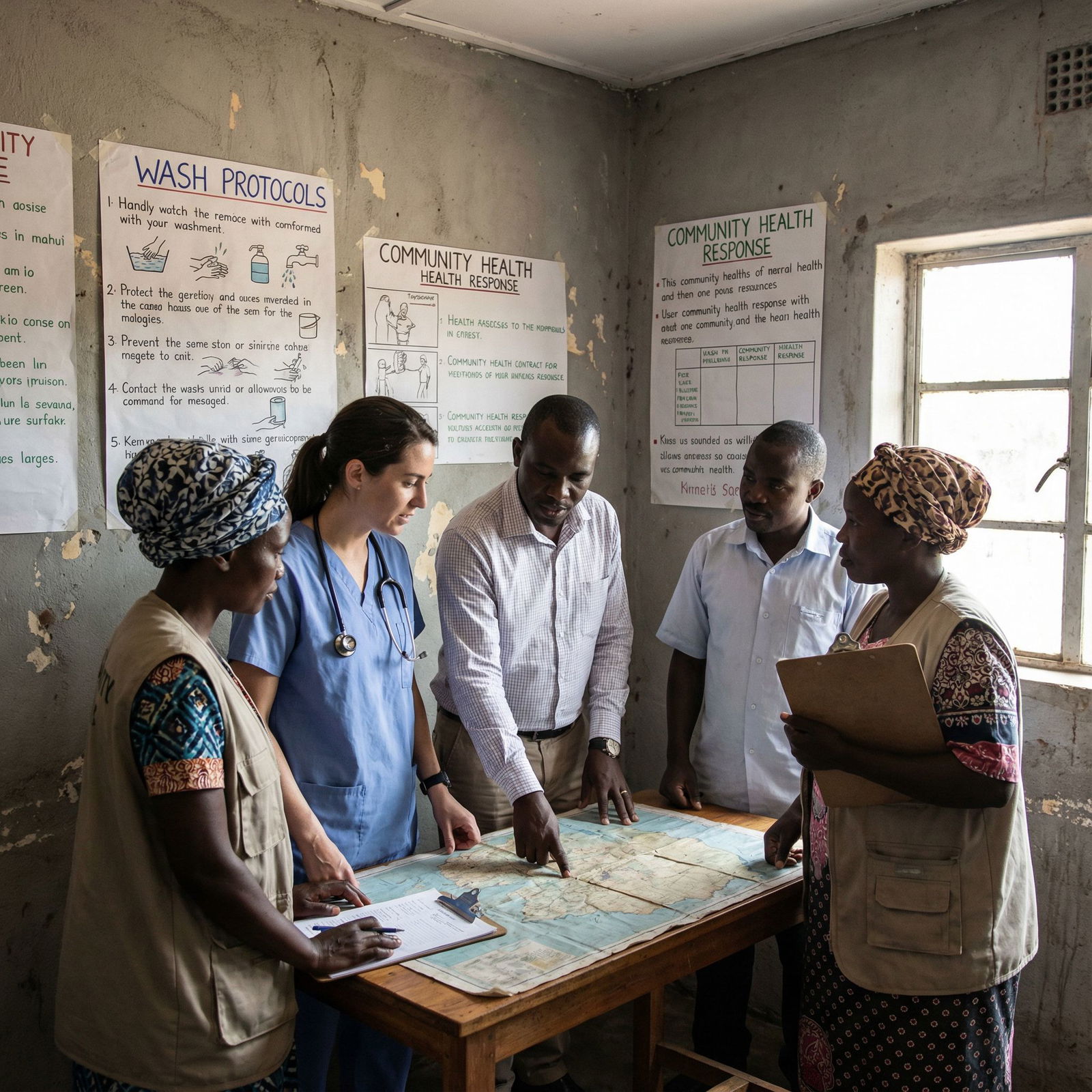
The guidelines are not wrong. They are just written for a world many hospitals will never see.
If you work in a low-resource setting and try to apply tertiary-center protocols word for word, you will fail your patients. Not because you are careless. Because the protocol was never designed for your reality.
This is where ethics and practicality collide. And where you have to become something more than a guideline follower: you have to become a protocol engineer.
Below is a structured way to adapt “gold standard” guidelines to low-resource hospitals without slipping into dangerous improvisation or quiet nihilism.
1. Accept the Gap: Your First Ethical Duty
The biggest ethical mistake in low-resource settings is denial. Pretending that “we follow WHO guidelines” while everyone knows that half the steps are physically impossible.
That quiet lie does real harm:
- It blocks honest problem-solving.
- It creates moral injury for staff who feel they are constantly “failing.”
- It hides systematic under-resourcing behind the illusion of “guideline compliance.”
You cannot fix what you will not name. So start here: acknowledge the gap.
Do a brutal constraints inventory
Sit down with your team and map what you truly have access to. Not theoretically. Actually.
Ask three questions for every major guideline you use (e.g., sepsis, postpartum hemorrhage, pediatric pneumonia, stroke):
- What steps are we able to perform reliably, 24/7?
- What steps are inconsistently available (time of day, particular staff, particular rooms)?
- What steps are never available, under current conditions?
Do this fast and simple. One sheet of paper per condition.
| Sepsis Step | Status | Comment |
|---|---|---|
| IV broad-spectrum antibiotics | Reliable | Always available |
| Serum lactate measurement | Never available | No reagent, no machine |
| Blood cultures before antibiotics | Inconsistent | Only day shift |
| Continuous blood pressure monitor | Inconsistent | 2 working monitors total |
| ICU admission with vasopressors | Never available | No ICU, no pumps |
Now you have the ethical baseline: the honest map of reality.
Because here is the key: ethics in low-resource care is not primarily about heroic sacrifices. It is about accurate situational awareness and transparent trade-offs.
2. Build “Tiered” Protocols Instead of Fantasy Standards
Trying to force a level-3 ICU protocol into a hospital that barely has oxygen is like trying to fly a jet with bicycle parts. You need tiers.
Think of protocols in three levels:
- Tier 1 – Ideal care: What top centers do. From the guideline as written.
- Tier 2 – Adapted care: What you can do with your current constraints if you are smart and organized.
- Tier 3 – Crisis care: What you do when even your usual limited resources are overwhelmed (mass casualty, oxygen shortage, staff strike).
You formalize this. On paper. On the wall. In training.
How to write a tiered protocol in 60 minutes
Pick one high-impact condition. Sepsis, obstetric emergencies, pediatric respiratory distress—whatever kills the most at your hospital.
Then:
Copy the official guideline
Print the key steps from WHO, Surviving Sepsis Campaign, national OB guidelines, etc. Highlight the “critical path”—the few steps that matter most for survival.Label each step with your reality status
Use R (reliable), I (inconsistent), N (not available).Define your Tier 2 – Adapted Path
For each I or N:- Ask: “What is the closest effective alternative we can do reliably?”
- If there is no alternative: “What early step can we strengthen to compensate?”
Define a Tier 3 Trigger
Decide what event pushes you into crisis protocol:- Oxygen stock below X cylinders
- More than Y patients requiring vasopressors with only Z pumps
- Only 1 nurse covering >30 patients
Write it in simple language on one page
If the protocol is longer than one page front and back, it will die on a shelf.
Here is what that might look like for sepsis.
| Tier | Focus | Key Elements |
|---|---|---|
| Tier 1 | Full guideline | Cultures, lactate, ICU, vasopressors |
| Tier 2 | Adapted ward care | Rapid antibiotics, fluid bolus, basic monitoring, early transfer if possible |
| Tier 3 | Crisis (no ICU, no pumps) | Maximize antibiotics, restricted fluids, prioritize by survival probability |
3. Use Ethical Triage Instead of Quiet Rationing
Resource limitation is not hypothetical. It is daily life: one oxygen port, two patients. One operating room, five emergencies. One bag of O-negative blood, three postpartum hemorrhages.
Most hospitals ration silently. Whoever shouts the loudest or arrives first gets the resources. That is not neutral. It is unethical.
You need explicit triage rules, even for ordinary days—not just disasters.
Stepwise triage framework you can actually use
This is a simple, defensible algorithm stressed teams can remember.
Immediate survival benefit
- Which patient is most likely to survive with this resource?
- Which patient is likely to die without it?
Duration of resource use
- Who can be stabilized and weaned fastest?
- Avoid locking a scarce resource for days when another patient could benefit for hours.
Fairness guardrails
- No discrimination by wealth, social status, tribe, religion, gender.
- No “VIP oxygen” for staff relatives without documented clinical justification.
Reassessment timetable
- Decide how often you reassess (e.g., every 4 hours for oxygen, every 24 hours for ICU beds).
- Build that into your handover.
Write this down as a short local triage policy. Not just “what we usually do.” A real policy.
And then, crucially, you document triage decisions in the notes briefly:
- “Oxygen cylinder allocated to Bed 3 – severe pneumonia, SpO₂ 78% RA, improved to 92% on 10L. Bed 4 stable on 2L, SpO₂ 95%.”
It protects the patient. It protects you ethically. It protects you legally.
4. Replace “Missing Technology” With Strong Clinical Systems
Guidelines from high-income countries lean heavily on diagnostics and infrastructure:
- CT scans for strokes and trauma
- Troponins and ECGs for chest pain
- Continuous fetal monitoring
- Regular lab panels for sepsis, DKA, renal failure
You probably do not have half of that. So you strengthen two things instead:
- Clinical assessment skills
- Basic systems that multiply whatever you do have
Clinical skill: make your own “low-tech” protocol
Take any common condition where high-tech tools are missing—like acute stroke without CT, or pediatric pneumonia without X-ray.
Build a decision tool around:
- Symptoms
- Physical signs
- Basic vitals
- Cheap tests you do have (fingerstick glucose, urine dipstick, maybe hemoglobin)
Example: Suspected stroke in a district hospital with no CT.
Instead of the impossible: “CT within 20 minutes and thrombolysis if ischemic.”
You use:
- Clear inclusion criteria (sudden onset focal deficit, facial droop, unilateral weakness, speech change).
- Exclusion criteria for hemorrhagic stroke (sudden severe headache “worst ever,” rapid coma, very high BP, meningism).
- A simplified neuro exam cheat sheet.
You will not reach tertiary accuracy. But you will:
- Recognize stroke earlier.
- Control blood pressure and glucose sooner.
- Identify who must be transferred when it is actually feasible.
System skill: do not underestimate simple checklists
I have seen one laminated sheet on a ward wall cut deaths more than any new machine.
Examples:
- Sepsis screening at triage: one box to tick for temp, heart rate, blood pressure, respiratory rate, mental status, suspected infection.
- PPH emergency box near labor room: misoprostol, oxytocin, IV sets, wide-bore cannulas, gloves, suture, with a 1–2–3 step algorithm.
You design these checklists based on your adapted, tiered protocol. Not on fantasy guidelines.
5. Make Risk-Benefit Decisions Explicit (and Shared)
The hardest ethical situations in low-resource care are not about whether to give “gold standard” care. You already know you cannot.
They are about whether to attempt a risky adapted intervention when you do not have full support.
Examples:
- Intubating a child with severe pneumonia when there is no ventilator and limited experience.
- Starting a high-dose vasopressor drip on a general ward with no continuous monitoring.
- Attempting a trial of VBAC when there is no 24/7 surgical team.
You will face these often. Hand-wringing is useless. You need a structure.
The 4-question risk-benefit huddle
For any high-risk decision outside guidelines, take 2–3 minutes with at least one colleague and run through:
What is the baseline prognosis without this intervention?
- “Likely to die in the next few hours” vs “significant chance of survival with basic care.”
What are the realistic benefits of our adapted intervention?
- Not the guideline benefit. Your benefit, in this context, with this staff and equipment.
What are the main failure modes and their consequences?
- If this goes wrong, does the patient die faster? Do we risk harming others (e.g., tying up oxygen, blood, staff)?
What does the patient or family want, when informed honestly?
- Can they understand that this is not standard care but a last-resort attempt?
You then:
- Document the discussion in simple terms.
- Ensure at least one more senior clinician, if available, signs off.
- Make clear time limits and reassessment triggers.
This does three things:
- Reduces impulsive, emotional decisions.
- Spreads responsibility across the team instead of one isolated clinician.
- Protects against the slippery slope of “we’ll just try this” becoming normal.
6. Protect Yourself From Moral Injury While You Do This Work
Working in low-resource hospitals and adapting protocols is not just an intellectual puzzle. It is emotionally corrosive if you do not protect yourself.
- You know what the right care is.
- You are physically prevented from providing it.
- You have to watch harm unfold, repeatedly.
If you ignore that, you burn out or become numb. Neither is good for patients.
Three practical habits that actually help
Forget the generic wellness slogans. These are the things I have seen keep clinicians functioning:
Daily micro-debriefs, not occasional big ones
End each shift with a 5-minute team huddle:- One case that went well.
- One case that felt wrong or heavy.
- One thing you want to try differently tomorrow.
No therapy speeches. Just naming. Regularly.
Hot debrief after “moral crashes”
When something hits you hard—a preventable maternal death, a child dying for lack of oxygen—clearly label it as an event:- “We are doing a 10-minute hot debrief. Phones outside. One person writes 3 system changes we will test.”
You are not just sharing feelings. You are linking the emotion to concrete system improvement. That prevents helplessness.
Boundary for personal responsibility
Say this clearly to yourself and your team:- “We are responsible for doing the best possible within our system. We are also responsible for pushing to improve that system. But we are not personally guilty for what the system makes impossible.”
That is not an excuse. It is a boundary that lets you survive long enough to keep fighting for change.
7. Turn Adaptation into a Learning System, Not Random Hacks
If you are adapting guidelines and protocols, you are running a series of experiments. The worst thing you can do is:
- Change a protocol out of necessity.
- Never track what happened.
- Rotate staff.
- Have all the learning evaporate.
You need a basic “quality loop.” No grant. No fancy software. Just discipline.
Simple PDSA (Plan-Do-Study-Act) for low-resource hospitals
Choose one adapted protocol to improve over 3 months. For example: “Our Tier 2 sepsis protocol on the adult ward.”
Plan
- Choose 1–2 simple outcome or process measures:
- Time from triage to first antibiotic.
- Proportion of septic patients getting a lactate alternative (e.g., capillary refill + blood pressure + mental status documented).
- 7-day mortality in suspected sepsis cases.
- Decide exactly how data will be collected. Often this means a simple logbook at triage.
- Choose 1–2 simple outcome or process measures:
Do (4–6 weeks)
- Train staff on the adapted protocol.
- Run it as consistently as you can for a month.
- Collect data quietly in the background.
Study (1–2 weeks)
- Plot the basic numbers on a wall chart.
- Sit with the team for 30–60 minutes:
- Did the numbers move?
- Where did the protocol break down?
Act
- Adjust 1–2 concrete steps:
- Move antibiotics to triage instead of pharmacy.
- Add a sepsis sticker to the chart for any “red flag” patient.
- Start the next cycle.
- Adjust 1–2 concrete steps:
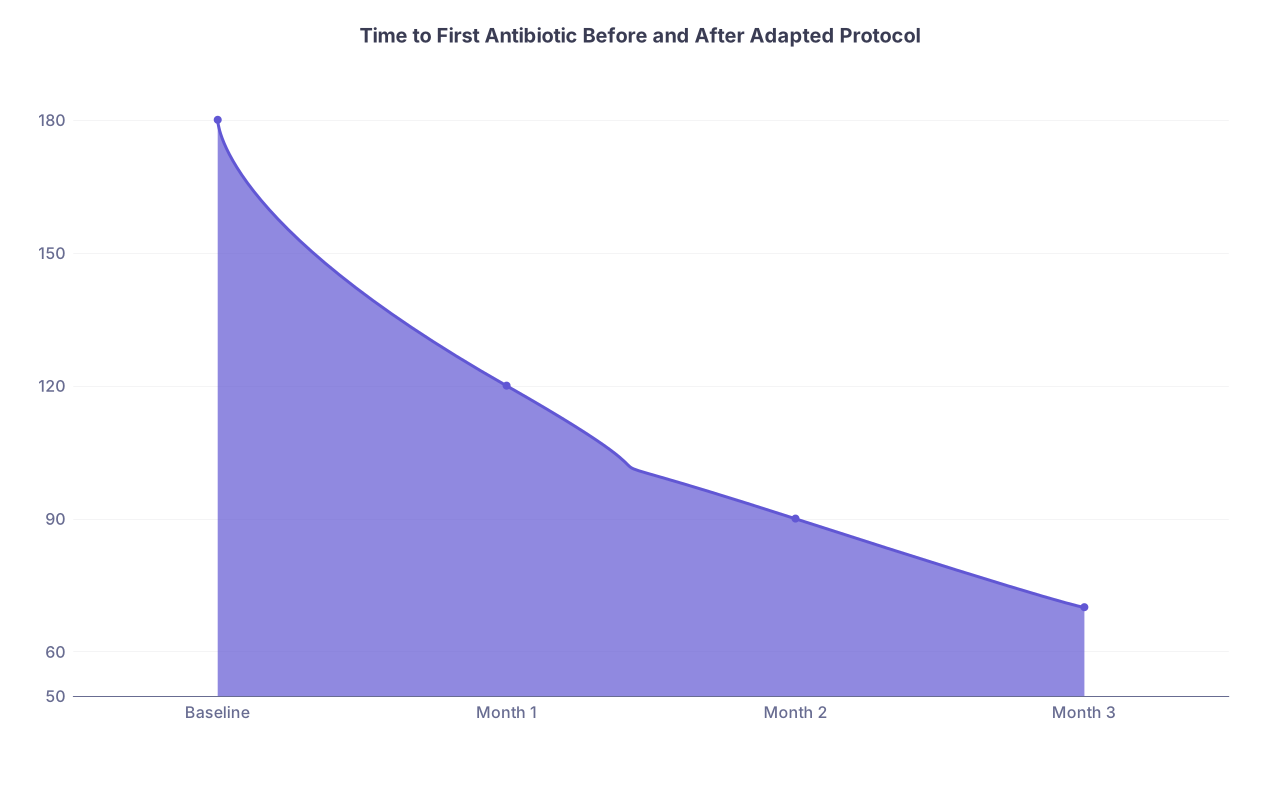
| Category | Value |
|---|---|
| Baseline | 180 |
| Month 1 | 120 |
| Month 2 | 90 |
| Month 3 | 70 |
That line chart? That is the only “research” your team may see. It is also what keeps them believing that adaptation is not just improvisation—it is improvement.
8. Communicate Honestly With Patients and Communities
Ethical practice in low-resource systems is not only about what you do clinically. It is also about how you talk about it.
Two temptations:
- Overpromising: “We will do everything,” when “everything” includes things you simply cannot provide.
- Underexplaining: Saying nothing. Letting families guess why their relative did not get a CT, a ventilator, or a specialist.
You have to thread the middle: honest about limits, clear about efforts, respectful about uncertainty.
A script you can adapt on the ward
When resources are limited and you are deviating from a textbook guideline, use language something like this (adapted to culture and context):
- “In larger hospitals, this condition is often treated with [X, Y]. We do not have those things here.”
- “What we can do is [A, B, C]. These are treatments that help many patients in our setting.”
- “Because of these limits, the situation is still very serious. Some patients in this condition die even with treatment.”
- “We will review his/her condition regularly and adjust what we can. If transfer becomes possible and useful, we will discuss that with you as well.”
You do not need to explain global health politics at the bedside. You do need to:
- Avoid false guarantees.
- Make it clear that lack of resources is not the same as lack of care or concern.
- Invite questions and, when appropriate, shared decisions.
9. Push for Structural Change While Still Surviving the Day
Adapting protocols is not a long-term substitute for building functional health systems. You know this. The question is how to push for structural improvements when you are already drowning.
The trick is to bake advocacy into your routine work, not imagine it as a separate heroic project.
Three advocacy moves that fit into a busy clinician’s life
Turn protocol gaps into documented incidents
- Every time a patient outcome is clearly worsened by a missing resource, log it:
- Date
- Condition
- Resource missing (drug, blood, oxygen, staff, lab, bed)
- Outcome (deterioration, death, transfer refused, etc.)
Over a few months you will have a pattern:
- “We had 18 neonatal deaths where oxygen was either unavailable or interrupted.”
- “We had 12 delayed caesarean sections due to no available OR time at night.”
That is ammunition for change.
- Every time a patient outcome is clearly worsened by a missing resource, log it:
Present quarterly “mortality and resource” summaries
- Ask for 20 minutes in the hospital’s clinical meeting or admin meeting.
- Present:
- 2–3 anonymized case stories.
- Simple numbers from your incident log.
- 1–2 low-cost, realistic asks:
- “Reorganize oxygen cylinder refills to guarantee minimum of 4 full cylinders on the maternity ward at all times.”
- “Authorize purchase of 2 more blood pressure cuffs and one extra pulse oximeter.”
-
- NGOs, academic partners, diaspora physician networks—all can help.
- But only if you:
- Know your top 3 priorities.
- Have basic data.
- Have concrete proposals, not just “we need help.”

| Step | Description |
|---|---|
| Step 1 | Clinical Problem |
| Step 2 | Document Case |
| Step 3 | Log Recurrent Issues |
| Step 4 | Analyze Patterns |
| Step 5 | Prepare Brief Report |
| Step 6 | Present to Leadership |
| Step 7 | Secure Small Change |
| Step 8 | Monitor Impact |
The loop keeps turning. And the gap between guideline and reality narrows, slowly but measurably.
10. Develop Yourself Ethically, Not Just Technically
You are not just learning how to improvise around missing labs. You are shaping the kind of clinician you are becoming.
In low-resource environments, it is easy to drift into two unhelpful extremes:
- The Cynic: “Nothing will change. We just do what we can.”
- The Martyr: Burning out under impossible expectations, then leaving medicine or the country entirely.
You want a third path: Principled Adaptation.
That means you commit to:
Conscious standards, not hidden ones
- You know exactly what the ideal standard is.
- You know exactly what your adapted standard is.
- You refuse to pretend they are the same.
Transparent trade-offs
- You can say out loud:
- “We are choosing to prioritize early antibiotics and careful fluids over ICU care we do not have.”
- You can defend this choice rationally and ethically.
- You can say out loud:
Ongoing learning
- You seek out literature on:
- WHO “resource-stratified” guidelines.
- Implementation science.
- Ethics of scarcity.
- You ask: “What can we test here over the next month?” instead of “Why does no one care?”
- You seek out literature on:
-
- You do not only complain to students and juniors.
- You show them:
- How to map resource gaps.
- How to build tiered protocols.
- How to speak about limitations without self-hatred or fatalism.
Final Takeaways
Stop pretending full guidelines fit your hospital. Do the hard work of mapping what you actually have and building tiered, adapted protocols around that reality.
Make your trade-offs explicit, ethical, and shared. Use simple triage rules, risk-benefit huddles, and honest communication with patients and families to keep improvisation from becoming chaos.
Turn adaptation into a learning and advocacy engine. Track what you change, measure a few basic outcomes, and use those data to push for structural improvements—while protecting your own moral integrity in the process.


