
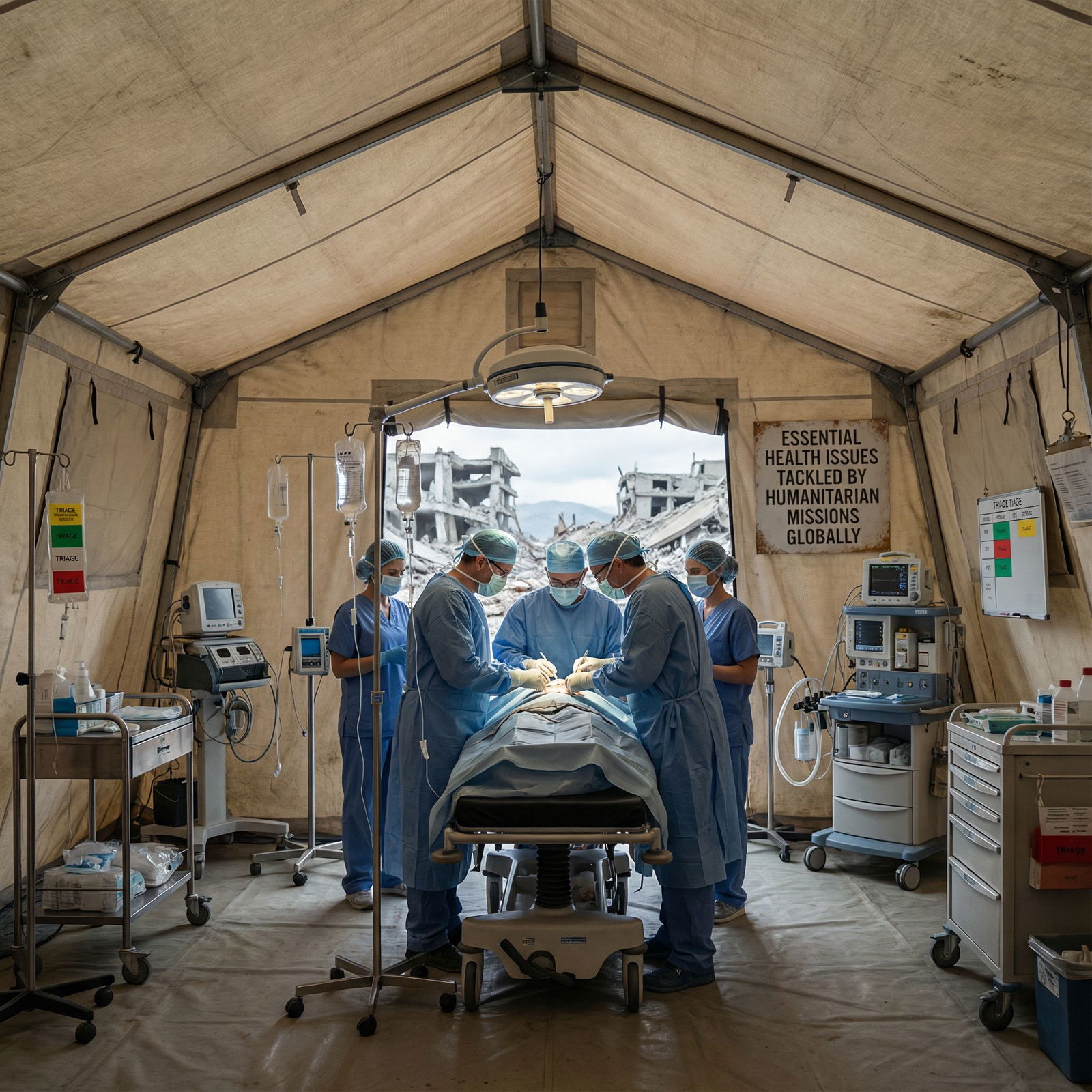
Most “advanced” emergency protocols fall apart the minute you do not have the drugs or equipment they assume.
If you are working in a resource-limited ward and still relying on memory and Western guidelines printed from UpToDate, you are gambling with patients’ lives. You need an emergency medication algorithm built for your ward, with your drugs, at your doses. And it needs to be on the wall, not in someone’s head.
Here is how to build it, step by step, in a way that is clinically sound, realistic for low-resource settings, and ethically responsible.
1. Start With Reality, Not Guidelines
You cannot design a useful algorithm until you face three uncomfortable facts:
- You will not have everything you are “supposed” to have.
- You will often be the only person in the room who knows what to do.
- In a real emergency, no one has time to read a textbook paragraph.
Your algorithm lives or dies on one thing: alignment with reality.
Step 1: Map what you actually have
Do this on a quiet afternoon, not during a code.
Walk bed-to-bed, then room-to-room (ward, crash trolley, pharmacy, procedure rooms) and write down:
- Emergency medications actually available today:
- Adrenaline (epinephrine) – what concentration? (1:1000? 1 mg/mL?)
- Salbutamol – inhaler? nebulizer solution?
- Diazepam – IV? rectal? only oral?
- Magnesium sulfate – what vial size?
- Hydrocortisone – IV vials?
- Dextrose – 50%? 10%? only 5%?
- Naloxone – any at all?
- Antibiotics – ceftriaxone? ampicillin? gentamicin?
- Antimalarials – artesunate? artemether? quinine?
- Anticonvulsants – phenobarbital? phenytoin?
- Delivery tools:
- Oxygen – cylinders? concentrator? none?
- Bag-valve mask – sizes available?
- IV cannulas – which sizes?
- Nebulizer machine or only inhalers?
- Glucometer working? test strips in date?
- Staff skill reality:
- Who can safely push IV adrenaline?
- Who can calculate mg/kg under pressure?
- Who can start IVs in shocked patients?
- Is there a realistic way to get a doctor at night?
This is not an inventory for administration. This is a “what can I actually do in the next 5 minutes” map.

Step 2: Define your “Top 6” emergencies
If you try to cover everything, you will cover nothing well.
From your own cases, nursing staff stories, and mortality meetings, pick 5–6 emergencies that:
- Happen frequently
- Require fast medication decisions
- Have clear benefit from timely, basic treatment
Common in low-resource adult wards:
- Anaphylaxis
- Status asthmaticus / severe asthma attack
- Status epilepticus / uncontrolled seizure
- Severe hypoglycemia
- Septic shock / sepsis with hypotension
- Hypertensive emergency (headache, stroke symptoms, very high BP)
Pediatrics will shift that list, but the process is the same.
Step 3: Set the ground rule: “Only what we truly have”
For each of your Top 6, pull standard guidelines (WHO, national protocols, respected resources). Then cross out everything you cannot reliably do in your ward.
Example: Asthma
- IV aminophylline: pharmacy “sometimes” has it → out.
- Continuous nebulized salbutamol: you have one nebulizer that breaks often → you plan for inhaler + spacer, nebulizer as bonus.
- Continuous cardiac monitoring: not available → no algorithm steps that depend on its presence.
Harsh rule: if it is not reliably available, do not put it on the algorithm. Mention it as a “consider if available” at most.
This is where the ethics start: you are committing to honesty with yourself and your team about what you can actually deliver.
2. Decide the Ethical Backbone Before the Drug Doses
Emergency algorithms are not just pharmacology flowcharts. They are ethical documents. They decide what happens when there is one oxygen cylinder and three patients circling the drain.
If you ignore this, you will end up rationing randomly at 3 a.m. while the sickest patient’s family screams at you.
Step 4: Agree on basic triage principles
You need explicit, simple principles agreed by the team (and ideally written next to the algorithm):
- Priority based on:
- Immediate threat to life
- Reversibility of condition with resources available
- Chance of meaningful survival
- Non-discrimination based on:
- Ability to pay
- Social status, tribe, religion, gender
- When resources are limited:
- Allocate to the patient most likely to benefit most from the limited resource, not first-come, first-served.
That last line is where things get uncomfortable. But it is more ethical than pretending everyone gets everything when they do not.
Step 5: Build “stop points” into the algorithm
An honest algorithm must include:
- Points where you stop escalating because:
- Patient is not responding
- Resources needed for next step are not available
- Further care would be futile given your setting
- Clear triggers to:
- Call senior / anesthetist / on-call doctor
- Initiate family discussion about prognosis
This protects you from the hidden violence of “doing everything” that only prolongs suffering in a setting where “everything” is actually quite little.
3. Design the Algorithm: Simple, Visual, and Usable at 3 a.m.
If your algorithm needs a paragraph to explain each step, you have already lost.
Think like this: A tired nurse with shaky English, alone at night, has 30 seconds. Can they follow it?
Step 6: Choose your format: one page per emergency
Best structure:
- One separate sheet for each emergency (A4/A3, laminated).
- Each sheet:
- Left side: ABC (airway, breathing, circulation) non-drug actions
- Right side: medications with ready-to-use doses
- Bold boxes, arrows, minimal text
Use this mental template:
- Top: “If X emergency suspected, do this FIRST (non-medication)”
- Middle: “Give THESE medications now”
- Bottom: “If no response after Y minutes, move here” or “Call for help”

| Step | Description |
|---|---|
| Step 1 | Recognize emergency |
| Step 2 | Immediate ABC actions |
| Step 3 | First line medication |
| Step 4 | Continue monitoring |
| Step 5 | Second line medication or call senior |
| Step 6 | Document and reassess |
| Step 7 | Improved? |
Step 7: Hard-code drug doses to avoid math in crisis
Do not force people to calculate mg/kg while a patient is seizing. That is how dosing errors happen.
For each medication on the algorithm:
- Specify:
- Standard adult dose (or simple adult vs pediatric columns)
- Exact volume in mL for common weights or “average adult”
- Route (IV / IM / PO / inhaled)
- Maximum total dose in first hour
Example – Anaphylaxis (adult, adrenaline 1 mg/mL; 1:1000):
- Adrenaline IM:
- Dose: 0.5 mg = 0.5 mL
- Route: IM into mid-thigh
- Repeat: every 5 minutes if no improvement, up to 3 doses
- Hydrocortisone:
- 200 mg IV (full vial if 100 mg/mL, then 2 vials)
Write it like this on the page:
- Adrenaline IM: 0.5 mL of 1 mg/mL (1:1000) into mid-thigh. Repeat every 5 minutes if still in shock (max 3 doses).
No one should have to calculate 0.5 mg from 1 mg/mL on the spot.
| Drug | Indication | Usual Adult Dose | Practical Volume |
|---|---|---|---|
| Adrenaline IM (1 mg/mL) | Anaphylaxis | 0.5 mg | 0.5 mL |
| Salbutamol inhaler | Severe asthma | 4–8 puffs | 4–8 puffs via spacer |
| Diazepam IV (5 mg/mL) | Seizure | 10 mg | 2 mL |
| 50% Dextrose IV | Hypoglycemia | 25 g | 50 mL |
| Ceftriaxone IV | Sepsis | 2 g | As per dilution |
Step 8: Use color and boxes, not dense text
You are not writing a chapter. You are building a decision map.
Simple approach:
- Red boxes – life-saving first actions
- Yellow boxes – second-line measures
- Blue boxes – monitoring and documentation
And keep the content at 2–3 words per box whenever possible.
Example, anaphylaxis page:
- Red:
- “Lay flat, legs up”
- “High-flow O2”
- “Adrenaline IM 0.5 mL”
- Yellow:
- “IV fluid bolus”
- “Hydrocortisone IV”
- “Chlorphenamine” (if you have it)
- Blue:
- “Monitor BP, pulse, RR”
- “Document time, dose”
- “Observe ≥4 hours”
4. Build the Core Algorithms for Common Emergencies
Let me walk you through how to actually construct a few of these, with realistic compromises for low-resource wards.
I will assume: basic oxygen, IV fluids (normal saline or Ringer’s), adrenaline 1 mg/mL, diazepam IV, salbutamol inhaler, dextrose 50%, ceftriaxone, hydrocortisone, and maybe magnesium sulfate. Adjust to your list.
Anaphylaxis – Your Must-Have Algorithm
This one kills fast and responds beautifully if you act early. Your algorithm must make adrenaline non-negotiable.
Key elements:
- Recognition
- Rapid onset:
- Difficulty breathing / wheeze / stridor
- Hypotension or faintness
- Widespread hives / swelling
- Rapid onset:
- Immediate actions (red):
- Lay patient flat, legs elevated.
- High-flow oxygen if available.
- Call for help.
- Medication (red):
- Adrenaline IM (mid-thigh):
- Adult: 0.5 mL of 1 mg/mL (1:1000)
- Child: 0.01 mL/kg (max 0.5 mL)
- If no response or worsening after 5 minutes, repeat (up to 3 doses).
- Adrenaline IM (mid-thigh):
- Support (yellow):
- IV access.
- Rapid IV fluid bolus:
- 500–1000 mL normal saline in adults (adjust if heart failure suspected).
- Hydrocortisone IV:
- Adult: 200 mg IV.
- Monitoring (blue):
- BP, HR, RR every 5–10 minutes.
- Watch for biphasic reaction – observe at least 4 hours after last adrenaline dose.
Notice what is not here: IV adrenaline infusion. In a low-resource general ward with limited monitoring and training, that is often more dangerous than helpful.
Severe Asthma / Status Asthmaticus
You need to make sure salbutamol is not delayed by “waiting for the doctor”.
Core steps:
Recognition:
- Severe breathlessness, unable to speak full sentences.
- Wheeze or “silent chest.”
- RR > 30, use of accessory muscles, cyanosis.
Immediate actions:
- Sit upright.
- High-flow oxygen.
- Call for help.
Medication:
- Salbutamol inhaler via spacer:
- 4–8 puffs, each puff one at a time, inhaled deeply. Repeat every 20 minutes for 3 doses.
- If nebulizer available:
- Nebulized salbutamol 2.5–5 mg in 3 mL saline.
- If poor response:
- Add ipratropium (if available) or escalate salbutamol frequency.
- Steroid:
- Prednisone 40–50 mg PO or hydrocortisone 200 mg IV.
- Salbutamol inhaler via spacer:
Second line (if you have it and know how to use it safely):
- Magnesium sulfate 2 g IV over 20 minutes for life-threatening asthma.
- Transfer to higher level of care if persistent hypoxia or exhaustion.
Again, your algorithm should match your capacity. If no nebulizer, do not pretend there is one.
Status Epilepticus / Ongoing Seizure
Big risk here: underdosing benzodiazepines or waiting too long to give them.
Key elements:
Immediate actions:
- Protect airway:
- Turn patient to side (recovery position).
- Do not put anything in the mouth.
- Check blood glucose (if glucometer available).
- Give oxygen if available.
- Protect airway:
First-line medication:
- Diazepam IV:
- Adult: 10 mg IV slowly over 2 minutes (2 mL of 5 mg/mL).
- If no IV access:
- Diazepam rectal:
- 10–20 mg (2–4 mL of 5 mg/mL solution).
- Diazepam rectal:
- Diazepam IV:
If still seizing after 5–10 minutes:
- Repeat diazepam dose once (same amount).
Escalation:
- If seizure persists after 2 doses or total 20 mg:
- Call senior / anesthetist urgently.
- Prepare for potential airway support and transfer.
- If seizure persists after 2 doses or total 20 mg:
Special note:
- If glucose < 3 mmol/L or suspicion of hypoglycemia:
- Give 50 mL of 50% dextrose IV slowly.
- If glucose < 3 mmol/L or suspicion of hypoglycemia:
This must be explicitly written, not left to memory.
Hypoglycemia
This one is criminally under-managed in many low-resource wards. It is also super fixable.
Recognition:
- Any of:
- Confusion, sweating, tremor, seizures, coma.
- If diabetic on insulin or OHA: treat as hypoglycemia until proven otherwise.
- Any of:
Immediate actions:
- Check capillary blood glucose if possible.
- If you cannot check but clinical suspicion is high, treat.
Medication:
- If IV access:
- Adult: 50 mL of 50% dextrose IV (25 g).
- If no IV but patient can swallow:
- Give sugary drink (not ideal but better than nothing).
- If IV access:
Recheck glucose in 15 minutes:
- If still low:
- Repeat 25–50 mL 50% dextrose or start dextrose infusion if you have it.
- If still low:
Prevention of recurrence:
- Once awake and swallowing:
- Give oral carbohydrate (meal/snack).
- Review insulin / medication dosing and feeding schedule.
- Once awake and swallowing:
5. Make It Work in the Real Ward: Training and Testing
A beautiful poster that no one trusts is useless.
Step 9: Run simulations with your team
Pick one emergency per week, gather 3–5 staff, and run a 10-minute drill:
- Scenario: “70-year-old, sudden shortness of breath, BP 80/40, rash.”
- Ask: “Where is the anaphylaxis algorithm?” (It must be visible, reachable.)
- Time how long until:
- Oxygen on
- First adrenaline dose given
- Afterwards, ask:
- Was anything unclear?
- Was any medication missing?
- Did doses feel realistic?
You will uncover problems like:
- Algorithm stuck behind a cabinet.
- Drug names written in a way nurses do not recognize.
- Instructions requiring equipment that is never where it should be.
Fix those.
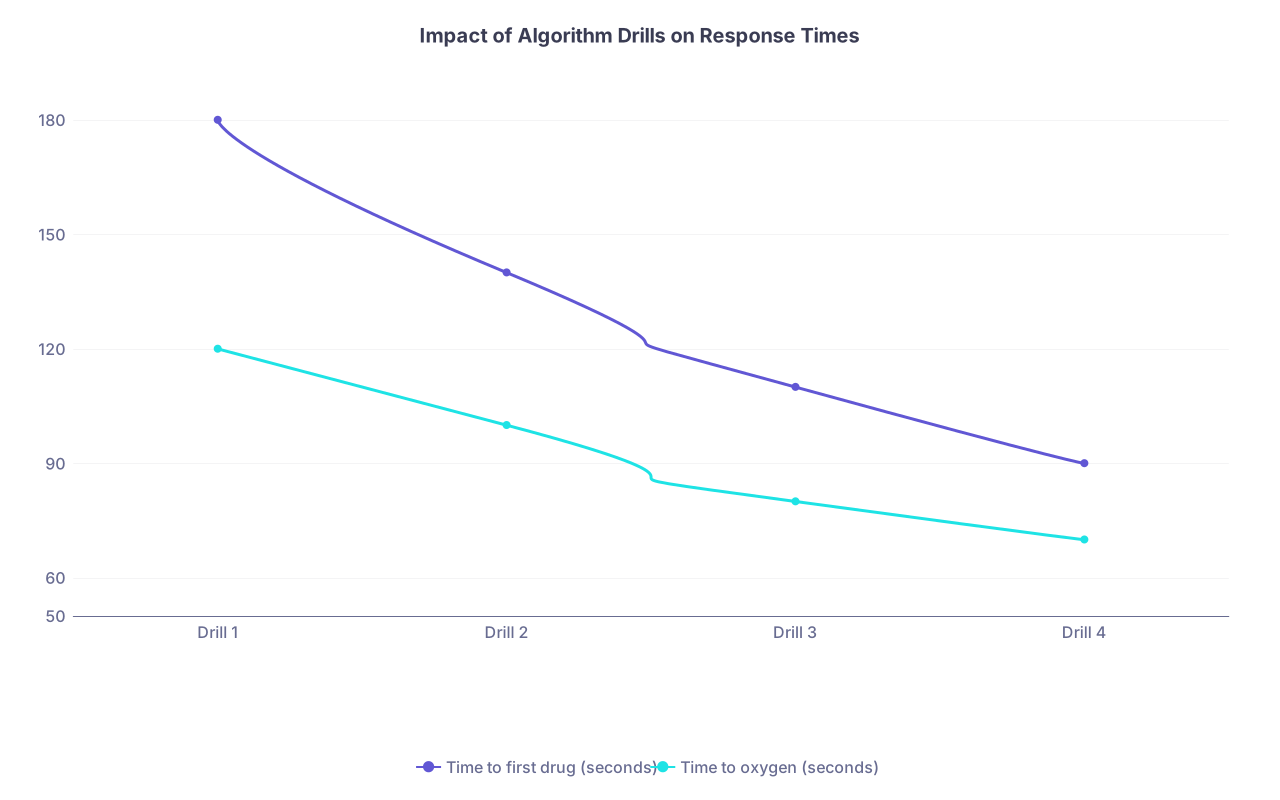
| Category | Time to first drug (seconds) | Time to oxygen (seconds) |
|---|---|---|
| Drill 1 | 180 | 120 |
| Drill 2 | 140 | 100 |
| Drill 3 | 110 | 80 |
| Drill 4 | 90 | 70 |
Step 10: Create a “micro-formulary” linked to the algorithm
Your algorithm should drive your procurement priorities, not the other way around.
Make a one-page list:
- “Medications essential for emergency algorithms in this ward”
Example:
- Adrenaline 1 mg/mL – minimum X ampoules on ward
- Diazepam IV – minimum Y ampoules
- Dextrose 50% – minimum Z vials
- Salbutamol inhaler – minimum 2 inhalers
- Hydrocortisone IV – minimum X vials
- Ceftriaxone – minimum Y vials
Give that to whoever orders supplies. Explain that if these drop below the minimum, your emergency protocols are compromised.
Step 11: Standardize storage and labeling
You want the same medication in the same drawer in every ward.
- Crash trolley:
- Top drawer: resuscitation drugs, with color-coded labels matching algorithm colors.
- Label drawers clearly: “Anaphylaxis”, “Seizure”, “Cardiac arrest”.
And then do something most places skip: once a month, walk around and check if those drugs are still where the algorithm assumes they are.
6. Ethics in Daily Use: Documentation, Consent, and Fairness
You are not a protocol robot. You are a clinician, and sometimes you will deviate. That is fine. It just must be thoughtful, not random.
Step 12: Document not just what you did, but what you could not do
After any major emergency, write three short lines in the notes:
- Algorithm used: “Anaphylaxis algorithm – ward protocol.”
- Steps given: list doses and times.
- Limitations: “No oxygen available”, “No second-line anticonvulsant in pharmacy”, etc.
This is not about blame. It is an ethical record of the truth. When outcomes are bad, it shows you acted within a structured, rational approach despite constraints.
Step 13: Communicate honestly with families
In low-resource settings, families often assume Western-level care but see very basic treatment. The gap is emotionally explosive.
When things are critical:
- Name the emergency in simple language.
- Explain:
- What you are doing now (including medications).
- What you would do in a better-resourced setting.
- What you cannot do here – and why.
Example phrasing:
“Your mother is having a severe allergic reaction. We have given the most important medicine, adrenaline, and fluids. In a larger hospital, we could also provide intensive monitoring and advanced support. We do not have that level of equipment here, but we are using the best protocol available with what we have.”
It is not comfortable, but it is honest, and it respects their right to understand the situation.
Step 14: Guard against quiet discrimination
Your algorithm should be blind to:
- Who pays cash
- Who comes from a “good family”
- Who donated to the hospital last year
In a crisis, the easiest path is to treat the loudest or most powerful first. Your algorithm is one of the few tools that can protect against that drift.
The discipline is simple:
- Use the same algorithm for every patient meeting criteria.
- Record vital signs and criteria you used to start emergency treatment.
- If two people need the same scarce resource, use your pre-agreed triage principles, not social pressure.

7. Keep It Alive: Review, Revise, Repeat
An emergency algorithm is not a one-time project. It is a living tool.
Step 15: Schedule a 6-month review
Twice a year, sit down with:
- One or two nurses
- A junior doctor or clinical officer
- A pharmacist (if you have one)
Discuss for each algorithm:
- Did we actually use it? If not, why?
- Were any doses confusing or wrong?
- Did we pretend we had resources we really do not have?
- Have new medications become available? Have any disappeared?
Be brutally practical. If something never happens in your ward and only clutters the page, remove it. If a step always causes confusion, simplify it.
Step 16: Grow slowly, not all at once
Start with:
- Anaphylaxis
- Severe asthma
- Seizure
- Hypoglycemia
Once those four are solid and used consistently, then add:
- Sepsis / septic shock
- Hypertensive emergency
- Suspected meningitis
- Obstetric hemorrhage (for maternity settings)
You are better off with four excellent, trusted algorithms than ten pretty posters that no one follows.
Three Things to Walk Away With
- Your algorithm must match your reality. If a drug or device is not reliably present, it does not belong in the main pathway.
- Make it usable at 3 a.m. by the most junior person on duty. Hard-code doses, minimize math, and present steps visually, not as text blocks.
- Treat it as both a clinical and ethical tool. Build in triage principles, acknowledge your limits, document constraints, and apply it fairly to every patient who needs it.
Do this well and you will not just “have protocols.” You will have a ward where, in the worst five minutes of a patient’s life, the team actually knows what to do – and has the drugs and the moral backbone to do it.


