
Introduction: Why Global Health Ethics Matters for Trainees and Practitioners
Global health is more than providing care across borders. It is a complex, evolving field that touches on politics, economics, culture, and history. From managing infectious disease outbreaks to strengthening health systems and addressing maternal mortality or malnutrition, global health initiatives can transform communities—but they can also unintentionally reinforce power imbalances, create dependency, or deepen Health Disparities if not approached thoughtfully.
For medical students, residents, and early-career professionals, understanding Global Health Ethics is not optional; it is foundational. Whether you are planning a short-term elective, joining a research project, or envisioning a career in global health, you will confront questions of Equity in Healthcare, Cultural Sensitivity, and Informed Consent in very practical ways.
This expanded guide explores core ethical principles in global health work, common challenges and pitfalls, real-world examples, and concrete strategies for practicing ethically sound, sustainable, and respectful global health care.
Core Ethical Principles in Global Health Practice
Defining Ethics in Global Health
Global health ethics applies familiar bioethical principles to complex, cross-border contexts—and adds additional dimensions such as justice, colonial legacies, and global power differentials. Four classic principles remain central:
Beneficence (Promote Good)
- Aim to improve health outcomes and well-being at both individual and community levels.
- In global health, beneficence often means focusing on long-term system strengthening (e.g., training local clinicians, improving supply chains) rather than only short-term clinical gains.
Non-Maleficence (Do No Harm)
- Avoid causing physical, psychological, social, or structural harm.
- This includes minimizing unintended consequences—such as disrupting local services, undermining trust in local health workers, or creating parallel systems that are unsustainable when external funding ends.
Justice (Fairness and Equity in Healthcare)
- Ensure that resources, risks, and benefits are fairly distributed.
- In global health, justice demands attention to global and local Health Disparities: who receives care, whose needs are prioritized, and whose voices are heard in planning and evaluation.
Respect for Autonomy (Individual and Collective)
- Honor the rights of individuals—and communities—to make informed decisions about their health.
- This goes beyond individual consent; it also includes community consultation, transparent communication, and respecting local governance structures.
Expanding the Ethical Lens: Global Justice and Solidarity
Traditional clinical ethics often focus on individual encounters. Global health ethics requires a broader, population-level and structural perspective:
Global Justice
- Recognizes that historical processes (colonialism, trade policies, structural adjustment) have shaped today’s Health Disparities.
- Encourages practitioners to see themselves not just as helpers, but as partners addressing unjust systems.
Solidarity
- Emphasizes shared goals and mutual support rather than charity or “rescue” narratives.
- Ethical global health work is done with communities, not for or to them.
A Practical Framework for Global Health Ethics
To navigate real-world dilemmas, many practitioners draw on frameworks that account for context, partnership, and power. A useful working framework for Global Health Ethics includes:
1. Contextual Relevance
Ethical standards must be interpreted within specific cultural, political, economic, and legal contexts.
Key questions to ask:
- What local norms and values shape health, illness, and decision-making?
- How do national policies, religious beliefs, and customary practices affect what is considered acceptable care?
- Are there local regulations or ethical bodies that should guide your work?
Ethical practice does not mean discarding universal human rights—but it does mean avoiding a one-size-fits-all approach based on your home country’s norms alone.
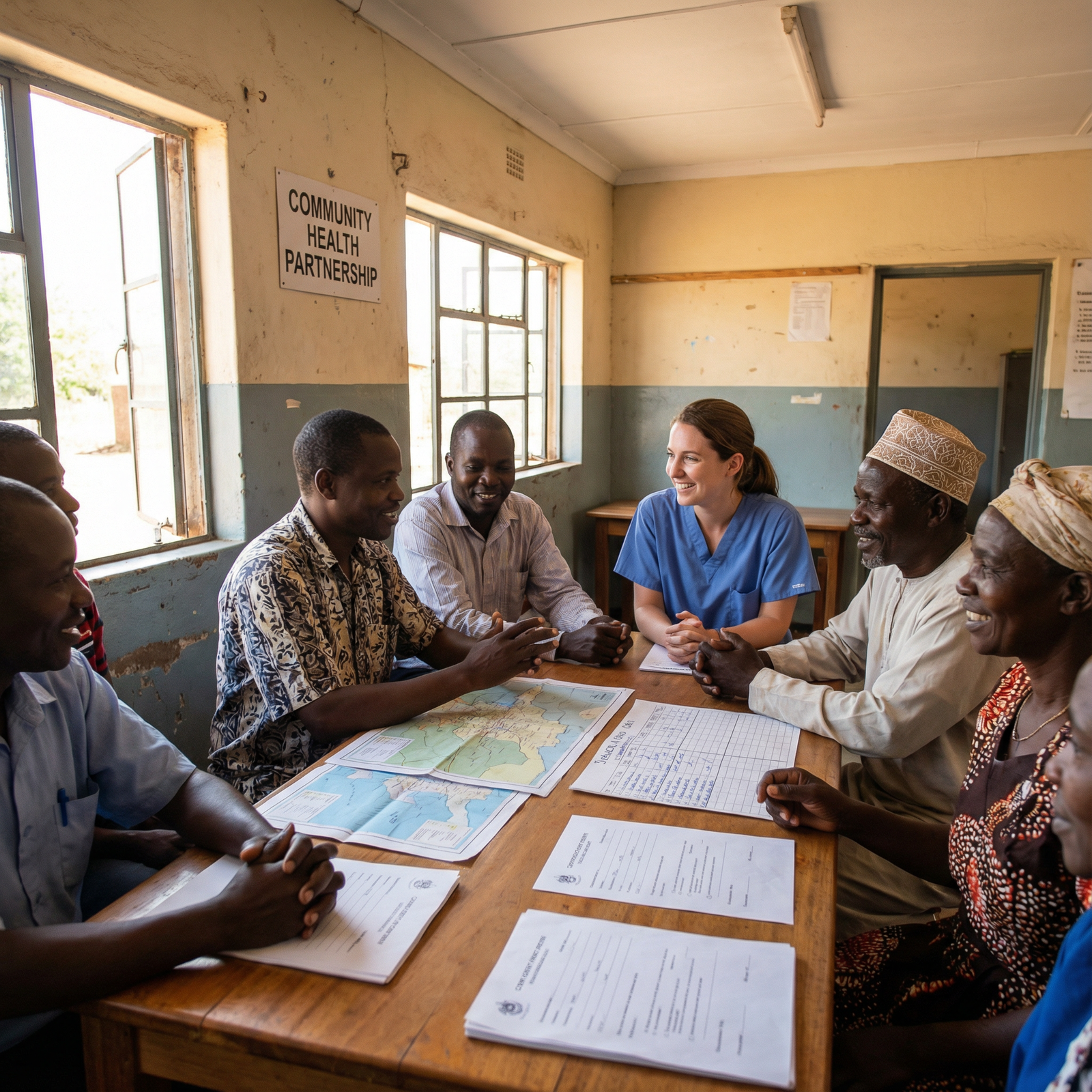
2. Community Engagement and Shared Decision-Making
Ethical global health work starts with listening:
- Involve community members, local clinicians, and health authorities from the earliest stages of project design.
- Use participatory methods (focus groups, community advisory boards, stakeholder meetings) to identify priorities and acceptable interventions.
- Compensate community partners fairly for their time and expertise.
This approach supports Cultural Sensitivity, respects autonomy at a community level, and improves sustainability and effectiveness.
3. Capacity Building and Sustainability
Short-term gains are insufficient if they leave no lasting improvement.
Ethical capacity building includes:
- Training local health workers and leaders with transferable skills.
- Strengthening local systems (e.g., record-keeping, referral pathways, quality improvement methods).
- Ensuring that technologies or interventions are maintainable and affordable locally.
- Planning for transition of responsibilities and leadership to local institutions from the outset.
A key ethical test: “If external funding or foreign teams stopped coming tomorrow, what would remain?”
Common Ethical Challenges in Global Health Work
Cultural Sensitivity and Respect for Local Norms
Cultural Sensitivity means more than being polite or learning a few phrases. It requires actively recognizing that:
- Health beliefs may be rooted in religion, tradition, or family structures.
- Concepts such as autonomy, privacy, or end-of-life preferences can differ substantially.
- Western biomedical approaches are not the default “right” way, even when they are evidence-based.
Case Study: Family Planning in a Pro-Natalist Community
A global health worker supports a reproductive health program in a rural area where religious and cultural norms strongly favor large families. Standard counseling scripts emphasize small family size and delayed childbearing.
Ethical tensions:
- Promoting contraceptive use may be perceived as undermining cultural identity or religious teachings.
- Women may face backlash at home if they use family planning secretly.
Ethically informed approach:
- Engage religious leaders and women’s groups early to understand perspectives.
- Frame discussions around maternal health, birth spacing, and child well-being, rather than population control.
- Ensure voluntary participation and avoid incentives that may be coercive in low-resource settings.
- Train local providers to offer confidential counseling that respects individuals’ values and choices.
Power Dynamics, Exploitation, and Neo-Colonialism
Global health often involves partnerships between resource-rich institutions and under-resourced communities or countries. This imbalance can lead to:
- Top-down decision-making driven by external funders’ priorities.
- “Parachute medicine” or “voluntourism” where visitors provide care without proper coordination, sometimes practicing beyond their training.
- Data extraction—where local populations participate in research, but results, authorship, and career benefits primarily accrue to foreign researchers.
Case Study: Pharmaceutical Trials in Low-Income Settings
A pharmaceutical company conducts a phase III trial for a new drug in a low-income country:
Ethical problems may arise when:
- Participants are not fully informed about alternatives or post-trial access.
- Local health systems are unable to continue providing the intervention after the trial ends.
- Data and samples are exported without clear benefit sharing.
Ethical safeguards:
- Robust local and international ethical review (IRBs/RECs).
- Agreements ensuring post-trial access to effective interventions.
- Fair authorship and capacity-building commitments for local investigators.
- Transparency about funding, conflicts of interest, and goals.
Equity and Access: Addressing Health Disparities
Equity in Healthcare is a central pillar of Global Health Ethics. Yet many programs unintentionally exacerbate Health Disparities:
- Focusing only on urban hospitals while rural communities remain underserved.
- Offering advanced surgical missions while basic primary care and supplies are overlooked.
- Prioritizing diseases attractive to funders over locally identified priorities.
Example: Vaccine Distribution During a Pandemic
During the COVID-19 pandemic:
- High-income countries secured large vaccine stocks early, some far beyond their population needs.
- Many low- and middle-income countries faced severe delays in access, despite high disease burden.
Ethical considerations:
- Global justice argues for allocation based on need and vulnerability, not simply purchasing power.
- Initiatives like COVAX attempted to address inequity, but faced logistical, political, and financial challenges.
For trainees and practitioners:
- Be aware of how your institution’s partnerships and projects may benefit some groups more than others.
- Advocate for fair access policies, transparent allocation criteria, and priority for the most vulnerable populations.
Informed Consent in Diverse and Low-Literacy Settings
Informed Consent is a cornerstone of ethical practice, but it is harder to achieve in contexts where:
- Literacy is limited or multiple languages are spoken.
- Medical concepts are unfamiliar or explained differently.
- Hierarchical relationships with clinicians make refusal difficult.
- Participation in research or programs is tied to access to scarce care.
Case Study: Biomedical Research in a Low-Income Country
A research team recruits participants for a study on a new diagnostic test. Consent forms are lengthy, written in technical language, and translated poorly.
Ethical issues:
- Participants may sign without understanding risks, alternatives, or their right to withdraw.
- Community leaders might consent on behalf of individuals without their direct input.
- Payments or free care may act as undue inducements.
Ethically sound strategies:
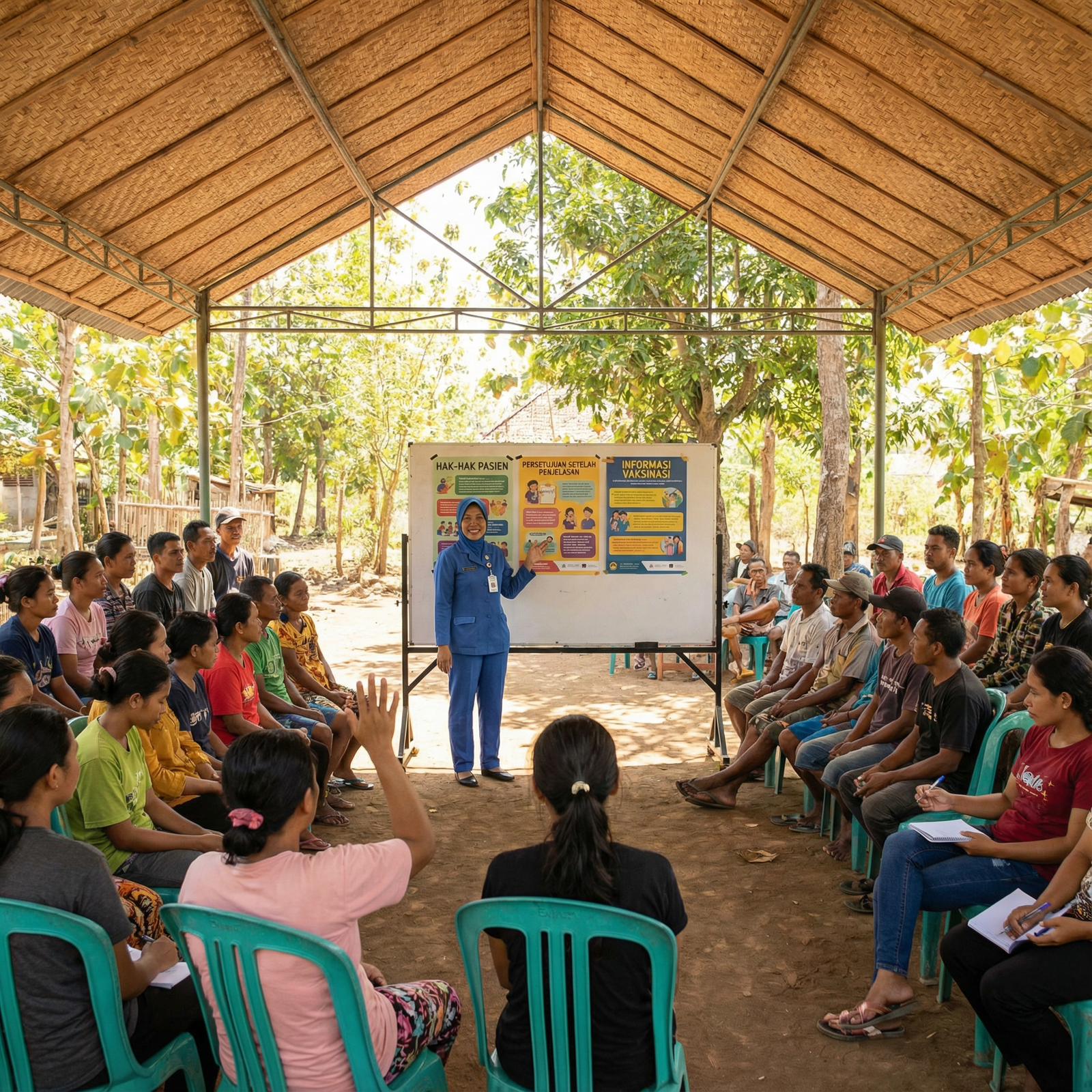
- Use plain language explanations in the local language(s) and confirm understanding with teach-back methods.
- Provide information orally with visual aids or stories, not just written forms.
- Clarify that care will not be withheld if individuals decline participation.
- Consider community-level consent as a complement, not a substitute, for individual consent—especially in settings where decisions are made collectively.
Building Ethical Global Health Programs and Partnerships
Principles of Ethical Global Health Practice
To operationalize the concepts above, practitioners can use the following guiding principles:
Form Genuine, Long-Term Partnerships
- Work with established local institutions (hospitals, NGOs, universities, ministries of health).
- Develop memoranda of understanding (MOUs) that outline roles, responsibilities, mutual expectations, and decision-making structures.
- Ensure that local partners set or co-set priorities and are involved in all stages—planning, implementation, evaluation, and dissemination.
Commit to Culturally Competent and Humble Care
- Engage in Cultural Sensitivity training before deployment.
- Practice cultural humility: recognize your own biases, ask questions, and remain open to learning and correction.
- Integrate traditional healers, religious leaders, or community elders when appropriate and safe, to bridge biomedical and local perspectives.
Adopt a Rights-Based, Equity-Focused Approach
- Ground your work in human rights principles, including the right to health, non-discrimination, and participation in decision-making.
- Design interventions that intentionally address Health Disparities—for example, targeting services to marginalized groups (rural communities, ethnic minorities, refugees, or persons with disabilities).
- Collect and disaggregate data (by gender, geography, socioeconomic status) to monitor who is being reached—and who is being left out.
Ensure Transparent, Bidirectional Communication
- Communicate clearly with local partners about goals, timelines, funding constraints, and potential risks.
- Share results—whether clinical outcomes, research findings, or program evaluations—in accessible formats and local languages.
- Create feedback mechanisms for community members and frontline staff to raise concerns or suggest changes.
Maintain Robust Ethical Oversight and Accountability
- Submit research and major interventions to both local and home-country ethics review boards.
- Disclose conflicts of interest and funding sources.
- Develop clear mechanisms to address harms, complaints, or unintended consequences.
- Include local ethics committees, professional councils, or community advisory boards as ongoing partners—not one-time approvals.
The Critical Role of Education and Training
For medical students and residents, structured preparation is essential:
Recommended Educational Components
Global Health Ethics Courses
- Cover theories of justice, colonial history, power dynamics, and practical case studies.
- Explore dilemmas like task-shifting, dual loyalty (to patients vs. funders/governments), and resource allocation.
Cultural Competency and Humility Workshops
- Include role-plays, reflective writing, and debriefs with faculty and peers.
- Address implicit bias, communication across language barriers, and negotiating value conflicts respectfully.
Pre-Departure and Post-Return Training for Electives
- Pre-departure: logistics, safety, scope of practice, ethical guidelines, and local context.
- Post-return: debriefing to process moral distress, discuss what went well and what did not, and strategize for future improvement.
Example of Ethical Training in Practice
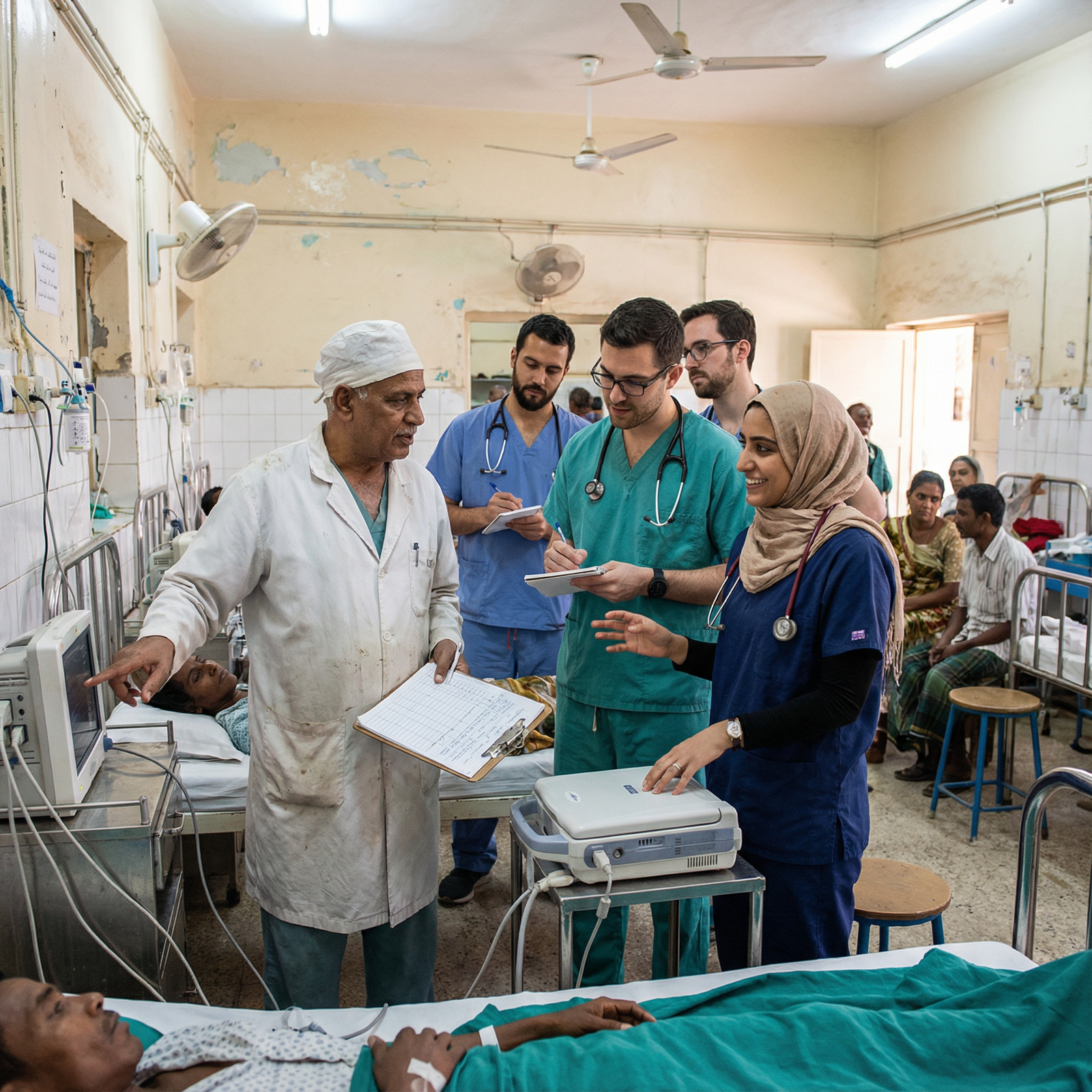
A residency program planning a rotation in a partner country might:
- Co-develop learning objectives with the host institution.
- Require residents to complete readings on Global Health Ethics, local history, and health system structure.
- Limit clinical responsibilities to the resident’s level of training and local licensure regulations.
- Pair each resident with a local mentor for supervision and mutual learning.
- Evaluate the rotation based on benefit to the host site, not just trainee satisfaction.
Conclusion: Practicing Ethical, Equitable, and Respectful Global Health
Global health work can be profoundly meaningful and impactful, but good intentions are not enough. Ethical practice requires:
- A commitment to Equity in Healthcare, actively addressing Health Disparities rather than accepting them as an inevitable backdrop.
- Deep Cultural Sensitivity and humility, recognizing that local partners are experts in their own context.
- Rigorous approaches to Informed Consent and community engagement that truly honor autonomy and rights.
- Long-term, mutually beneficial partnerships that emphasize capacity building, sustainability, and shared decision-making.
For medical trainees and practitioners, cultivating these skills and perspectives is a core component of professional development and medical ethics—not an optional add-on. By grounding your work in Global Health Ethics, you can contribute to interventions that are not only clinically effective but also just, respectful, and sustainable.
Frequently Asked Questions on Ethics in Global Health Work
1. What are the main ethical principles guiding global health practice?
The foundational principles are:
- Beneficence – promoting health and well-being.
- Non-maleficence – avoiding harm, including unintended structural or cultural harms.
- Justice – ensuring fair distribution of resources and addressing Health Disparities.
- Respect for autonomy – honoring individual and community decision-making.
In global settings, these are complemented by considerations of global justice, solidarity, and historical responsibility.
2. Why is Cultural Sensitivity so important in global health work?
Cultural Sensitivity helps ensure that:
- Interventions are accepted, relevant, and sustainable within the local context.
- Communication is respectful, avoiding misinterpretation of health messages.
- Care respects local values around family roles, disclosure, death, reproductive health, and more.
Without cultural sensitivity, programs risk being rejected, causing offense, or undermining trust in healthcare systems.
3. How can I ensure that informed consent is truly informed in low-resource or low-literacy settings?
Key strategies include:
- Using plain language in the local language, with interpreters when needed.
- Supplementing written forms with verbal explanations, visual aids, and the teach-back method (“Can you explain in your own words what this means?”).
- Allowing adequate time for questions and involving trusted community members if appropriate.
- Making it clear that participation is voluntary, that refusal will not affect access to care, and that participants can withdraw at any time.
4. As a student or resident, how can I avoid causing harm during a short-term global health experience?
You can:
- Work within your level of training and local regulations; never perform procedures you are not qualified or authorized to do.
- Seek close supervision from local and host mentors.
- Focus on learning, supporting local teams, and building capacity (e.g., sharing educational resources) rather than trying to “fix” systems in a few weeks.
- Reflect regularly on your impact and be open to feedback and course corrections from local colleagues.
5. How can global health programs promote equity rather than reinforce existing disparities?
Programs can:
- Start with local needs assessments and community input to identify priorities.
- Design interventions that specifically reach marginalized or underserved groups.
- Monitor who is benefiting (and who is not) with disaggregated data.
- Advocate at institutional and policy levels for fair resource allocation, inclusive policies, and long-term investment in local health systems.
By integrating these ethical considerations into planning, implementation, and evaluation, global health professionals can play a meaningful role in advancing equity and justice in healthcare worldwide.


