
The most common mistake in global health careers is trying to “go global” without actually earning it.
You do not pivot from local safety‑net work to serious global roles with a plane ticket and a passion statement. You do it with a disciplined, three‑year plan.
Below is that plan—year by year, quarter by quarter, and then narrowed down to concrete weekly actions. You will see exactly what you should be doing at each point if you want to move from a local FQHC / county hospital / free clinic world into credible, ethical, and sustainable global health roles.
Year 1 – Clarify, Commit, and Build Foundations
Goal for Year 1: Stop being vaguely “interested in global health” and become someone with a visible, structured trajectory.
At this point you should be brutally honest: you are mostly a strong local clinician with scattered global aspirations. Year 1 is about three things:
- Defining what “global role” actually means for you.
- Building core skills that travel.
- Demonstrating ethical maturity, not voluntourism.
Months 1–3: Define Your Global Target and Audit Your Gaps
By the end of Month 3, you should have a written, specific target.
Examples of concrete targets:
- “Within 3 years, I want a 50–70% time role as Medical Officer with an NGO like Partners In Health or MSF, focusing on HIV/TB in East or Southern Africa.”
- “I want to transition into a global maternal health implementation research fellowship, then faculty, working on respectful maternity care in South Asia.”
Weeks 1–4: Personal and professional audit
Sit down for 2–3 hours and write out:
- Current role: safety‑net clinic, county ED, etc.
- Clinical strengths: what do you actually do well? (E.g., HIV primary care, addiction medicine, OBGYN, pediatrics, trauma.)
- Limits: languages, procedural skills, comfort with resource scarcity, burnout level.
- Constraints: family, loans, geography, visas.
Then compare yourself against common expectations.
| Domain | Your Current State | Strong Global Candidate Target |
|---|---|---|
| Clinical | Local safety-net focus | Experience with high-burden conditions |
| Language | English only | At least one additional working language |
| Research / QI | Minimal projects | 1–2 completed, presented or published |
| Ethics / Justice | General awareness | Formal coursework, reflective practice |
| Systems / Leadership | Small team experience | Leading QI, protocols, or small teams |
Weeks 5–12: Narrow your “global lane”
You must pick a lane. “Global health” is too broad. At this point you should:
- Pick one primary clinical focus (HIV, NCDs, maternal health, surgery, mental health, etc.).
- Pick two or three geographic regions you are realistically open to.
- Identify 3–5 organizations doing credible work in that lane:
- E.g., PIH, MSF, ICRC, Last Mile Health, Partners for Development, national MOHs, academic global health divisions.
Make a simple one-page document:
- Top 3 roles you could see yourself in.
- Top 5 organizations.
- Your 5 biggest gaps.
This becomes your Year 1 roadmap.
Months 4–6: Build Ethical and Conceptual Spine
If you work in a safety‑net system, you already know inequity. Global health simply explodes that picture across borders.
At this point you should be actively studying:
- Core reading (pick at least 2 to fully finish):
- Reimagining Global Health (Farmer, Kim, Basilico)
- Global Health Justice and Governance (Ruger)
- Medical Apartheid (Washington) or Pathologies of Power (Farmer)
- Structured learning:
- Take one formal course:
- Examples: Harvard FXB online global health ethics course, London School of Hygiene & Tropical Medicine short course, or your institution’s global health certificate.
- Take one formal course:
Weekly structure (Months 4–6):
- 2–3 hours / week: reading and note‑taking.
- 1 hour / week: reflecting in a journal:
- “Where have I seen the same dynamics locally?”
- “What harm could I realistically cause in a low‑resource foreign setting?”
You are not allowed (yes, I am being prescriptive) to sign up for a short‑term international trip until you have done this work. Otherwise you risk exporting your blind spots.
Months 7–9: Make Your Local Work “Global‑Facing”
At this point you should start treating your local job as your training ground for global roles.
Focus on skills that move across borders:
- Task‑shifting and working with CHWs.
- Managing scarcity (drug stockouts, limited imaging).
- Team‑based care, nurse‑led clinics.
Concrete Month 7–9 goals:
- Lead or co‑lead one quality improvement or implementation project that a global NGO would actually care about:
- E.g., improving hypertension control at a safety‑net clinic using WHO HEARTS protocols.
- E.g., standardizing partograph use on your L&D unit.
Structure it properly:
- Baseline data.
- Simple intervention.
- Outcome metrics.
- Basic run chart.
This becomes a portable story you will use later in interviews and statements.
Months 10–12: Start Strategic Networking
Networking is not “meet random famous global health people.” It is “find 6–10 people whose actual jobs you could imagine having.”
By the end of Year 1, you should have had at least 4–6 focused conversations.
Targets:
- One or two people at each of your 3–5 aspirational organizations.
- One mentor with experience in your chosen geographic region.
- One local ethics or global health faculty member.
Pace:
- Aim for one conversation every 2–3 weeks.
- After each, write:
- What skills did they emphasize?
- What did they warn against?
- What is one concrete step they recommended in the next 12 months?
Year 2 – Get Real Experience, Not Tourist Stamps
Goal for Year 2: Acquire legitimate, longitudinal global experience and deepen technical and ethical competence.
This is where people often sabotage themselves with a random “medical mission” week. Do not. You are building a career shift, not collecting passport stamps.
Months 13–18: Plan and Execute One Substantial Field Engagement
At this point you should be designing one 4–12 week experience that:
- Serves an existing, locally owned program.
- Uses your actual skills.
- Has clear supervision and defined responsibilities.
- Connects to longer‑term work, not a one‑off pop‑up clinic.
Options:
- Academic partnership rotations (e.g., via your institution’s global health track).
- MSF, PIH short-term clinical deployments for experienced staff.
- Ministry of Health or WHO short assignments (if you have specialist experience).
- Longitudinal tele-mentoring plus one in‑person visit.
Timeline:
- Months 13–14: Identify specific site and supervisor; confirm scope.
- Months 15–16: Secure leave from your local job, funding, housing.
- Months 17–18: Finalize logistics, visas, malpractice coverage, clear ethical approvals if doing any research.
Include an explicit ethical plan:
- How will you avoid displacing local providers?
- What tasks will you say no to?
- How will handoff work when you leave?
Months 19–21: While in the Field – Behave Like a Future Colleague, Not a Guest
During the assignment, your mindset should be: “I might work here or somewhere similar longer‑term.” That changes how you show up.
Week 1:
- Listen more than you talk.
- Ask three specific questions:
- “What are the top 3 problems that matter most to you here?”
- “What has been tried before that did not work?”
- “What do outsiders usually misunderstand?”
Weeks 2–8 (or longer):
- Take structured notes:
- Clinical patterns you are seeing.
- System failures.
- Workarounds staff already use.
- Identify one small, locally requested improvement project:
- Could be as simple as rational antibiotic prescribing guidelines or a triage flow.
You are not there to fix the system in 8 weeks. You are there to prove you can be safe, humble, and useful in that system.
Months 22–24: Debrief, Convert Experience into Assets, and Correct Course
Most people come back from a field stint with stories and photos. You should come back with products and clarity.
Within the first 4–6 weeks after returning, you should:
- Conduct a formal debrief with:
- Local supervisor (ideally via Zoom if you have already left).
- Your home‑institution mentor.
- Create 2–3 outputs:
- A case report or brief for presentation at a global health or specialty conference.
- A short internal seminar at your institution on “What I got wrong before I went; what I learned.”
- A one‑page “lessons for future visitors” document for the host site (if welcome).
Ethics check:
- Where could your presence have caused harm or strain?
- Did you overstep your competence at any point?
- How will you behave differently next time?
At this point you should also revisit your original Year 1 target:
- Do you still want the same kind of global role?
- Did your preferred geography shift?
- Are there red flags (safety, schooling for kids, political instability) that change the plan?
Year 3 – Position Yourself and Execute the Transition
Goal for Year 3: Move from “aspiring” to “viable applicant” for serious global roles or fellowships, and then actually transition.
This is where your timeline gets tight. You will be applying while still in your current job and likely negotiating overlapping commitments.
Months 25–27: Sharpen Technical Profile and Fill Remaining Gaps
Look at your 3‑year trajectory as if you are on a hiring panel. Would you hire you for a global role that involves independent work in a low‑resource setting?
At this point you should:
- Have at least one substantial field engagement.
- Have led or co‑led at least two structured projects (one local, one global).
- Have some output: presentation, protocol, or publication.
Now, in Months 25–27, you close remaining gaps:
Common last‑mile deficits:
- Data / monitoring and evaluation skills.
- Grant writing / program proposal basics.
- Advanced language proficiency.
Weekly structure (for 12 weeks):
- 1–2 hours / week: targeted online short course or module:
- Monitoring and evaluation (M&E).
- Implementation science basics.
- Budgeting and logframes for global health programs.
- 1–2 hours / week: language practice (if relevant to your target region).
- 1 hour / week: revamping CV and tracking impact numerically (patient volumes, outcome shifts, QI metrics).
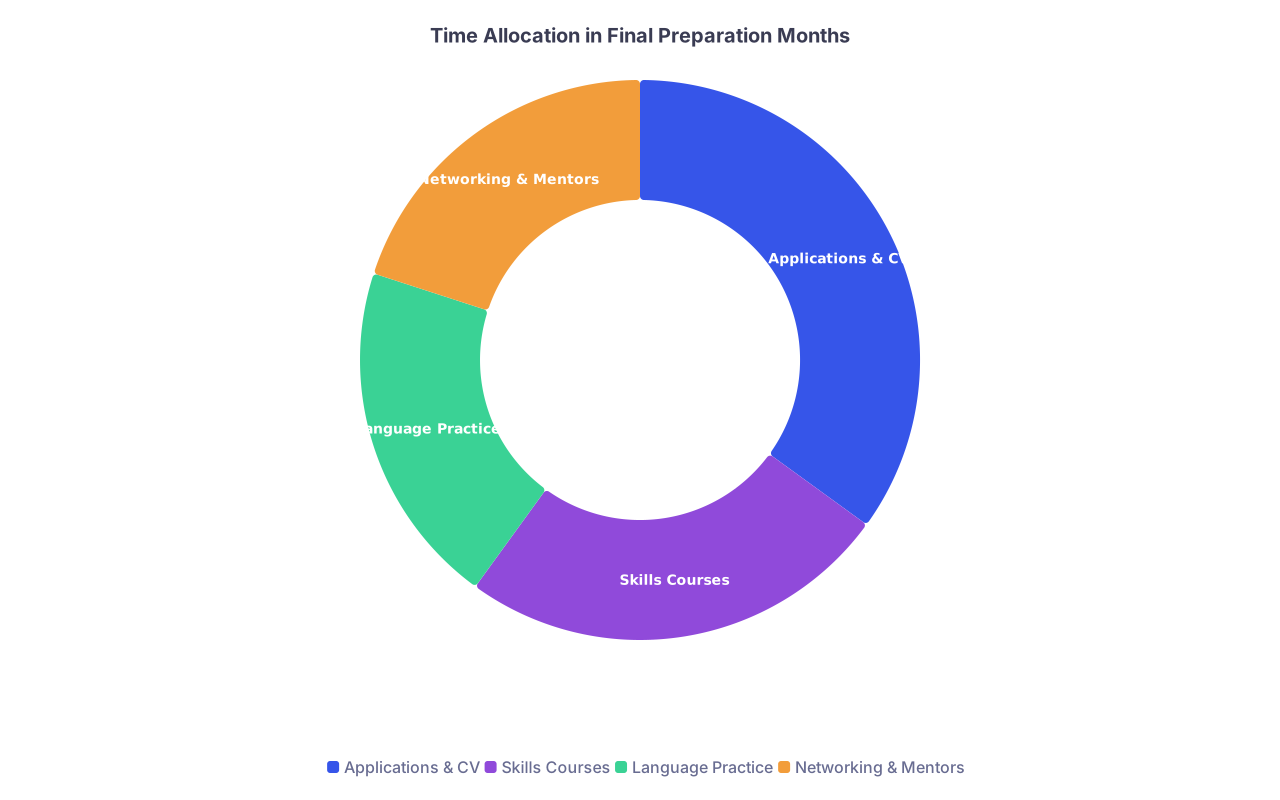
| Category | Value |
|---|---|
| Applications & CV | 35 |
| Skills Courses | 25 |
| Language Practice | 20 |
| Networking & Mentors | 20 |
Months 28–30: Apply Strategically, Not Desperately
At this point you should treat your global transition like another match process: structured, time‑bound, ruthless about fit.
Build a simple tracking sheet with columns:
- Organization / program.
- Role / fellowship.
- Application deadline.
- Contacts / insiders you know.
- Key selection criteria.
- Status (drafted, submitted, interview, offer).
Typical options:
- Global health fellowships (e.g., HEAL, UCSF/Partners, Duke, Johns Hopkins).
- NGO field positions (e.g., MSF field physician, PIH site clinician, Save the Children technical advisor roles).
- Academic global health faculty or staff roles with field‑based time.
| Type | Example Program / Role | Application Window |
|---|---|---|
| Fellowship | HEAL Initiative Fellowship | Aug–Nov |
| NGO Field Role | MSF Field MD (HIV/TB) | Rolling |
| Academic | Global Health Clinician-Educator | As posted |
| UN/Agency | WHO Short-Term Consultant | Rolling / project |
Target volume:
- 5–10 serious applications, not 30 random ones.
For each application:
- Tailor your narrative to emphasize:
- Local safety‑net: demonstrates commitment to marginalized populations.
- Global stint: proves you can function ethically in low‑resource settings.
- Projects: show that you improve systems, not just see patients.
Months 31–33: Prepare for and Crush Interviews (Without Losing Your Ethics)
Global roles will test two things repeatedly:
- Can you handle complexity and scarcity without falling apart?
- Will you respect local leadership and avoid cowboy behavior?
Common interview scenarios you should practice:
- “Describe a time you faced a serious resource limitation and how you handled it.”
- Use a safety‑net or global example. Include ethical tension, not just logistics.
- “What are the main ethical concerns about foreign clinicians working in low‑income settings?”
- Talk about displacement of local staff, dependency, brain drain, accountability, power asymmetries.
- “What will you do if local practices conflict with your training or values?”
- Show nuance: curiosity, negotiation, not immediate condemnation.
Do at least 3–4 mock interviews with:
- A mentor in global health.
- A colleague who will not sugarcoat feedback.
- Someone who has done your target role (if you can find them).
Months 34–36: Transition Logistics and Identity Shift
At this point you should be moving from “planning to leave” to “executing departure and arrival.”
Two parallel tracks: practical and ethical/personal.
Practical logistics (Months 34–36)
Job exit:
- Give adequate notice (3–6 months is respectful in safety‑net settings).
- Help recruit or train your replacement if possible.
- Document handoff plans for high‑risk patients.
Legal and financial:
- Sort visas, licenses, and registrations.
- Review insurance, disability coverage, evacuation coverage.
- Re‑budget for potential pay dip or currency differences.
Life logistics:
- Schooling or partner job options if relocating.
- Storage or rental plans for housing.
- Health precautions: vaccines, prophylaxis, travel medicine visit.
Ethical and identity work
You are leaving a community that likely depended on you. You are stepping into work where you have even more power over even more vulnerable communities.
Take this seriously:
- Have explicit conversations with your local patients and team (as appropriate) about:
- Why you are going.
- How continuity will be protected.
- Commit in writing to:
- How often you will re‑evaluate your role abroad.
- What would make you leave a harmful or extractive program.
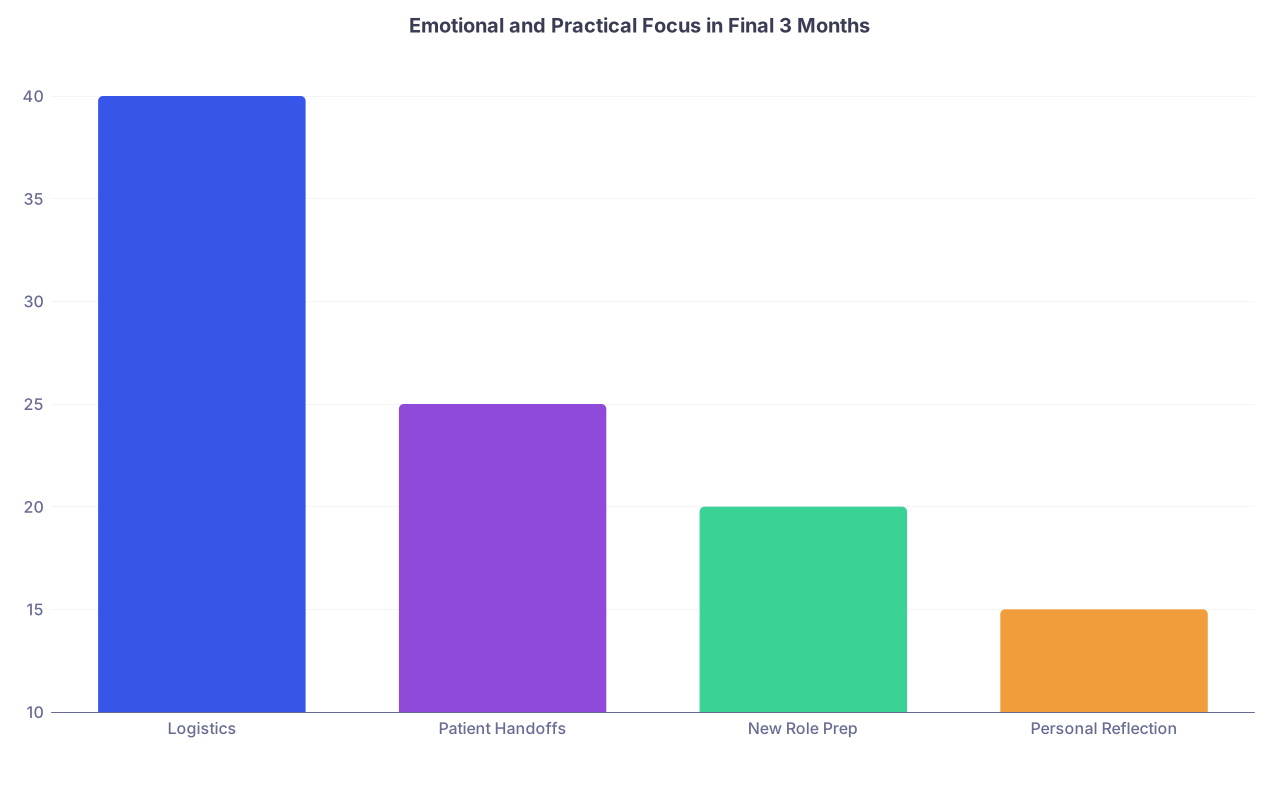
| Category | Value |
|---|---|
| Logistics | 40 |
| Patient Handoffs | 25 |
| New Role Prep | 20 |
| Personal Reflection | 15 |
Zooming In: What Your Weeks Should Look Like Across the Three Years
To keep this from becoming abstract, here is how your weekly rhythm should roughly shift across the three years.
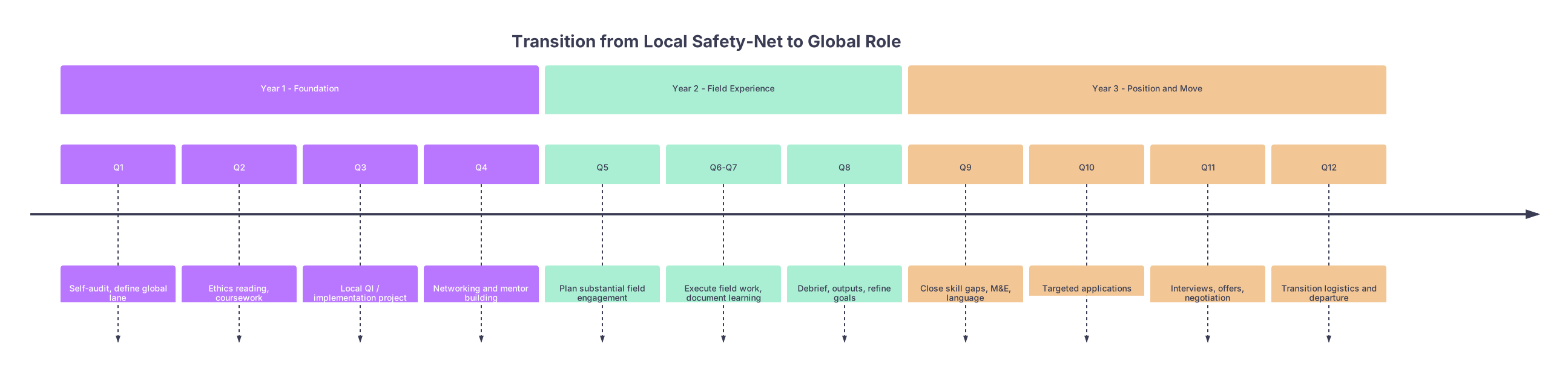
| Period | Event |
|---|---|
| Year 1 - Foundation - Q1 | Self-audit, define global lane |
| Year 1 - Foundation - Q2 | Ethics reading, coursework |
| Year 1 - Foundation - Q3 | Local QI / implementation project |
| Year 1 - Foundation - Q4 | Networking and mentor building |
| Year 2 - Field Experience - Q5 | Plan substantial field engagement |
| Year 2 - Field Experience - Q6-Q7 | Execute field work, document learning |
| Year 2 - Field Experience - Q8 | Debrief, outputs, refine goals |
| Year 3 - Position and Move - Q9 | Close skill gaps, M&E, language |
| Year 3 - Position and Move - Q10 | Targeted applications |
| Year 3 - Position and Move - Q11 | Interviews, offers, negotiation |
| Year 3 - Position and Move - Q12 | Transition logistics and departure |
Year 1 – Typical Week
- 45–60 hours: your actual job.
- 2–3 hours: reading / coursework.
- 1–2 hours: QI or small project work.
- 1 hour: networking or mentor outreach.
- 30 minutes: journal reflection.
Year 2 – When not in the field
- 45–60 hours: job.
- 2 hours: planning/debriefing field work or converting into outputs.
- 1–2 hours: skill building (data, research methods).
Year 2 – During the field stint
- Full clinical days (often 50–60 hours).
- 30–45 minutes / day: jotting field notes.
- 2 hours / week: reflective writing plus check‑ins with your home mentor.
Year 3 – Application and Transition Focus
- 40–55 hours: job (you may have to protect some time now).
- 3–4 hours / week: applications and CV tailoring.
- 2–3 hours / week: interview prep and networking.
- 2 hours / week: courses or final skill polishing.
- 1 hour / week: practical logistics (visas, licensing, finances).
Right now—today—open your calendar, block two hours this week, and complete a brutally honest self‑audit of your skills, gaps, and constraints. That document will be the first page of your three‑year plan.


