
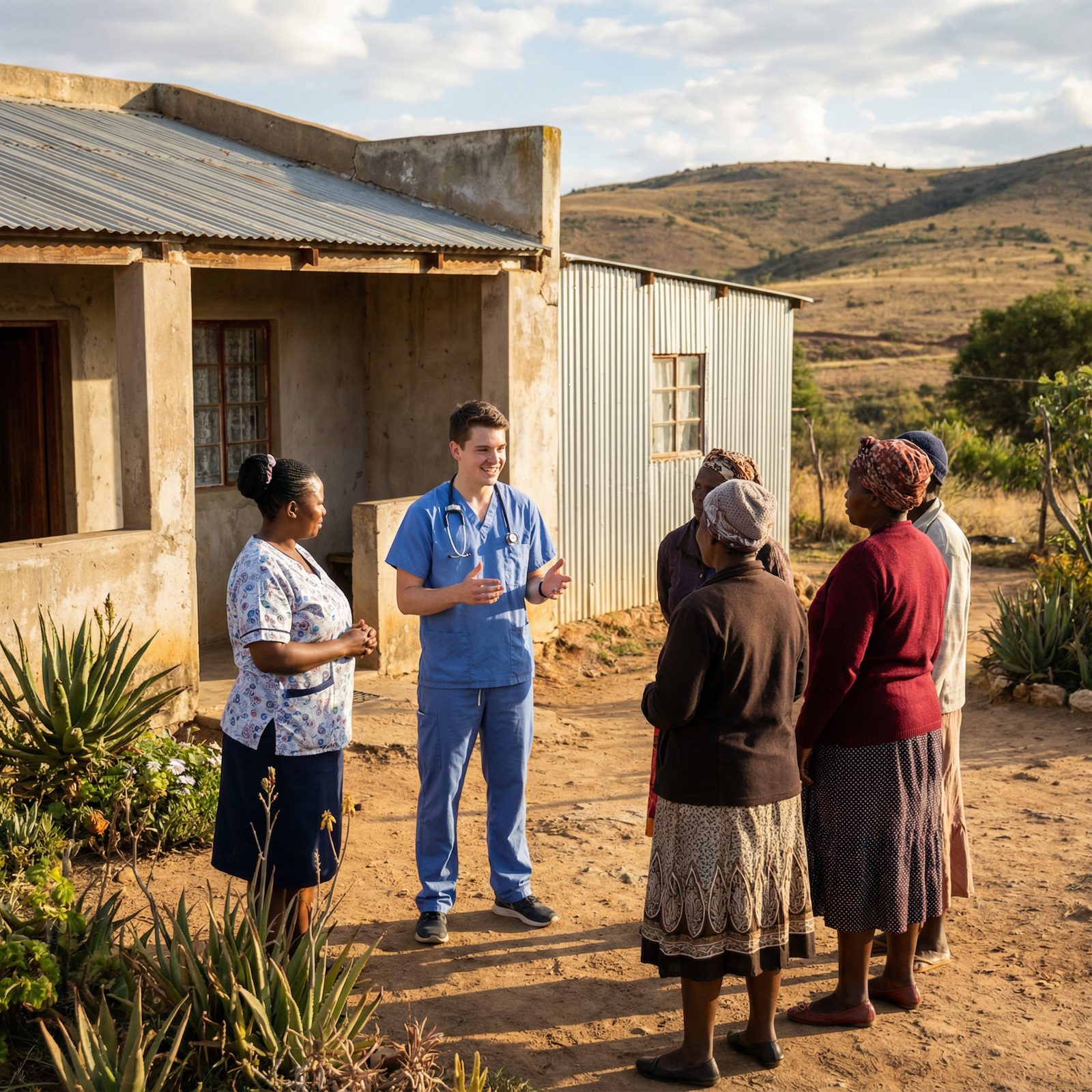
The biggest mistake on a first humanitarian deployment is thinking you can “figure it out when you get there.” You will not. A safe, ethical, useful deployment is built months in advance, in boring increments, on a calendar.
You want a 6‑month countdown? Good. Here is exactly what you should be doing, and when.
Month −6: Decide If You Should Even Go
At six months out, you are not “preparing for a trip.” You are deciding whether you are a good fit, right now, for this work. Many people are not. That is fine. Walking away at this point is a success, not a failure.
At this point you should:
Clarify your “why” on paper
Sit down and write three things:
- Why you want to go (one page, max).
- What you actually bring (skills, languages, experience).
- What you will not do (e.g., “I will not perform procedures I am not trained for”).
If your “why” reads like adventure tourism or saviorism, stop. Rethink. Get supervision.
Audit your clinical readiness
Be brutally honest. A first humanitarian deployment is the wrong time to be clinically shaky.
Ask yourself:
- Can I manage common acute conditions independently at the level of my training?
- Am I safe without immediate subspecialty back‑up?
- Can I adapt without labs, imaging, and fancy drugs?
At this point you should:
- Talk with a mentor who has done field work.
- Ask, “Given my current skills, what roles would be appropriate? And what would be unsafe?”
Select the right organization, not just the first one that accepts you
You are not booking a hostel. You are choosing the system that will control your security, supervision, and ethical framework.
At this point you should:
- Shortlist 2–4 serious organizations, for example:
- Médecins Sans Frontières / Doctors Without Borders (MSF)
- International Committee of the Red Cross (ICRC)
- Partners In Health
- International Medical Corps
- Check:
- Do they have clear clinical governance and protocols?
- How do they handle adverse events and patient complaints?
- What is their stance on short‑term deployments?
If an organization is vague about supervision, malpractice coverage, or scope of practice, walk away.
- Shortlist 2–4 serious organizations, for example:
Check your life logistics and mental bandwidth
Humanitarian work is not a sabbatical from your problems. They wait for you. Sometimes they get worse.
At this point you should:
- Map major life events in the next year: exams, residency match, family obligations.
- Confirm:
- Who covers your clinical duties at home?
- Who handles your bills, pets, dependents?
- Discuss candidly with:
- Partner or family
- Program director or supervisor
If your support system is shaky, fix that before you go “help” anyone else.
Month −5: Commit, Apply, and Start Building the Ethical Frame
Five months out, you move from “maybe” to “I am planning around this.” This is where ethics either gets built in—or ignored and retrofitted, badly, on the plane.
At this point you should:
Submit your applications and lock timelines
- Complete formal applications.
- Clarify:
- Expected deployment length
- Tentative location and context (refugee camp, post‑disaster, chronic under‑resourced region)
- Role: clinician, educator, systems support
You cannot prepare for “somewhere in Africa.” You prepare for a malaria‑endemic, French‑speaking, conflict‑adjacent district hospital. With actual constraints.
Do an ethics and scope‑of‑practice pre‑mortem
Before anyone is in front of you, imagining worst‑case scenarios is the most ethical thing you can do.
At this point you should:
- List likely ethical flashpoints:
- Resource rationing (one ventilator, four patients).
- Practicing with limited diagnostics.
- Witnessing local practices that clash with your norms but are not immediately harmful.
- For each, write:
- What I think I should do.
- Who I would call.
- Where I draw a hard line.
Then bring this to:
- An ethics committee member, or
- A senior colleague with real humanitarian experience.
Let them tear it apart. Better now than mid‑crisis.
- List likely ethical flashpoints:
Start structured global health prep
I do not mean random blog posts. I mean real content.
At this point you should:
- Choose 1–2 substantial resources and commit:
- E.g., WHO’s “Clinical management of patients in humanitarian emergencies”
- MSF clinical guidelines (free and excellent)
- Block 2–3 hours per week for:
- Reading
- Case discussions with mentors
- Reflective writing
- Choose 1–2 substantial resources and commit:
Begin language and cultural groundwork
Language disasters are ethical disasters. Misunderstood consent, botched histories, offended families.
At this point you should:
- Identify the main local language(s).
- Aim for basic competence in:
- Greetings
- Pain, symptoms, time words
- Numbers, family relationships
- Ask the organization:
- Typical local health beliefs you should understand.
- Any cultural “red lines” for dress, gender roles, communication.
Month −4: Lock the Deployment and Harden Your Skills
Four months out, you should have a probable assignment. Now you get specific.
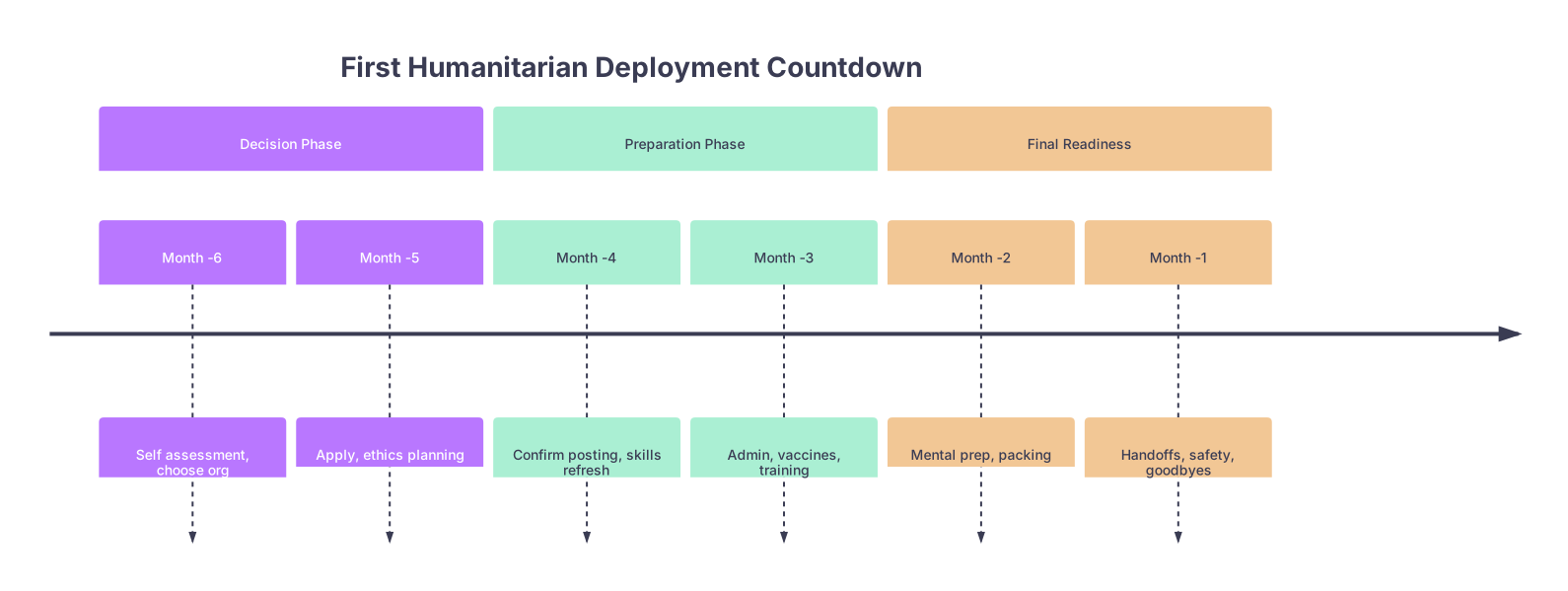
| Period | Event |
|---|---|
| Decision Phase - Month -6 | Self assessment, choose org |
| Decision Phase - Month -5 | Apply, ethics planning |
| Preparation Phase - Month -4 | Confirm posting, skills refresh |
| Preparation Phase - Month -3 | Admin, vaccines, training |
| Final Readiness - Month -2 | Mental prep, packing |
| Final Readiness - Month -1 | Handoffs, safety, goodbyes |
At this point you should:
Confirm key deployment details
You should know, at least provisionally:
- Country and region
- Facility type (primary clinic vs tertiary hospital vs mobile team)
- Likely patient population (IDPs, refugees, rural communities)
If this is still “TBD,” push your coordinator hard. Vague planning creates real risk later.
Do a targeted clinical skills refresh
You are not trying to become an ICU fellow in four months. You are shoring up the basics that will actually matter where you are going.
At this point you should:
- Ask for a likely case mix:
- Adult and pediatric malaria
- Obstetric emergencies
- Trauma stabilization
- Malnutrition
- For each, commit to:
- Reviewing standard protocols (e.g., WHO, MSF).
- Practicing procedures in simulation or under supervision:
- IV/IO access in children
- Basic airway management
- Normal vaginal delivery and basic management of PPH
- Ask for a likely case mix:
Clarify clinical authority and supervision
This is not negotiable.
At this point you should have answers to:
- Who is my direct clinical supervisor on site?
- What is my formal scope of practice?
- What is the escalation path for cases beyond my comfort?
If the answer is, “You are the doctor; you decide,” and you are early in training, that is a red flag.
Deepen your ethics preparation with context
Generic ethics is weak in the field. Contextual ethics matters.
At this point you should:
- Learn about:
- Local legal frameworks: abortion laws, consent age, mandatory reporting.
- Recent political and conflict history.
- Map three sensitive domains:
- End‑of‑life decisions
- Gender‑based violence
- Minors’ consent and confidentiality
- Learn about:
Month −3: Administration, Health, and Safety—The Boring Stuff That Saves You
Three months out is admin heavy. People procrastinate this and then spend the final month in chaos. Do not.
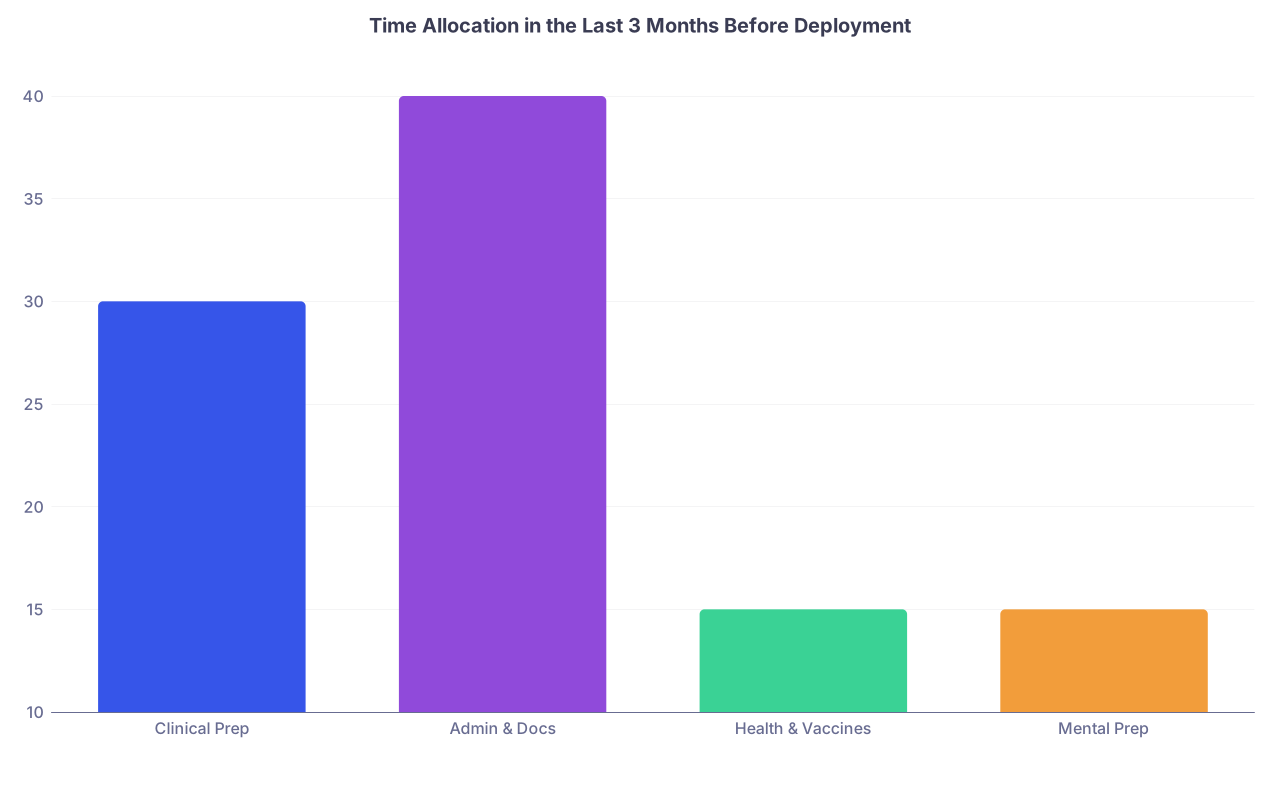
| Category | Value |
|---|---|
| Clinical Prep | 30 |
| Admin & Docs | 40 |
| Health & Vaccines | 15 |
| Mental Prep | 15 |
At this point you should:
Sort all medical, legal, and employment documents
- Passport (valid at least 6–12 months beyond deployment).
- Licensure:
- Ensure your home license will remain valid.
- Confirm who handles local registration.
- Contracts and insurance:
- Get a copy of your contract.
- Confirm:
- Malpractice coverage in the host country.
- Personal accident and evacuation insurance.
Schedule vaccines and health checks
Do not leave this for the last few weeks. Some series take time.
At this point you should:
- Book a travel clinic consultation.
- Start any series that require multiple doses:
- Hepatitis A/B
- Rabies (if indicated)
- Check:
- Tetanus status
- Yellow fever requirements
- Malaria prophylaxis plans
And yes, sort your own chronic health issues now. One field colleague learned the hard way that ignoring mild asthma in a dusty camp is a bad strategy.
Create your “personal risk profile”
This is not paranoia. This is ethics toward yourself and your team.
At this point you should:
- List:
- Personal medical vulnerabilities (e.g., seizures, diabetes).
- Psychological vulnerabilities (e.g., prior PTSD, depression).
- Decide:
- Who on the team should know what.
- Where your red lines are for security (e.g., no unarmed travel at night, no unaccompanied movement outside base).
- List:
Start mental health and resilience planning
You are going to see things that stick. Pretending otherwise is childish.
At this point you should:
- Identify one or two people who will serve as:
- Debrief partners during deployment (could be remote).
- Post‑deployment check‑ins.
- Learn one or two concrete grounding or regulation skills:
- Brief breathing protocols
- “After action” journaling template
- Identify one or two people who will serve as:
Month −2: Build Your System, Pack with Discipline, and Practice Saying “No”
Two months out, the departure feels real. This is the time to set up the structures that will prevent both harm and burnout.
At this point you should:
Design your clinical “playbook”
You do not want to be scrolling PDF guidelines at 3 a.m. with a seizing child in front of you.
At this point you should:
- Build a small, organized reference system:
- Printed or offline copies of:
- Local treatment protocols
- Drug formularies with local trade names
- Dosing charts (especially pediatric)
- Printed or offline copies of:
- Create 1–2 page quick references for:
- Sepsis
- Obstetric emergencies
- Malaria
- Acute respiratory distress in kids
- Build a small, organized reference system:
Clarify your decision‑making boundaries
In low‑resource settings, the biggest ethical risk is over‑reach. Stepping into skills you do not have “because no one else is here.”
At this point you should:
- Write down:
- Which procedures you are fully competent to perform independently.
- Which you will only perform with supervision.
- Which you simply will not do.
- Practice saying, out loud:
- “This is beyond my competence; we need another plan.”
- “I need to discuss this with my supervisor.”
- Write down:
Plan communication and data ethics
The Instagram temptation is real. And destructive.
At this point you should:
- Set rules for yourself on:
- Patient images (basically: do not).
- Stories you will not share (sexual violence, identifiable details).
- Clarify:
- What your organization’s policy is on social media.
- How clinical data is documented, stored, and shared.
- Set rules for yourself on:
Start disciplined packing—not hoarding
New people overpack gadgets and underpack essentials.
At this point you should:
- Create three packing lists:
- Personal health and safety (medications, glasses, basic first aid, headlamp).
- Professional essentials (stethoscope, penlight, offline references, minimal personal PPE if needed).
- Comfort / resilience items (one or two, not a suitcase of hobbies).
- Ask current field staff:
- “What did you pack and never use?”
- “What did you wish you had?”
- Create three packing lists:
Month −1: Final Checks, Ethical Grounding, and Goodbyes
The last month is where people panic and try to learn tropical medicine from scratch. Do not do that. You are refining, not rebuilding.
| Area | Priority Focus |
|---|---|
| Clinical | Protocol refresh, boundaries |
| Admin & Legal | Copies, contacts, backups |
| Personal Health | Medications, mental plan |
| Relationships | Expectations, goodbyes |
| Safety & Security | Briefings, contingencies |
At this point you should:
Confirm all logistics and emergency plans
- Reconfirm:
- Flight details
- Pick‑up arrangements
- First night accommodation
- Document:
- In‑country emergency contacts
- Evacuation procedures and triggers
- Nearest tertiary referral sites
- Reconfirm:
Do a focused ethics “rehearsal”
You are not going to predict every scenario. You can still rehearse thinking clearly.
At this point you should:
- Revisit your earlier ethical flashpoints and update them with what you now know about the context.
- Run through 3–4 short scenarios with someone experienced:
- Example: Two patients, one oxygen concentrator. One is a local elder, one is a displaced pregnant woman. What now?
- Example: Local staff routinely use a treatment you think is outdated but not clearly harmful. Do you intervene?
Set expectations with home and host
You owe people clarity.
At this point you should:
- Sit down with:
- Family/partner
- Mentor or program director
- Agree on:
- Communication frequency and channels.
- Under what conditions you would shorten the deployment or come home early.
With the hosting organization, clarify:
- Performance expectations.
- How conflict with local staff or leadership is managed.
- Sit down with:
Finish packing and create redundancy
Assume one bag goes missing.
At this point you should:
- Split critical items between carry‑on and checked luggage.
- Share:
- Scans of passport, visas, key documents with a trusted person at home.
- Your itinerary and contact details.
Mentally transition
This part is usually rushed. Do not.
At this point you should:
- Take one uninterrupted half‑day to:
- Review your motivations again.
- Re‑read your own boundaries and non‑negotiables.
- Write a short letter to yourself about why you are going, to read when things get rough.
- Take one uninterrupted half‑day to:
Final Week and First 72 Hours on Site
The week before departure, stop cramming. Sleep. Say goodbye properly. You will not regret that.

Final Week: At this point you should:
- Taper down outside work.
- Double‑check medications and glasses.
- Print and organize your quick references and key contacts.
- Have meals or calls with the people who matter. They need to hear from you now, not in a rushed airport text.
First 72 hours on site: At this point you should:
Shut up and observe
The fastest way to alienate a team is to arrive “fixing” things before you understand them.
- Ask:
- “How do things usually run here?”
- “What’s one thing you wish newcomers would stop doing?”
- Spend time:
- Watching ward rounds
- Learning where supplies actually are
- Understanding informal hierarchies
- Ask:
Clarify again—scope and safety
- Confirm:
- Your daily schedule
- On‑call structure
- Where you sleep, eat, and what is off‑limits
- Ask explicitly about:
- Recent security incidents
- What to do if you feel unsafe
- Confirm:
Start ethically, even when it slows you down
From day one:
- Obtain consent as clearly as the setting allows.
- Use interpreters properly.
- Admit your limitations openly.
One Month In: Mid‑Deployment Checkpoint
You wanted a 6‑month countdown, but the ethical work does not stop at departure. The first real ethical test is often around week 3–4, when the initial adrenaline wears off.
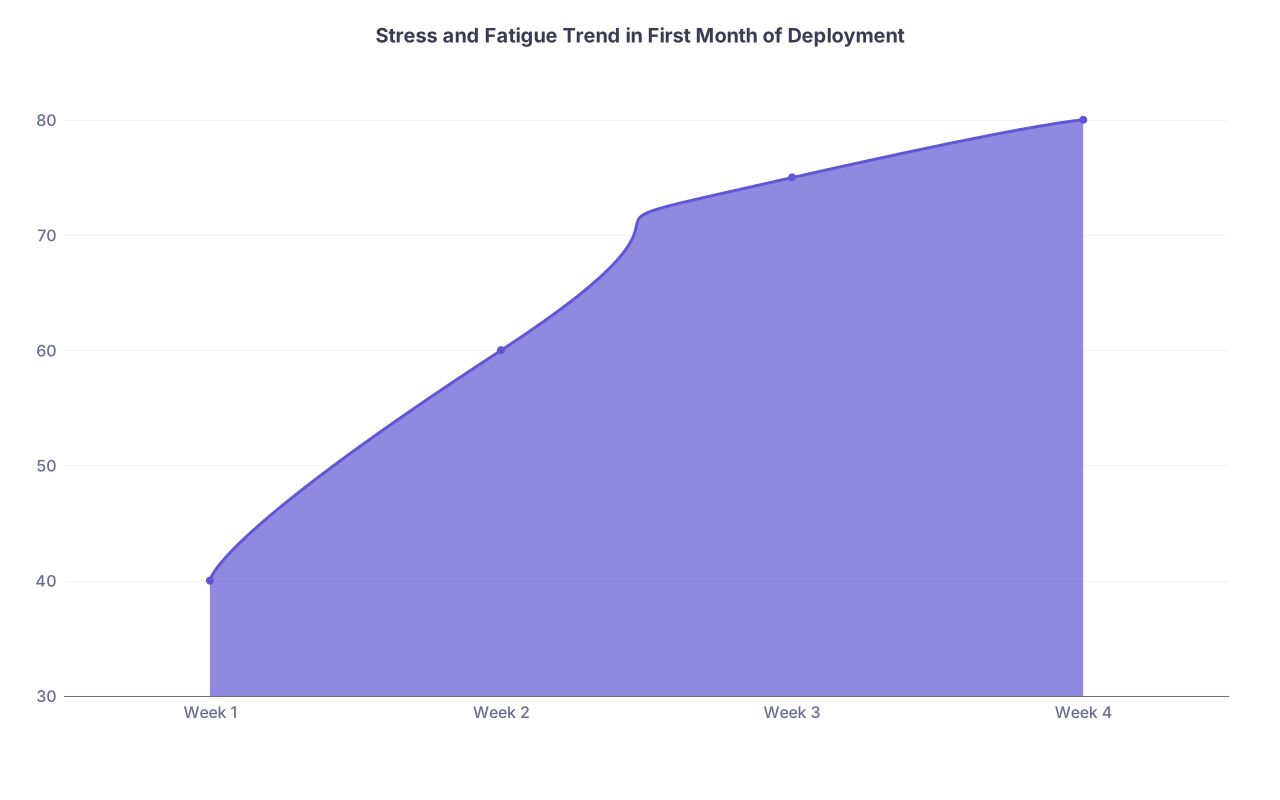
| Category | Value |
|---|---|
| Week 1 | 40 |
| Week 2 | 60 |
| Week 3 | 75 |
| Week 4 | 80 |
At this point you should:
- Schedule a deliberate check‑in with:
- Your on‑site supervisor
- A trusted mentor back home (even a 20‑minute call)
- Ask yourself bluntly:
- Am I practicing within my boundaries?
- Have I started normalizing things that bothered me initially, in a bad way?
- What cases or situations are replaying in my head at night?
If the answers are uncomfortable, good. That is where the growth is. Adjust now, not after someone gets hurt.
Three Key Points To Walk Away With
- Ethical, effective humanitarian work is built months before you see a single patient, through tedious, calendar‑based preparation—clinical, administrative, and psychological.
- Clear personal boundaries on scope of practice, safety, and storytelling are not luxuries; they are protective for you, your team, and your patients.
- The best volunteers arrive curious, humble, and prepared to learn how the system already works before they try to “improve” it. If you can commit to that, you are on the right track.


