
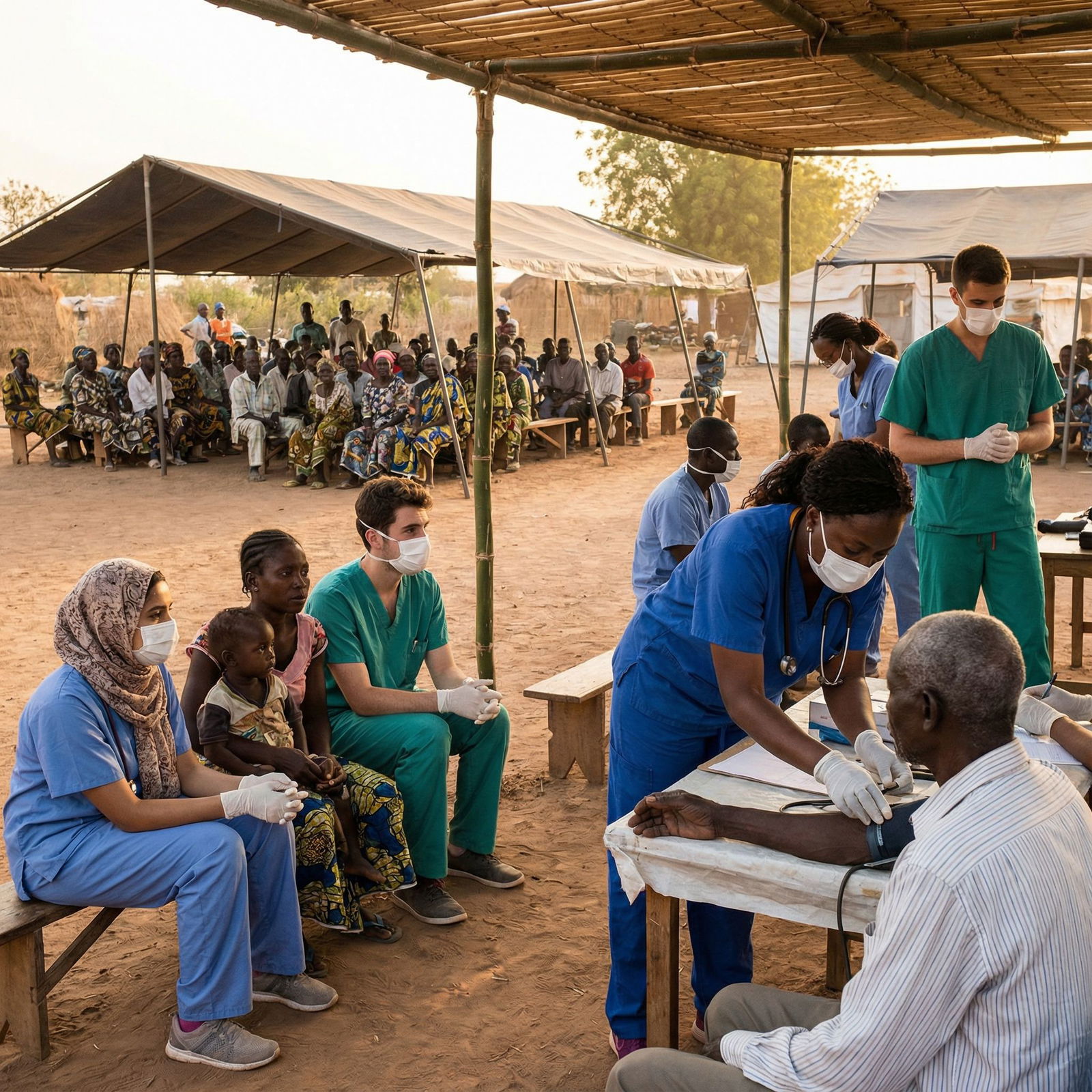
The disaster of a last‑minute canceled global health elective is exactly the ethical stress test most students fail.
Not because they’re bad people. Because they panic, scramble for any replacement, and forget that global health is not tourism with scrubs. It is power, privilege, and responsibility. Even when your flight gets canceled or a strike shuts down the hospital 72 hours before you leave.
So let’s handle this like a grown clinician, not a disappointed traveler.
You just lost your international elective. You still want growth, you still need to graduate, and you do not want to slide into white-savior nonsense hunting for whatever clinic abroad will still take you.
Here’s the salvage plan.
Step 1: Put out the immediate fires in the first 24–48 hours
You have two parallel problems: logistics and ethics. People usually obsess over logistics and ignore the ethics. You need both.
1. Clarify what’s actually canceled
Do not act on third-hand rumors.
Within the first few hours:
- Get a clear written statement from the host site or organizing body: email saying the elective is canceled/postponed, and why.
- Confirm dates: is it the whole month/rotation? Or the first two weeks? Partial cancellations can be turned into hybrid electives.
Then:
- Email your med school’s electives coordinator / dean’s office with:
- A two‑sentence summary of what happened
- The dates of your original elective
- A direct question: “What are my options for replacement credit within this time window?”
Keep that email short and professional. No whining, no drama. This is the screenshot that will end up in your file.
2. Protect yourself financially without acting impulsively
Before you torch your bank account on change fees:
- Pull up every relevant policy:
- Airline/refund or travel credit rules
- Travel insurance coverage (if you bought it)
- Your school’s refund/cancellation policies for program fees
Then, in this order:
- Freeze new spending. No rebooking, no second elective fees yet.
- Call or chat with the airline and say clearly: “My educational program was canceled due to [reason]. What are my options for free date change, credits, or refunds?”
- If you have travel insurance, open a claim immediately. Even if it might not pay out, the clock starts now.
- Do not book a new country or site “just to use the ticket” until you have school approval and an ethical plan. A random replacement in a new low‑resource setting, arranged in 48 hours, is almost always bad medicine and bad ethics.
Step 2: Negotiate with your school like a professional
Your next move is not “find a new global health trip.” Your next move is “secure academic credit and a plan that actually makes sense for your training.”
Here’s what you put on the table with your school.

| Step | Description |
|---|---|
| Step 1 | Elective canceled |
| Step 2 | Notify school |
| Step 3 | Look for internal options |
| Step 4 | Defer global health |
| Step 5 | Domestic rotation |
| Step 6 | Remote or research elective |
| Step 7 | Plan future ethical global health |
| Step 8 | Credit needed now? |
1. Ask explicitly about these options
You should be asking:
- Can I convert this block into:
- A home-clinic or hospital elective (e.g., infectious disease, refugee health, HIV, TB, migrant health)?
- A remote/global health scholarly elective (policy, ethics, research, curriculum design)?
- A reading course in global health ethics with a faculty mentor?
- Can I delay the global health elective to a later block without delaying graduation?
- Will the school count partial time (e.g., two weeks instead of four)?
Phrase it like a future colleague, not a student begging for mercy:
“Given the last‑minute cancellation, I’d like to prioritize: (1) meeting graduation requirements, and (2) using this time for meaningful global health–related work, even if not abroad. What options would you recommend?”
That framing signals maturity. It also pushes them to offer something beyond, “I guess you can take vacation.”
2. Bring them concrete Plan B/C options
Administrators move faster when you do the legwork. Come with 2–3 specific possibilities.
For example:
- A 4‑week elective at your home institution in:
- Infectious Diseases with focus on HIV/TB
- Refugee and immigrant health clinic
- Public health / epidemiology service
- A 2–4 week “Special Studies” elective:
- Global health ethics project under Dr. X
- Literature review + policy brief on [topic] for a global NGO
- Curriculum development for your school’s global health track
- Combining:
- 2 weeks of home rotation + 2 weeks research/writing
Your ask should sound like:
“Here are three options I’ve identified that align with global health and my availability. Can we approve one of these for credit?”
Step 3: Do not “cold drop” into another country for a replacement
This is where students get ethically sloppy.
Your instinct: “Maybe I can just email a mission hospital in [Country B] that my friend went to last year and see if they’ll take me.”
My answer: no. Not last‑minute.
Why this usually goes wrong
I’ve watched it play out:
- No formal affiliation or liability coverage
- No clear supervision; student ends up doing procedures they aren’t trained for
- No language capacity
- No understanding of local systems
- Zero continuity or long‑term partnership
You become:
- Free labor sometimes,
- A liability often,
- A distraction always.
And it screams “this elective is about my experience, not their patients.”
If a replacement in another country is even on the table, it has to meet all of this:
| Requirement | Non-Negotiable Standard |
|---|---|
| Formal affiliation | Written agreement with your school and host site |
| On-site supervision | Named supervising physician responsible for you |
| Scope of practice | Clear list of what you can/cannot do, signed off by both sides |
| Language | You speak the clinical language or have reliable interpretation |
| Duration | At least 3–4 weeks, not a “medical tourism” week |
If you cannot meet these, you skip the international fix and create a strong local/global hybrid elective instead.
Step 4: Build an ethical “salvage” elective at home
Let’s say you cannot go abroad now, or you decide not to (good). That does not mean you lose global health.
You just shift from “somewhere far away” to “global health where I am.”
1. Turn this into a focused global health elective locally
You can put together a 2–4 week elective that checks ethical, educational, and even CV boxes.
Combine:
- Clinical:
- Refugee/asylum clinic
- Federally Qualified Health Center (FQHC) serving migrants or low‑income patients
- TB/HIV clinic
- Homeless outreach teams
- Didactic:
- Assigned reading list (e.g., Farmer, Marmot, Paul Farmer’s “Pathologies of Power”, articles from Lancet Global Health)
- Recorded lectures from your school or online global health courses
- Project:
- Quality improvement for an underserved clinic
- Patient education materials in multiple languages
- Needs assessment for housing, food security, or access barriers
You propose it to your school as:
“Global Health in Local Contexts” or “Health and Human Rights in [Your City].”
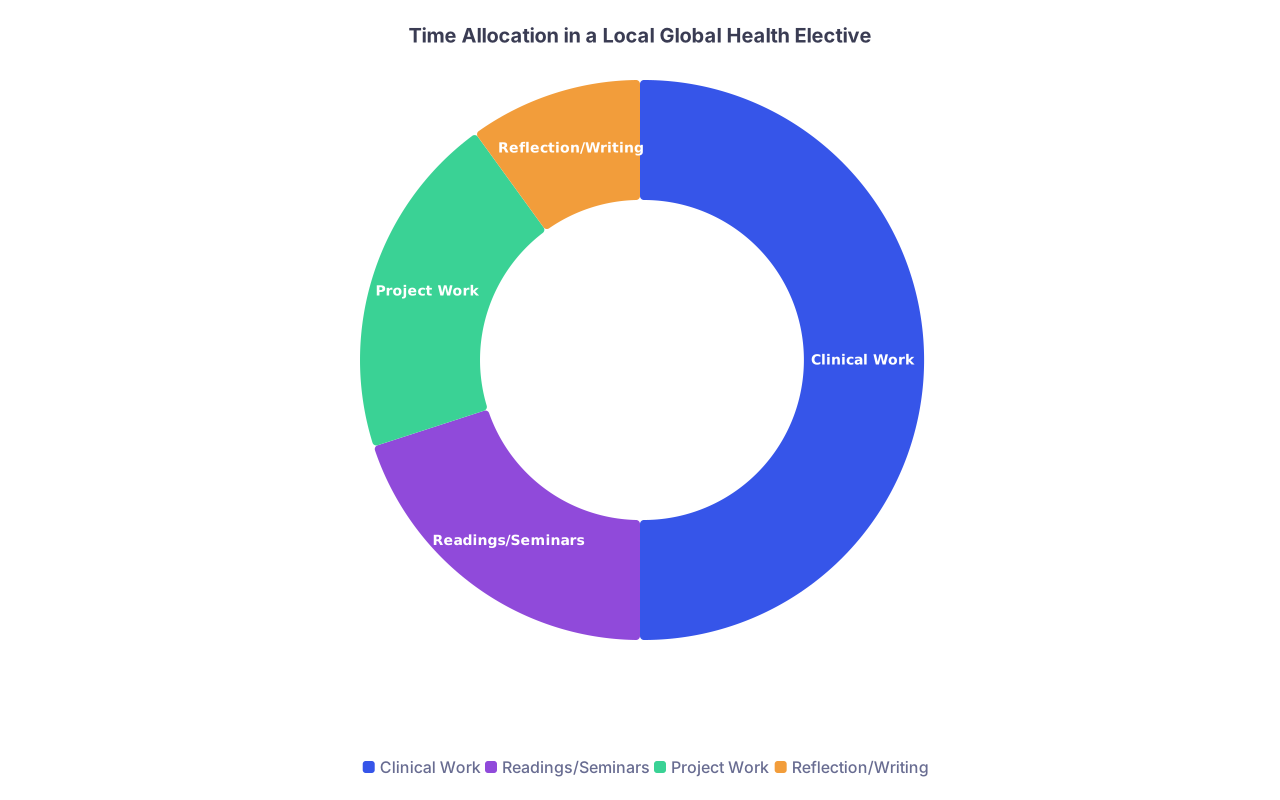
| Category | Value |
|---|---|
| Clinical Work | 50 |
| Readings/Seminars | 20 |
| Project Work | 20 |
| Reflection/Writing | 10 |
Rough ratio: 50% clinical, 20% readings/seminars, 20% project, 10% reflective writing. That looks serious, not like a vacation substitute.
2. Line up a mentor who actually does global health
You need a faculty sponsor whose work spans:
- International programs, OR
- Refugee/immigrant health, OR
- Public health/health systems, OR
- Human rights/advocacy
Your email to them should be brief, humble, and specific:
- 2–3 sentences of context: elective canceled, dates you are free
- 2 sentences on your interests and prior global health experience
- 1 direct ask: “Would you be willing to supervise a short, focused elective related to your work during [dates]?”
If they say yes, you and the mentor co-write a 1‑page elective description and send to the school.
Step 5: Use the disruption to do actual ethical reflection (not performative)
This category is supposedly “Personal Development and Medical Ethics.” Act like it.
You just got handed a perfect case study in:
- Power and privilege in global health
- Dependence on unstable systems
- The ethics of short-term clinical work abroad
- Your own motivations
Do something with it.
1. Write one serious reflection essay (for yourself and later use)
Not a feelings dump. A structured reflection.
Try this outline:
- What I thought global health was about when I signed up
- What the cancellation exposed about:
- My motivations
- The fragility of short-term international electives
- The dynamics between home institutions and host sites
- Three ethical questions this raised for me:
- e.g., Is it acceptable to take up supervision time in a low‑resource setting for my learning?
- How short is “too short” for clinical electives abroad?
- Who benefits most from these programs?
- How I plan to approach global health differently from now on:
- Criteria I’ll use for future programs
- Commitments I’m willing to make (time, follow‑up, research, advocacy)
That becomes gold later for residency essays, fellowship statements, or even publications. More importantly, it stops you from repeating the same shallow pattern.
2. Talk through the ethics with someone who’ll push back
Not your equally disappointed friend.
Book 30 minutes with:
- A global health faculty member
- A medical ethicist
- Or both
Ask them directly:
- “If you were me, would you try to find a last-minute overseas replacement? Why or why not?”
- “What are the most common ethical mistakes students make with global health electives?”
- “What questions should I be asking about any future program before I sign up?”
Take notes. Those conversations are more valuable than any one month spent abroad pretending to be a junior infectious disease attending.
Step 6: Preserve your “global health trajectory” without forcing it
You might be worried: “Will this hurt my global health story for residency/fellowship?” Only if your story was shallow to begin with.
Let’s be blunt: Programs care less about where you went, more about what you learned and what you did with it.
Here is how you salvage the narrative.
1. Build a coherent arc, not a one-off trip
Use this canceled elective as the pivot point in a three-part story:
- Before:
- Your interest and earlier experiences (local underserved work, language skills, research)
- Disruption:
- The canceled elective and your decision not to scramble into an ill‑considered replacement
- The ethical reasoning you used
- After:
- The local/global elective you created
- Any project, paper, or ongoing involvement that grew from it
That sounds like maturity and intentionality. It reads much better than, “I did a random month in [Country] and loved the culture.”
2. Turn this into something concrete on your CV
Within the next few months, aim to produce one of:
- A poster or abstract from your global health/local project
- A short article or blog for your school on “Ethical pitfalls of last-minute global health electives”
- An ongoing role with a refugee clinic, migrant shelter, or policy group
One example I’ve seen work well:
- Student’s Uganda elective was canceled due to political instability
- She created a local elective with a refugee health clinic + lit review on continuity of HIV care among resettled refugees
- She presented a poster at a regional conference and later used that work in a residency application
- When asked in interviews, she spoke more insightfully about ethics and systems than peers who actually went abroad
You can be that person. If you do the work now.

Step 7: If a future international elective is still on your radar, raise your standards
Let’s assume you still want an overseas rotation at some point. Good. But do it with higher standards now.
1. Create your personal checklist before you ever sign up again
Your non-negotiables for any future global health elective should include:
- Long-term institutional partnership (your school + host for years, not a one-off)
- Clear educational objectives created with the host, not just for you
- Scope of practice that matches your training level
- Adequate supervision and feedback
- Language support (you speak it, or the site has interpreters available)
- At least a month, ideally more
- An opportunity for continuity (return visits, remote collaboration, research, or curricular work)
If a glossy program brochure doesn’t answer those quickly, that’s a red flag.
2. Be radically honest about why you’re going
Ask yourself, in writing:
- If I could not take any photos or post anything on social media, would I still want to go?
- If this rotation were in my own city with a similar patient population, would I be as interested?
- Am I expecting to “help” more than I’m likely to be actually helpful?
Your answers tell you if you’re doing global health or just buying a story to tell.
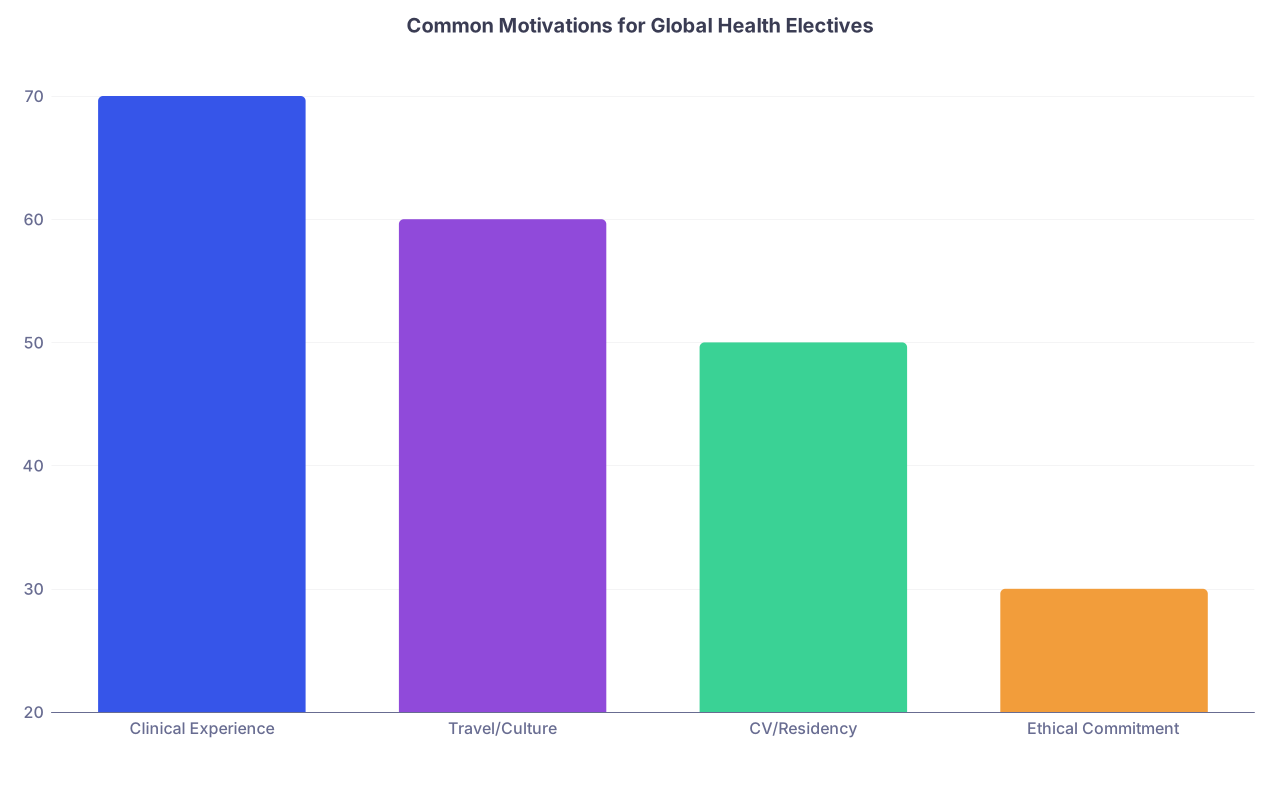
| Category | Value |
|---|---|
| Clinical Experience | 70 |
| Travel/Culture | 60 |
| CV/Residency | 50 |
| Ethical Commitment | 30 |
Most students start with a messy mix of all of these. The point is not purity. The point is awareness and accountability.
Step 8: Emotional triage – dealing with disappointment without stupid decisions
Let’s not pretend: this hurts.
You spent months planning, maybe years dreaming. You told people. You maybe learned some of the language. Now you’re stuck at home.
Fine. Acknowledge that. Then don’t let it drive your choices.
Short version of emotional triage:
- Give yourself 24–48 hours to be pissed off, sad, or both
- Do not book anything international, sign any new forms, or send any emotional emails during that window
- Talk to one person who is not directly involved (friend, therapist, resident mentor) just to vent
- Then switch into planning mode with the steps I laid out above
If you try to skip the emotional piece, it leaks out as bad decisions masked as “initiative.”

A concrete salvage timeline
To make this less abstract, here is what a strong 10–14 day response window could look like.
| Day Range | Main Actions |
|---|---|
| 1–2 | Confirm cancellation, notify school, freeze spending, start refund/credit processes |
| 3–4 | Meet with electives coordinator, identify feasible credit options, email potential faculty mentors |
| 5–7 | Finalize Plan B elective (local/global, research, or hybrid), submit formal proposal, adjust travel if needed |
| 8–10 | Build reading list, define project component, set clear learning objectives with mentor |
| 11–14 | Start elective work; begin structured reflection writing |
This is doable. If you treat it like actual clinical problem-solving, not personal tragedy.
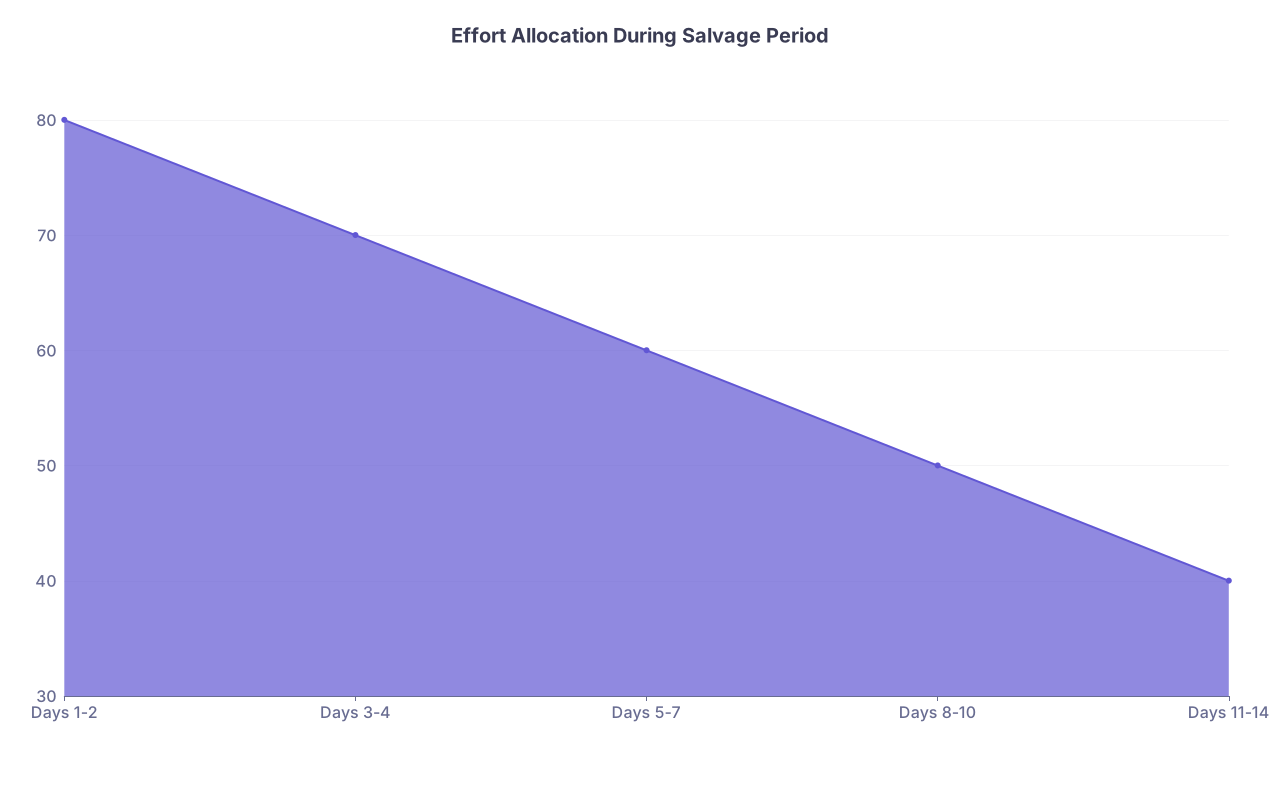
| Category | Value |
|---|---|
| Days 1-2 | 80 |
| Days 3-4 | 70 |
| Days 5-7 | 60 |
| Days 8-10 | 50 |
| Days 11-14 | 40 |
Your stress and admin burden are front-loaded. If you push through that, the second half starts looking like a real elective, not a consolation prize.
Bottom line
Three points and we’re done:
- Do not panic‑book a replacement international elective. If it cannot meet basic ethical and educational standards, skip it and build a serious local/global alternative instead.
- Use this disruption to sharpen, not soften, your global health ethics: reflect, write, talk with people who will challenge you, and raise your standards for any future abroad work.
- Salvage your academic and career trajectory by creating something concrete—local clinical work, a project, a mentor relationship—that you can point to as evidence of maturity rather than just bad luck.


