
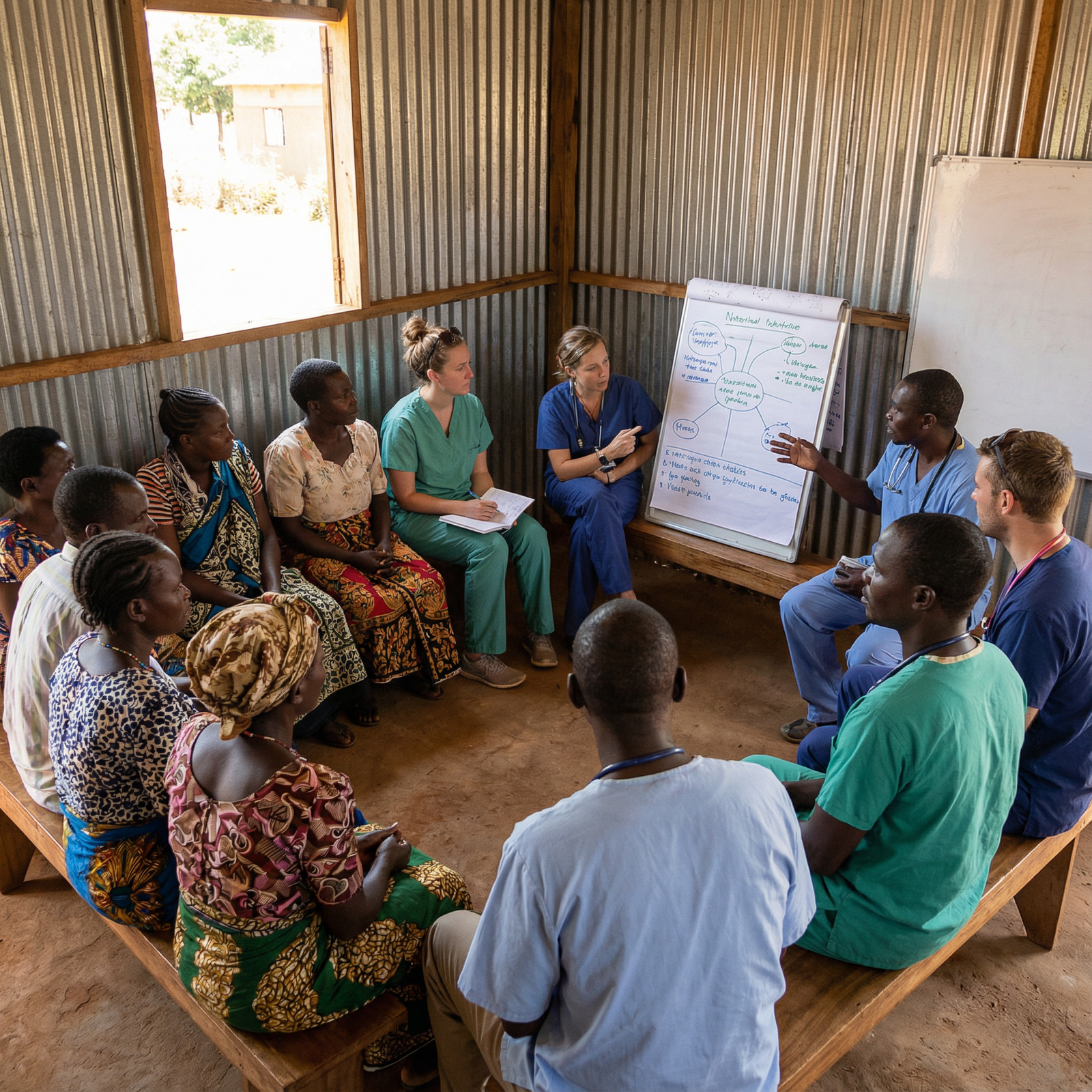
The belief that you “missed the global health train” because you matched into a non–global health program is nonsense. You are not stuck. You are just unguided.
If you want a global career but you’re in a standard internal medicine, pediatrics, surgery, psych, EM, or even a completely unbranded community program with zero global health reputation, here is the reality: you can still get there. But not by wishful thinking or vague “interest” statements. You will get there by deliberate moves, in the right order, with a realistic view of how global health careers actually work.
I’m going to walk you through that, step by step, assuming the worst: no global health track, no institutional support, maybe even an unsupportive PD. This is the “how do I do this from the ground” playbook.
Step 1: Stop Fantasizing About Global Health and Define What You Actually Mean
Most people say “global health” and mean five different, incompatible careers at once. That’s why they feel lost.
Before you do anything else, you need to answer a blunt question: “Ten years from now, what am I actually doing day to day in my ‘global health career’?”
Not what conference badge says. What your Tuesday looks like.
Common real-world “global health” endpoints:
- Academic global health faculty at a US/European institution
- Long-term clinician in a low- or middle-income country (LMIC) hospital or NGO
- Humanitarian / emergency response physician (MSF, ICRC, etc.)
- Public health / policy / WHO / CDC / ministry of health role
- Hybrid: Mostly domestic clinical + 2–8 weeks/year meaningful overseas work with one partner site
- Research-heavy career focused on global disease burden, implementation science, health systems
Each of these requires a different build.
If you’re not sure yet, fine—but you must at least rank what doesn’t appeal to you. For example:
- “I don’t want a purely academic statistics-heavy job.”
- “I don’t want to live full time outside my home country.”
- “I’m not built for constant crisis response.”
Why this matters: if you tell yourself “I want a global health career” but actually want a US-based clinical job with occasional trips, you’ll chase the wrong credentials (like a PhD in epidemiology you’ll never use) and burn years.
Write your answer down. Literal sentences, not vague concepts:
“I am in a community internal medicine program. Ten years from now I want to be 70% hospitalist in the US and 30% long-term partnership work with one East African hospital, focused on education and systems improvement.”
Now you have something we can work with.
Step 2: Get Honest About Your Position and Constraints
You can’t plan forward if you lie to yourself about where you’re standing.
Do a quick, brutal inventory:
- Specialty and year: e.g., PGY-1 IM in a small community program, or PGY-3 EM in a big county hospital.
- Schedule control: Do you get any elective time? Can you stack it? Are away rotations possible?
- Program culture: Supportive, indifferent, or hostile toward “extracurriculars”?
- Money reality: Can you self-fund travel? Need grants? Already buried in debt?
- Life anchors: Partner? Kids? Visa status? All of this matters for how mobile you are.
You’re not powerless, but you have constraints. Own them.
From there, you decide your early strategy:
- If you have generous electives and a neutral/curious PD → you can push for structured global experiences during training.
- If you have rigid scheduling and a skeptical PD → you’ll build your global profile through local work, remote collaboration, and post-residency fellowships.
Step 3: Build Global Health Substance Locally First
Here’s the uncomfortable truth: flying somewhere for 2 weeks to “help” without skills is ethically shaky and professionally unimpressive. Most serious global health leaders can spot “global voluntourism” on a CV from across the room.
The fix: make your local work globally relevant.
You focus on skills that transfer directly to global health environments:
- Quality improvement: stroke pathways, sepsis protocols, handoff systems
- Public health: vaccination campaigns, screening programs, outreach to marginalized populations
- Resource stewardship: optimizing care with limited resources, guideline implementation
- Ethics and equity: care of refugees, uninsured, undocumented, rural communities
If your hospital serves:
- A large immigrant/refugee population
- Underserved rural or urban communities
- Patients with low health literacy, language barriers, or poor access to care
…then congratulations, you have a global health lab sitting in front of you with better continuity and less plane fuel.
Take one or two of these and turn them into real projects:
- Start a QI project on hypertension control in a clinic with mostly West African or Latin American immigrants. Compare barriers you find with WHO NCD frameworks.
- Create a simple, language-appropriate patient education initiative on TB screening or diabetes care with interpreters and community partners.
- Join or start a refugee clinic, street medicine team, or mobile clinic. Bring structure. Collect data. Present results.
You are building three things:
- Actual competence in caring for structurally marginalized populations.
- A demonstrable track record of “global” thinking applied locally.
- Something credible to talk about when you later ask for positions, fellowships, or funding.
This isn’t second-best. This is global health, if you approach it seriously.
Step 4: Quietly Assemble Mentors and Networks (Even If Your Program Doesn’t Care)
You probably won’t find your global health mentors inside your non–global health program. That’s fine. You can build horizontally.
Where to look:
- Your medical school: global health office, alumni in MSF, WHO, academic global health roles. Email them as an alum. They will answer at a higher rate than you expect.
- Nearby academic centers: every major city has at least one big institution with an “Office of Global Health,” “Center for Global Surgery,” or “Global Health Equity” program. You don’t need to be their trainee to show up for Zoom talks, grand rounds, or open projects.
- Professional societies:
- Society of General Internal Medicine (global health interest group)
- ACEP global emergency medicine section
- AAP global health chapter
- ACOG global women’s health committees, etc.
Your ask to potential mentors should be surgically precise, not vague:
“I’m a PGY-2 in a small community IM program with no global track. I want a career that combines US hospitalist work with long-term partnership at a single LMIC site. Could I have 20 minutes to ask how you’d prioritize skills and opportunities during residency for that goal?”
Not: “I’m interested in global health and would love to pick your brain.”
You’re signaling seriousness and constraints. That makes people more willing to invest in you.
Step 5: Use Electives and Vacation Strategically – But Ethically
Everyone wants the sexy part: “How do I go abroad from a program that has no global partnership?”
First, an ethics reality check.
Going abroad too early, without supervision, language, or understanding can:
- Create extra burden for host clinicians who must babysit you
- Lead to inappropriate scope of practice
- Reinforce the exact power dynamics global health is trying not to replicate
So your rule of thumb:
- Build at least 1–2 years of solid clinical competence and local global-style work first.
- Then look for structured, partner-led experiences—not random trips you organize yourself.
Good options when your home program has nothing:
Join existing institutional partnerships as an external resident.
Some universities allow “visiting residents” to join their long-running partnerships. You pay your way; they plug you into supervision and existing projects.Short, well-structured electives with strong supervision (4–8 weeks).
These exist through NGOs, universities, and some US-based consortia. They should have:- Clear educational goals
- Defined scope of practice
- Faculty on site or strong local senior clinicians
Use vacation to observe or meet future partners, not to “fix” anything.
Early visits can be strictly observational: understand the system, meet local leaders, ask what they are already doing and how outsiders could support long-term priorities.
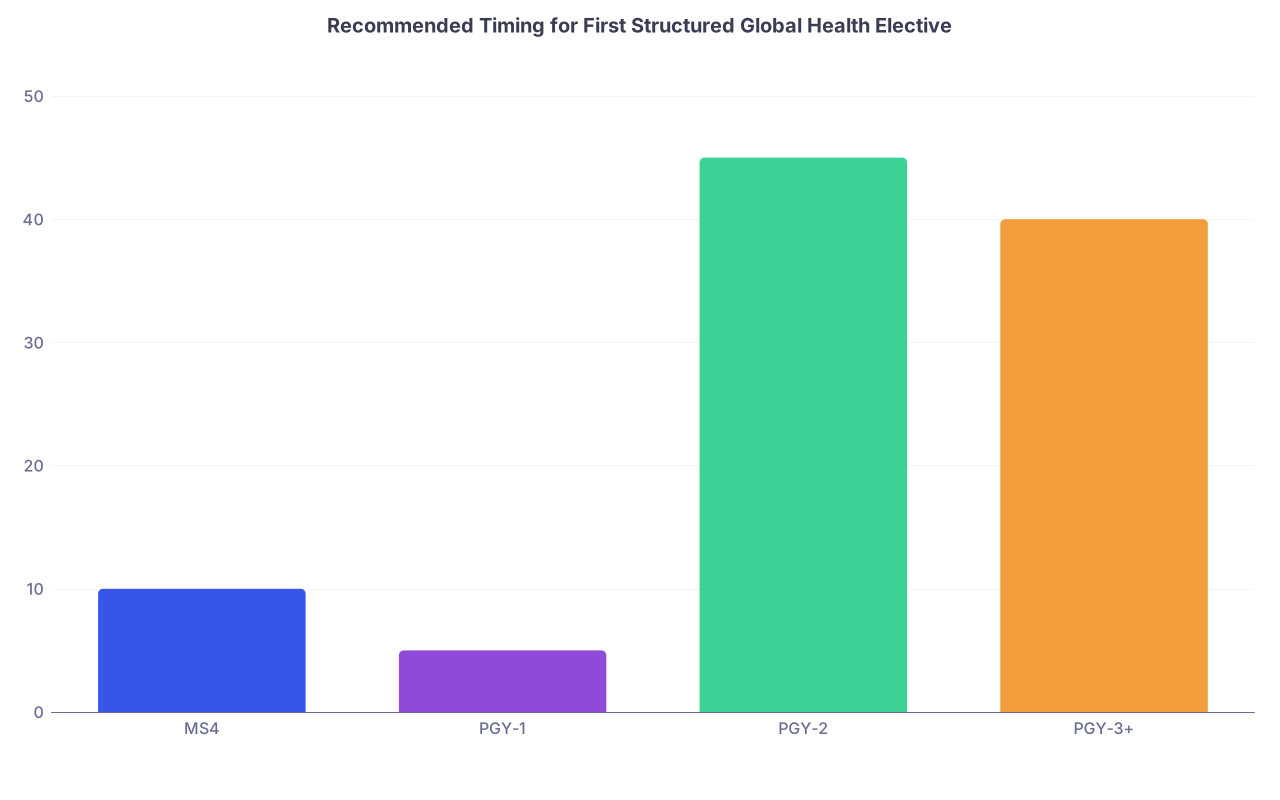
| Category | Value |
|---|---|
| MS4 | 10 |
| PGY-1 | 5 |
| PGY-2 | 45 |
| PGY-3+ | 40 |
If your PD is skittish, frame it correctly:
“This is a supervised elective through X University with longstanding partnership at Y hospital, where my role is primarily observation, teaching students, and QI—not independent unsupervised practice. I’ll bring back a QI project or teaching module that benefits our program.”
You’re not asking for a vacation. You’re proposing a defined educational experience.
Step 6: Turn “No Global Track” into a Custom Global Track
You can secretly build the equivalent of a global health track, even if your program doesn’t advertise one.
Think in terms of pillars:
- Clinical excellence in your base specialty
- Exposure to global and local inequity
- Skills: QI, research, leadership, teaching
- Relationships: mentors, partner sites, organizations
- Outputs: posters, talks, small papers, curriculum contributions
You want each year of training to tick boxes in those pillars.
Here’s a sample structure for a resident who has no formal global pathway:
| Year | Main Focus | Concrete Actions |
|---|---|---|
| PGY-1 | Clinical base + local inequity | Join refugee or safety-net clinic, start small QI or education project |
| PGY-2 | Skills and networks | Present QI locally, attend 1–2 global health webinars/conferences, find external mentor |
| PGY-3 | Field exposure | Do 4–8 week supervised global elective, solidify relationship with one partner site |
| PGY-4+ (if chief or fellow) | Consolidation | Lead curriculum on global equity, apply for fellowship or formal global role |
Your program might never advertise this. But anyone looking at your CV will see a coherent through-line.
Step 7: Decide Early if You Need Formal Credentials (And Which Ones Actually Matter)
You do not need a global health fellowship or MPH to have a globally engaged career. But for some career endpoints, they are extremely useful or functionally required.
General rules:
You likely need an MPH / MSc / global health or public health–focused training if you want to:
- Work in policy, epidemiology, health systems design
- Hold leadership roles in NGOs, WHO, CDC, ministries of health
- Do serious implementation science or health services research
You might benefit from, but don’t strictly need, a global health fellowship if you want to:
- Work in an academic global health division
- Spend a large portion of time abroad with institutional support
- Compete for certain funded positions that want “formal training”
You probably don’t need either if your dream is:
- Primarily domestic clinical practice with periodic, deeply committed work with a single partner site
- Short-term humanitarian deployments where organizations care more about robust clinical skills and prior field experience than degrees
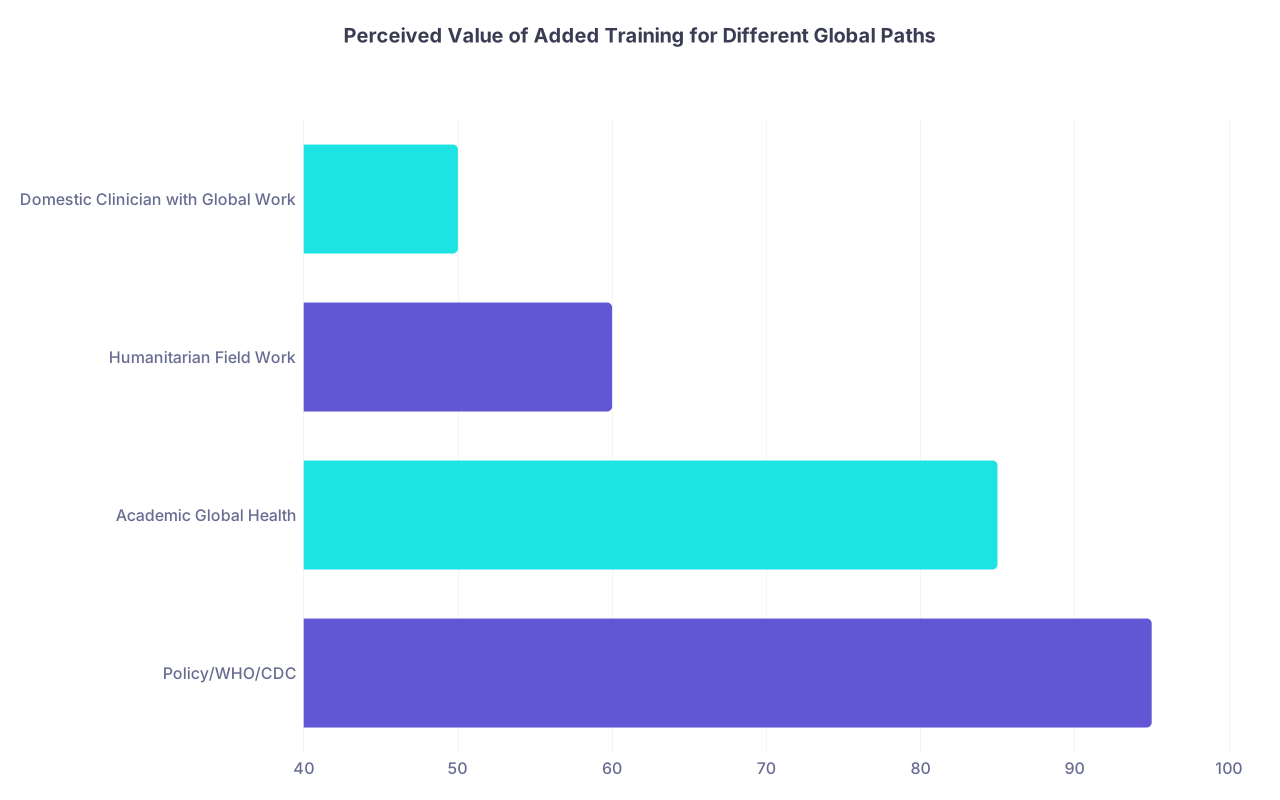
| Category | Value |
|---|---|
| Policy/WHO/CDC | 95 |
| Academic Global Health | 85 |
| Humanitarian Field Work | 60 |
| Domestic Clinician with Global Work | 50 |
If you’re in training:
- You can do an MPH between residency years (not my favorite choice) or after residency.
- You can apply for 1–2 year global health fellowships (EM, IM, peds, OB all have these) that bundle field time, mentorship, and sometimes a degree.
Do not collect degrees just to feel more “global.” Collect them only when they clearly move you toward the Tuesday you described in Step 1.
Step 8: Guard Your Ethics in Every Decision
Global health is full of people with impressive titles who have done deeply unethical things under the banner of “helping.”
You’re in a good position: coming from a non–global health program, you’re less likely to be swept into reputation-driven projects, and more free to ask the hard questions.
Before you join any overseas project, ask:
- Who invited this partnership? Who sets the agenda—the US institution or the local team?
- Does this project have year-round continuity, or is it just waves of short-term visitors?
- What is my actual scope of practice there? Would I be allowed to do things I would never be allowed to do at home? (Red flag.)
- Who benefits if I come? Patients? Local trainees? Or my CV and Instagram?
If the answers are vague or defensive, walk away.
At home, your ethical work looks like:
- Calling out “medical tourism” trips sold to trainees as “global health” that are little more than shadowing and selfies.
- Advocating for longitudinal partnerships over one-off mission trips.
- Acknowledging and interrogating your own positionality—how your passport, race, training, and institutional backing affect power dynamics abroad.
Global health without ethical clarity is just colonialism with nicer branding.
Step 9: Make a 3–5 Year Plan That Survives Real Life
You don’t need a 20-year plan. You need a 3–5 year plan that includes:
- Specific skills you will gain
- 1–2 potential partner sites or organizations you’ll invest in
- A realistic sense of time and money
Example: internal medicine PGY-2 in a community program, wants academic global hospitalist career.
Next 3–5 years could look like:
Year 1 (current PGY-2):
- Take lead on QI project in safety-net clinic around diabetes in immigrant patients.
- Identify 1–2 mentors at nearby university global health center; schedule quarterly check-ins.
- Present one poster at a national meeting with “global/health equity” in the title.
Year 2 (PGY-3):
- Apply for global health electives at a university with a longstanding partnership in East Africa or Latin America.
- Spend 4–6 weeks on-site, focused on teaching residents or helping with ongoing QI, not “rescuing” anyone.
- Start exploring global health hospitalist or global health fellowship roles.
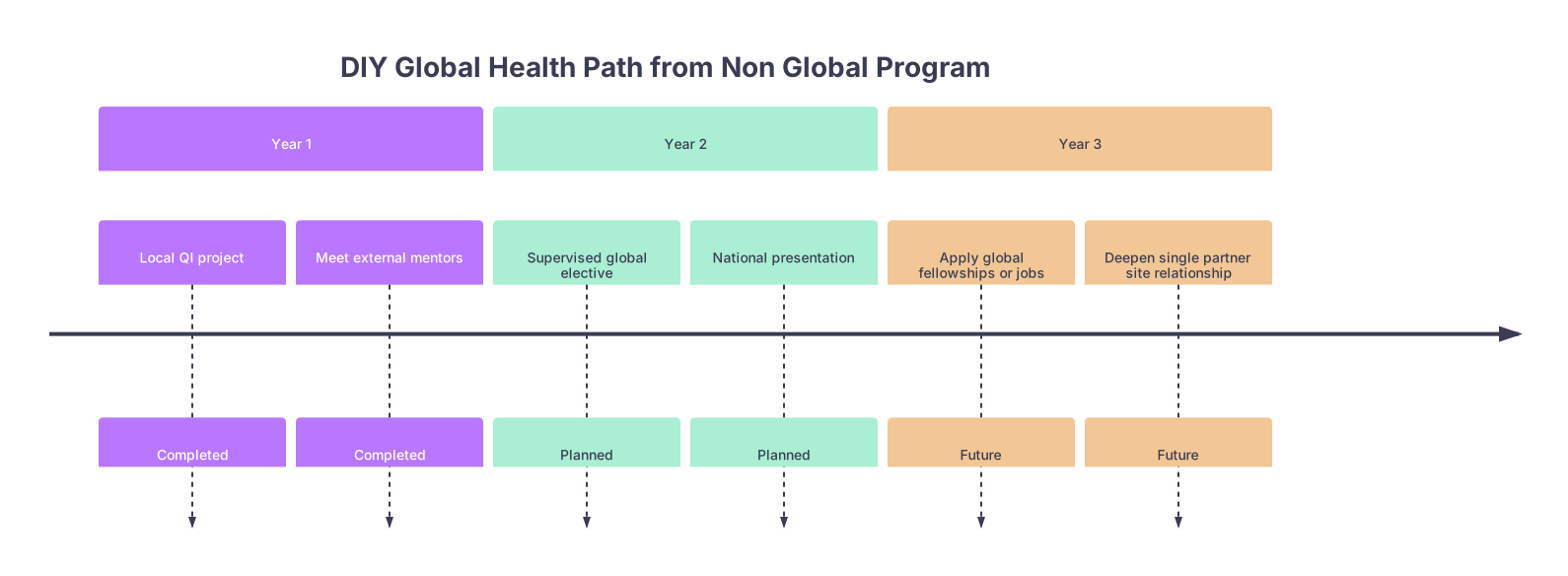
| Period | Event |
|---|---|
| Year 1 - Local QI project | Completed |
| Year 1 - Meet external mentors | Completed |
| Year 2 - Supervised global elective | Planned |
| Year 2 - National presentation | Planned |
| Year 3 - Apply global fellowships or jobs | Future |
| Year 3 - Deepen single partner site relationship | Future |
Years 3–5 (early attending or fellow):
- Either do a global health fellowship with field time and an MPH, or start as a hospitalist with negotiated protected time for global work.
- Commit to one partner site for at least 3–5 years: build curricula, help with QI, support grant writing.
- Aim for 2–3 tangible outputs: guidelines adapted to local context, publications with local co-authors, joint teaching programs.
Update this plan annually as your interests and circumstances shift. The point isn’t to perfectly predict your life. It’s to avoid drifting.
Step 10: What To Do Tomorrow Morning
You’re reading this while stuck in a call room between admissions, or on a rare day off. That’s fine. Here’s how to move the needle this week, even if you’re exhausted and strapped for time.
Tomorrow or this week:
- Write your 2–3 sentence “ten-year Tuesday” description of your global health career. Stop hand-waving.
- Identify one local setting that mirrors global health challenges—refugee clinic, FQHC, free clinic, homeless outreach, rural ED—and email the person in charge asking how you can plug in meaningfully for at least 6 months.
- Send one email to a potential external mentor with a concrete ask for a 20-minute conversation.
Within a month:
- Sketch a barebones 3-year plan (no more than half a page).
- Look up 2–3 global health fellowships or jobs and read their past fellows’ bios. Notice what they actually did, not what they said they were “interested” in.
- Decide whether you’ll realistically pursue further formal training (fellowship/MPH) or lean into a hybrid career.
Within a year:
- Have at least one finished, globally relevant QI/education project.
- Have shown up repeatedly in one local setting that deals with inequity.
- Have at least one serious conversation about a future structured global elective or fellowship.
You do not need permission from your program to do 90% of this. You need clarity, discipline, and a bit of shamelessness in asking for help.

The Bottom Line
You are not blocked from a global health career because you’re in a non–global health program. You are only blocked if you wait for your program to hand you a pathway.
Three key points to keep:
- Define the actual career you want—your “ten-year Tuesday”—and let that drive your decisions, not the vague label “global health.”
- Build serious, ethical global health skills locally first: QI, equity-focused care, work with marginalized communities, plus networks and mentors outside your program.
- Use electives, fellowships, and (when appropriate) degrees strategically to deepen an already coherent story, not to compensate for inaction.
Do those, consistently, and your “non–global health” program will become a line in your biography—not a cage.


